It remains one of the most controversial and fiercely debated historical mysteries in the Morawica region. What started as a local curiosity about a rusted piece of scrap metal in the Czarna Nida River ultimately evolved into a multi-million-dollar international artifact heist.
Abandoned in the Mud
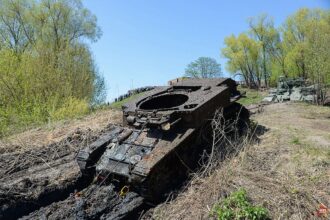
The story begins in mid-January 1945. During a chaotic retreat, the crew of a German Pz.Kampf.V Ausf. A Panther tank was forced to abandon their vehicle after it became hopelessly bogged down in the freezing waters of the Czarna Nida near Bieleckie Młyny.
For years, the armored beast sat undisturbed. In the 1950s, military sappers clearing post-war hazards detonated the tank’s turret and removed its ammunition. The remaining 30-ton hull slowly sank beneath the silt, becoming an invisible, permanent fixture of the riverbed—until drought occasionally exposed its resting place.
The “Shark” Attempts a Rescue
The quiet legacy of the sunken Panther ended in the summer of 1990 when a wave of demand for WWII military relics swept across Europe. A Gdańsk-based diving club known as “Rekin” (The Shark) descended on the river with heavy mechanical equipment.
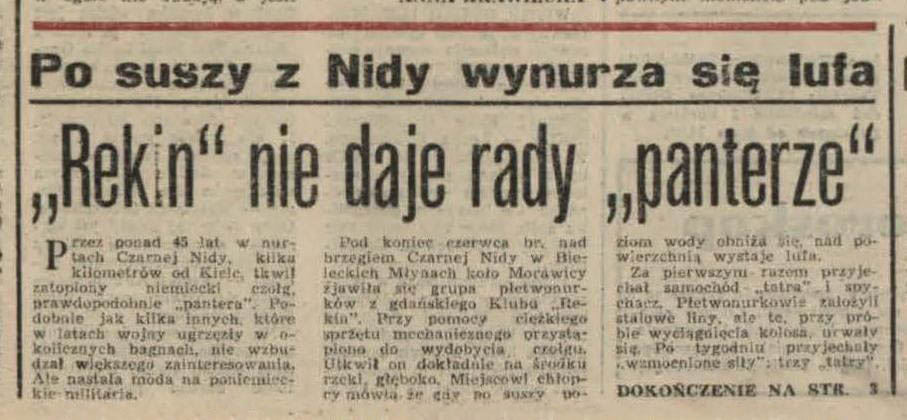
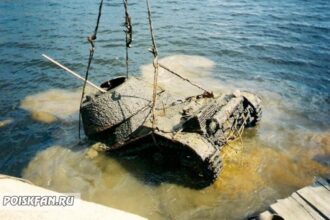
Using bulldozers, excavators, and Tatra trucks, the divers fought against the massive suction of the mud. The mud won. Thick steel cables snapped under the strain of the 50-ton submerged giant. The team only managed to rip free minor fragments, including a hatch, seat leather, and a piece of a German officer’s boot.
The operation was abruptly shut down on July 4, 1990, by Morawica’s mayor following a frantic intervention from the Polish Army Museum in Warsaw.
“The museum officials alerted local authorities that the extraction was entirely illegal, accusing the dive team of secretly plotting to sell the rare armored hull to wealthy buyers in West Germany.”
The divers fiercely defended themselves, arguing they had invested over 13 million złoty in the prep work only after the museum had seemingly abandoned interest due to the destroyed turret. The dive club even offered the local municipality a 10 million złoty payout to finish the job, sparking a massive bureaucratic war over who rightfully owned the State Treasury artifact.
The November Vanishing Act
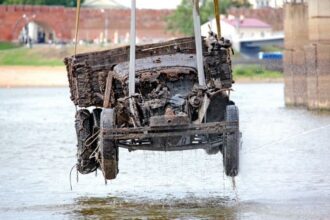
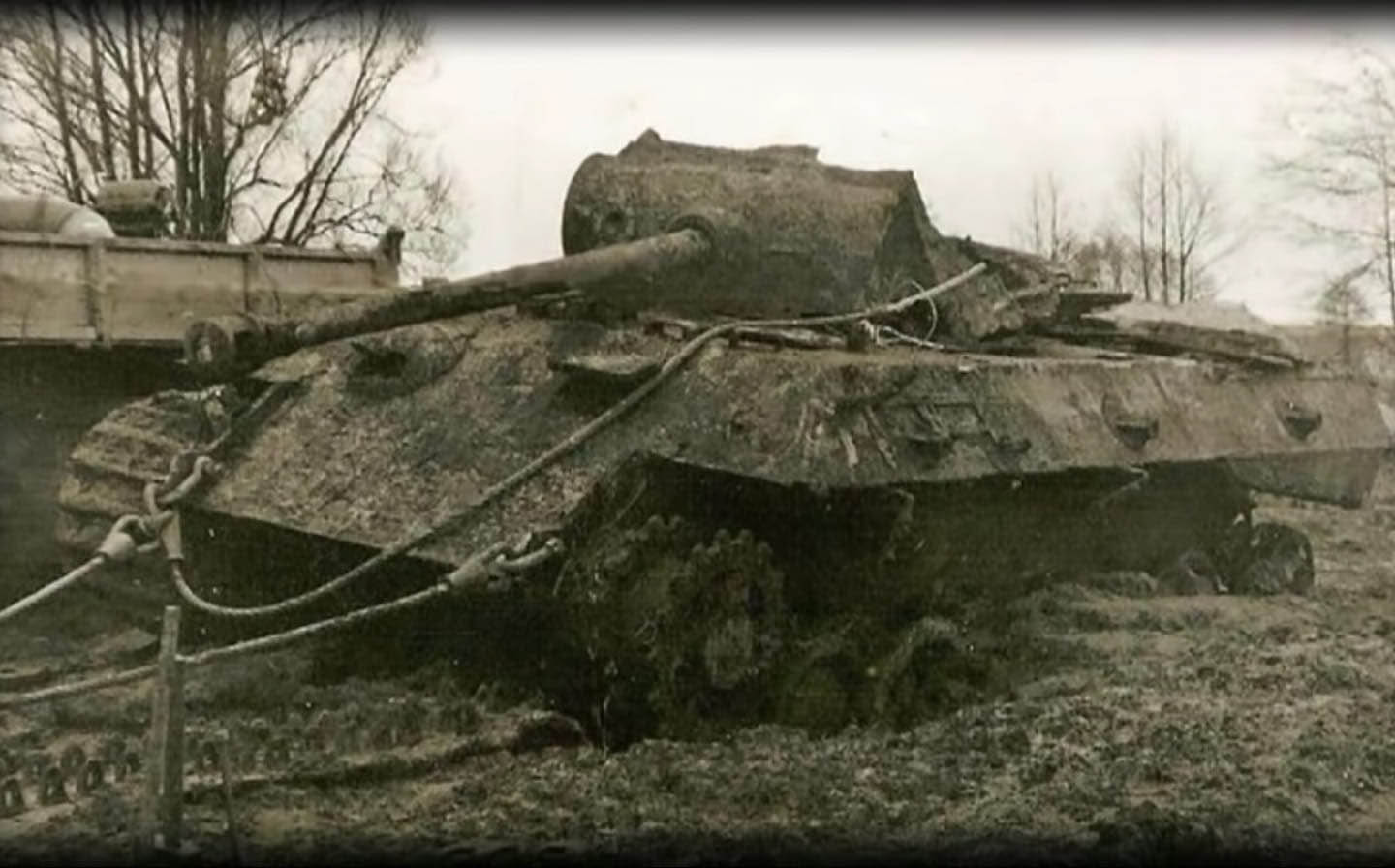
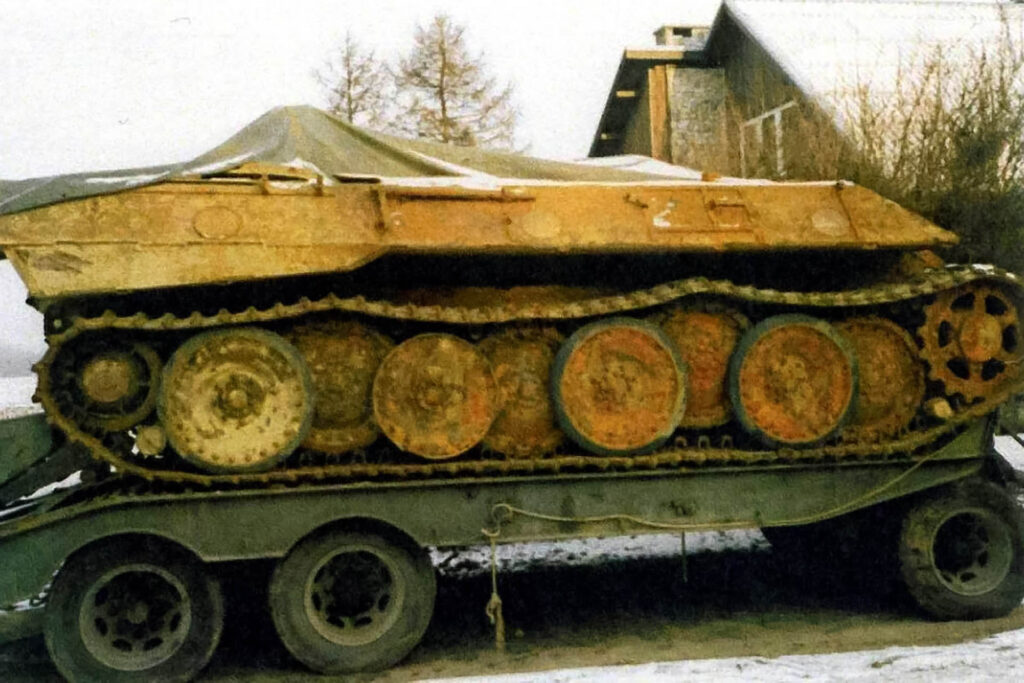
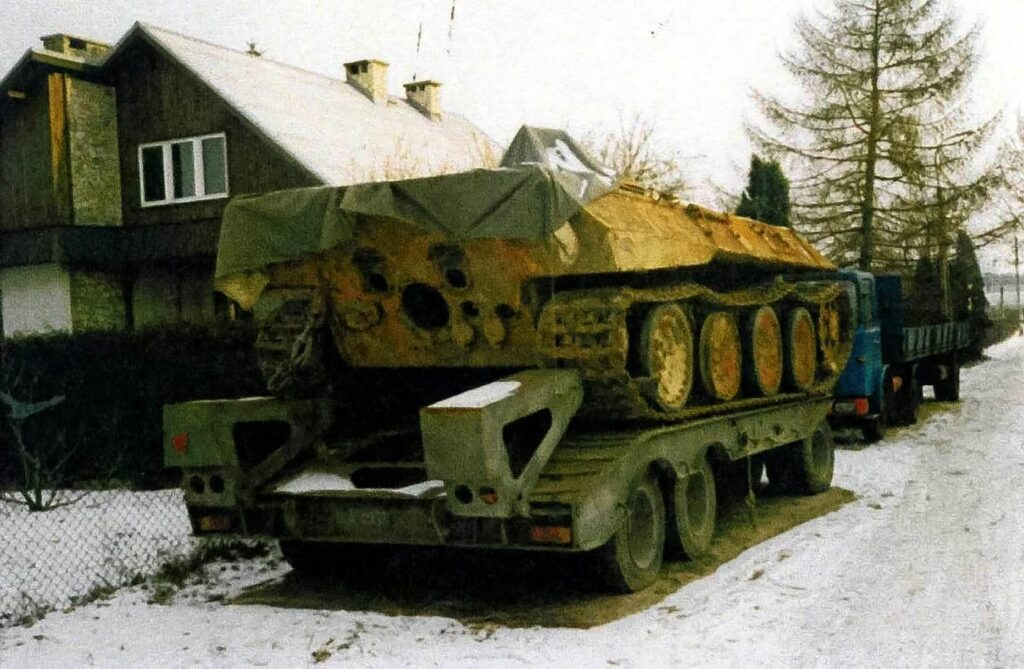
Everything changed drastically on November 16, 1990. Bypassing the previous disputes, a private entrepreneur from Wyszków stepped in. Backed by local military history enthusiasts and equipped with heavy recovery vehicles borrowed from a nearby army unit, they successfully dragged the remarkably well-preserved hull out of the river.
The Panther was loaded onto a heavy transport trailer, supposedly destined for a scrapyard near Warsaw. Instead, it completely vanished.
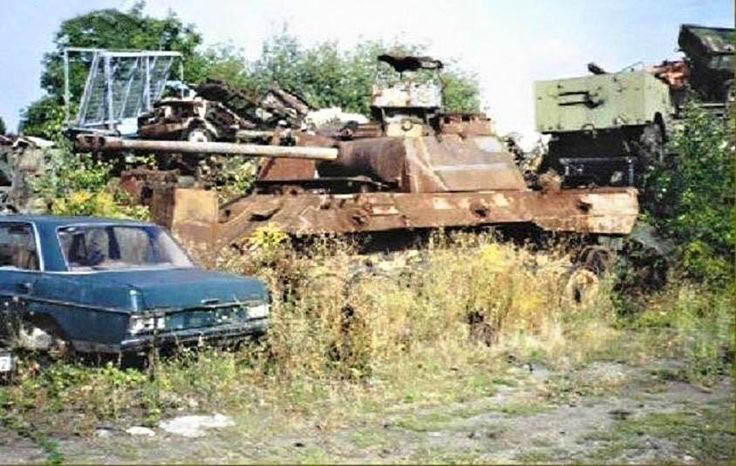
In 1991, behind closed doors, the entrepreneur attempted to secure legal permits to export the tank to Germany. He even offered to donate an American T-48 (SU-57) self-propelled gun to a local Polish museum in exchange. The General Monument Conservator and national museums furiously rejected the request, officially ruling that the Panther’s export would be a “loss to national cultural heritage.”
Somehow, despite the strict federal ban, the Panther was smuggled out of the country.
Resurrected in the USA
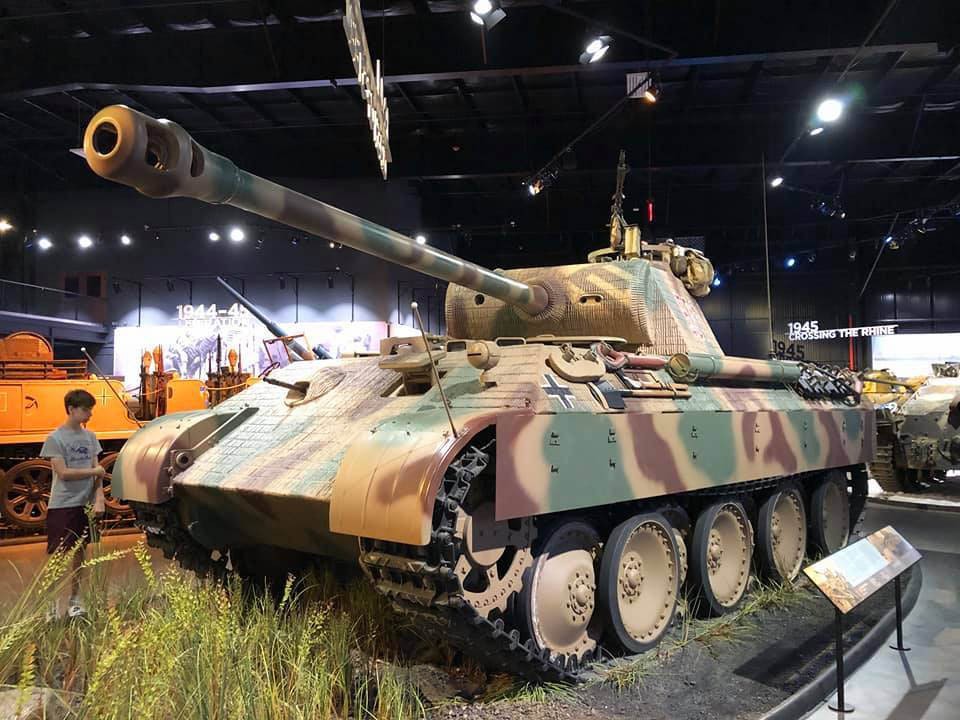
The Czarna Nida Panther eventually resurfaced thousands of miles away in California. It had been secretly acquired by the late Jacques Littlefield, a legendary collector and founder of the Military Vehicle Technology Foundation (MVTF).
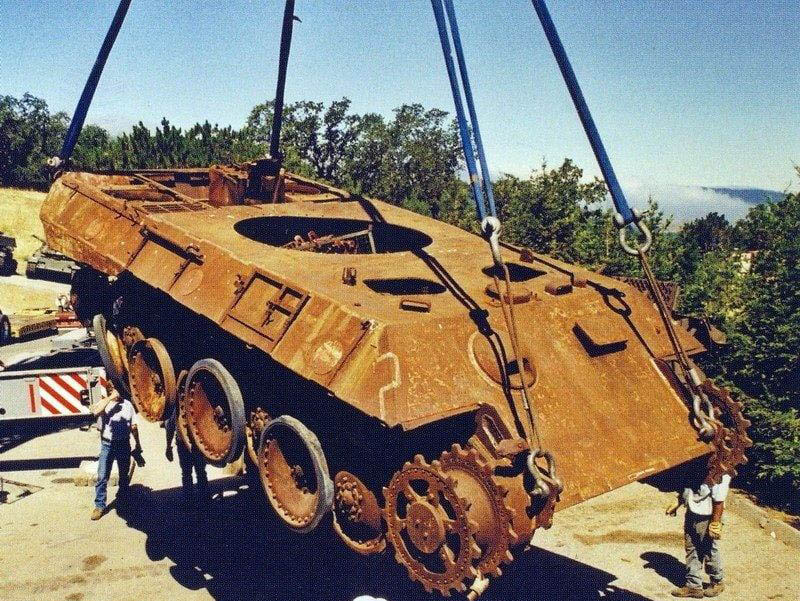
Sparing no expense, Littlefield poured an astonishing $2 million into the machine’s resurrection. His team meticulously reconstructed the missing turret from scratch and sourced an original German Maybach engine to bring the beast back to life.
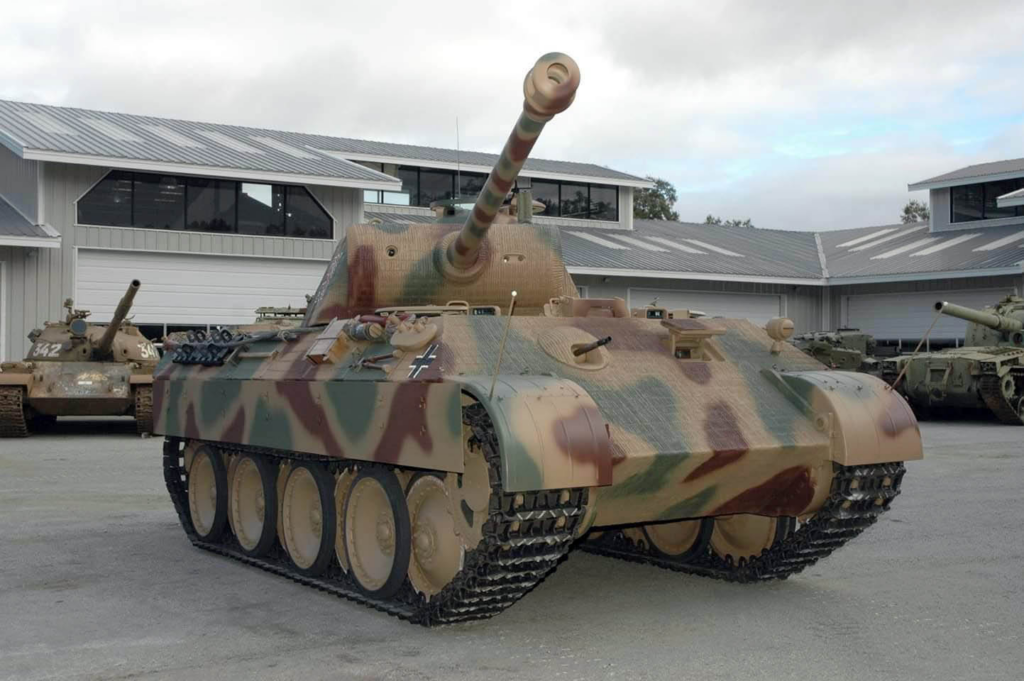
Today, the stolen piece of Polish river history rests safely across the Atlantic, serving as a crown jewel in the collection of the American Heritage Museum in Hudson, Massachusetts.