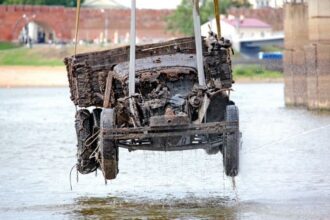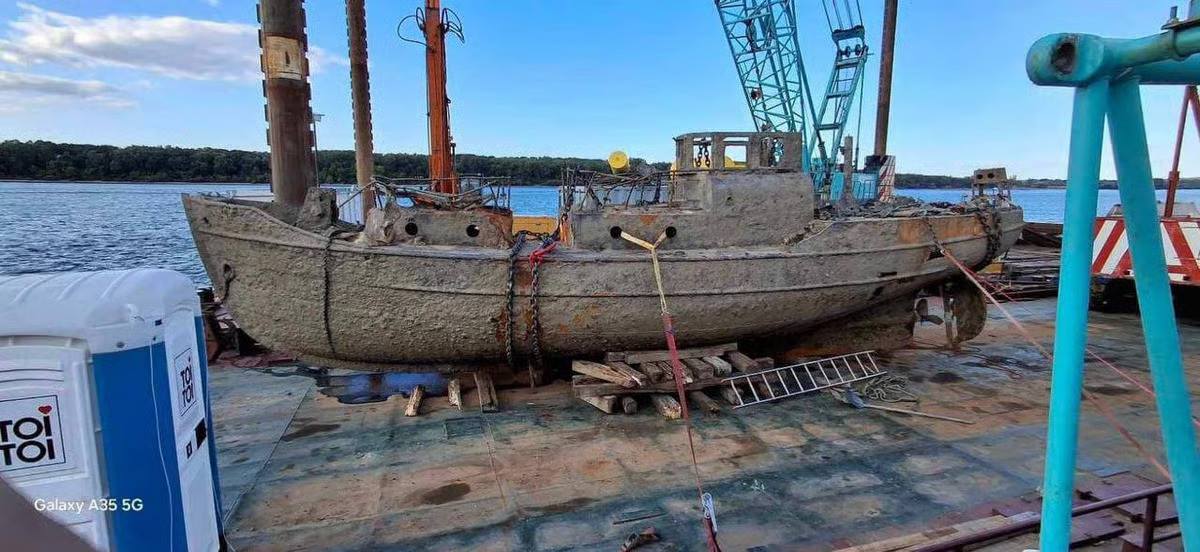
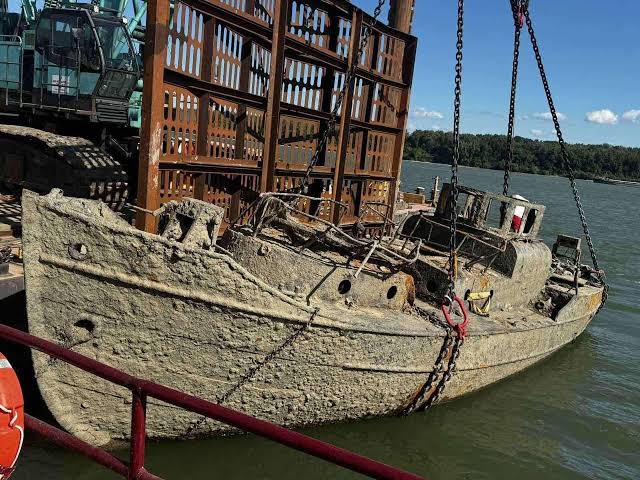
Eighty years after resting on the riverbed, history is finally coming back to the surface. The government of Serbia has launched a massive, large-scale salvage project to raise and remove a fleet of Nazi warships scuttled in the Danube River during the final days of World War II. Contractors have already successfully brought the first of dozens of armed German patrol boats out of the water.
Historical Background: The Trap at the Iron Gates
In August 1944, as German forces retreated rapidly from the Red Army across Eastern Europe, Russian troops advanced to the Serbian-Romanian border and seized the Iron Gates of the Danube near Prahovo.
This strategic maneuver cut off the sole escape route for the Kriegsmarine’s Kampfgruppe Zieb—a massive flotilla consisting of 200 German patrol vessels and support boats. Facing the imminent danger of capture, the flotilla commander issued a drastic order: scuttle all 200 hulls directly into the Danube.
“When these Nazi boats were sent to rest on the bottom, they partially blocked the Danube, temporarily delaying the advance of Soviet riverine forces.”
While the Soviet military cleared a portion of the wrecks later that year and repurposed others, the vast majority remained trapped underwater for eight decades, embedded deeply in sediment.
Why Now? Navigation Hazards and Unexploded Ordnance
Over the years, the sunken fleet has posed a persistent threat to modern commercial shipping on the Danube. During recent summer droughts and severe low-water events, the wrecks have even resurfaced into public view.
To ensure long-term navigation safety, Serbia has initiated a comprehensive, multi-phase removal project:
- Phase One: Removal of the first batch of wrecks (starting with 22 boats following last week’s initial crane lift).
- Phase Two: An additional 80 wrecks will be targeted for extraction.
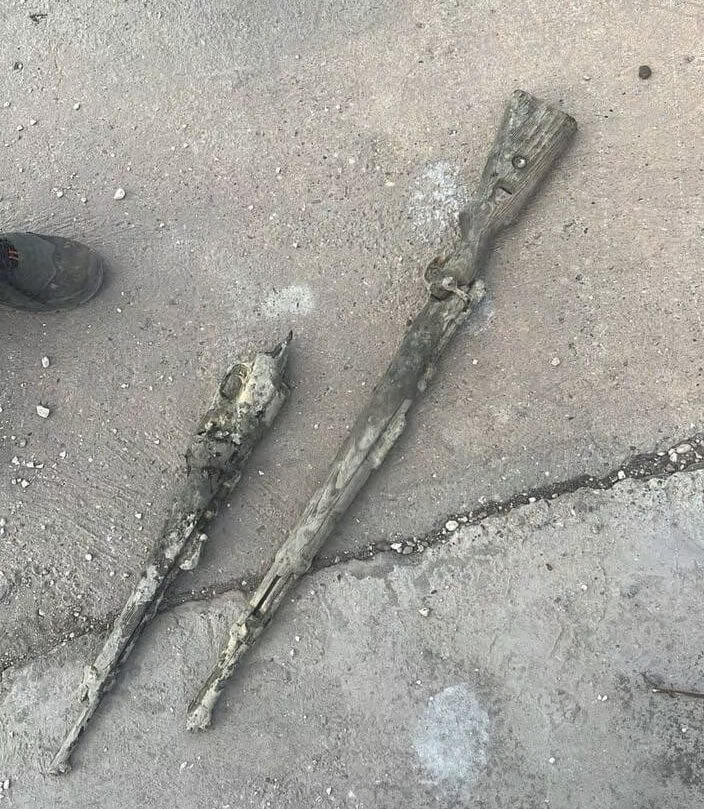
“Every ship that is taken out undergoes a detailed inspection with the dismantling of the explosive devices that remained in them. It lasts ten days. When this process is completed, we will allow the public to see part of the sunken Nazi fleet, which has been making navigation on this part of the Danube difficult for eight decades.” — Goran Vesić, Serbian Minister of Construction, Transportation and Infrastructure
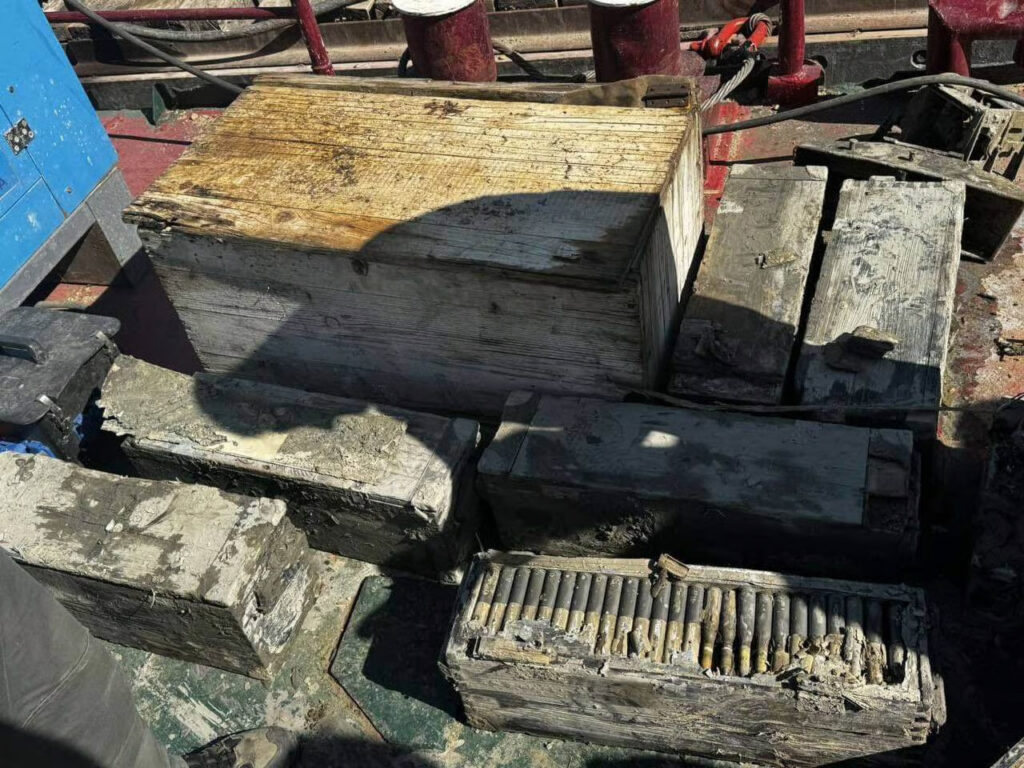
A Dangerous Legacy: Unexploded Munitions
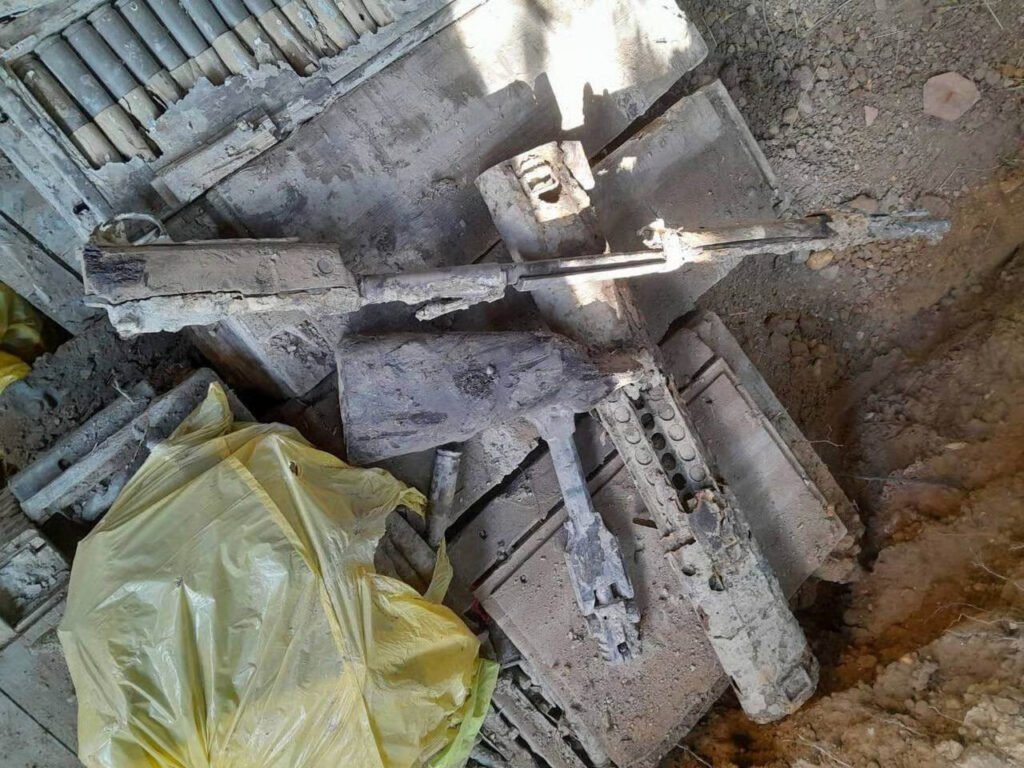
Photographs of the newly recovered vessel highlight the severe hidden dangers of these 80-year-old wrecks. The patrol boat was hoisted out of the water carrying intact wooden cases filled with cannon shells and other active munitions, proving that the salvage operation requires extreme technical precision and caution.