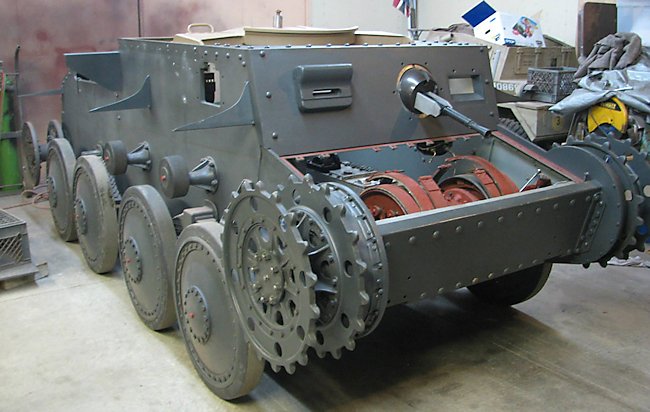
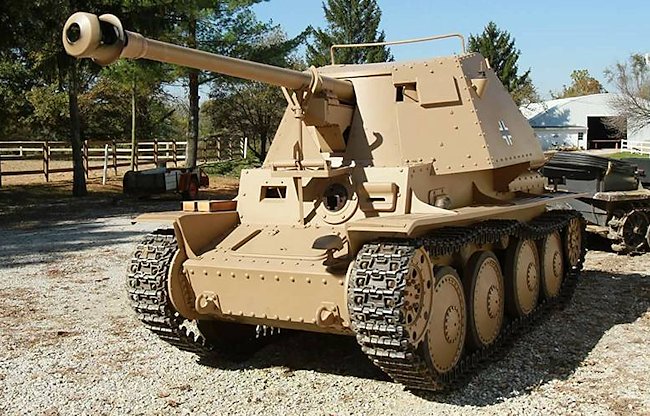
A masterclass in historic vehicle restoration. Meet the fully working, meticulously crafted replica of the German Jagdpanzer Marder III Ausf. H (7.5 cm PaK 40/3, Sd.Kfz. 138). Built around an authentic World War II chassis, this impressive machine bridges the gap between history and modern preservation, bringing a legendary piece of armored warfare back to life.
Where to See This Working Marder III Replica
While the vehicle is part of a private collection and is not permanently open to the public, military history enthusiasts still have a chance to experience it in person.
- Builders: Crafted by the Bob Graebe Collection
- Location: Just outside St. Louis, Missouri, USA
- Public Appearances: Frequently showcased at historical military vehicle events across the United States.
Technical Specifications & History of the Marder III Ausf. H
The original WWII vehicle was built on the chassis of the Czechoslovakian-designed Panzer 38(t) tank. The Ausf. H variant introduced a distinct configuration compared to its predecessors.
“Unlike the previous Marder III that used the captured Soviet 76.2 mm field gun, the fighting compartment was in the center of the vehicle and not at the rear. This enabled the gun crew to stay low in the vehicle, while large side armor provided additional protection.”
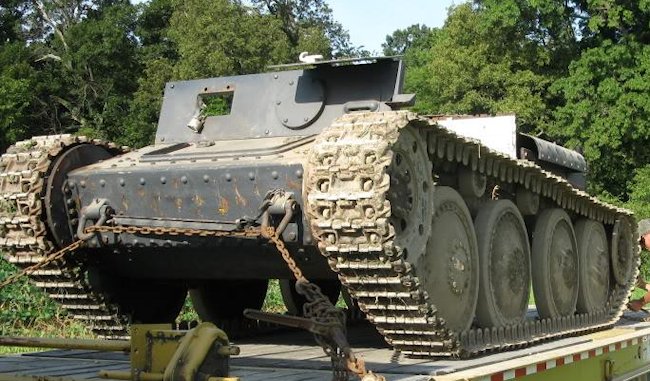
Key Performance & Design Stats:
- Official Designation: 7.5 cm PaK 40/3 auf Panzerkampfwagen 38(t) Ausf. H, Sd.Kfz. 138
- Main Armament: Original WWII German 7.5 cm PaK 40/3 anti-tank gun and original gun mount
- Secondary Armament: Hull-mounted 7.92 mm MG 37(t) machine gun
- Armor Thickness: Ranged from 10 mm to 50 mm (open top and rear)
- Engine (Original): Praga Typ TNHPS/II 6-cylinder petrol (148 hp) / Note: The replica uses a Scandia-vabis 1664 engine for modern reliability and parts availability.
- Top Speed: 42 km/h (26 mph) on roads
- Operational Range: 210 km (130 miles)
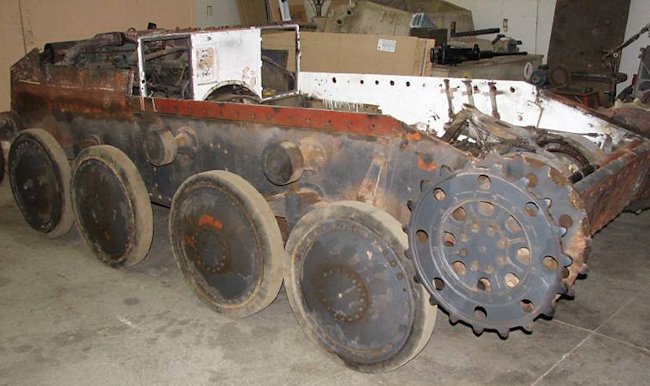
The Fascinating Backstory of the Chassis
The journey of the chassis itself is a remarkable historical puzzle. Its official hull number is 90150:
- Swedish Roots: It began as a Swedish-licensed copy of the Panzer 38(t) tank, known as the Stridsvagn M/41 S1.
- Artillery Conversion: Later converted into a Stormartillerivagn M/43 self-propelled gun.
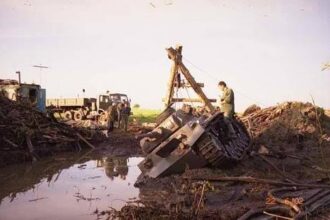
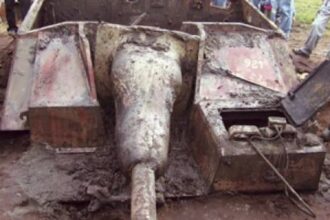
- Belgian Museum Era: Purchased by Bob Graebe from the closed Arlon Victory Museum in the Belgian Ardennes, where it had been modified into a Munitionschlepper (ammunition carrier) for a Battle of the Bulge diorama.
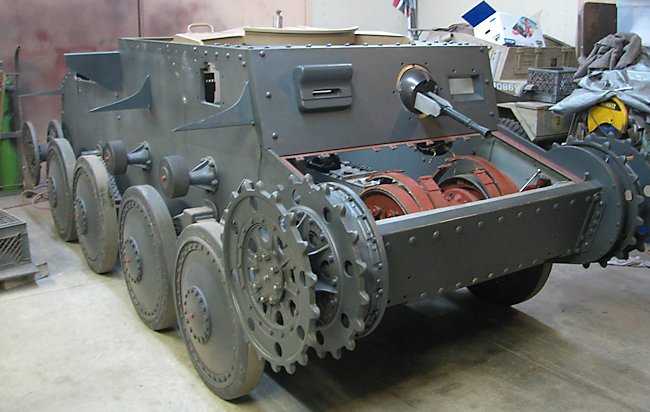
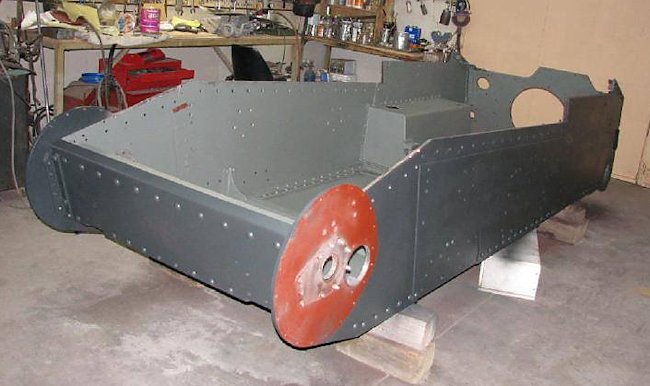
- The Marder Transition: After evaluating a Swedish M/41 turret layout, the team committed fully to building an accurate Marder III Ausf. H replica.
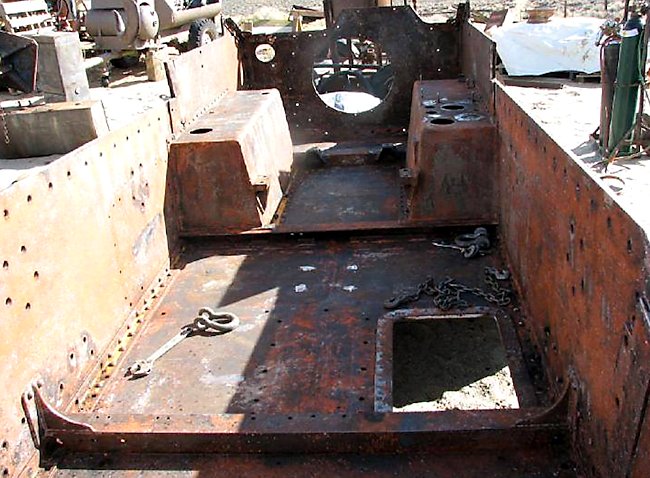
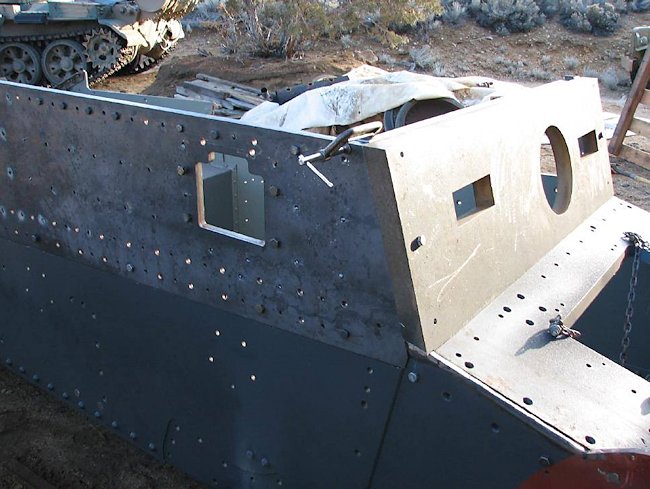
“All of the armor below the mudguards is original to the Swedish WWII chassis. The fighting compartment and upper driving compartment are newly fabricated out of the correct thickness steel to match the exact dimensions of the original AFV.”
Evolution of the Marder Series
The Marder family evolved out of an urgent need for effective anti-tank solutions (Panzerjäger) on the Eastern Front:
- Marder I: Simple stop-gap conversion using captured Soviet 7.62 cm guns on French-built tractor chassis (344 built in 1942).
- Marder II: Fitted with the indigenous 7.5 cm PaK 40/3 on PzKpfw II chassis (418 built).
- Marder III: A comprehensive redesign utilizing the reliable Panzer 38(t) chassis, shifting the engine forward and lowering the fighting compartment for superior crew protection (799 produced).
Production of these improvised tank destroyers ultimately ceased in May 1944 in favor of the purpose-built, highly successful Hetzer Jagdpanzer.