During routine construction at an elementary school in a Tokyo suburb, crews made a remarkable and hazardous historical discovery.
Moreover, they uncovered a massive, long-buried cache of World War II-era military weaponry, Forgotten Arsenal.
What began as standard drilling work quickly turned into a major excavation effort.
As hundreds of decayed firearms, blades, and explosives began emerging from the soil, the Forgotten Arsenal was revealed.
The Unearthing at Tanashi Elementary
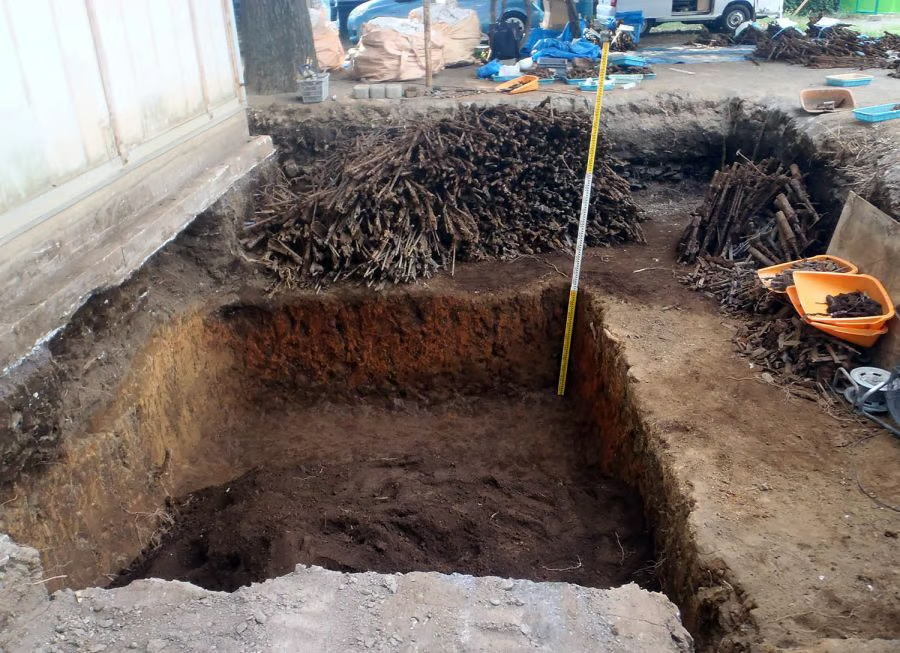
On July 27, workers at Tanashi Elementary School in Nishitokyo began hitting objects at depths of 3 to 7 feet. A Forgotten Arsenal was packed with Imperial Japanese Army weaponry.
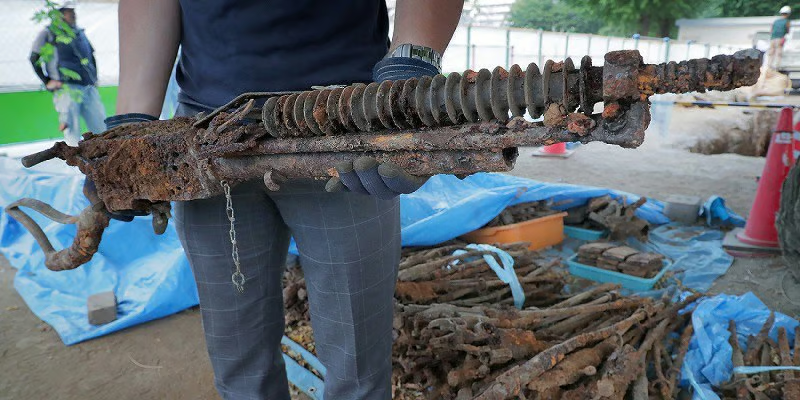
The Nishitokyo Municipal Government has released details of stacks of seriously deteriorated military rifles, machine guns, swords, and grenades found last week during construction at Tanashi Elementary School.
The scale of the discovery is staggering for an urban suburb.
- Firearms: Approximately 1,400 units
- Edged Weapons: Around 1,200 “swords” (primarily long bayonets)
- Explosives: 8 practice grenades and multiple mortars
Identifying the Imperial Arsenal
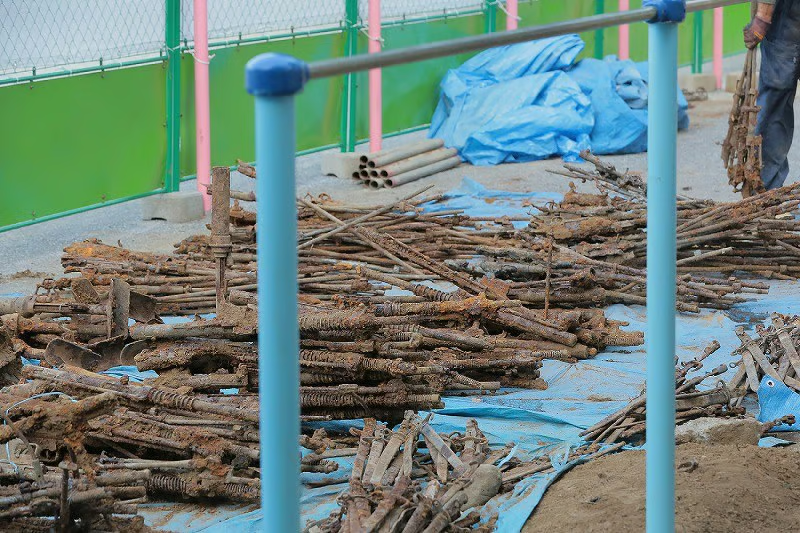
The bulk of the cache was tightly stacked inside a 15×12-foot pit.
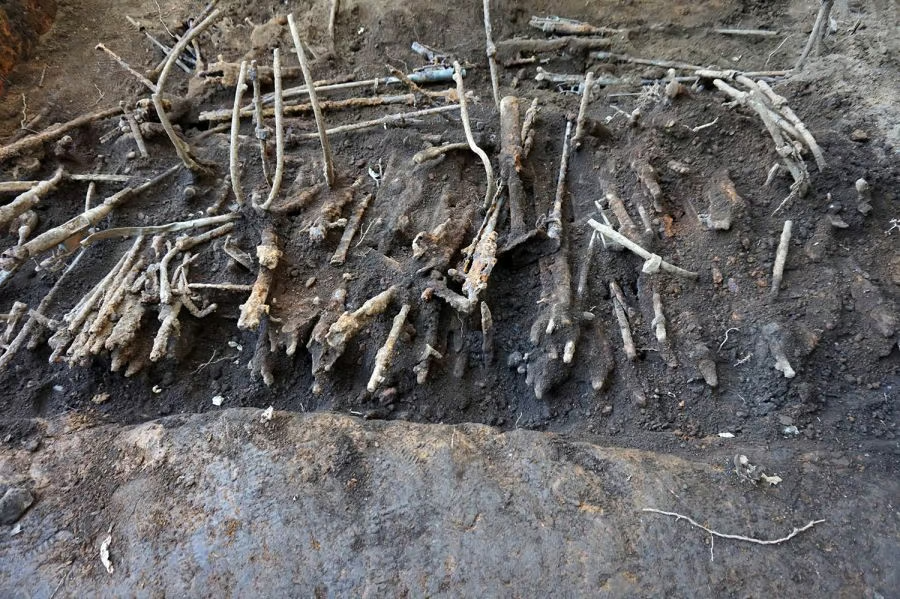
Despite decades of underground deterioration, historians identify pre-1945 Imperial Japanese weaponry from the remains as the Forgotten Arsenal.
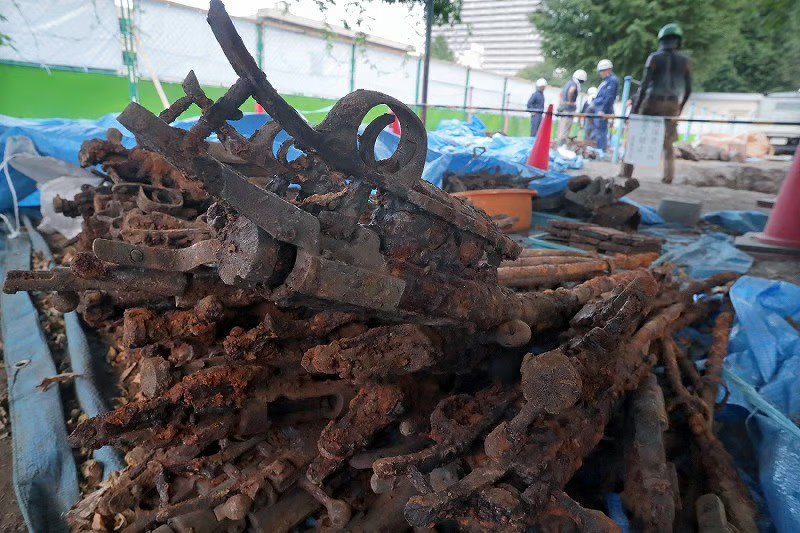
From the images, most of the well-decayed weapons are pre-1945 vintage. Judging by what is left, they appear to be a mix of various models of Arisaka rifles, Type 11 and Type 96 light machine guns, Type 3 heavy machine guns, grenade throwers, and bayonets.
Key photographic details from local coverage highlighted:
- Arisaka Rifles: Distinctive receivers remain visible even though the wooden stocks have long rotted away.
- Bayonets: The hooked quillons visible on the edged weapons match the classic Type 30 Arisaka bayonet. Featuring a 15.5-inch blade, these long bayonets explain why non-experts categorized them as “swords.”
- Knee Mortars: Japanese Type 89 grenade dischargers were spotted standing in the center and sides of the pit.
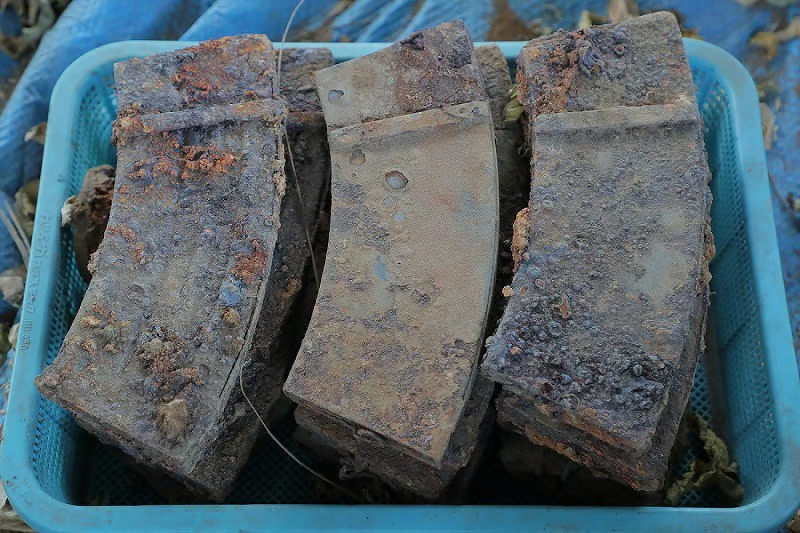
- Machine Guns: Distinctive curved top-fed magazines (likely for Type 96 LMGs) and short barrel springs characteristic of Type 2/3 machine guns were clearly identifiable.
Safety Operations and Historical Context
Both local police and the Japan Self-Defense Forces were called to the scene to secure the area. Officials categorized many of the items as training guns in initial statements.
To ensure safety, the city government temporarily relocated school operations. Meanwhile, full excavations continue.
While some may be kept as historical pieces, most will be disposed of appropriately based on consultation with the police station according to a release.
While finding unexploded ordnance (UXO) from World War II is not completely unheard of in Japan, a cache of this size is extraordinarily rare.
While finding unexploded ordnance (UXO) from World War II is not completely unheard of in Japan, a cache of this size is extraordinarily rare.
The Mainichi daily noted that, while unexploded ordnance and WWII-era weapons are still sometimes found in the country, it is rare for weapons used by the now-defunct Imperial Japanese Army to be recovered in such a large quantity at one time.
It remains unclear whether Tanashi Elementary occupied the same site during the war. However, during the 1930s and 1940s, the Imperial Japanese military mandated military training as part of the standard curriculum for students. This likely explains why so many training weapons were buried together at the site near the end of the conflict.