When people think of WWII German armor, iconic heavyweights like the Tiger or Panther usually come to mind. Yet, the real workhorse of the German armored forces from 1940 to mid-1943 was actually the Pz.Kpfw. III (Panzer III).
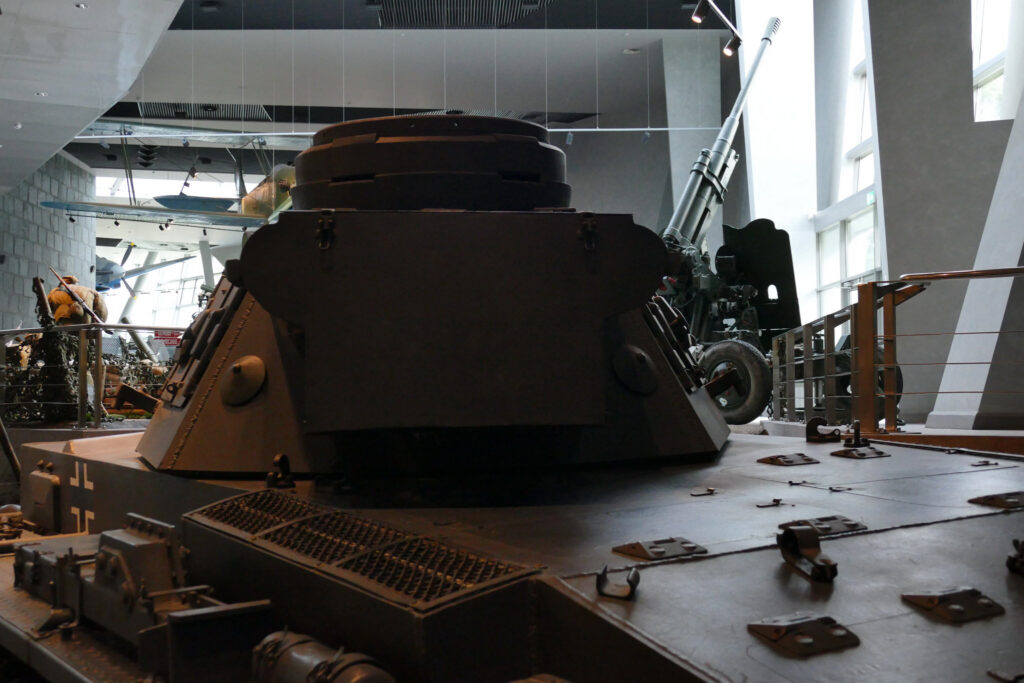
Despite starting the war with fewer than 100 operational units, the Panzer III quickly became the most numerous German medium tank in France and the Soviet invasion. Today, original surviving examples are extraordinarily rare—making the unique specimen at the Belarusian State Museum of the History of the Great Patriotic War in Minsk a truly remarkable sight.
Evolution of a “Racing Tank”
The development of the Panzer III was notoriously complex, undergoing radical design changes and testing three different suspension types (candle-type, bogie, and torsion-bar).
By 1938, the Z.W.38 variant emerged as a high-speed, “racing” tank featuring a new torsion-bar suspension. However, its high mobility came at a cost: the running gear couldn’t handle the extreme stress, and its 10-speed semi-automatic transmission proved unreliable.
This led to the 8.Serie/Z.W., officially designated as the Pz.Kpfw. III Ausf. J:
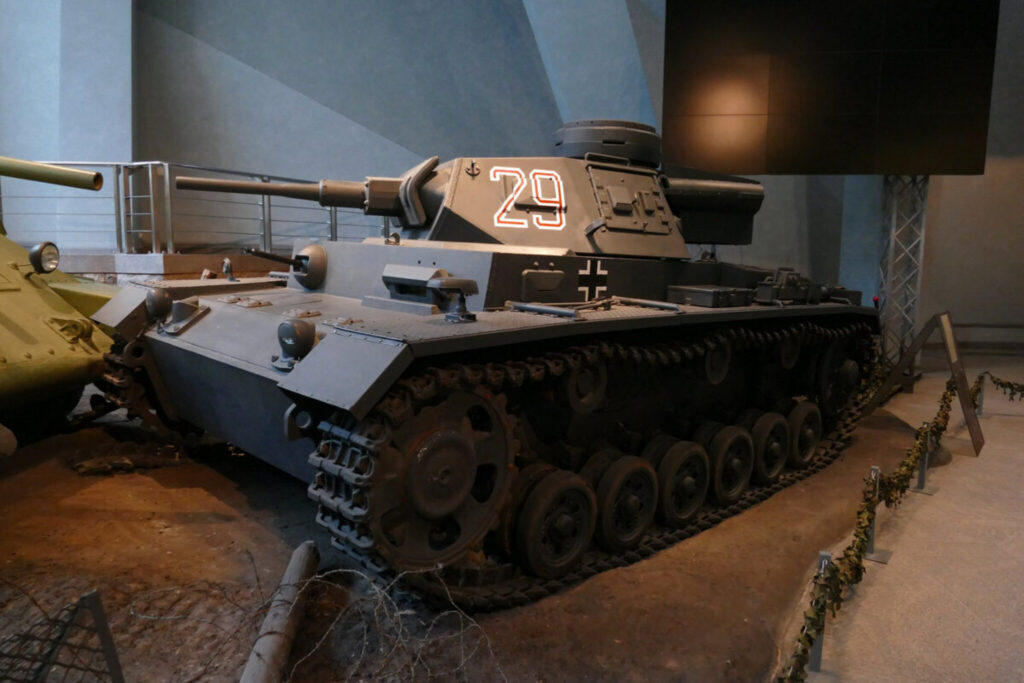
- Balanced Performance: Top speed was capped at a practical 40 km/h.
- Upgraded Armor: Reinforced frontal armor on both hull and turret protected the vehicle against 37–45 mm anti-tank rounds.
- Mass Production: A total of 1,521 Ausf. J units were produced, quickly forming the backbone of German armored units by autumn 1941.
Lost in the Bogs of Sychevka
The downside of being the Wehrmacht’s primary operational tank was an extraordinarily high loss rate. Very few survived the war intact.
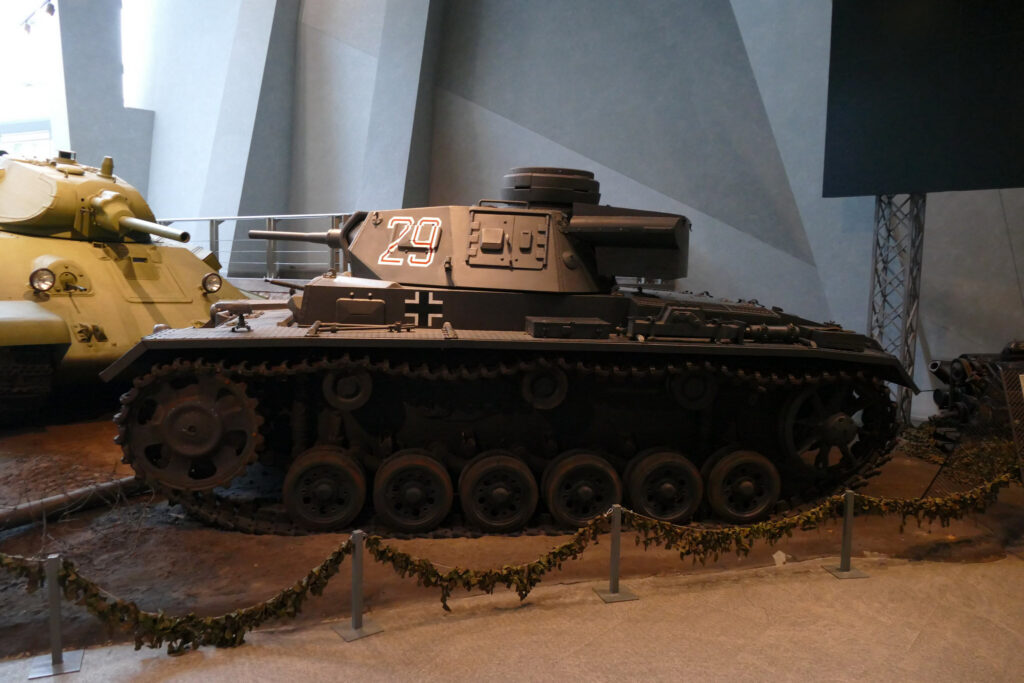
The vehicle now housed in Minsk (serial sequence starting with 6802#) was likely produced by Daimler-Benz in early 1941 and deployed as a replacement tank for the 1st Tank Division.
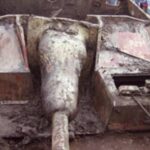
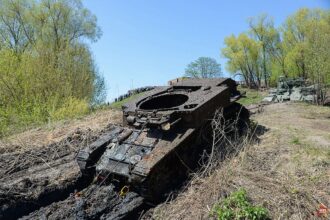
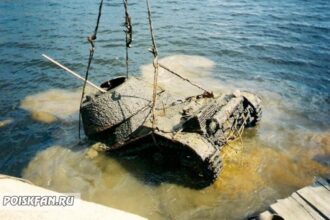
In early October 1941, during fierce combat near Mukovesovo (Sychevka region), the tank charged across open ground, drove into a hidden swamp, and sank out of sight. It remained submerged in the marsh for over 60 years.
A Dramatic Recovery and Split Across Borders
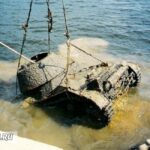
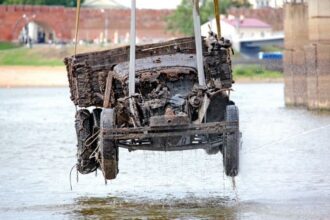
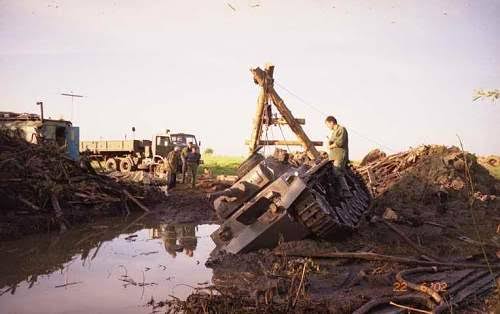
When researchers from the Kubinka Tank Museum excavated the vehicle in the early 2000s, they found the swamp had acted as an incredible natural preservative—even chocolate found inside was still intact!
Since Kubinka already possessed an Ausf. J variant, the decision was made to export the recovered vehicle. However, the tank’s journey across the Russian-Belarusian border became a strange chapter in military recovery history:
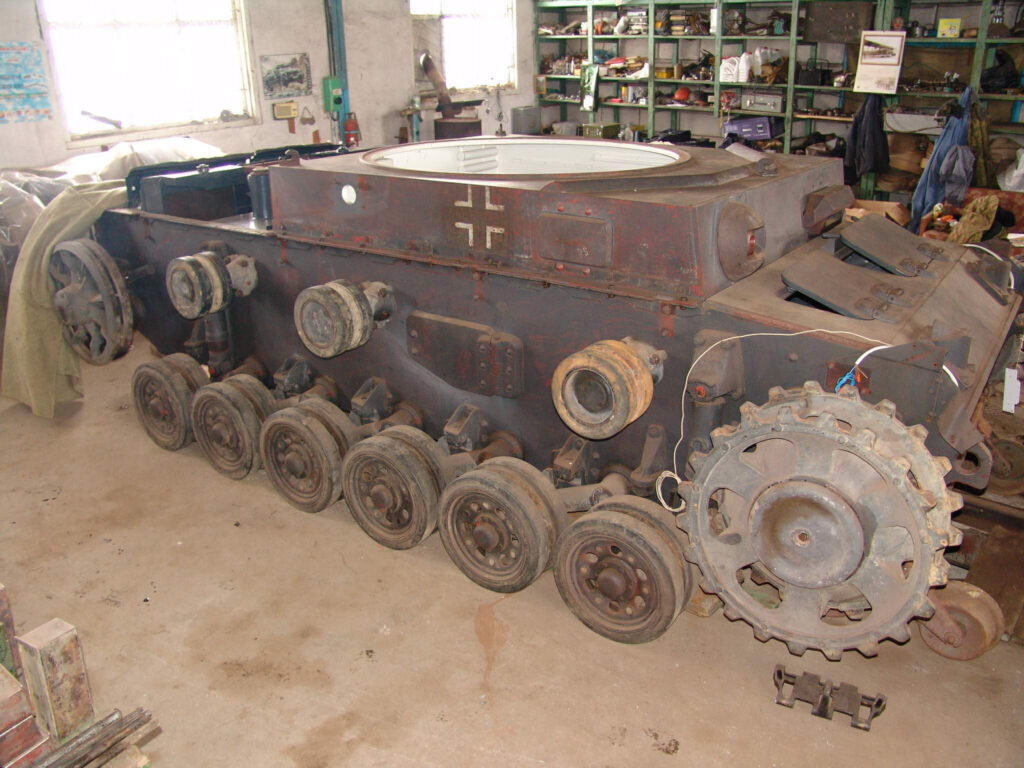
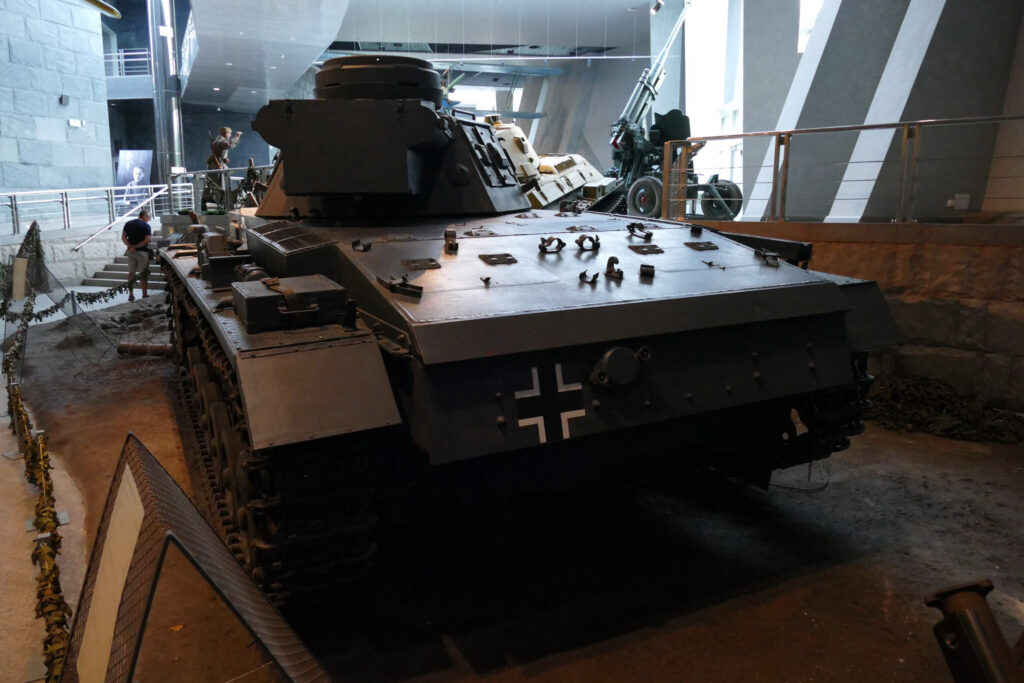
- The Hull: Successfully crossed into Belarus to be restored at the Stalin Line.
- The Turret: Shipped separately, but seized by Russian customs in December 2002 in the Smolensk region. Its ultimate fate remains unknown to this day.
- Fenders & Tracks: Lost during transit.
Reconstruction and Museum Exhibition
Faced with only half a tank, the skilled restoration team at the Stalin Line undertook an incredible rebuilding process:
- Reconstructed Turret: Recreated entirely from scratch with such remarkable accuracy that most visitors cannot distinguish it from an original.
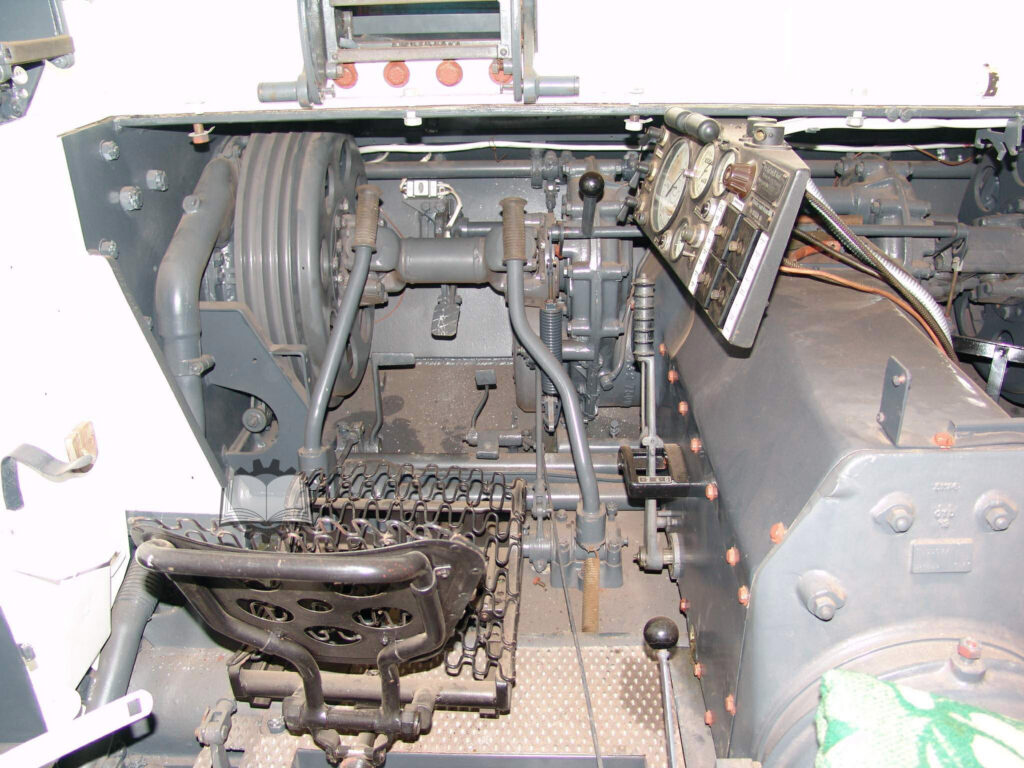
- Interior Preservation: Restored the driver’s compartment, instrument panel, and authentic internal components.
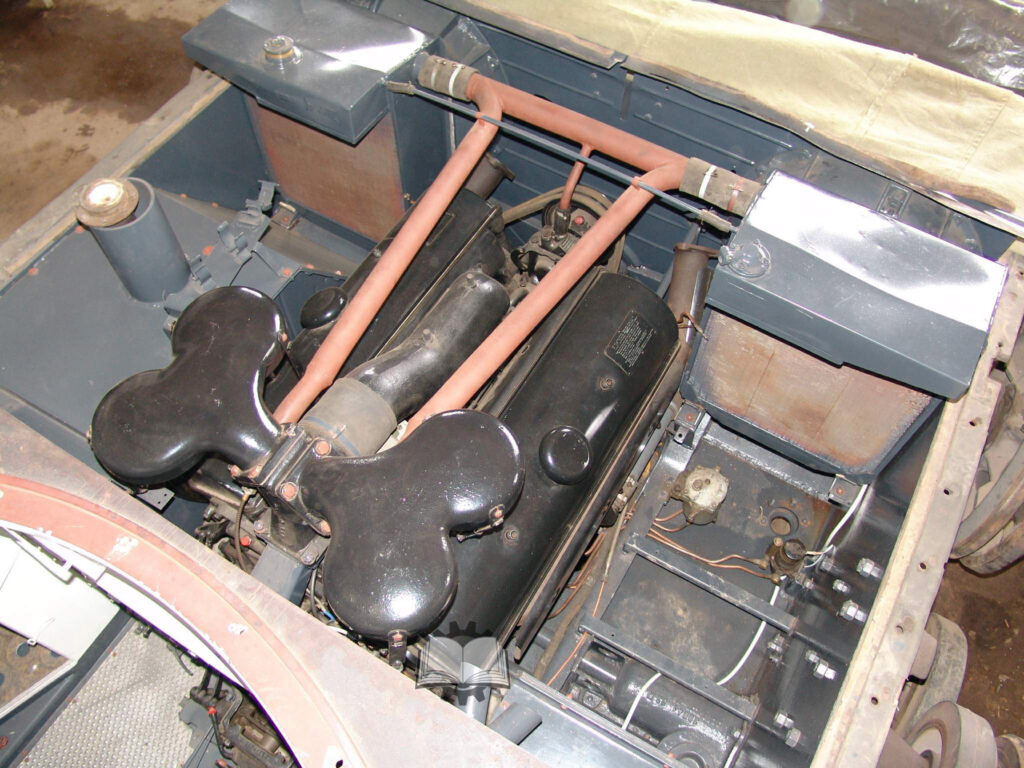
- Engine Display: The tank’s original Maybach HL 120 engine—the most widely produced German tank engine of the war—is displayed right beside the vehicle.
In July 2014, the completed Pz.Kpfw. III Ausf. J took its place as a centerpiece in the diorama of the 1941 battles inside the newly opened museum building in Minsk.