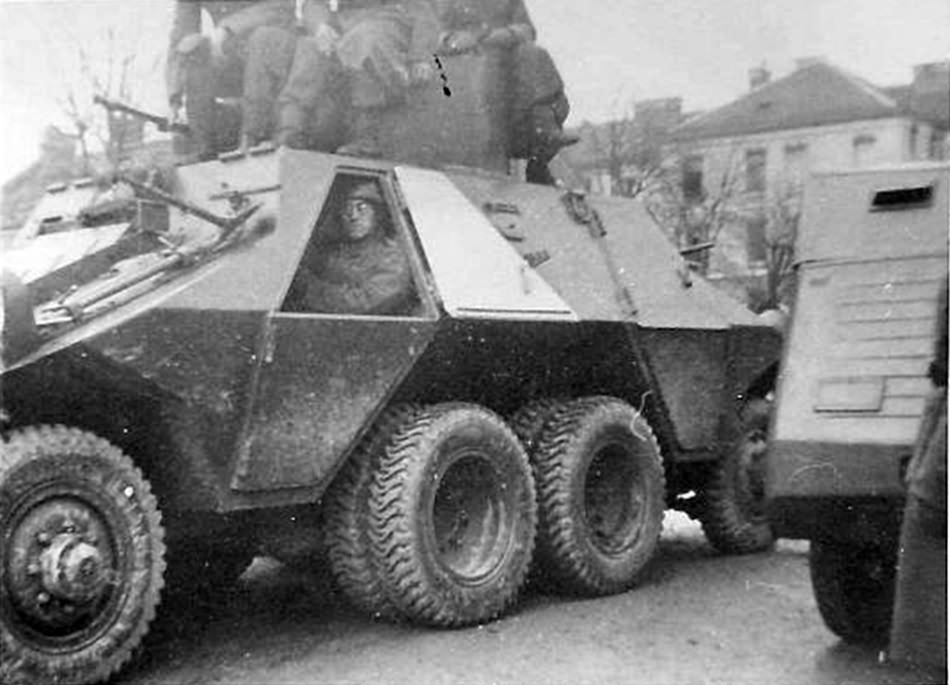
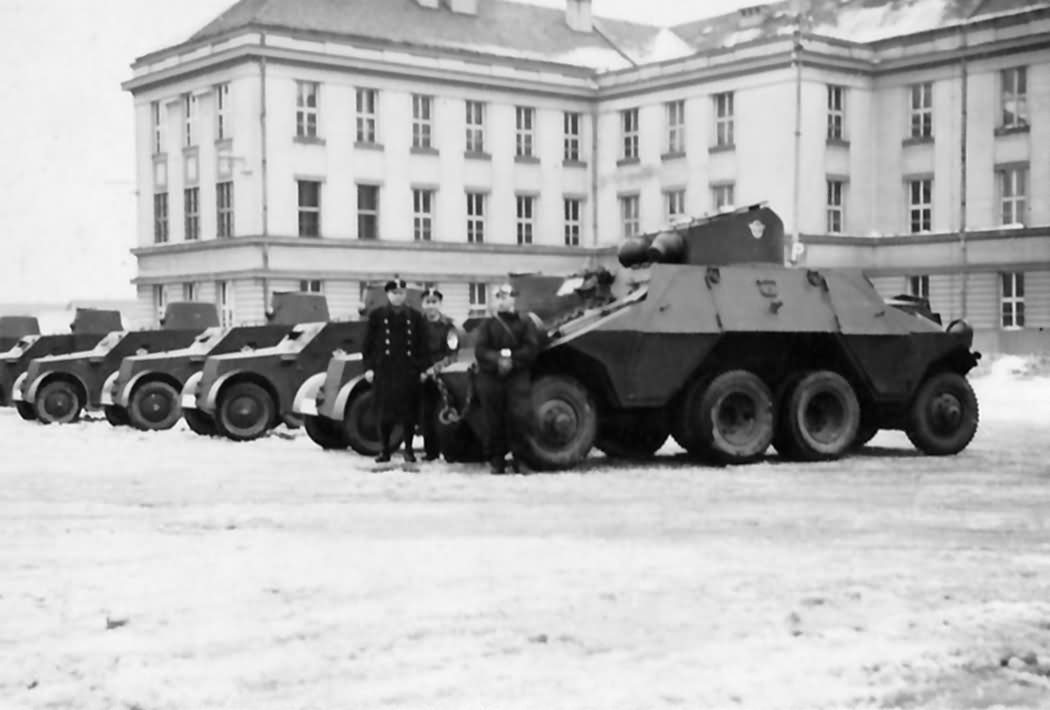
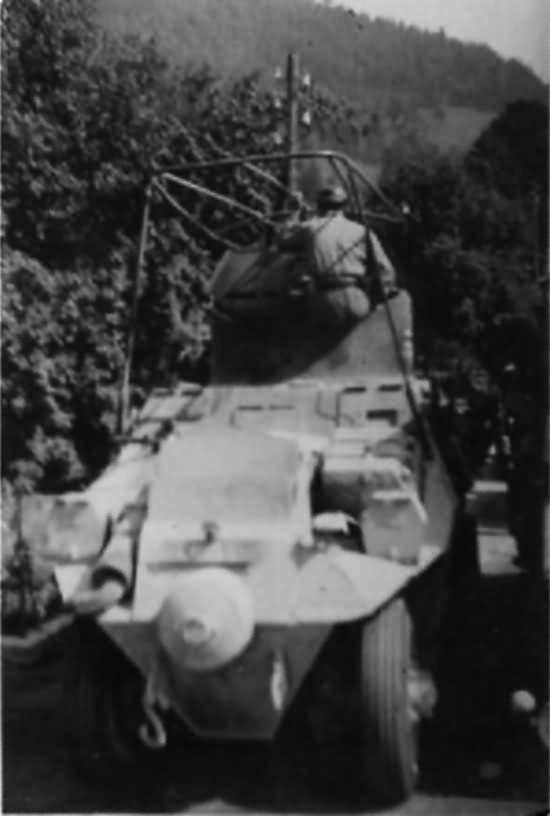
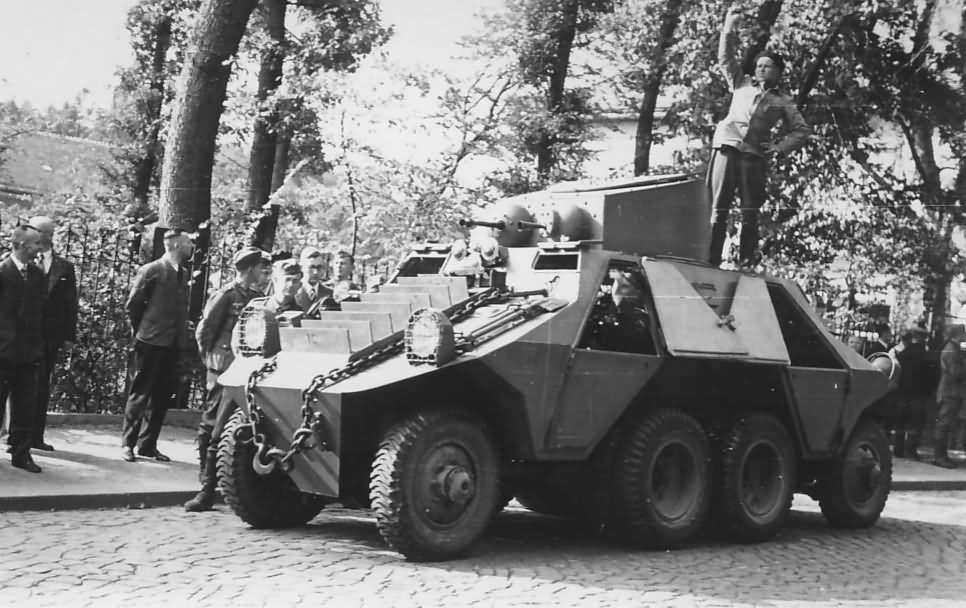
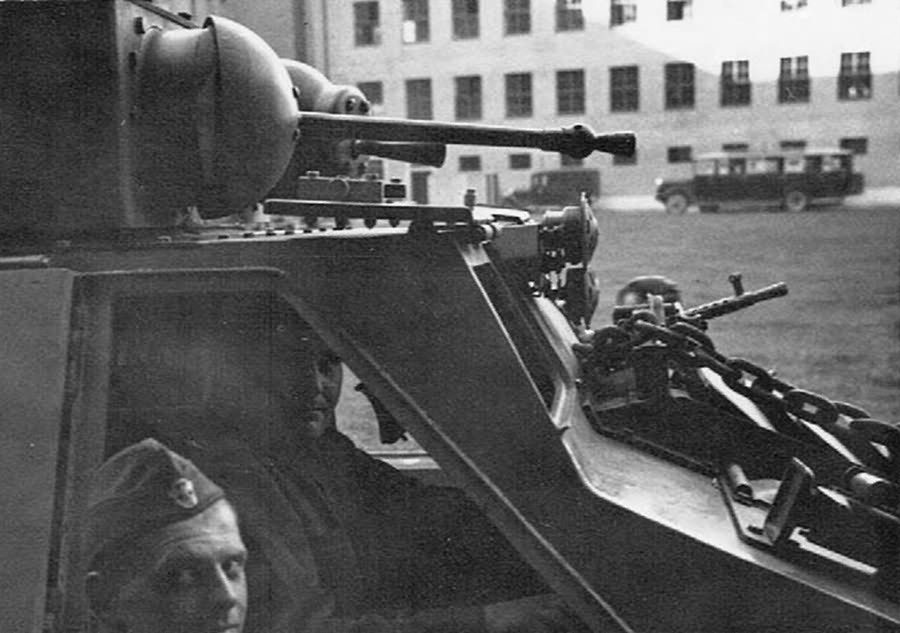
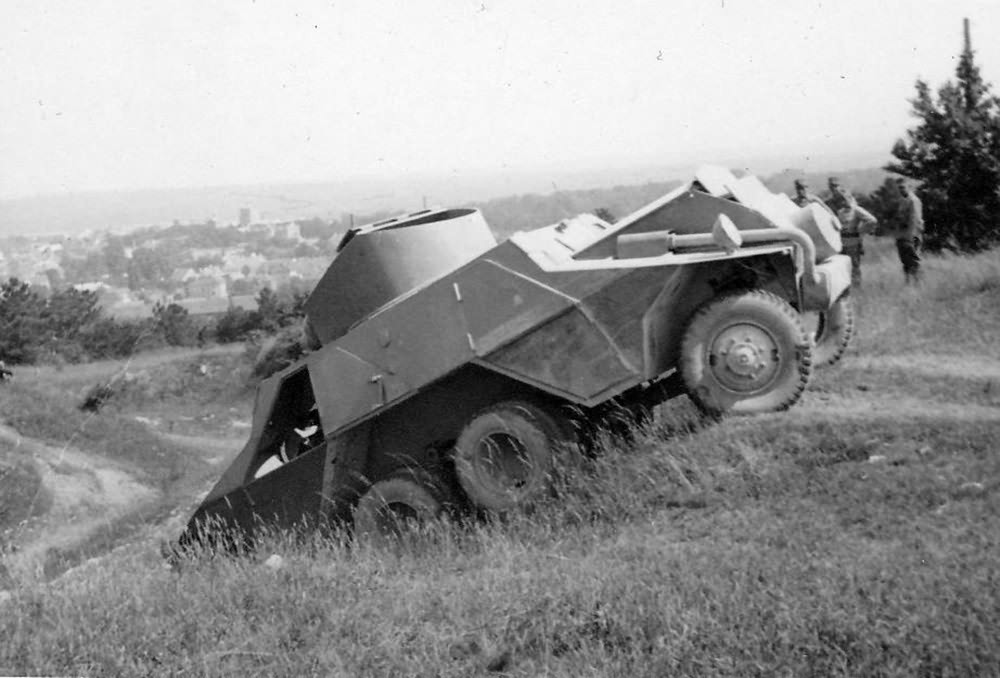
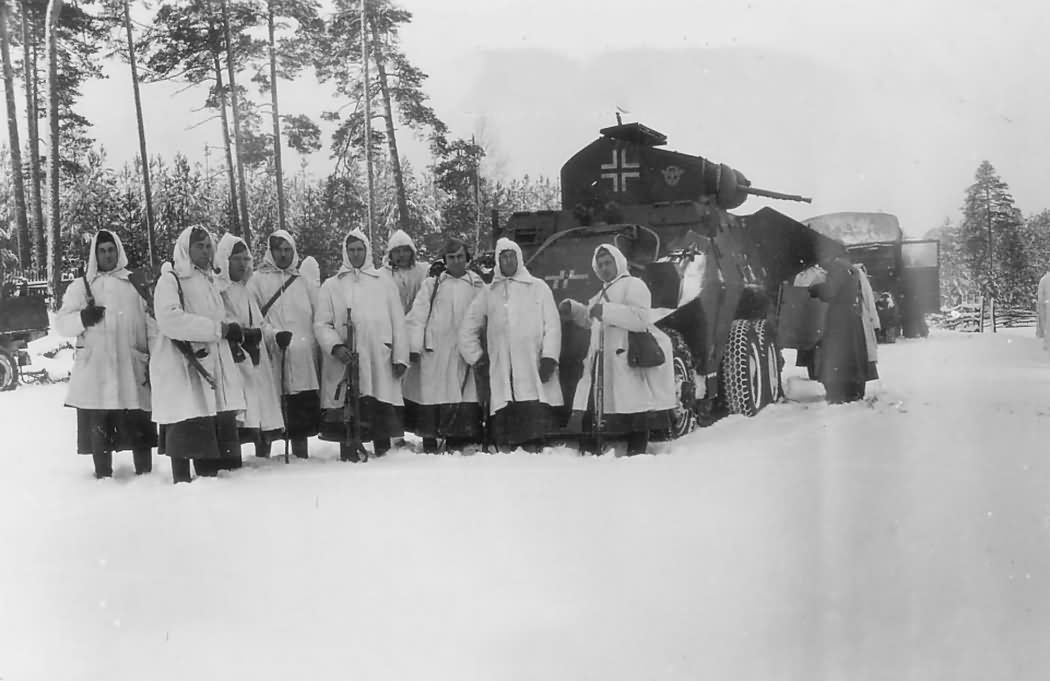
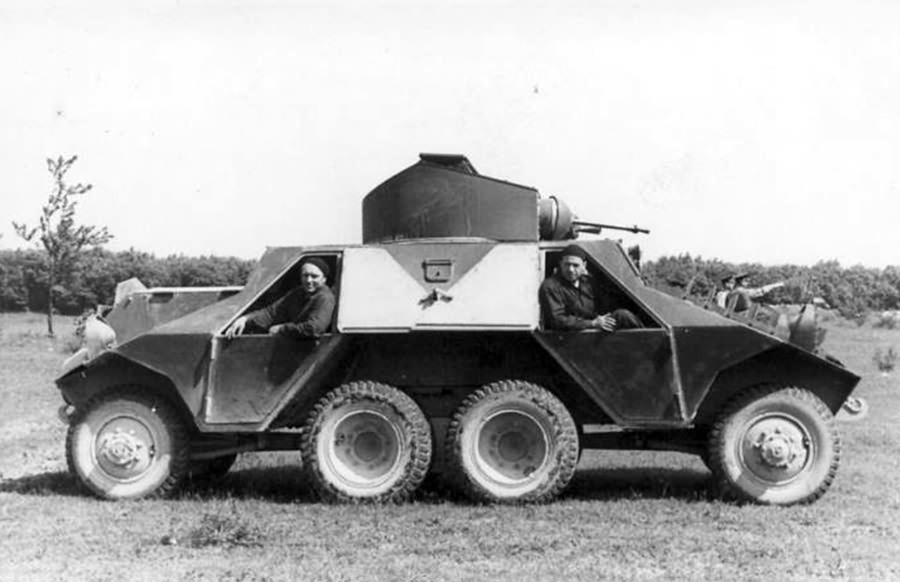
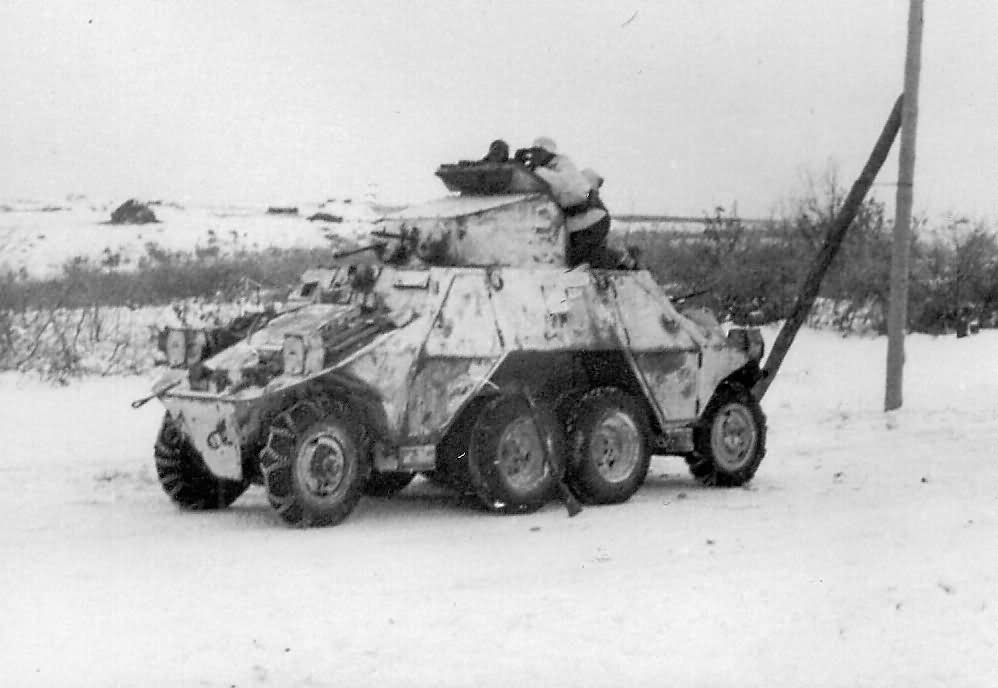
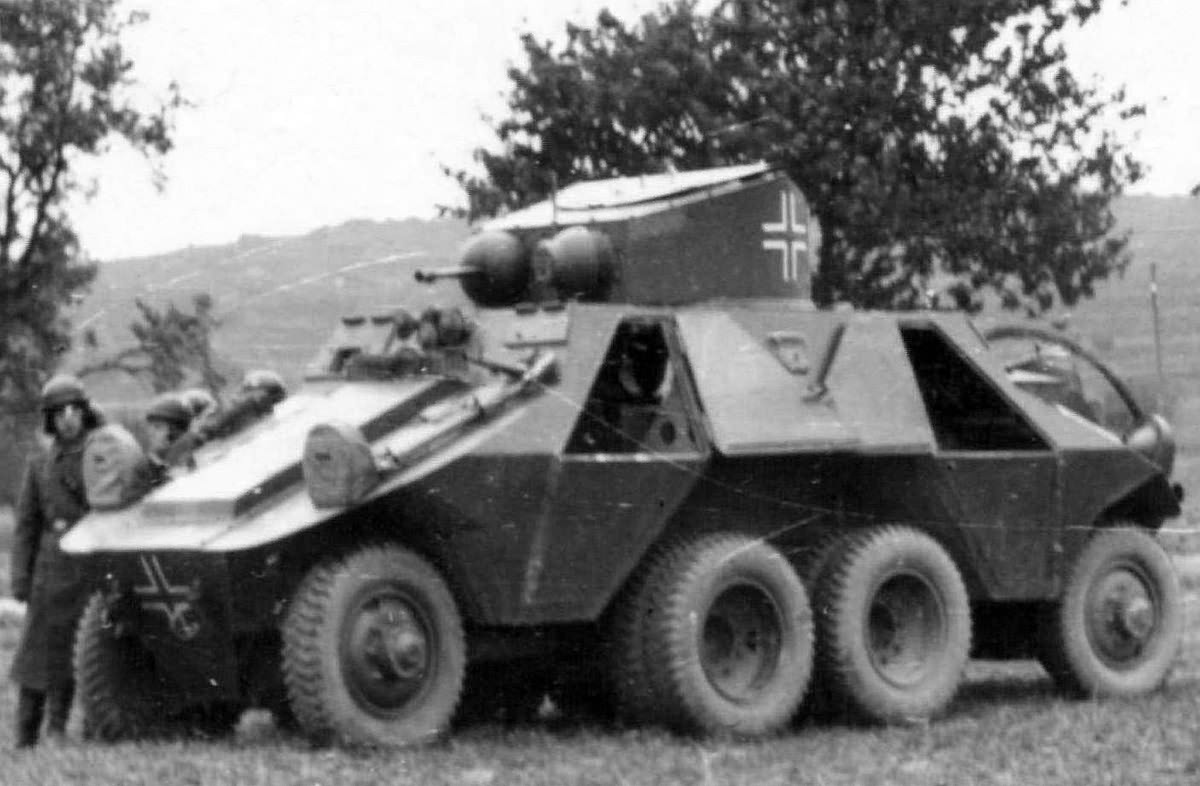
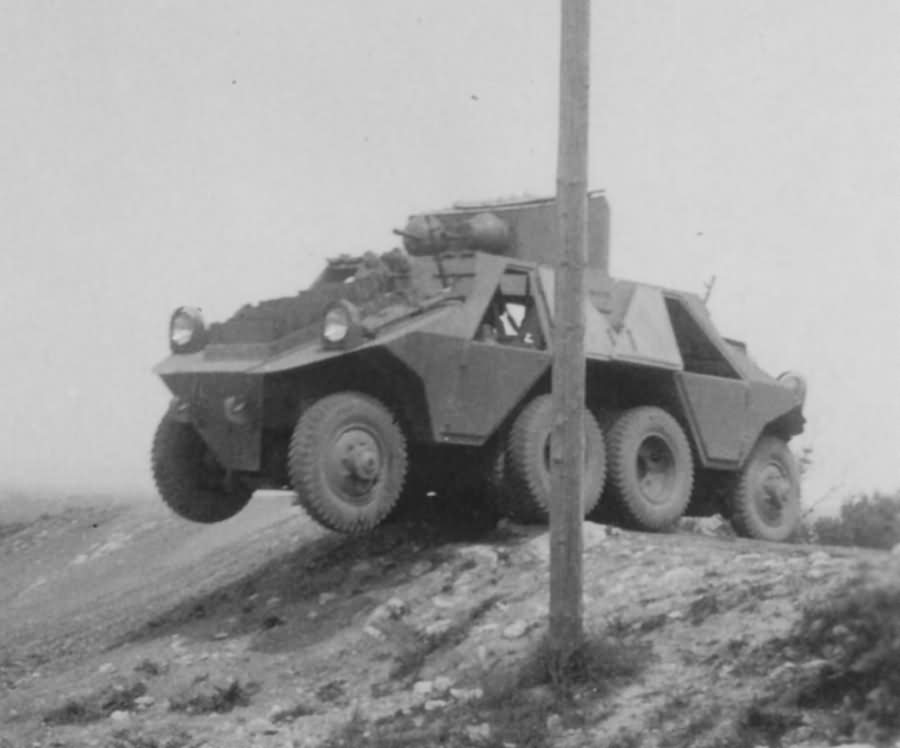
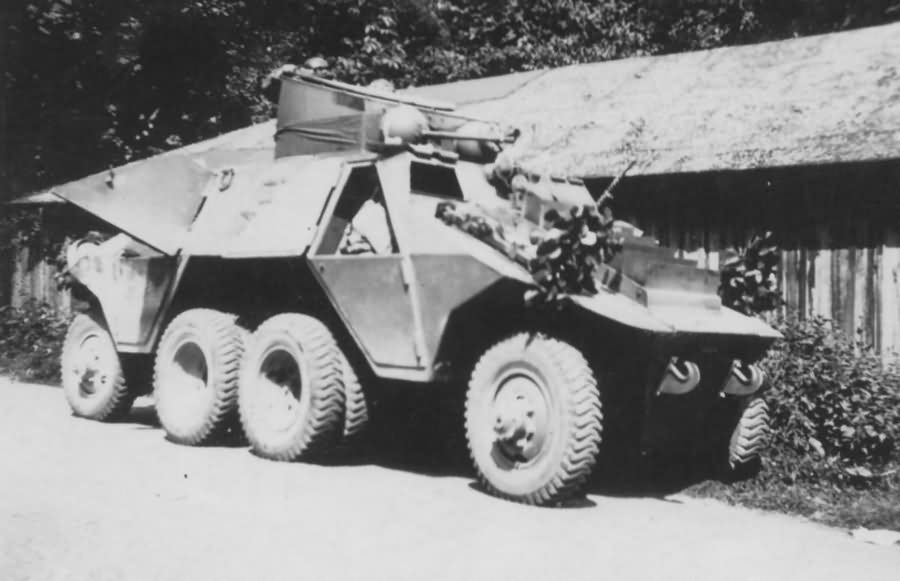
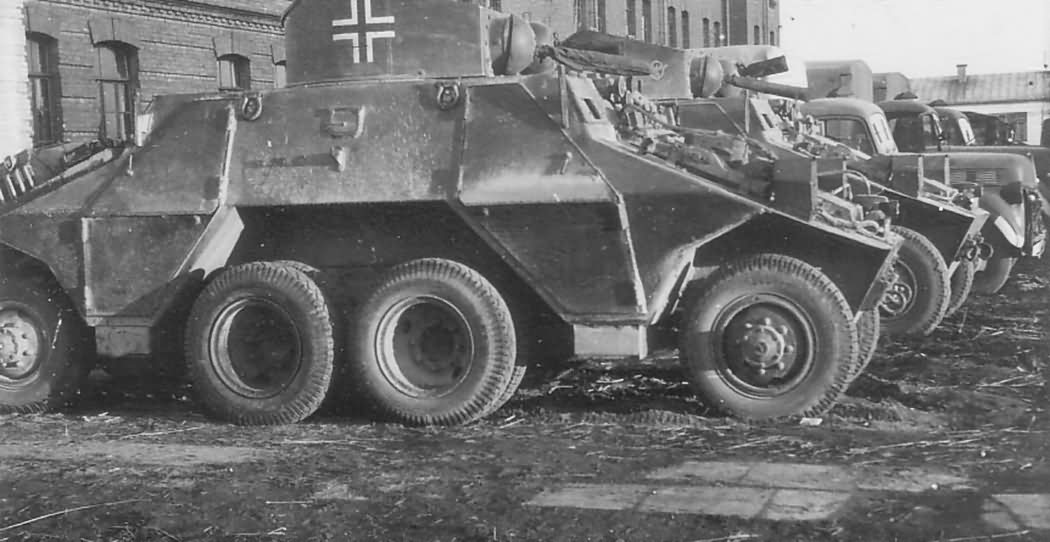
The Steyr ADGZ was a heavy, eight-wheeled armored car developed in Austria during the mid-1930s, standing out as one of the most distinctive and formidable reconnaissance vehicles of its era. Originally designed in 1934 by Austro-Daimler-Puch before production was finalized under the unified Steyr-Daimler-Puch firm, the vehicle was accepted into service by the Austrian Army under the designation M35 Mittlerer Panzerwagen. Engineered primarily for border defense, internal security, and urban combat, the ADGZ incorporated several unconventional features tailored to provide superior tactical mobility in confined environments or rapid retreat scenarios.The defining characteristic of the Steyr ADGZ was its completely symmetrical double-ended design, featuring two dedicated driver positions—one at the front and one at the rear. This configuration allowed the vehicle to operate in either direction at full speed without needing to perform a turning maneuver, making it exceptionally effective during urban ambushes or quick tactical disengagements. To support its massive 12-ton combat weight, the ADGZ was built on an 8×4 wheel chassis where the central four wheels were powered, providing reliable traction on paved roads and light off-road terrain. Power was supplied by a liquid-cooled Austro-Daimler M612 six-cylinder gasoline engine producing 150 horsepower, which enabled the heavy armored car to reach top road speeds of up to 70 kilometers per hour and offered an operational range of around 450 kilometers.In terms of protection and firepower, the vehicle was encased in sloped steel armor plates up to 11 millimeters thick, which provided sufficient defense against small-arms fire and shell splinters. Its offensive capabilities were remarkably potent for a mid-1930s wheeled design. The primary armament was housed in a central rotating turret equipped with a 20 mm autocannon—initially a Solothurn model, later replaced by the German KwK 35—paired with a co-axial machine gun. Additional firepower was provided by two hull-mounted machine guns, positioned at the front and rear ends to maximize coverage. Operational crews typically consisted of six to seven men, including two drivers, gunners, and a commander, reflecting the complex, multi-directional nature of the vehicle.Only 27 units were originally manufactured for the Austrian armed forces and police before the Annexation of Austria (Anschluss) by Nazi Germany in 1938. Following the integration, the German forces absorbed these vehicles into the Wehrmacht and police units as the Polizei-Panzerkampfwagen ADGZ. The ADGZ gained historical notoriety in September 1939 during the opening days of World War II, when Danzig SS police detachments utilized them during the assault on the Polish Post Office in Free City of Danzig. Recognizing the vehicle’s utility for rear-area security, the SS ordered an additional production run of 25 units in 1941, bringing the total built to 52 vehicles. During the war, these secondary batches were heavily deployed along the Eastern Front for anti-partisan operations and rear-guard defense. A few field-modified variants even had their turrets replaced with captured Soviet tank turrets, such as those from the T-26. Ultimately, the Steyr ADGZ remains a fascinating example of pre-war Austrian military engineering, showcasing an innovative dual-driving concept that served across critical historical turning points of World War II