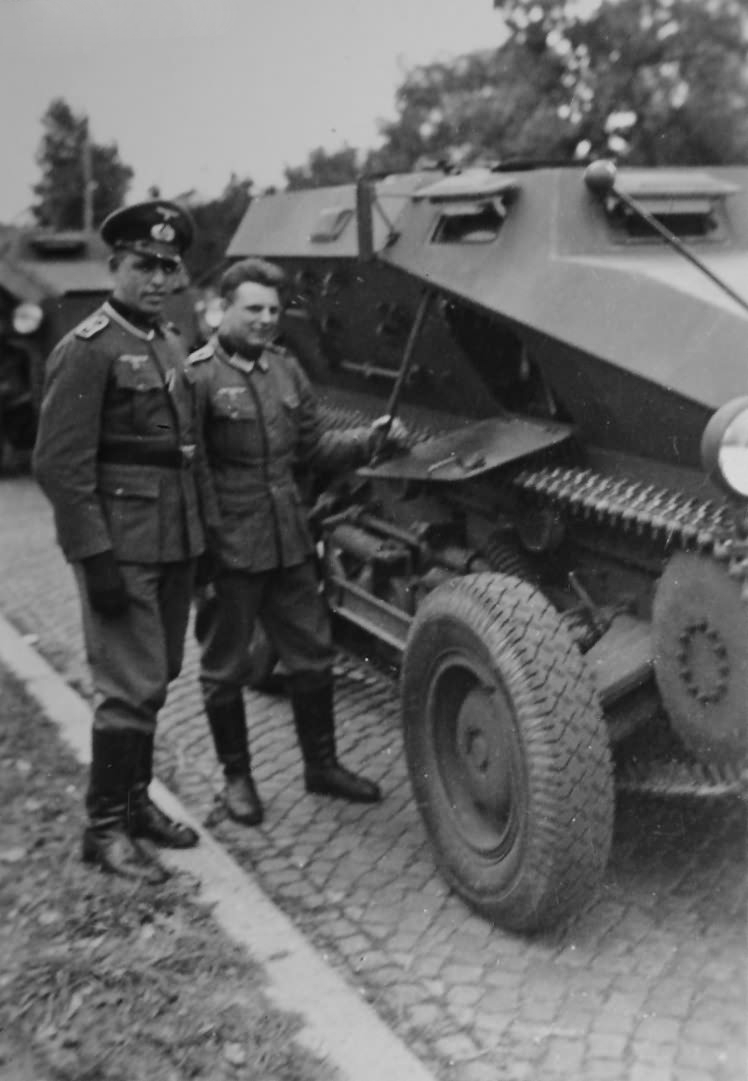
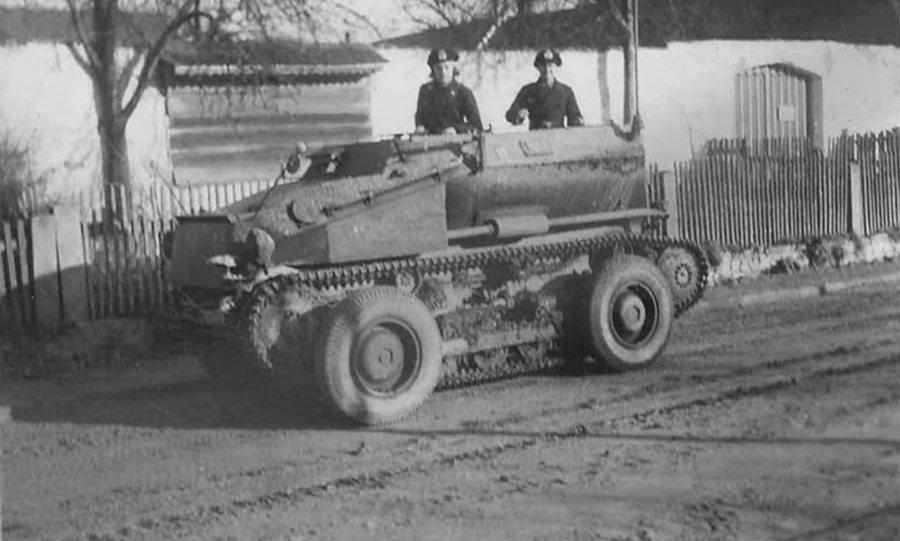
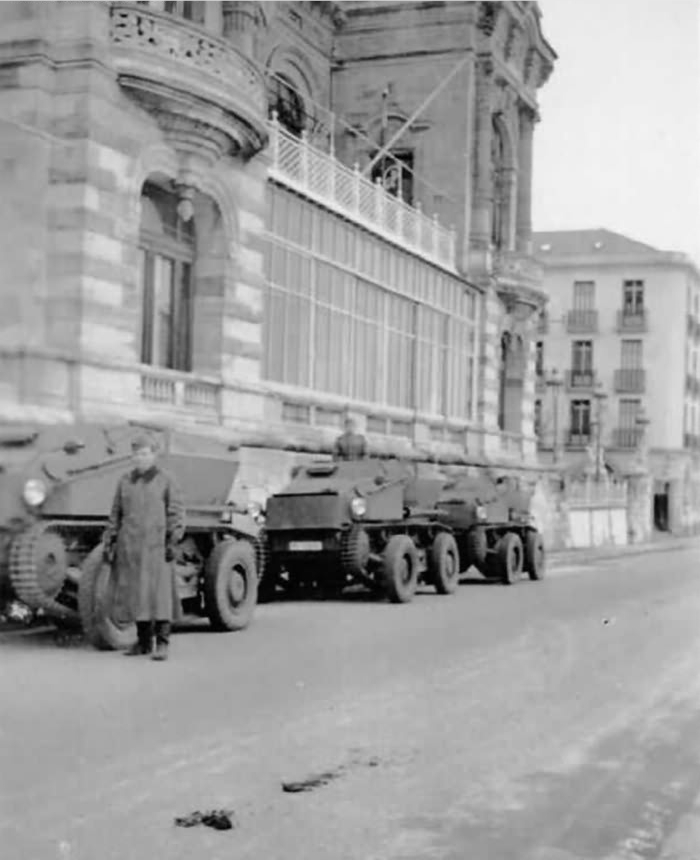
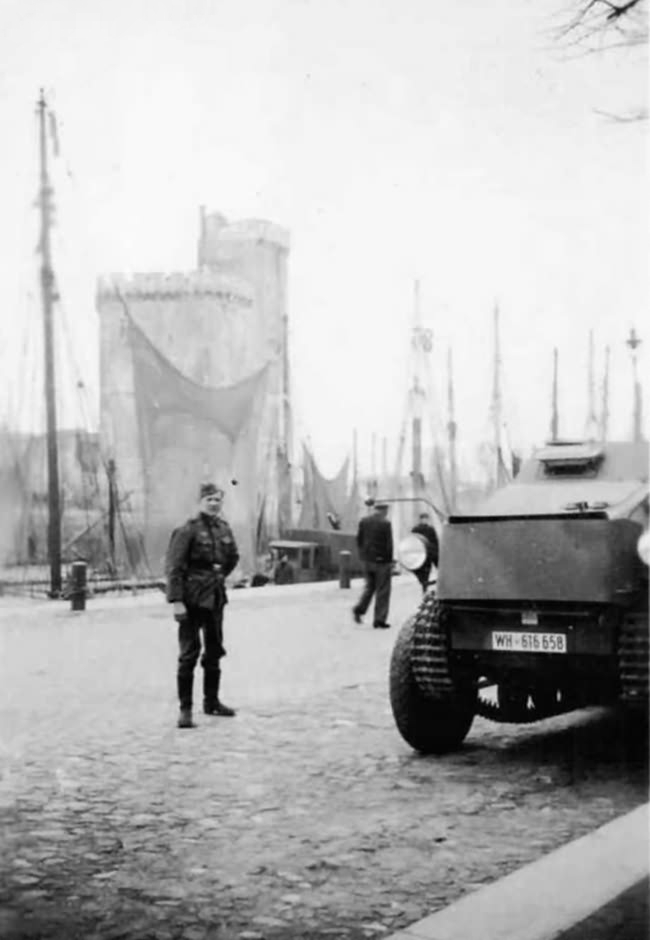
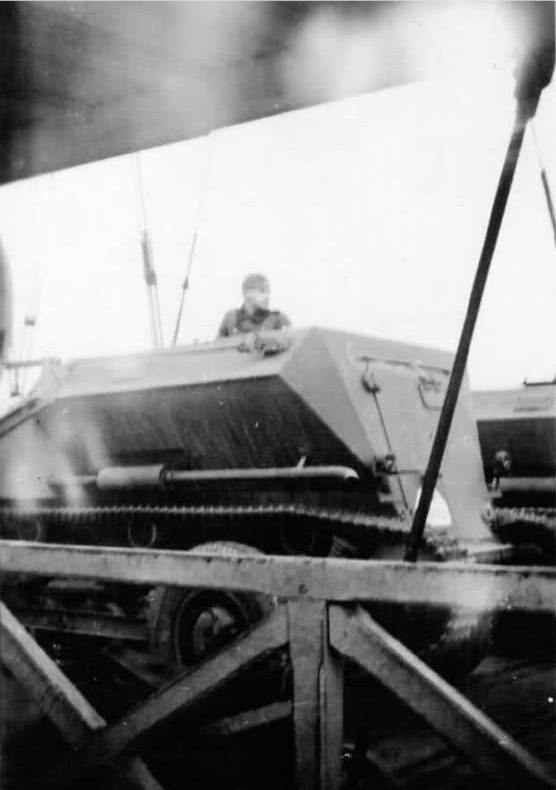
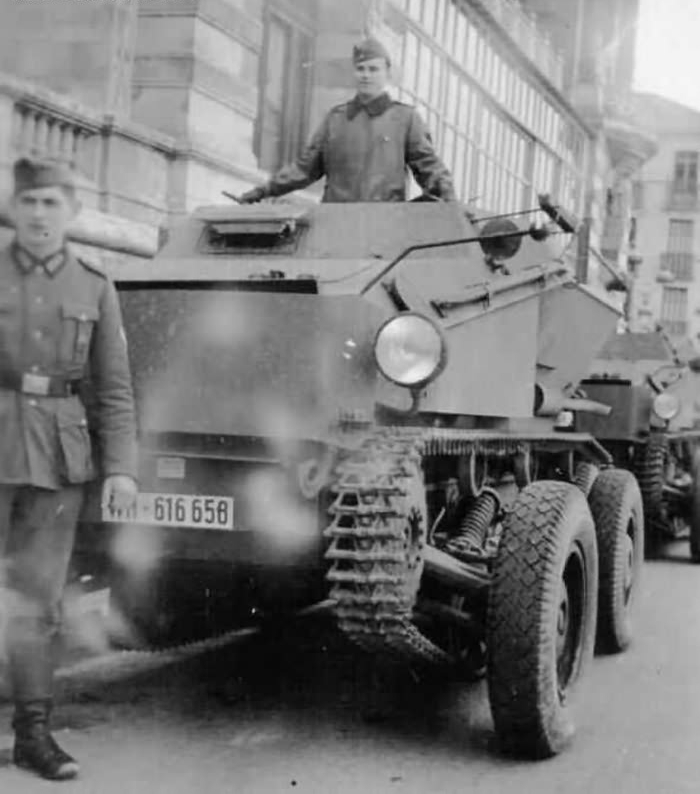
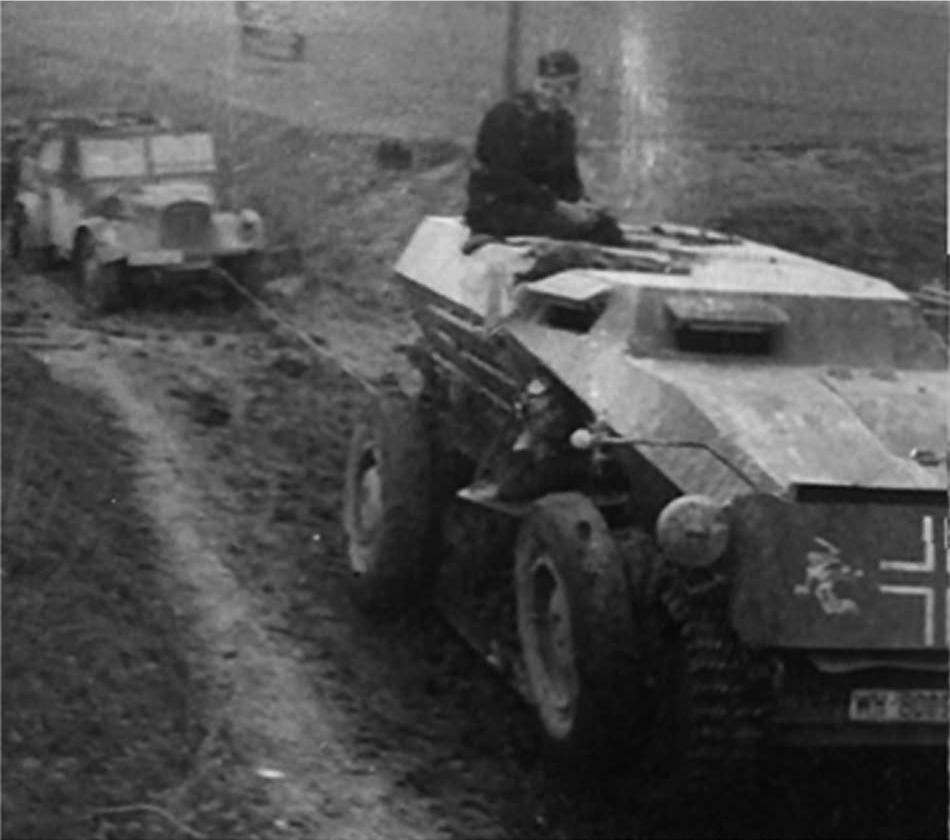
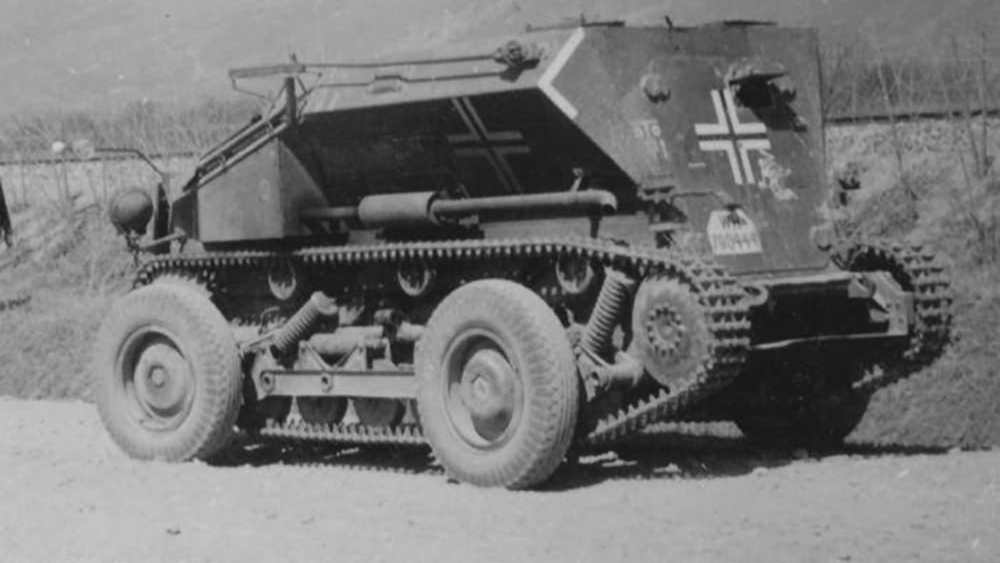
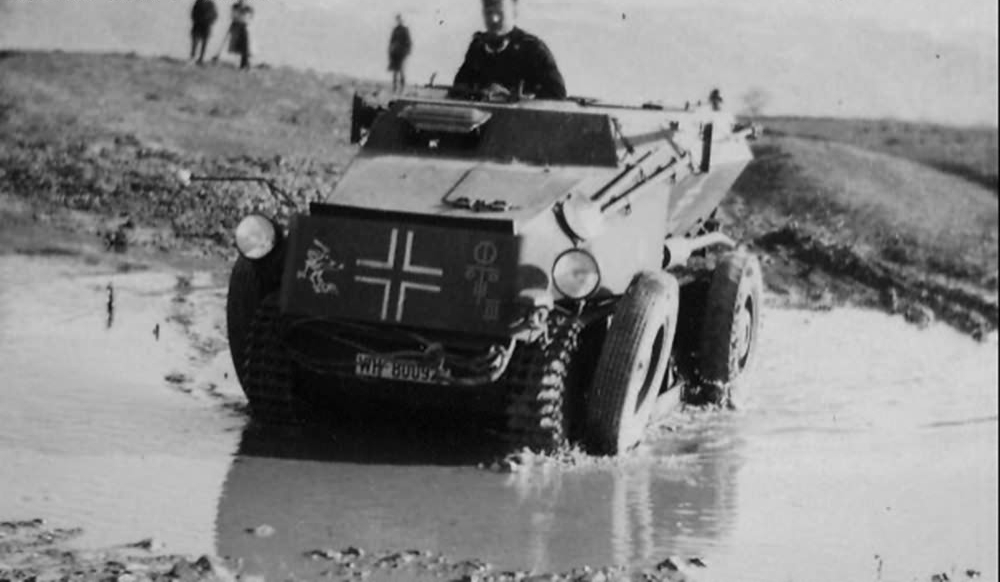
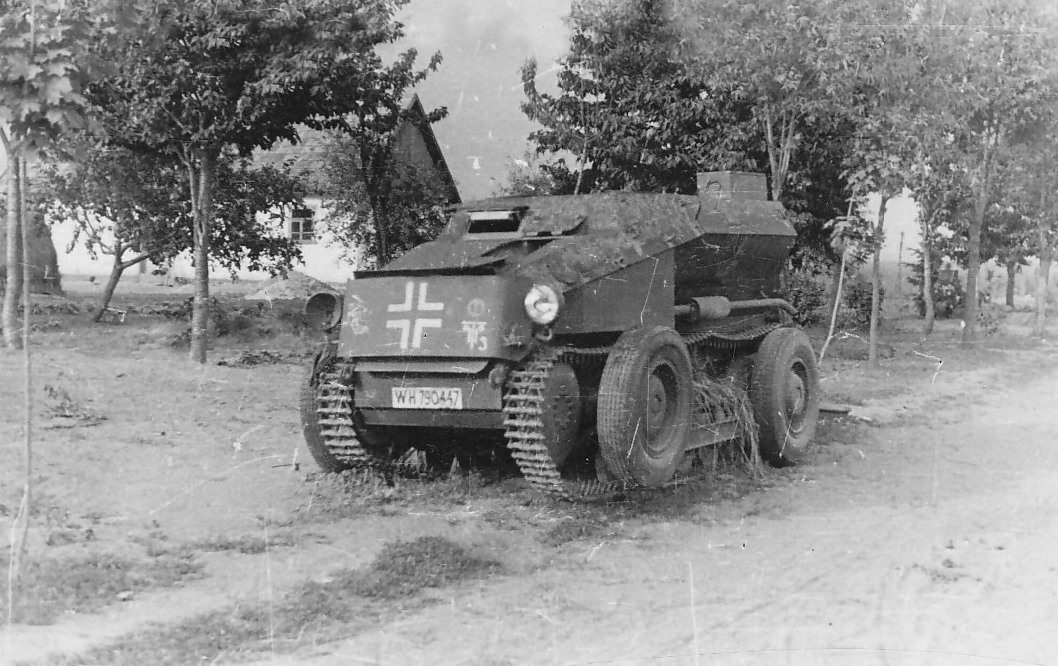
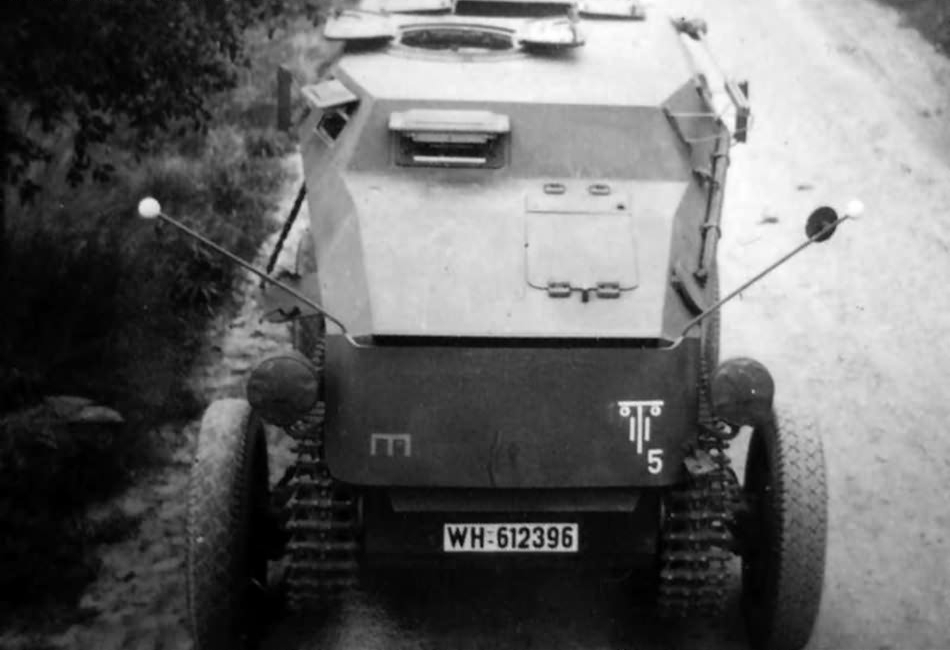
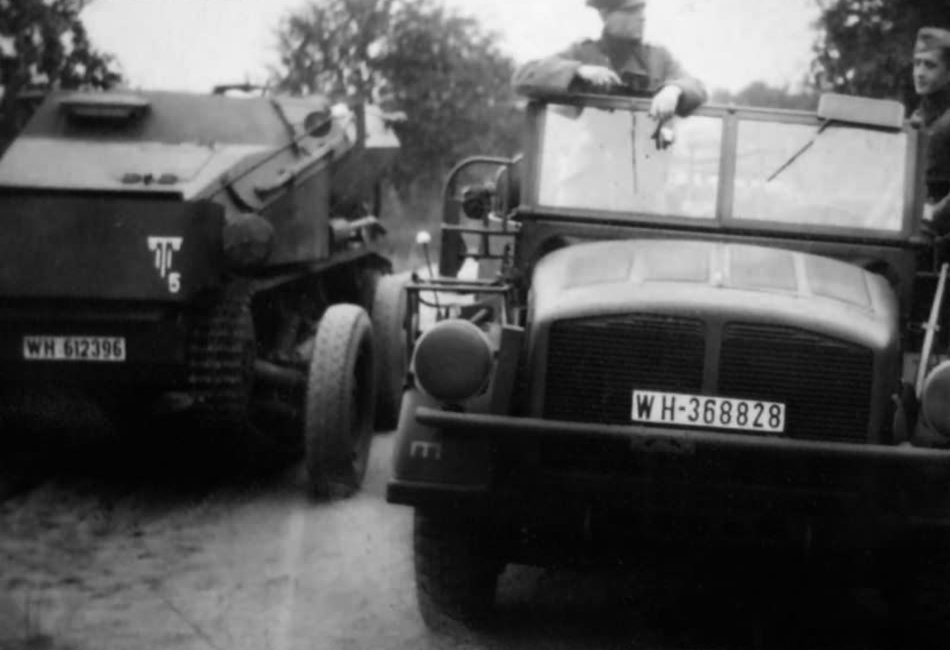
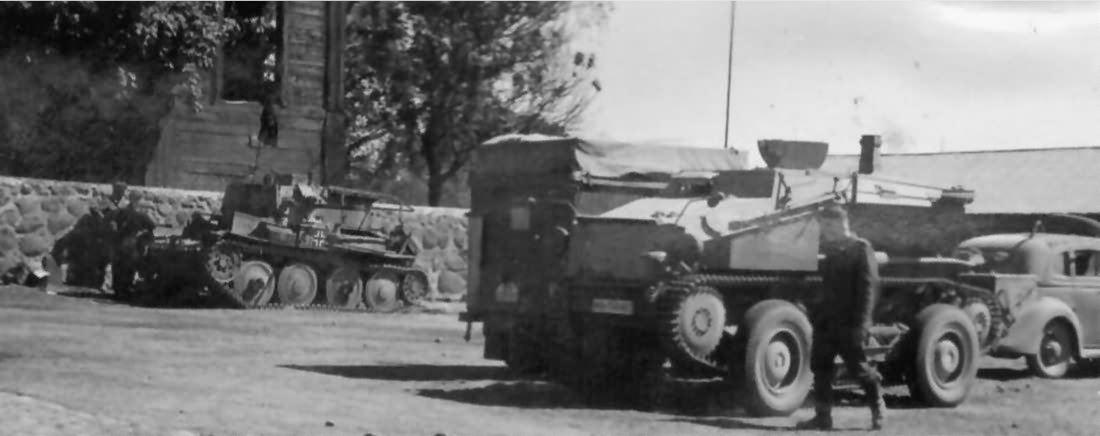
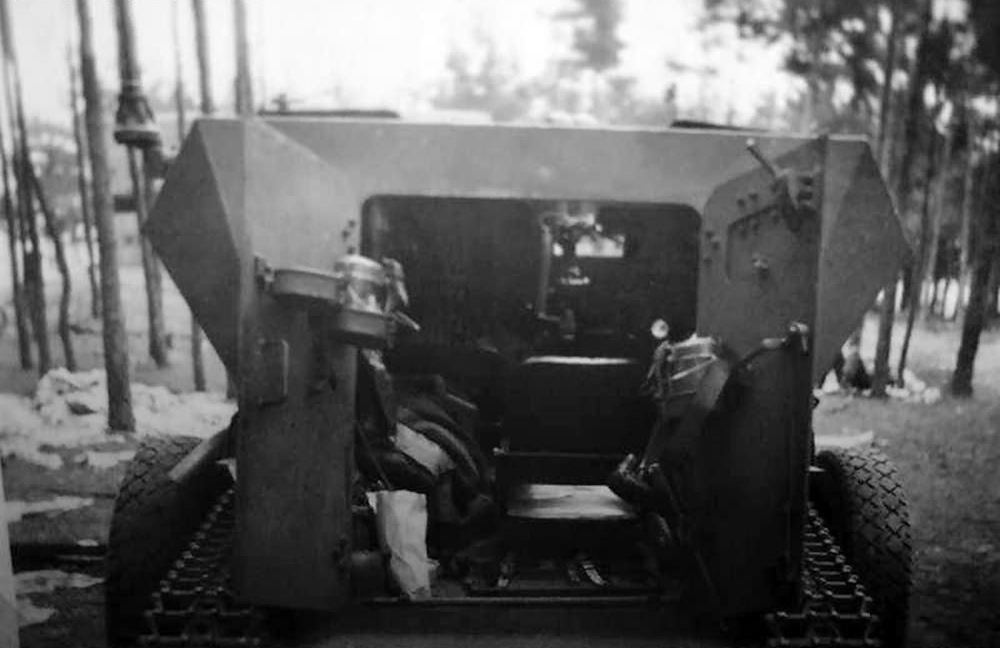
The Sd.Kfz. 254 (mittlerer gepanzerter Beobachtungskraftwagen) was a German armored observation and command vehicle developed from the Austrian Saurer RR-7 wheel-cum-track tractor. Originally designed in the mid-1930s for the Austrian Army to navigate mountainous terrain, the hybrid vehicle featured an innovative dual-propulsion system, allowing the driver to lower a tracked chassis for rough cross-country travel or raise it onto four rubber wheels to achieve road speeds up to 60 km/h. Following the 1938 Anschluss, the Wehrmacht integrated existing prototypes into service and commissioned an armored variant produced by Daimler-Benz, resulting in 129 units built between 1940 and 1941 before production shifted to simpler half-tracks like the Sd.Kfz. 250/5. Powered by a 70 hp Saurer diesel engine and fitted with an armored superstructure and long-range radio equipment (such as FuG 8 sets with frame antennas), the Sd.Kfz. 254 served in motorized artillery regiments across major theaters, including the Balkans, North Africa with the Afrika Korps, and the Eastern Front. Notably, captured examples were extensively tested by Allied forces, and a modified surviving chassis famously gained notoriety in 1953 as the “Freedom Tank” when a Czech mechanic used it to breach the Iron Curtain into West Germany.