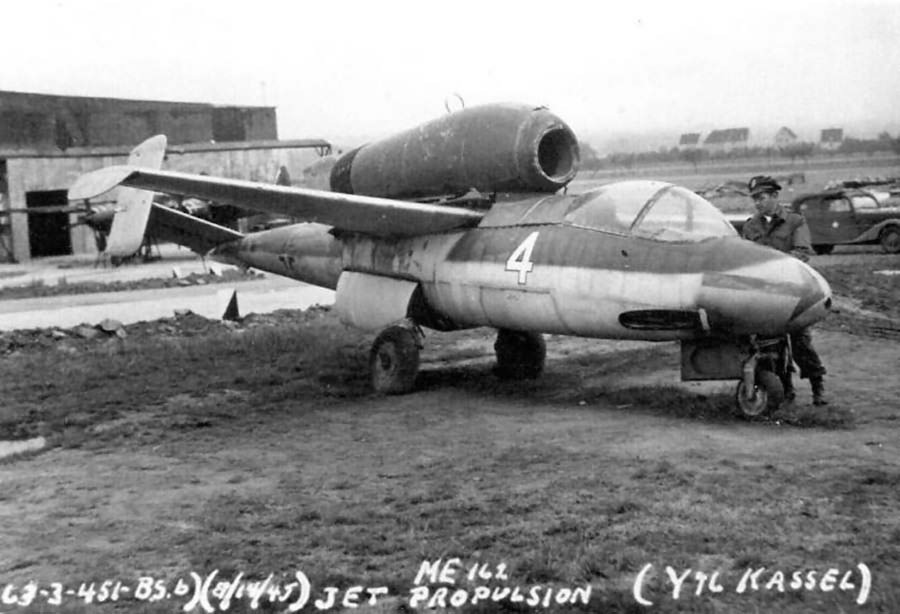
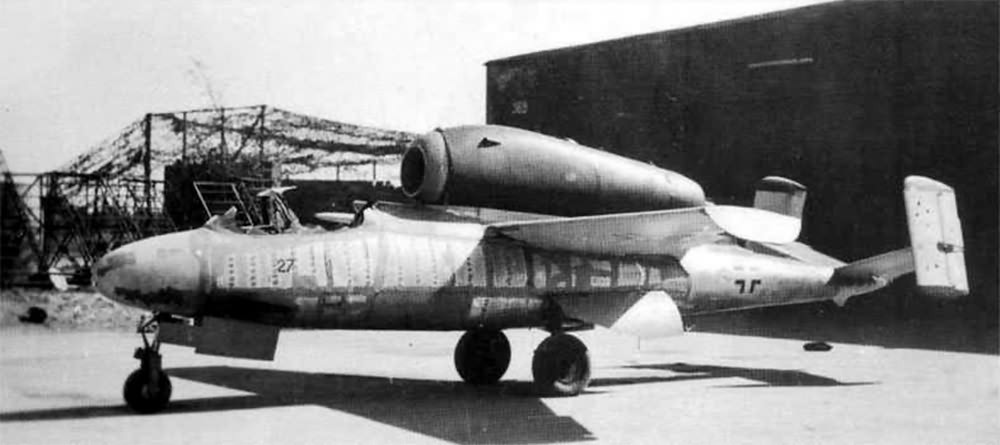
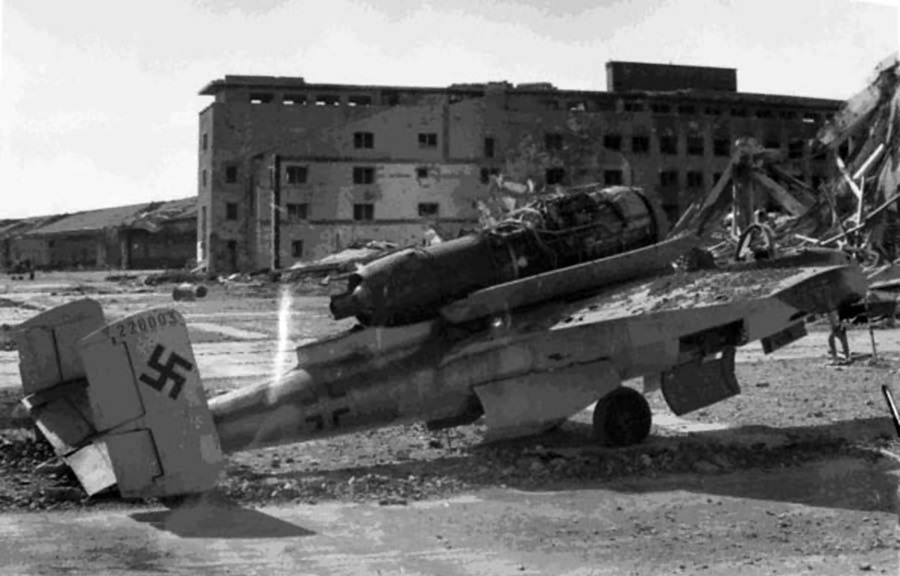
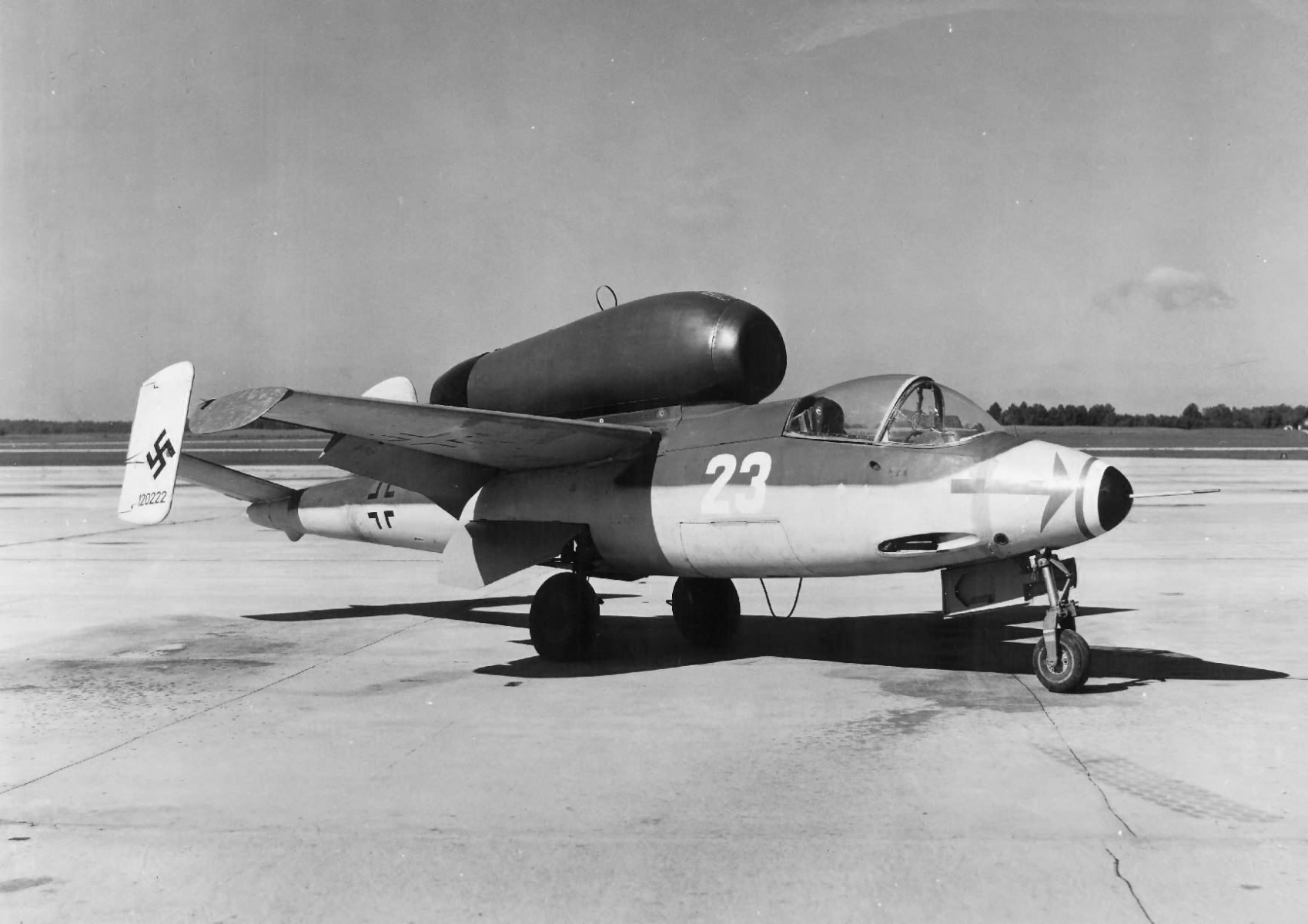
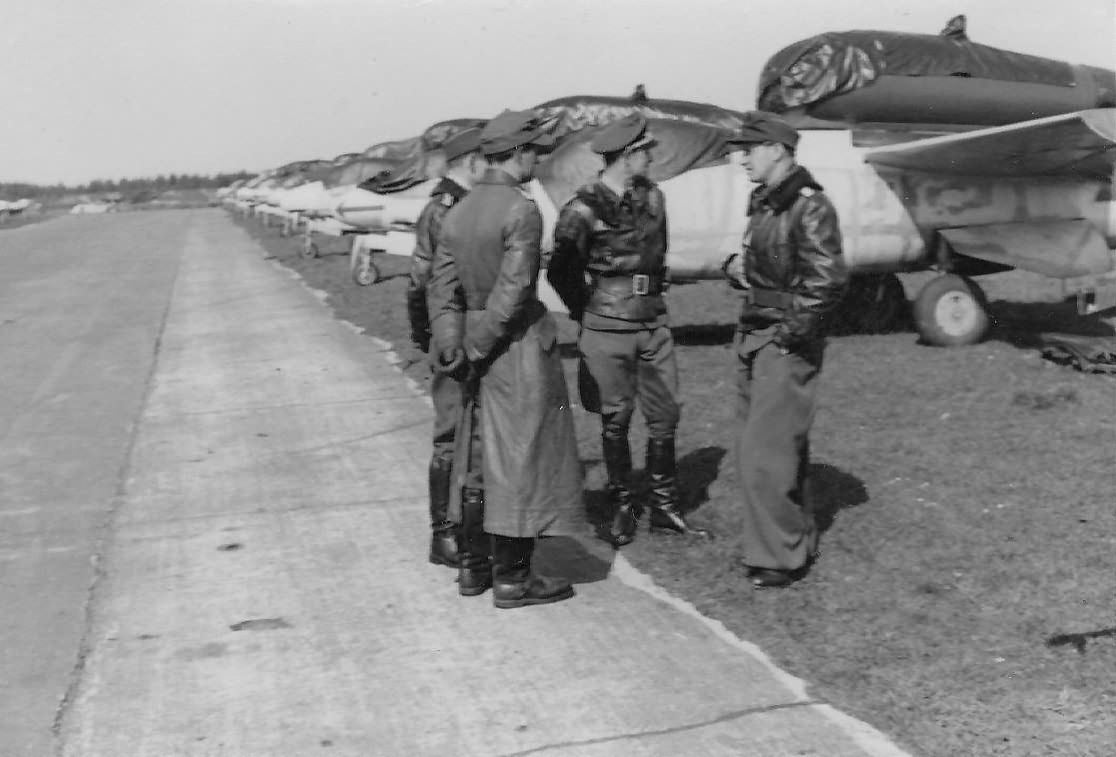
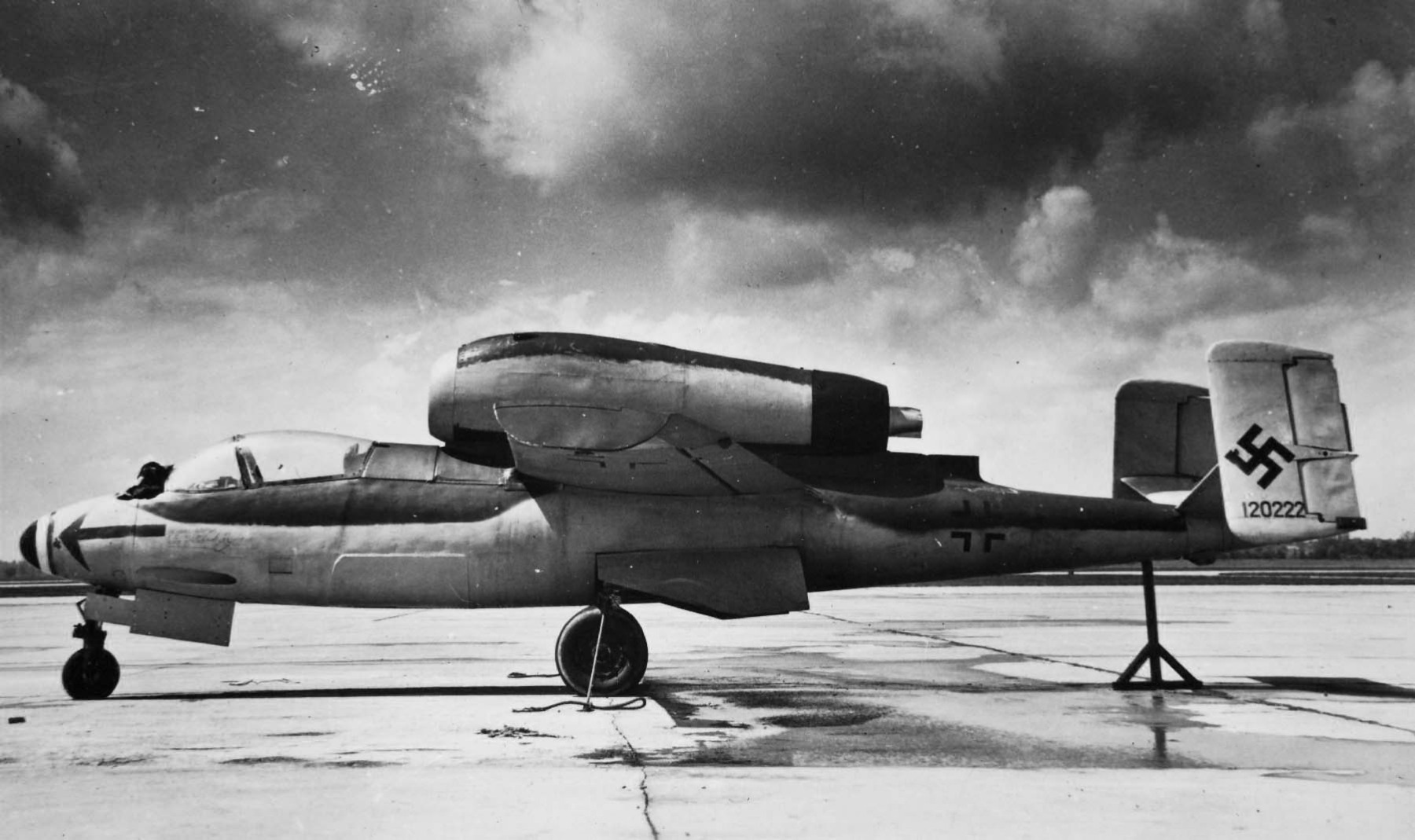
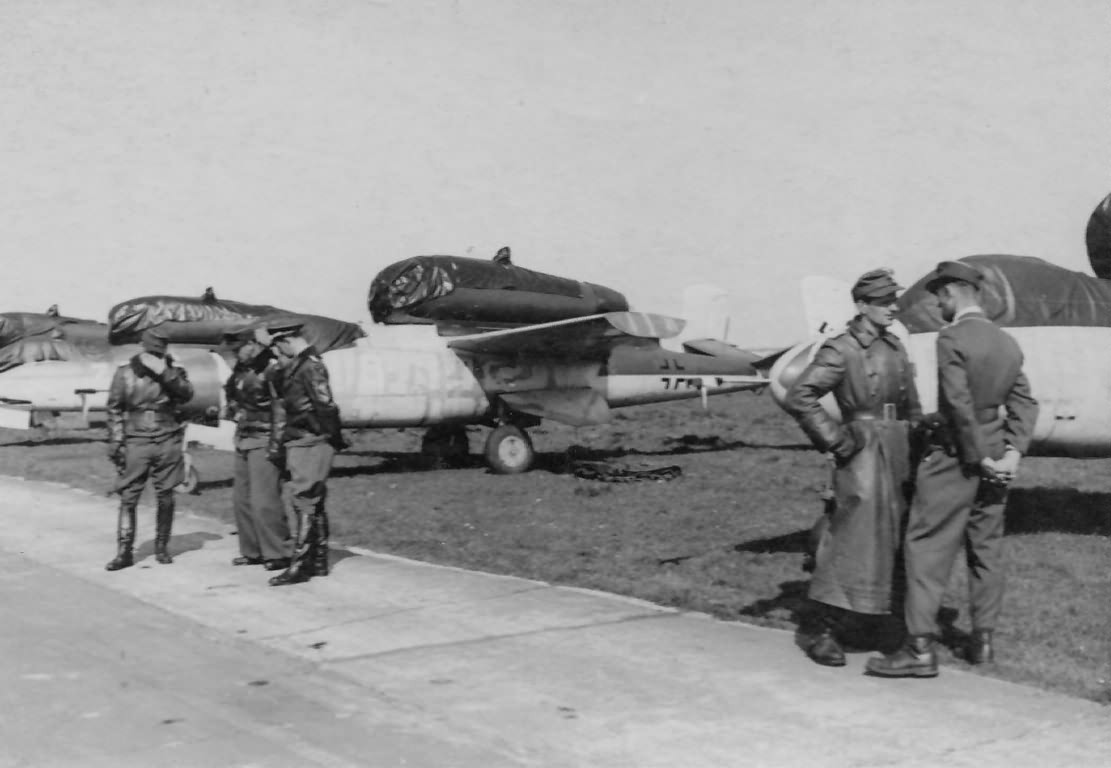
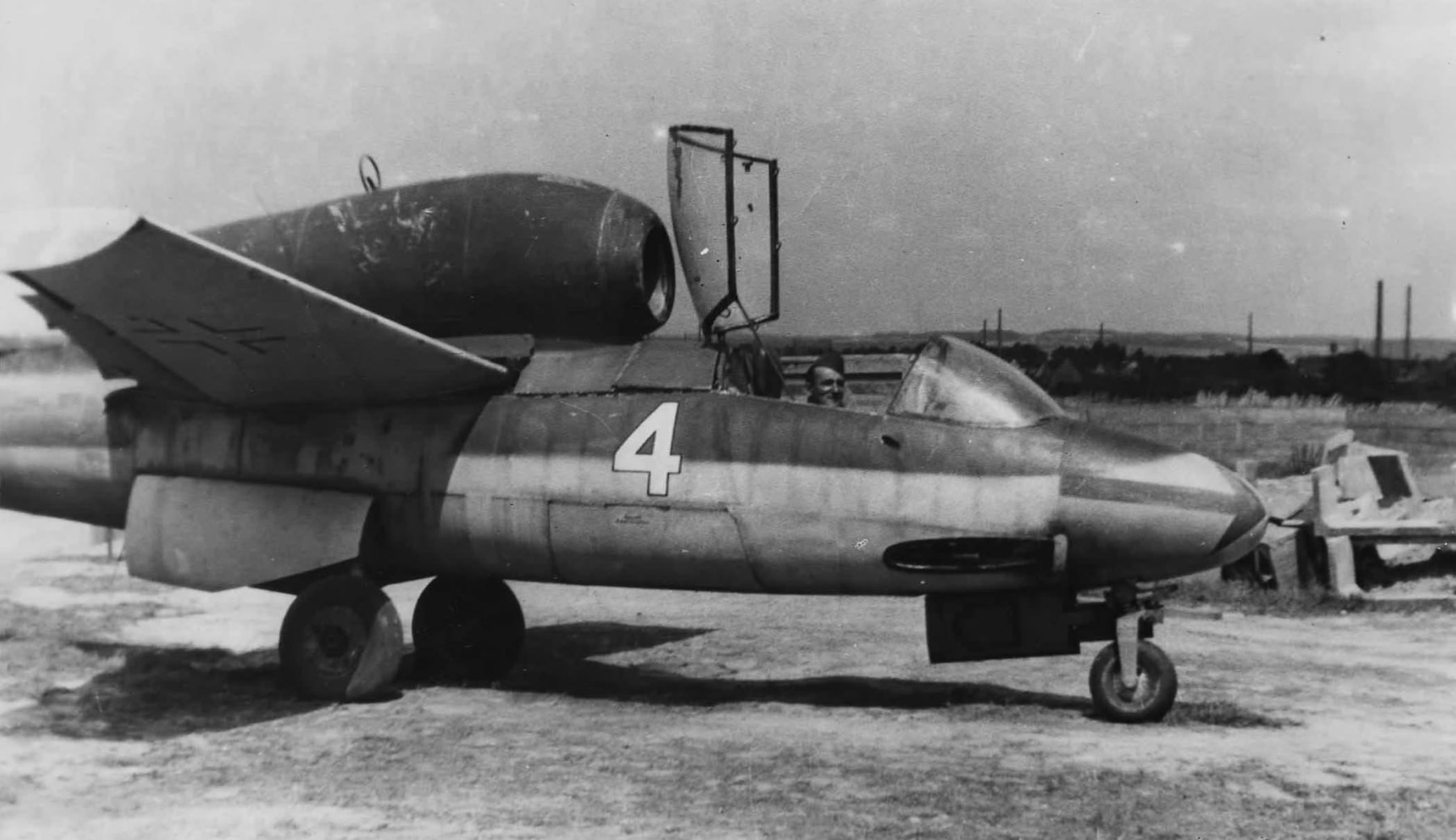
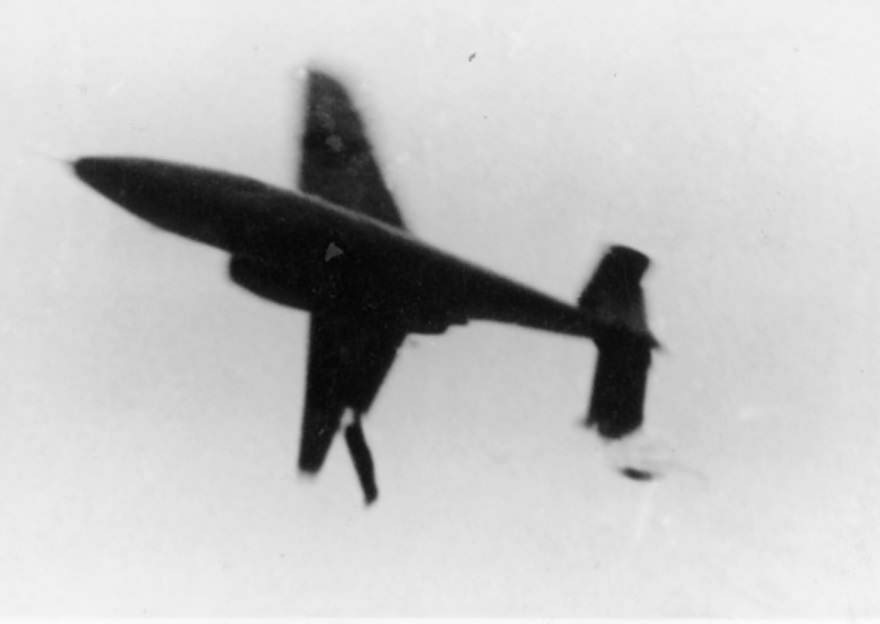
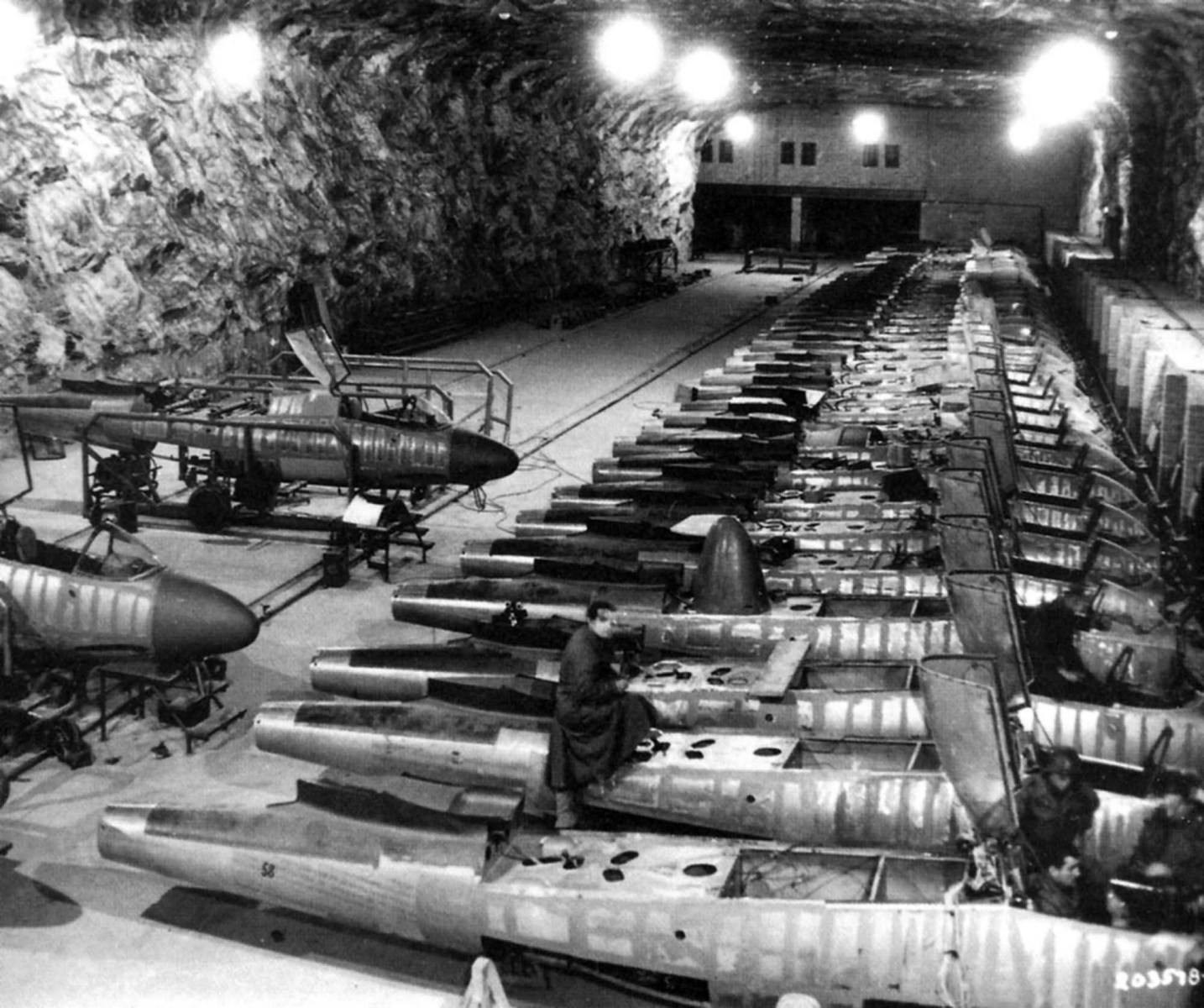
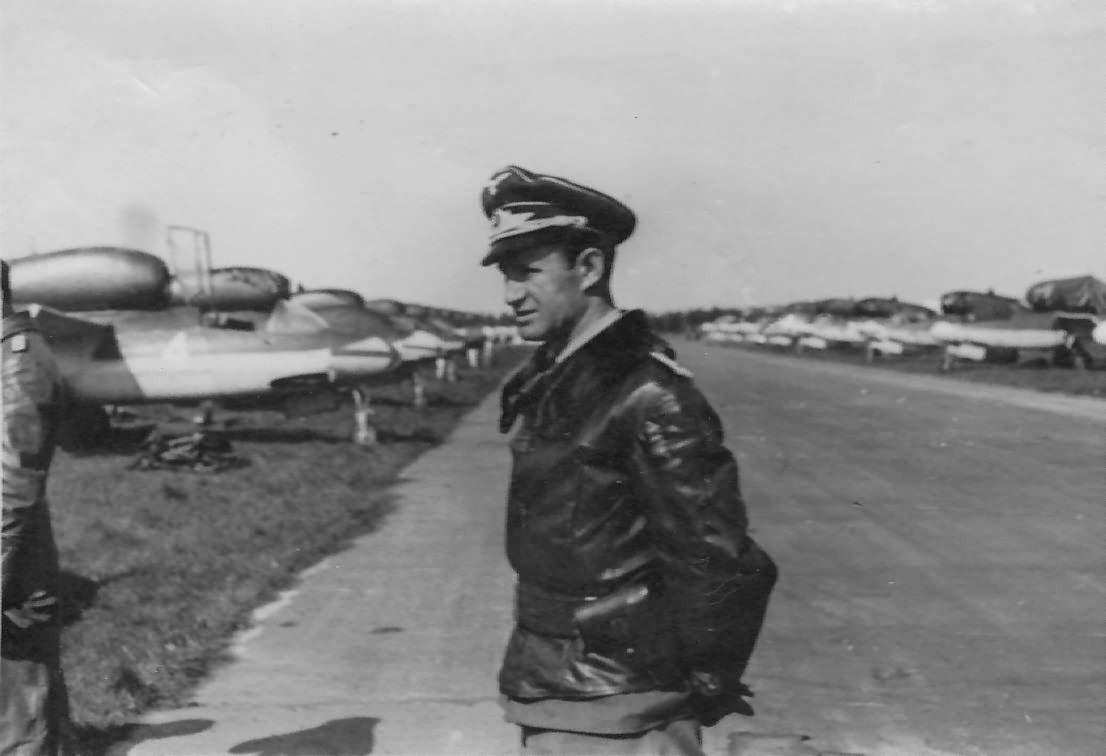
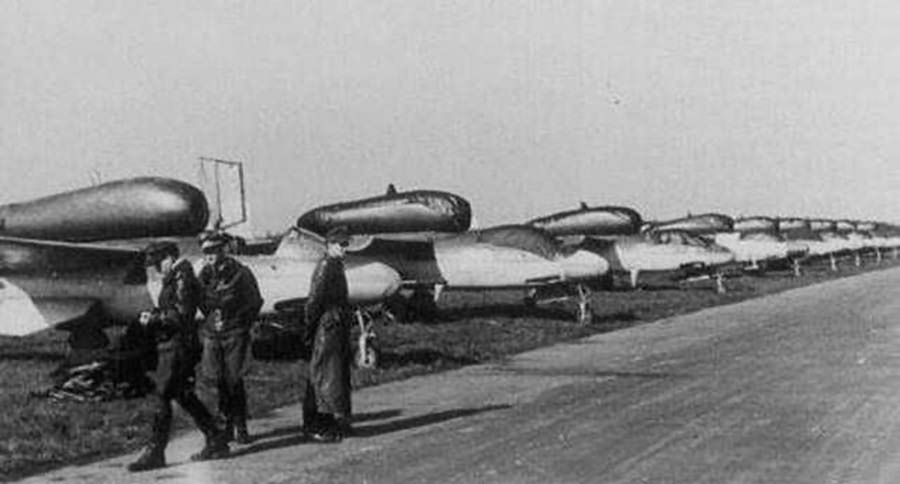
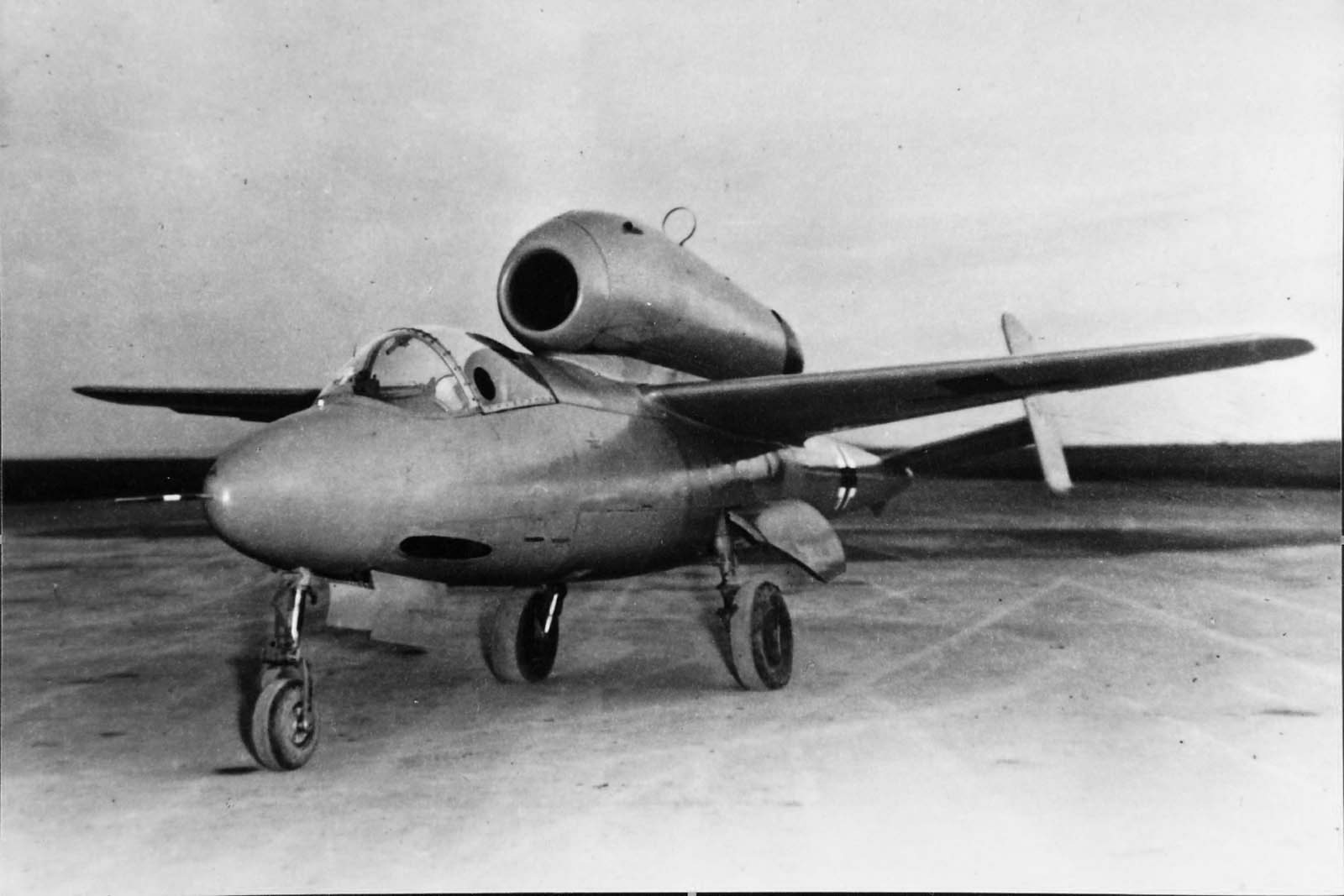
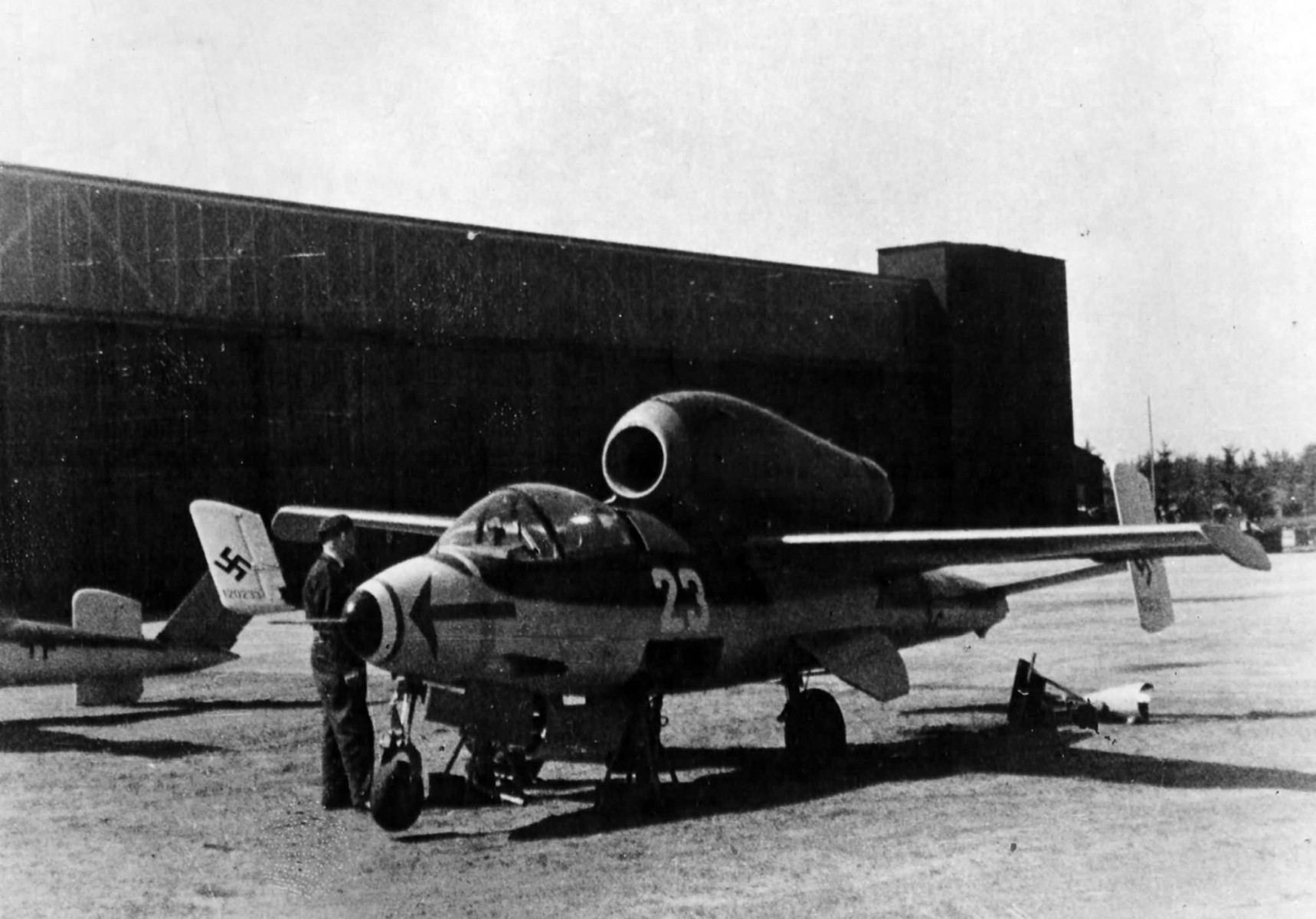
Heinkel He 162 Spatz (“Sparrow”)-also known as the Volksjäger (“People’s Fighter”) or under its development codename Salamander—was a German single-seat jet fighter introduced by the Luftwaffe in the final months of World War II, holding the speed record among first-generation jet aircraft. Conceived in late 1944 to counter heavy Allied daylight bombing raids amidst severe material and fuel shortages, the project aimed to quickly mass-produce a lightweight, cheap, and easily manufacturable jet requiring 40% fewer labor hours than the Messerschmitt Me 262. Driven forward by NSFK leader Alfred Keller to create a simple jet suitable for hastily trained Hitler Youth recruits, the RLM issued a design competition on September 10, 1944; Heinkel won with its P.1073 proposal, leading to a remarkably rapid development timeline where the first prototype (He 162 V1) flew on December 6, 1944—just 90 days after project approval. Constructed from a mixed duralumin and plywood semi-monocoque airframe with a straight high-wing layout, the aircraft featured a dorsally mounted BMW 003 axial-flow turbojet placed behind the cockpit, an ejection seat, and a tricycle landing gear. Despite early design flaws—including a fatal prototype crash caused by weak wood glue—the ambitious production drive in underground factories resulted in 275 completed airframes (and roughly 500 more in assembly) before war’s end, though only 171 were test-flown and around 116 officially delivered. Formally equipping a single operational unit, I./JG 1, in April 1945, the He 162 saw very limited combat near Rostock during the closing weeks of the war; while pilots praised its high speed, maneuverability, and superior visibility over conventional fighters, its demanding landing characteristics, poor low-speed handling, restricted rearward view, and hazardous pitch instability near maximum speeds contributed to at least 14 pilot fatalities during training and operational sorties before British forces captured their main base at Leck on May 6, 1945.