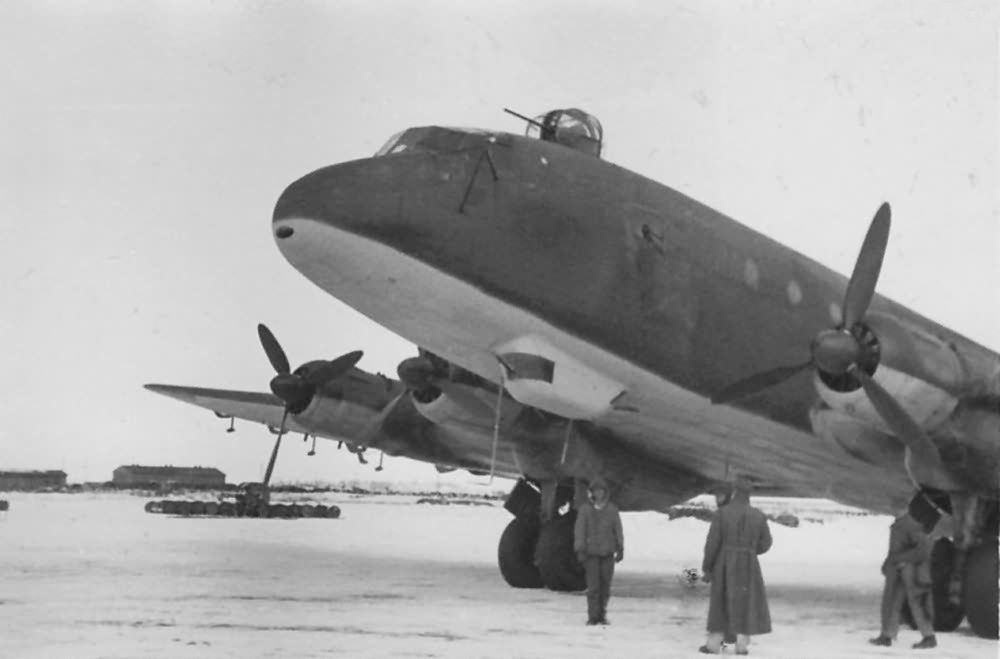
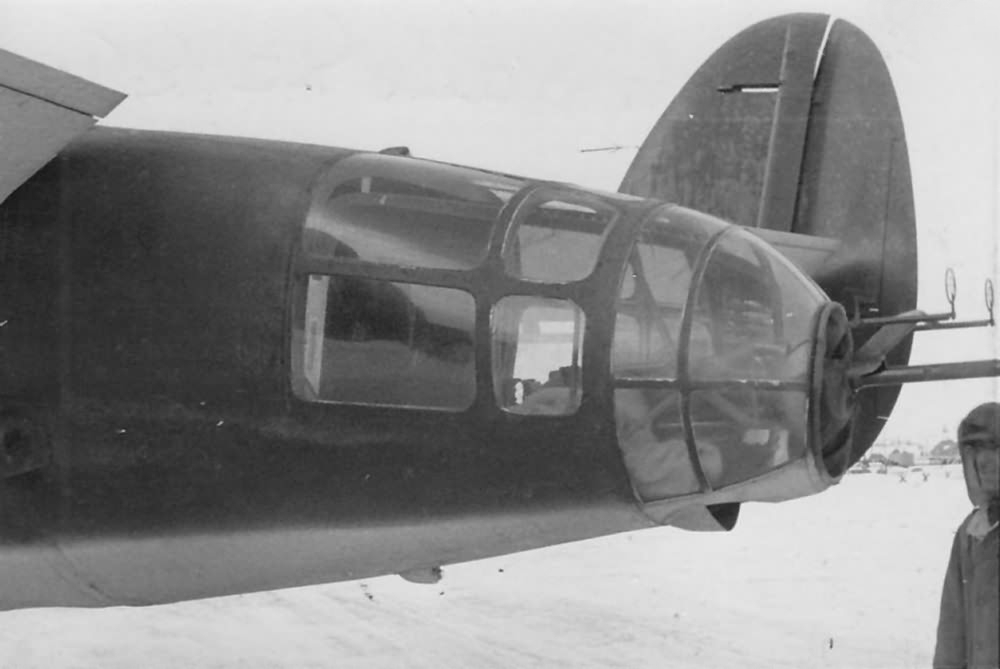
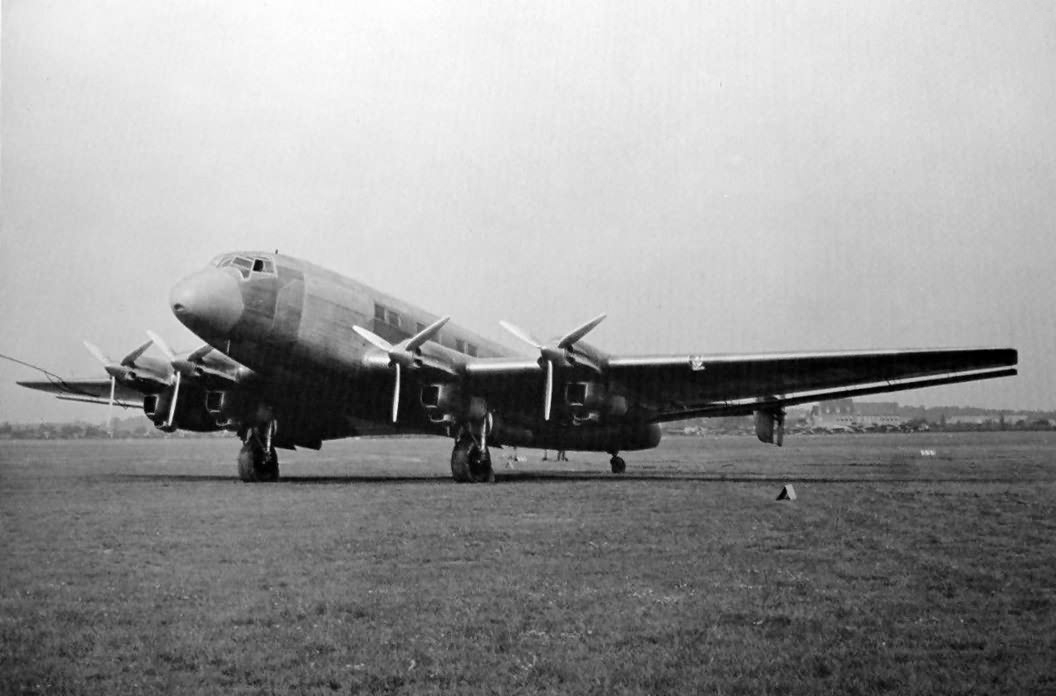
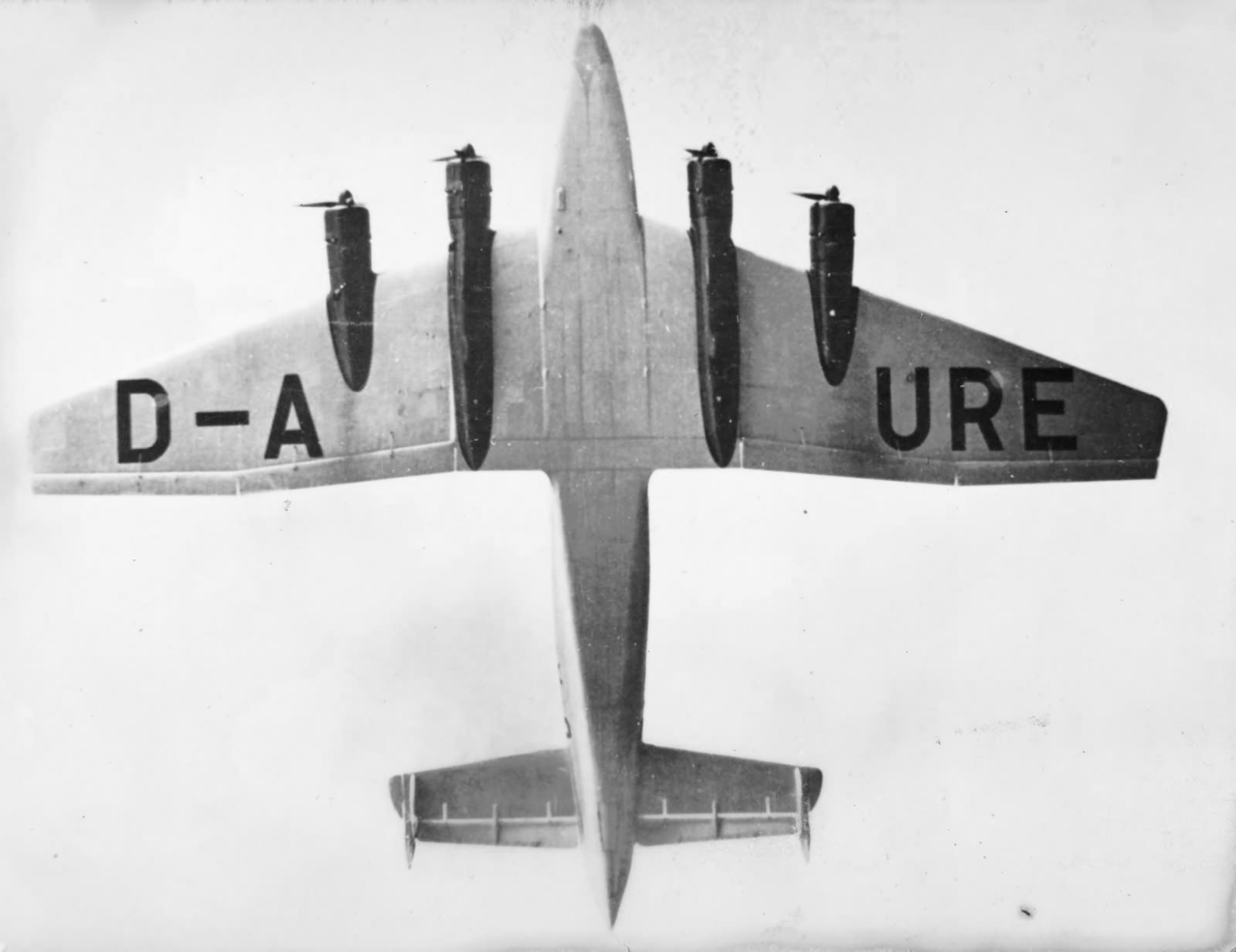
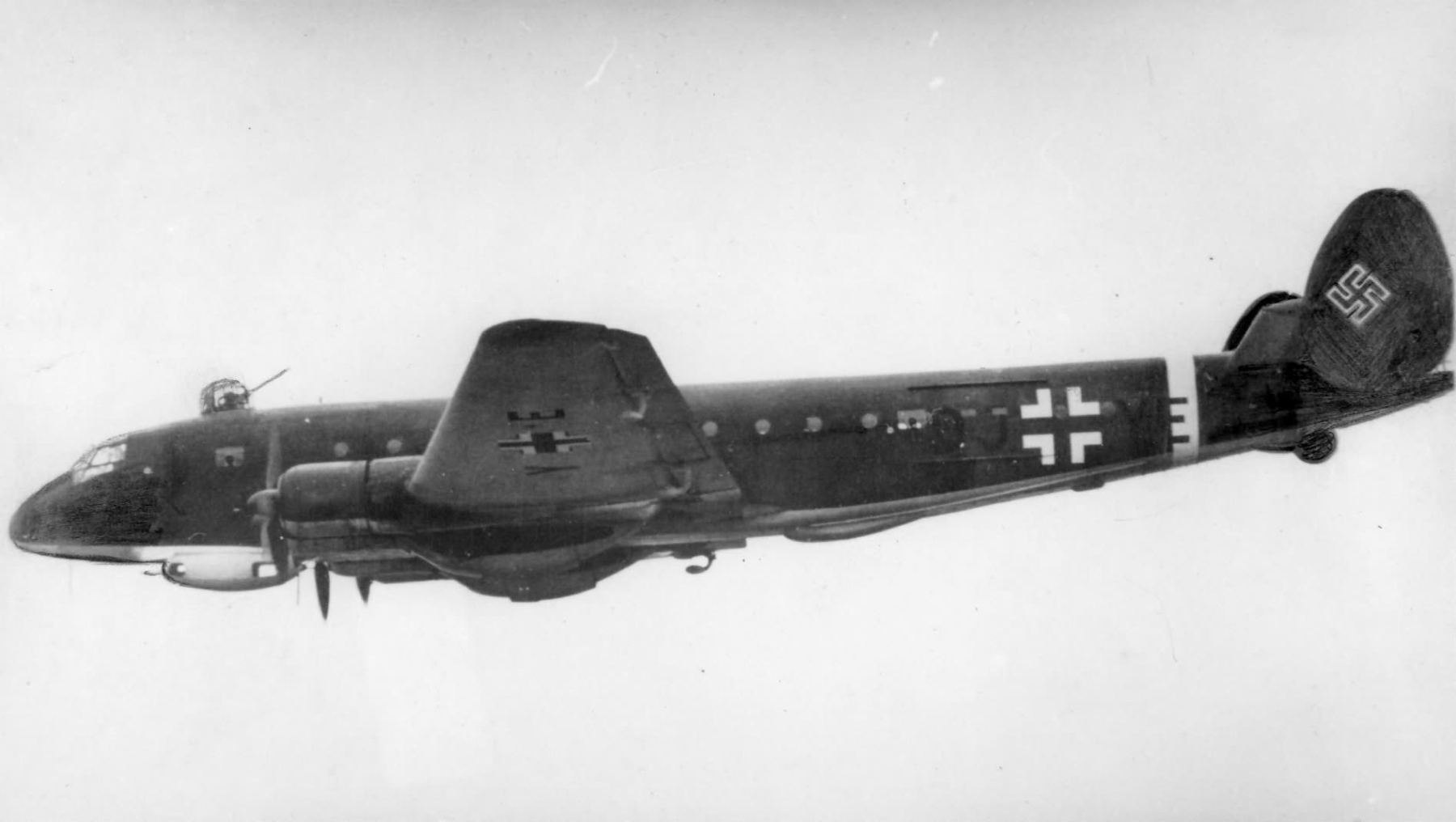
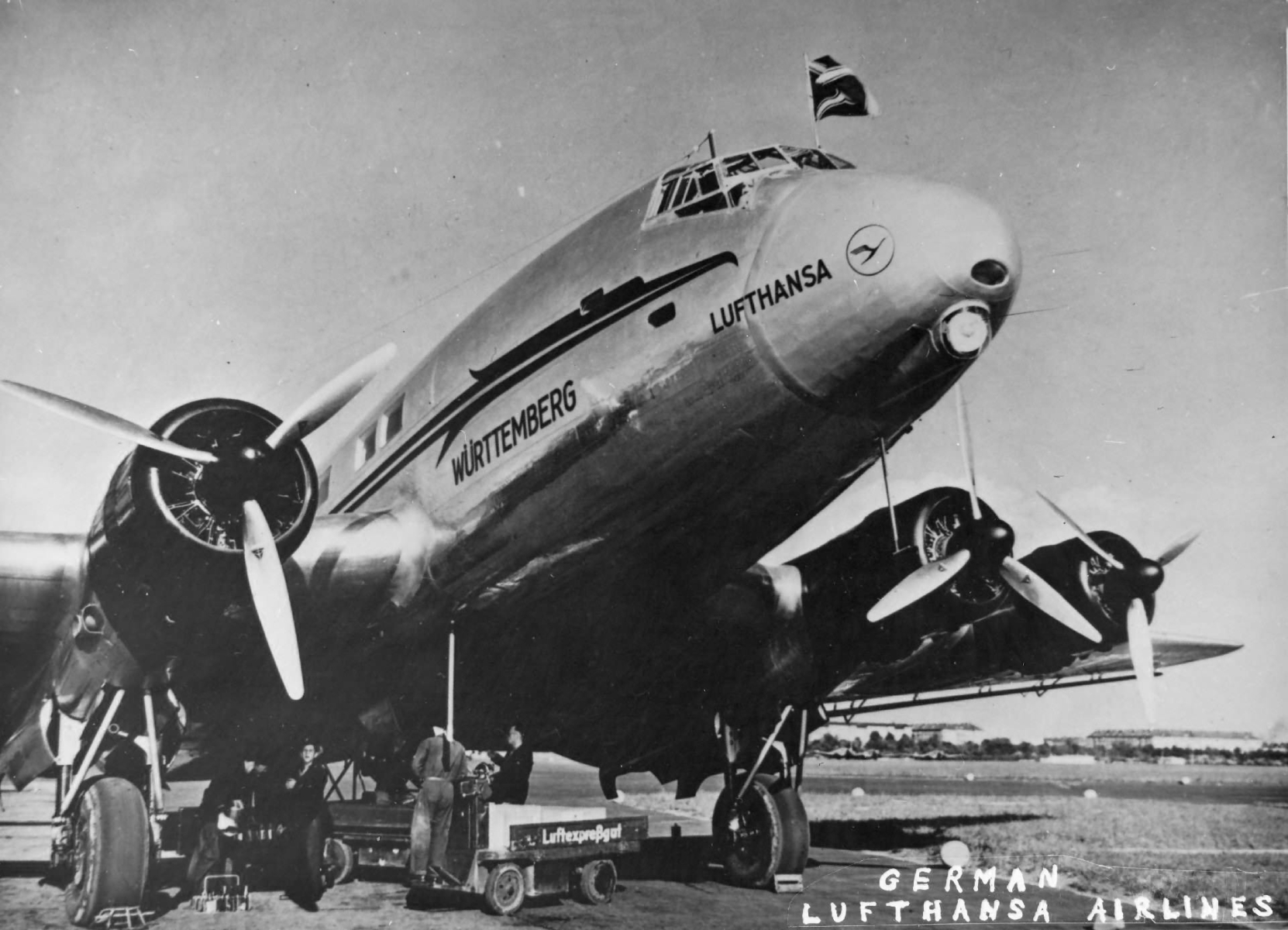
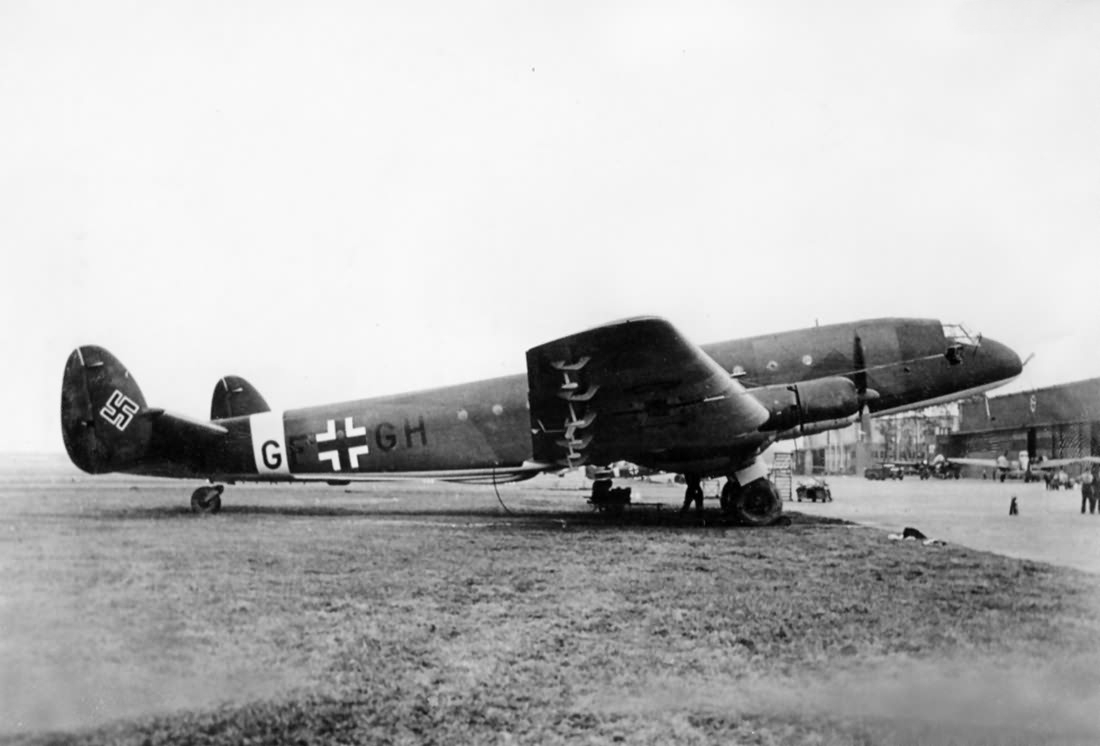
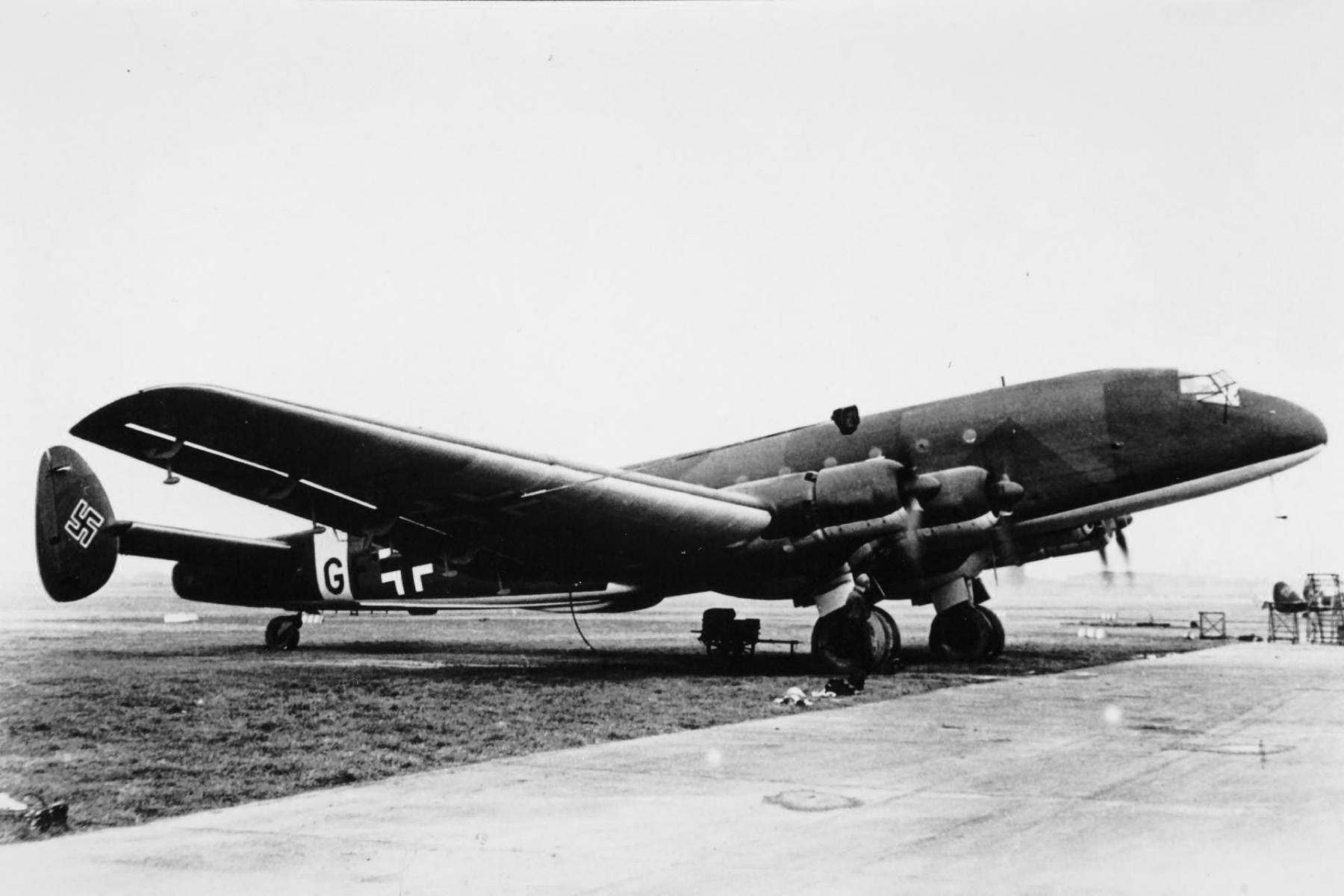
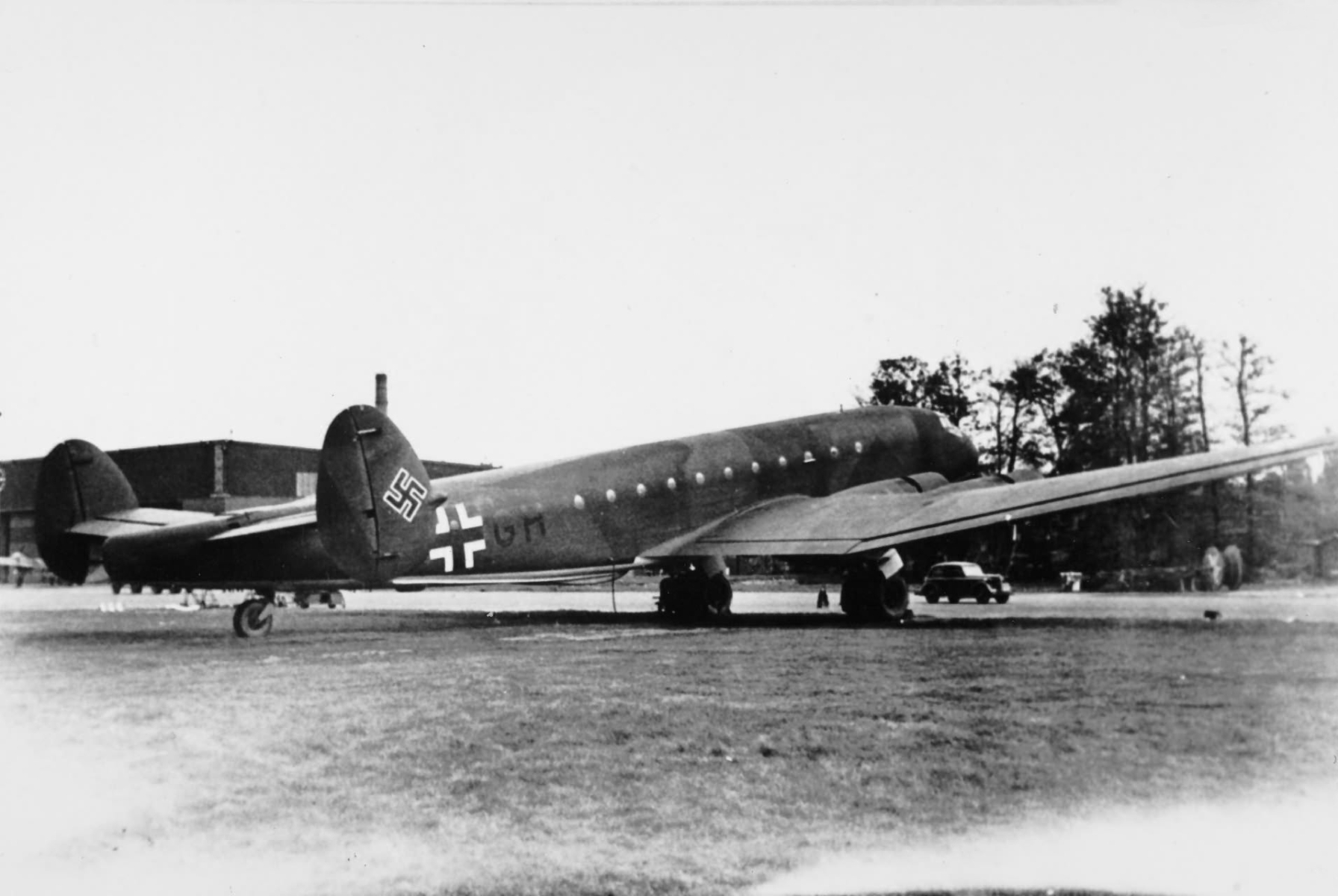
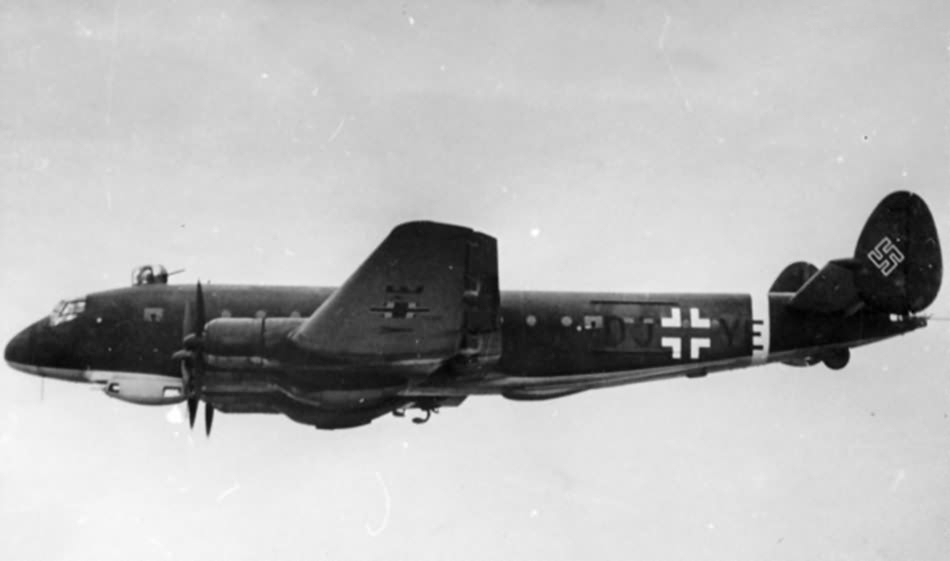
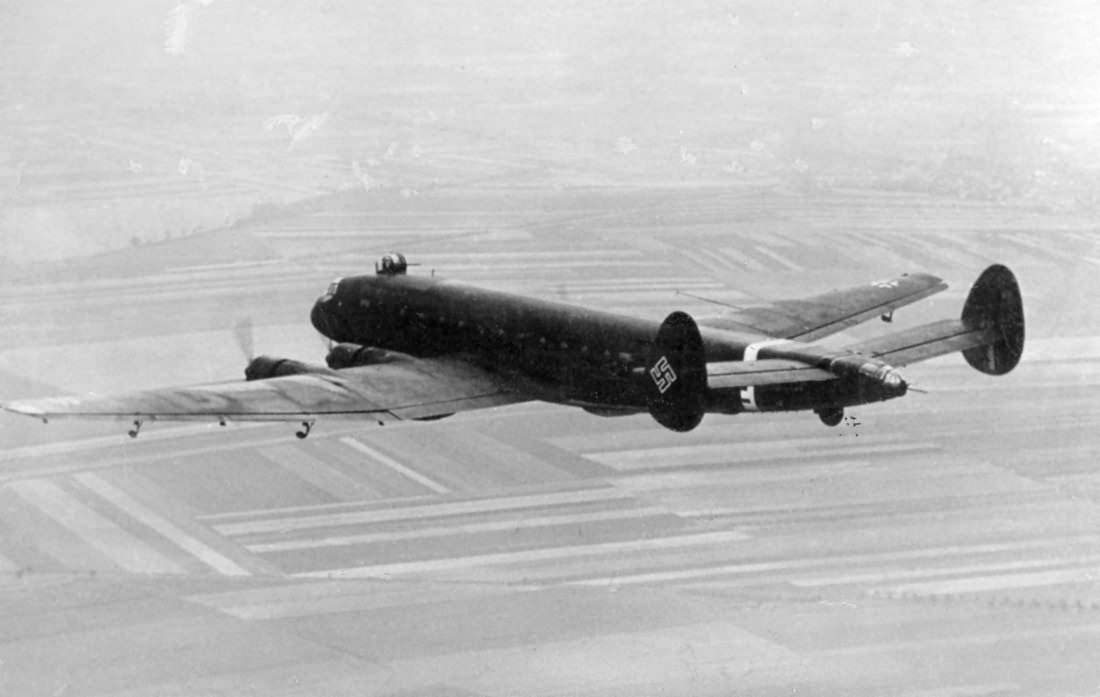
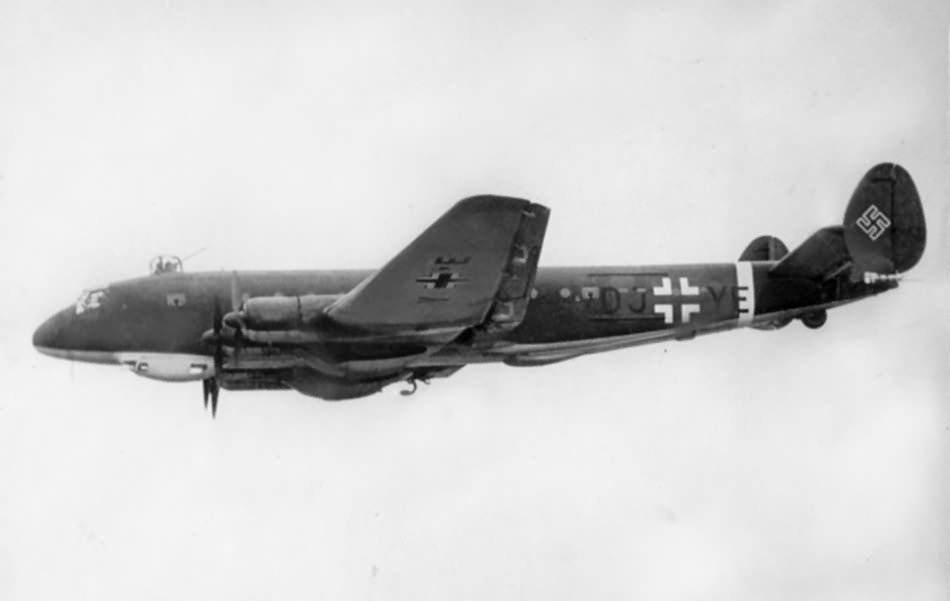
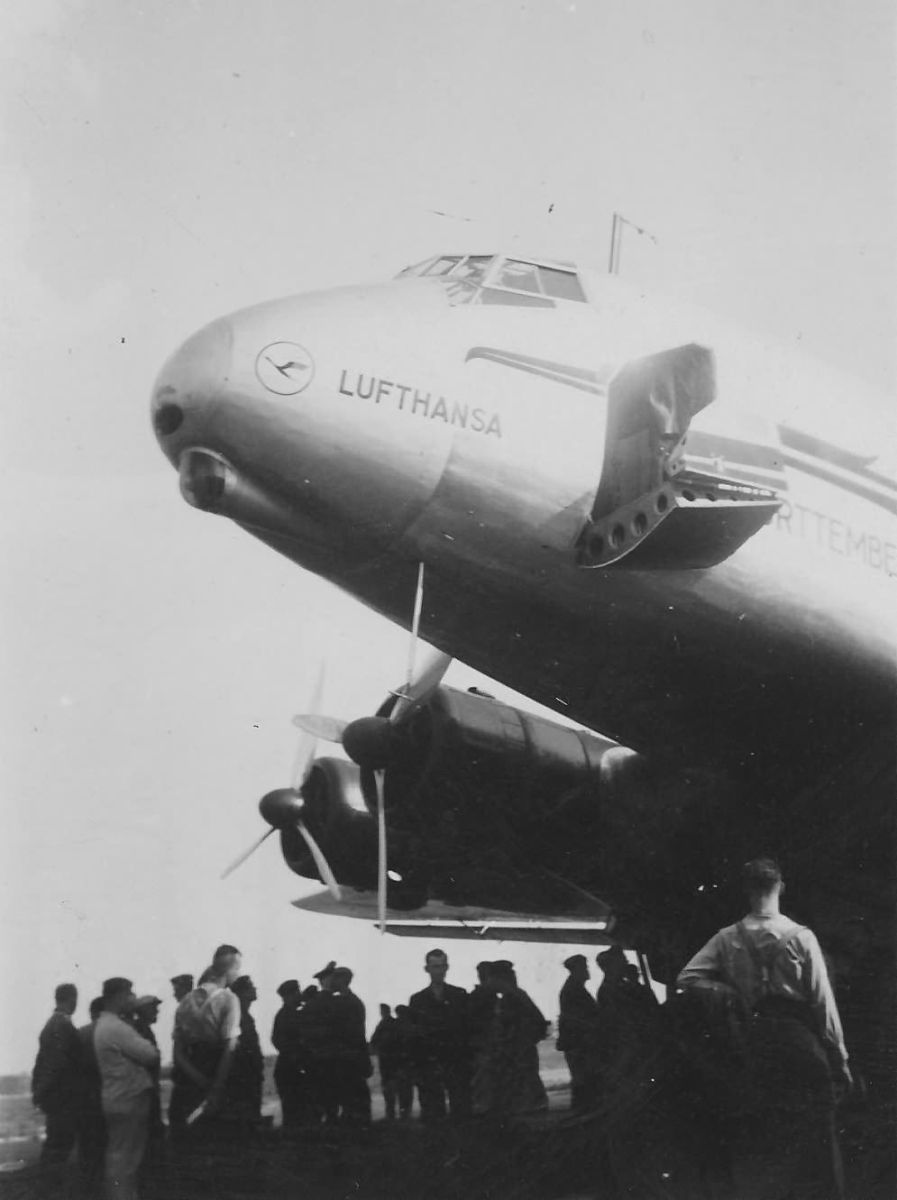
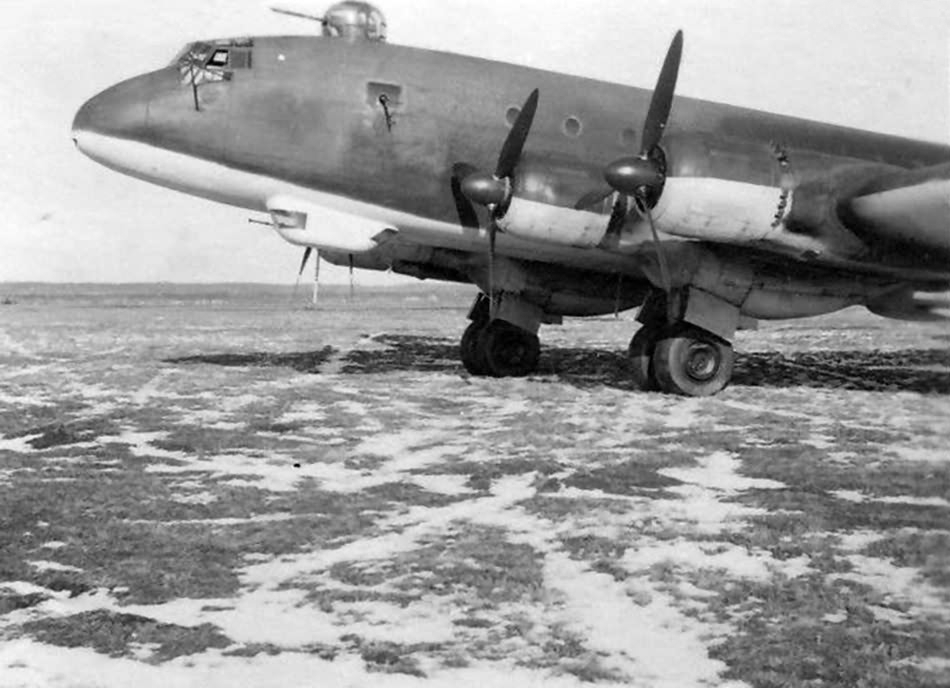
Junkers Ju 90 was a German four-engine, all-metal airliner and military transport aircraft first flown in August 1937. Developed by Junkers using the wings and tail of the Ju 89 combined with a newly designed duralumin semi-monocoque fuselage, it was originally built for Lufthansa to carry up to 40 passengers in high-comfort, air-conditioned cabins. A pre-series of 10 Ju 90B-1 aircraft (V5 to V14) tested various technical innovations, including hydraulic rear loading ramps (Ju-Paket) for vehicles and experimental military defensive armament. With the outbreak of World War II, the airliners were requisitioned by the Luftwaffe and assigned to specialized transport units (Transportstaffel 5 and Kampfgeschwader 200). Ju 90s served extensively across all major European and Mediterranean theaters—delivering supplies during Operation Weserübung, supporting the Afrika Korps, airlifting troops from the Crimea and Greece, towing heavy Messerschmitt Me 321 Gigant gliders, and flying transport missions to Stalingrad, where V13 was destroyed in 1943. Serving as the direct predecessor to the larger Ju 290, only a few Ju 90s survived until the end of the war, with two captured by British forces.