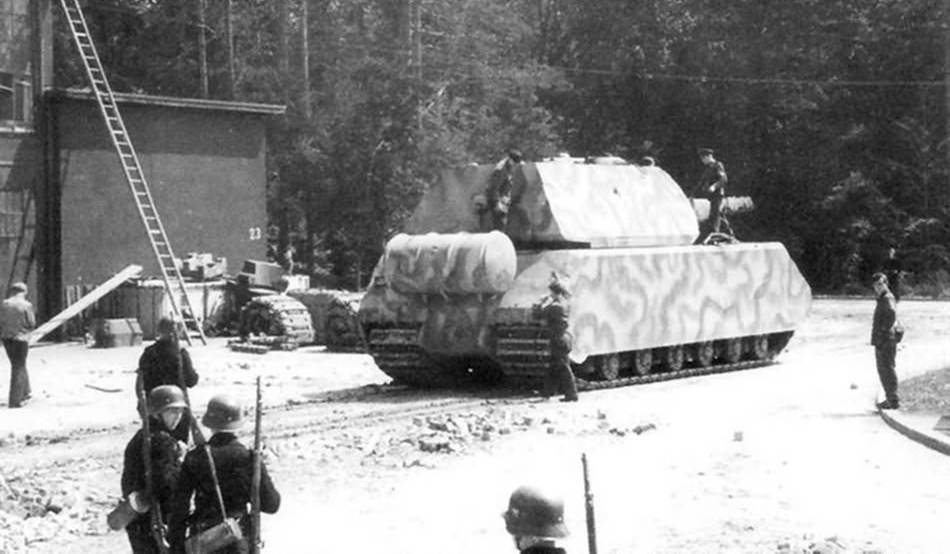
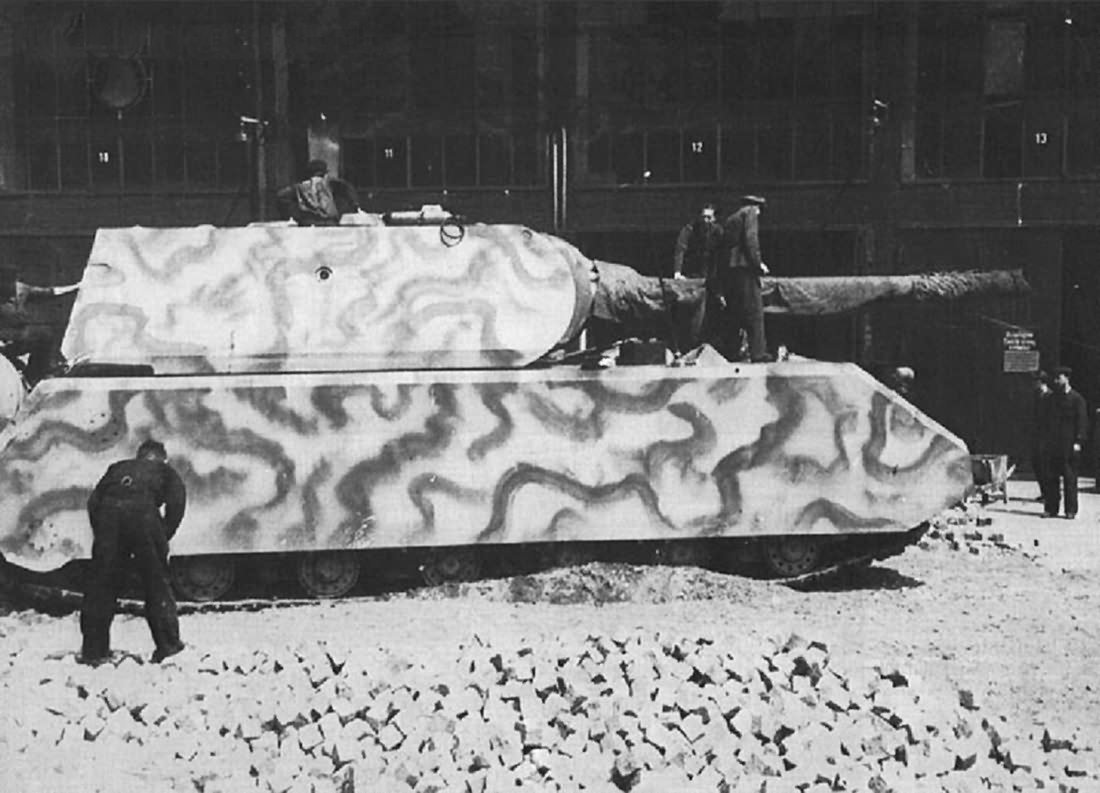
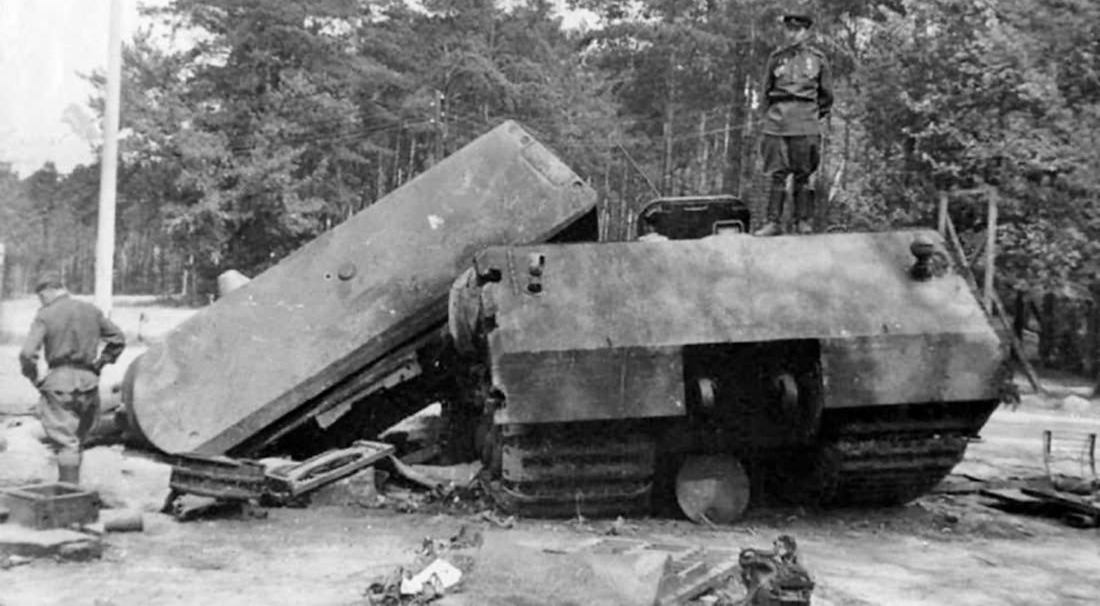
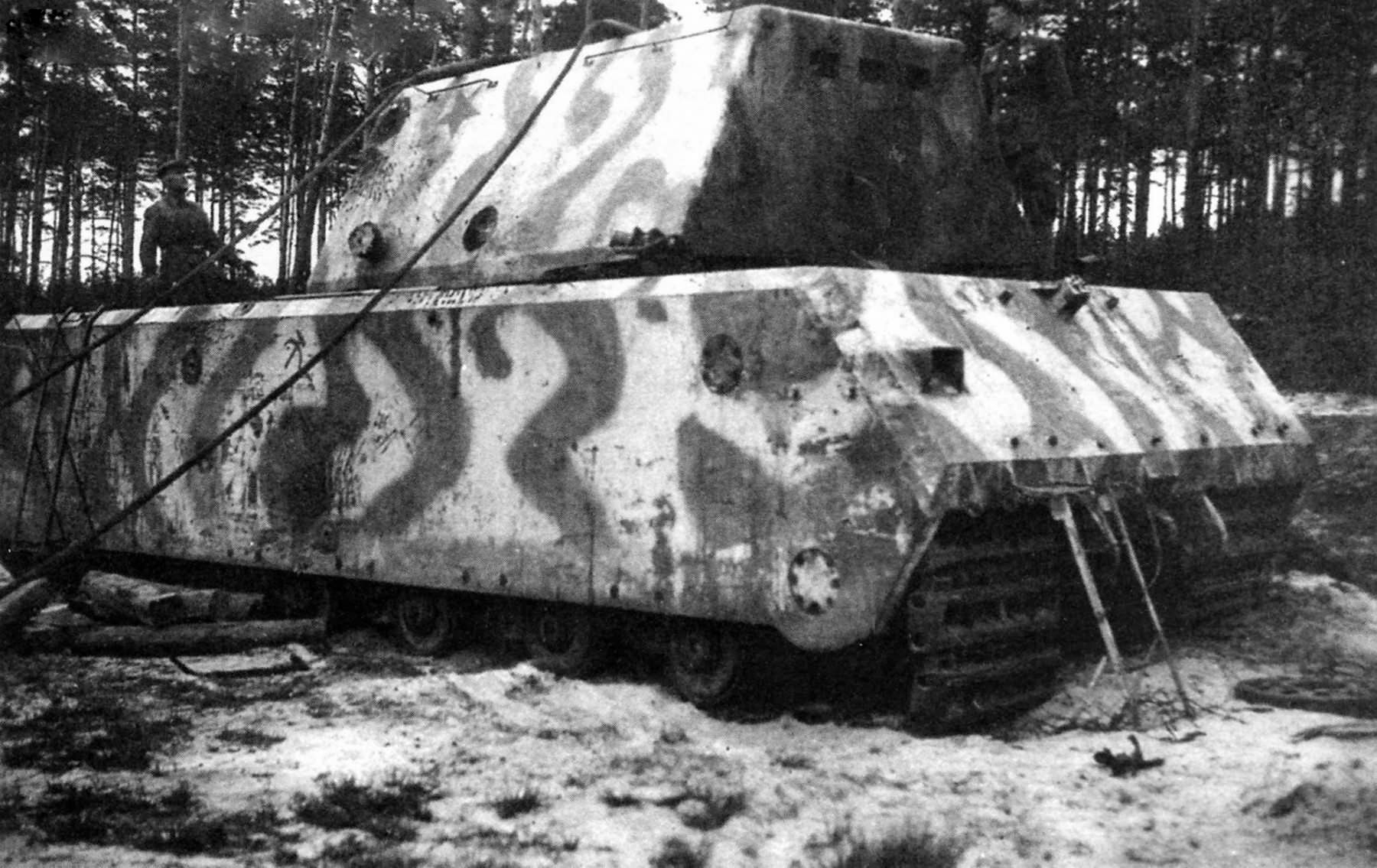
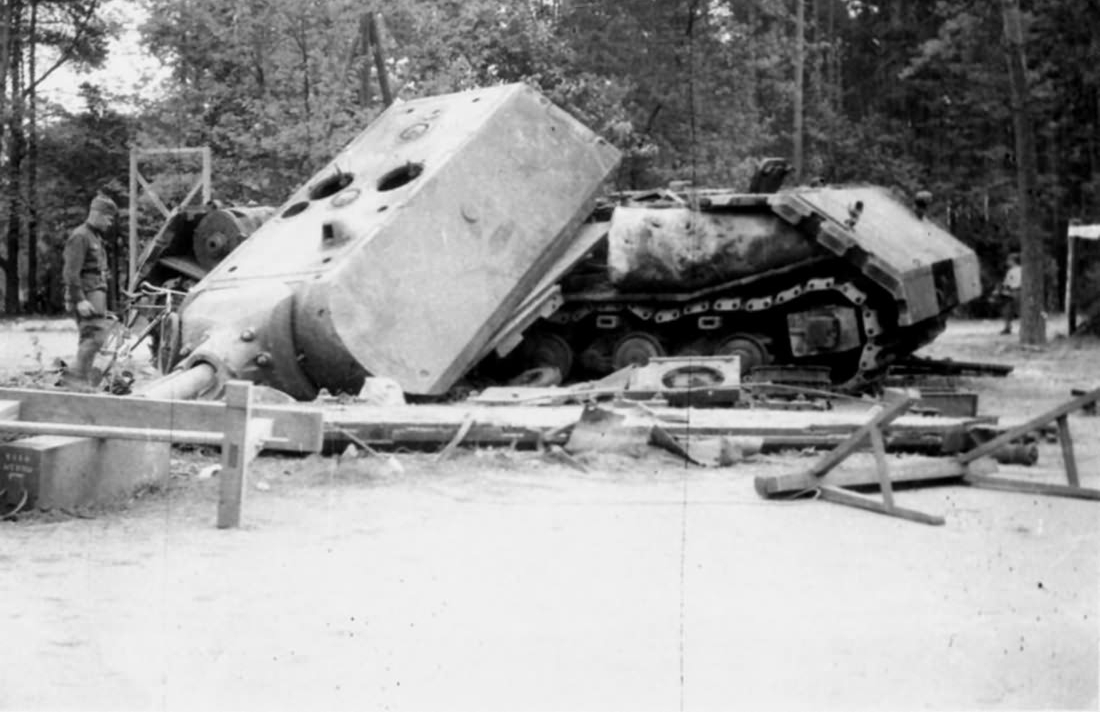
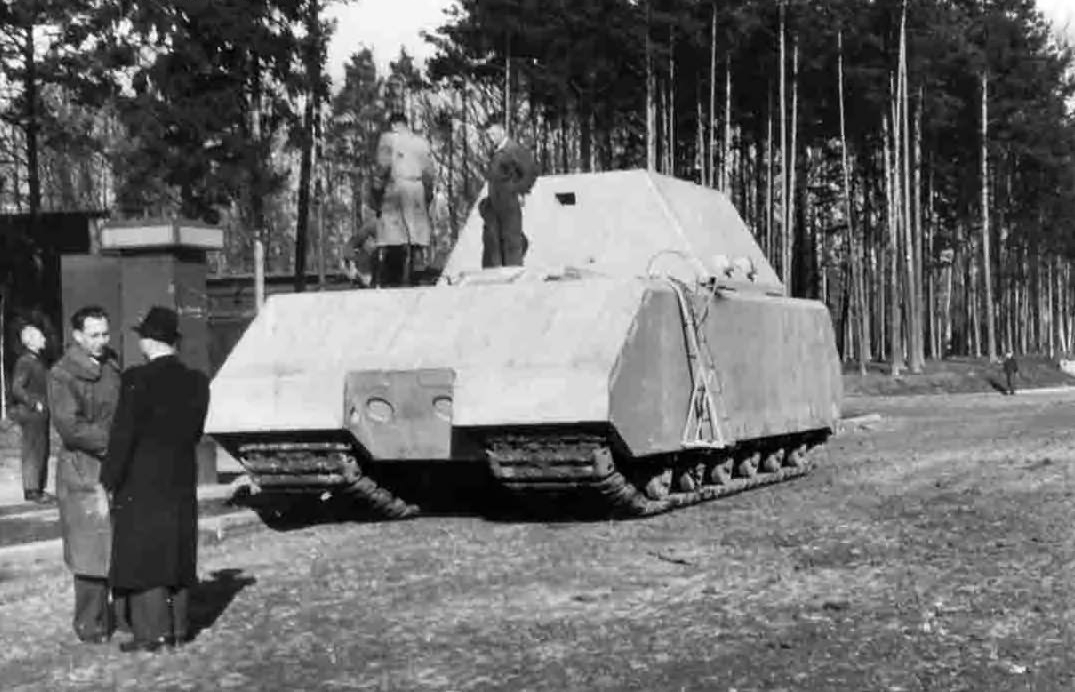
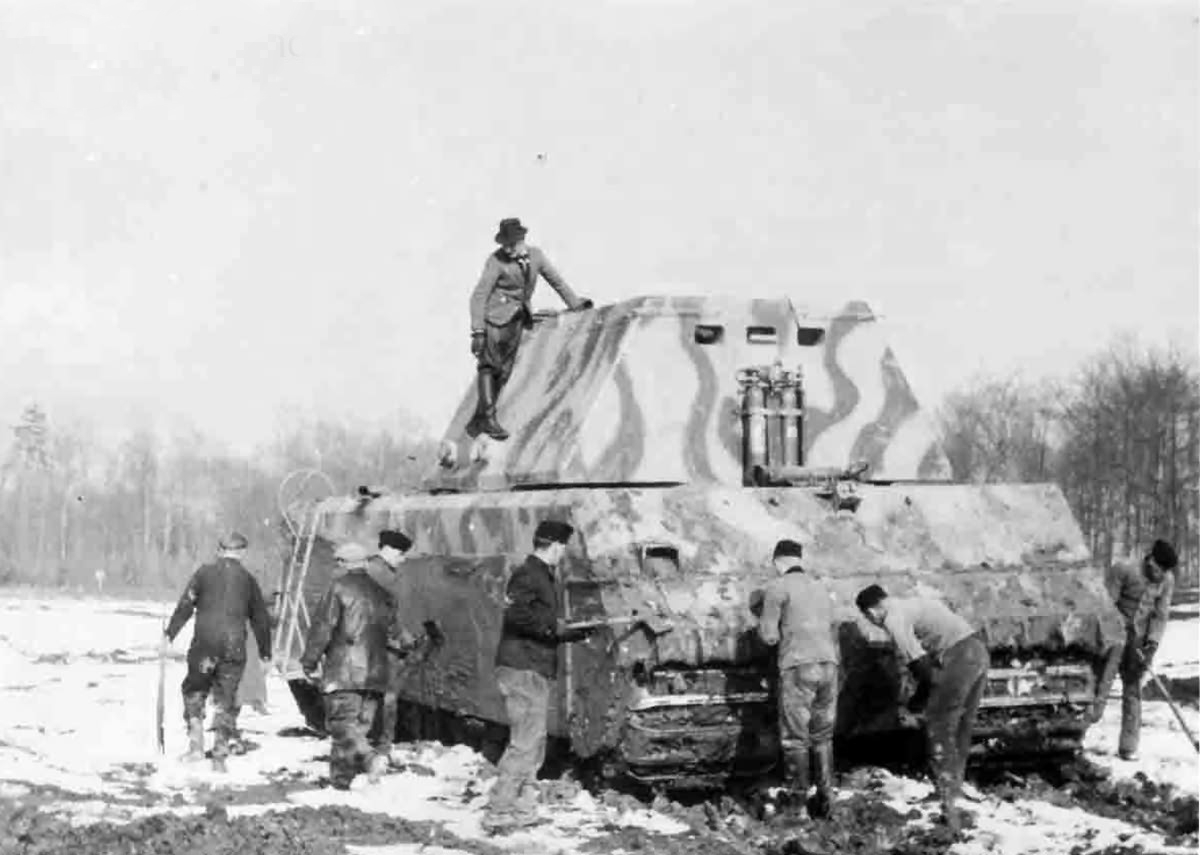
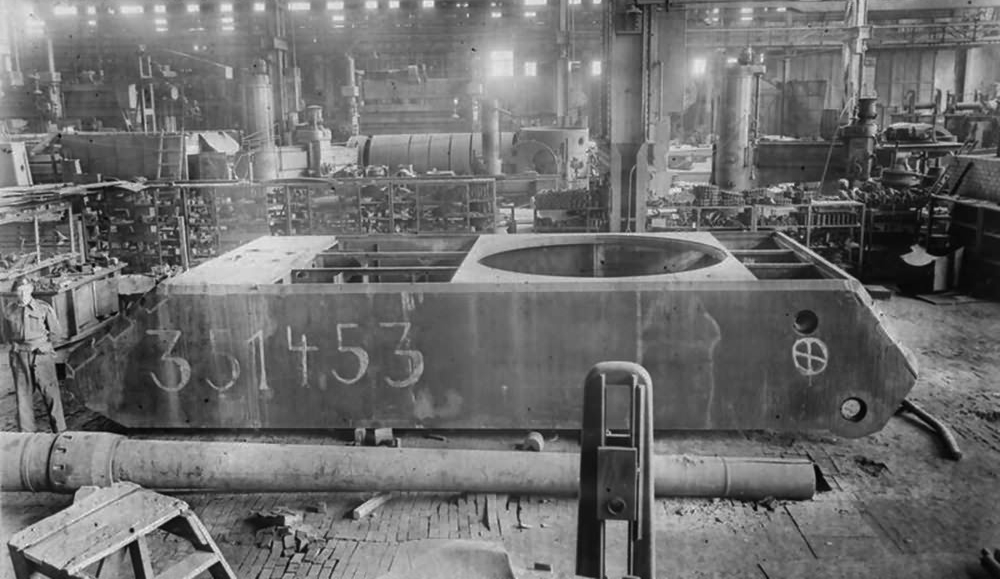
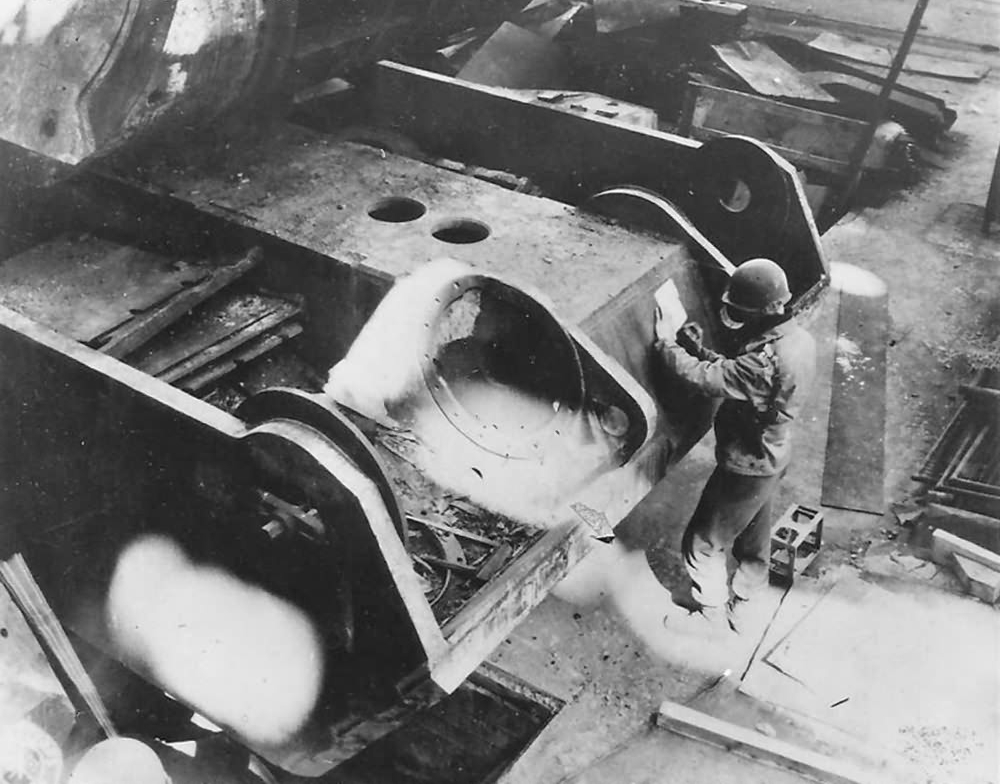
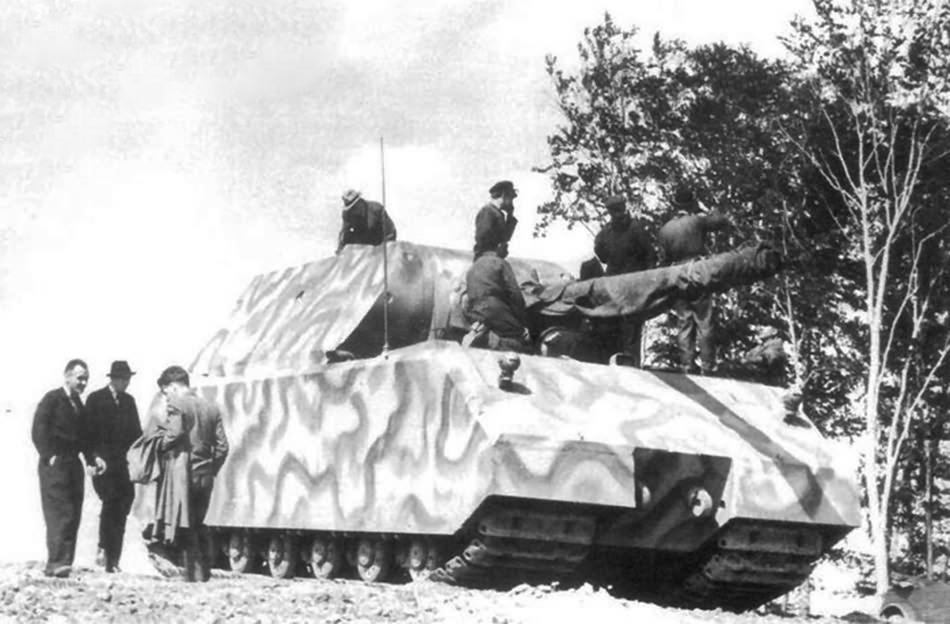
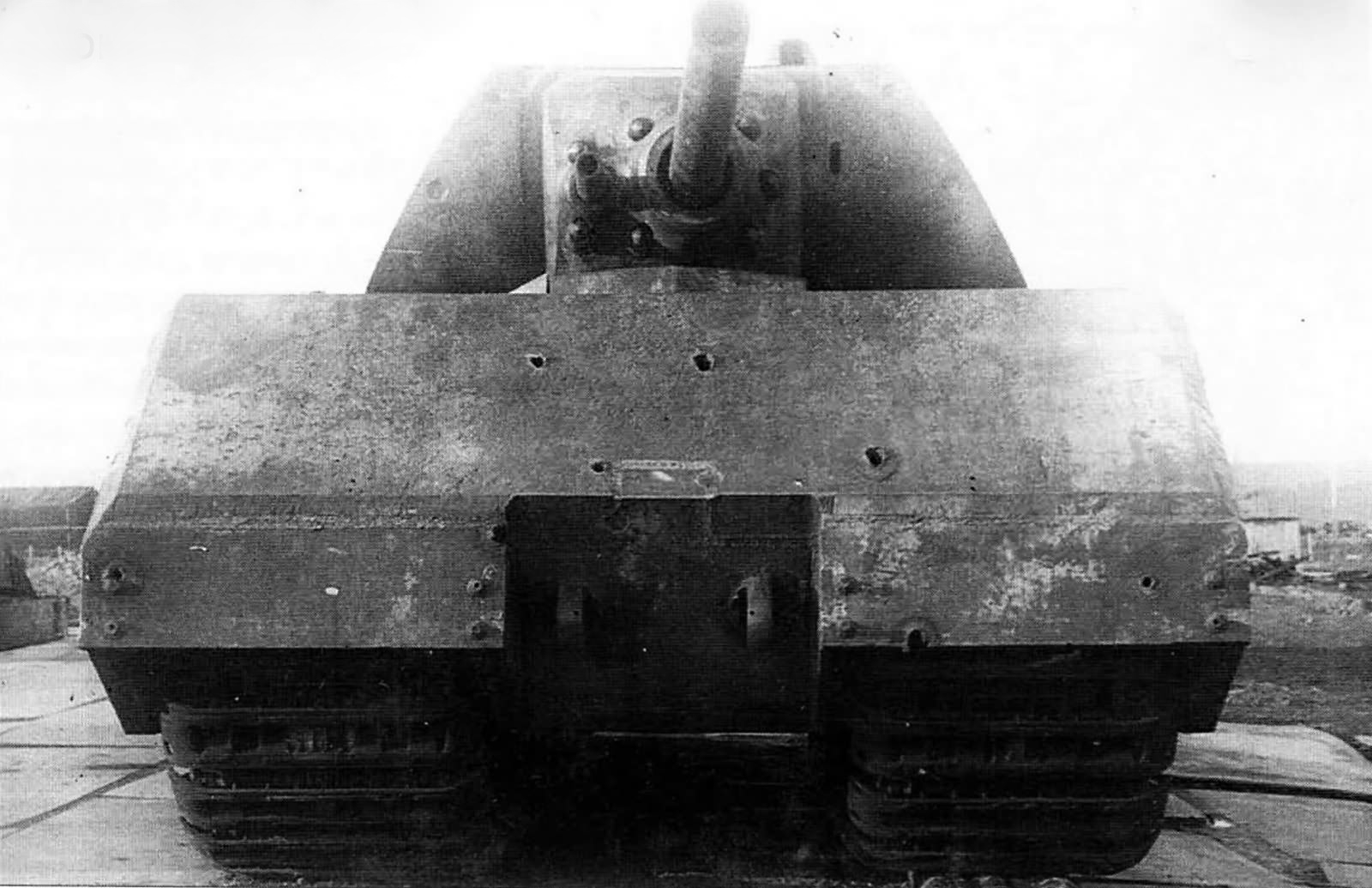
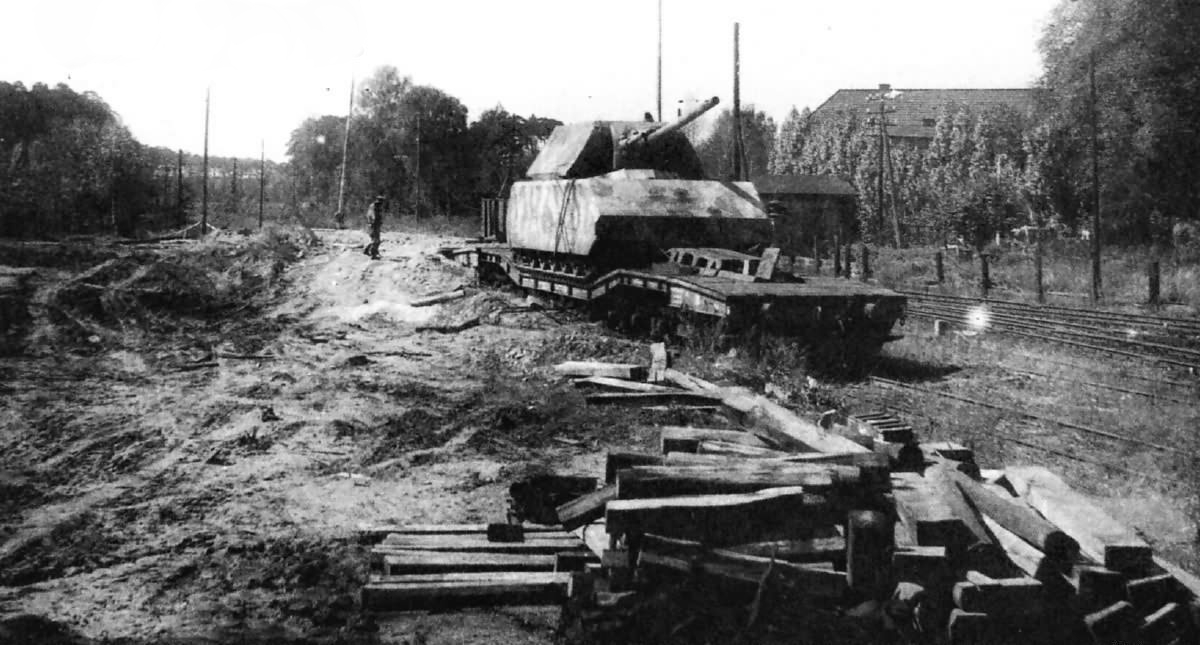
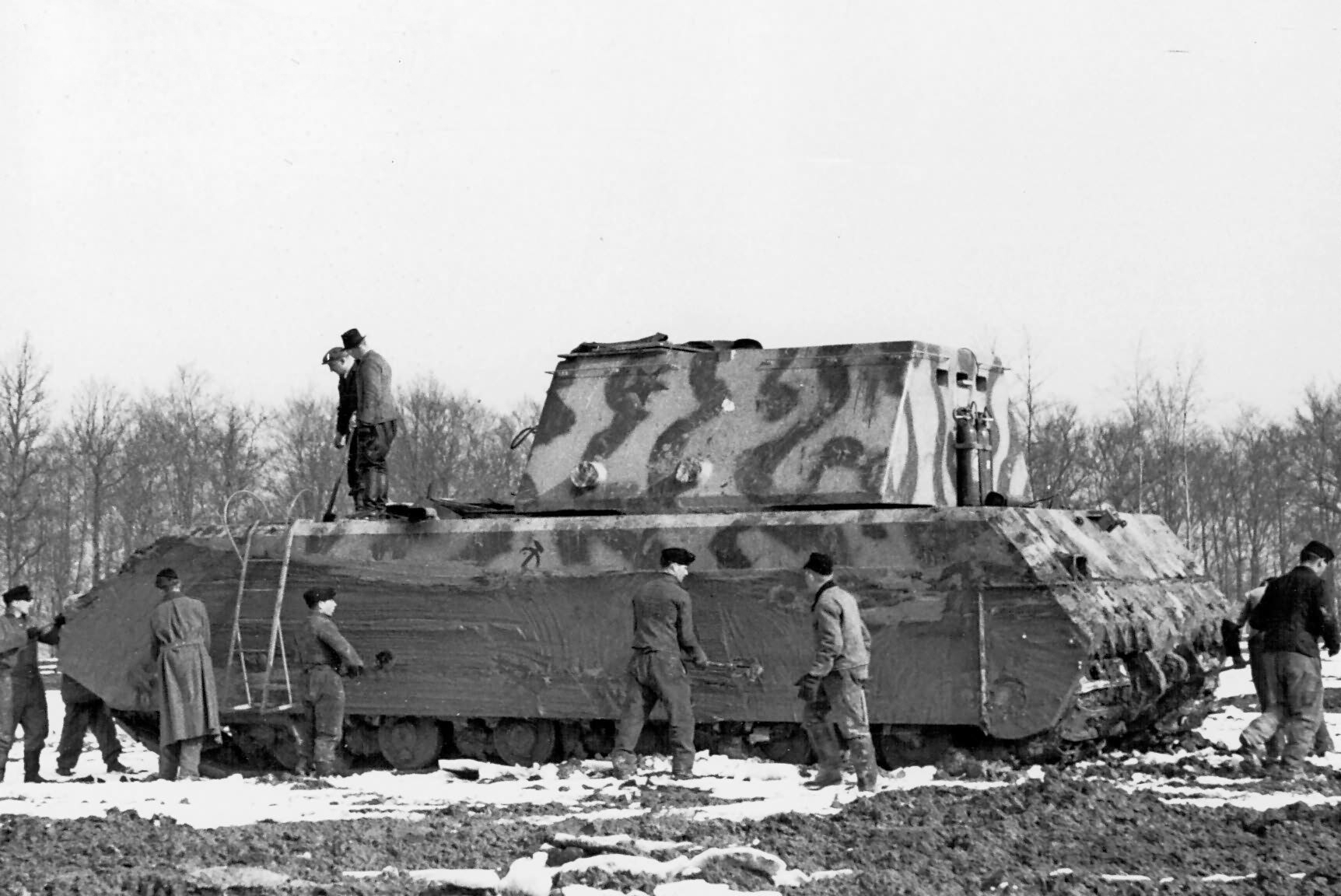
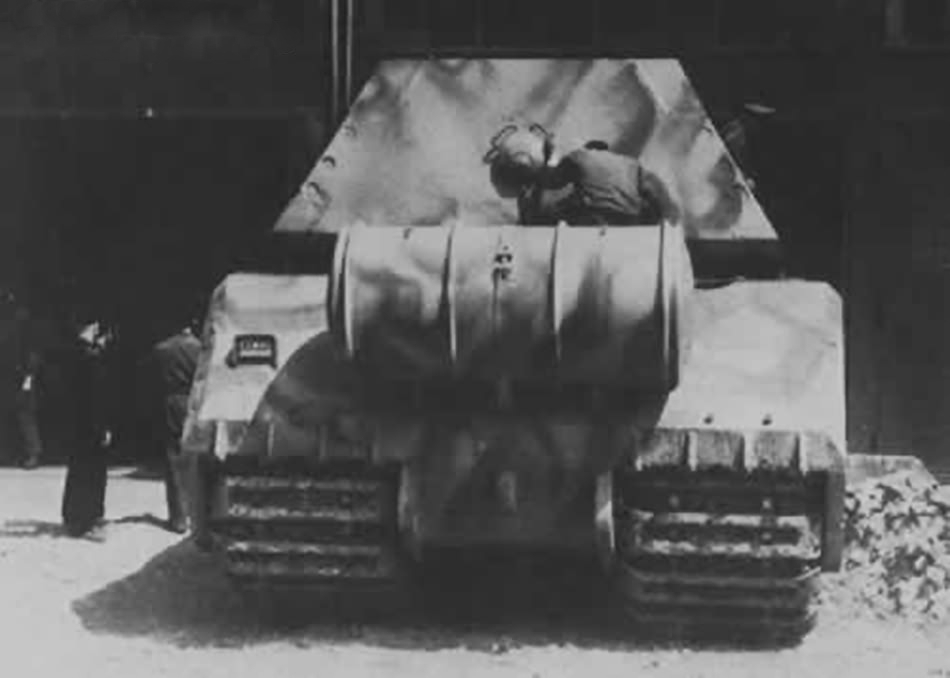
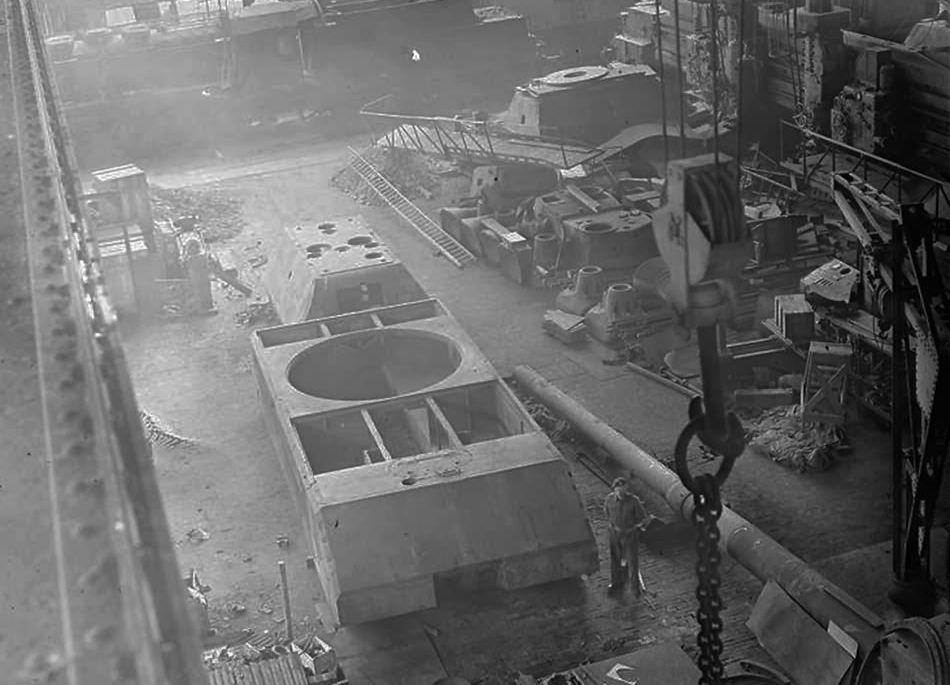
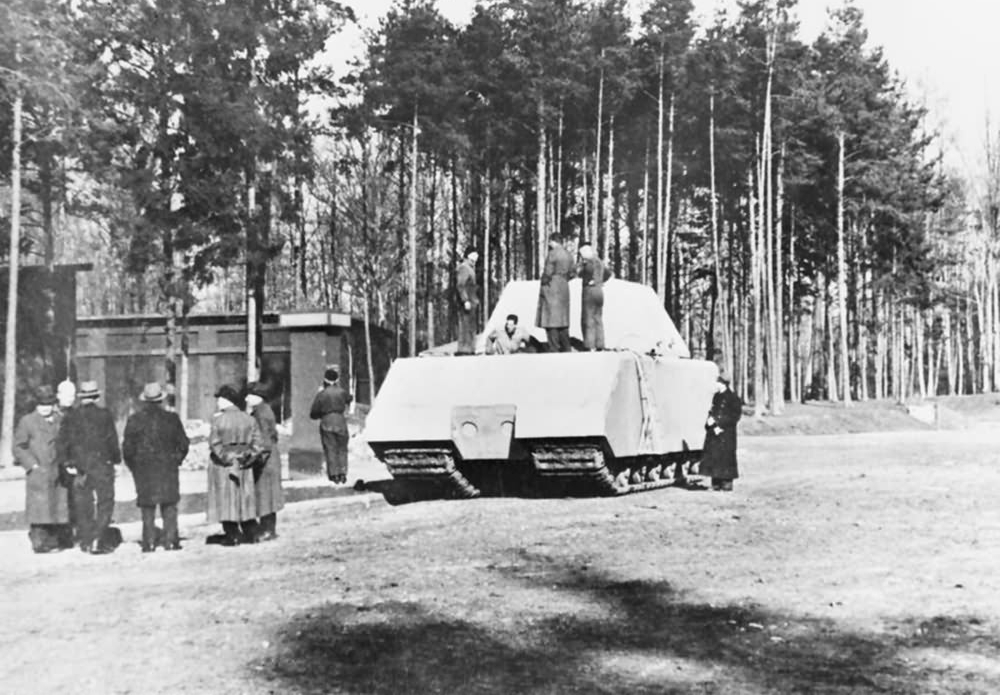
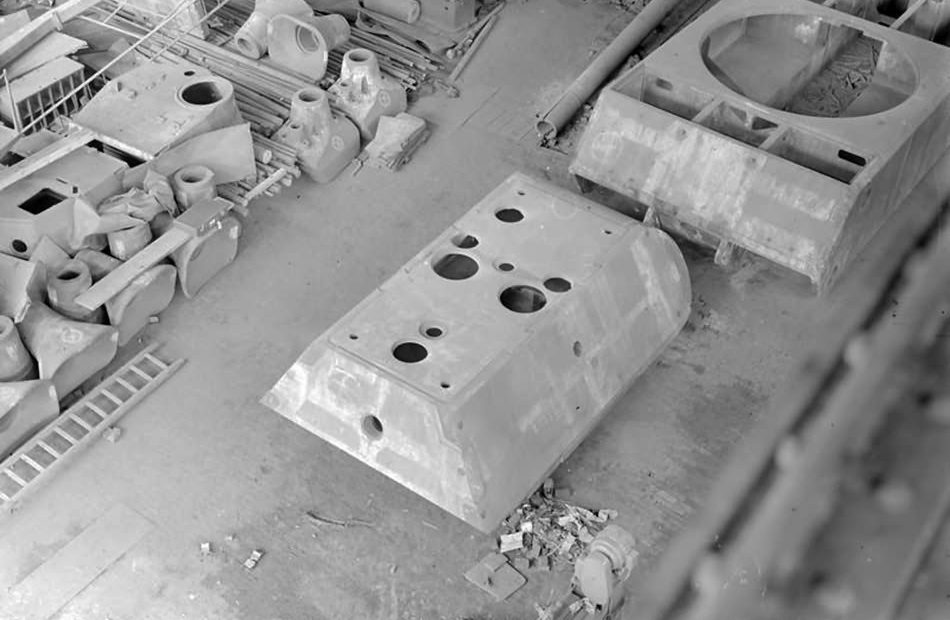
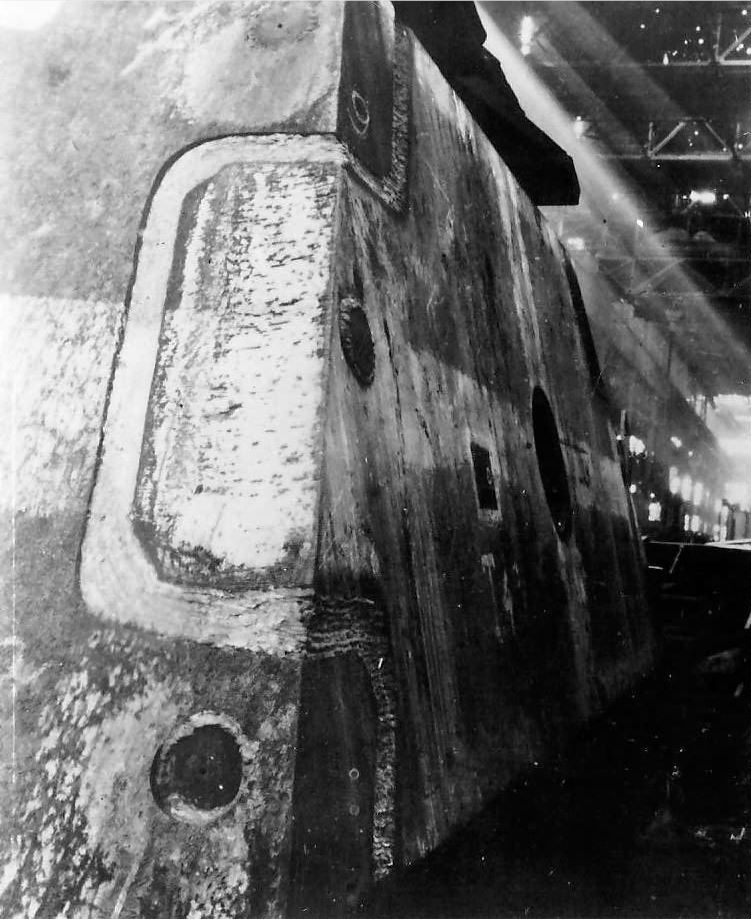
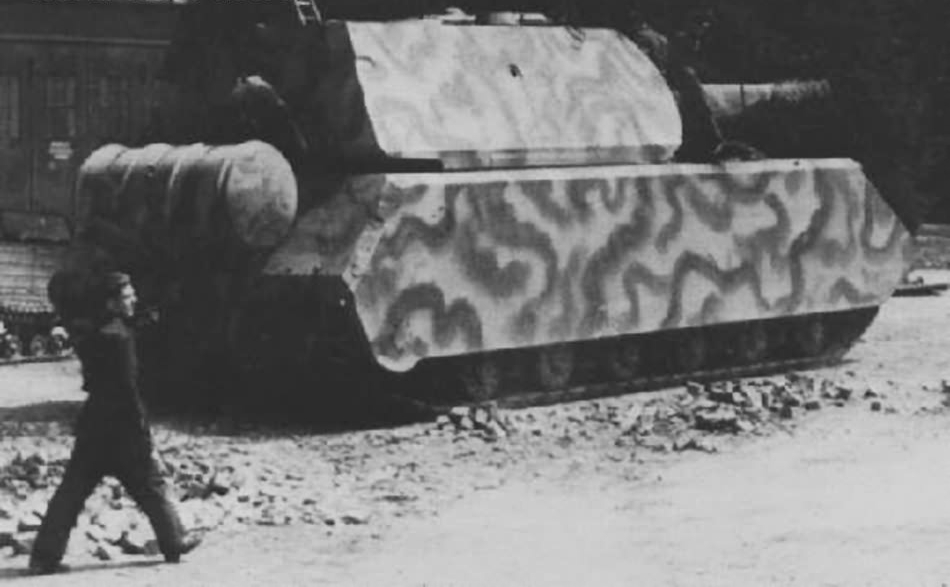
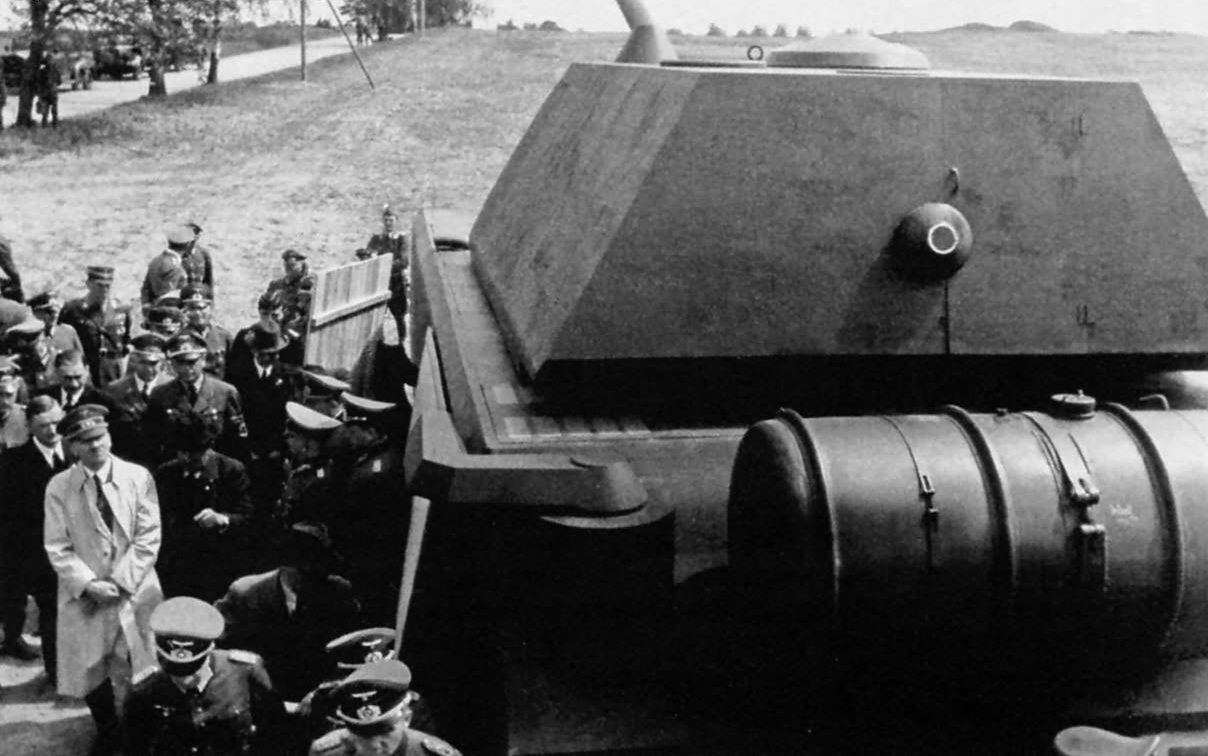
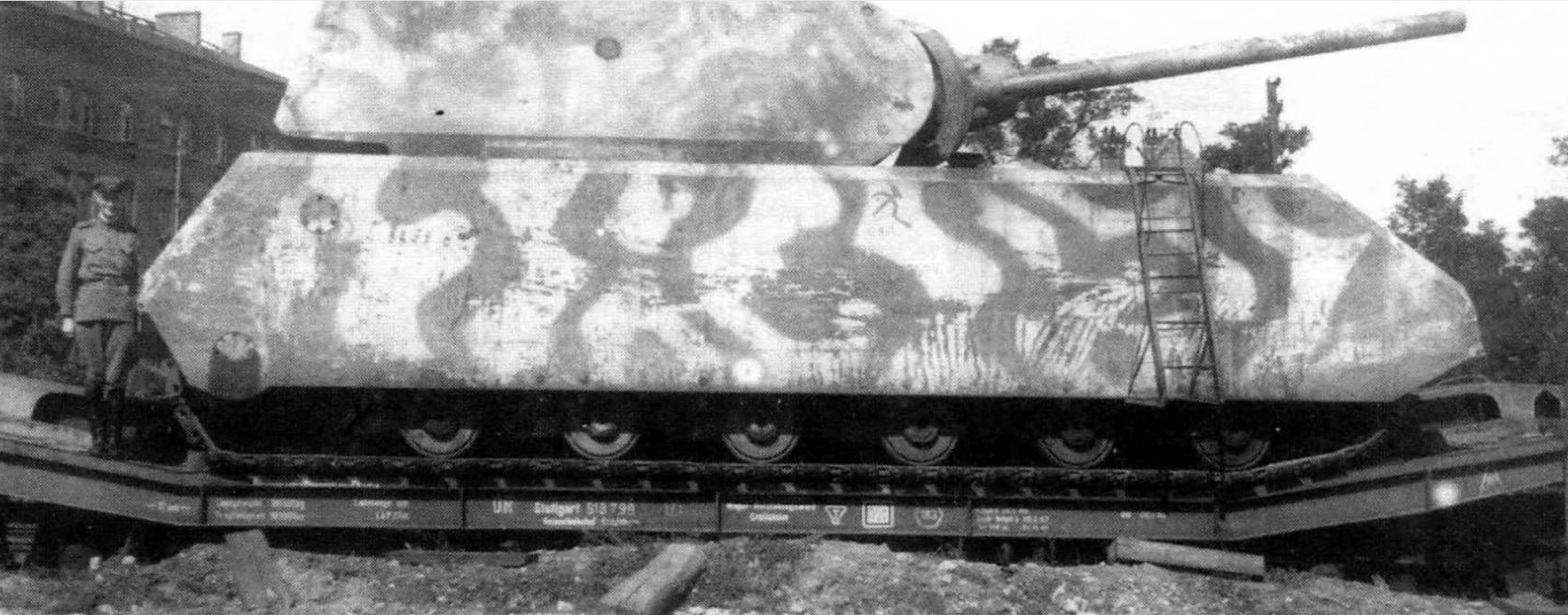
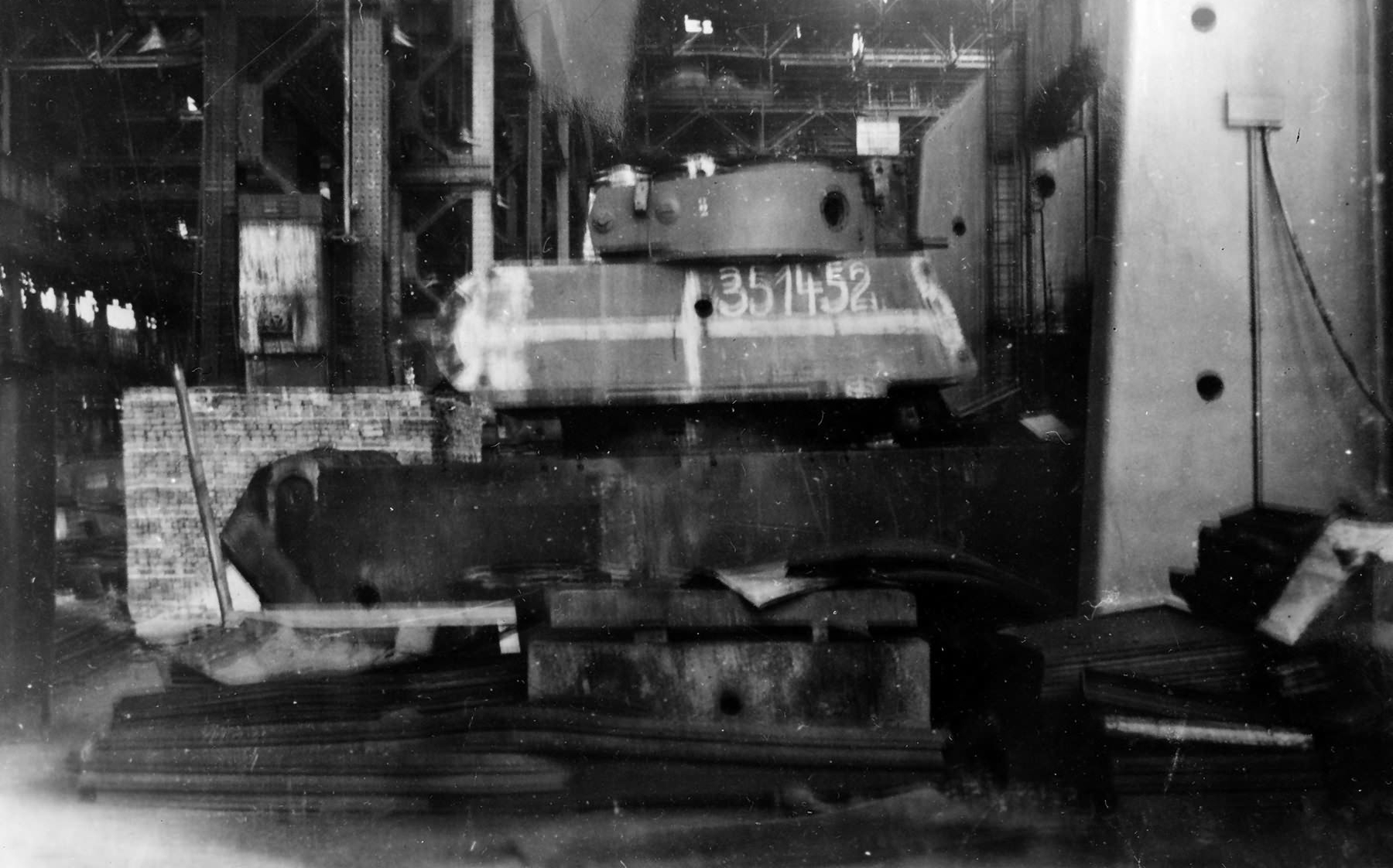
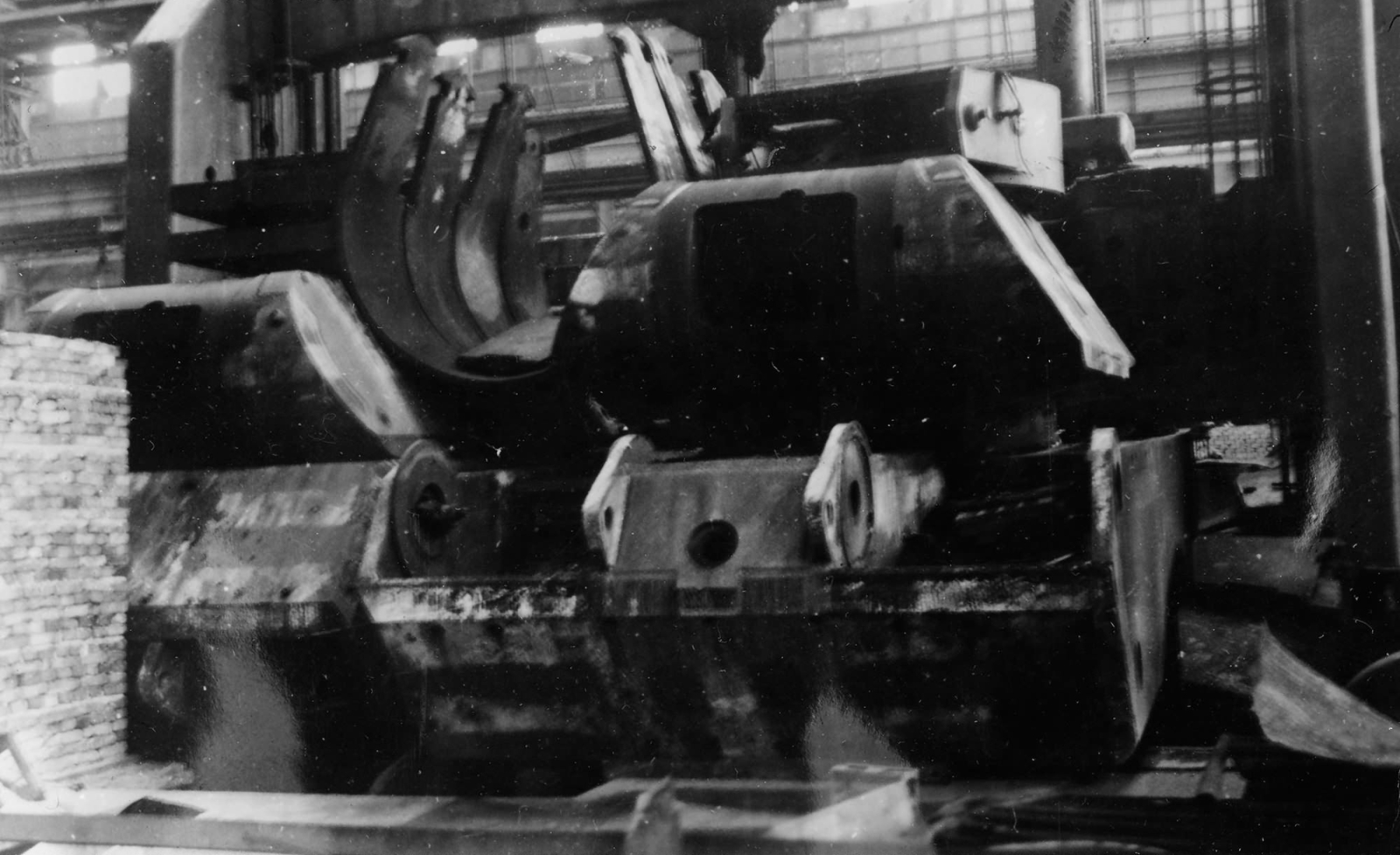
The Panzerkampfwagen VIII Maus (Sd.Kfz. 205 / Type 205) was a German super-heavy tank designed by Ferdinand Porsche and remains the heaviest fully enclosed armored fighting vehicle ever built. Initiated following a March 1942 conference with Adolf Hitler and Albert Speer, the project aimed to create an indestructible breakthrough tank featuring armor up to 220 mm thick and co-axial main armament consisting of a 12.8 cm KwK 44 L/55 gun and a 7.5 cm KwK 44 L/36.5 gun. Weighing a massive 188 tons, the vehicle utilized a hybrid petrol-electric (V1 prototype with a Maybach MB 509) or diesel-electric (V2 prototype with a Maybach MB 517) powertrain, which powered twin electric drive motors to achieve a top speed of roughly 20 km/h; due to its immense weight precluding the use of standard bridges, it was engineered to cross rivers using a snorkel apparatus while receiving power via umbilical cables from a paired unit on the bank. Assembled by Alkett using Krupp hulls and turrets, Škoda suspension, and Daimler-Benz engines, only two prototypes were constructed before the project was canceled in August 1944 due to severe resource shortages and a lack of tactical utility. Neither prototype saw combat, and both were captured by Soviet forces at the Kummersdorf proving grounds in April 1945, after which the hull of the first prototype and the functional turret of the second were combined into the single surviving example now displayed at the Kubinka Tank Museum.