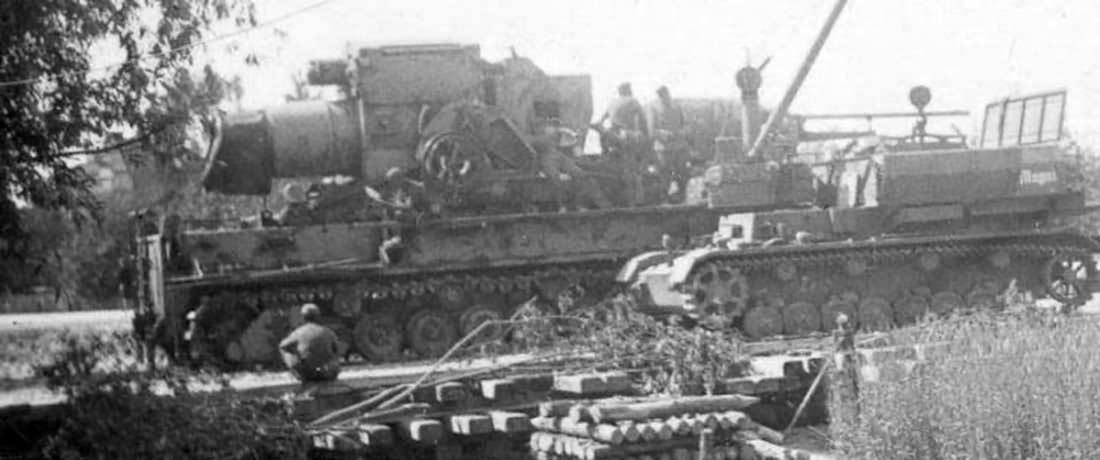
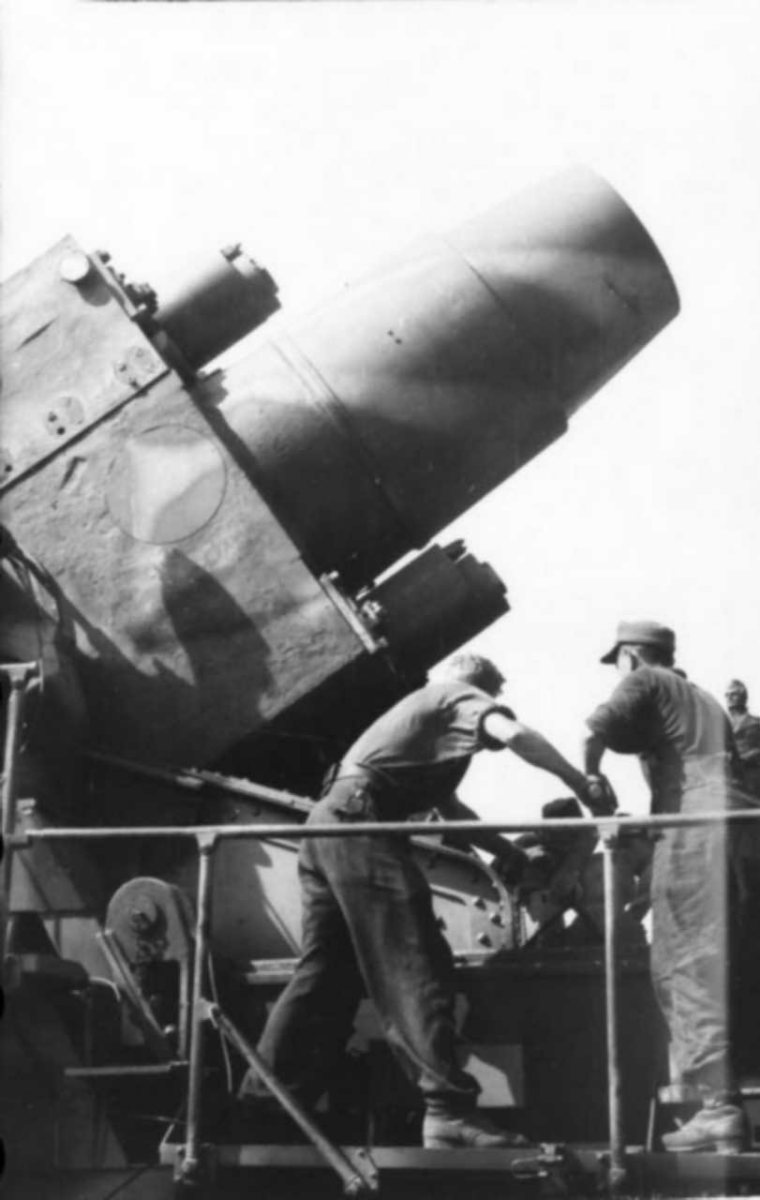
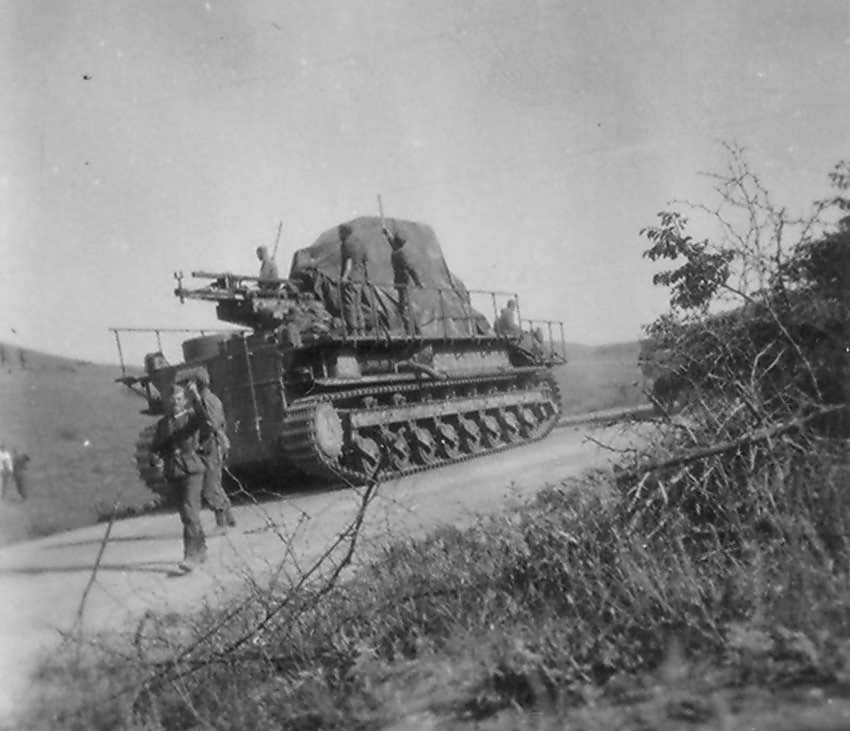
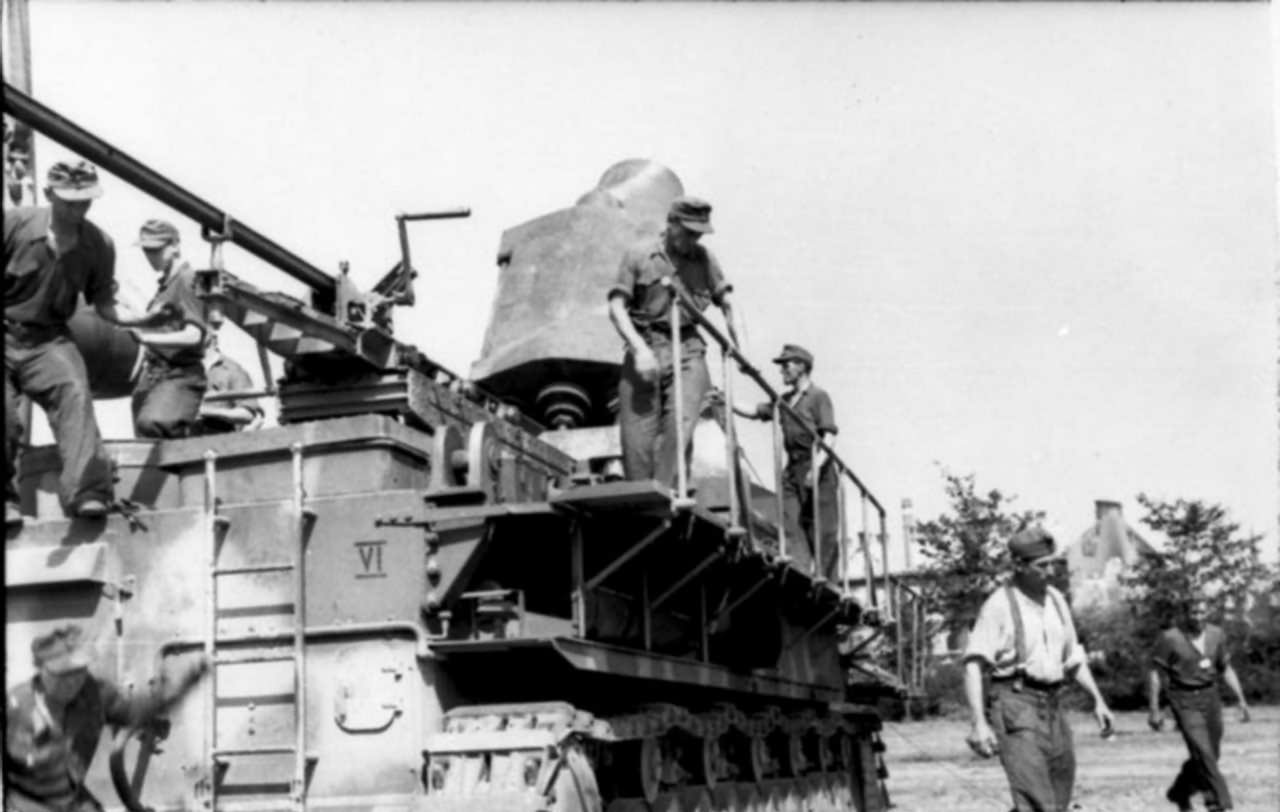
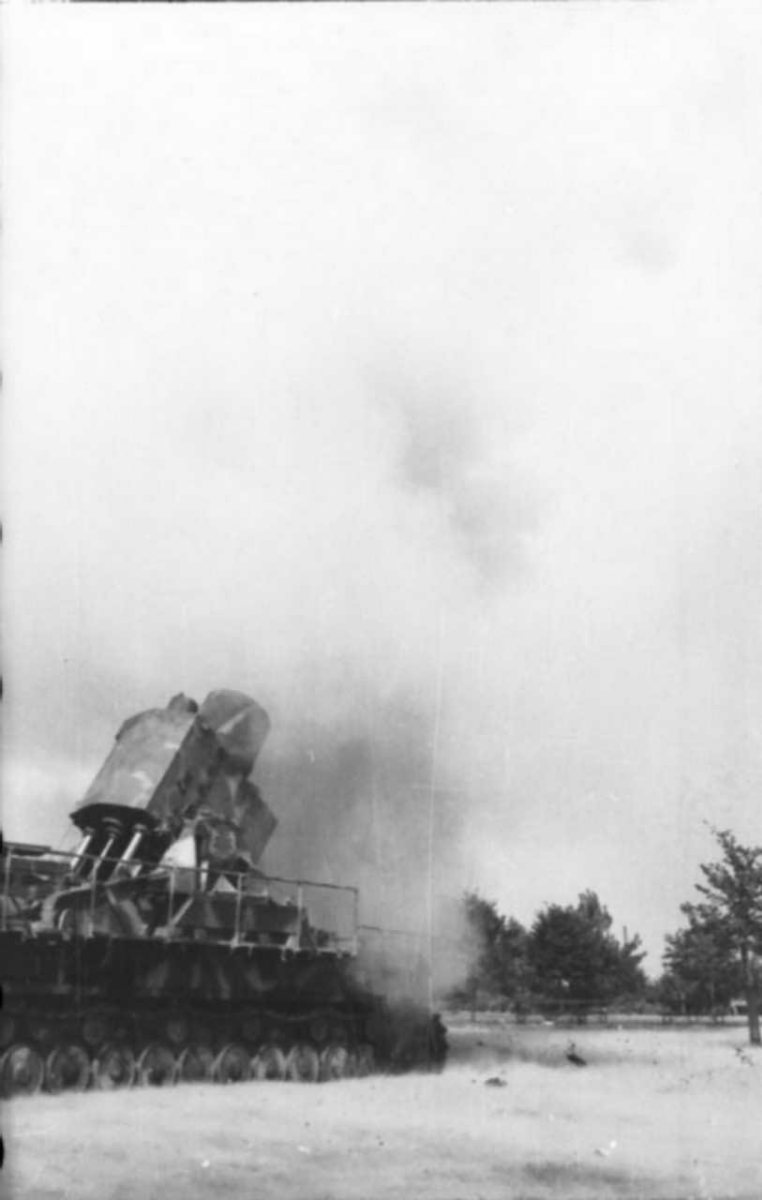
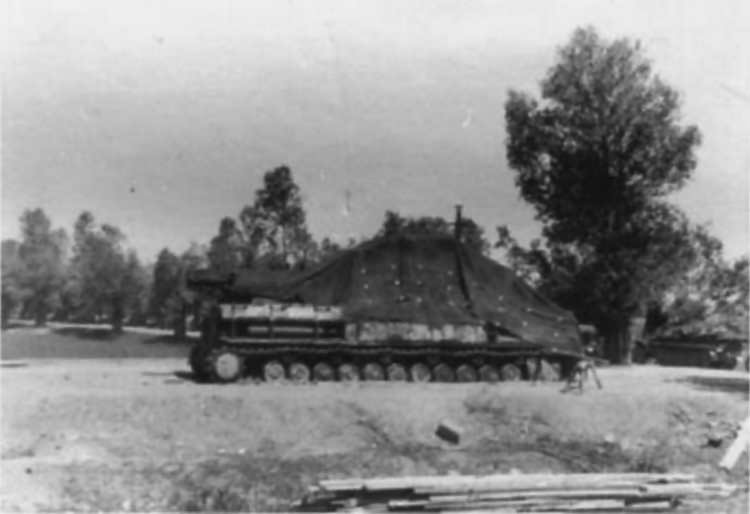
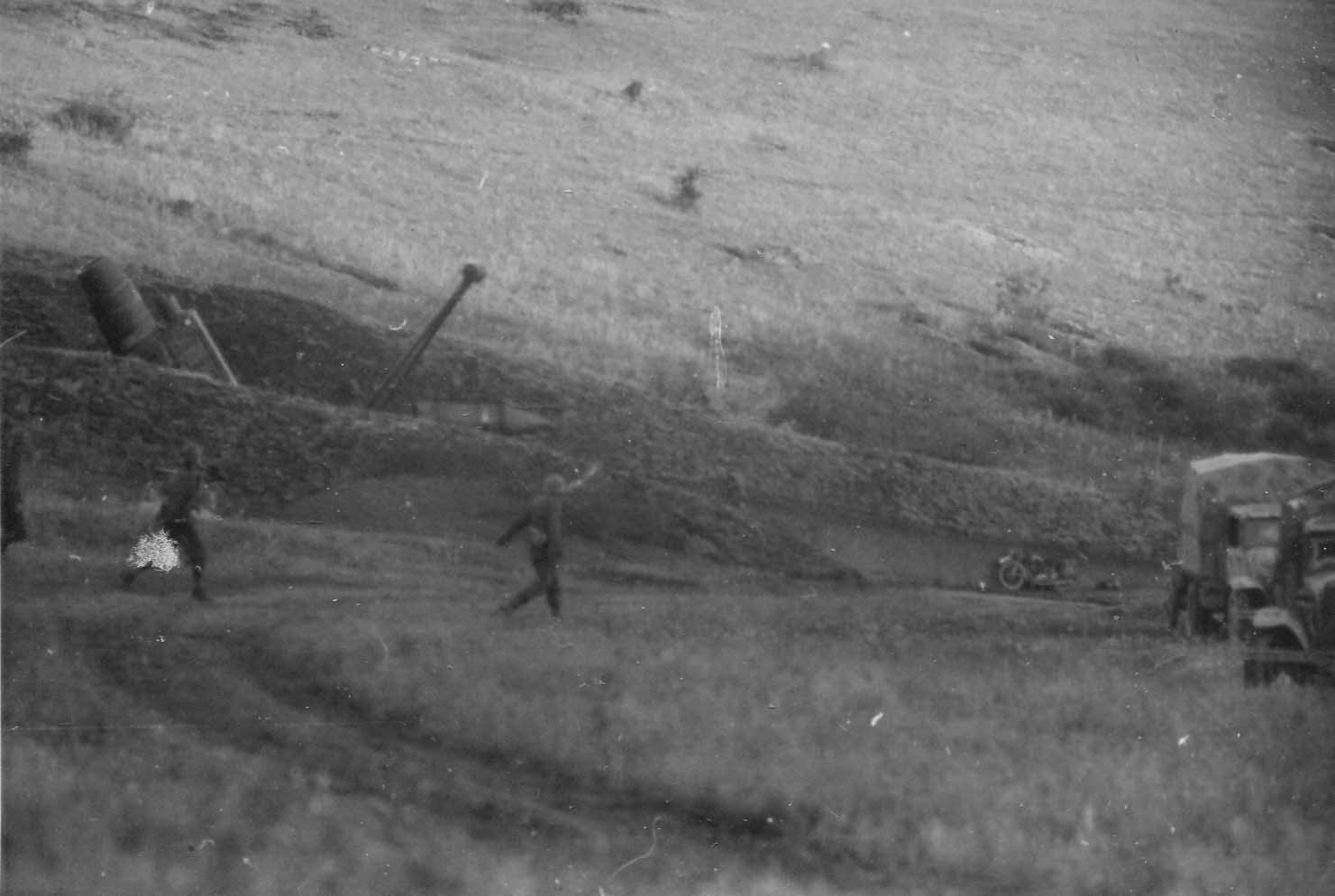
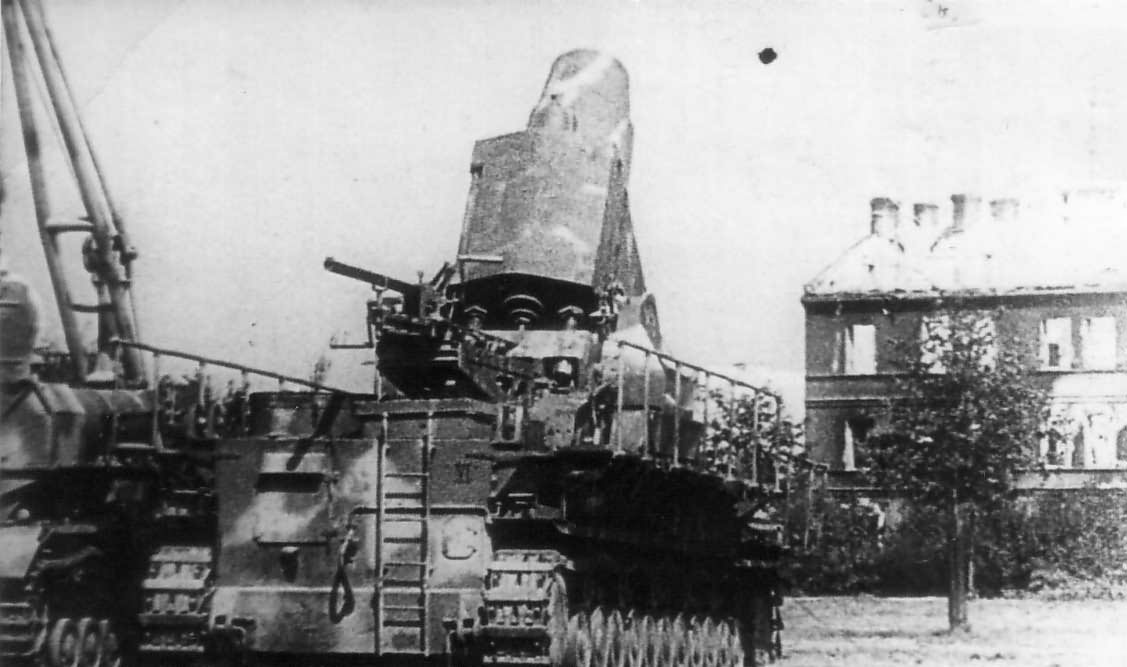
The Karl-Gerät (040/041), also known as Mörser Karl, was a massive World War II German self-propelled siege mortar designed by Rheinmetall from 1936 to attack fortified positions like the Maginot Line. Named after General Karl Becker, seven units were built between 1940 and 1941 (six operational guns nicknamed “Adam”, “Eva”, “Thor”, “Odin”, “Loki”, and “Ziu”, plus one test vehicle). The original Gerät 040 variant featured a 60 cm (L/7) barrel firing shells up to 2,170 kg, while three units were later fitted with the longer Gerät 041 54 cm (L/11.55) barrel to increase the firing range to over 10 km. The 124-ton vehicle relied on its onboard engine only for positioning and aiming—reaching a top speed of just 10 km/h—and was transported long distances via specialized Schnabel railcars or disassembled onto road trailers using a 35-ton crane. At the firing position, the chassis was lowered directly onto the ground to absorb the immense recoil, and each mortar was supported by converted Panzer IV ammunition carriers (Munitionsschlepper). Seeing combat between 1941 and 1945, the Karl-Gerät was deployed against the fortresses of Brest-Litovsk and Sevastopol, during the Warsaw Uprising, the Battle of the Bulge, and at the Ludendorff Bridge in Remagen, with only one vehicle surviving today.