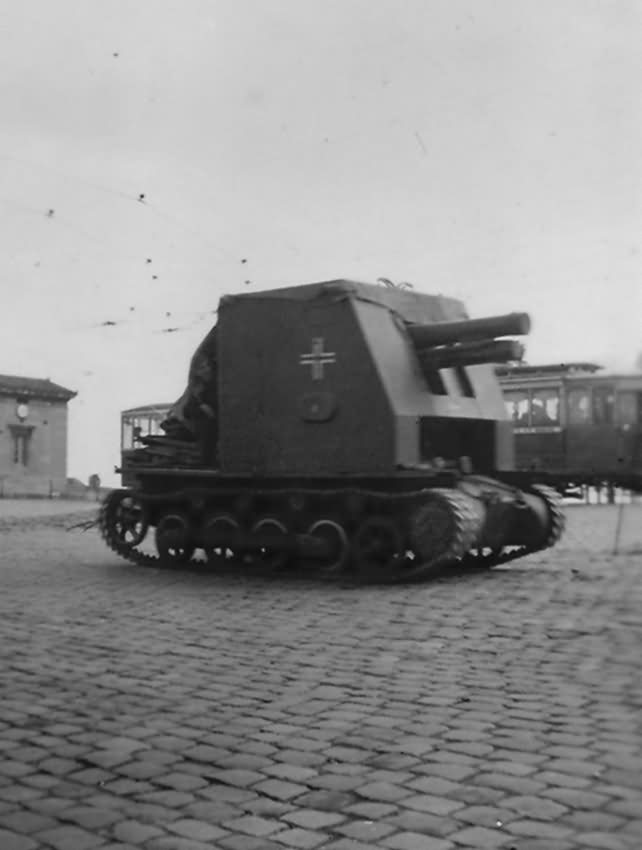
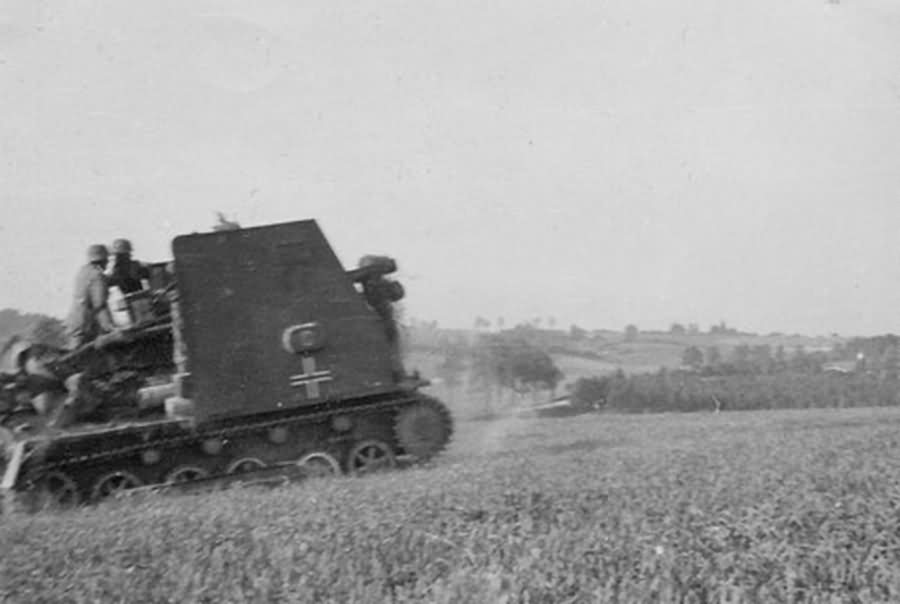
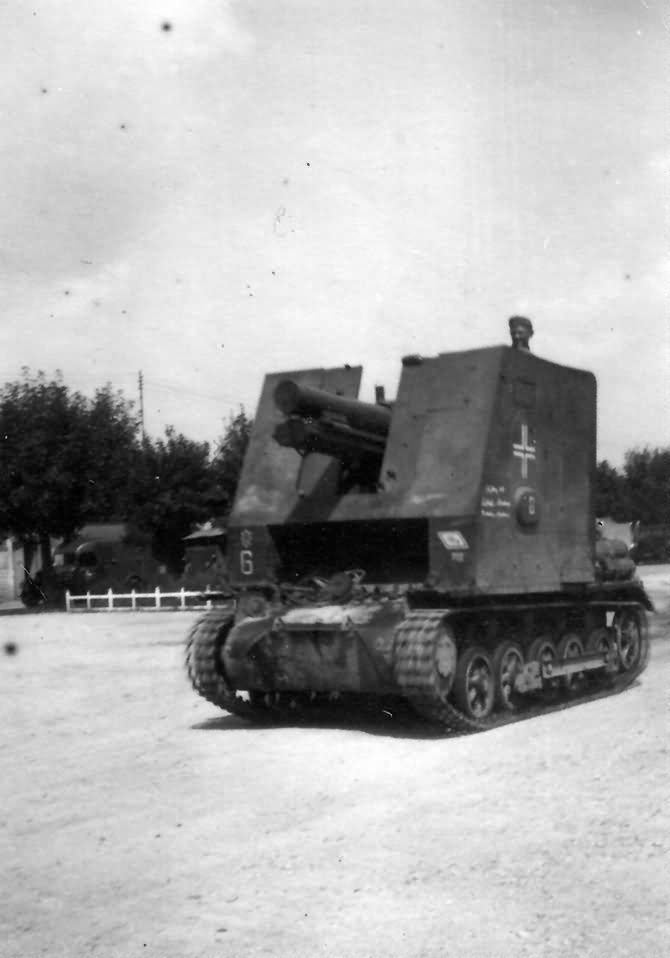
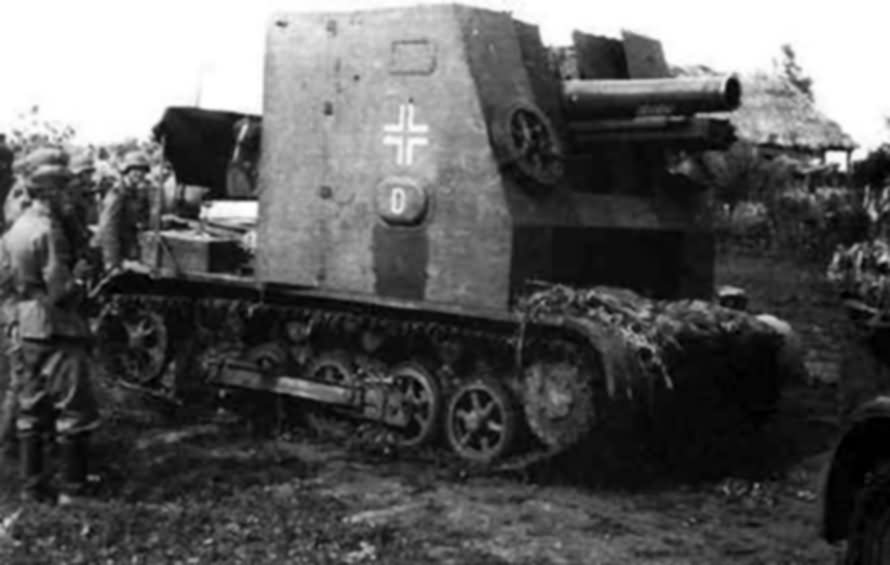
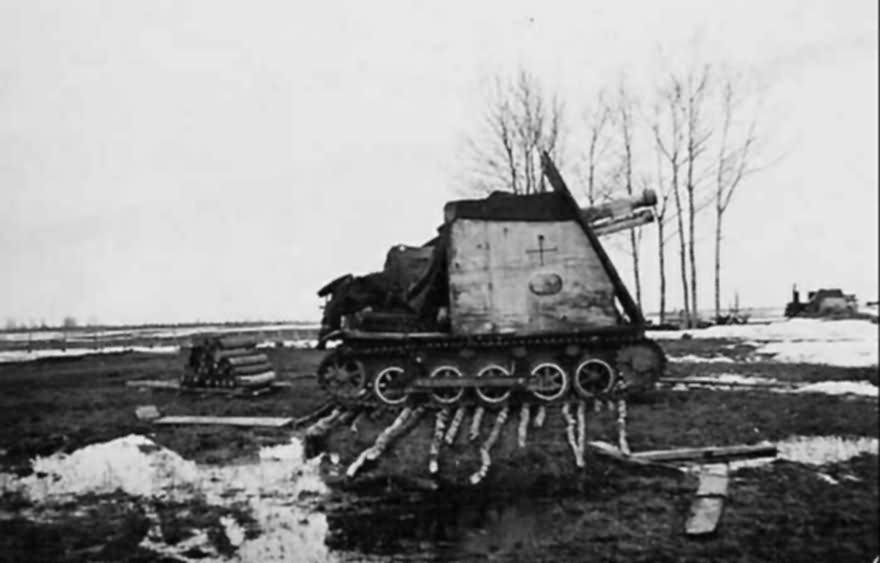
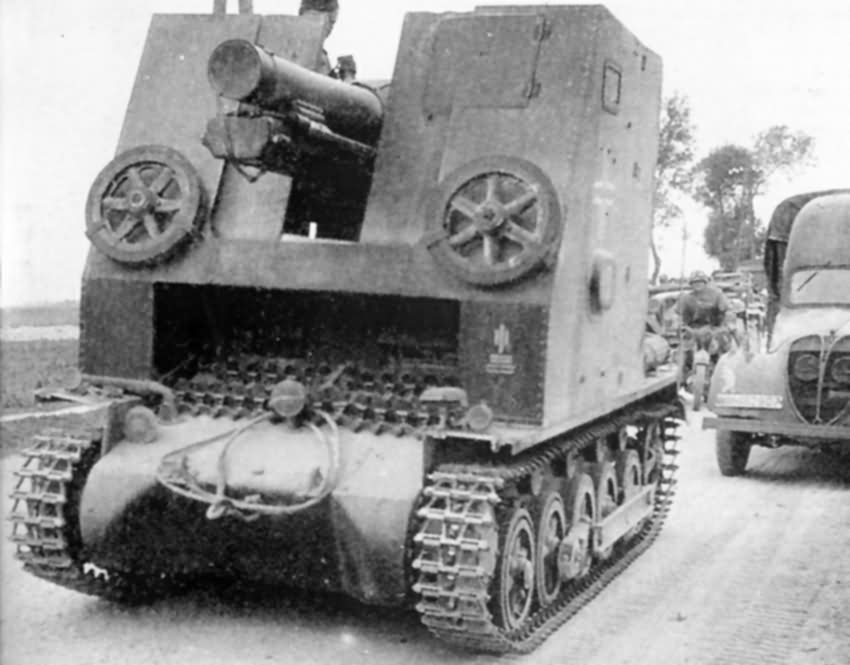
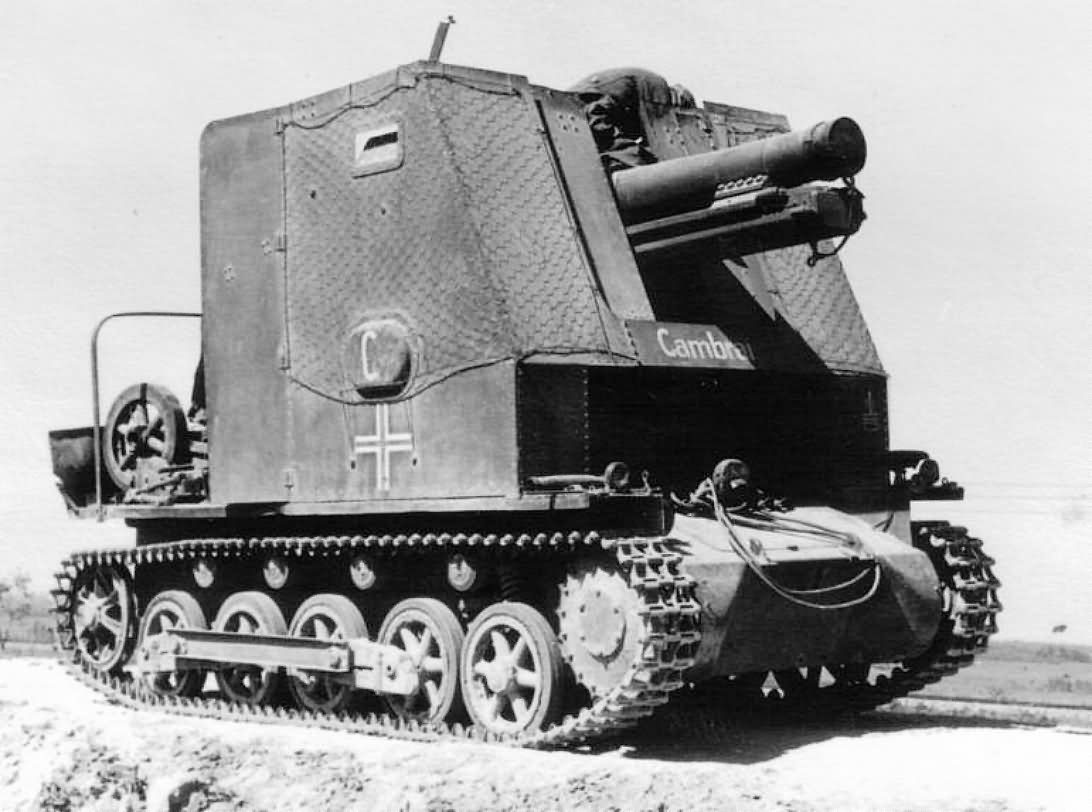
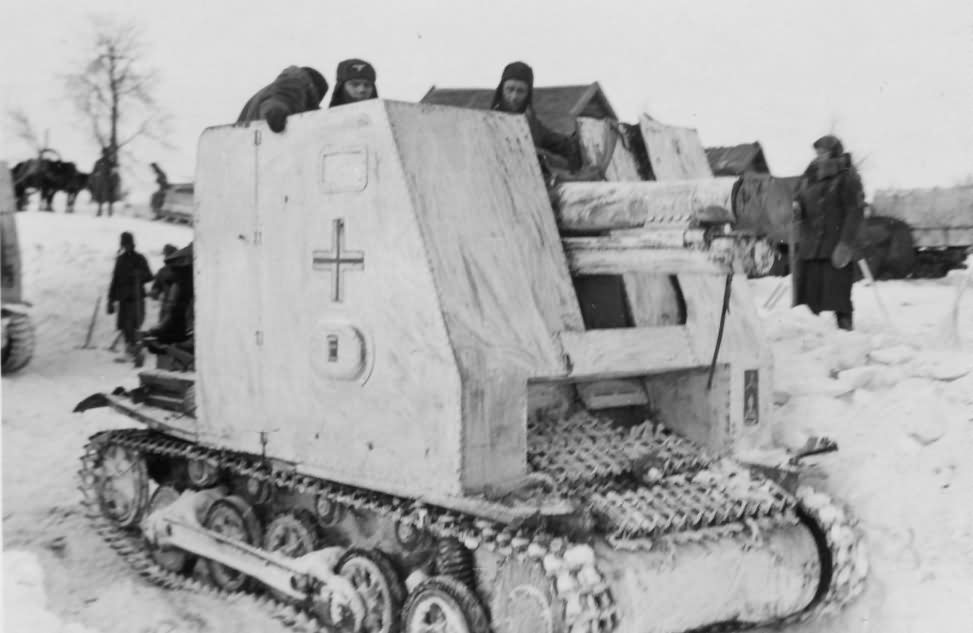
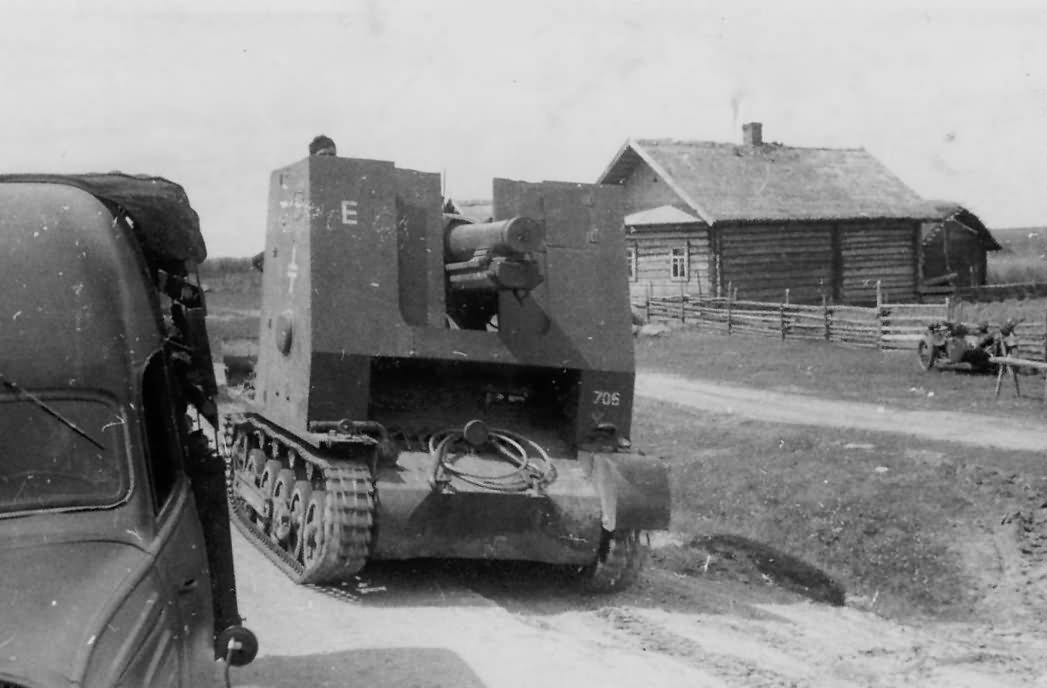
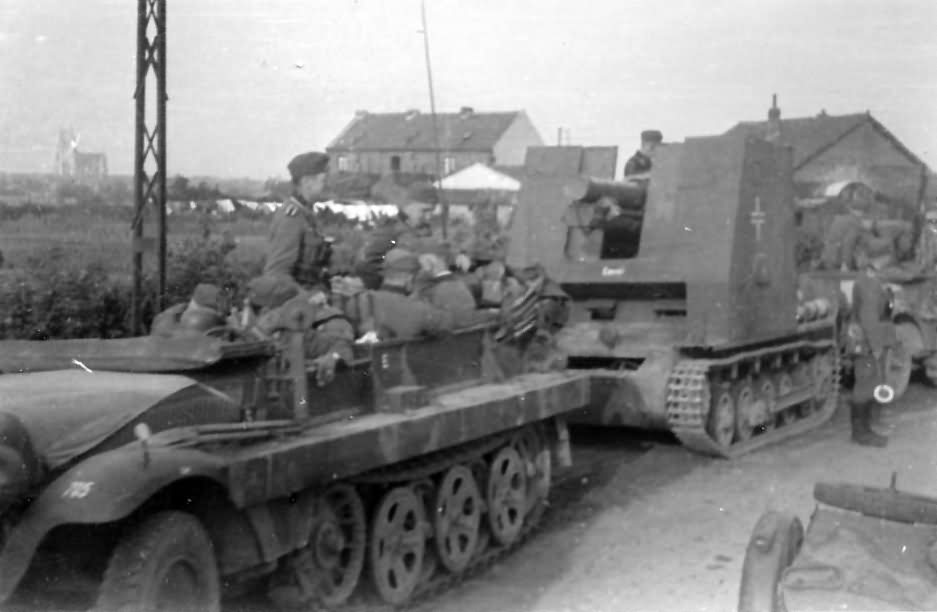
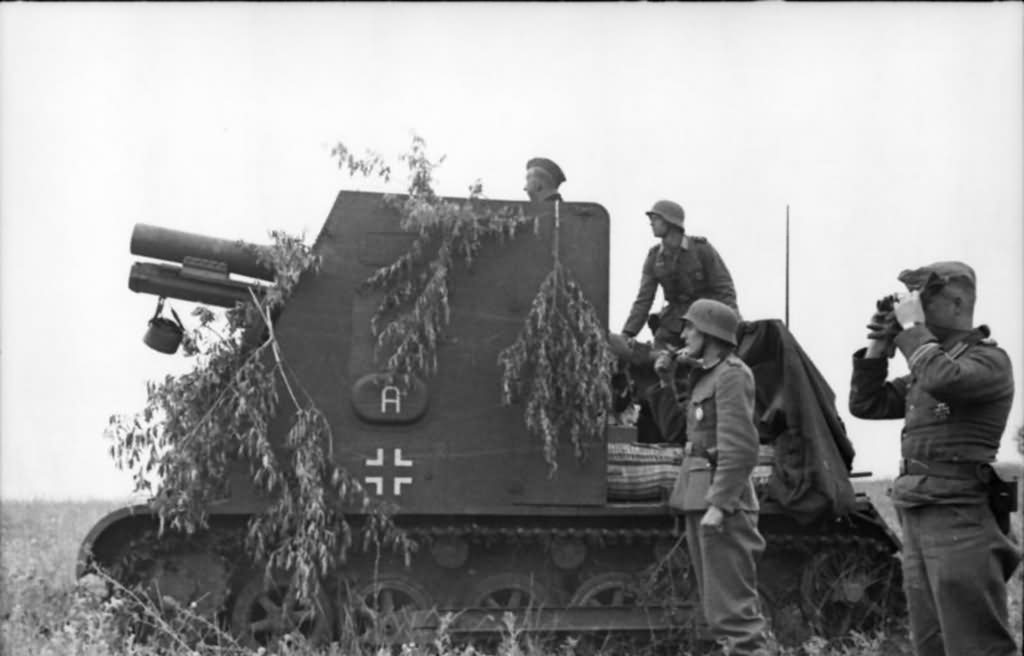
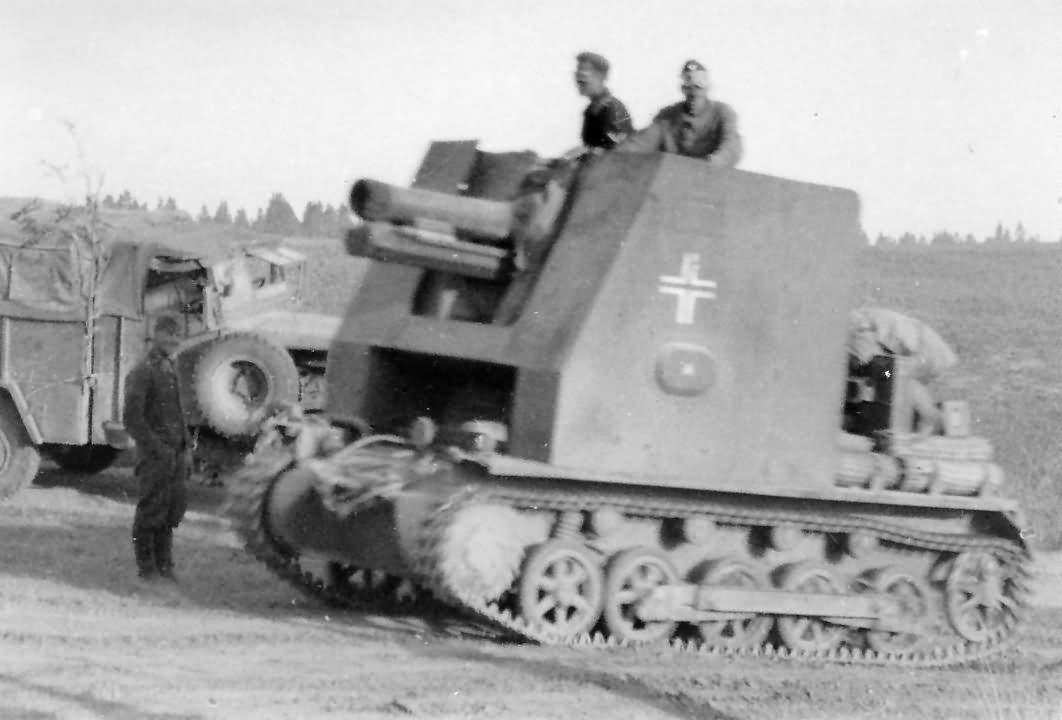
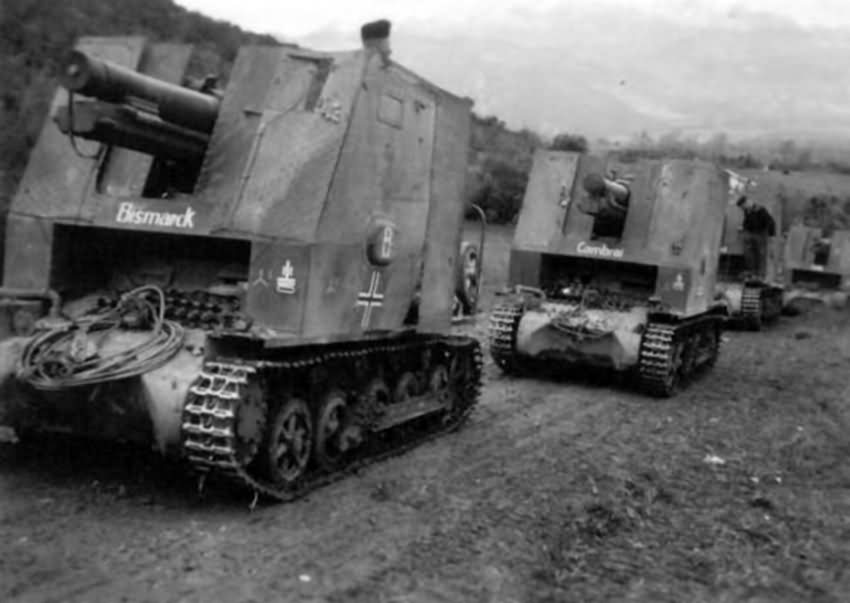
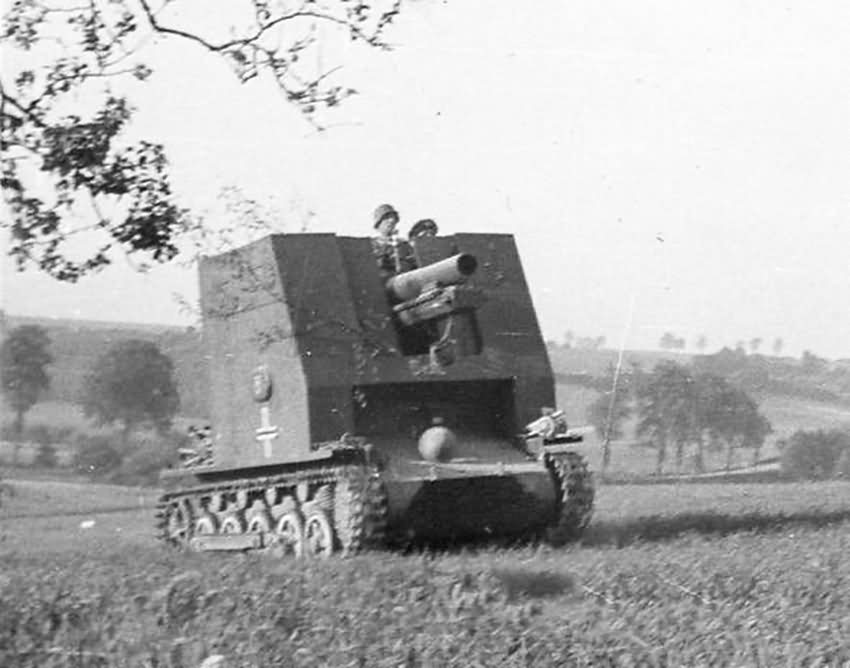
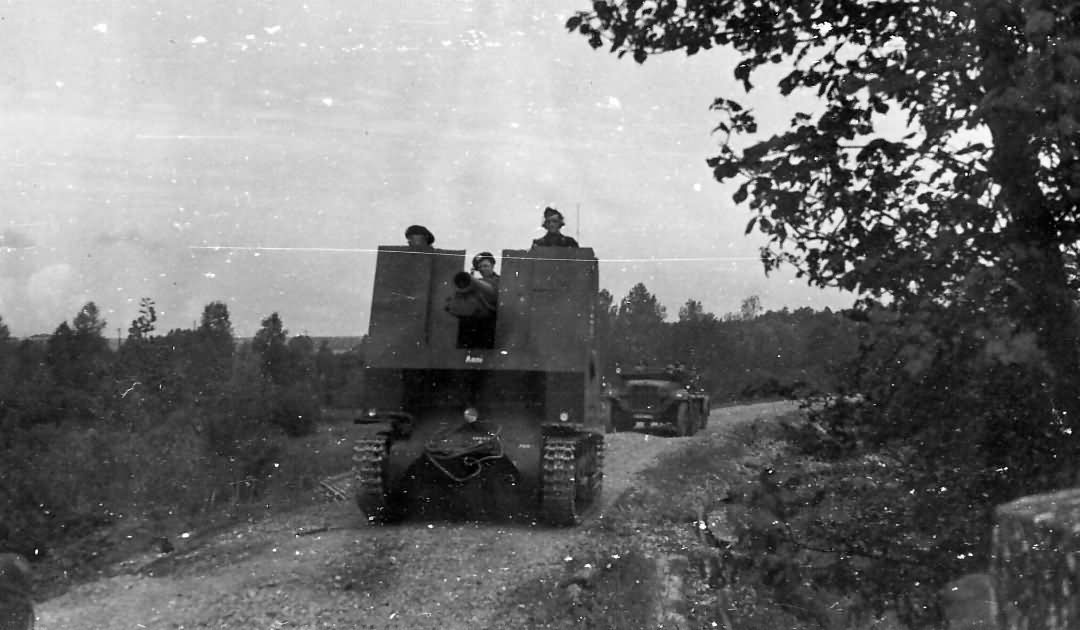
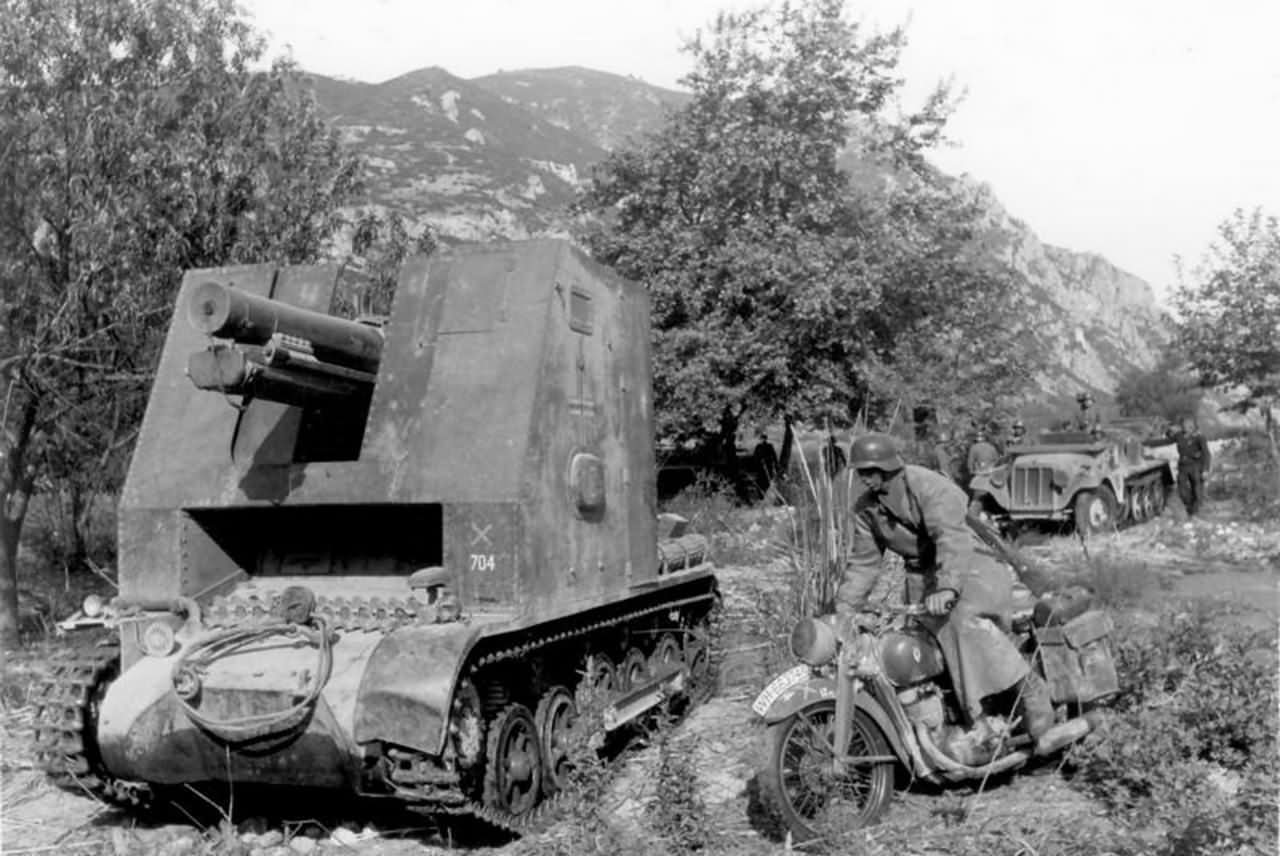
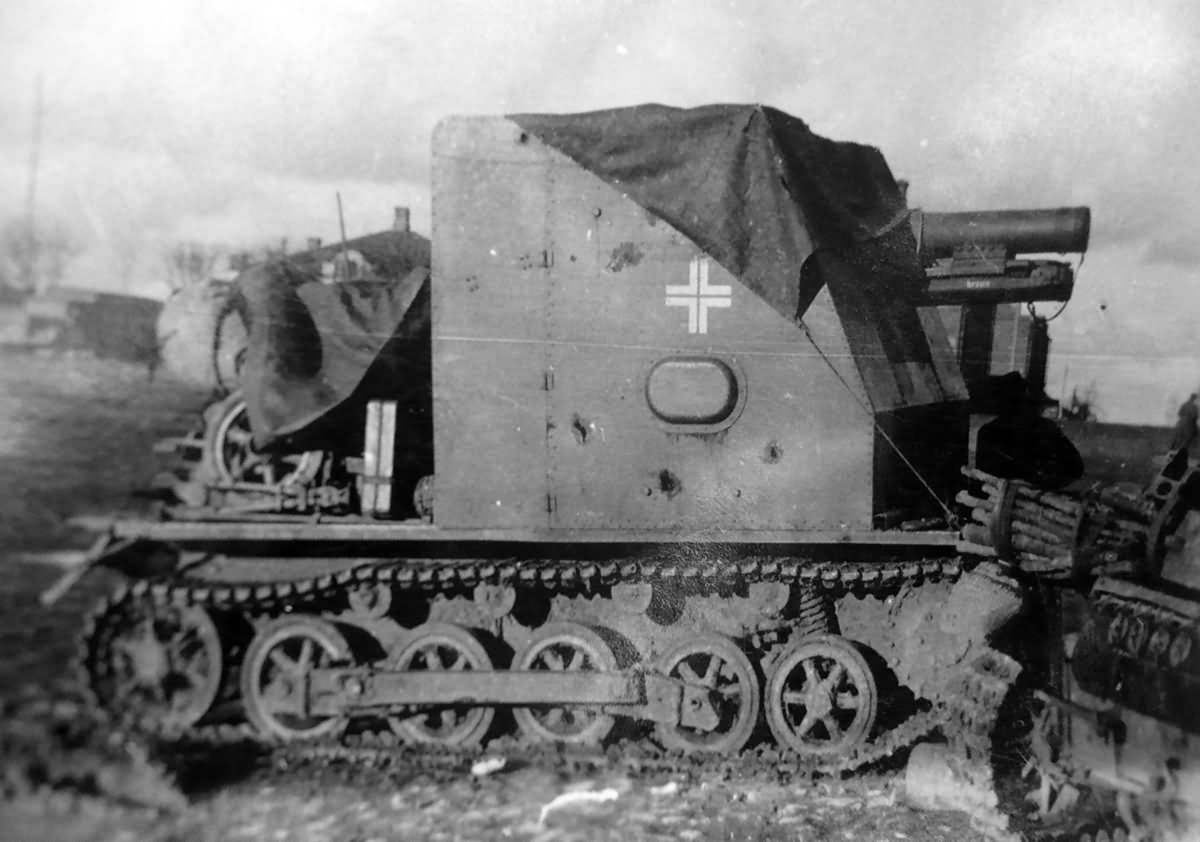
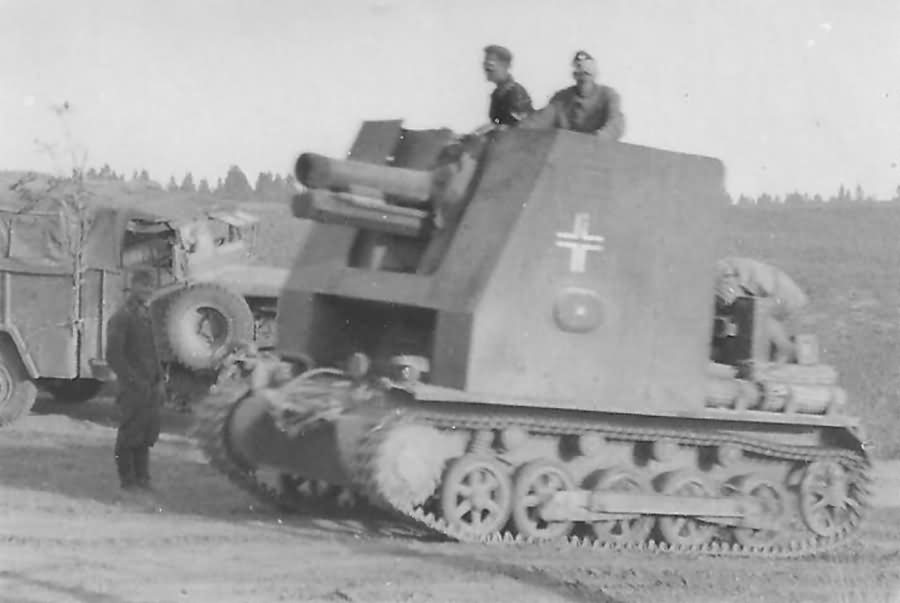
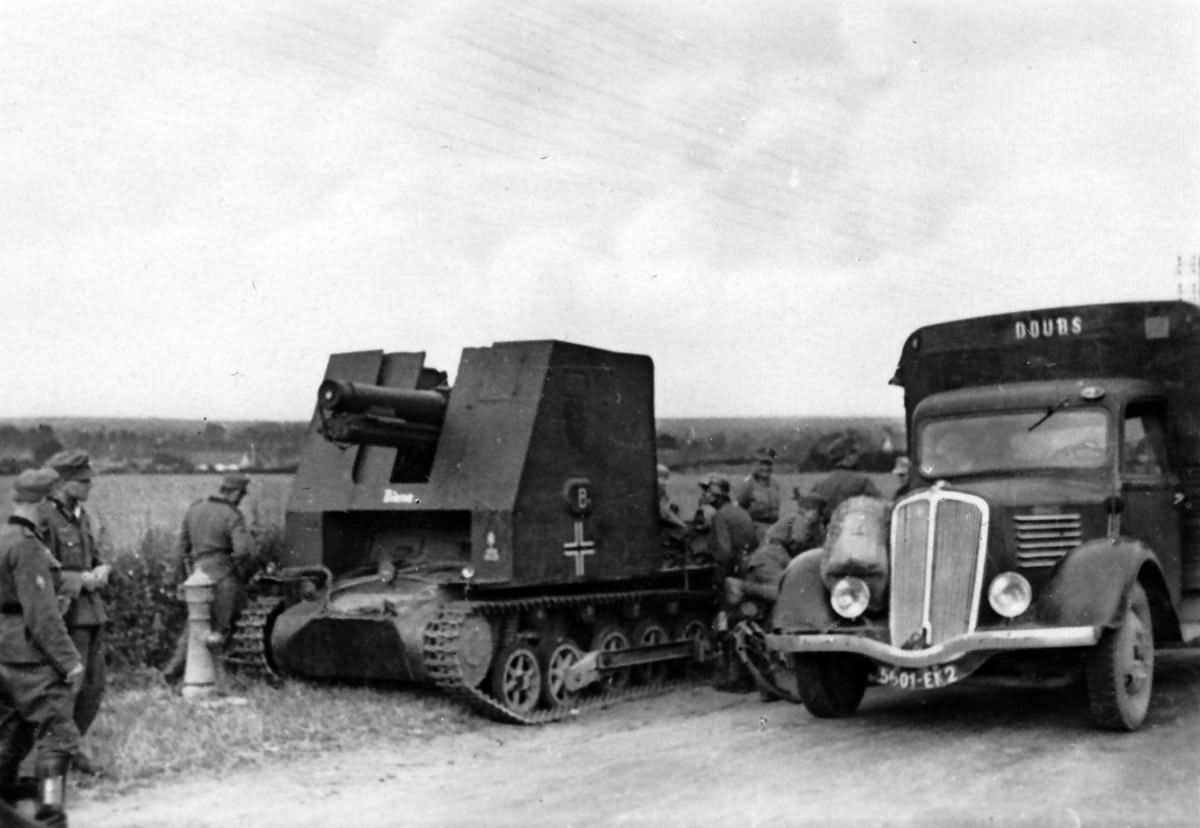
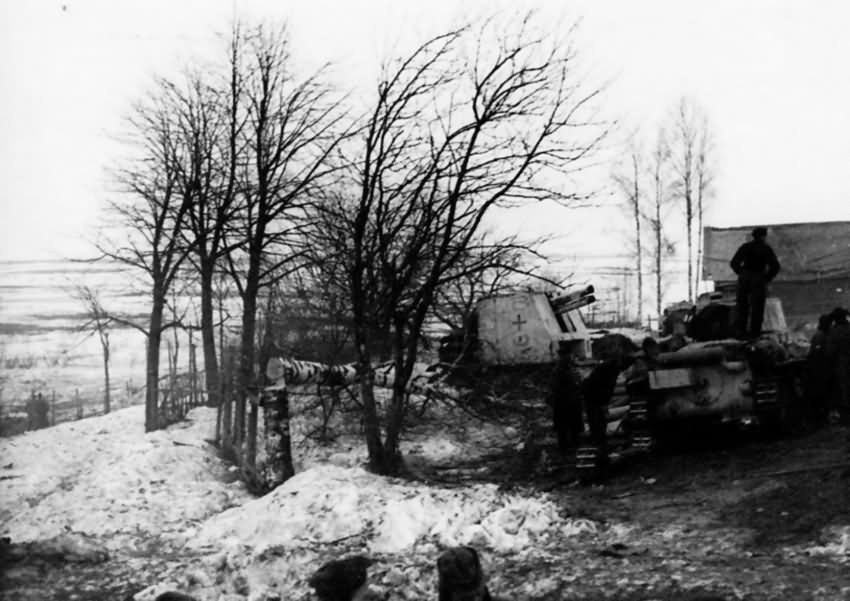
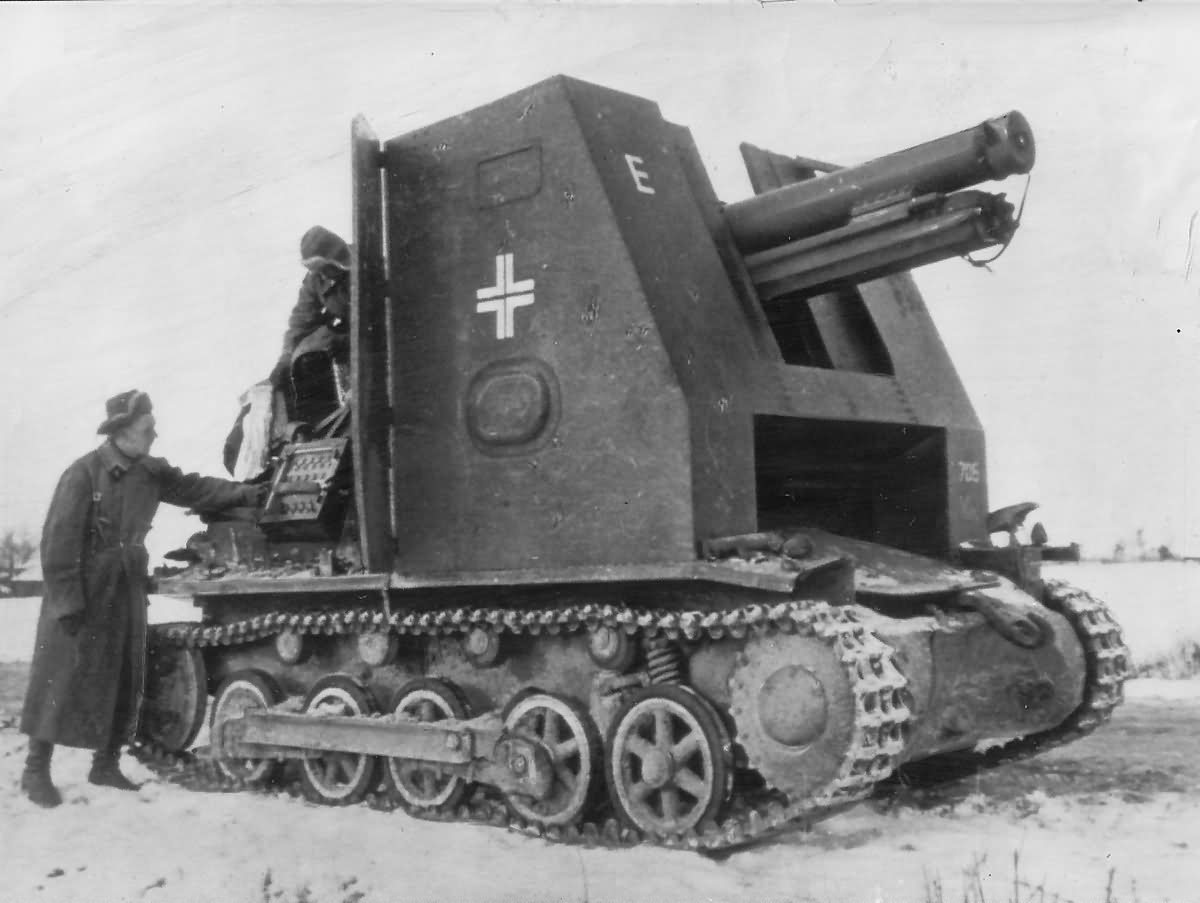
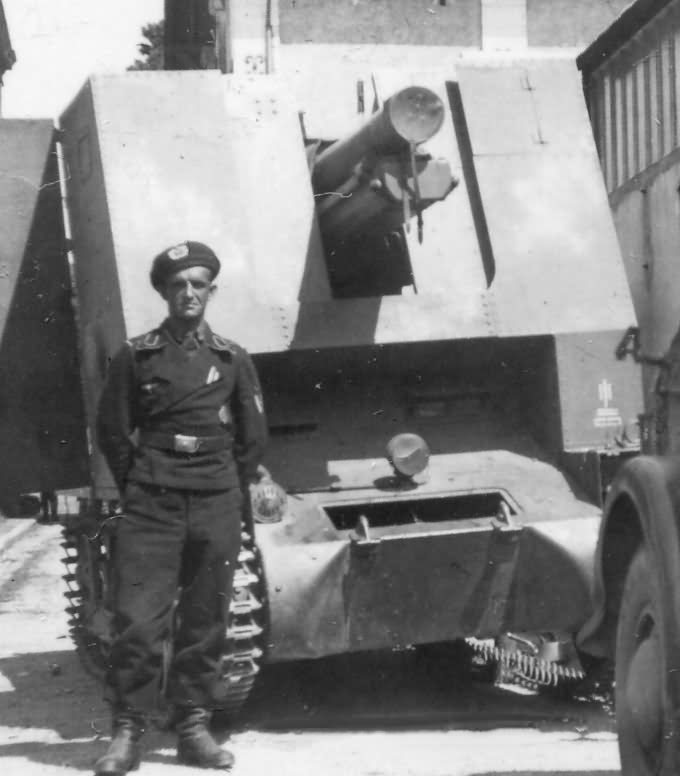
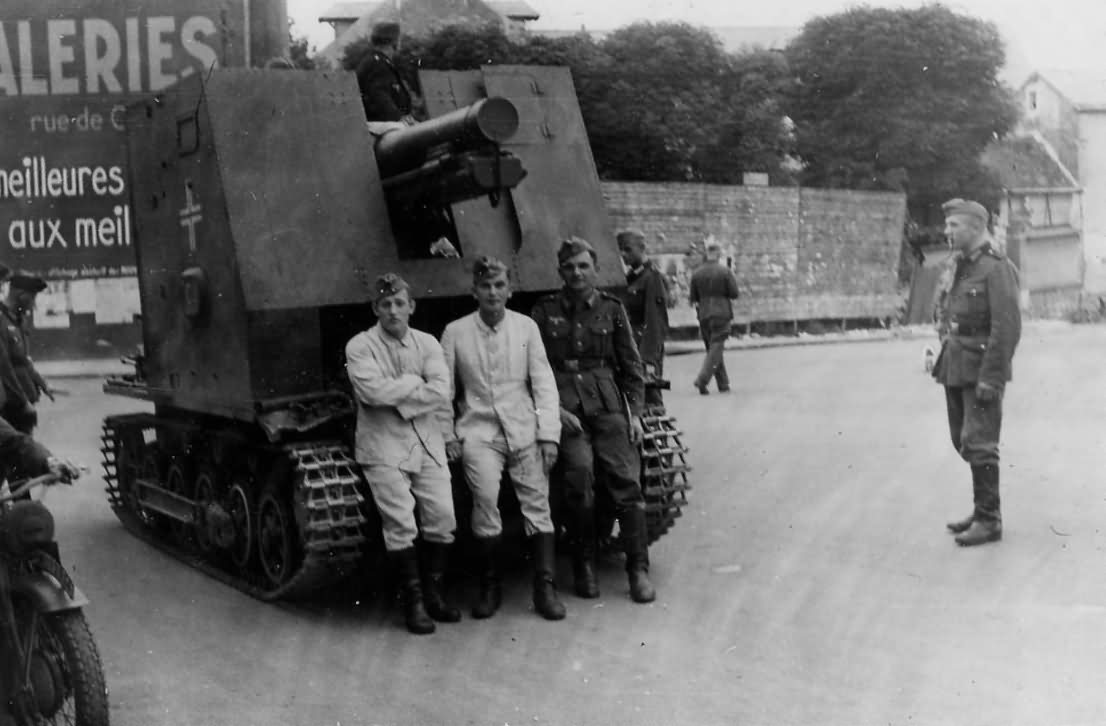
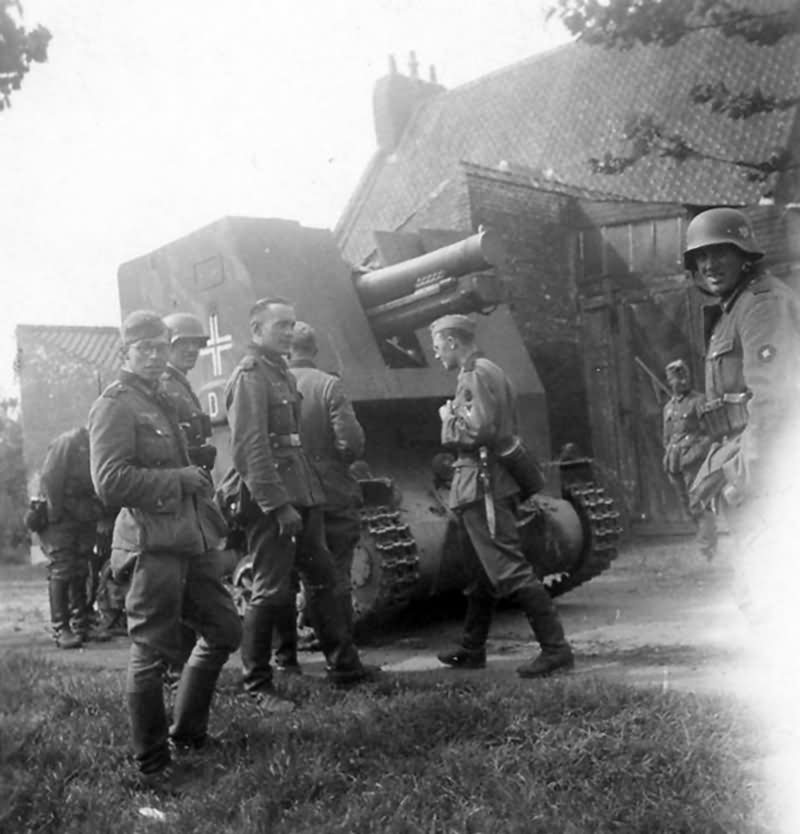
The 15 cm sIG 33 (Sf) auf Panzerkampfwagen I Ausf. B was Germany’s first self-propelled infantry gun of World War II, created by mounting a 149 mm sIG 33 L/12 heavy infantry howitzer onto the chassis of a light Panzer I Ausf. B tank. Lessons from the 1939 invasion of Poland highlighted a crucial flaw in Blitzkrieg tactics: traditional towed infantry guns suffered heavy crew casualties and lacked the mobility required to keep pace with rapid armored thrusts. To address this quickly, German commanders converted obsolete tank chassis into mobile artillery. An initial prototype mounted the entire field gun—wheels included—onto a turretless Panzer I, but testing exposed severe issues, including excessive overall height and heavy chassis overload. Despite these drawbacks, the urgent demand for mobile fire support ahead of the Battle of France led to an order for a small production run. In early 1940, Alkett produced 38 standardized units that removed the field gun’s road wheels and installed a 10 mm armored shield to offer basic crew protection. Assigned to independent heavy infantry gun companies (sIG Kompanien 701–706), these improvised vehicles saw combat in France, the Balkans, and on the Eastern Front, remaining in active service until the final surviving units were retired in late 1943.