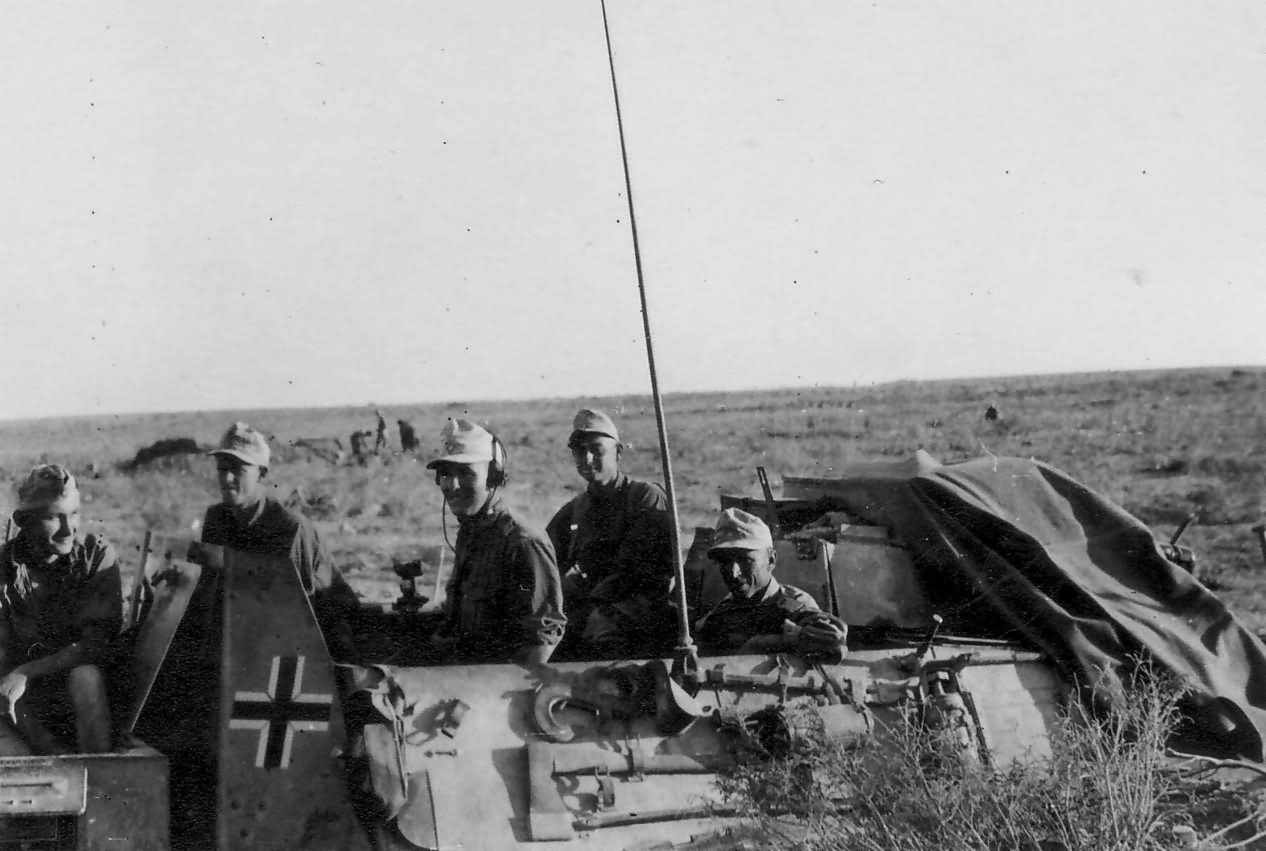
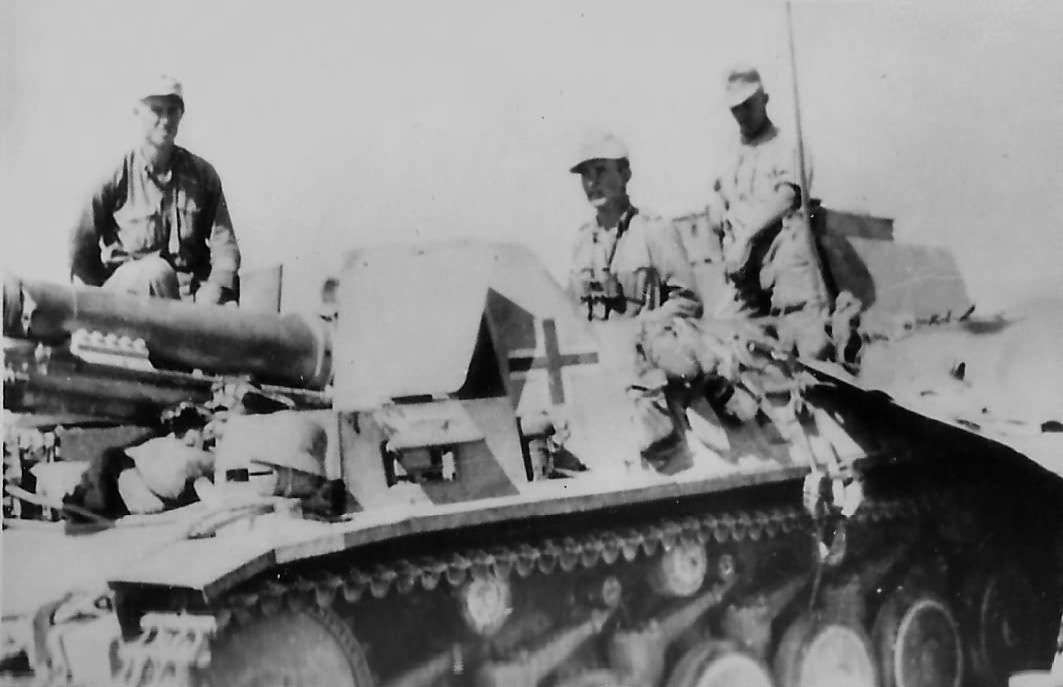
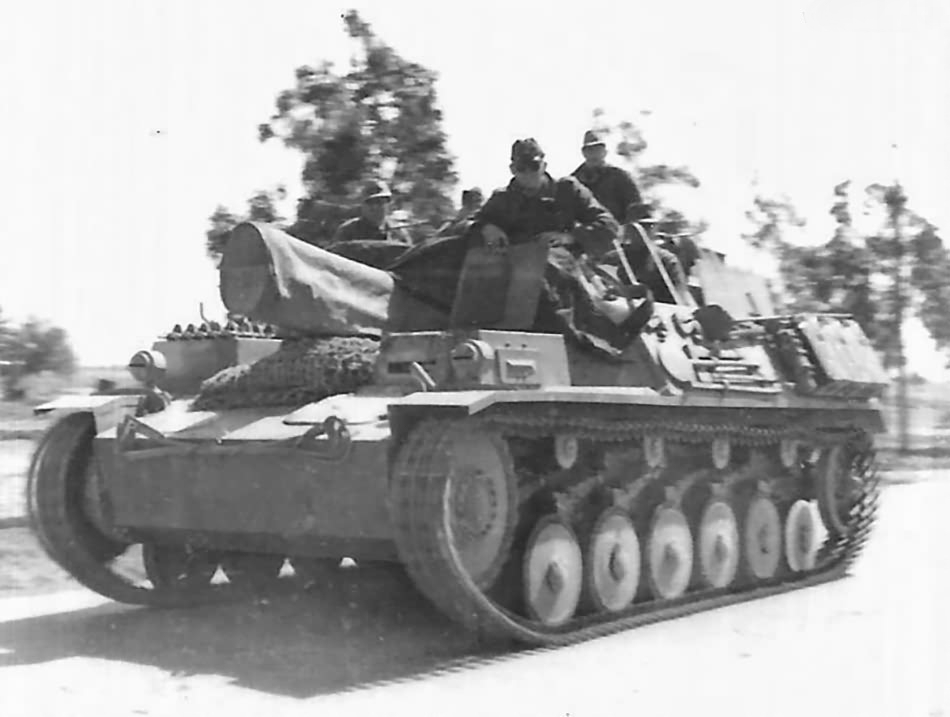
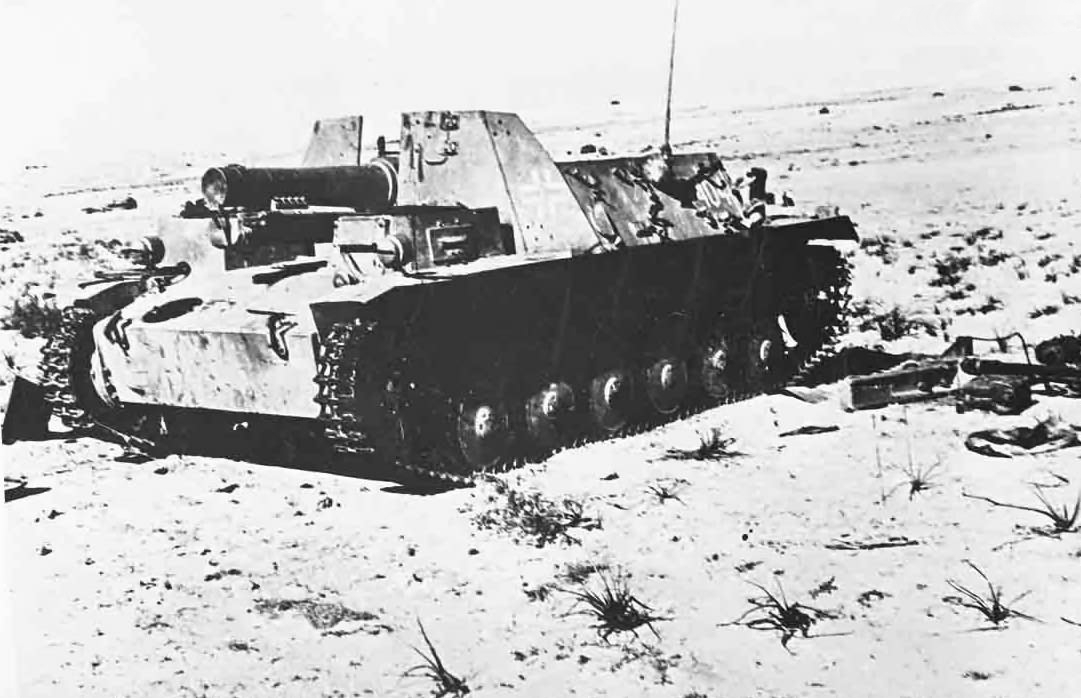
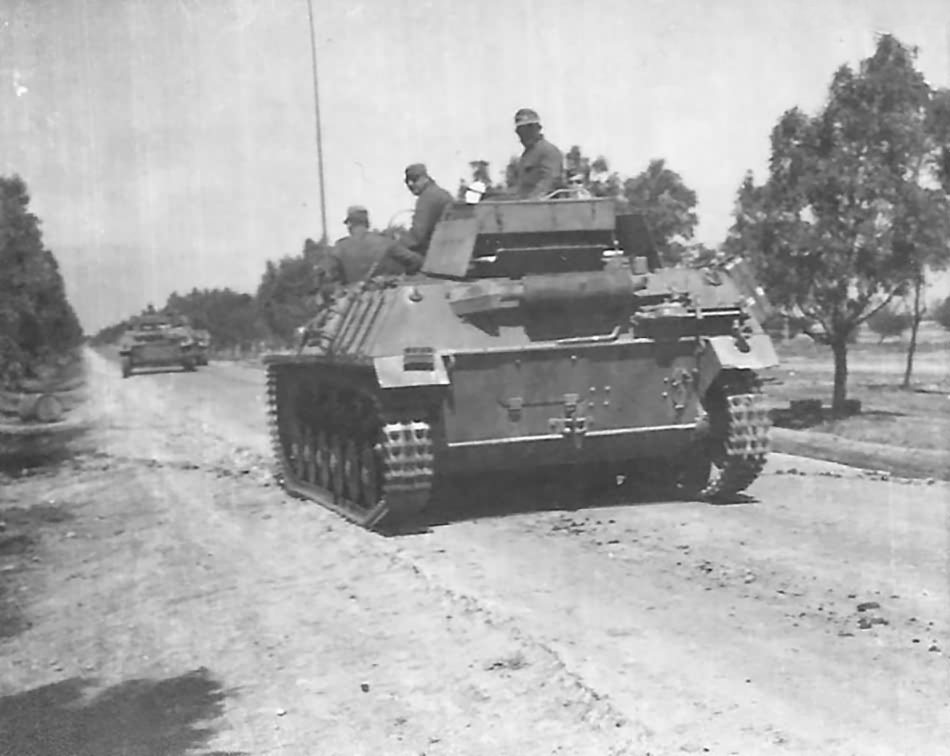
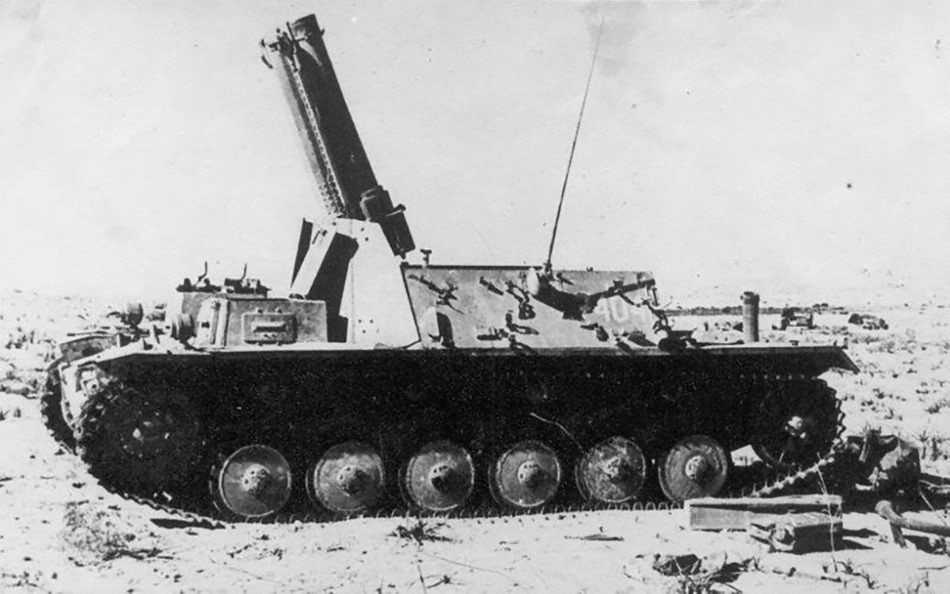
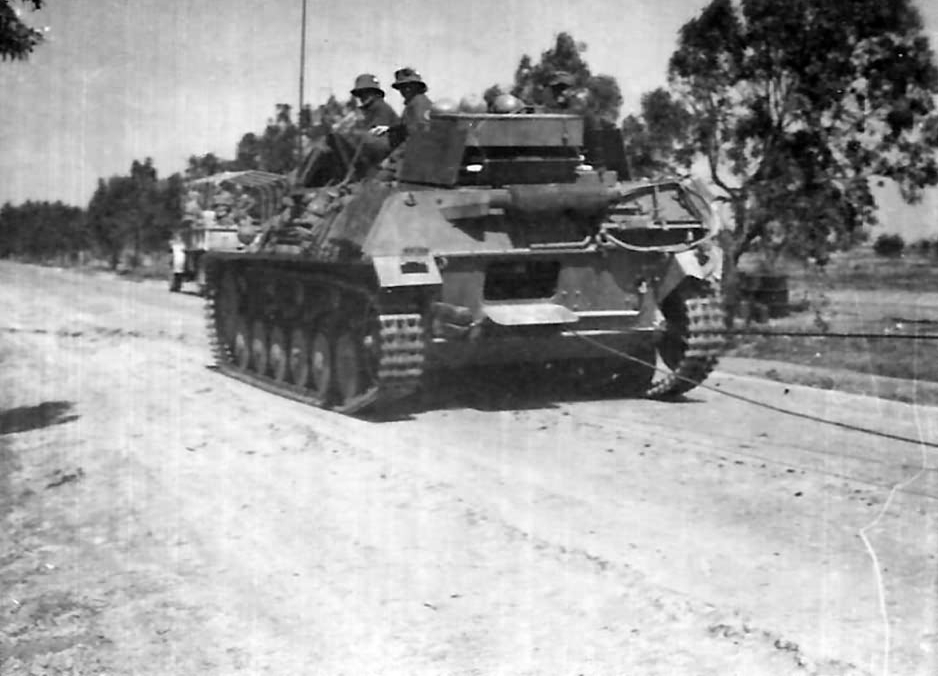
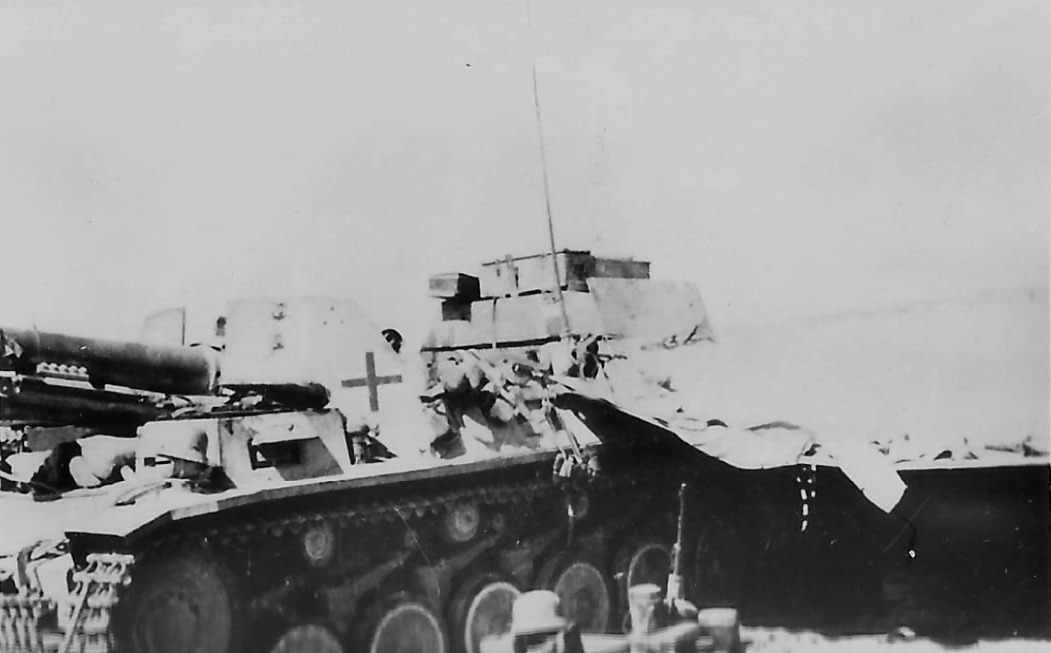
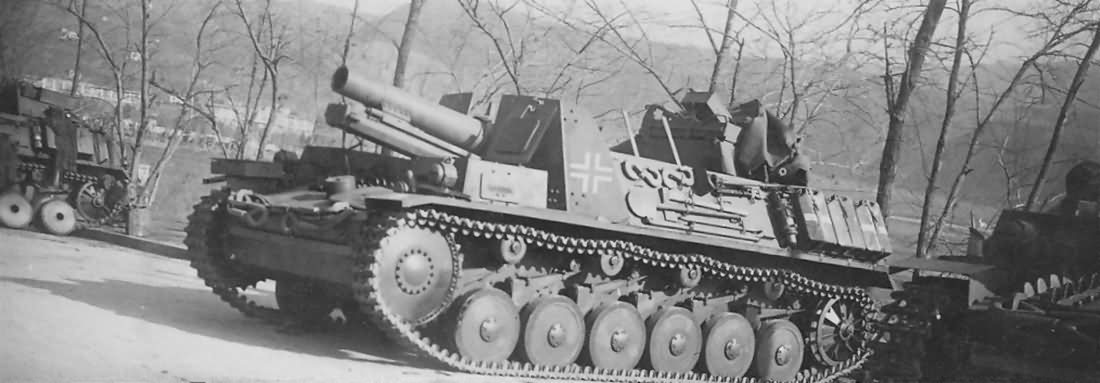
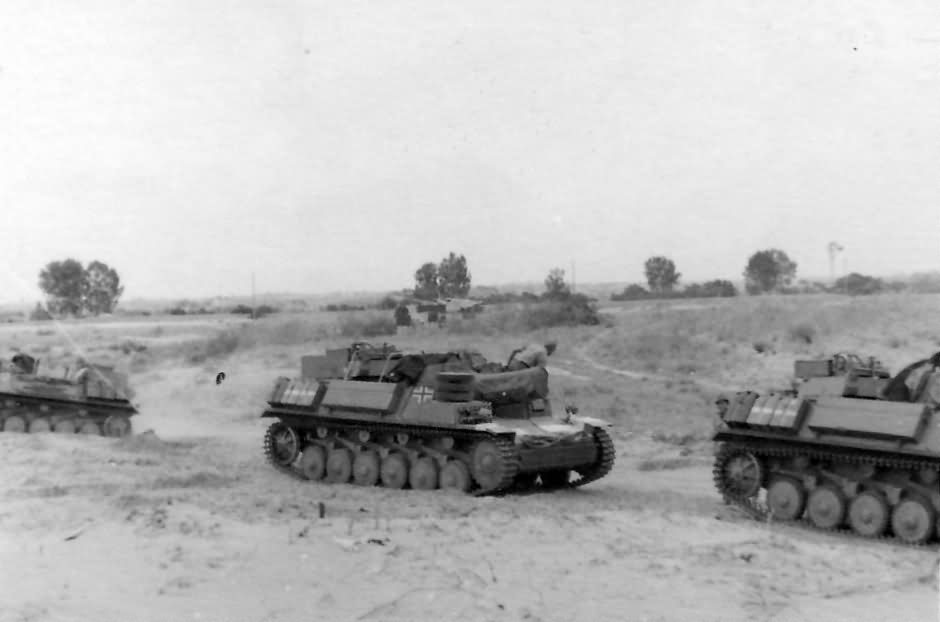
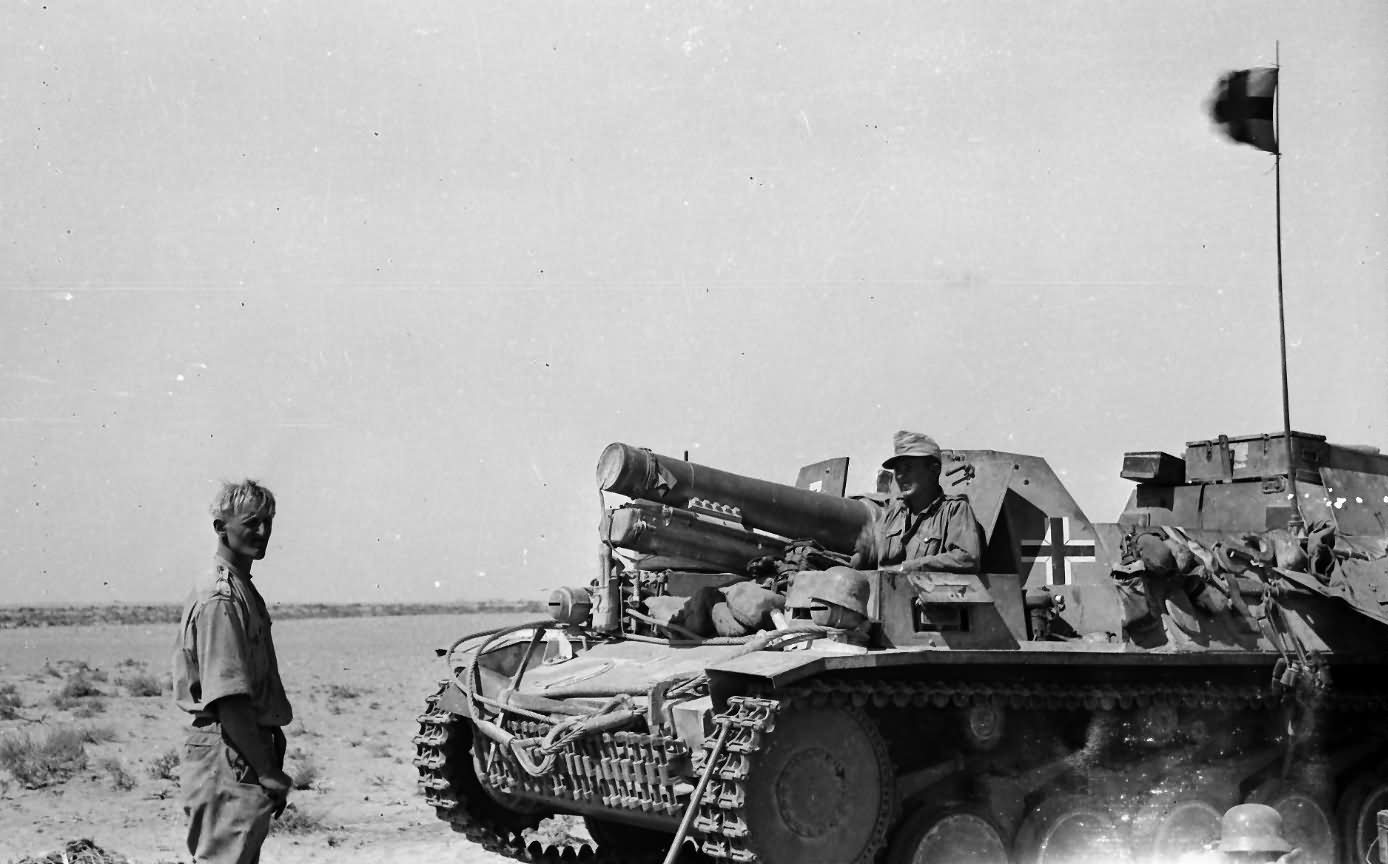
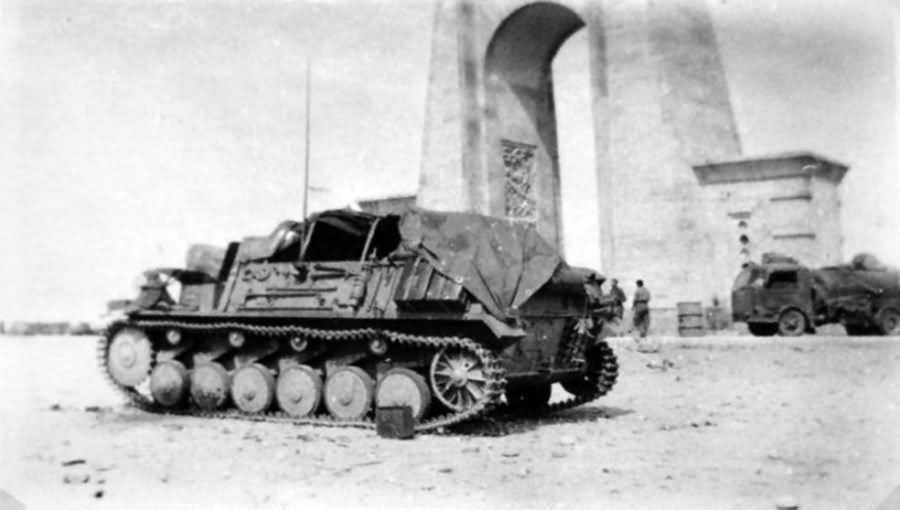
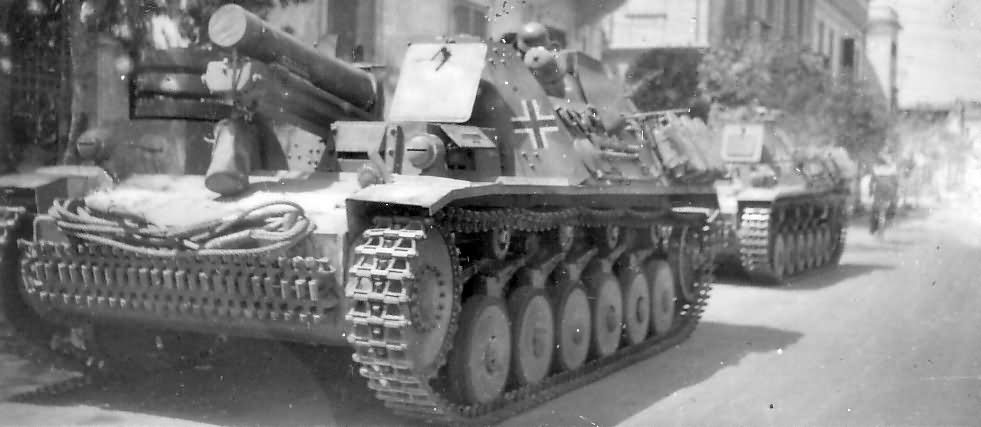
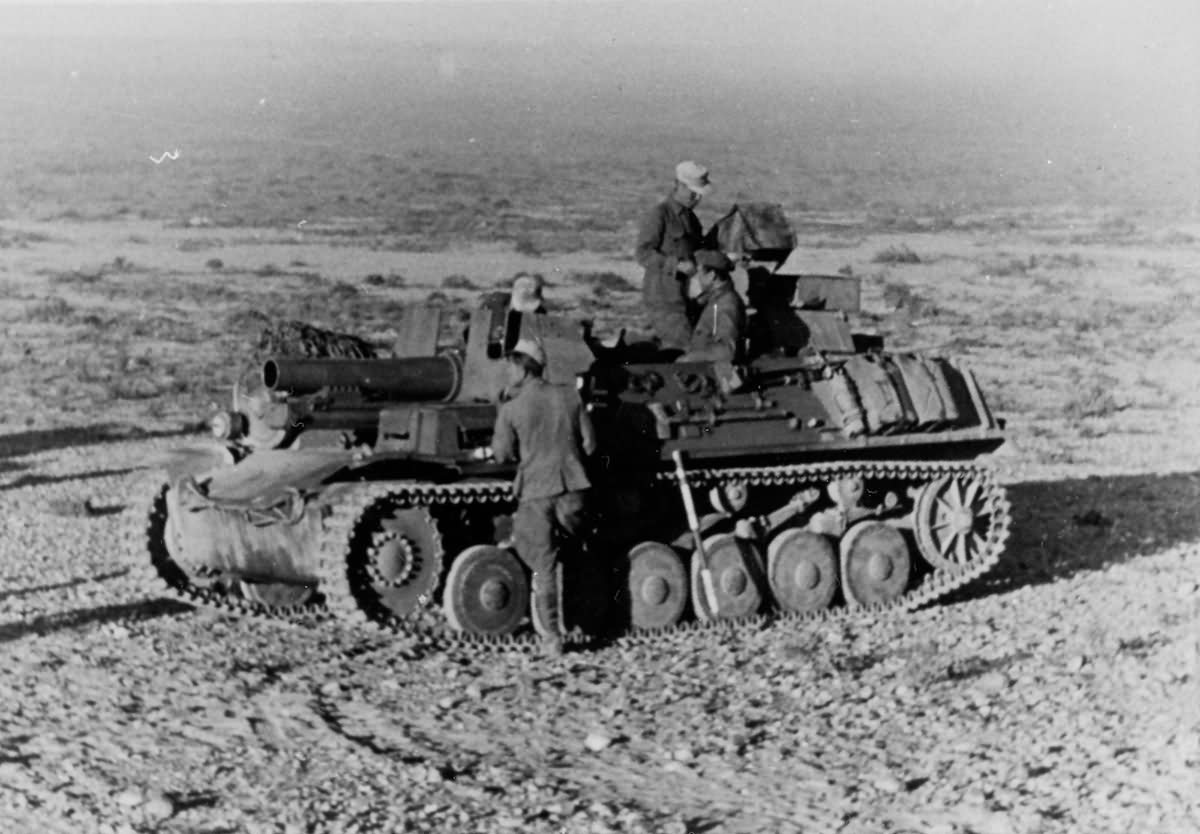
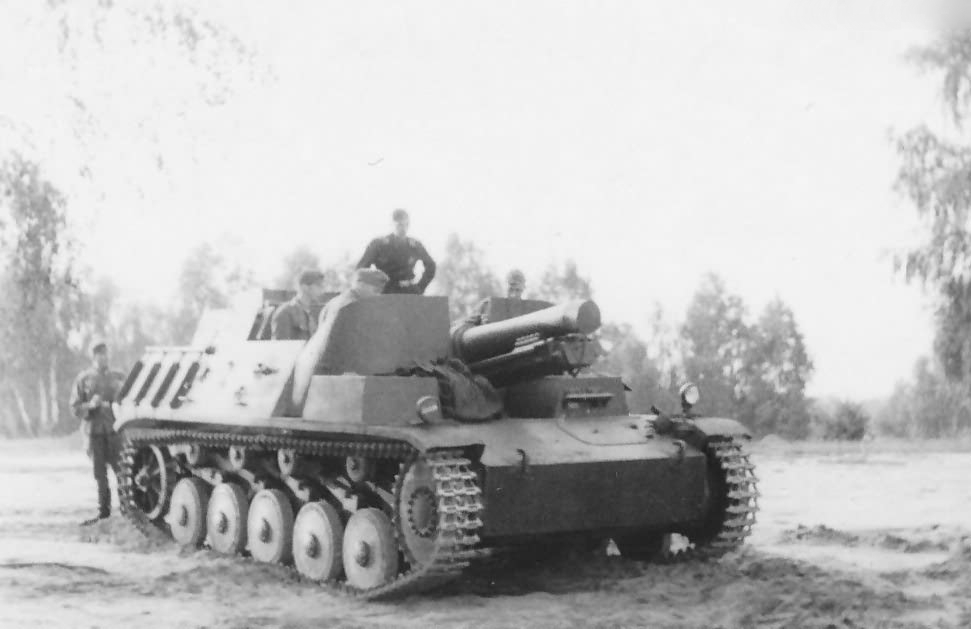
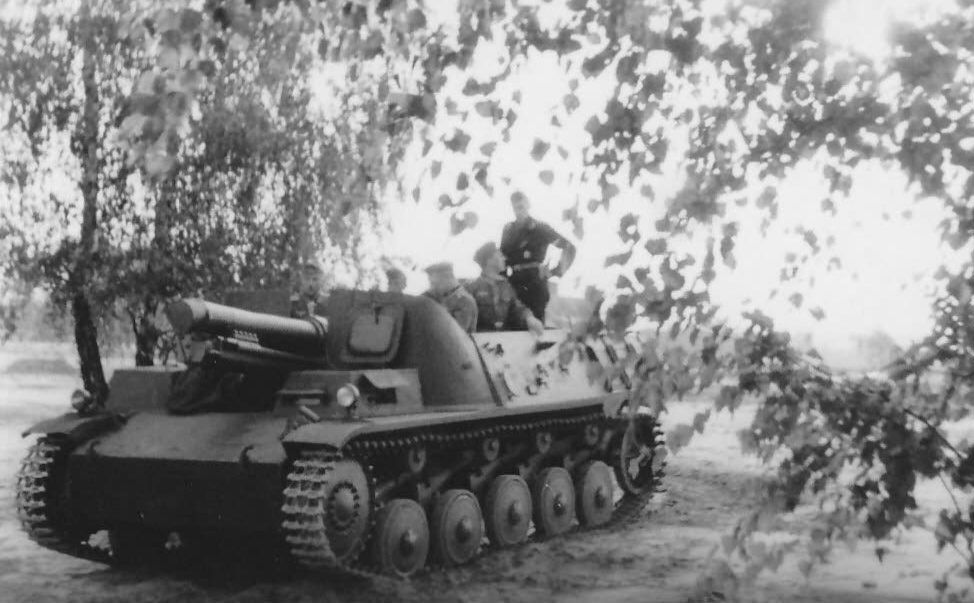
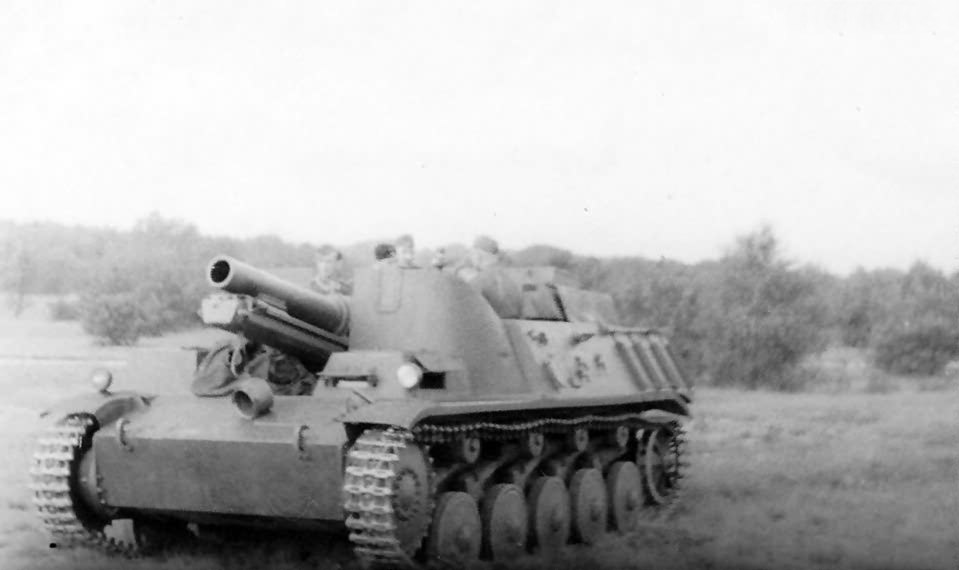
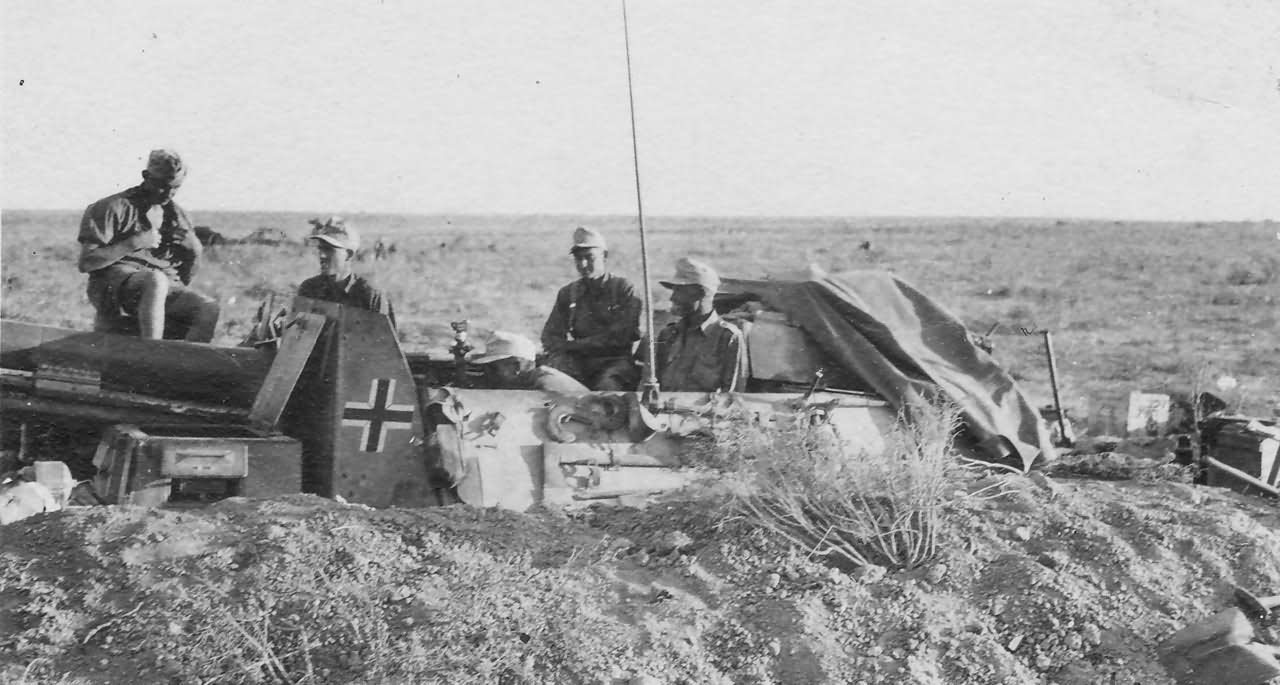
The 15 cm sIG 33 auf Fahrgestell Panzerkampfwagen II (Sf), often called the Sturmpanzer II Bison, was a World War II German self-propelled assault gun designed to fix the shortcomings of the earlier Panzer I-based model. While mounting the 15 cm sIG 33 heavy infantry gun on the Panzer I chassis provided crucial mobile fire support in France, that design proved excessively tall and severely overloaded its frame. To lower the silhouette and provide a sturdier base, engineers modified a Panzer II chassis. Following a cramped initial prototype in early 1941, the chassis was widened by 32 cm and lengthened by 60 cm—requiring a sixth road wheel on each side—and enclosed with 15 mm armor plates in an open-topped, open-backed compartment. Between December 1941 and January 1942, twelve production vehicles were built and shipped to North Africa, forming motorized heavy infantry gun companies (707 and 708) attached to the 90th Light Africa Division. These vehicles served in close-support artillery roles throughout the North African campaign until Axis forces surrendered in Tunisia in May 1943. Remarkably, three surviving units saw brief post-war combat service with Egyptian Army armored forces during the 1948 Arab–Israeli War.