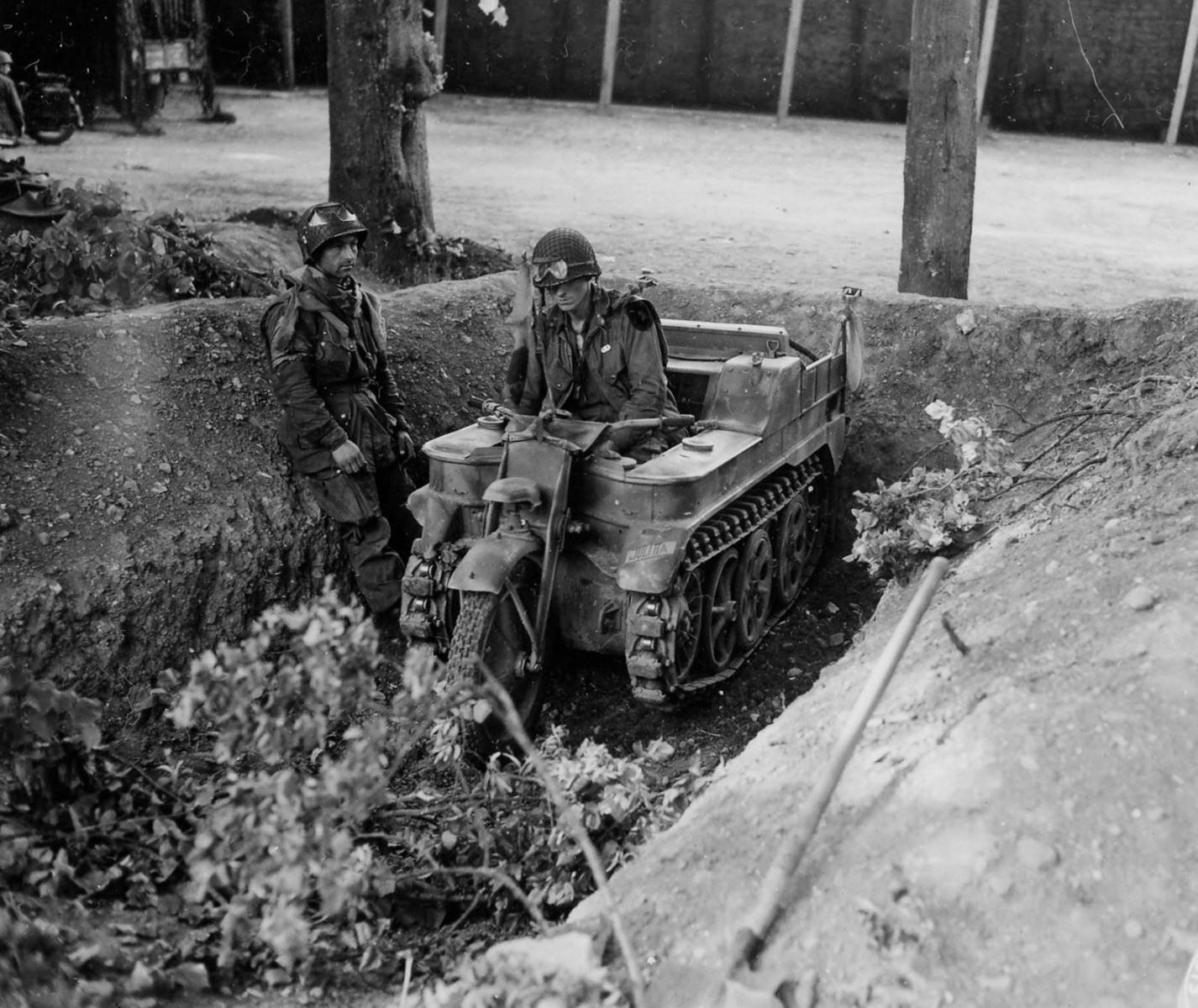
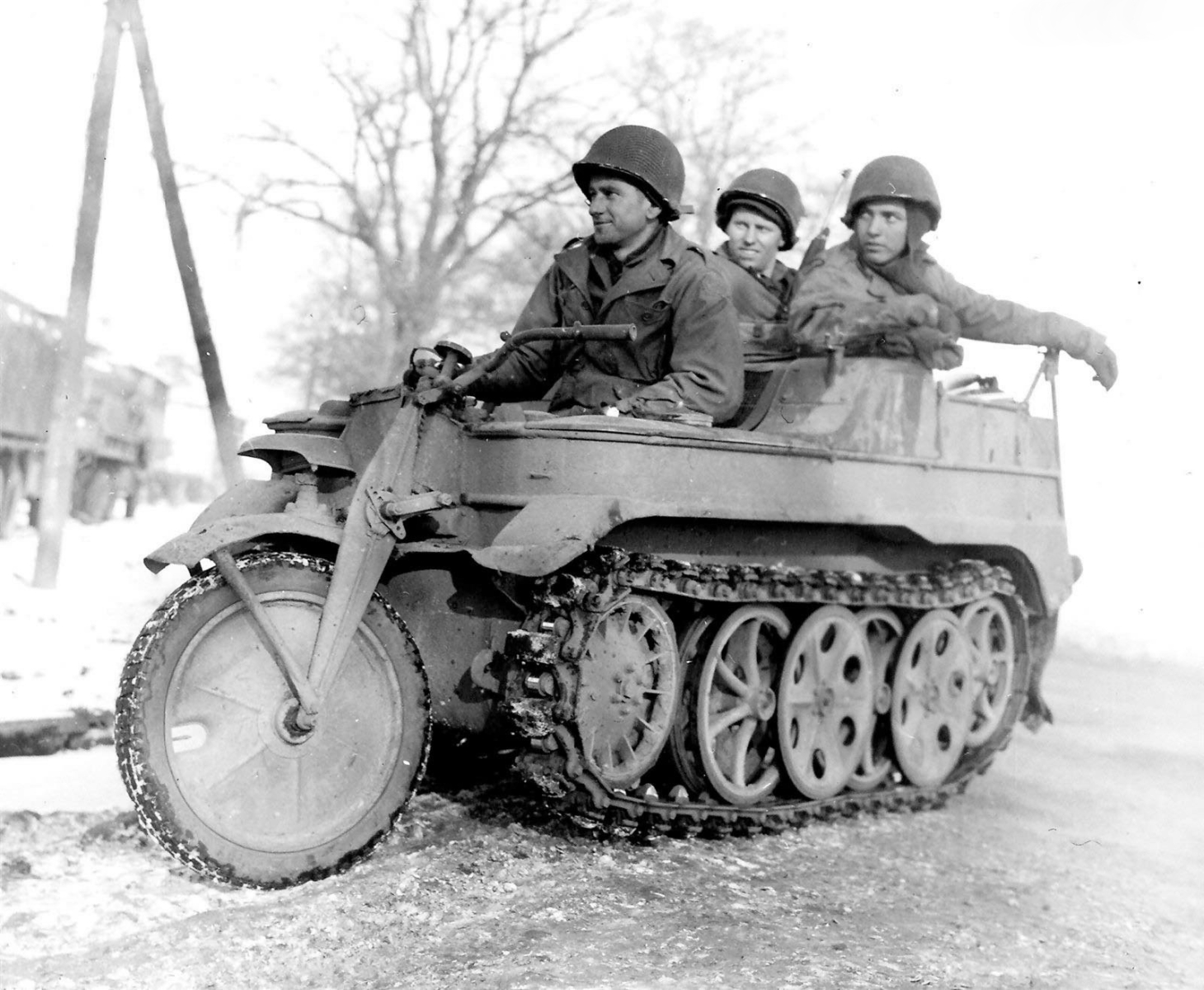
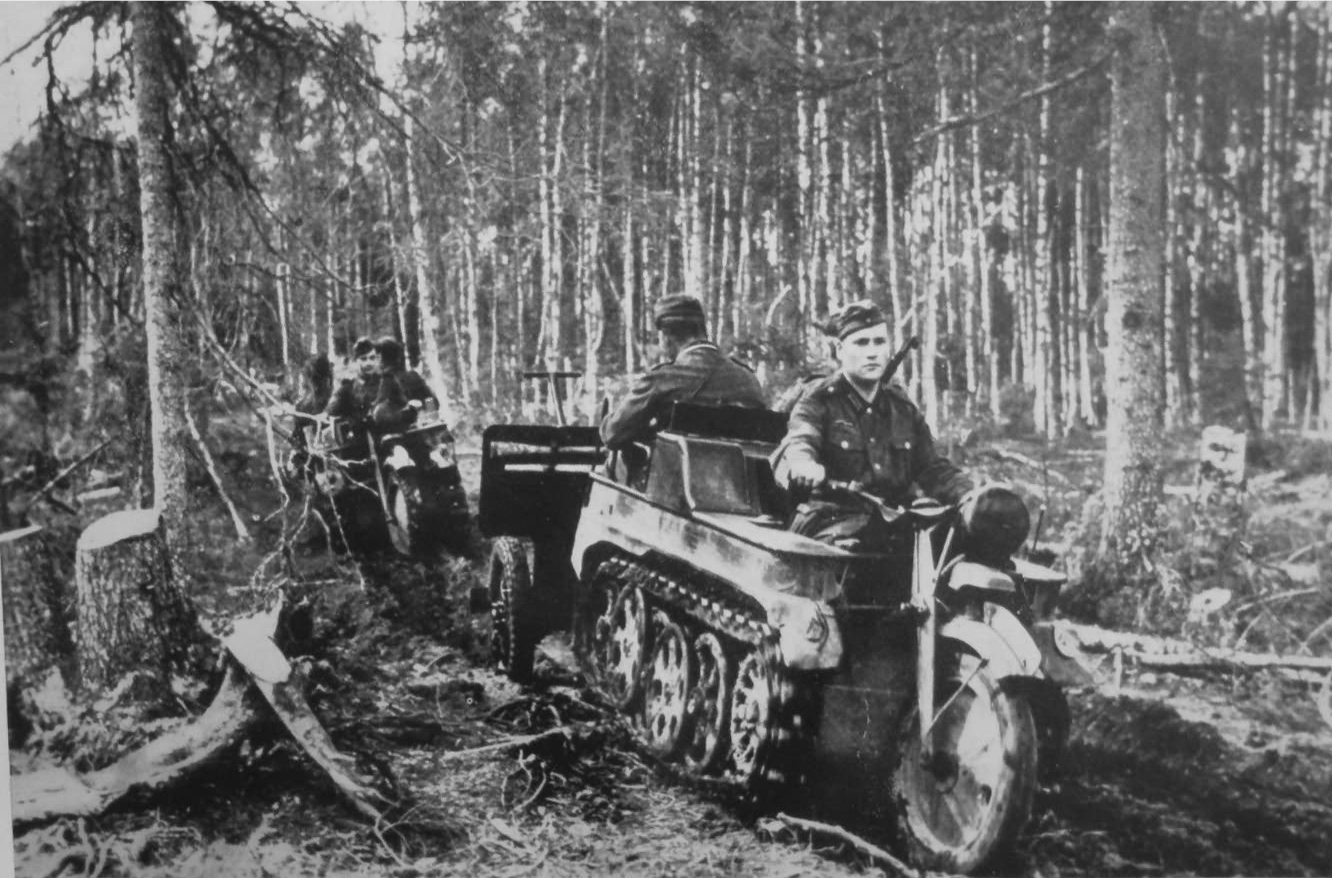
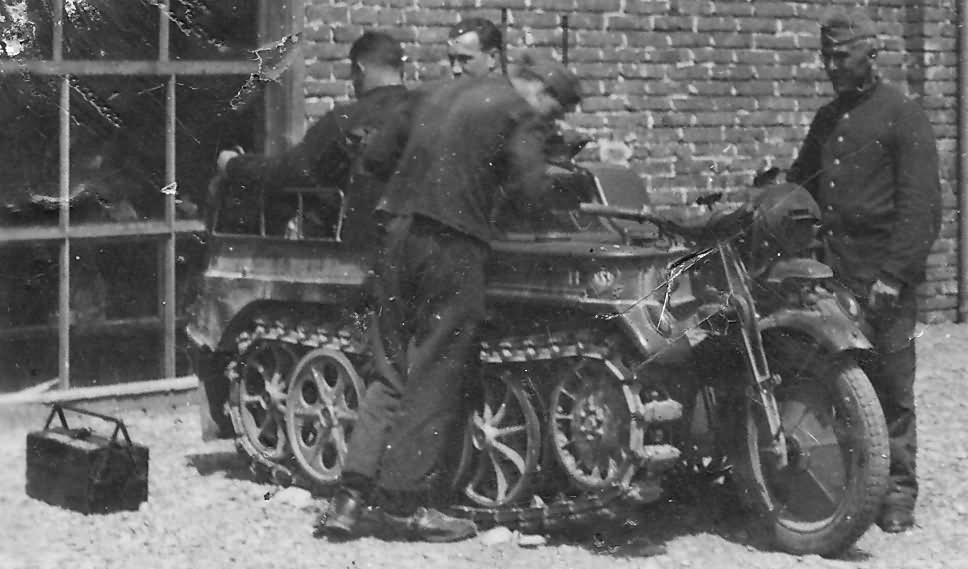
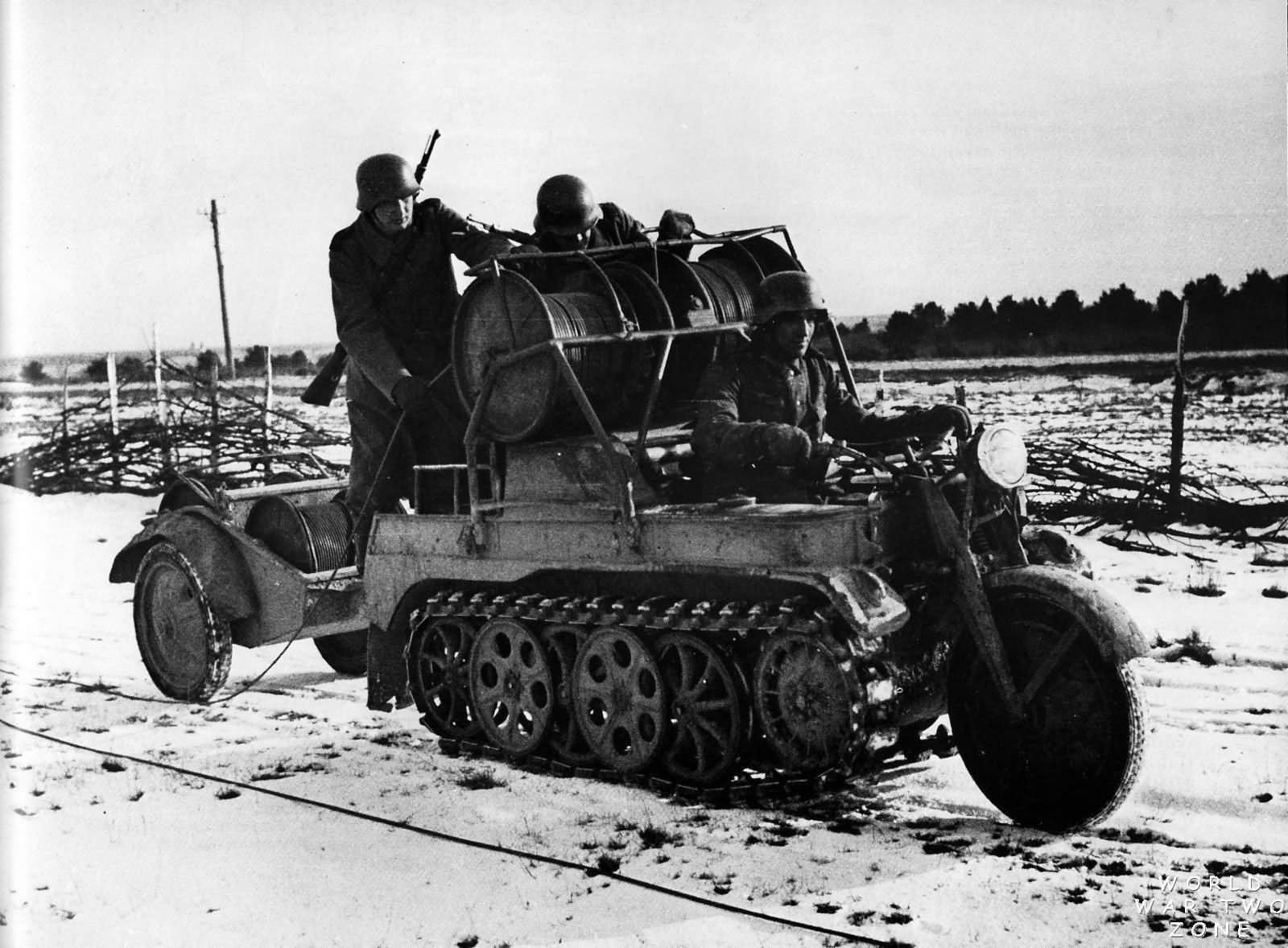
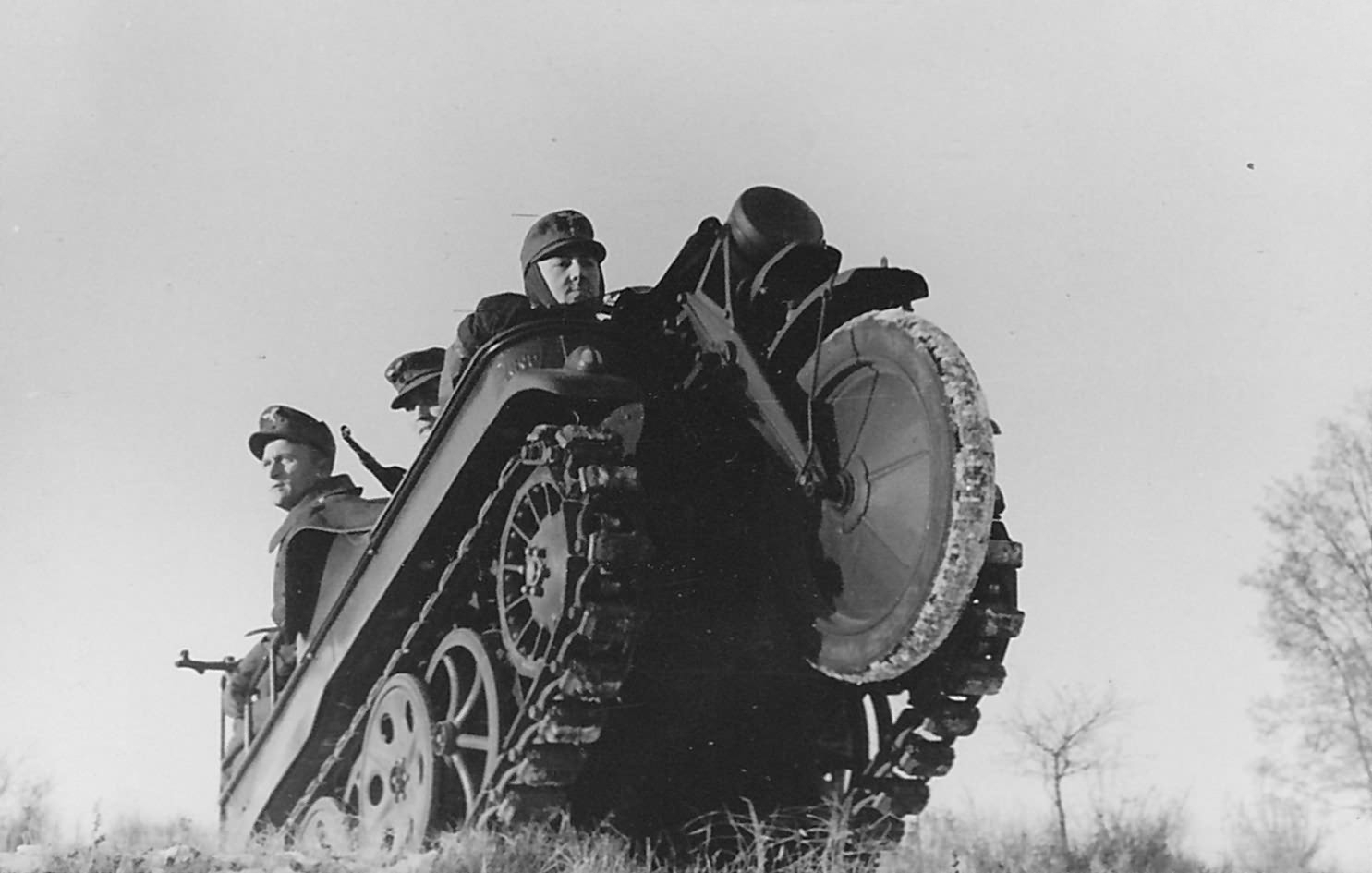
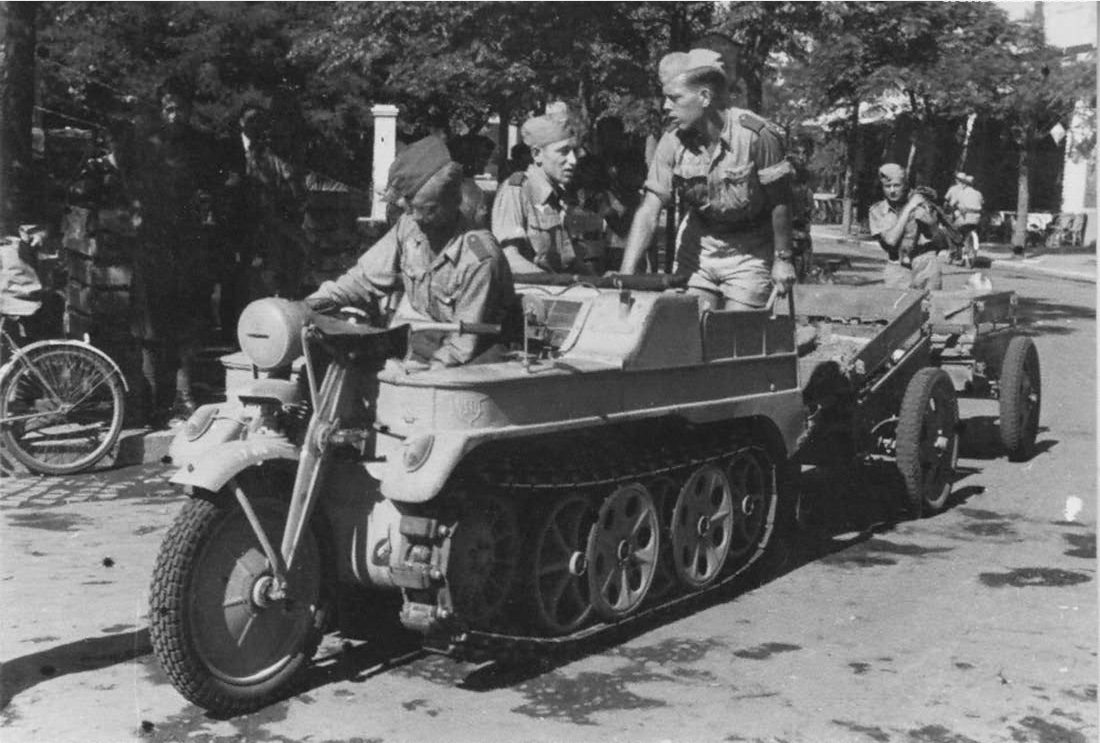
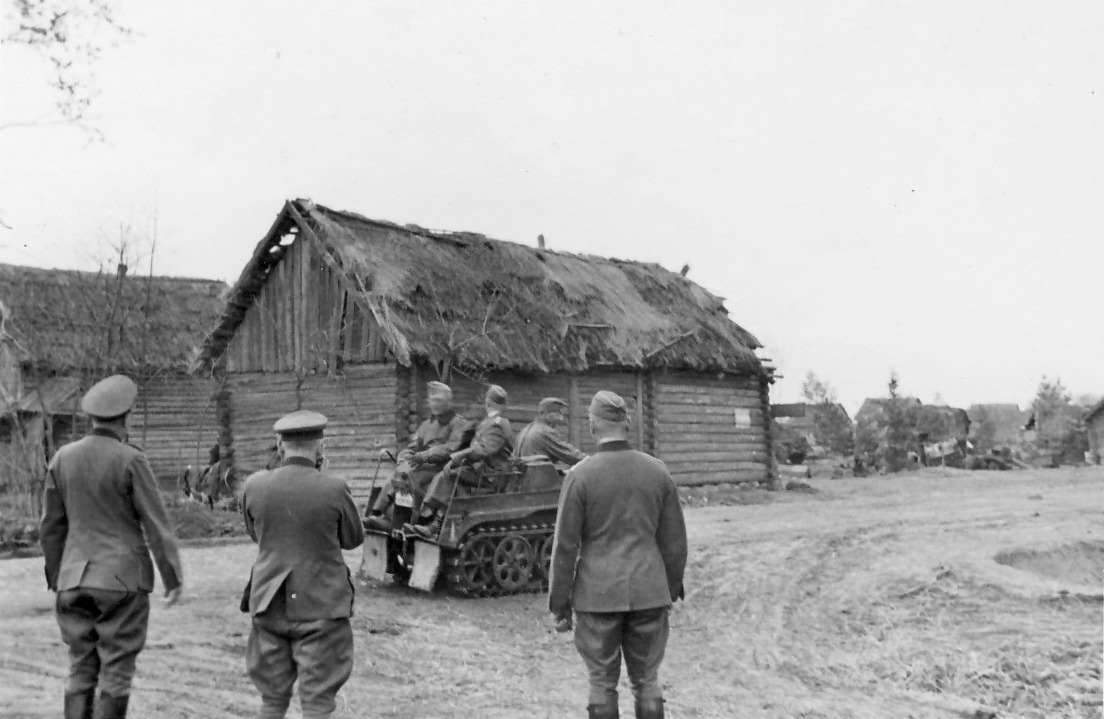
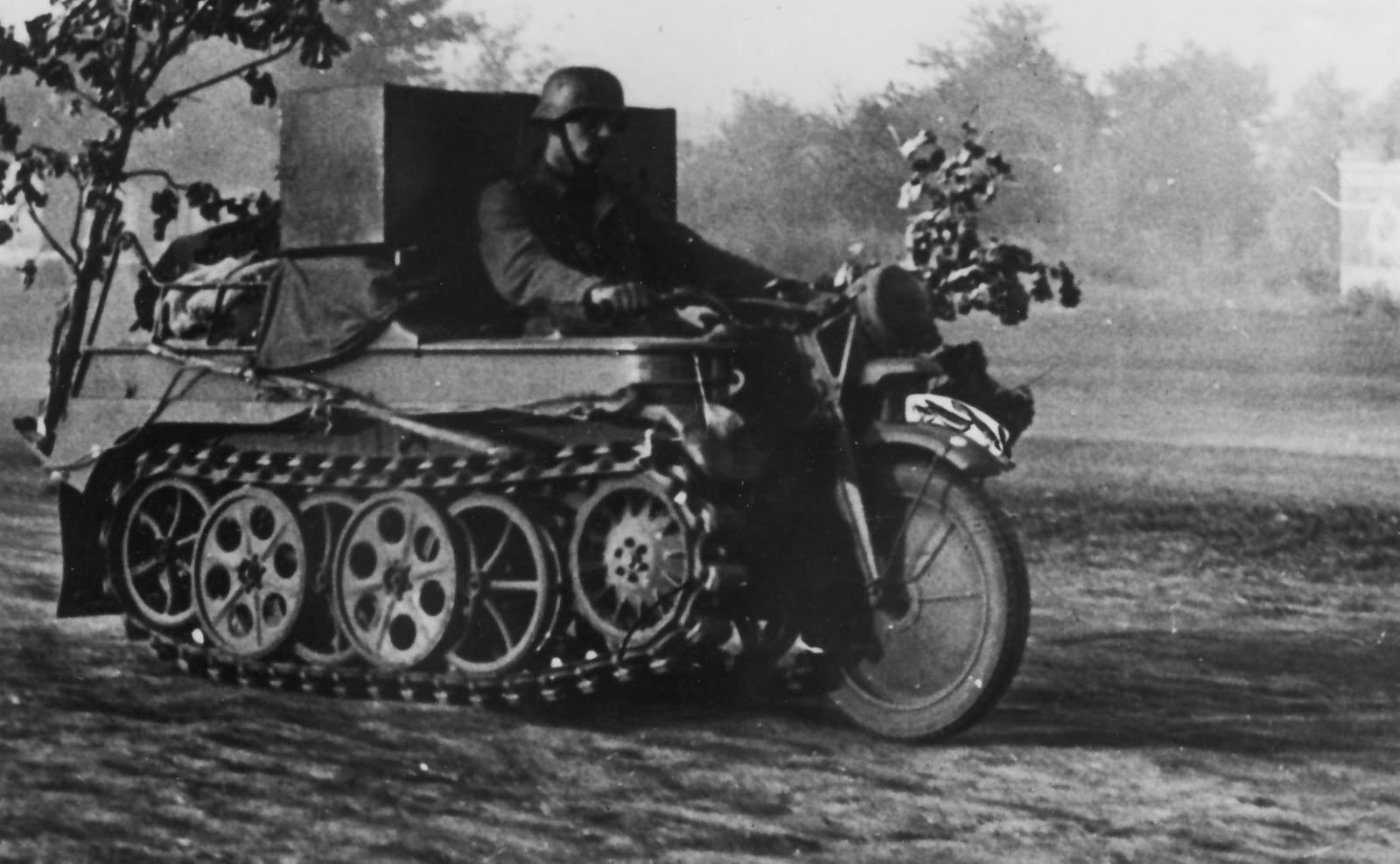
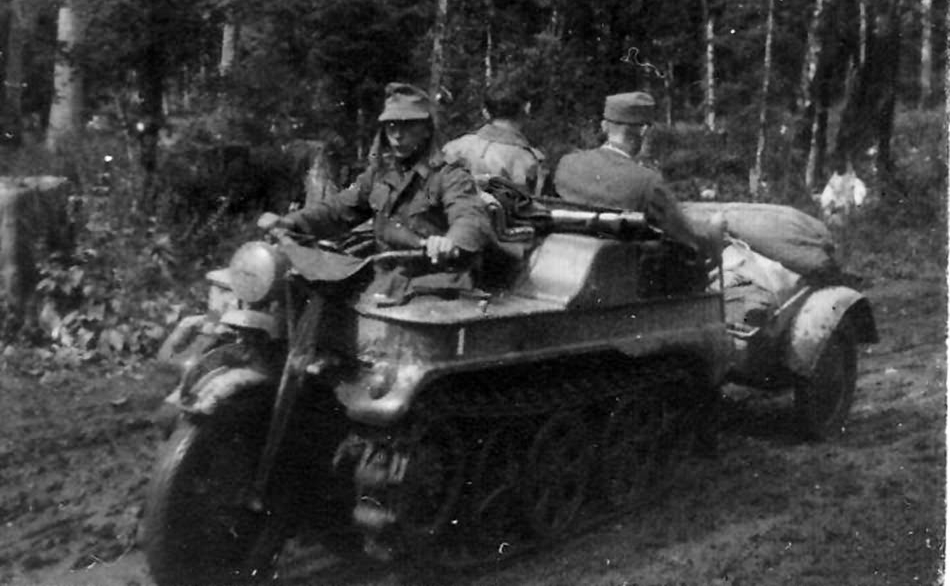
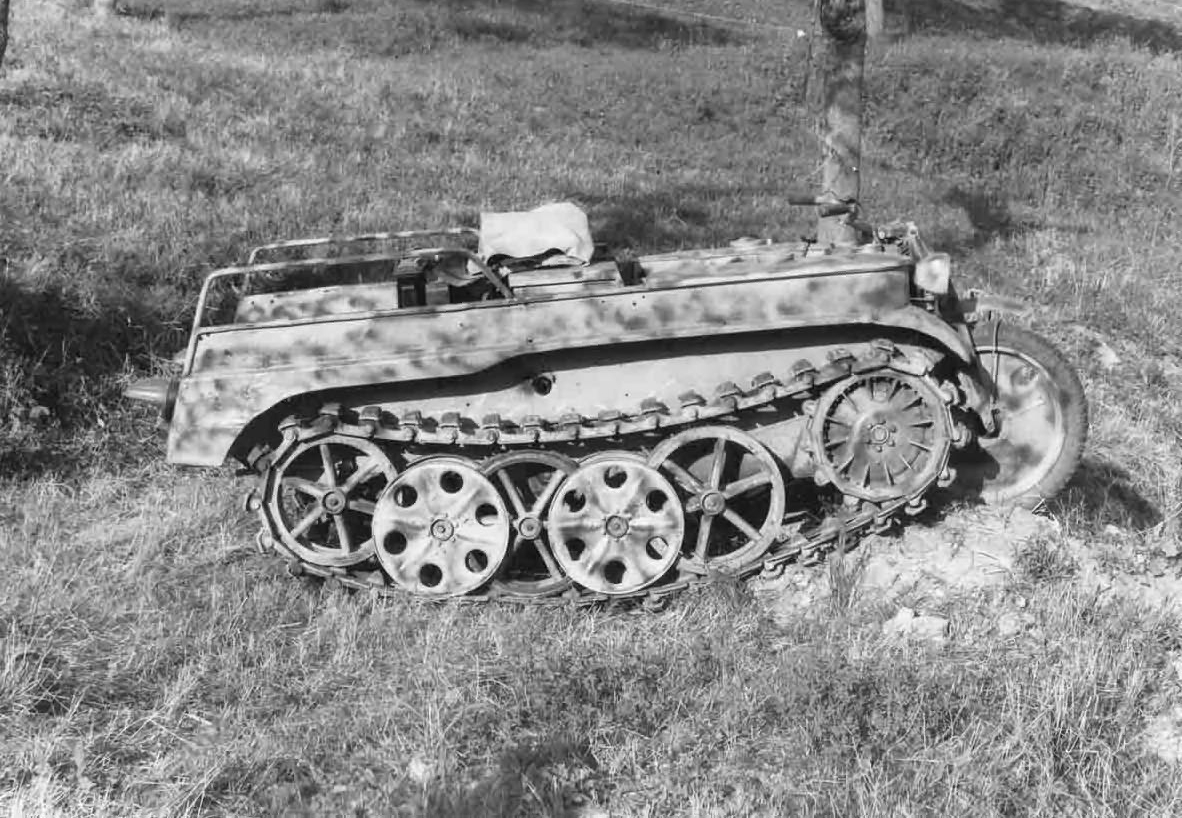
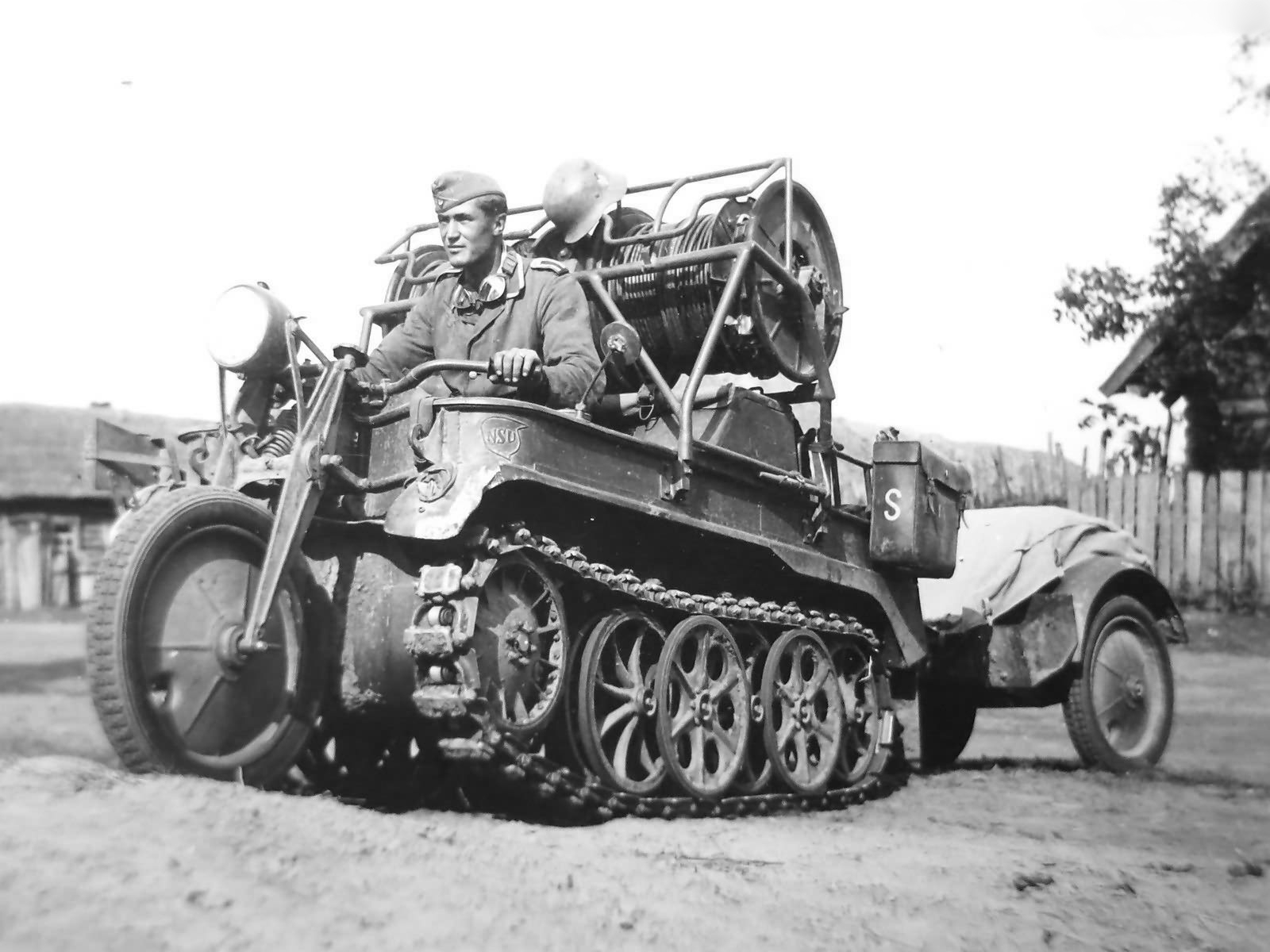
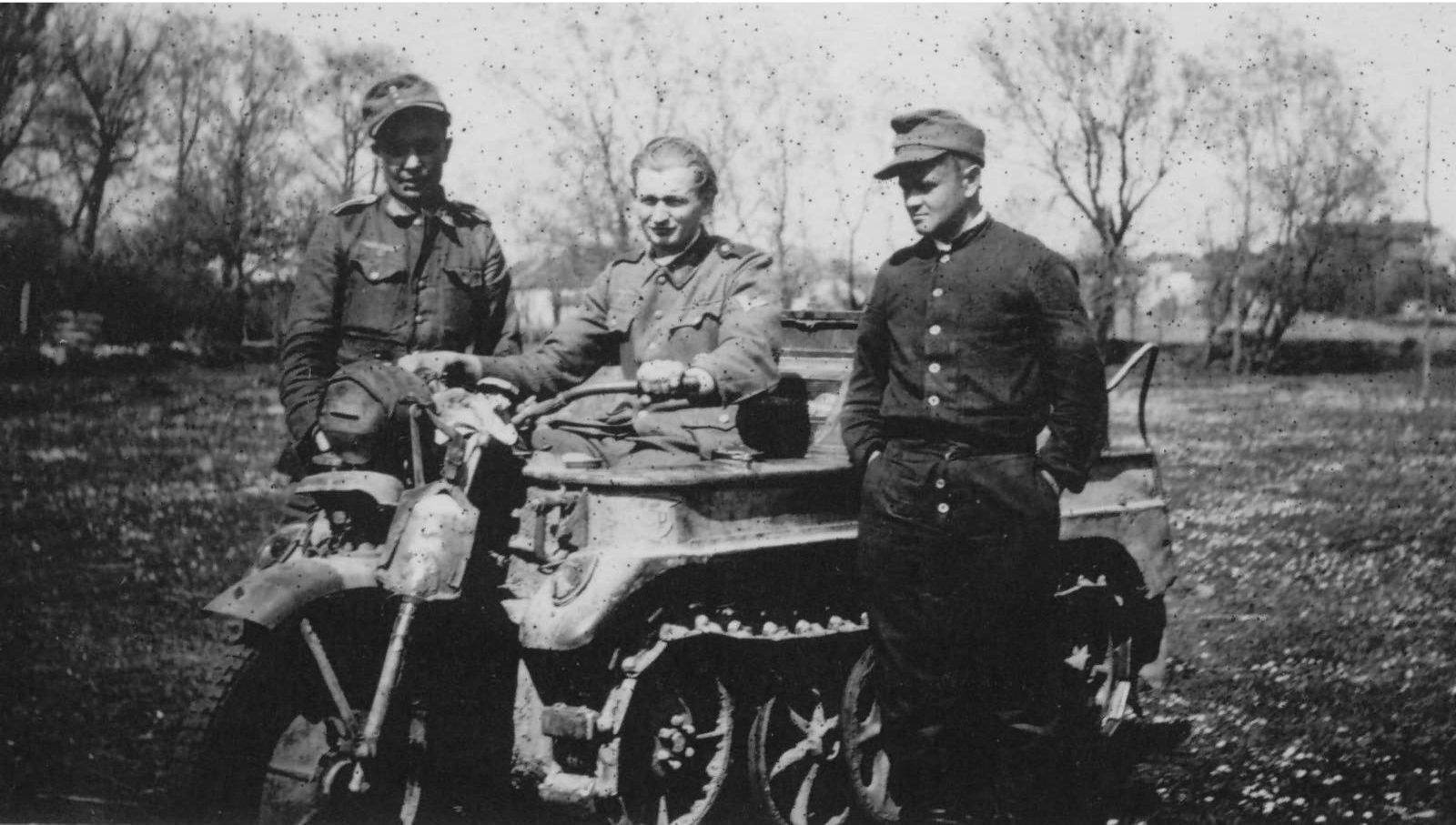
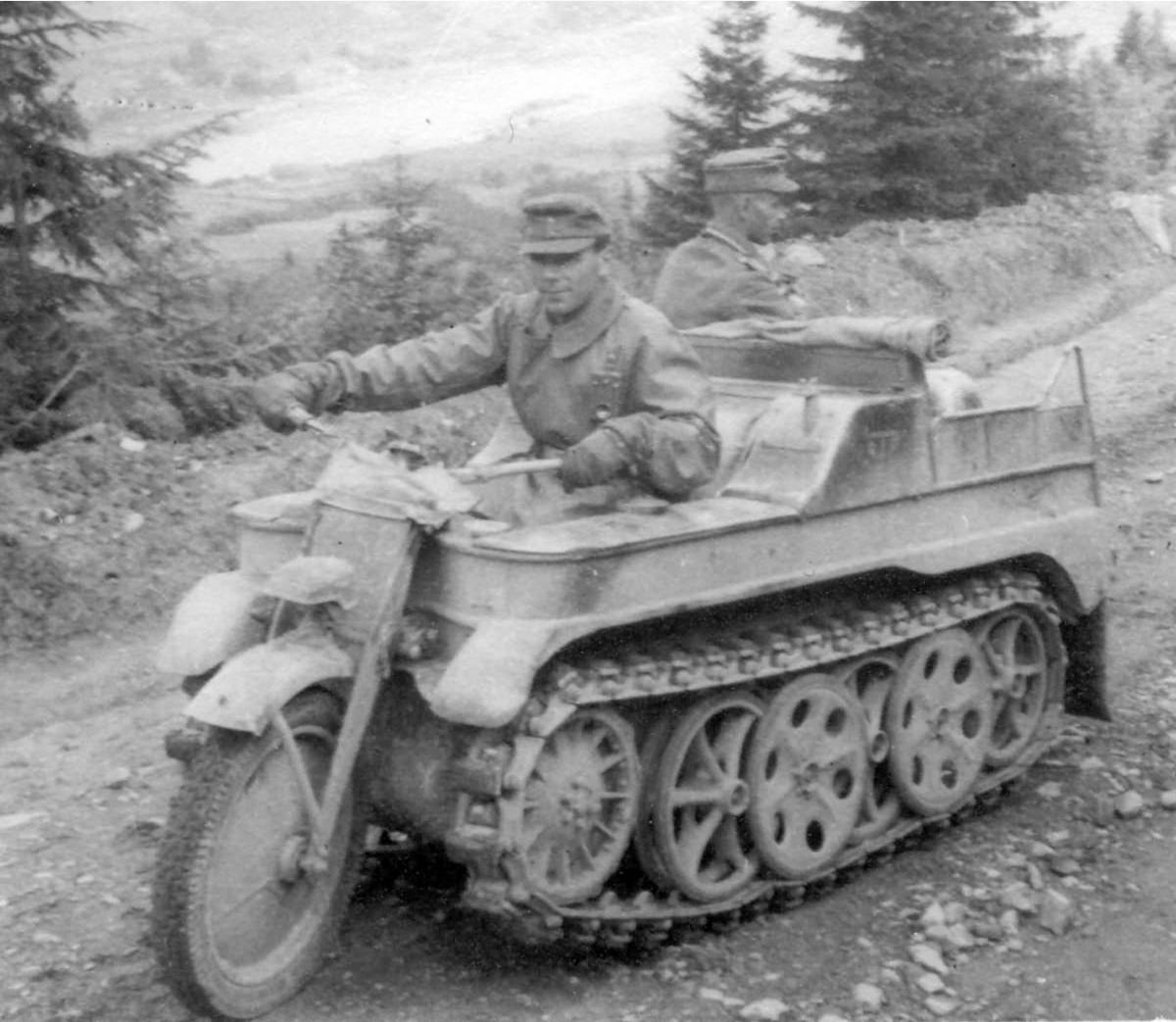
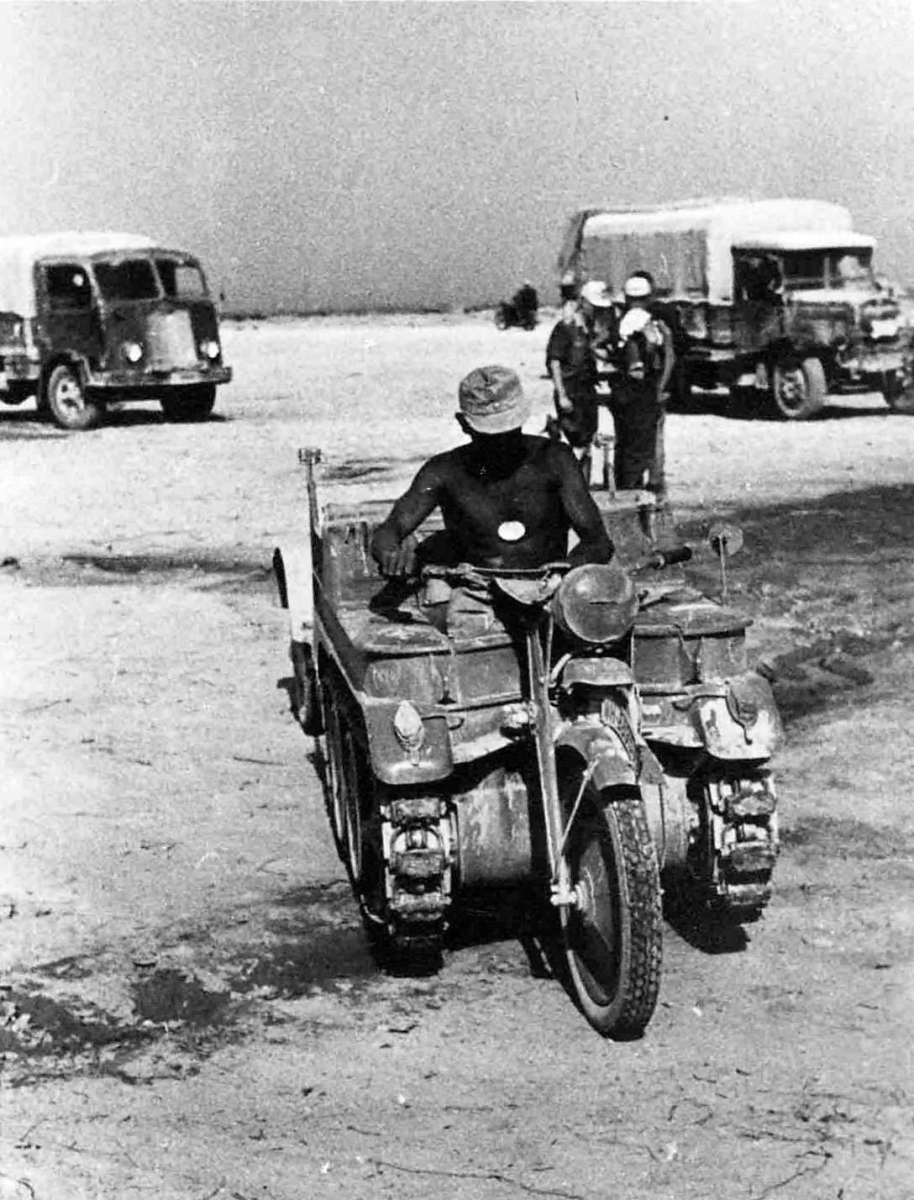
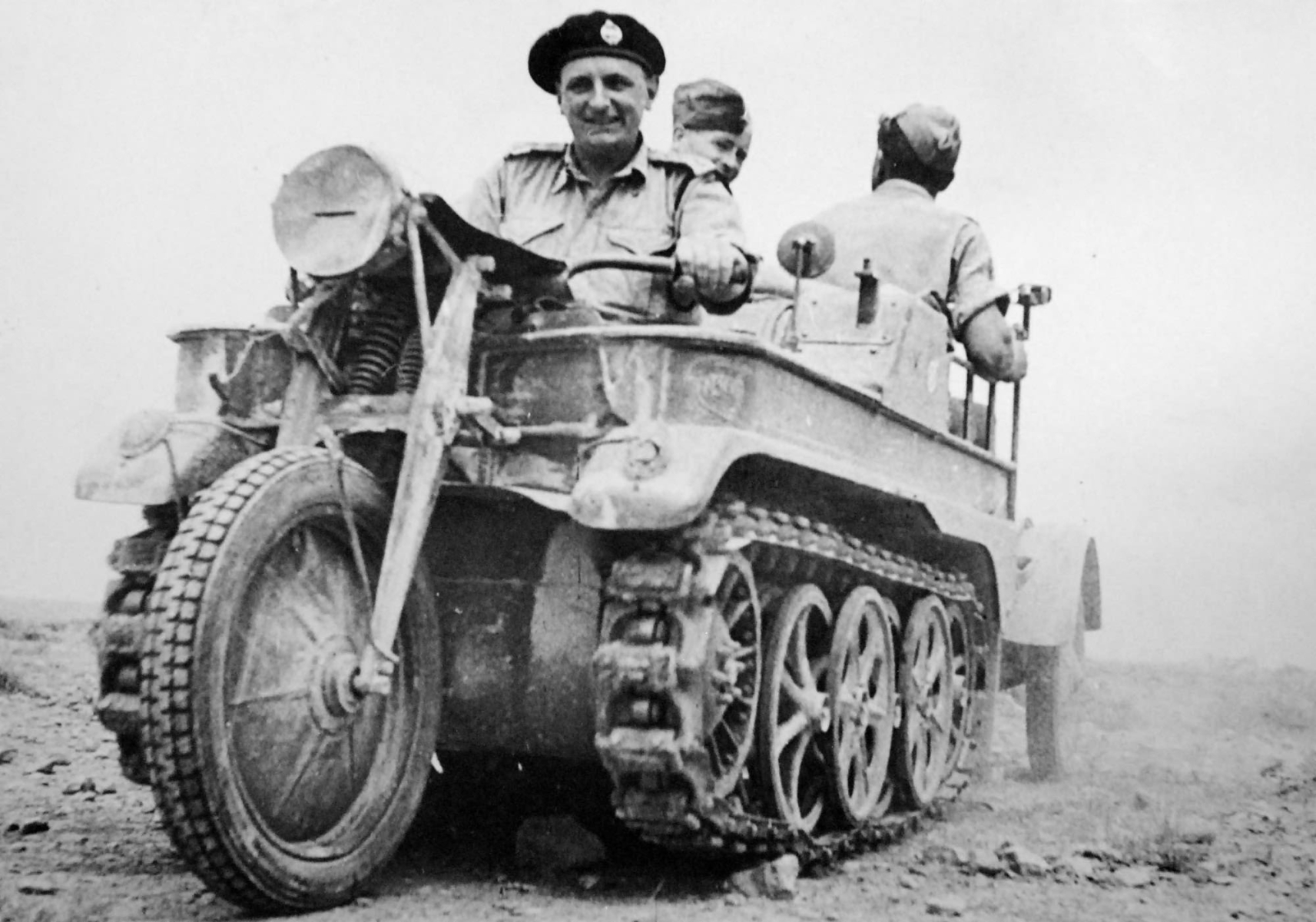
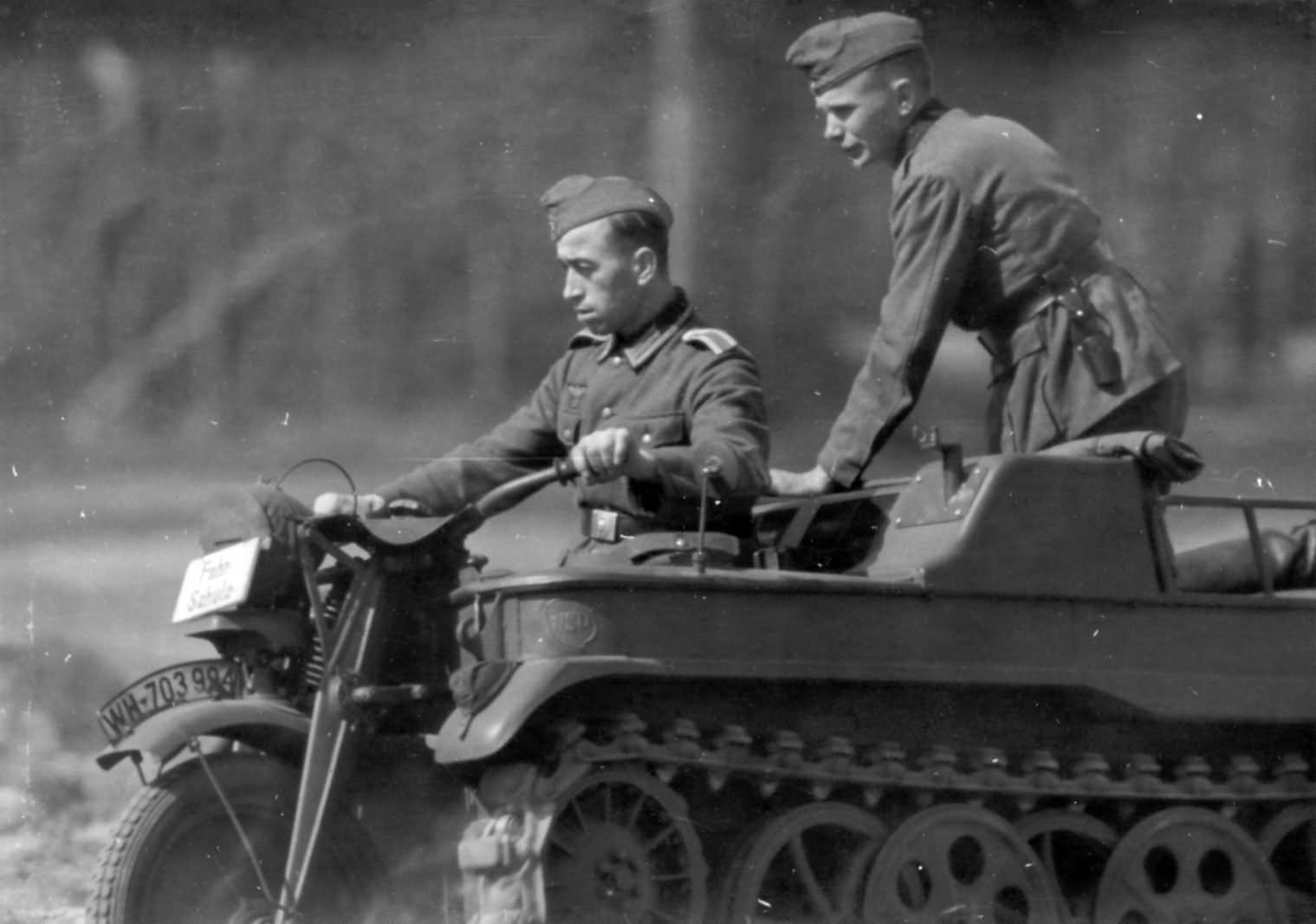
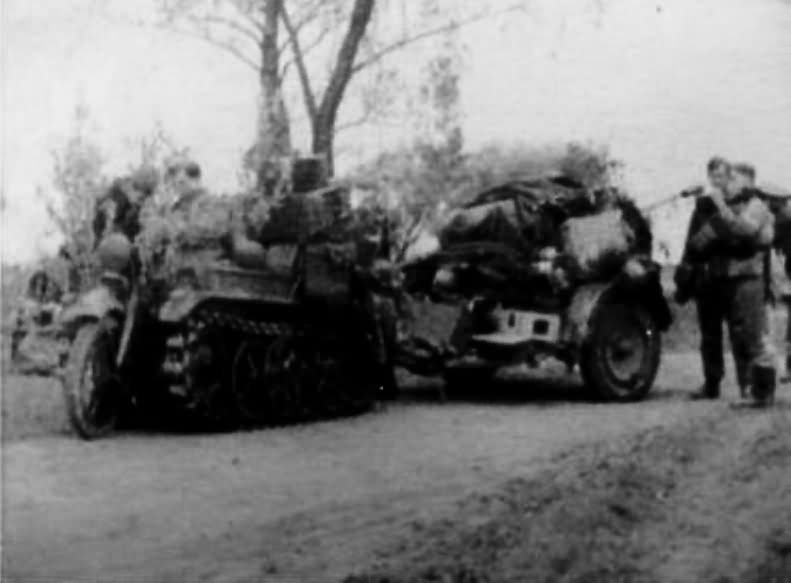
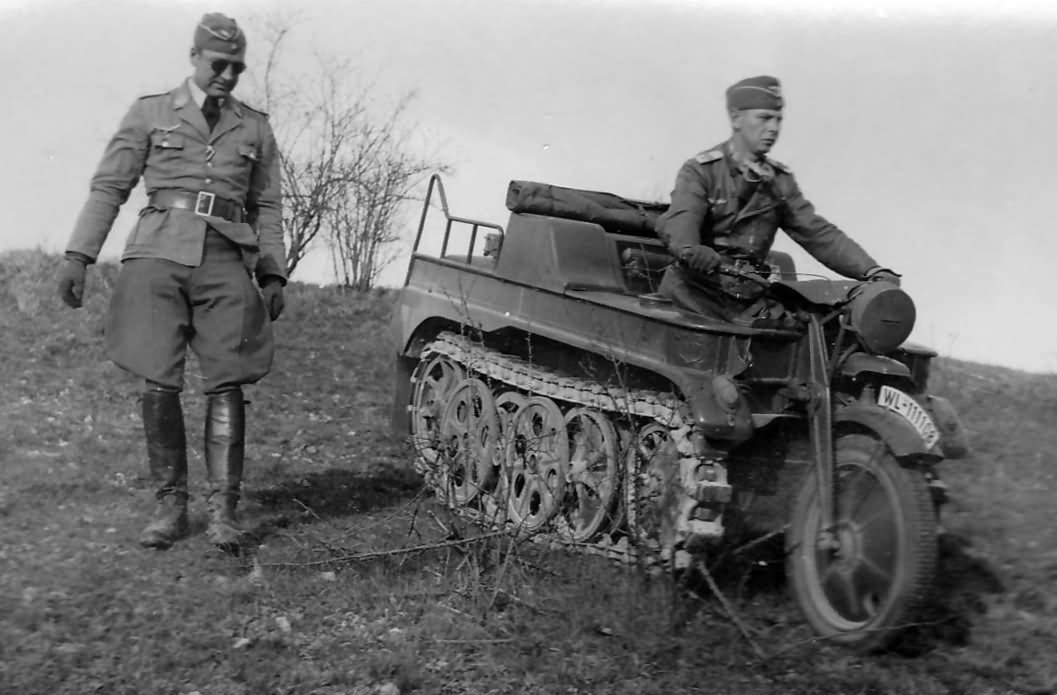
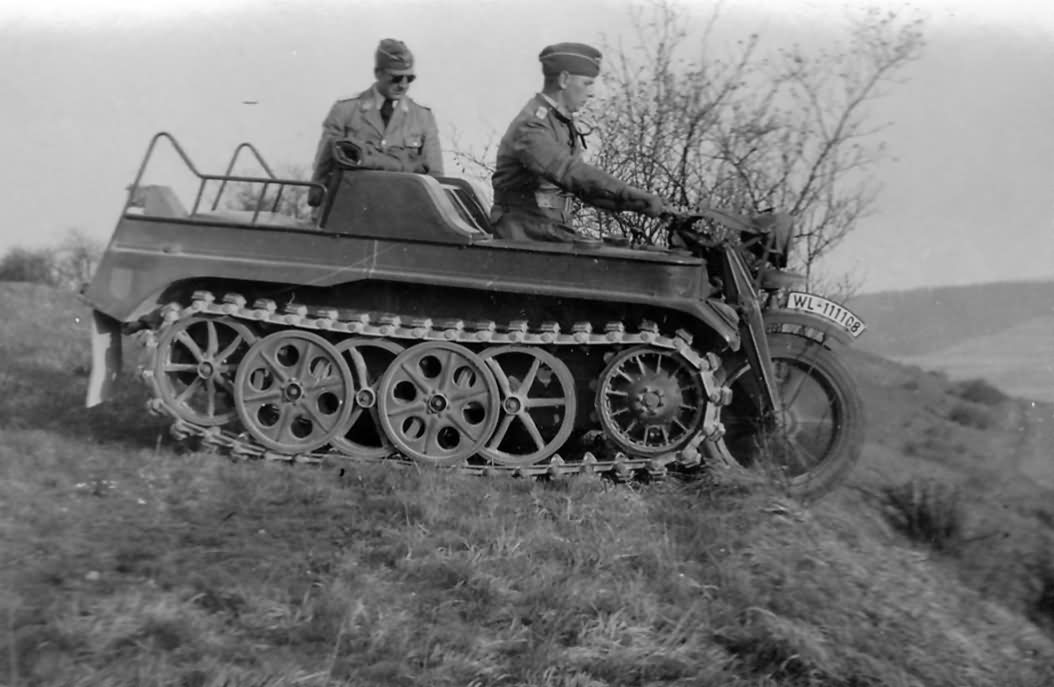
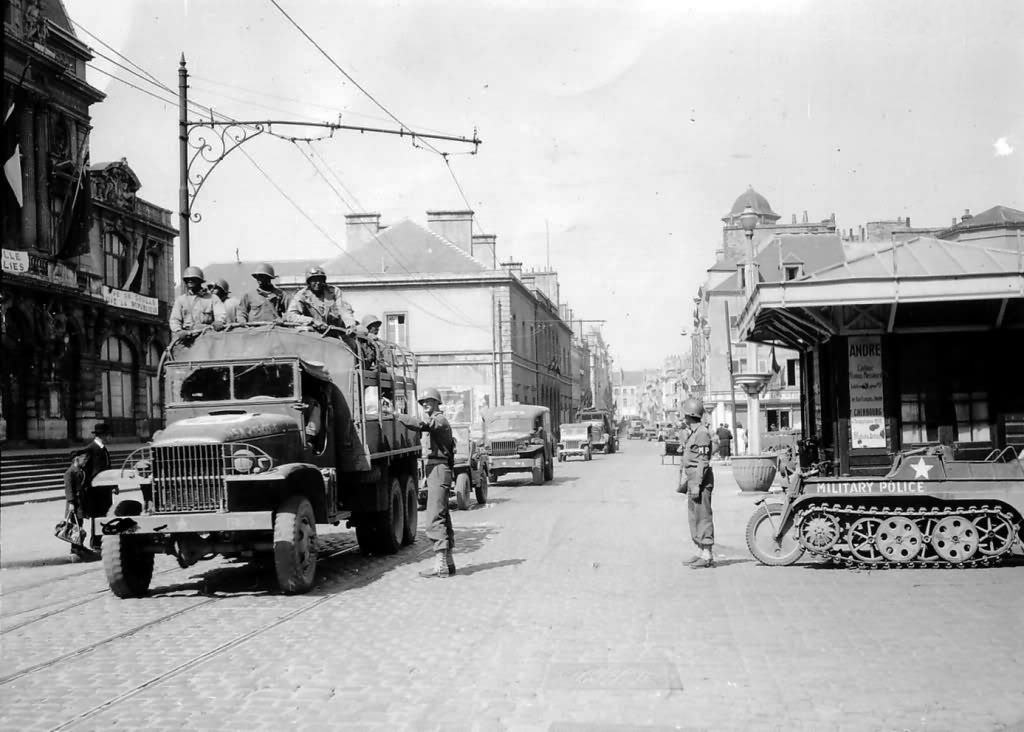
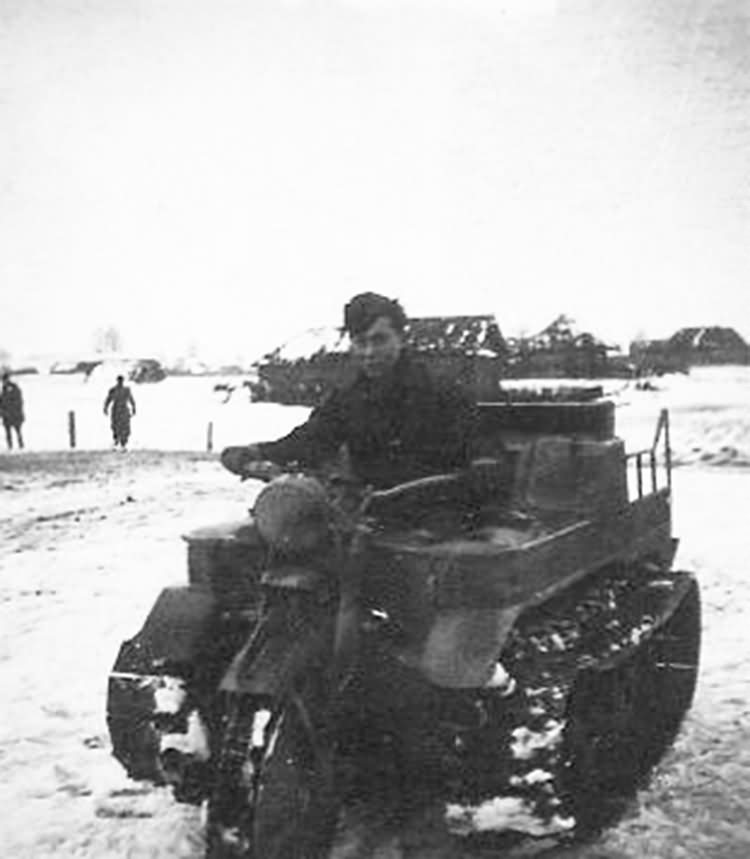
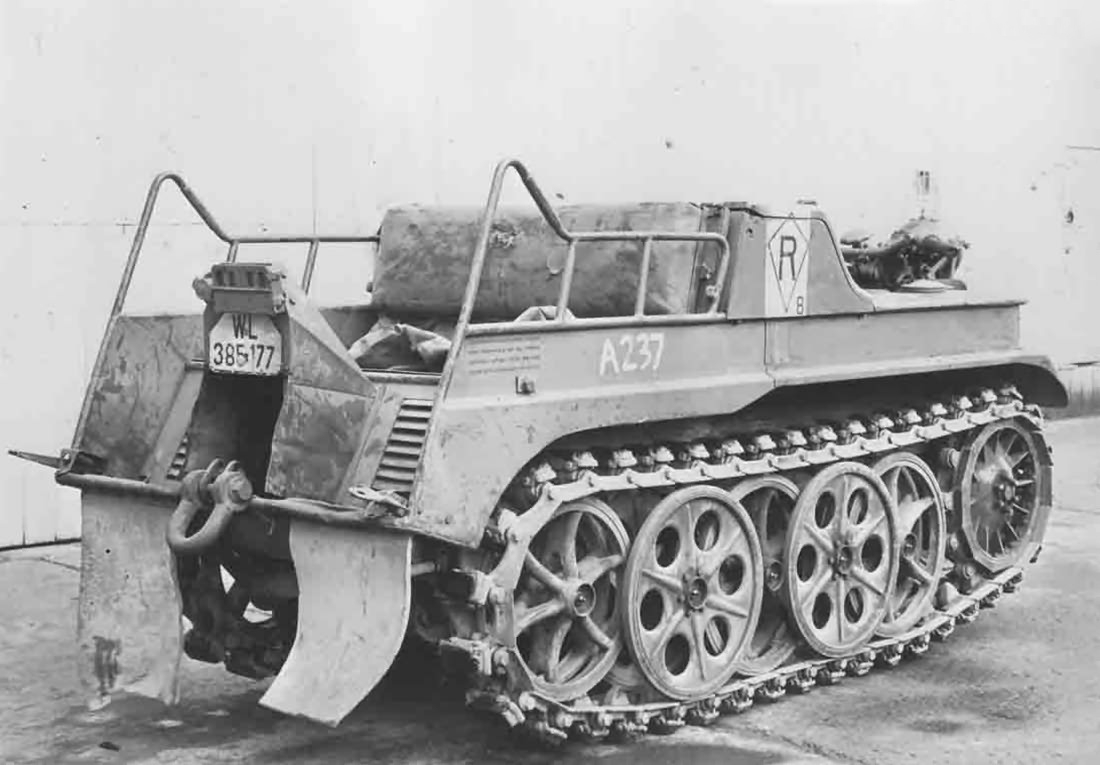
The Sd.Kfz. 2 (famously known as the Kettenkrad or NSU-Kettenkrad) was a unique light multi-purpose half-track vehicle produced by Germany during World War II. Originally conceived in 1938 by NSU Motorenwerke as an all-terrain agricultural and forestry tractor, the design was adapted for military use following army requirements for a light, highly mobile supply transport and equipment tower. Combining motorcycle-style steering with a tracked drive system, the Kettenkrad was powered by a 36 hp 1.5-liter Opel Olympia engine, steering via its front wheel for gradual turns and automatically engaging track brakes for tighter maneuvers.Officially adopted in June 1941, the vehicle gained immediate popularity across the Wehrmacht and Luftwaffe for its exceptional cross-country mobility and road speed. It was widely deployed on the Eastern Front, in North Africa, and on European battlefields for hauling light artillery (such as mountain guns and recoilless rifles), laying communications cables, carrying ammunition, and towing aircraft on airfields. Production was expanded beyond NSU to Stoewer in Stettin and French manufacturers like Simca, resulting in 8,411 military units built by the end of the war, followed by roughly 500 additional post-war commercial units produced for forestry and municipal fire departments up to 1948. Highly valued for its versatility—and frequently pressed into service by Allied forces when captured—the Kettenkrad remains one of the most iconic and recognizable light utility vehicles of World War II.