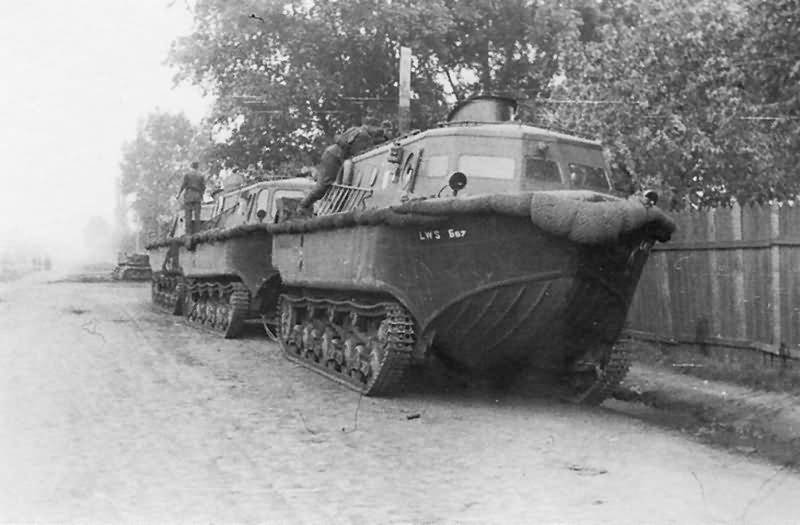
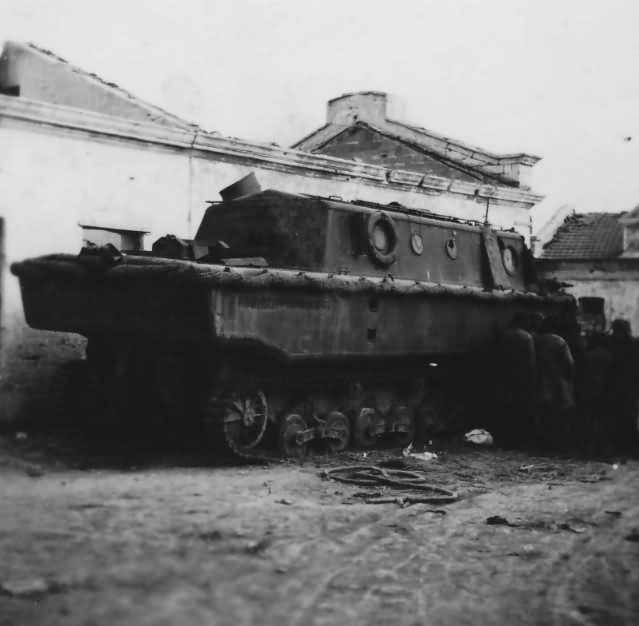
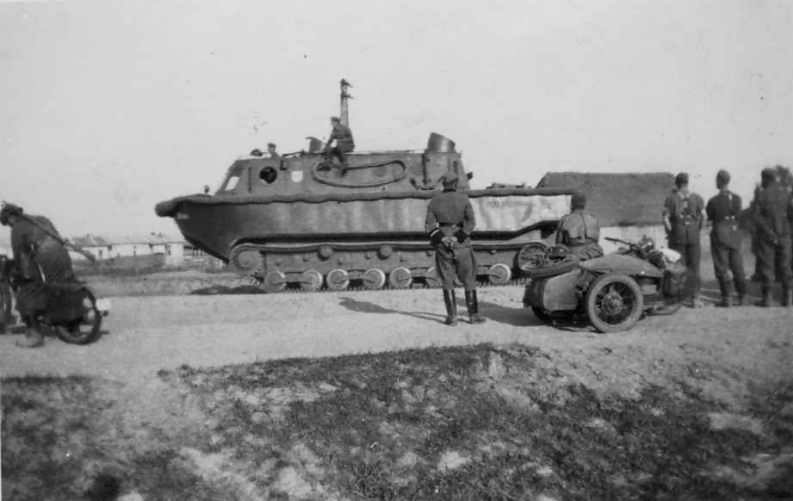
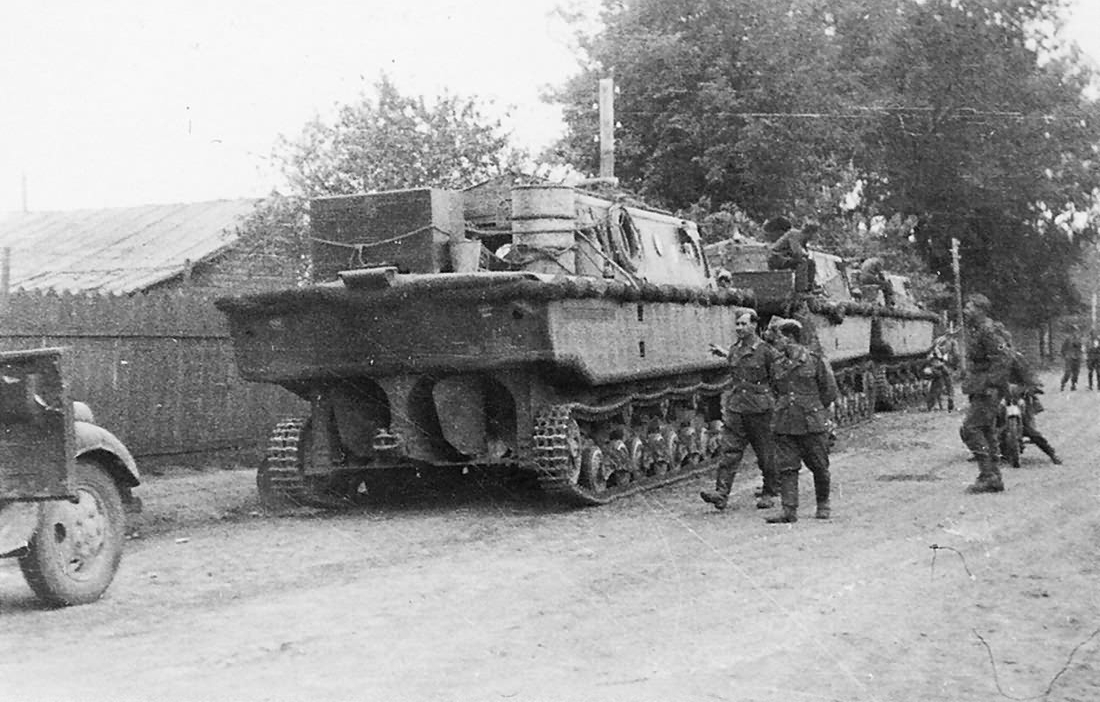
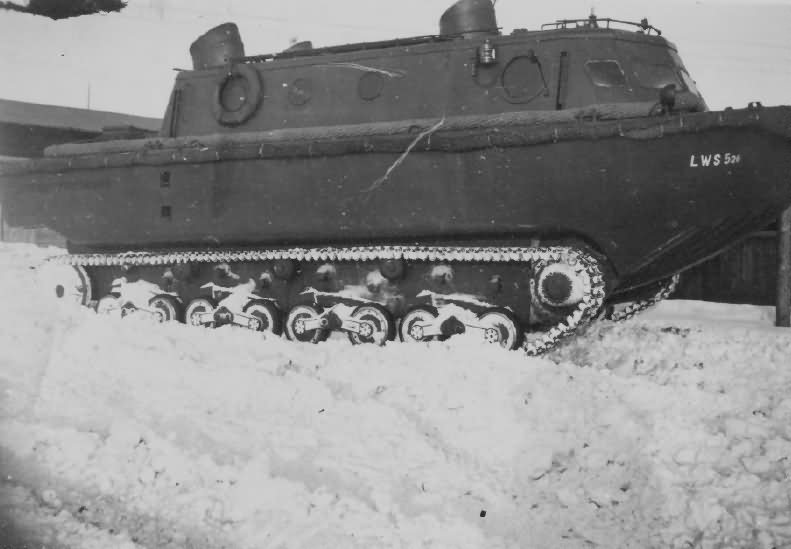
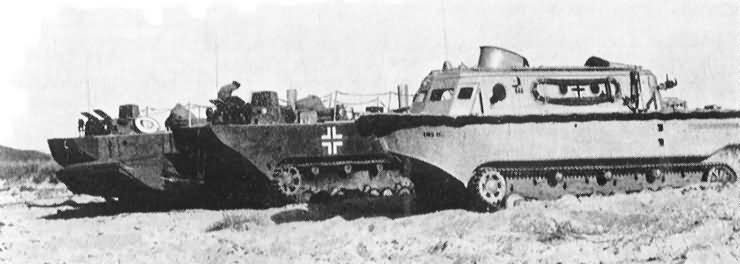
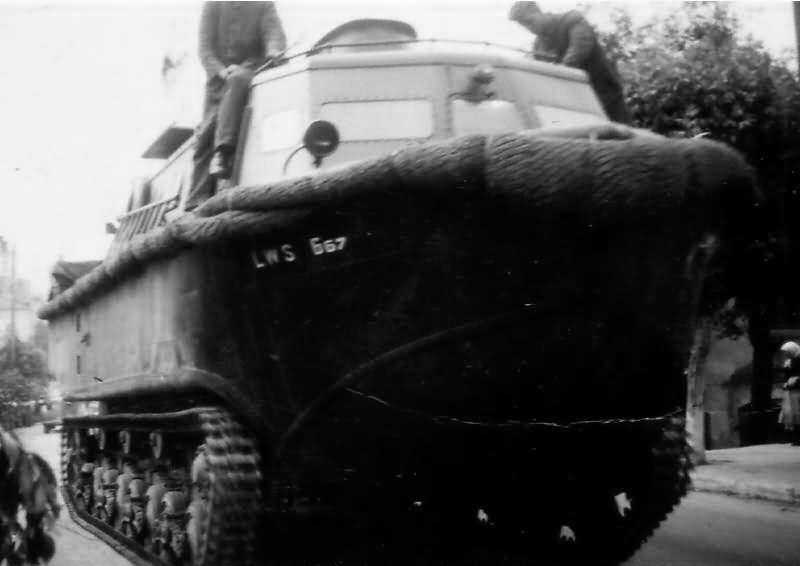
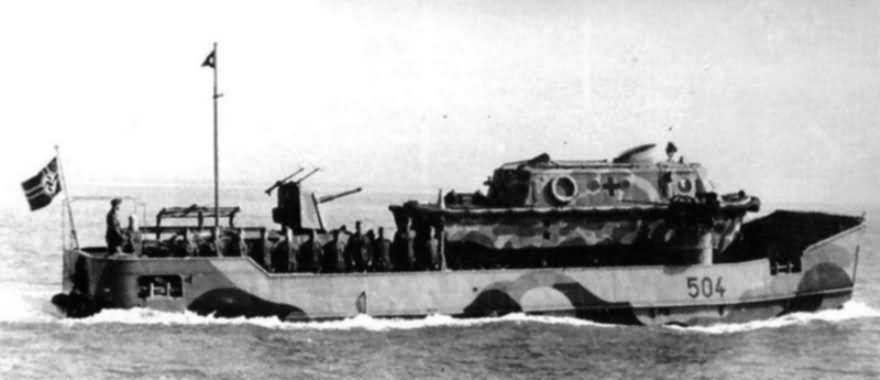
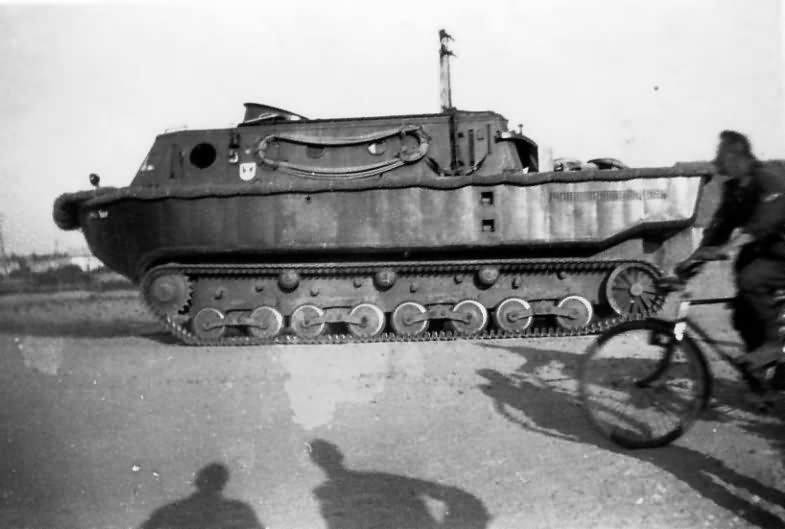
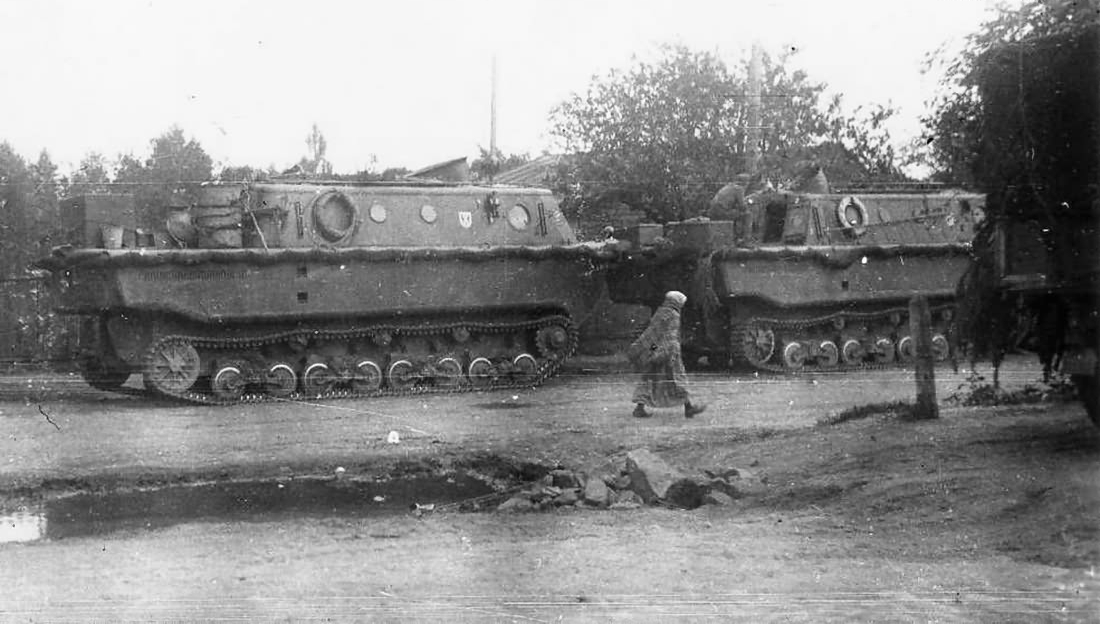
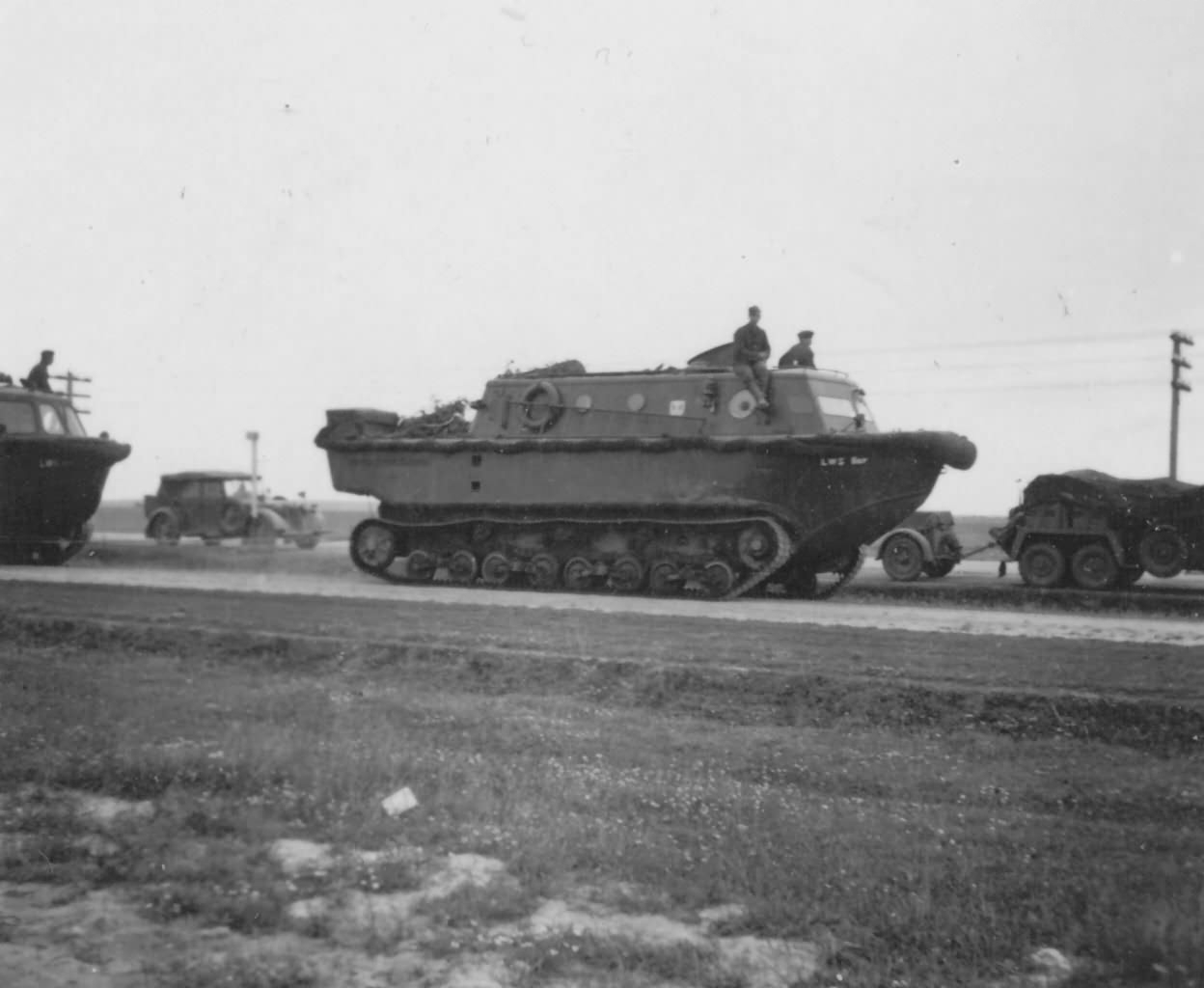
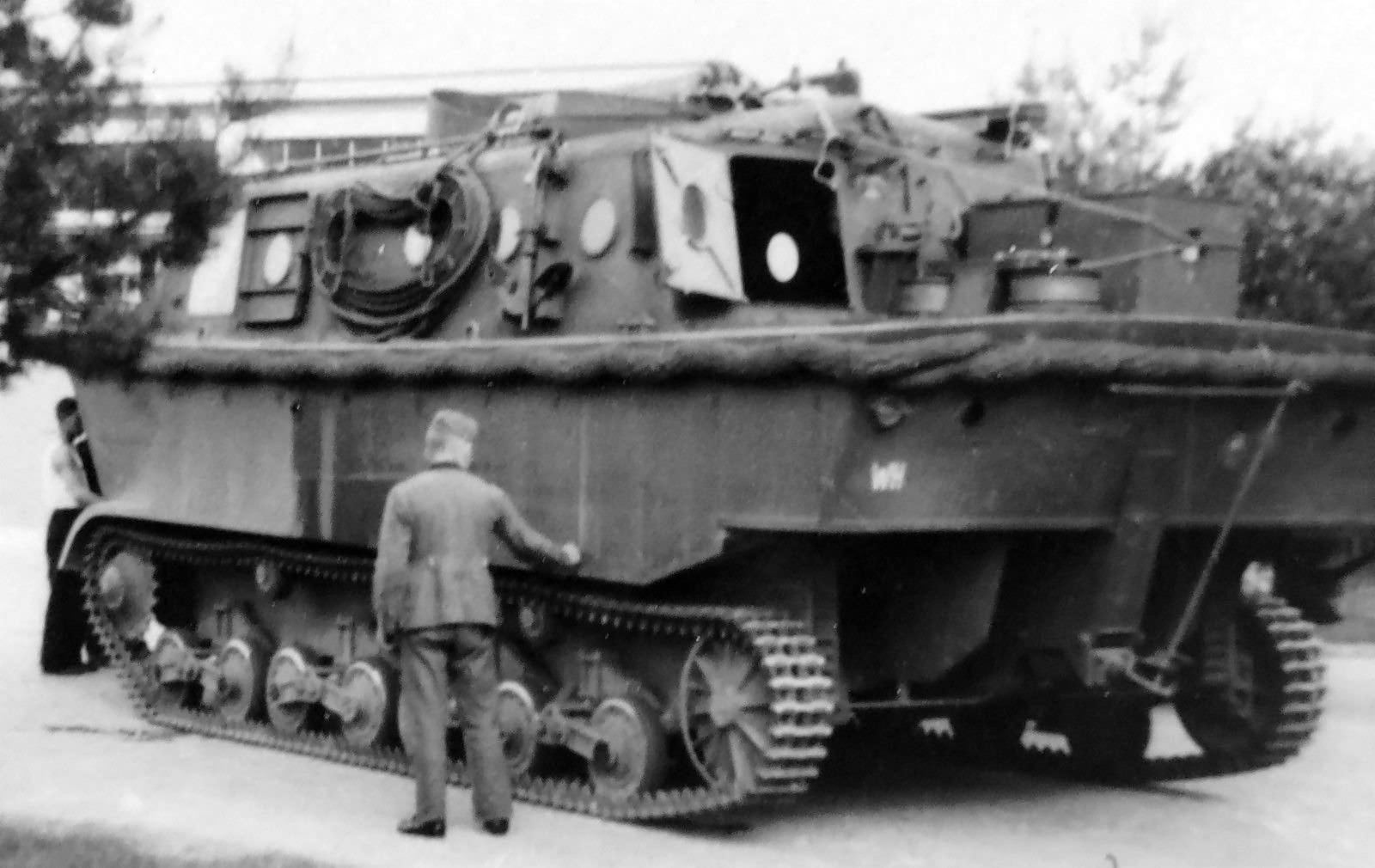
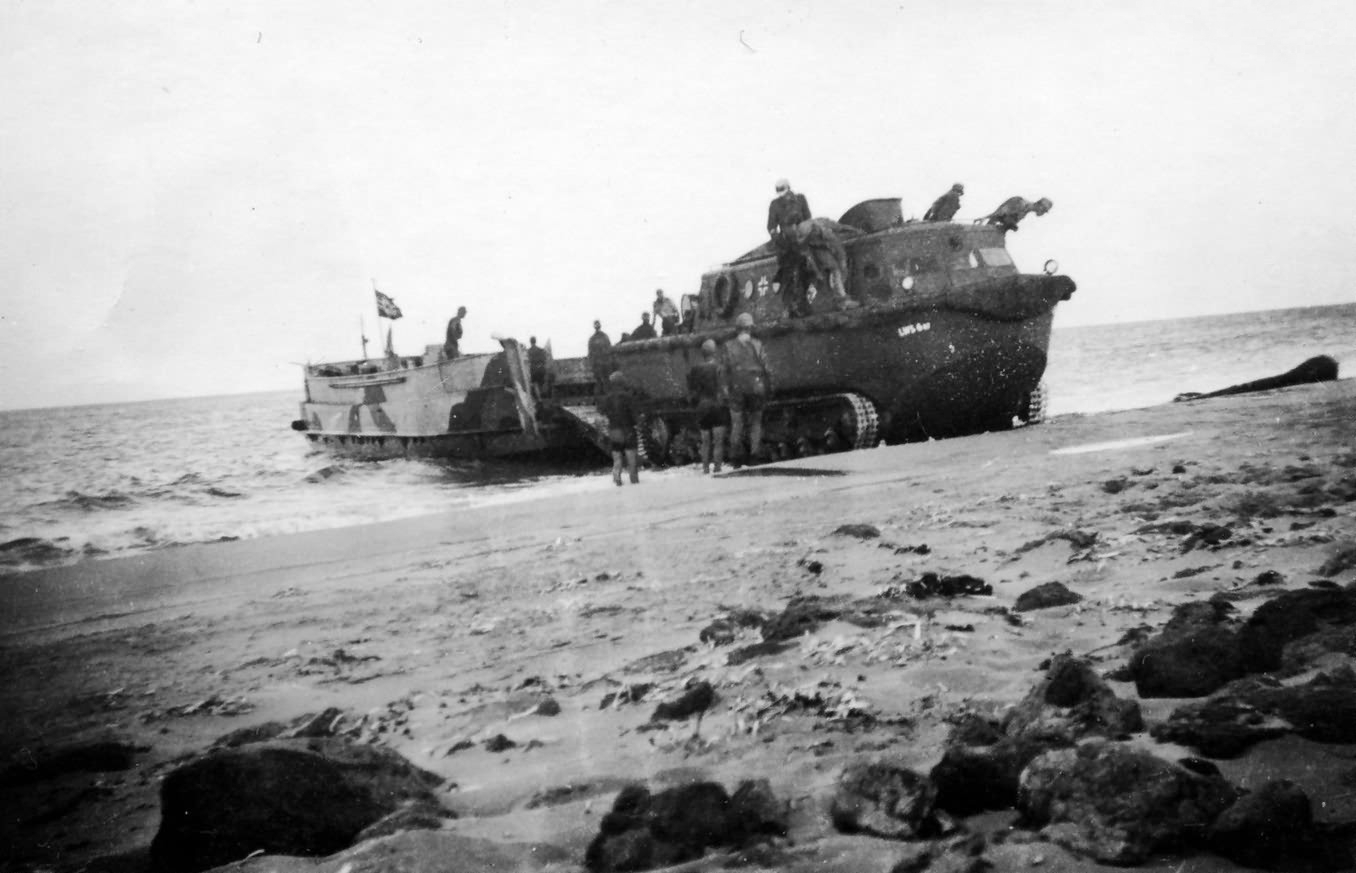
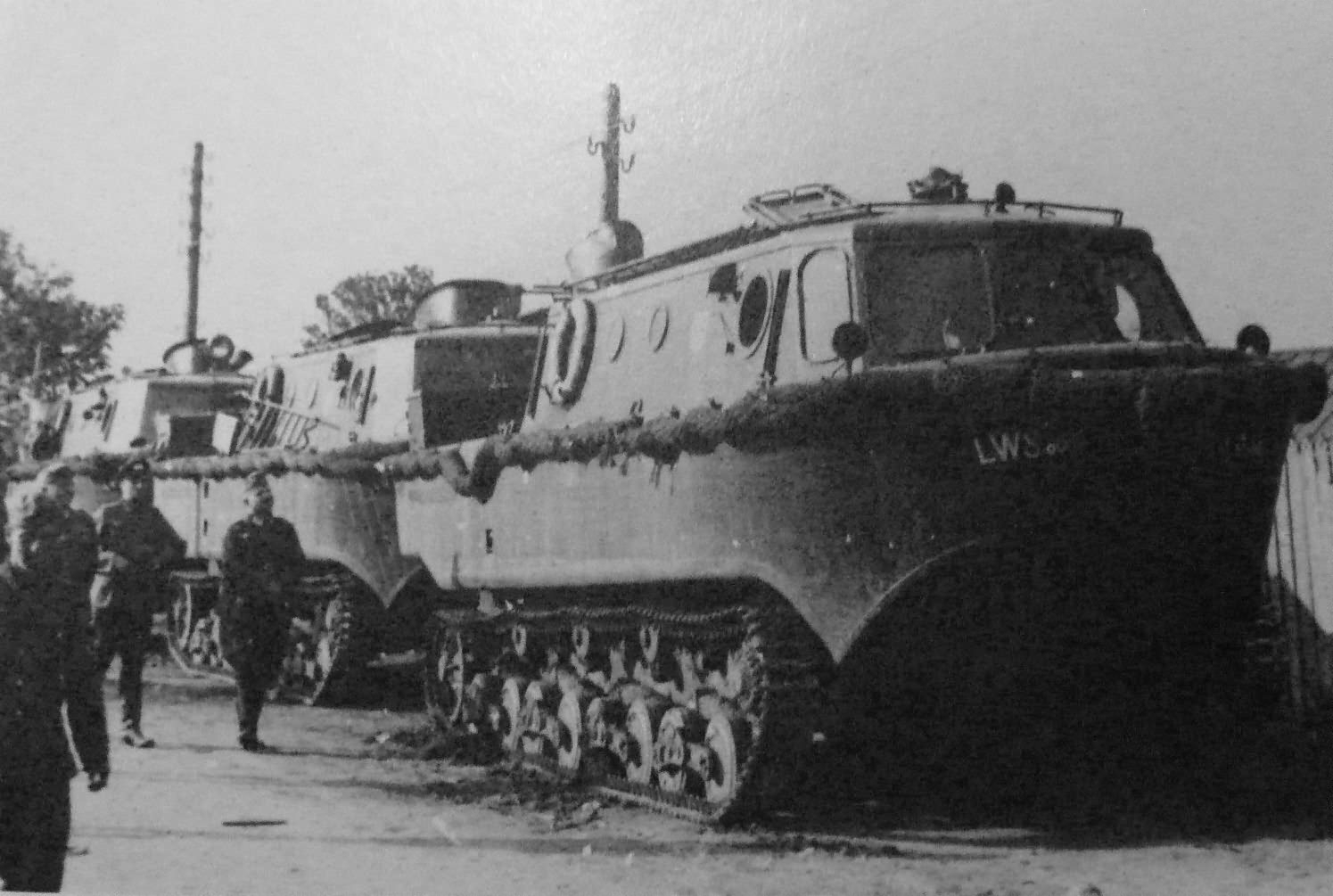
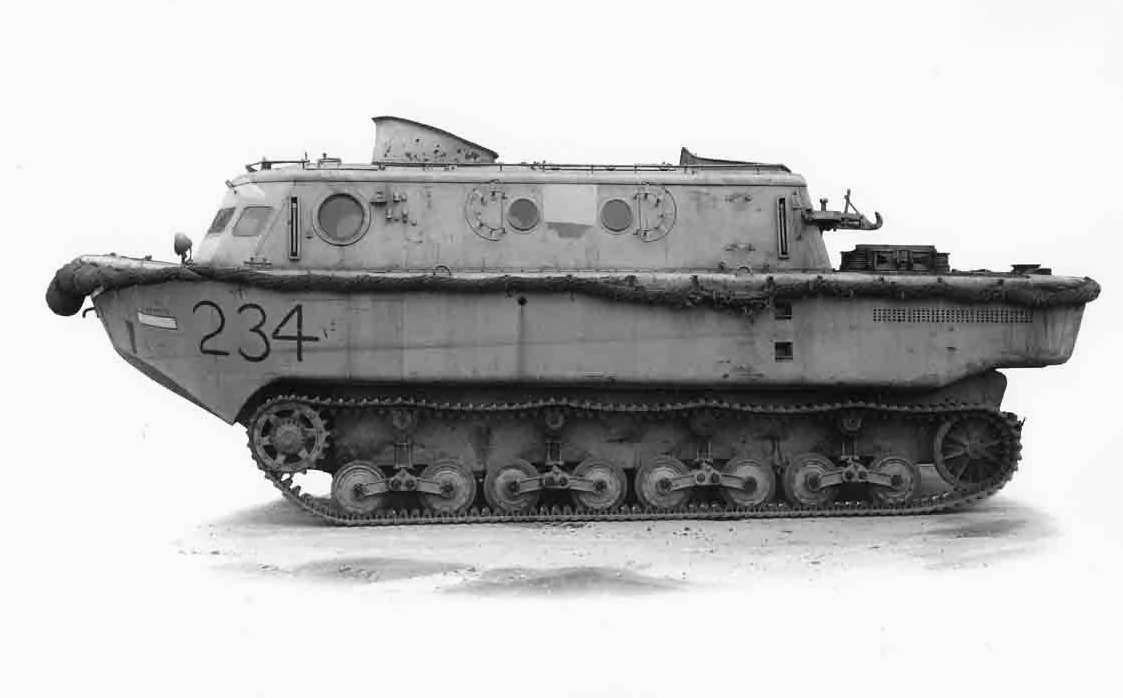
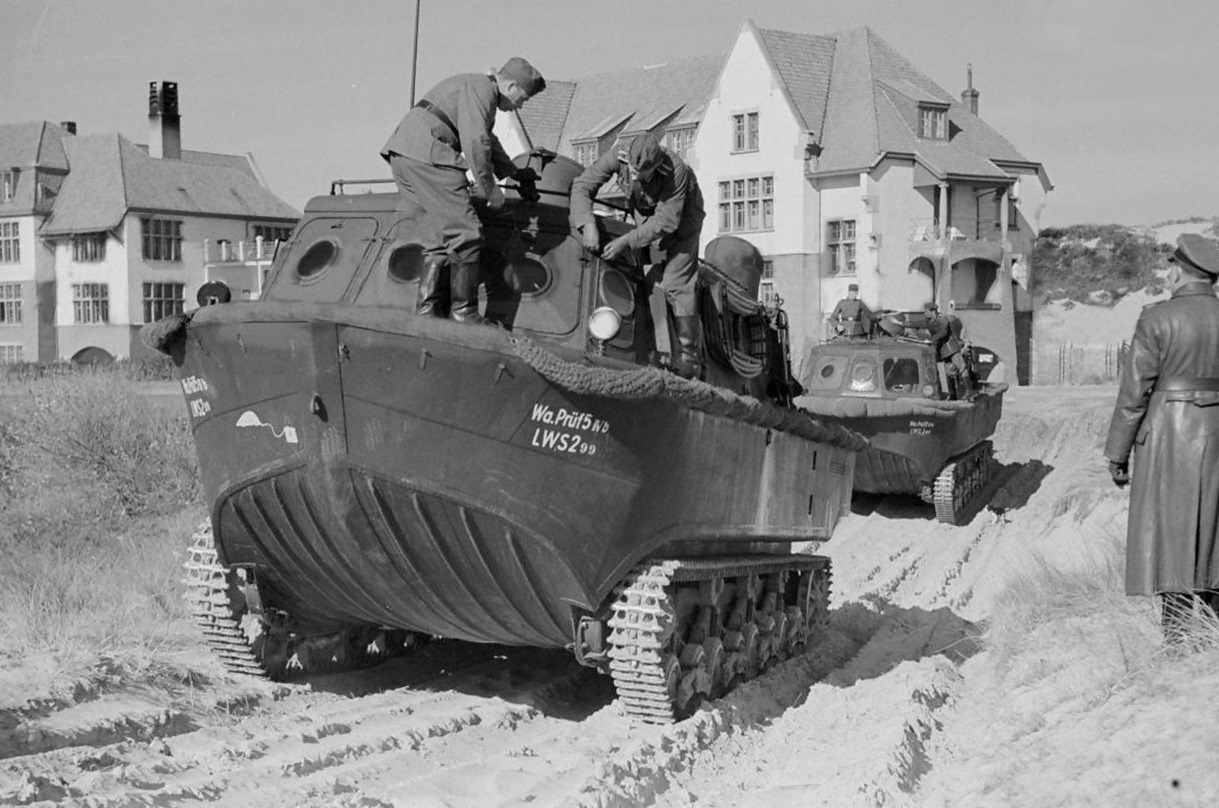
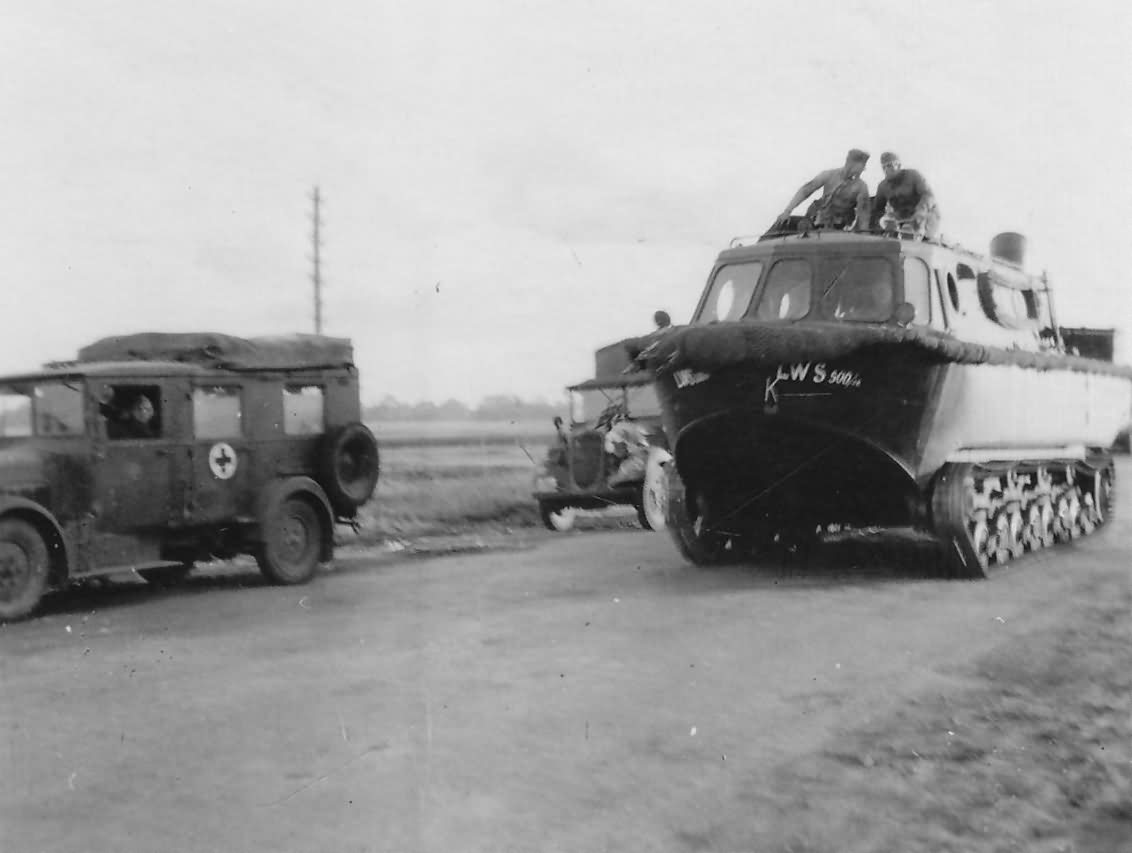
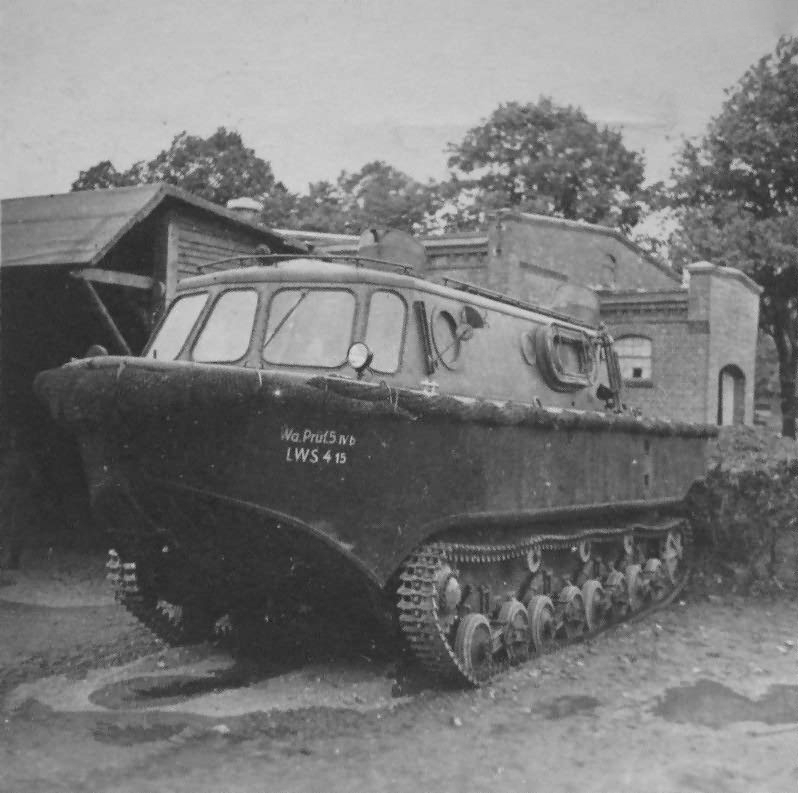
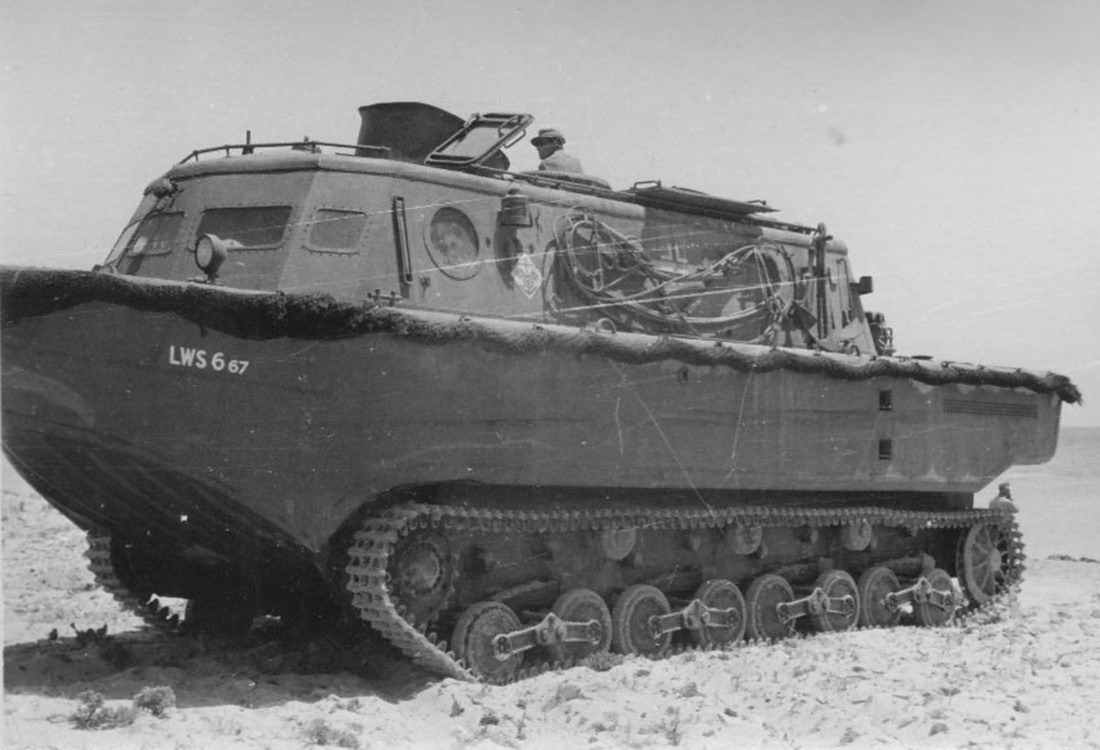
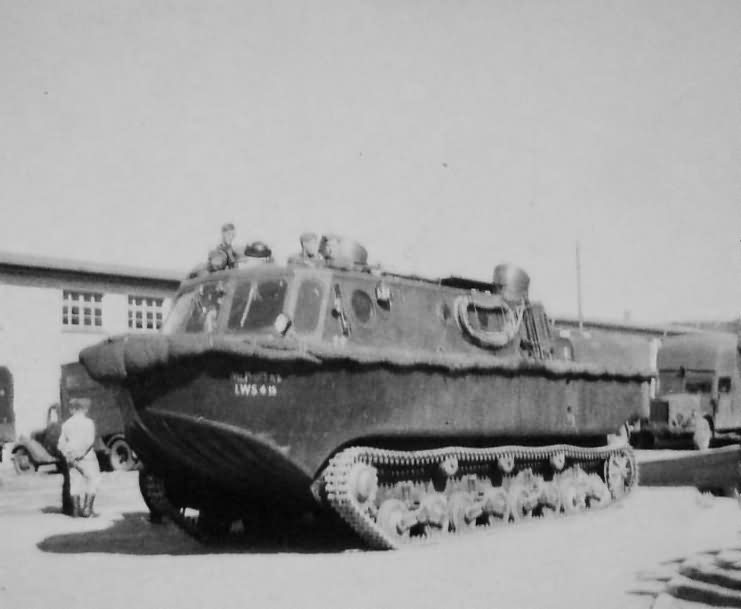
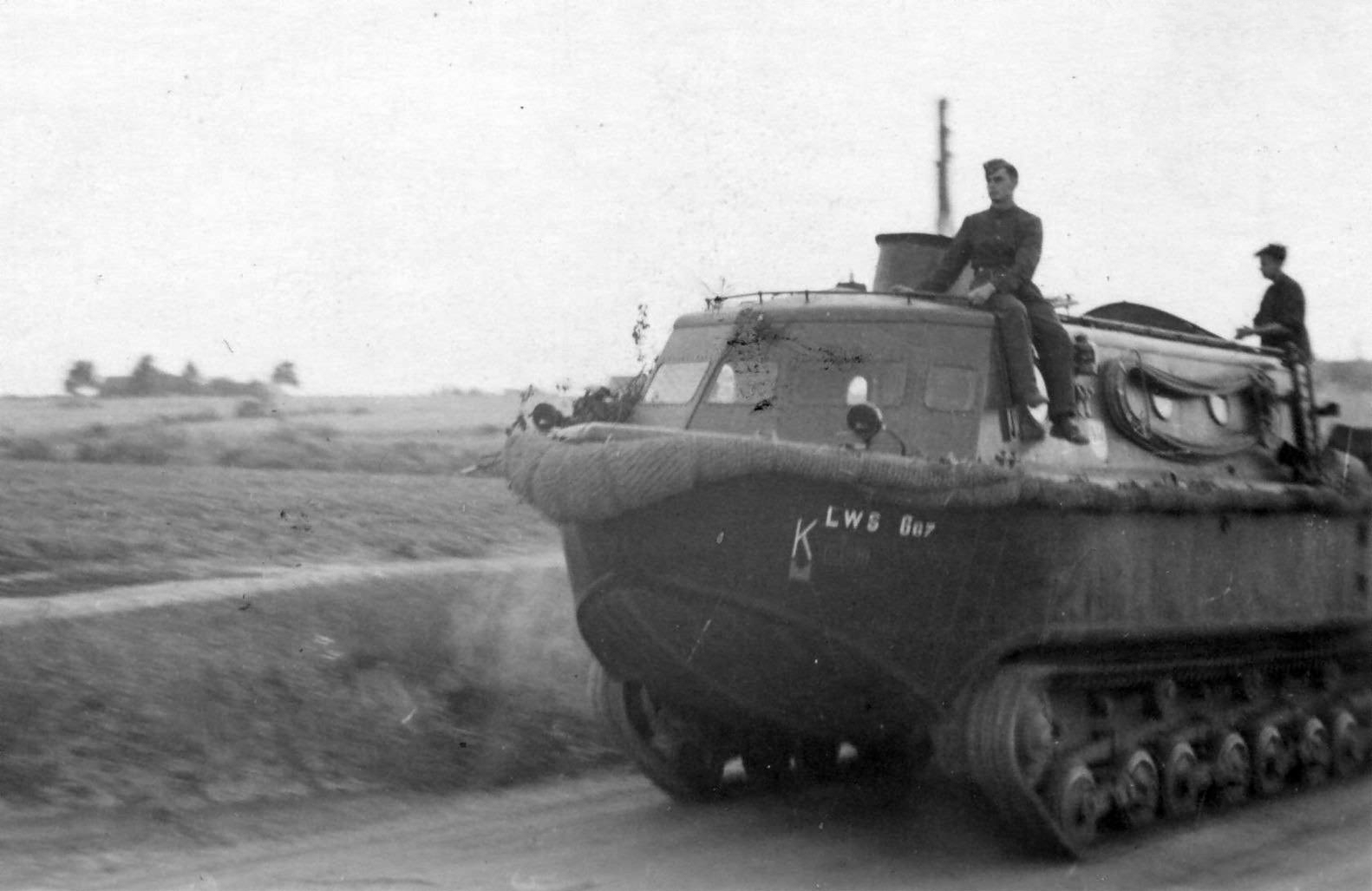
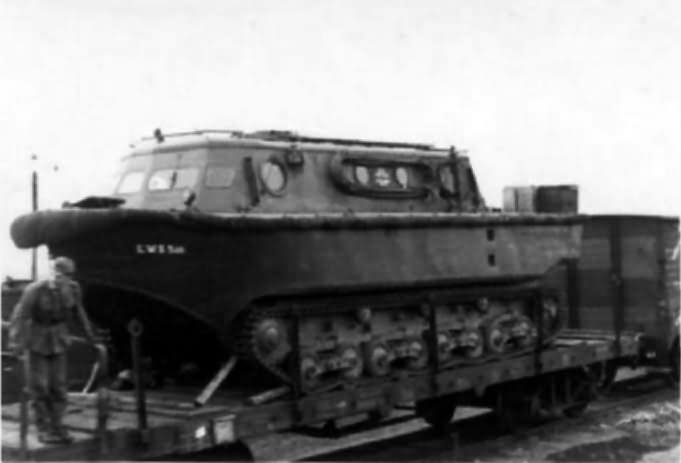
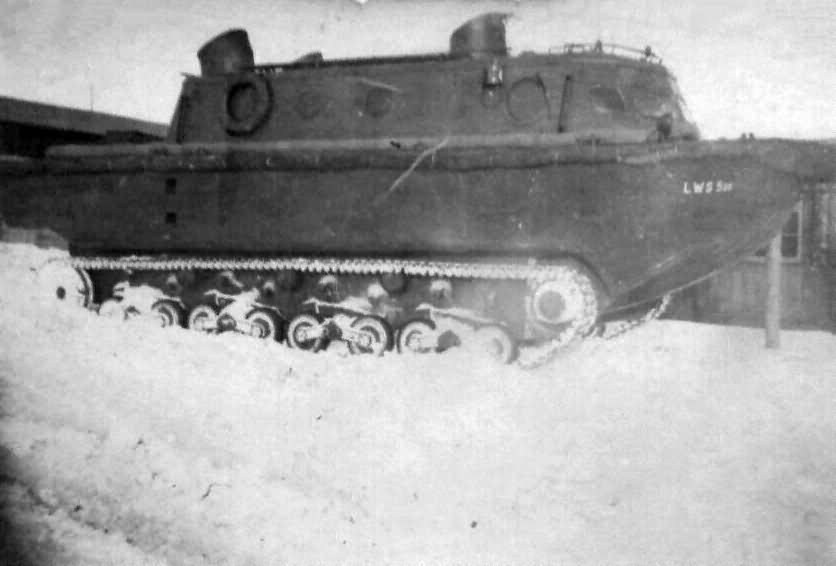
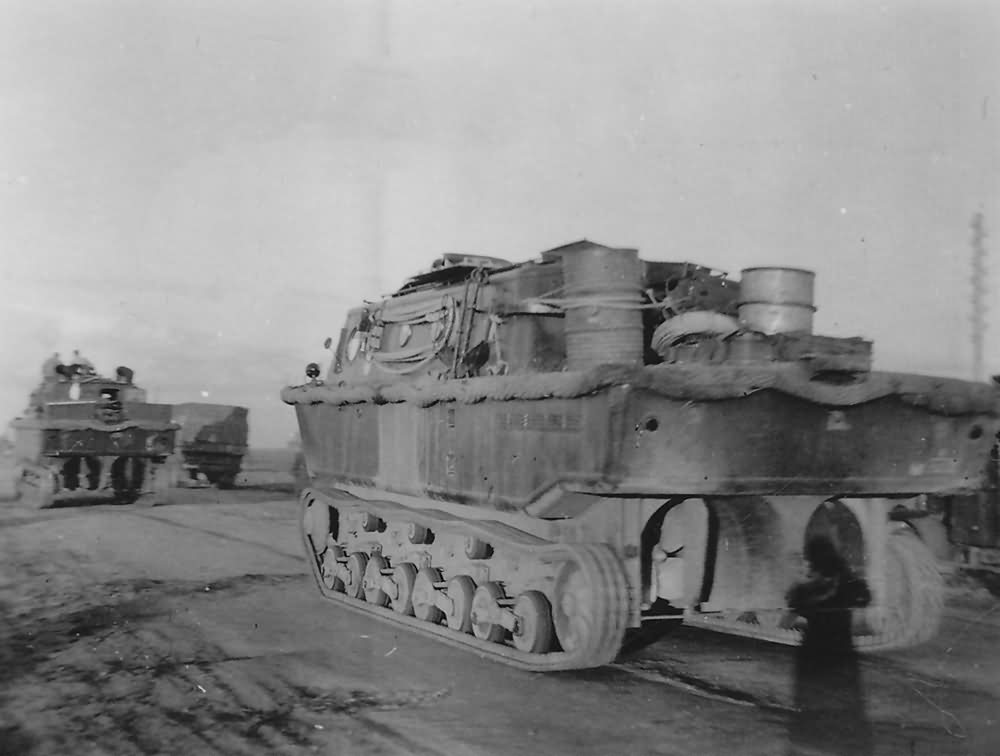
The Land-Wasser-Schlepper (LWS) was an amphibious tracked tractor developed for the Wehrmacht in 1936 by Rheinmetall-Borsig and built in collaboration with Alkett, Sachsenberg, Maybach, and ZF. Designed as a versatile multi-purpose transport for river crossings and coastal landings, it functioned as an overland tractor, tugboat, shallow-water towing vehicle, and engine ferry. Powered by a 300 hp 12-cylinder Maybach HL 120 engine, the 13-ton unarmored vehicle could carry around 20 soldiers, reaching a top road speed of 40 km/h and a water speed of 12.5 km/h via twin propellers.Despite positive evaluations by Army Chief of Staff Franz Halder during trials in 1940, mass production proved unfeasible, resulting in only 21 total units being built. Initially concentrated along the French coast for the cancelled invasion of Britain (Operation Sea Lion), the LWS units were assigned to engineer landing battalions and deployed to the Eastern Front, seeing action during the amphibious capture of the Baltic islands (Moon, Ösel, and Dagö) in late 1941. Operating primarily in Eastern Europe and the Mediterranean, the Land-Wasser-Schlepper remained in active military service until the end of World War II in May 1945.