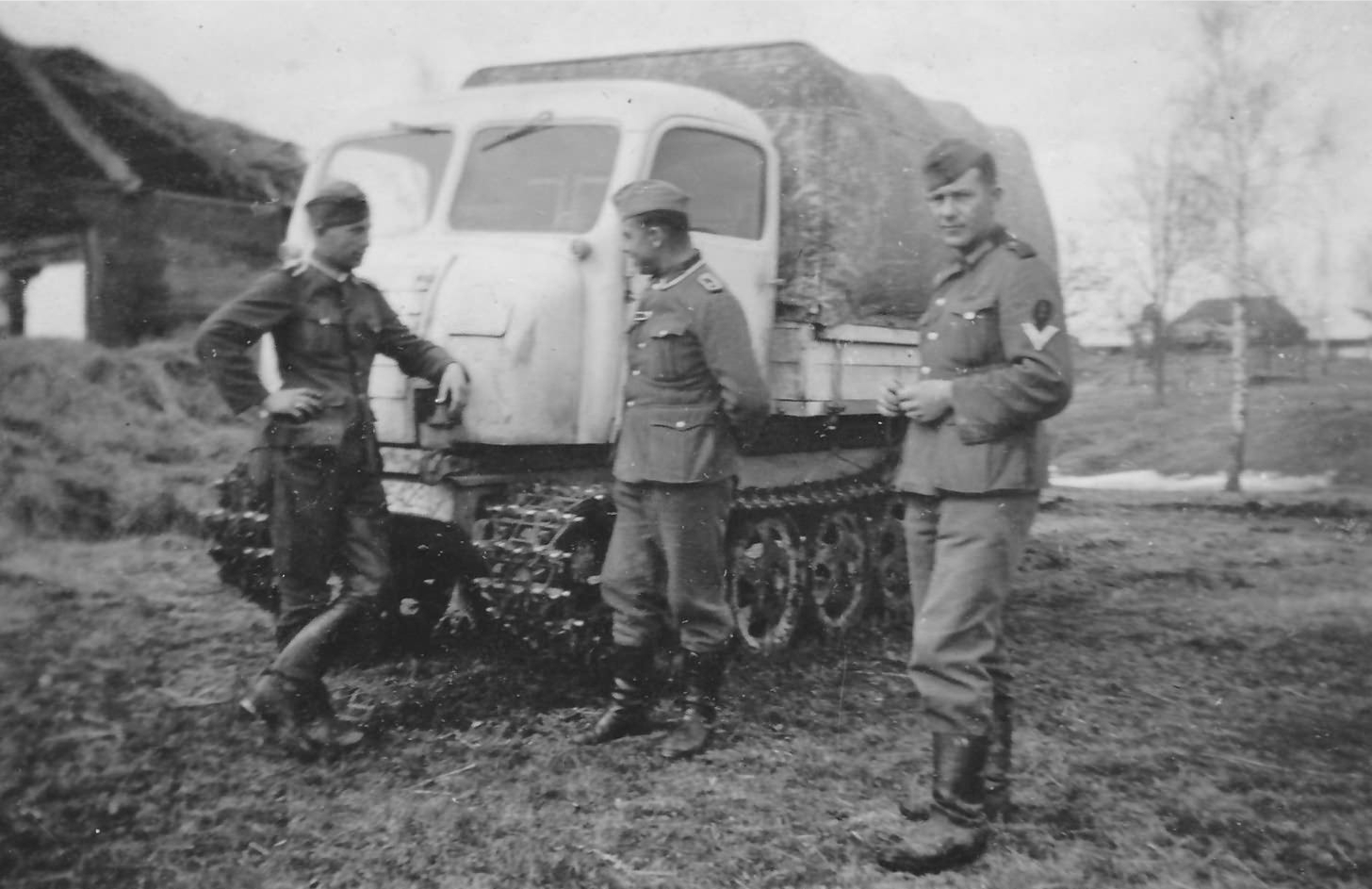
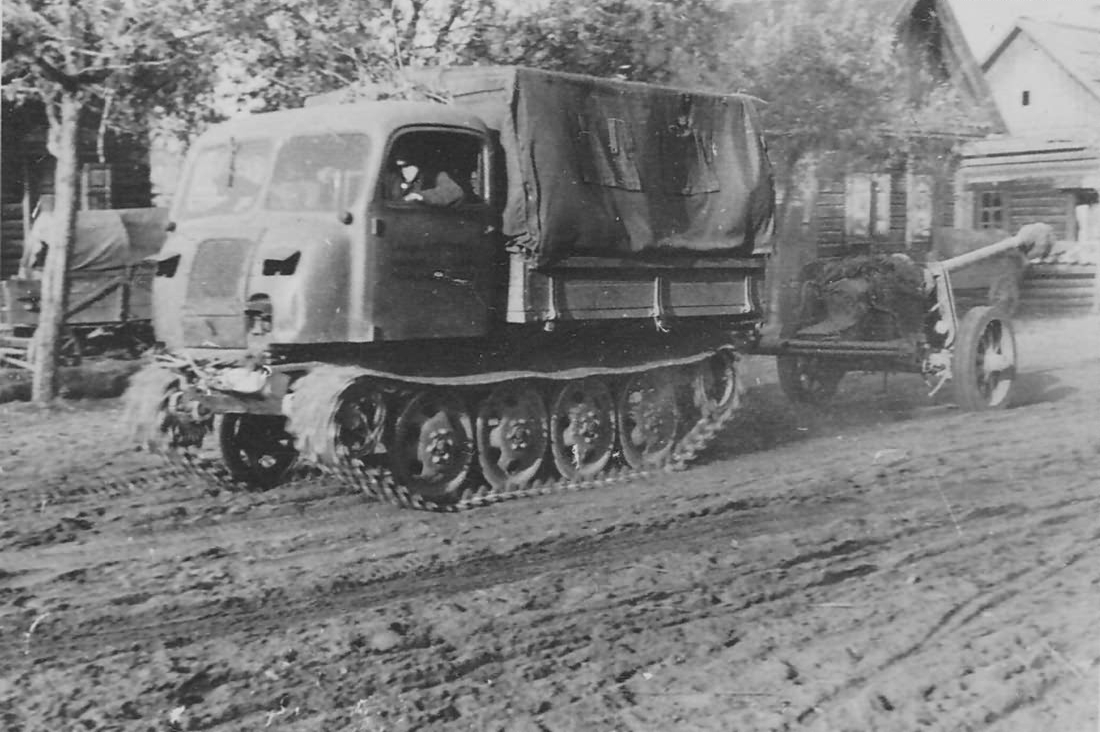
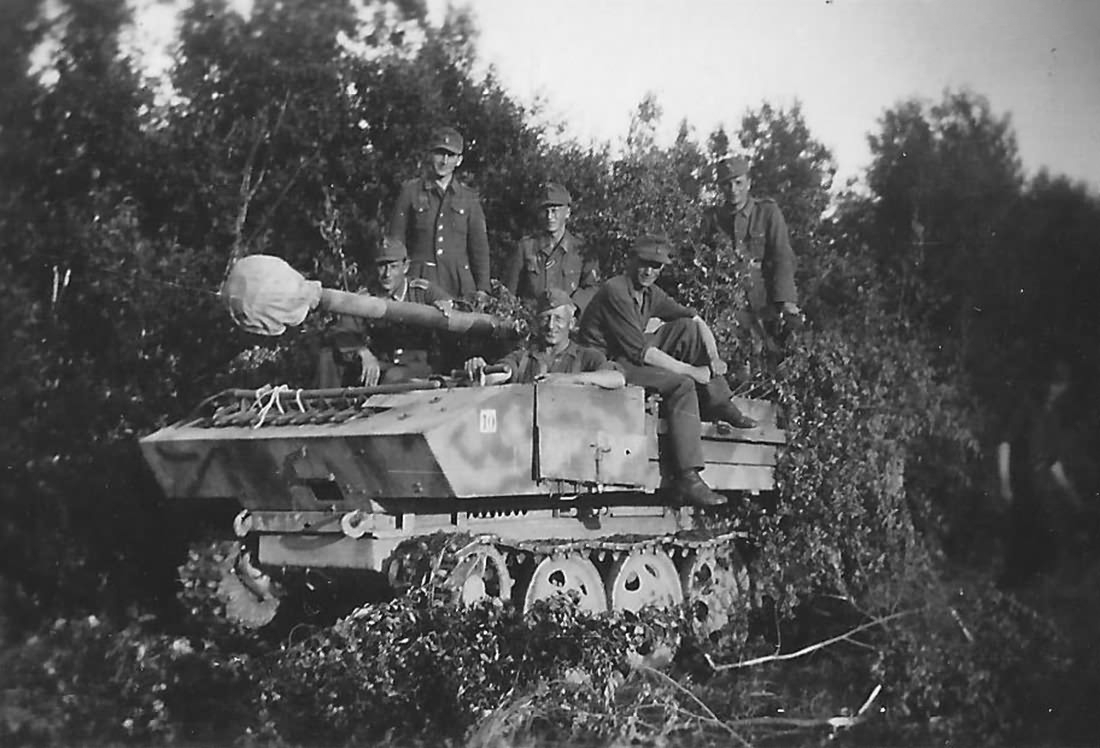
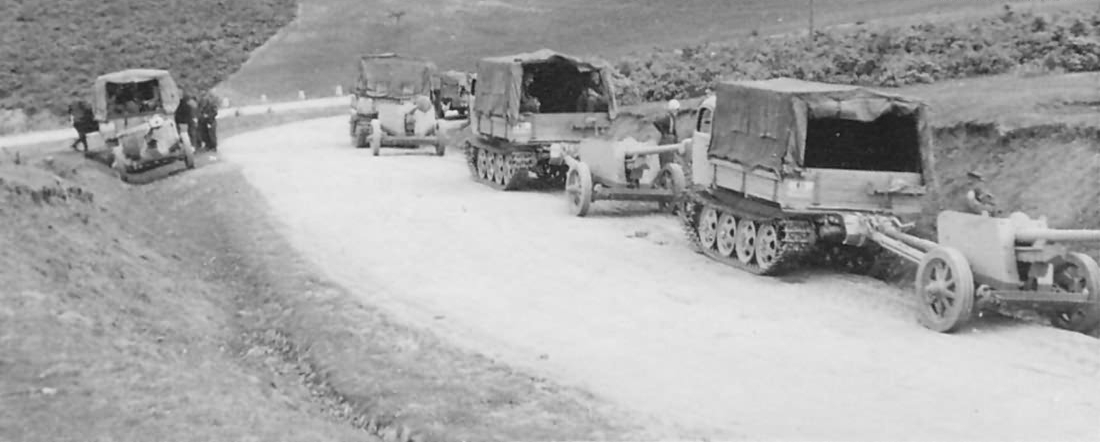
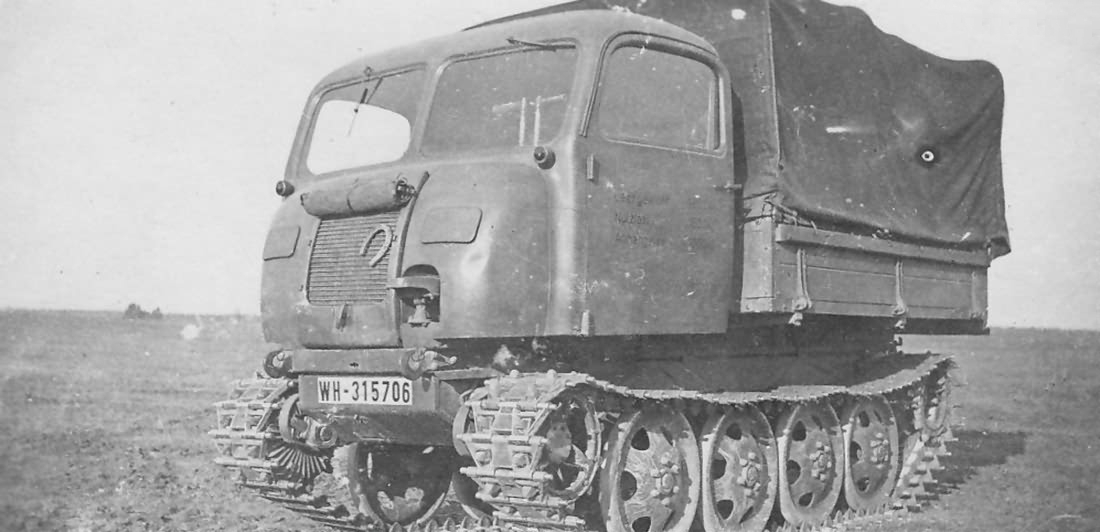
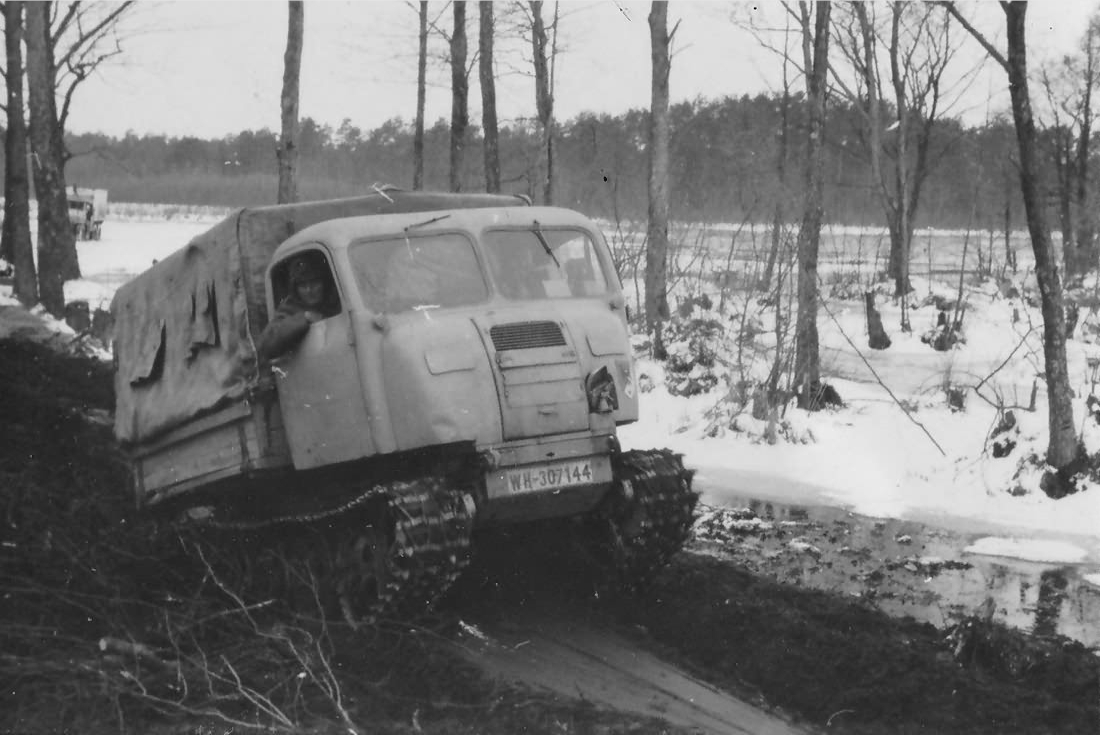
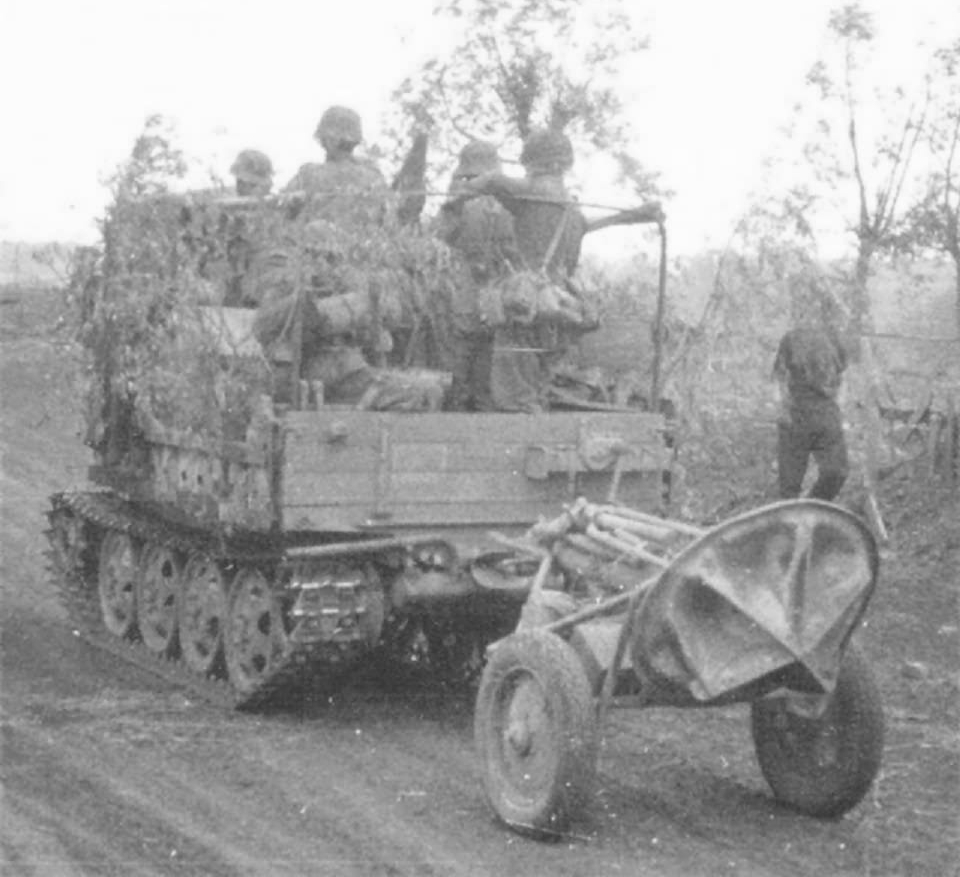
The Raupenschlepper Ost (RSO) (German for “Caterpillar Tractor East”) was a lightweight, fully tracked multi-purpose utility vehicle developed by Steyr in 1942 in response to the severe mobility challenges faced by the Wehrmacht during the mud (rasputica) and snow of the Russian winter. Based on components from the Steyr 1500 light truck, the RSO featured a simplified “slack-track” suspension system with four large road wheels per side and an exceptionally high ground clearance of 55 cm. This straightforward design avoided the freezing mud build-up typical of complex interleaved suspensions, making the vehicle outstandingly reliable, easy to maintain, and highly mobile across all off-road conditions.Produced across multiple variants—initially with a pressed-steel truck cab (RSO/01), followed by simplified slab-sided cabs (RSO/02 and 03), and powered by either a Steyr V8 petrol or a Deutz air-cooled diesel engine—the vehicle’s production expanded to manufacturers like Magirus to meet overwhelming demand. Beyond general supply transport and gun towing, a specialized self-propelled anti-tank variant was developed in 1943 by mounting a 7.5 cm PaK 40 gun onto a lightly armored, low-profile RSO chassis. Although around 60 pre-production units of the RSO/PaK 40 were built and combat-tested with positive feedback from frontline units, full-scale production was canceled in late 1943 before planned improvements or heavier 8.8 cm PaK 43 variants could enter service. Overall, the basic RSO became one of the Wehrmacht’s most dependable light tracked transports on the Eastern Front.