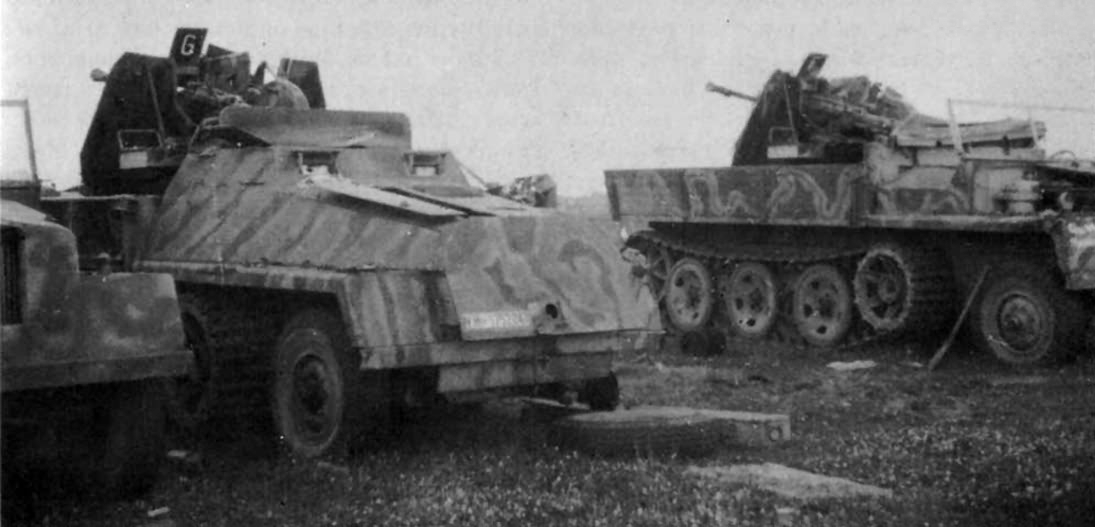
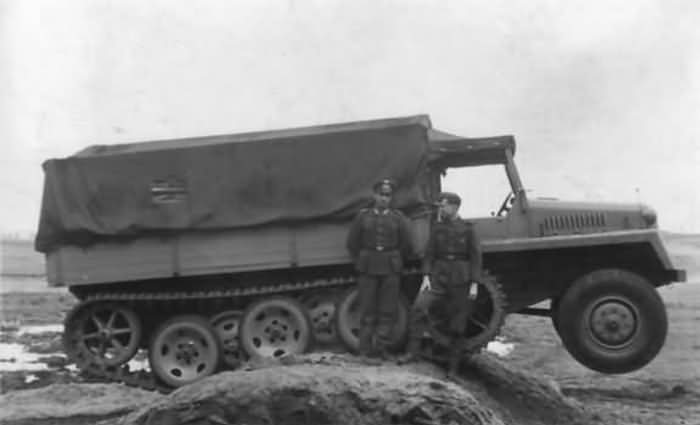
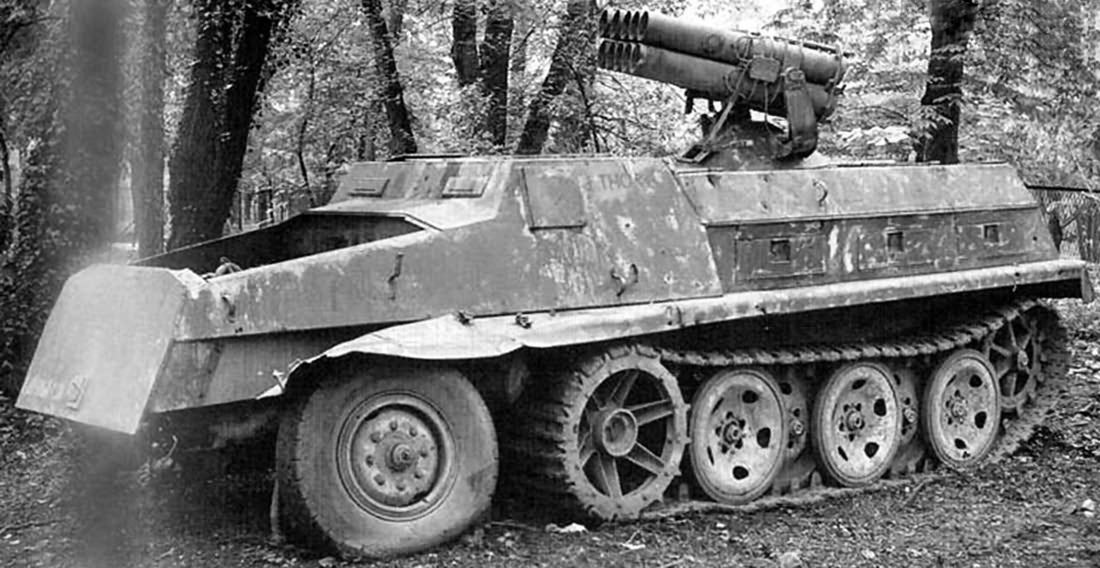
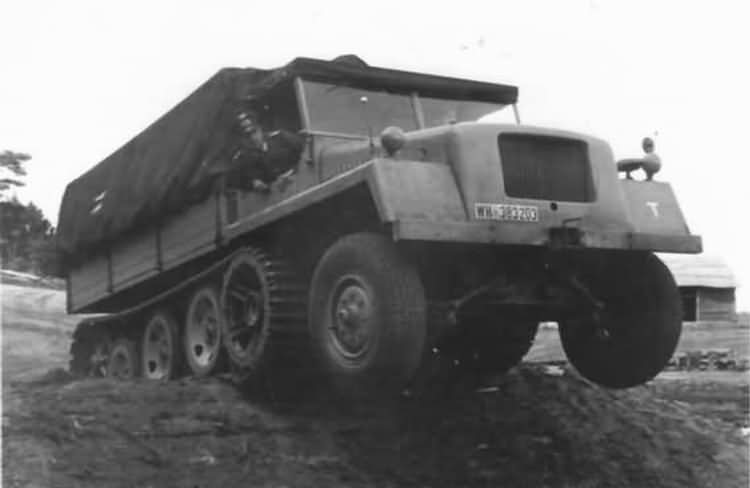
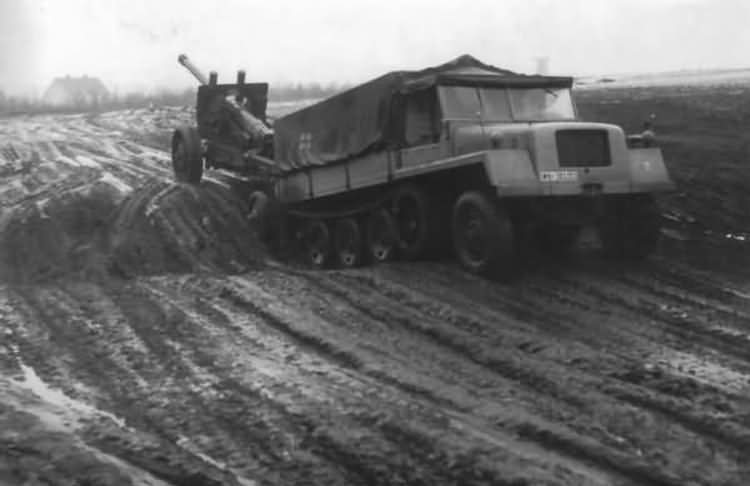
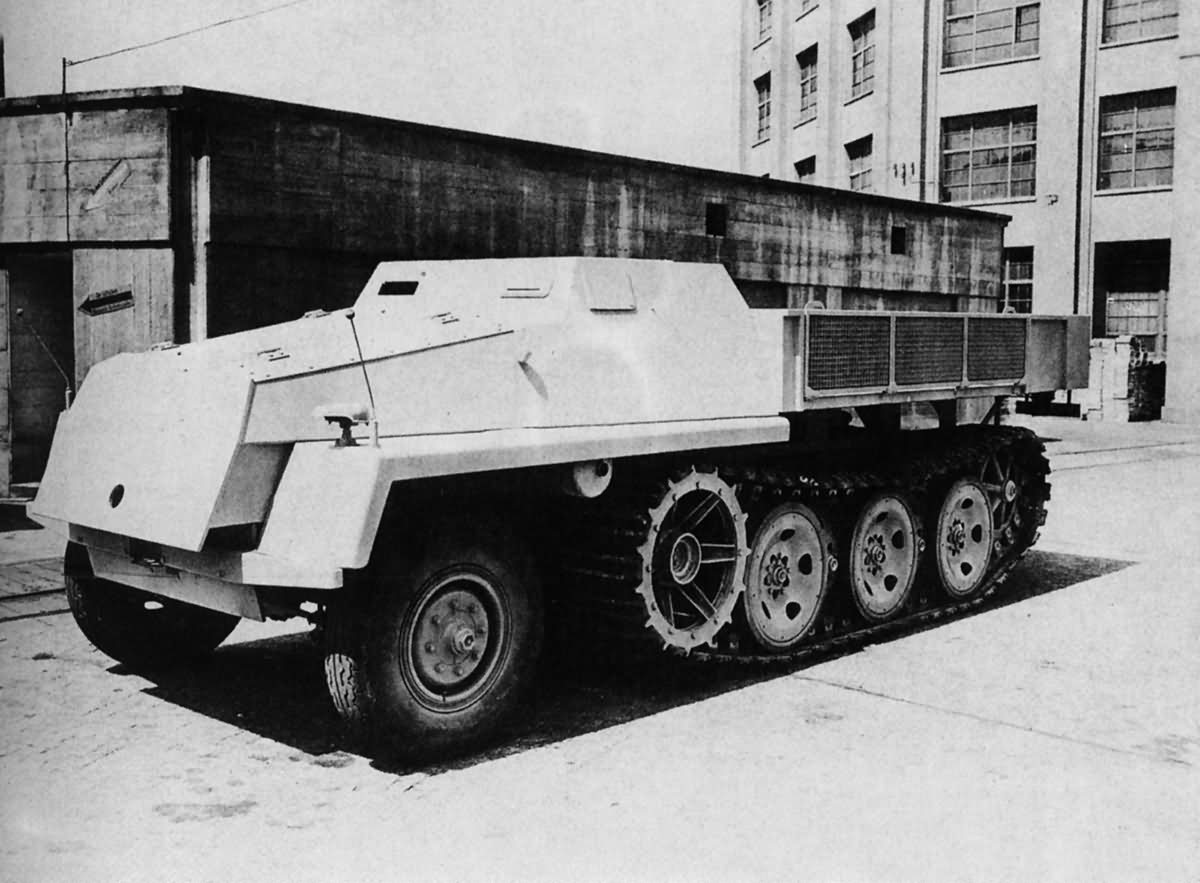
The schwerer Wehrmachtschlepper (sWS) (German for “Heavy Military Tractor”) was a simplified 3rd-generation German half-track developed by Büssing-NAG during World War II to serve as a low-cost prime mover, supply vehicle, and weapon platform. Although Germany’s pre-war 1st-generation half-tracks (Sd.Kfz. 10 through 9) performed exceptionally well in early campaigns, their complex design, high production costs, and low cargo capacities created severe supply bottlenecks, particularly under harsh Eastern Front conditions. Following a May 1942 directive from Hitler to replace expensive vehicles like the 5-ton Sd.Kfz. 6, Büssing-NAG engineered the sWS to deliver a 3-ton payload and a 6-ton towing capacity while using streamlined, highly economical manufacturing methods.Entering serial production in late 1943 alongside Ringhoffer-Tatra, the sWS featured a rugged, low-maintenance design with an unlubricated steel track system that eliminated rubber pads and simplified the interleaved road wheel assembly. Beyond its primary role as a heavy supply tractor, the chassis was adapted into armored variants, including a self-propelled anti-aircraft vehicle armed with a 3.7 cm FlaK 43 mounted on a flatbed with folding side shields for 360-degree traversal. Combining durability with low production overhead, the sWS served as one of the Wehrmacht’s most practical mid-to-late war utility platforms until the end of the conflict.