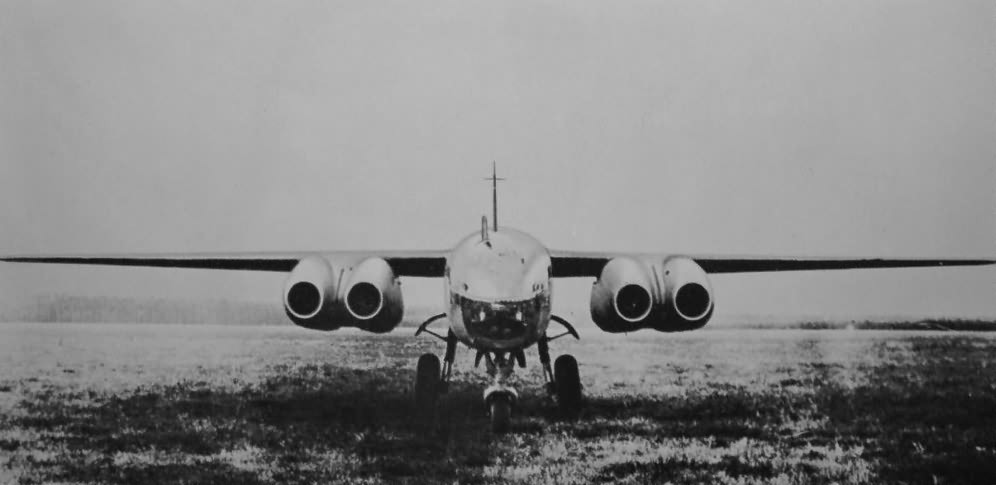
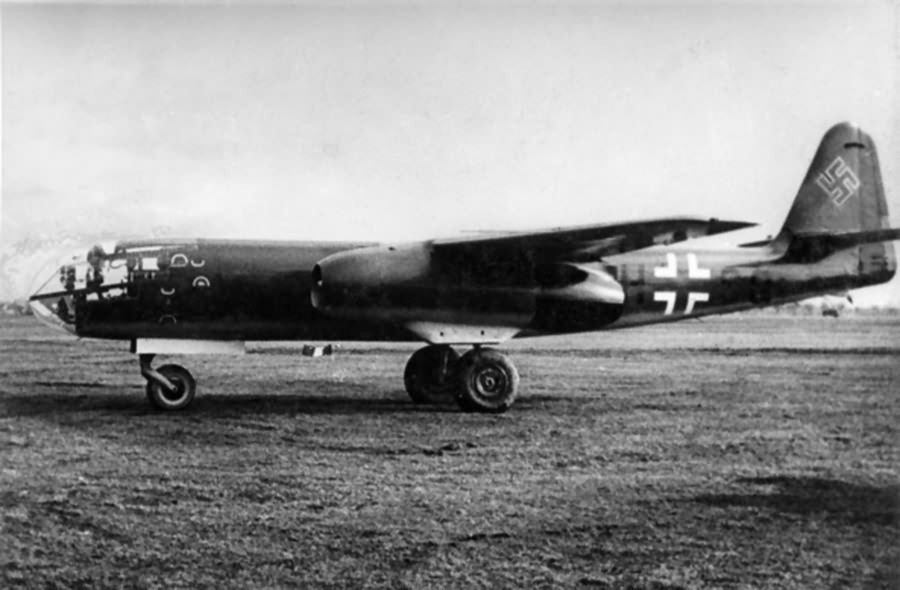
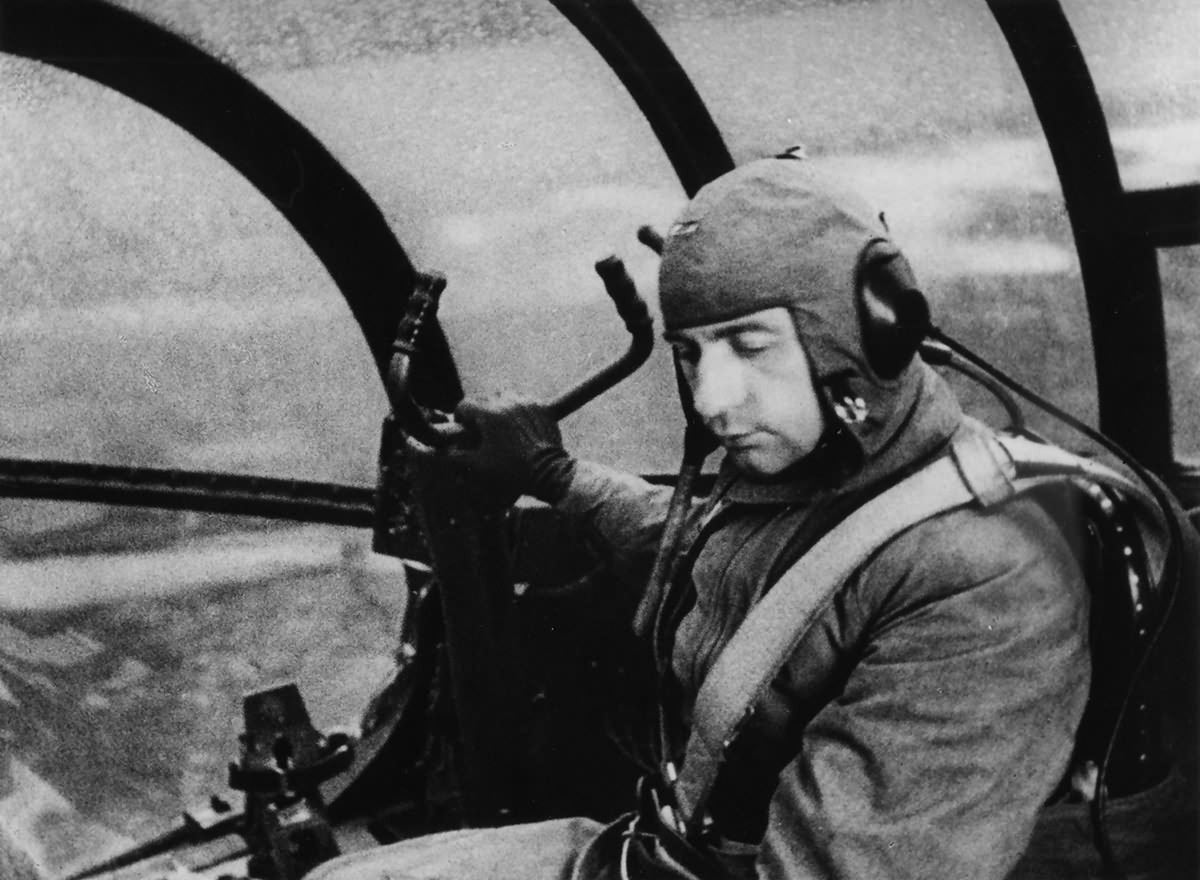
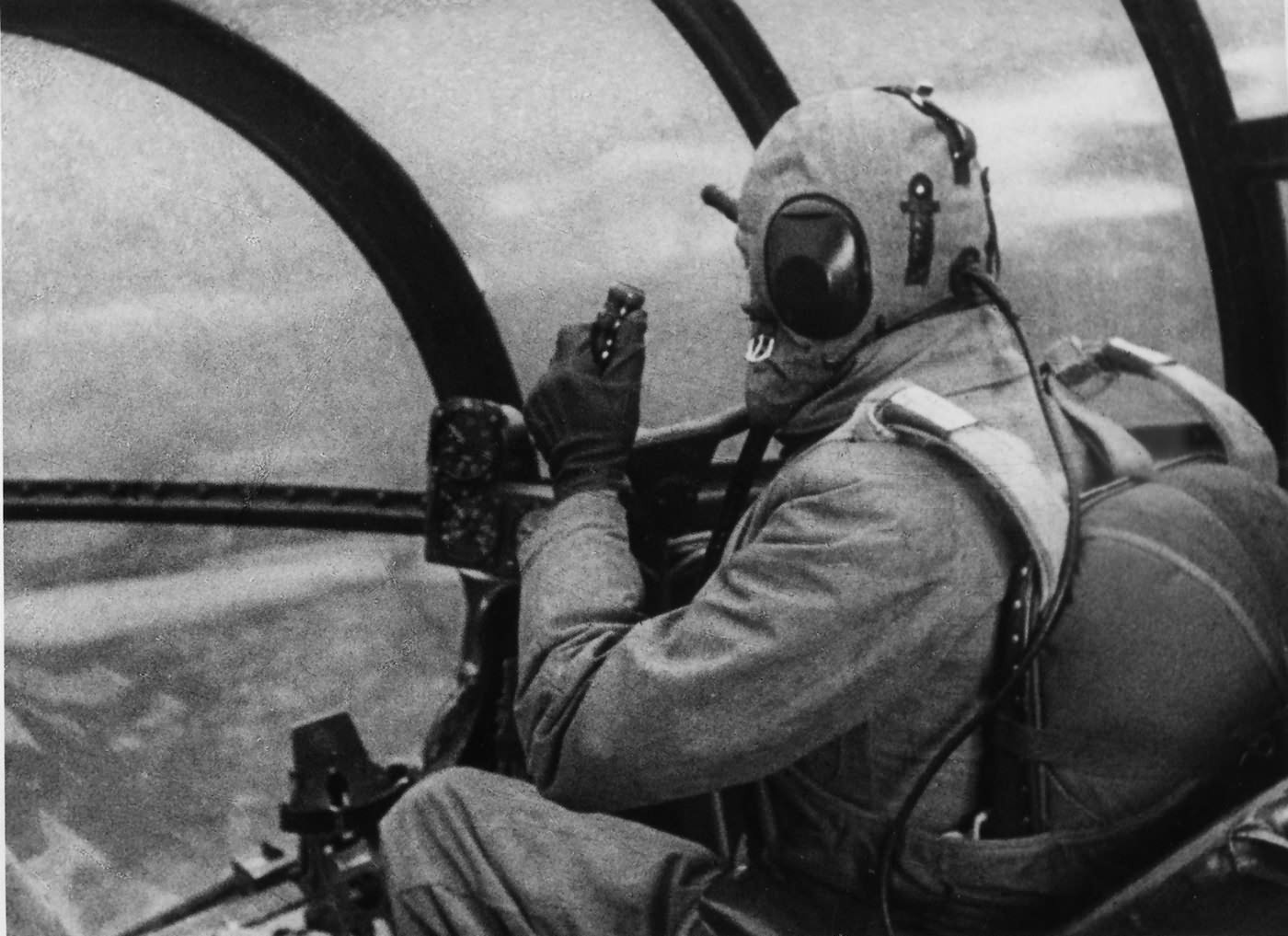
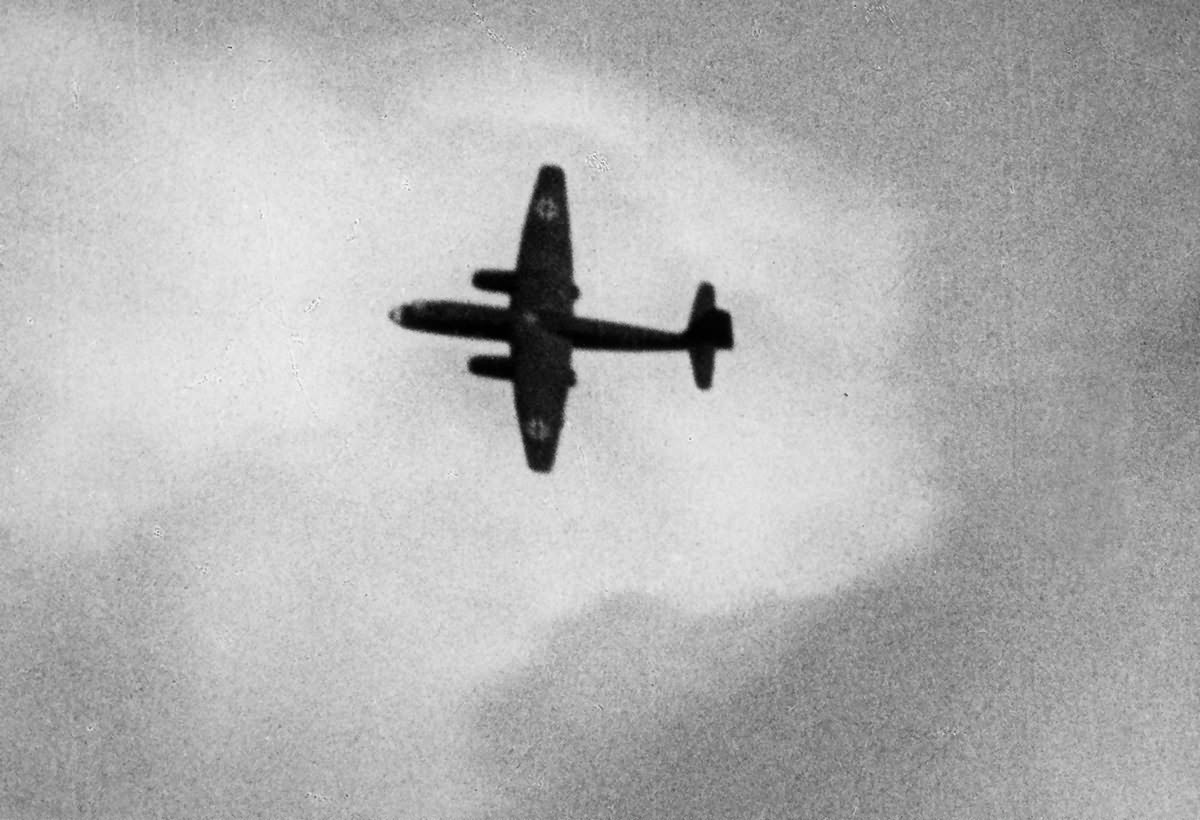
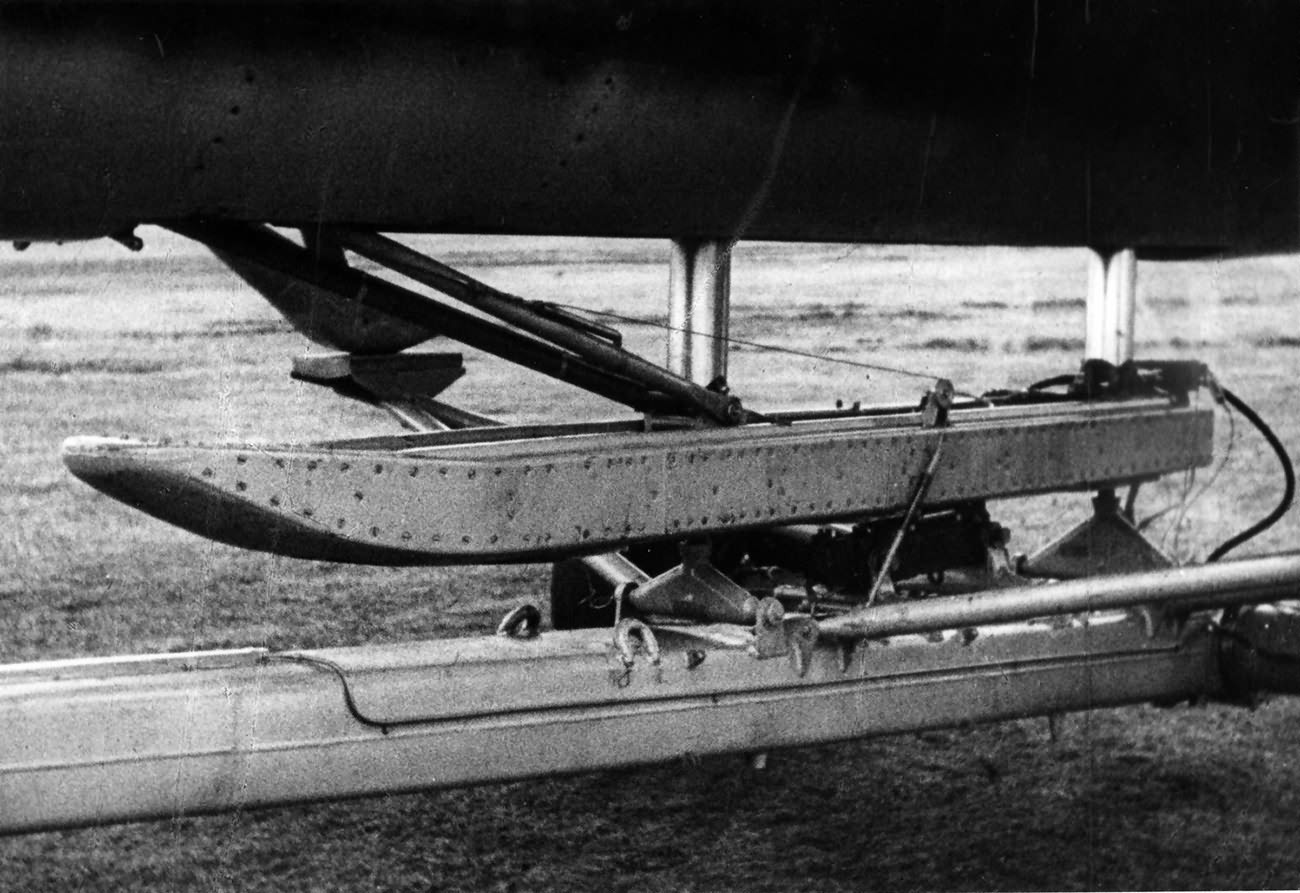
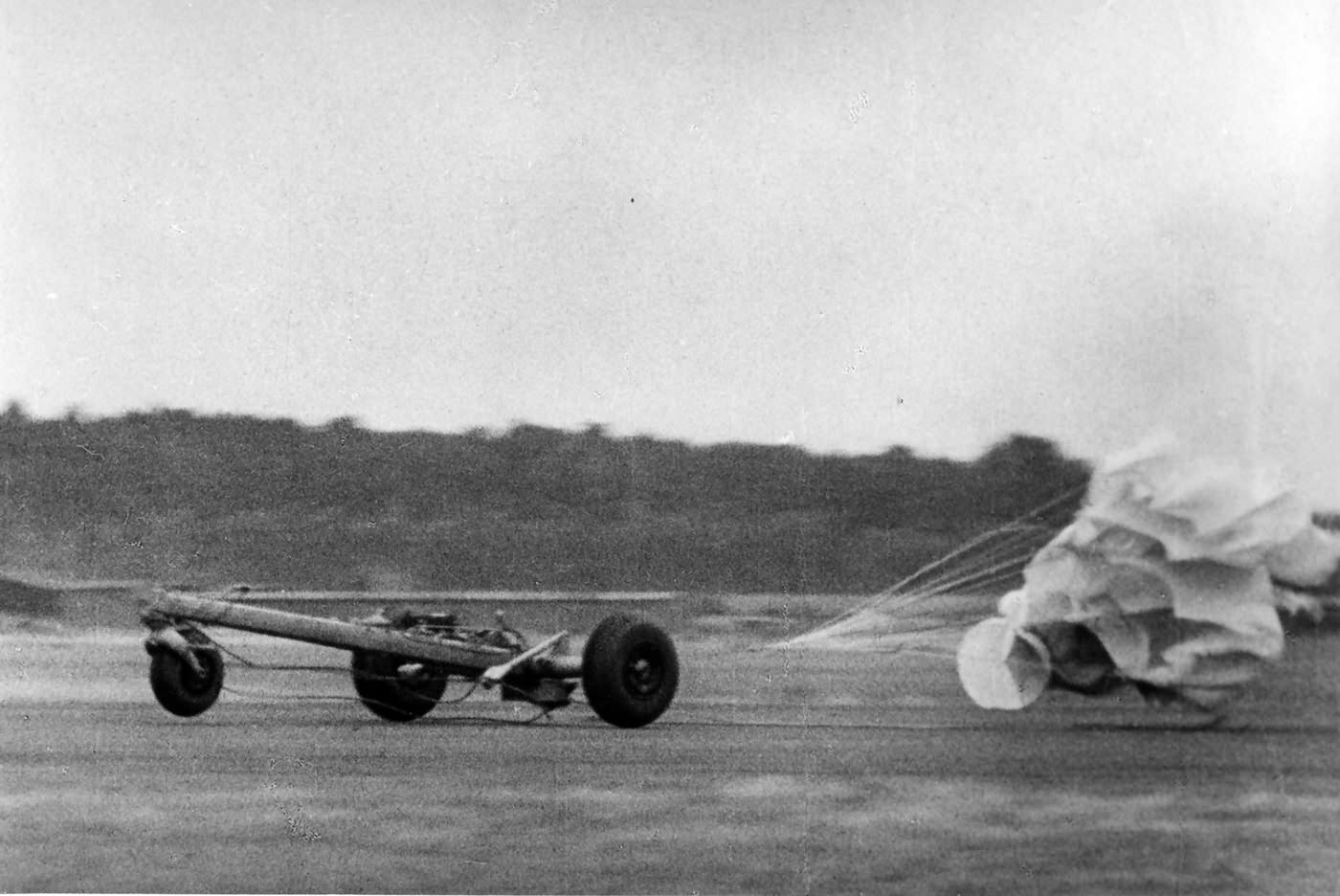
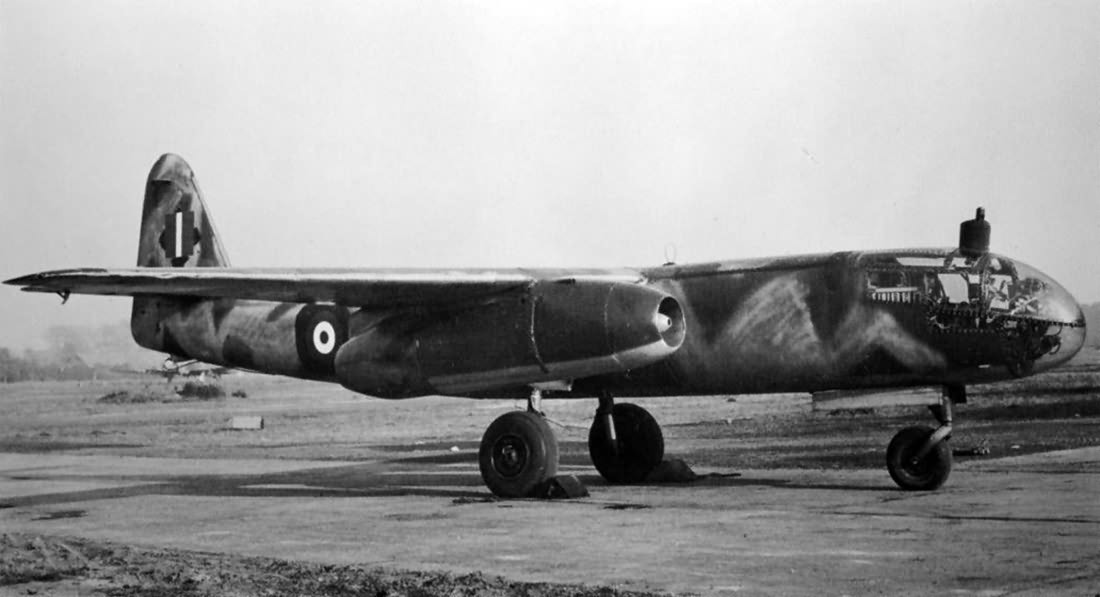
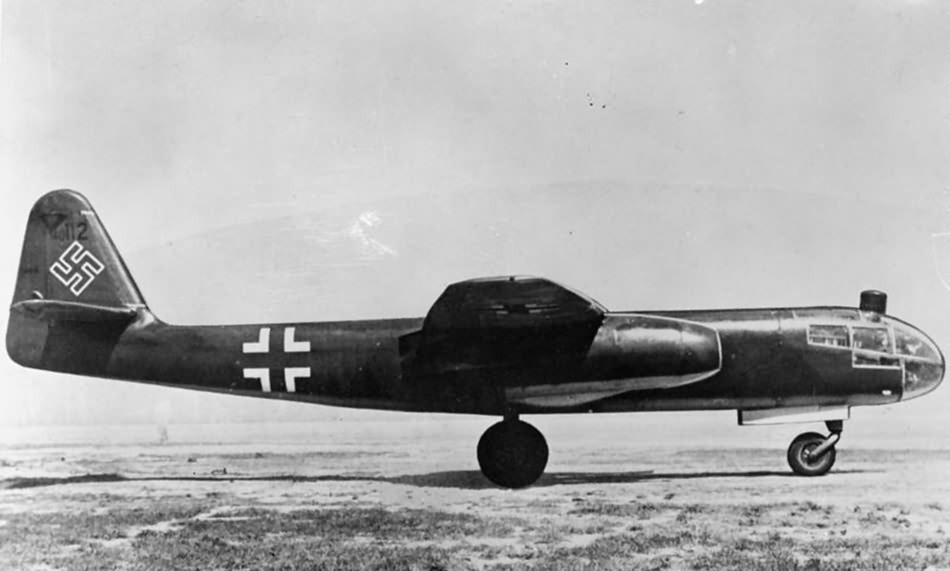
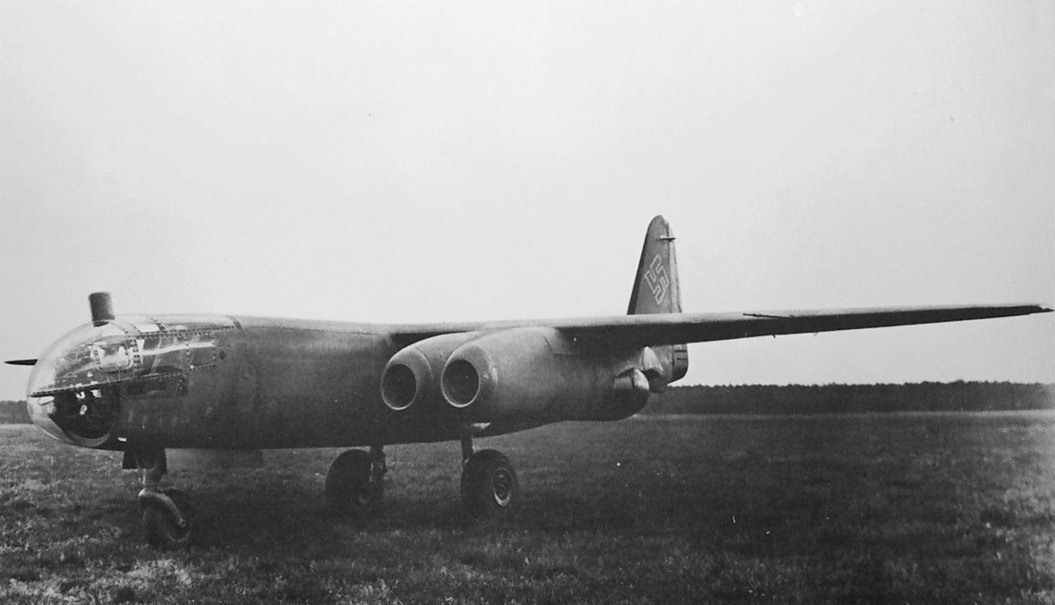
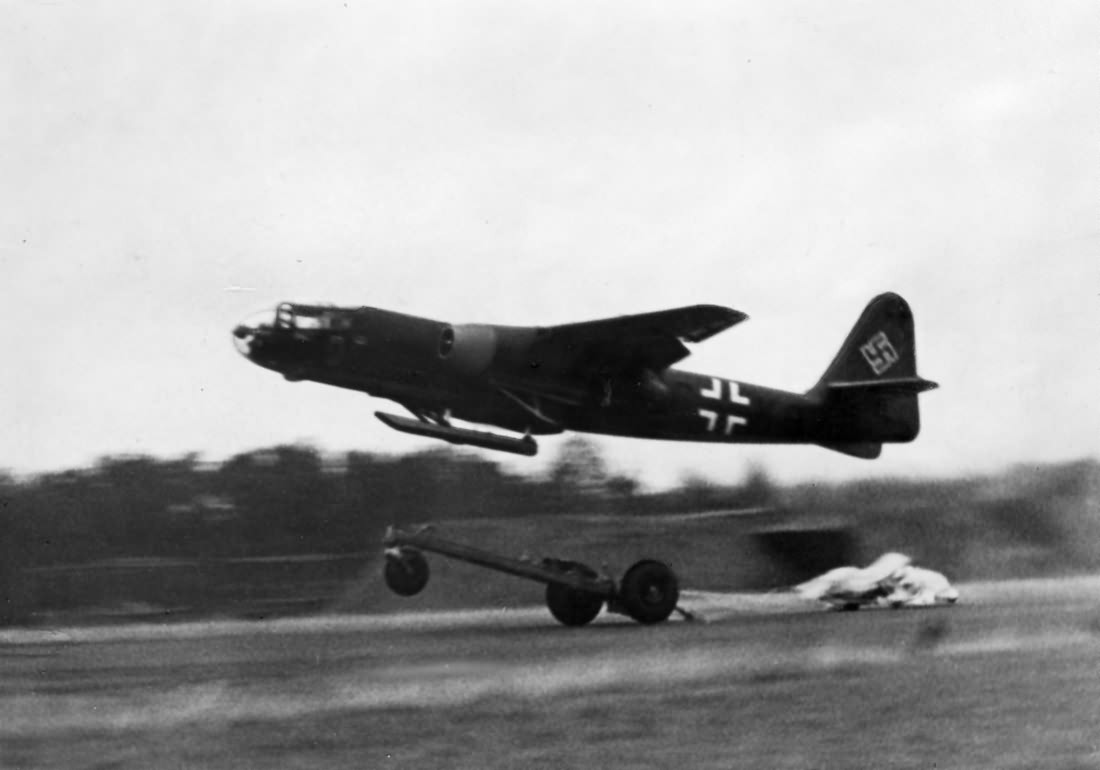
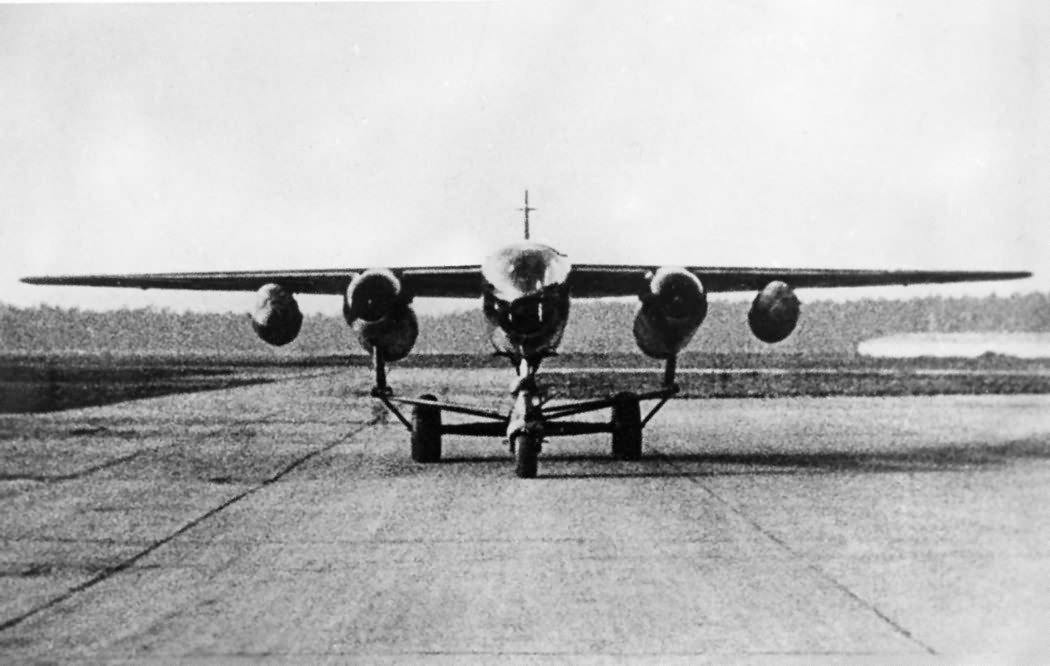
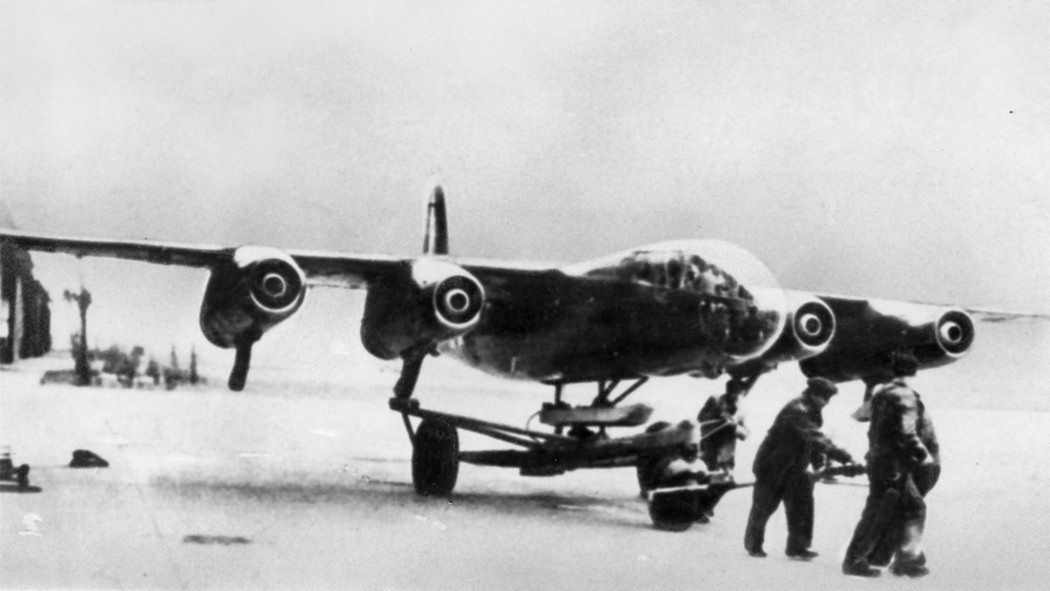
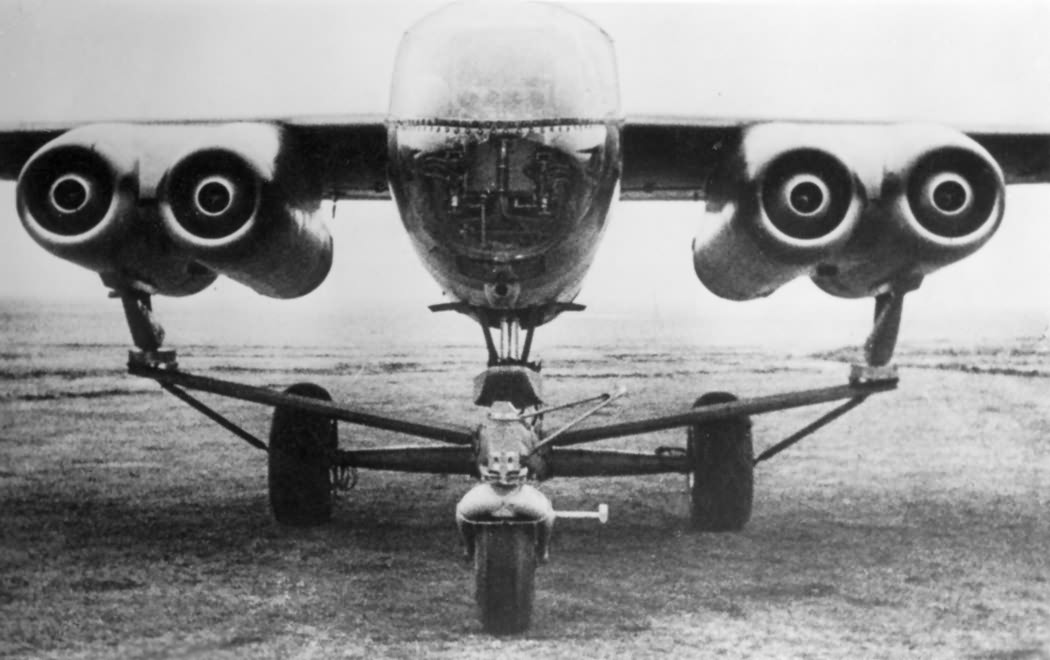
The Arado Ar 234, produced by Arado Flugzeugwerke GmbH and operated by the Luftwaffe from 1944 to 1945, holds the distinction of being the world’s first operational jet bomber. Initially conceived in early 1941 under Professor Walter Blume in response to a Reich Air Ministry (RLM) requirement for a high-speed reconnaissance aircraft, the design aimed for speeds of 780 km/h and a range near 2,000 km. Early prototypes featured a detachable three-wheel trolley dropped after takeoff and landing skids beneath the fuselage and engines to reduce weight. However, this system proved impractical and left grounded aircraft vulnerable to attacks. The first prototype (Ar 234 V1) made its maiden flight on July 30, 1943, following delays in engine delivery. Impressed by its maneuverability and speeds exceeding 800 km/h during demonstrations—outperforming the Messerschmitt Me 262 in turning radius—the RLM ordered a bomber variant named the “Blitz” (Lightning). Because the slim fuselage could not accommodate internal bomb bays, external bomb racks were added alongside a conventional retractable landing gear, standardizing the design with the prototype V9 (first flown on March 10, 1944). To handle heavy takeoff weights, Ar 234s were assisted by twin detachable rocket boosters jettisoned via parachute after launch. Subsequent prototype testing evaluated various configurations, including autopilot systems, external fuel tanks, wooden laminar-flow wings, air brakes, and four-engine variants powered by BMW 003 engines capable of reaching 874 km/h, laying the groundwork for serial production variants such as the Ar 234B-2.