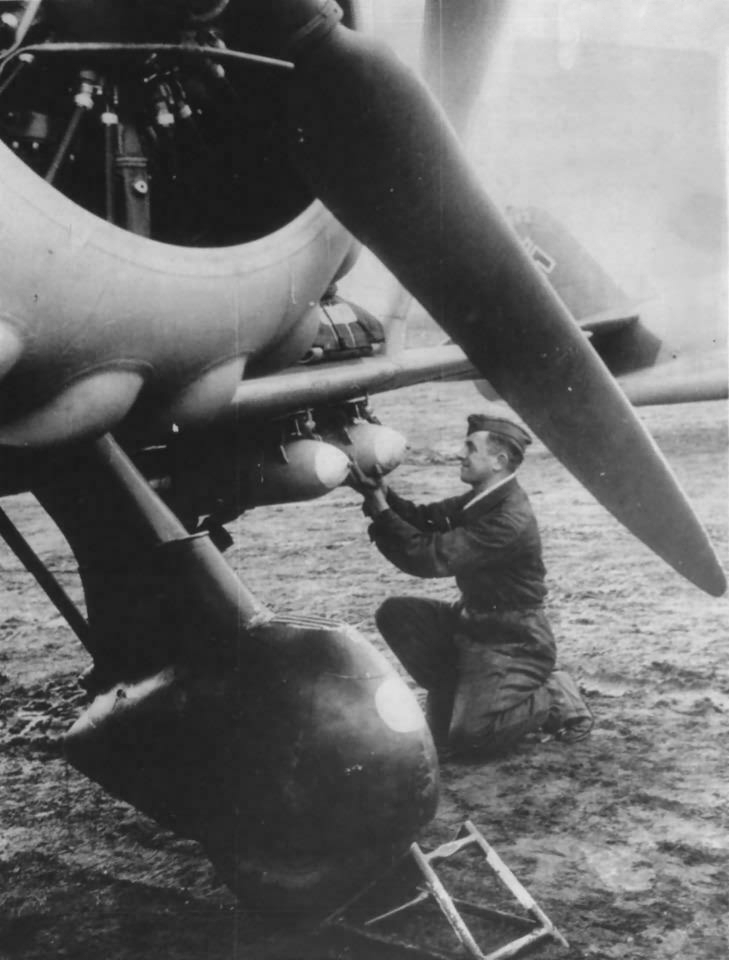
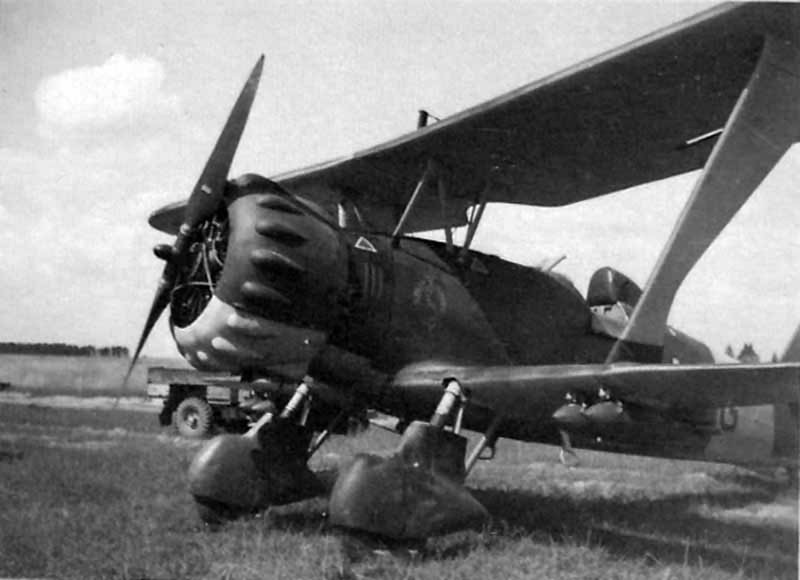
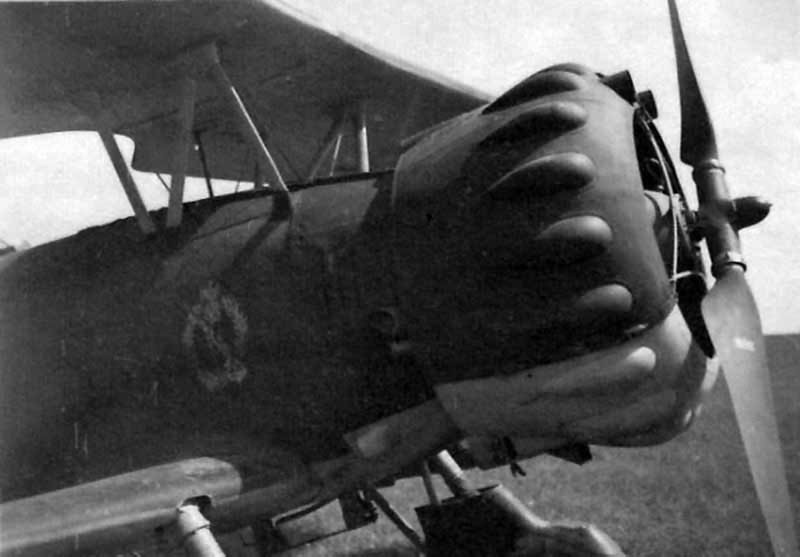
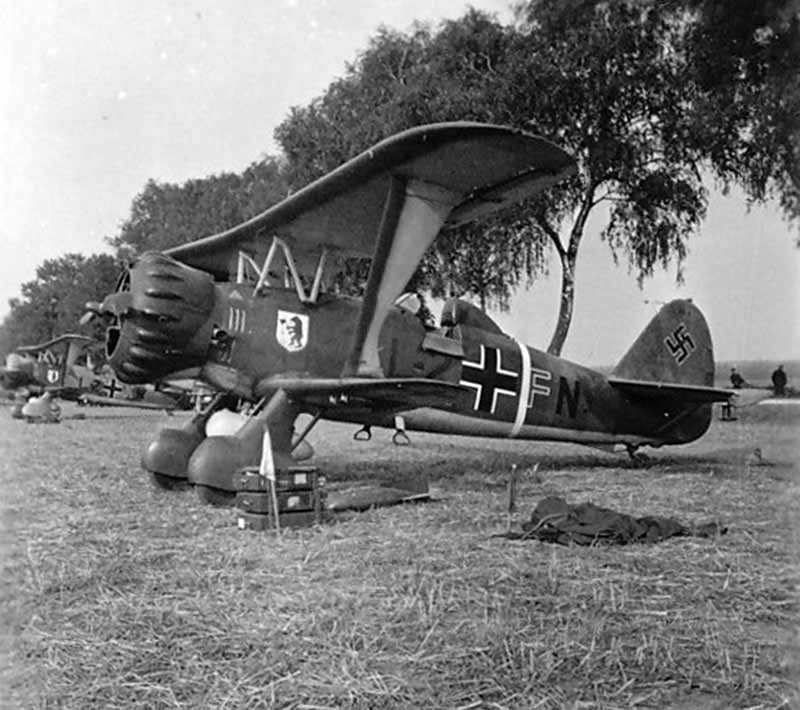
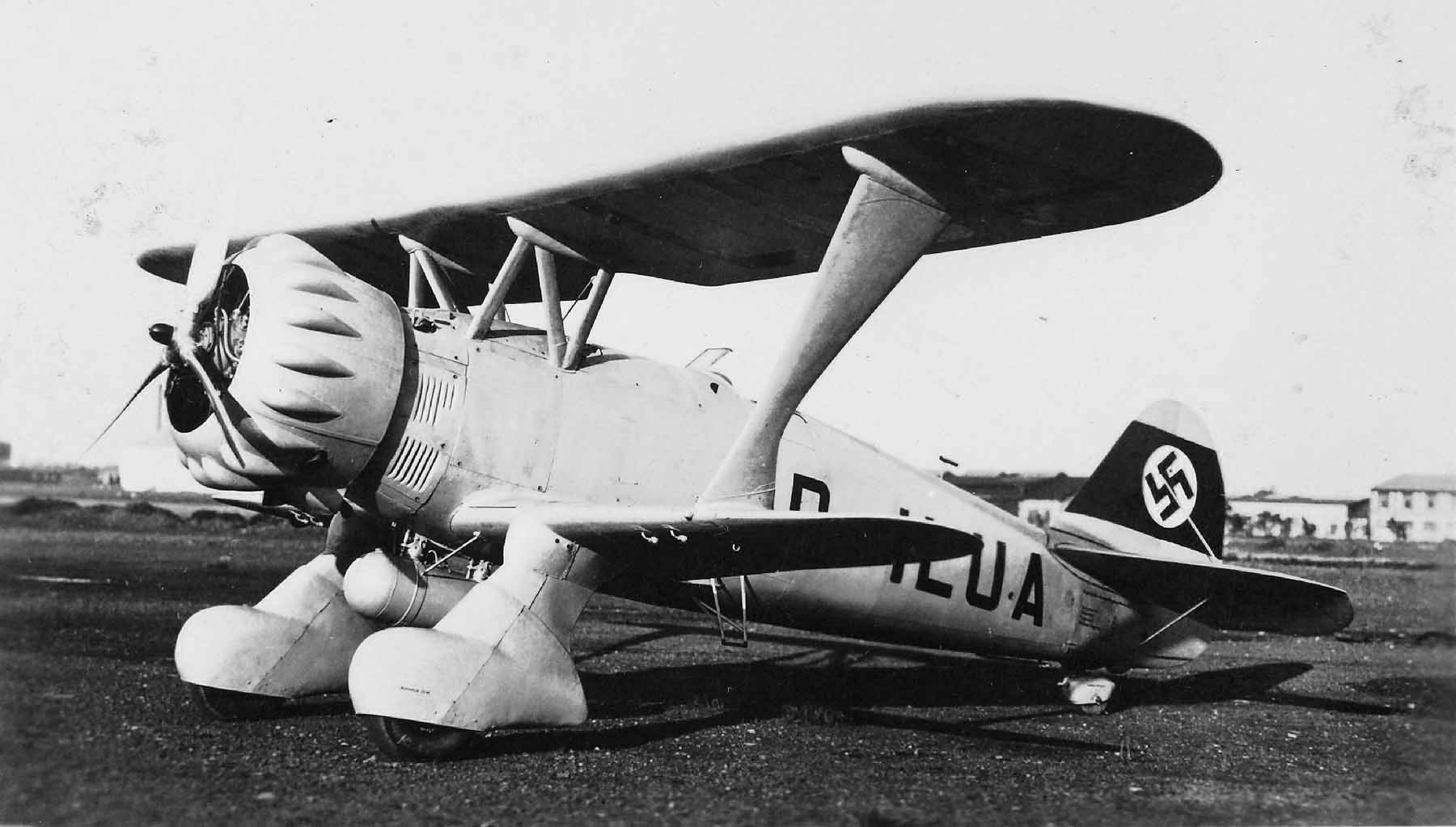
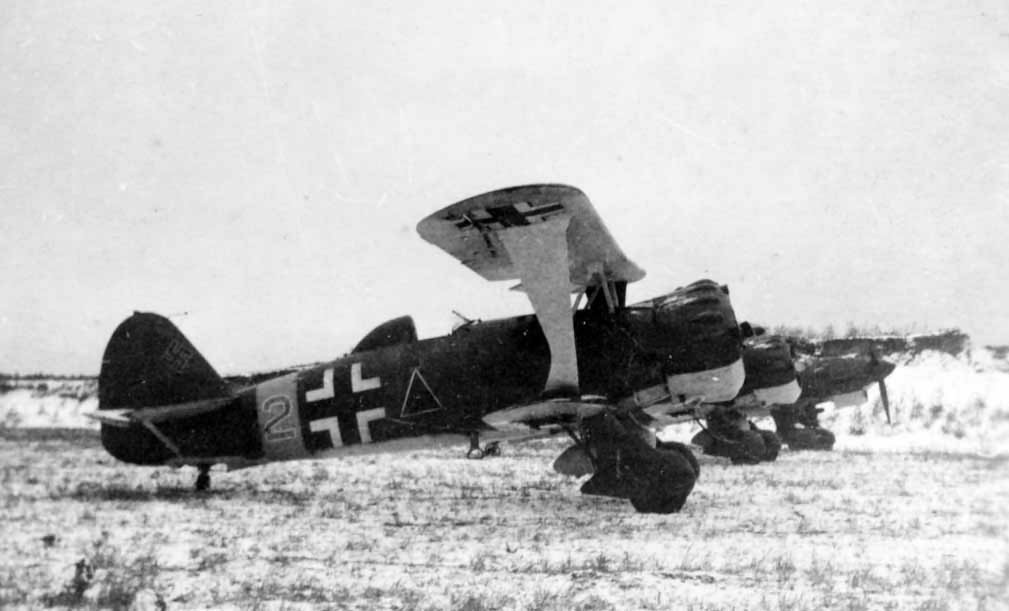
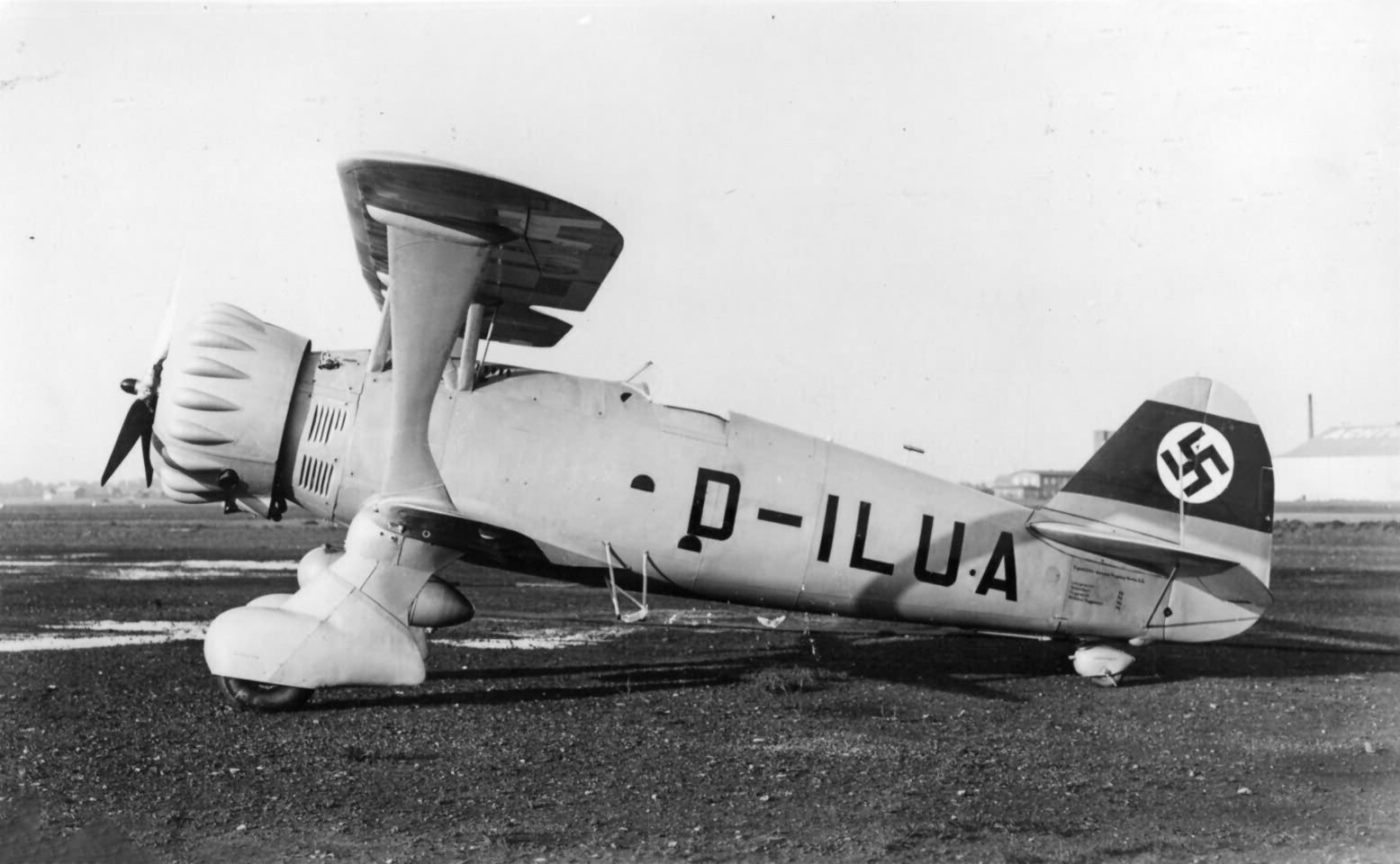
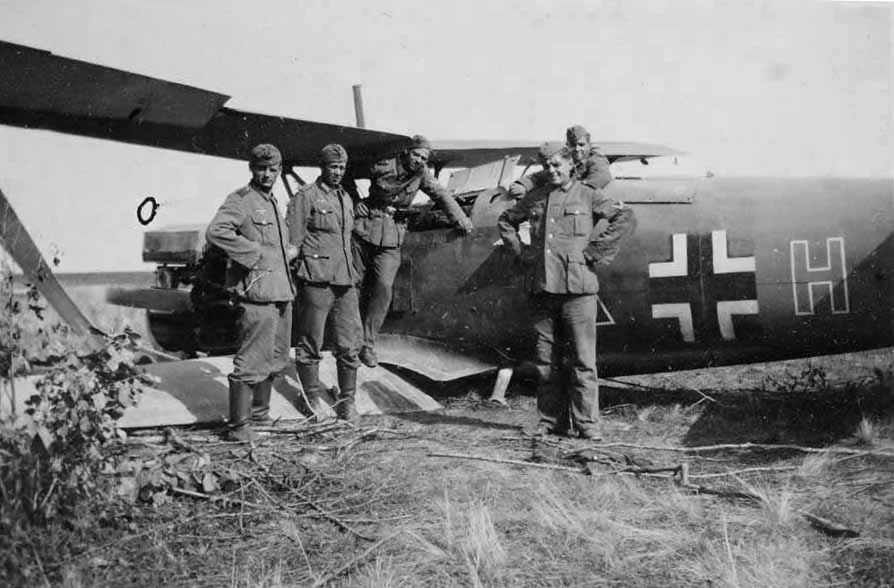
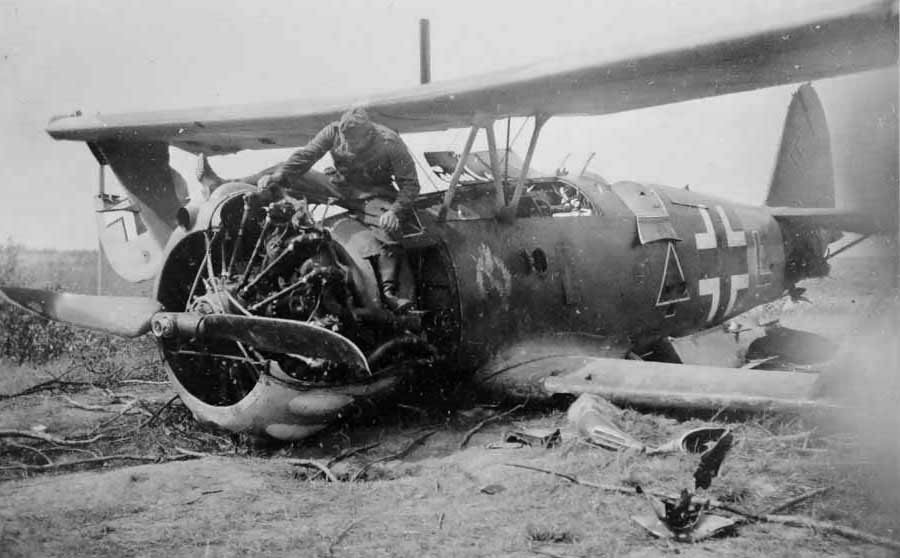
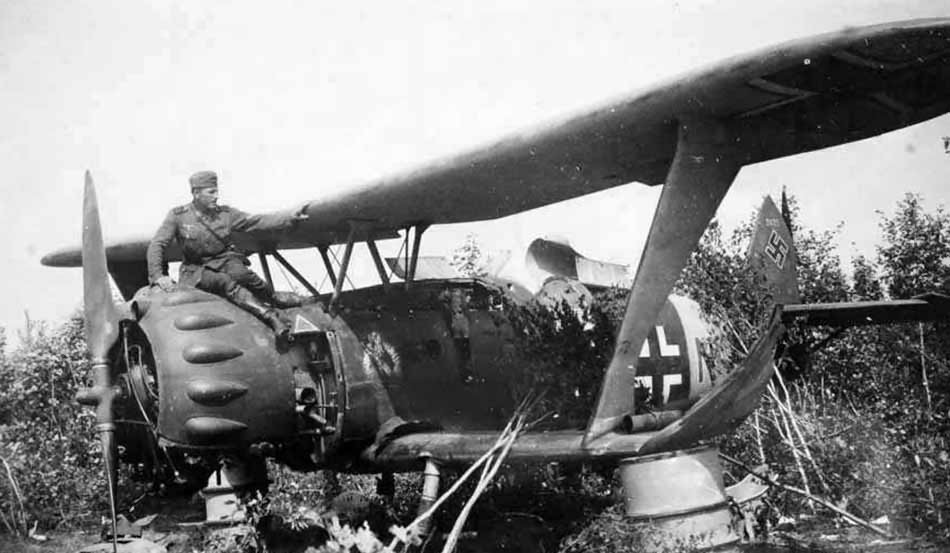
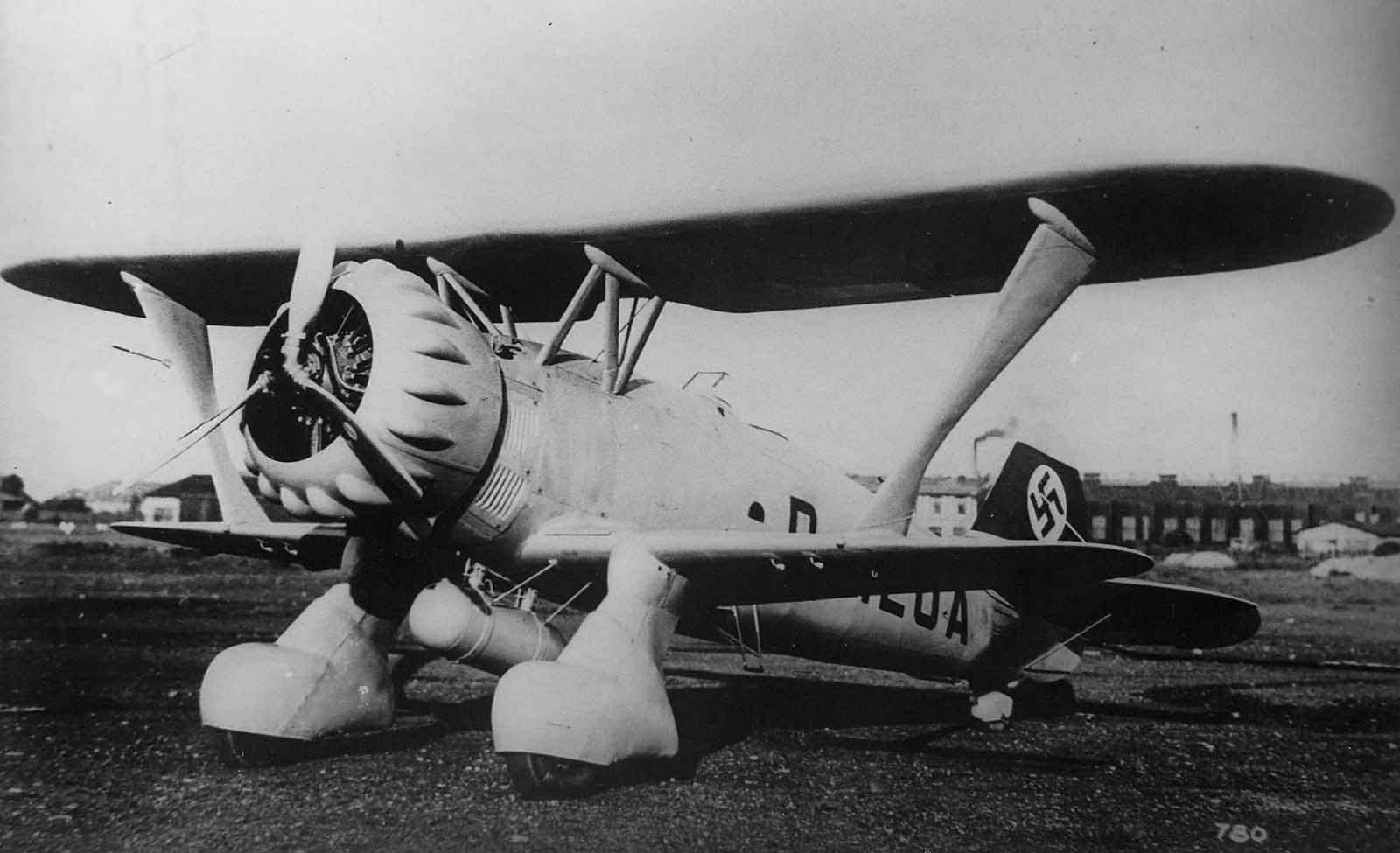
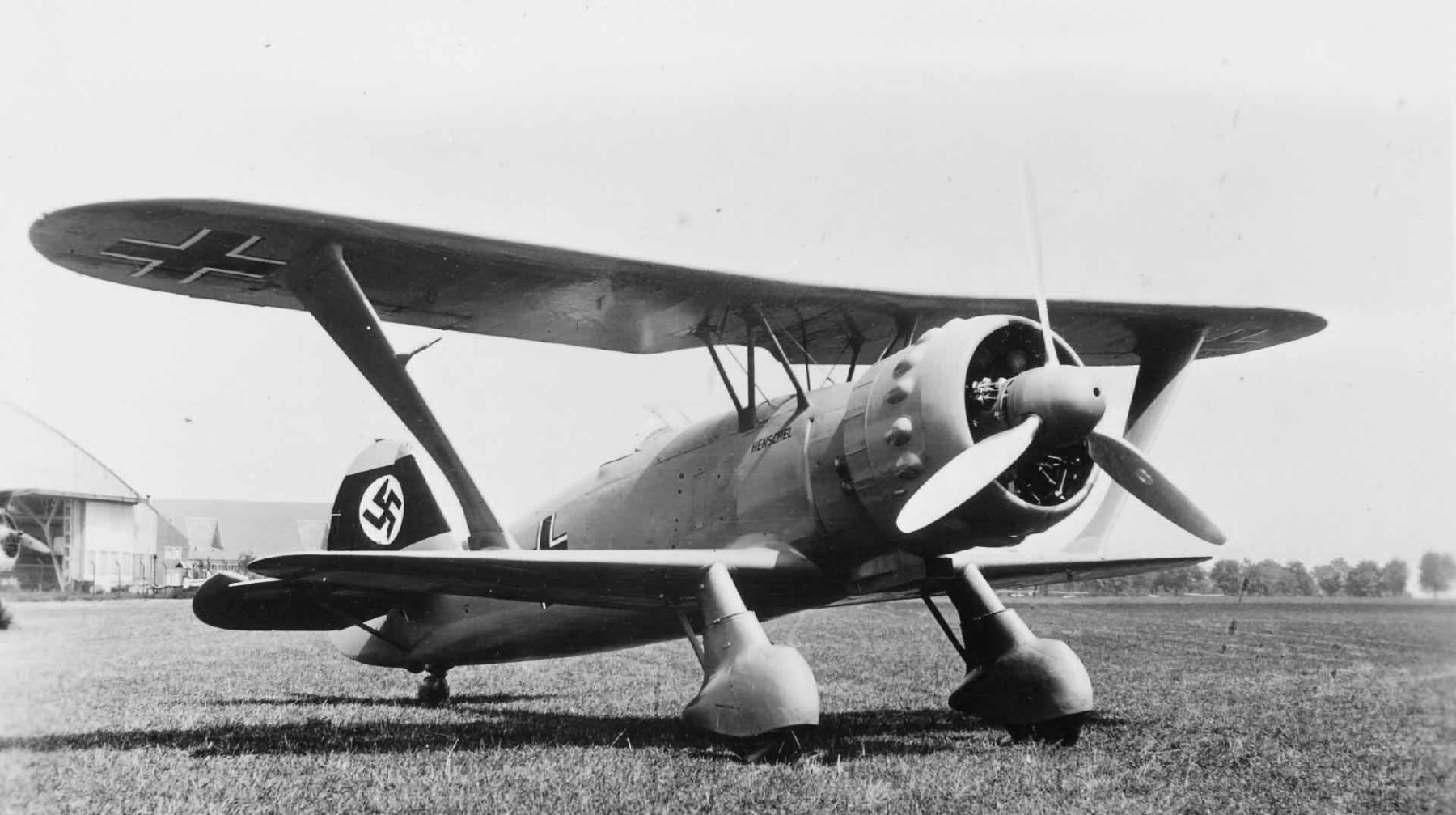
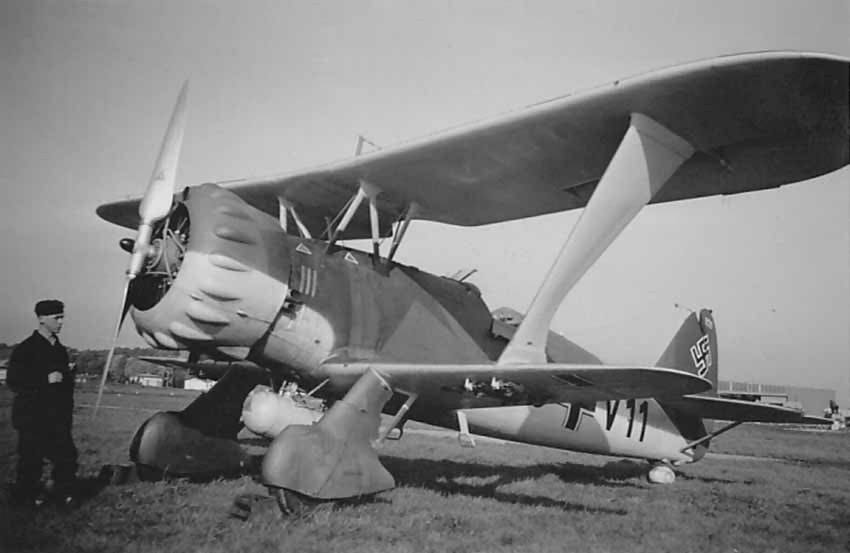
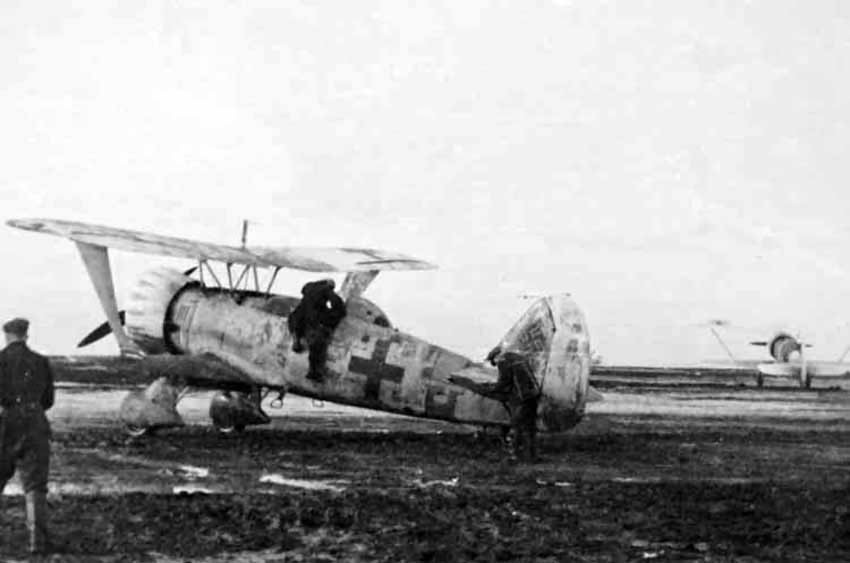
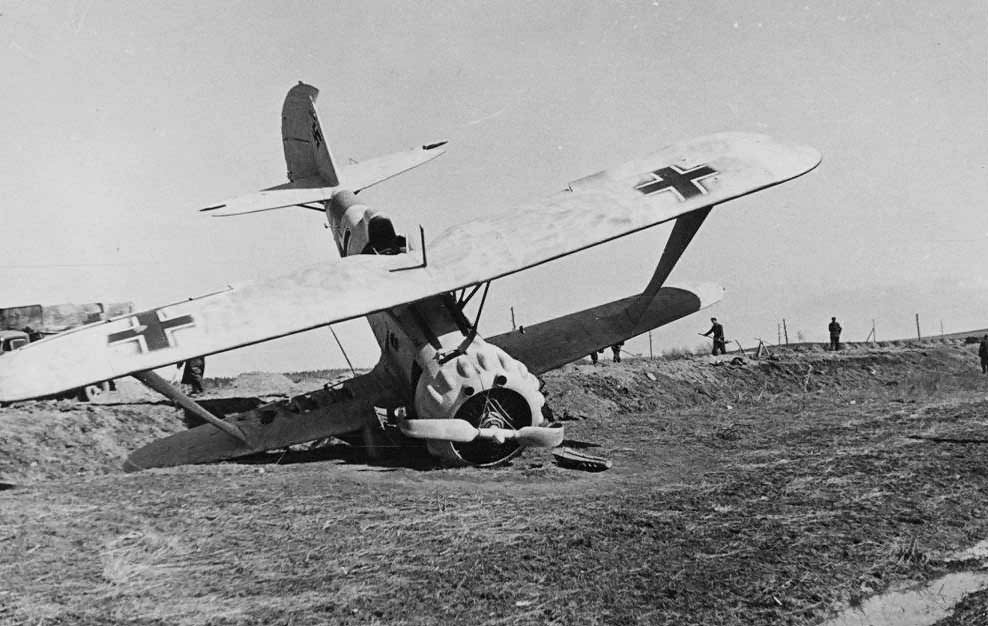
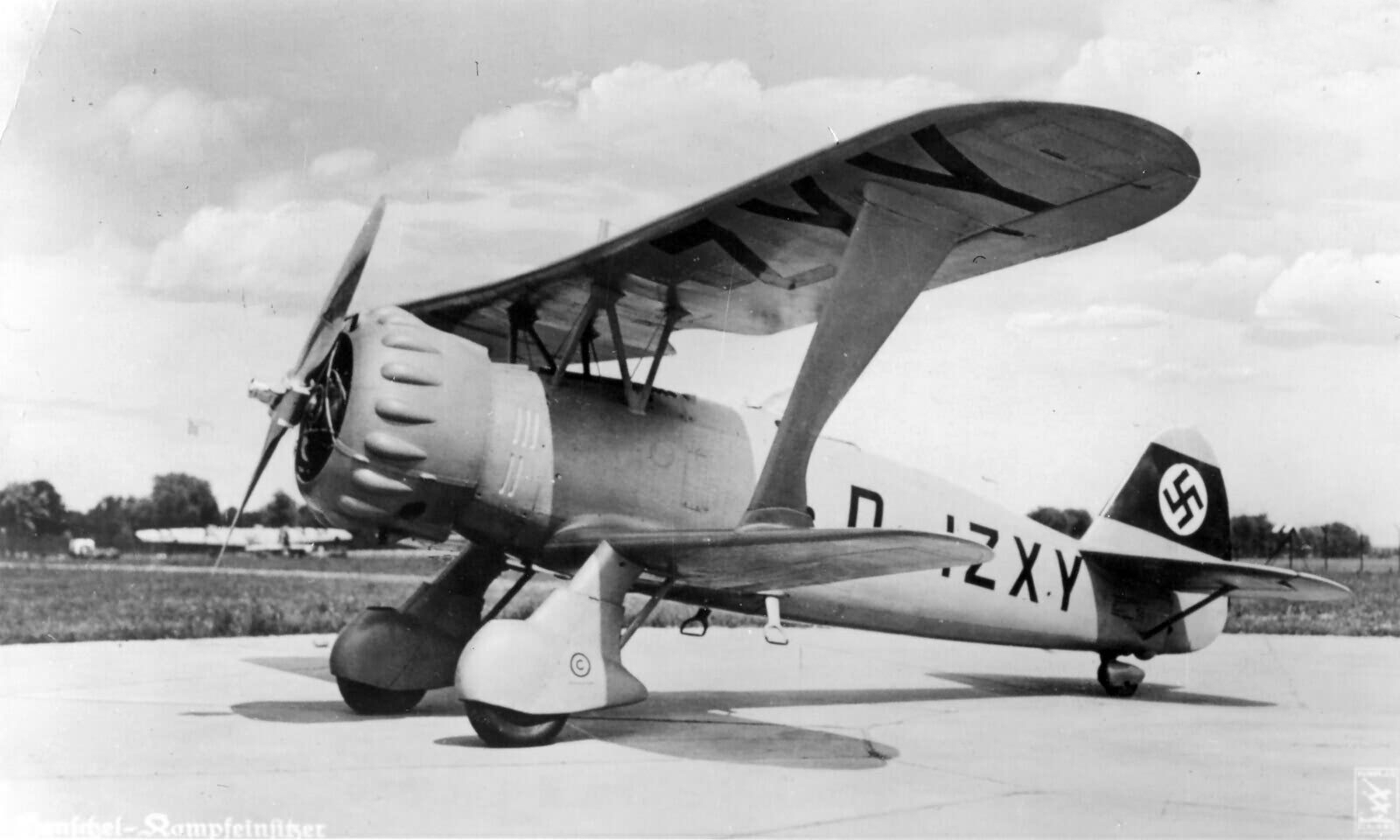
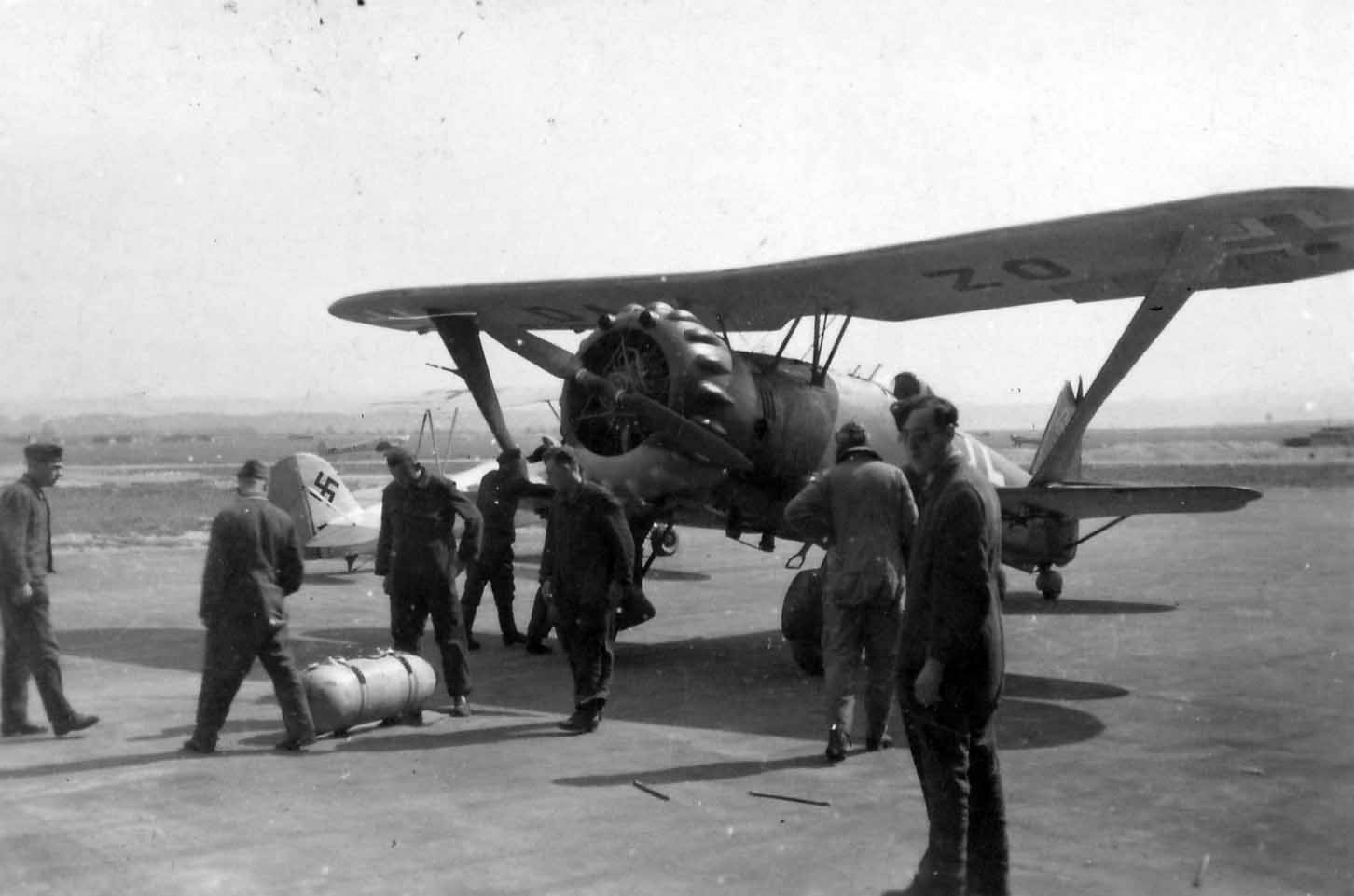
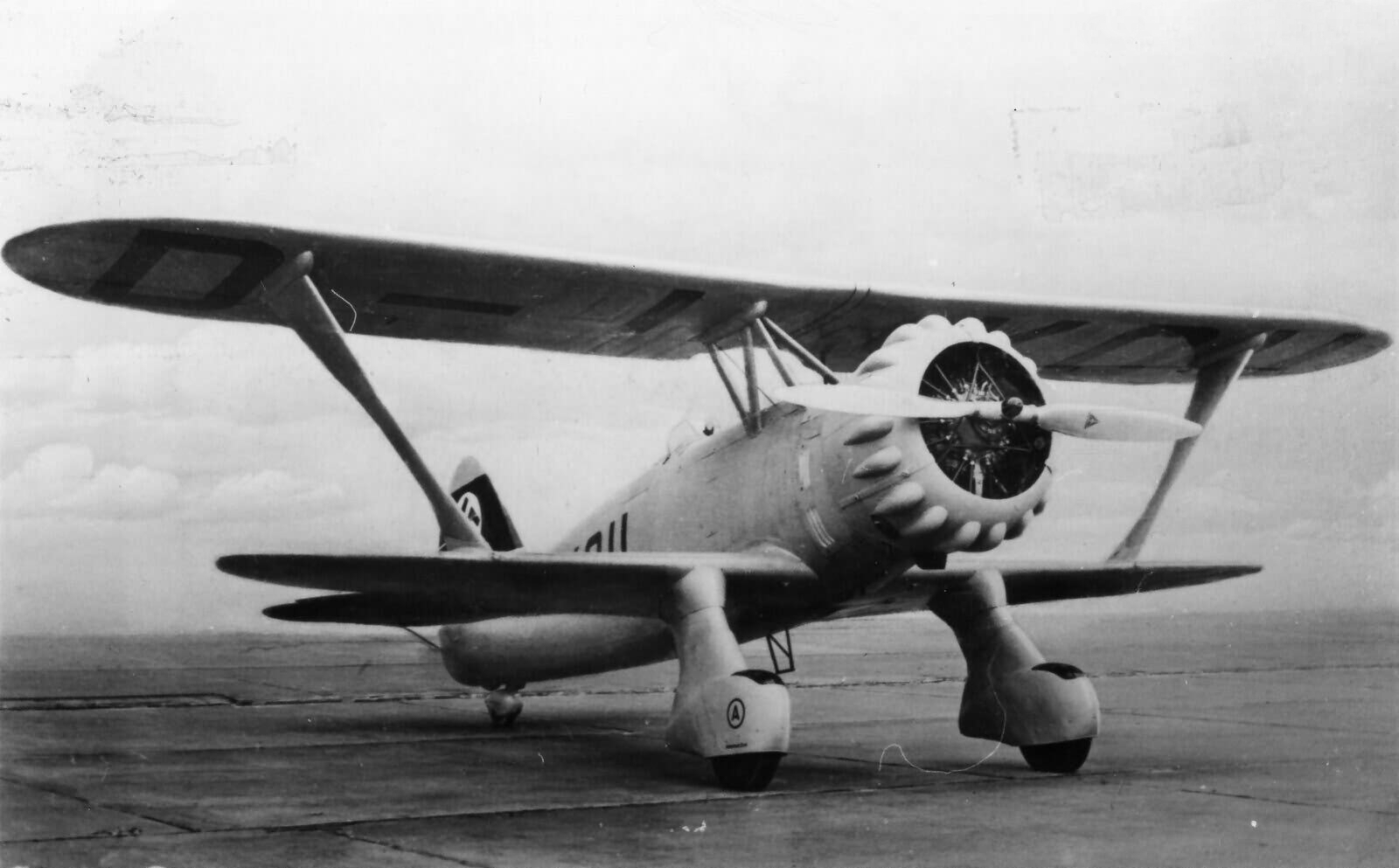
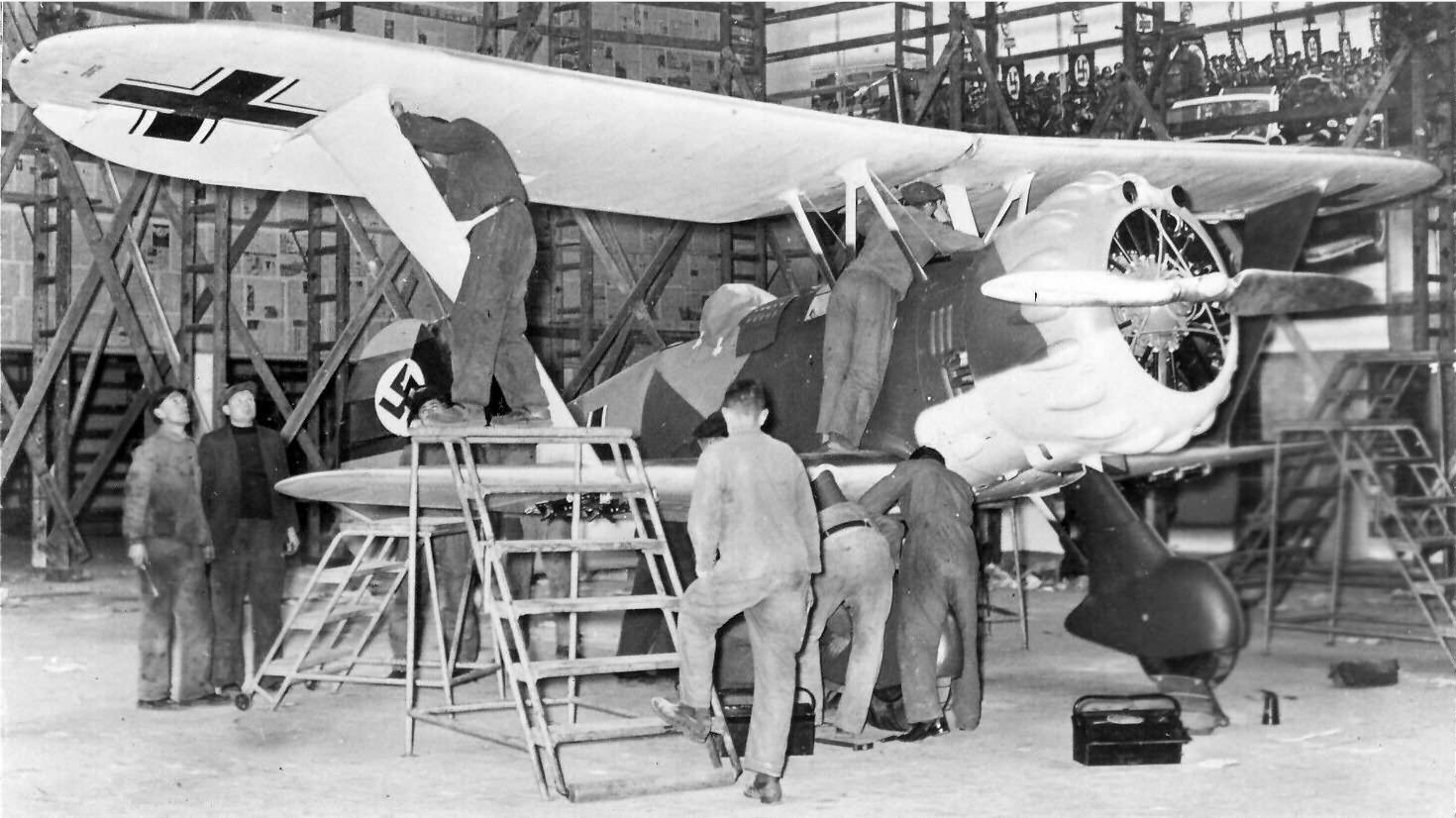
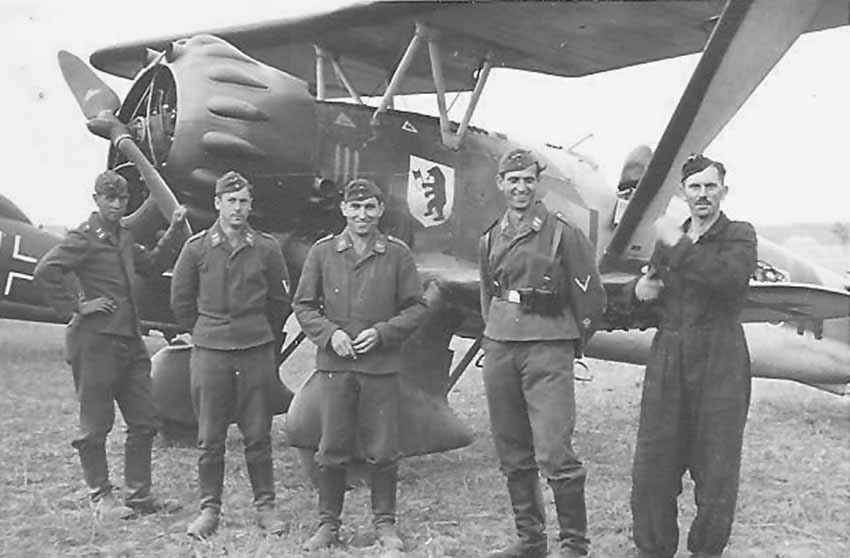
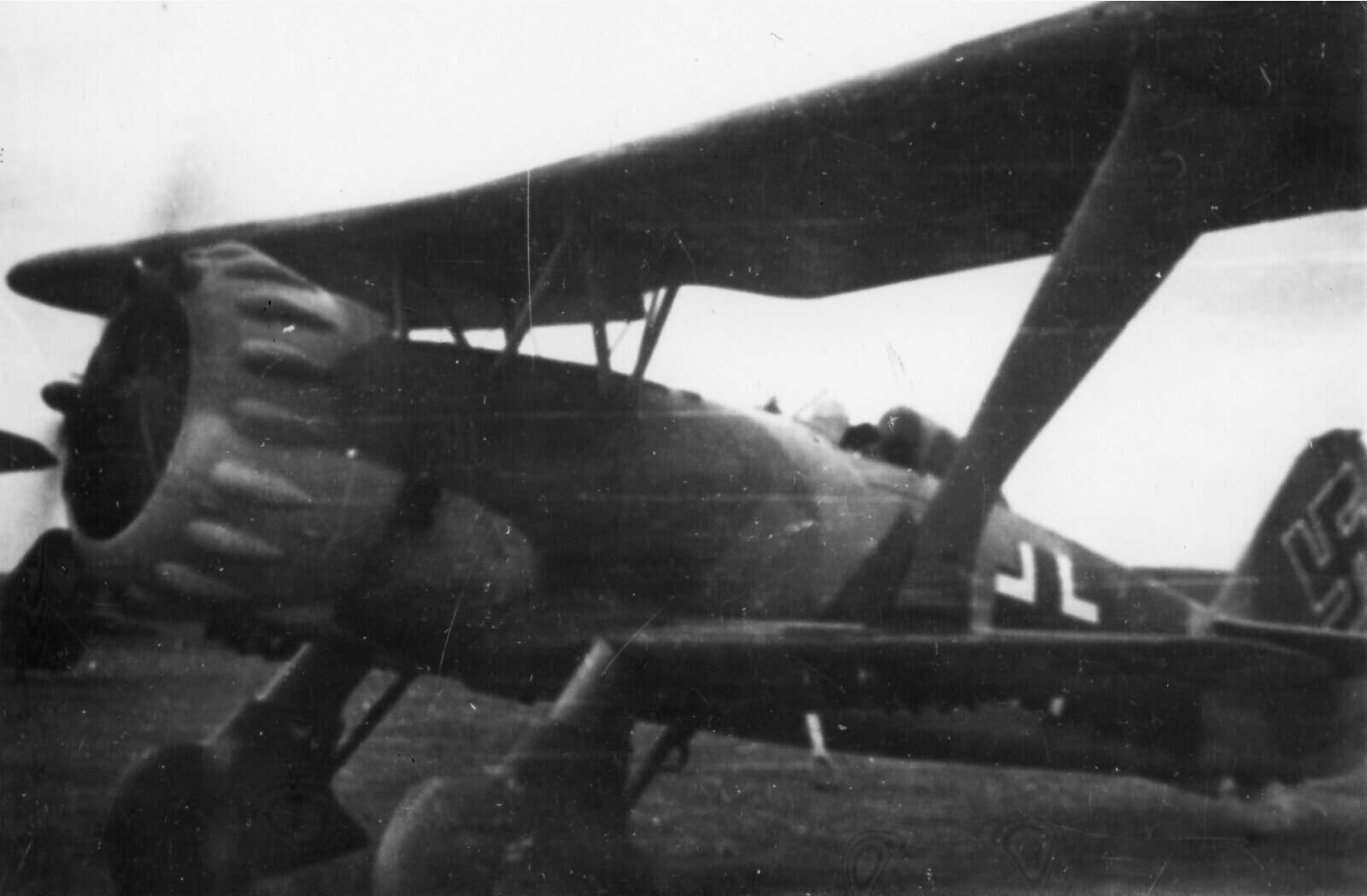
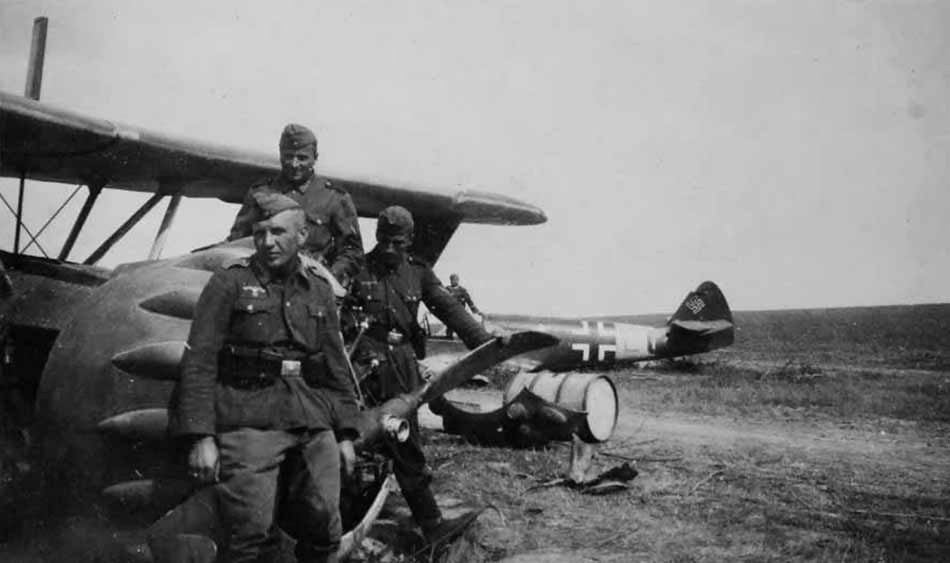
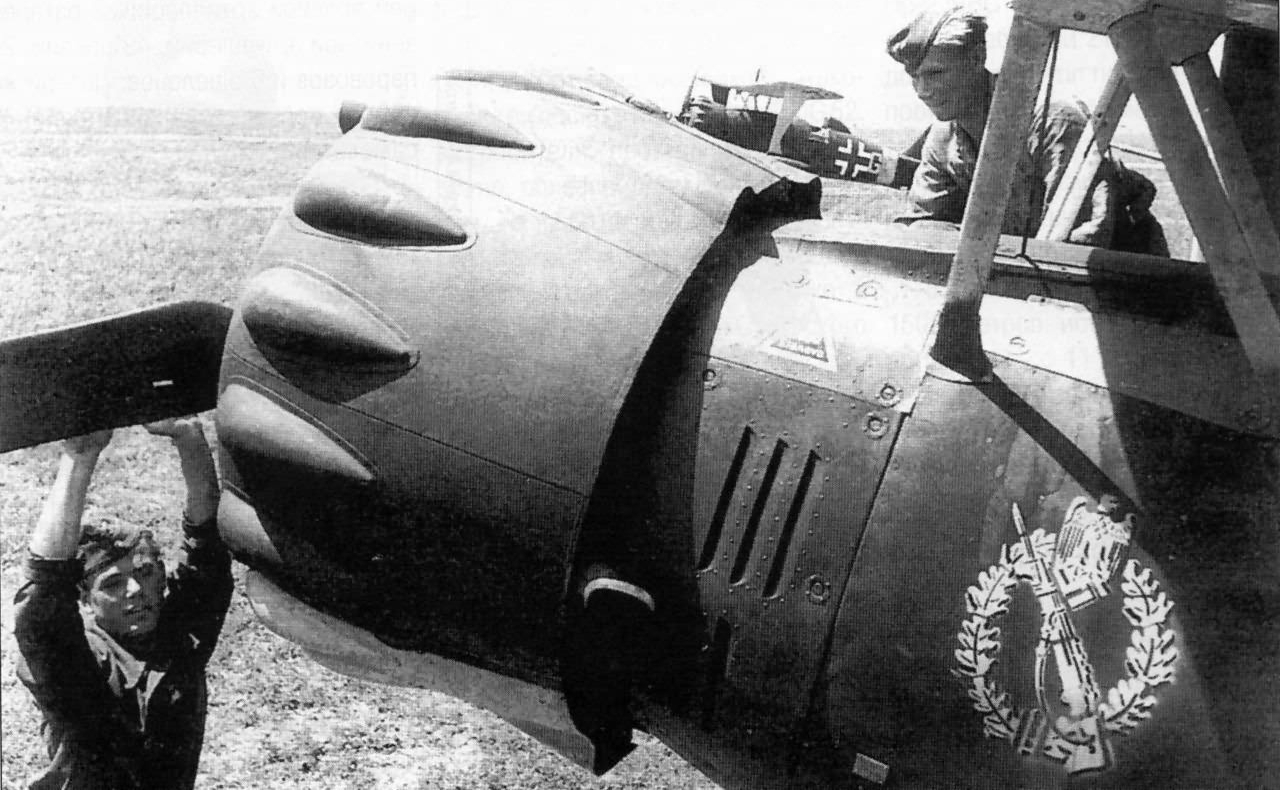
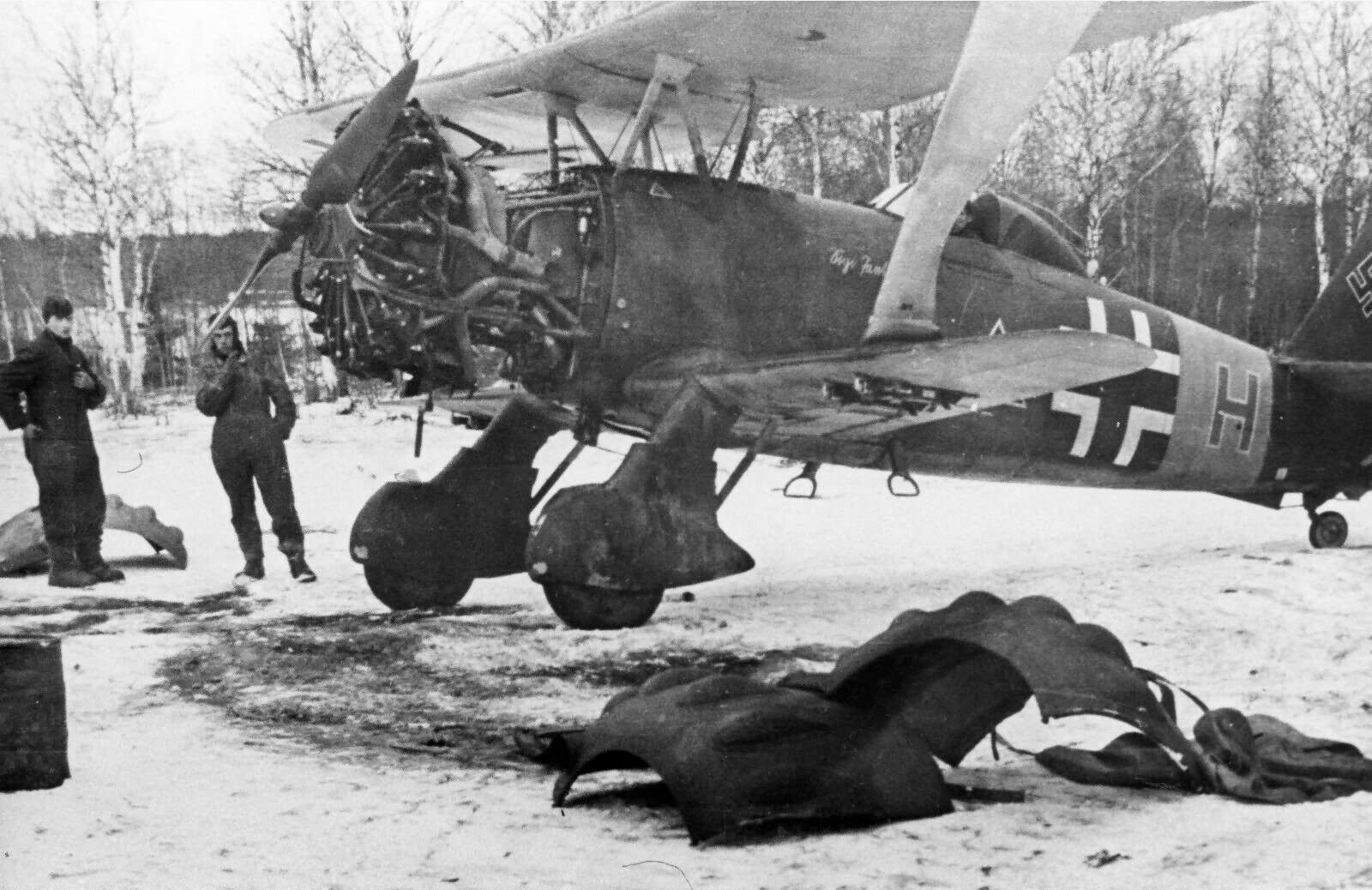
Henschel Hs 123 was a German single-seat, all-metal biplane dive-bomber and close-air-support ground-attack aircraft developed in the early 1930s by Henschel Flugzeugwerke. Designed by chief engineer Friedrich Nicolaus, the aircraft featured fixed landing gear, an open cockpit, and a 9-cylinder BMW 132 radial engine. Following early prototype testing in 1935—where early airframe failures were resolved by structural reinforcement—the type entered mass production, resulting in 255 units of the Hs 123A series built by October 1938.Although initially designed for dive-bombing, operational testing with five airframes in the Legion Condor during the Spanish Civil War revealed its exceptional effectiveness as a close-support ground-attack aircraft. Impressed by its performance, the Francoist Air Force acquired 11 units, and 12 were exported to Nationalist China for use in the Second Sino-Japanese War. Operating with the Luftwaffe, the Hs 123 proved its ruggedness and tactical value during the 1939 invasion of Poland, the 1940 Battle of France, and extensively on the Eastern Front. Pilots noted that at low altitudes and specific RPM settings (around 1,800 RPM), its engine noise mimicked rapid machine-gun fire, adding a psychological effect against ground troops. Despite being an obsolete biplane design, its reliability, capability to operate from primitive mud airfields, and high resistance to battle damage kept it in active frontline service until mid-1944.