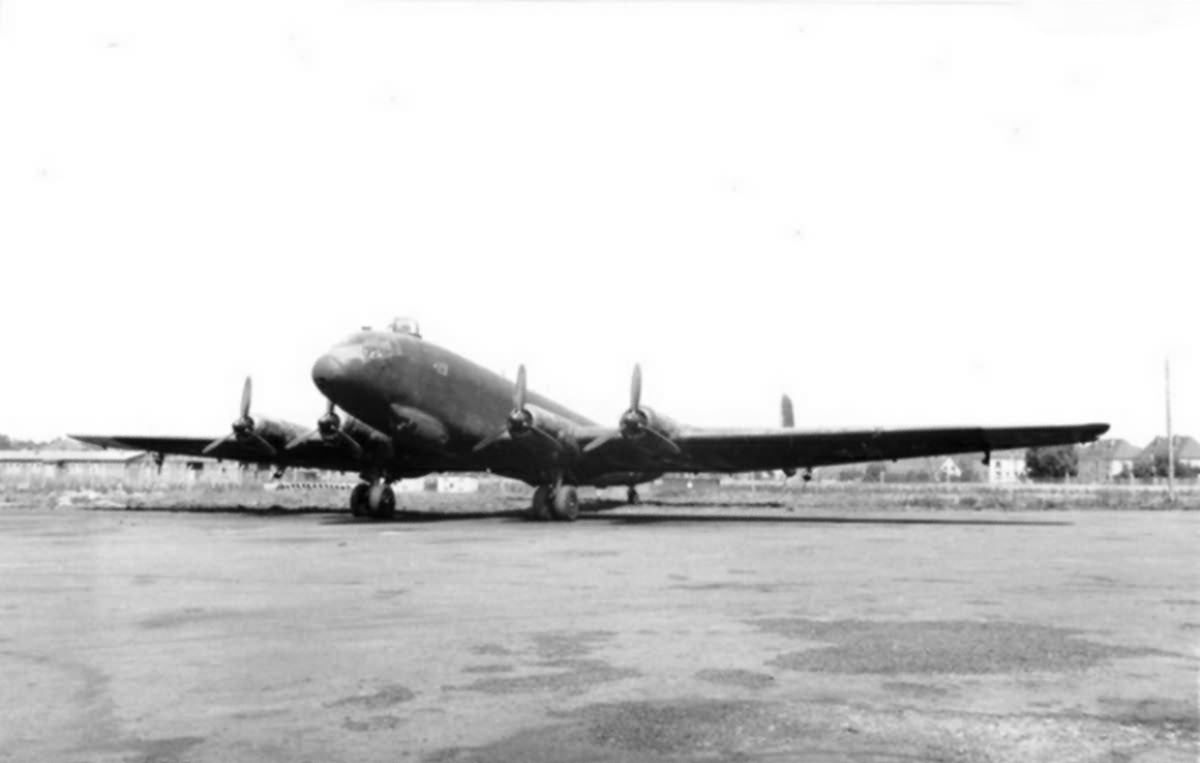
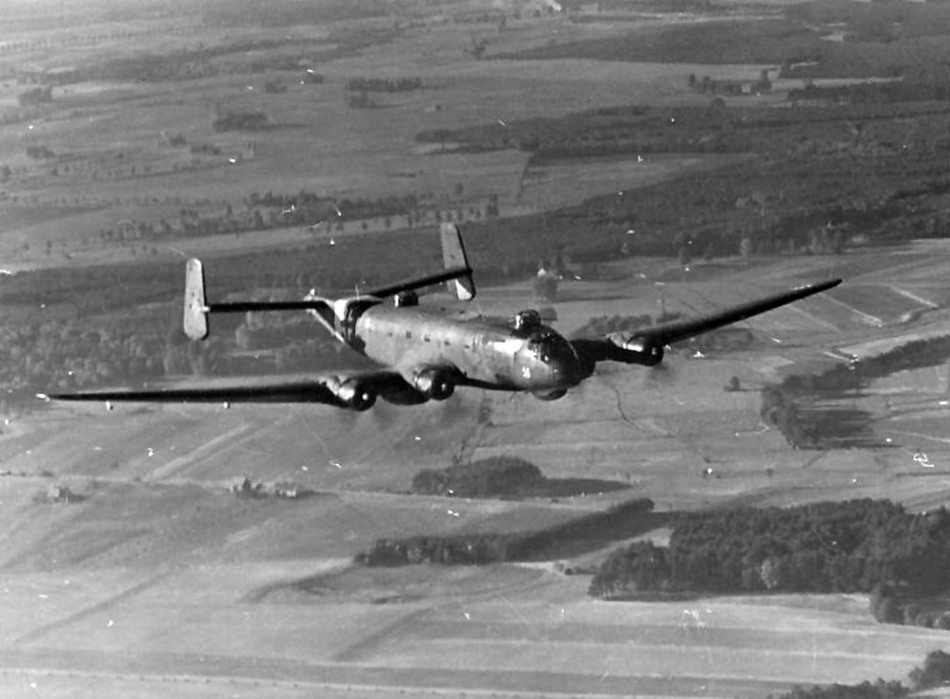
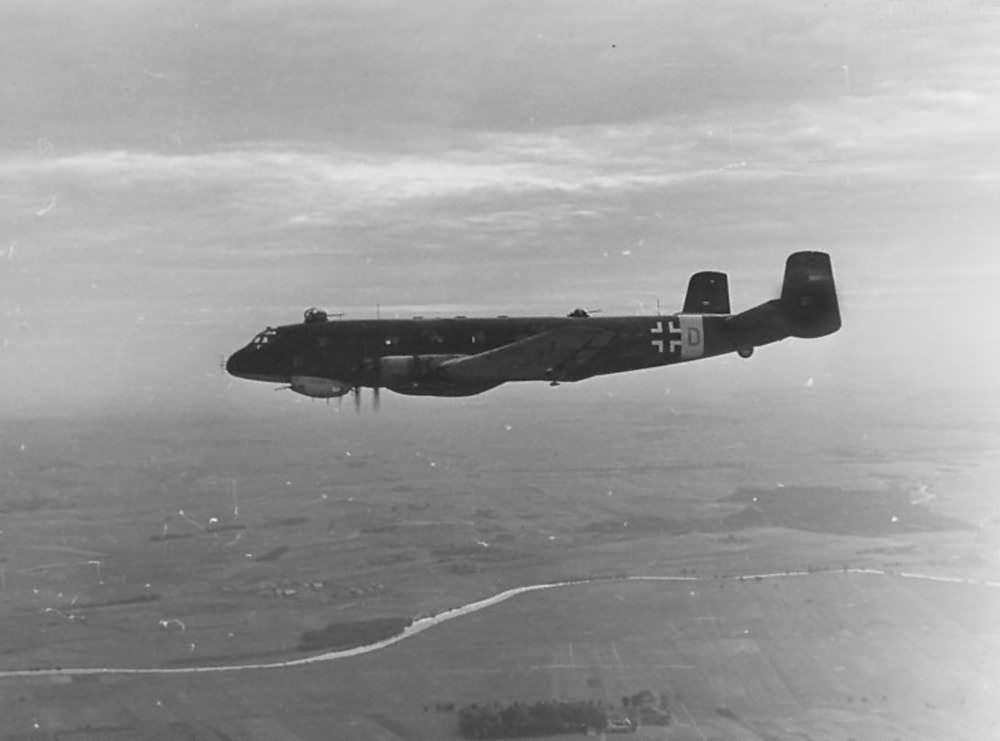
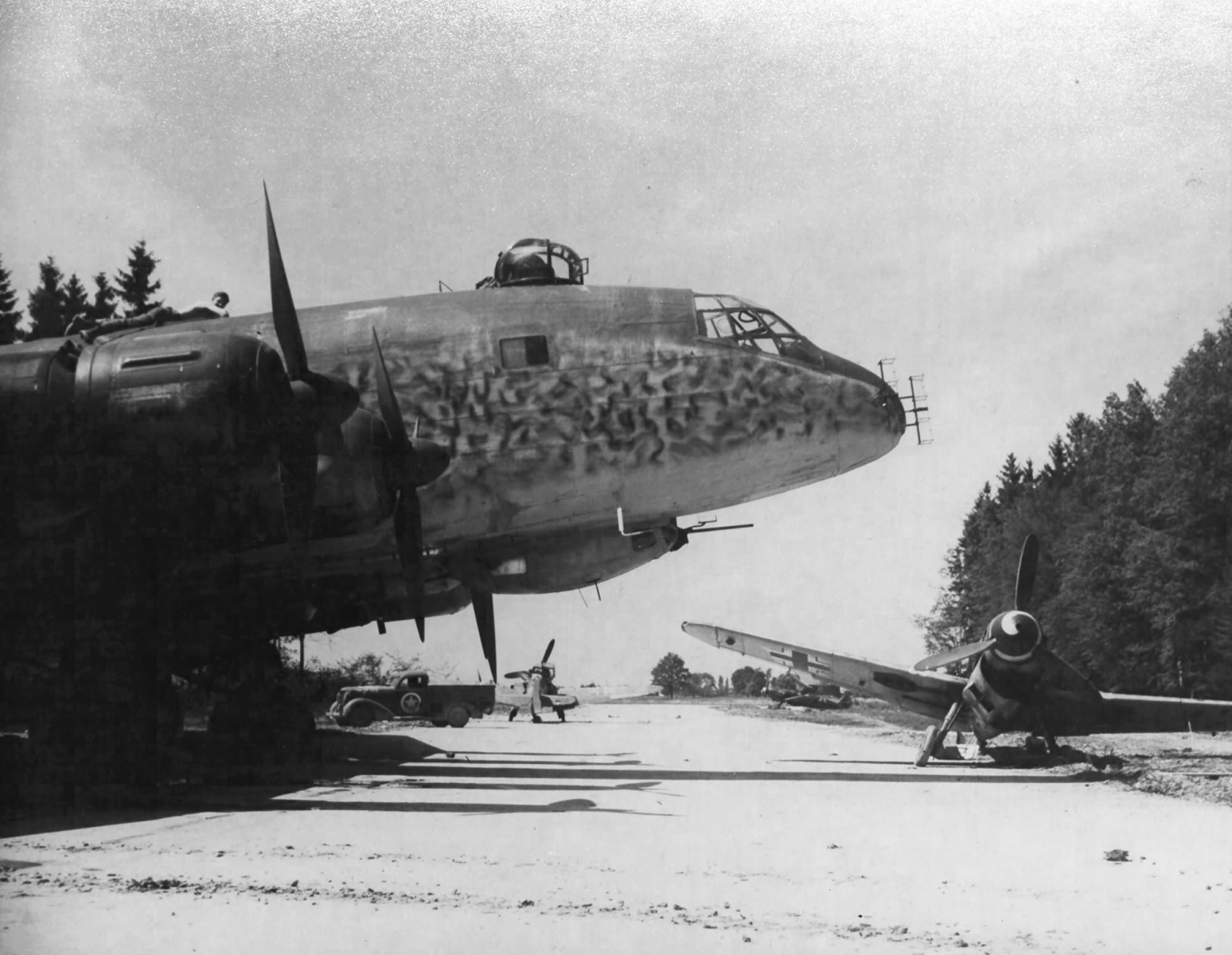
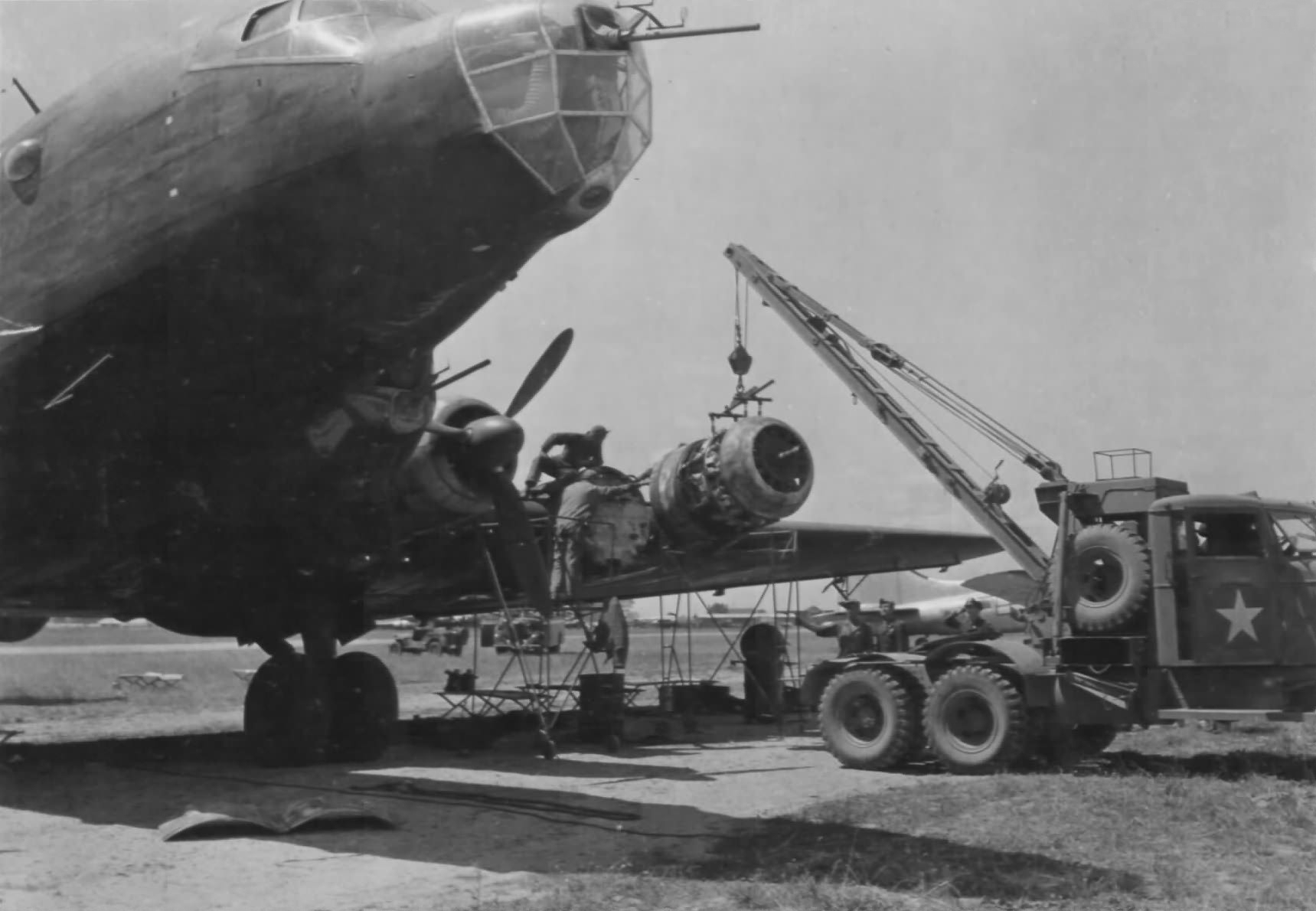
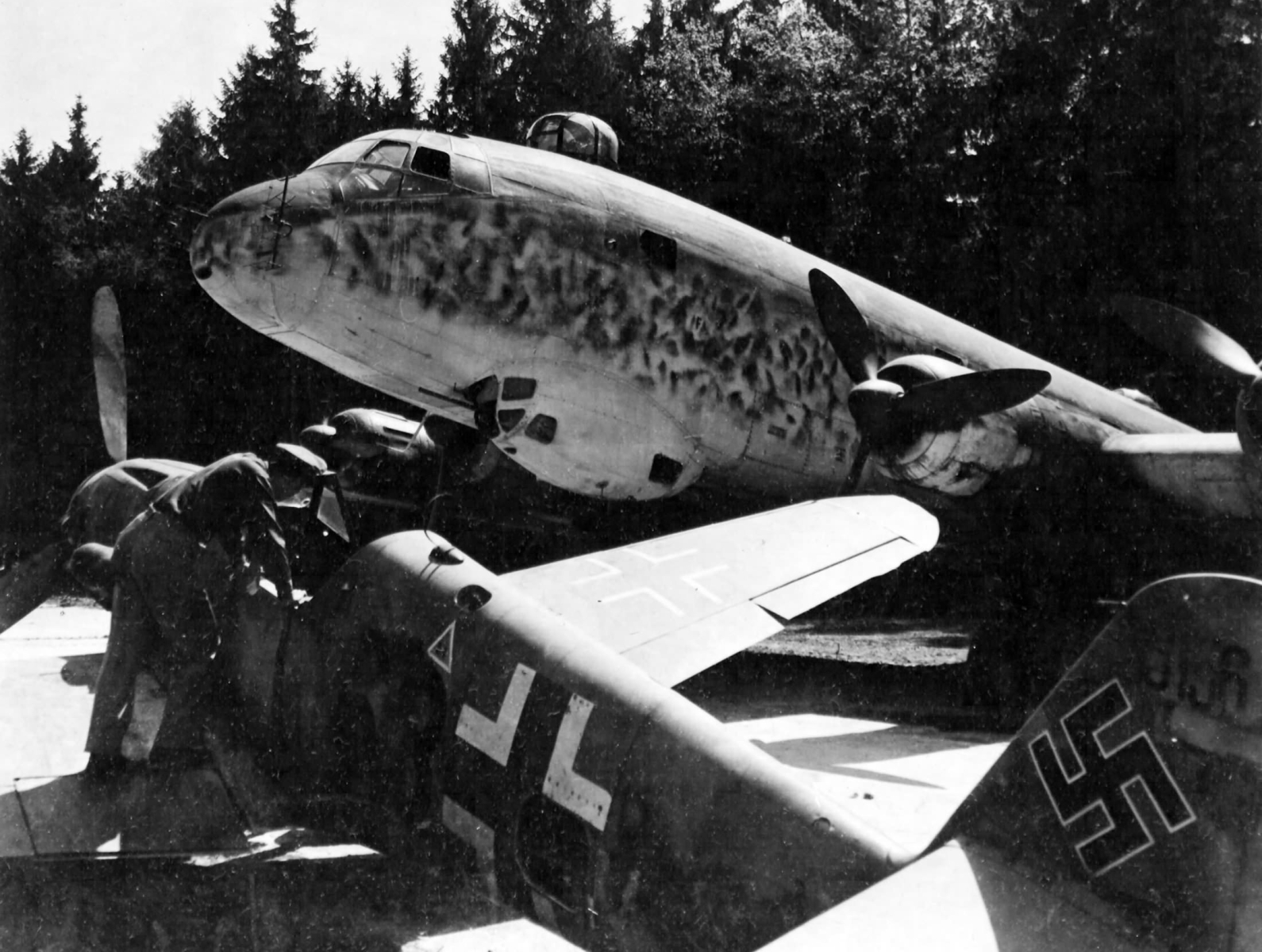
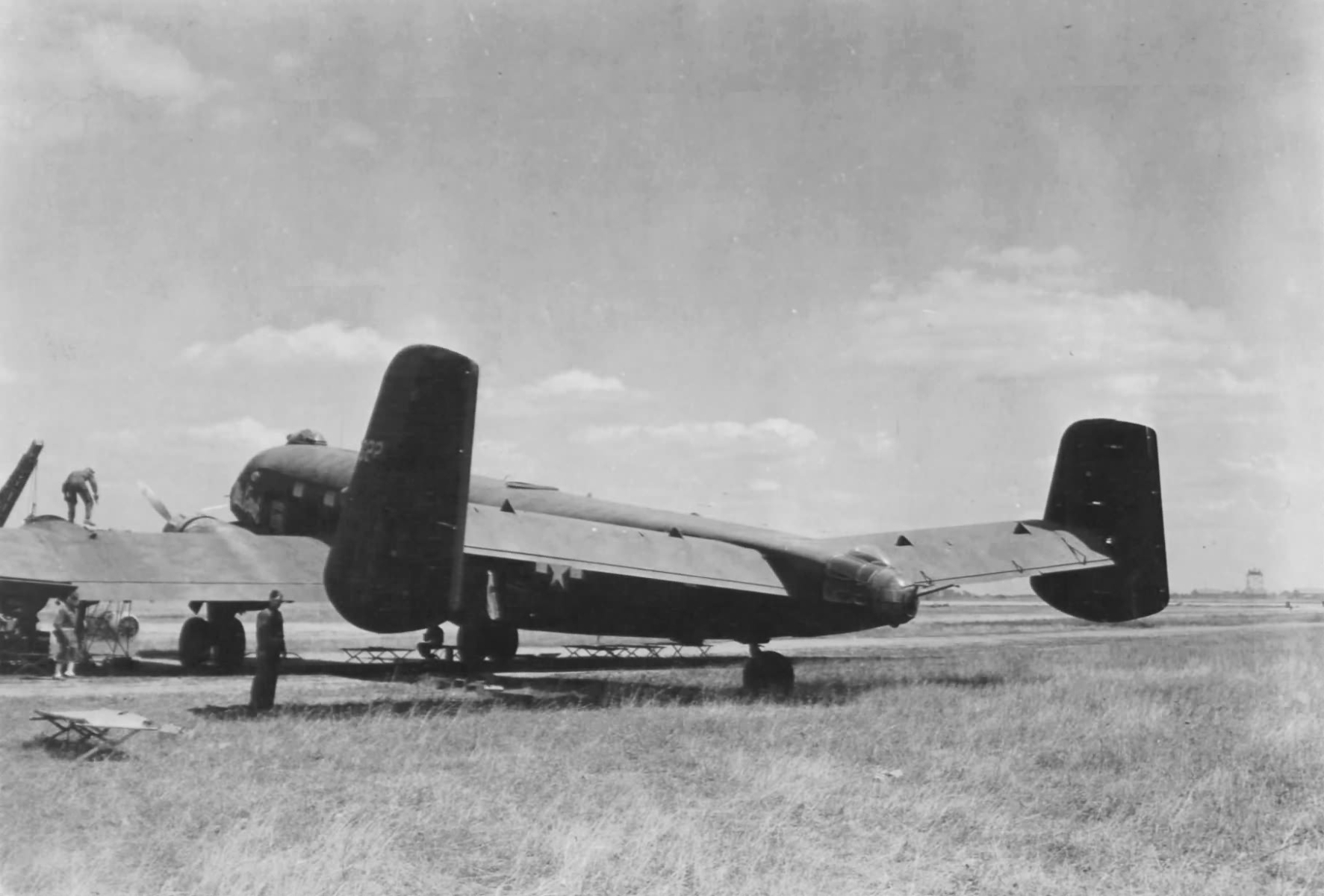
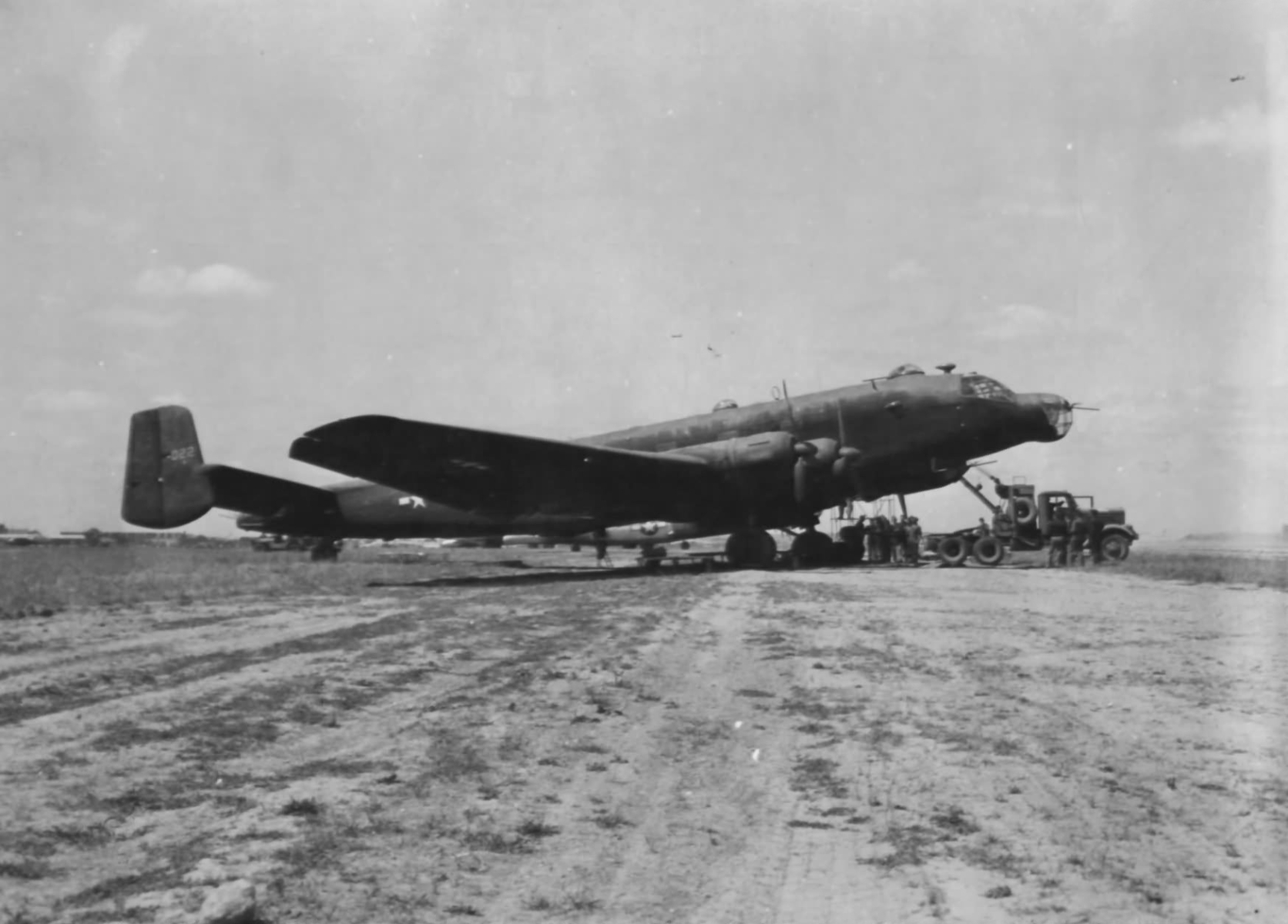
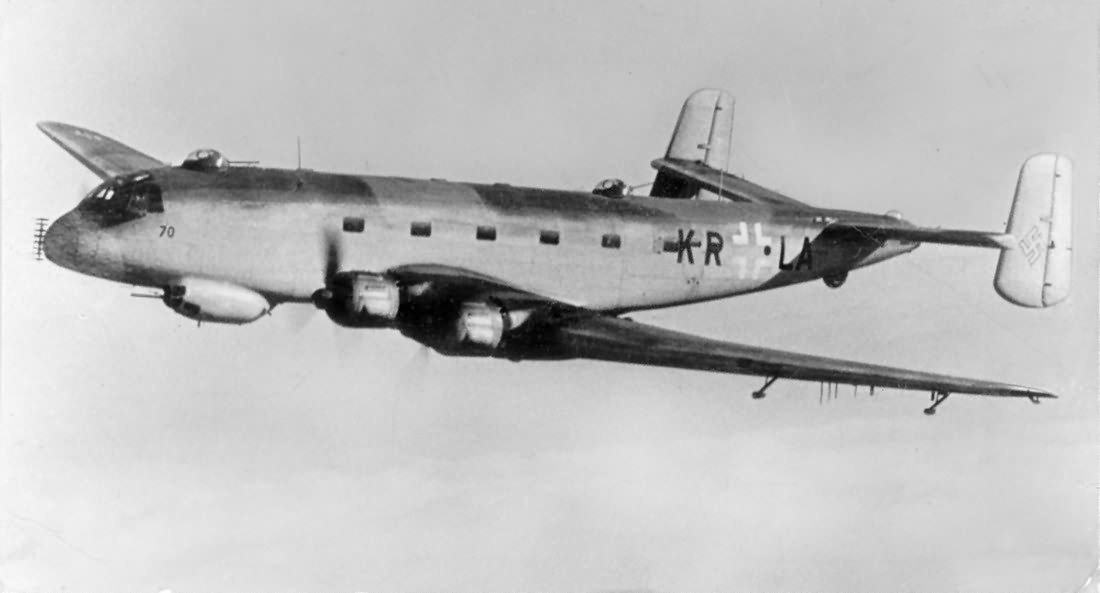
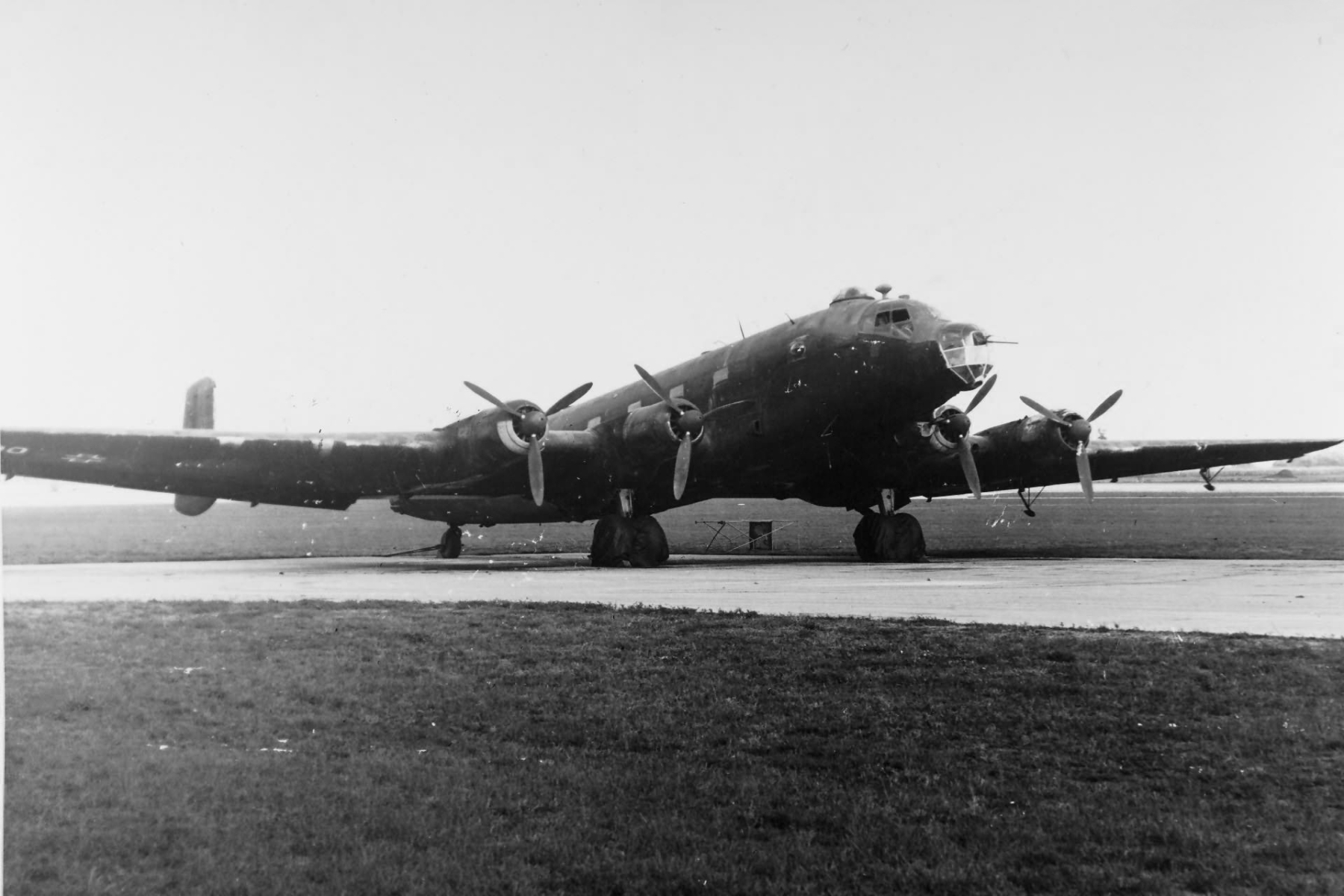
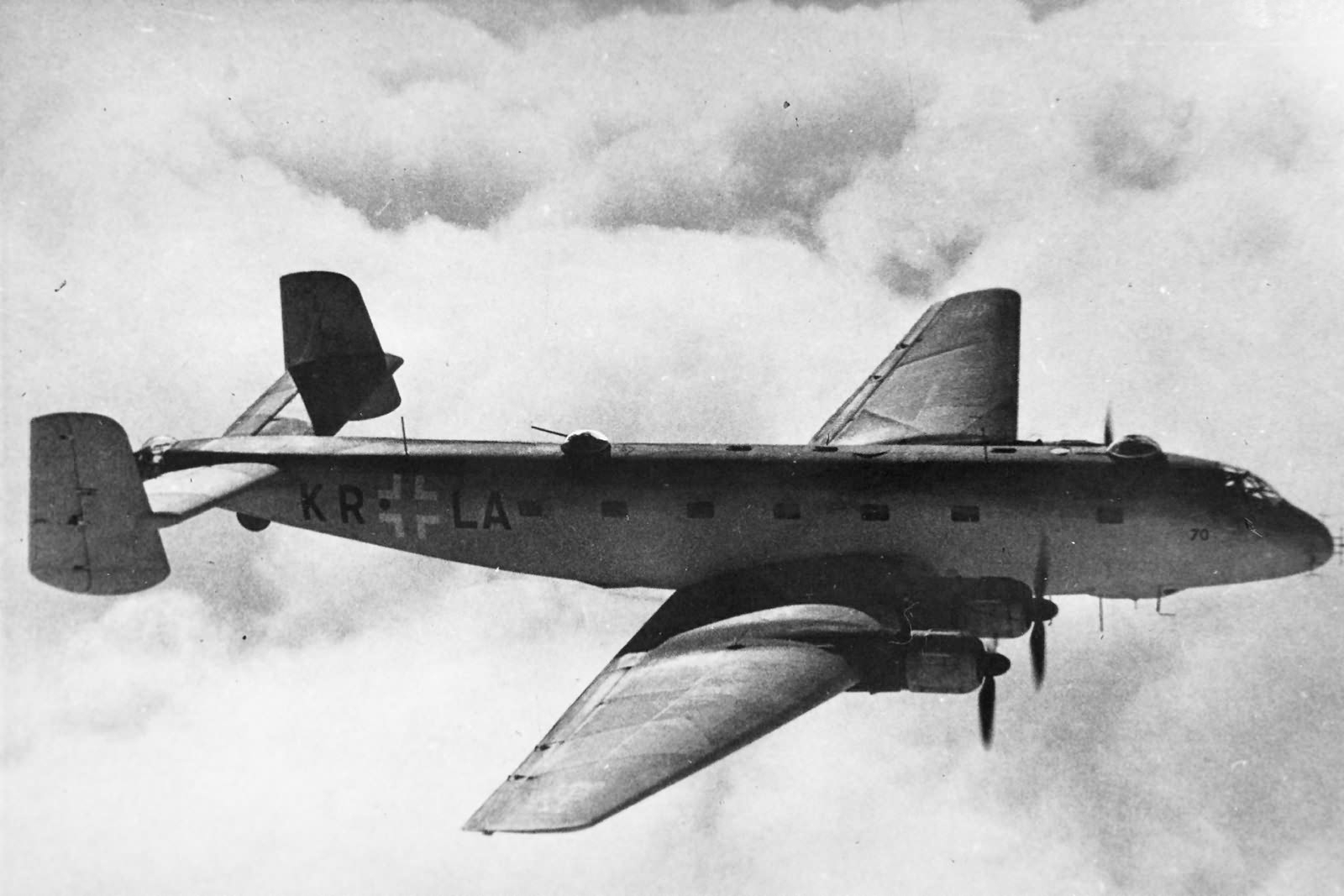
Junkers Ju 290 was a heavy four-engine military transport, long-range maritime reconnaissance, and strategic bomber developed by Junkers from early 1941 as an upgraded military derivative of the Ju 90 airliner. Powered by BMW 801 radial engines, the aircraft featured enlarged wings and tail surfaces, extended operational range, a hydraulic rear-loading ramp (Trapoklappe), and heavy defensive armament including 20 mm MG 151 cannons and 13 mm MG 131 machine guns. Beginning in February 1943, the type entered front-line service primarily as a long-range maritime patrol aircraft (A-2, A-3, A-4, A-5, and A-7 variants) operating over the Atlantic from bases in France like Mont-de-Marsan, where it cooperated with U-boat wolfpacks and tested anti-ship guided weapons like the Fritz X missile. Other airframes served in specialized transport roles—notably during the Battle of Stalingrad, where the V1 prototype crashed on January 13, 1943, during an evacuation mission at Pitomnik airfield while carrying 75 wounded soldiers, resulting in one of the Luftwaffe’s worst aviation disasters—and under secret operations with Kampfgeschwader 200 (A-5). Development of planned bomber derivatives (A-8) and modified high-altitude variants (Ju 290 B) remained mostly incomplete due to Allied bombing and manufacturing limitations, though the design served as the foundation for the enlarged six-engined Ju 390. Surviving airframes were captured by Allied forces after the war, including a Ju 290 A-7 evaluated extensively by the USAAF.