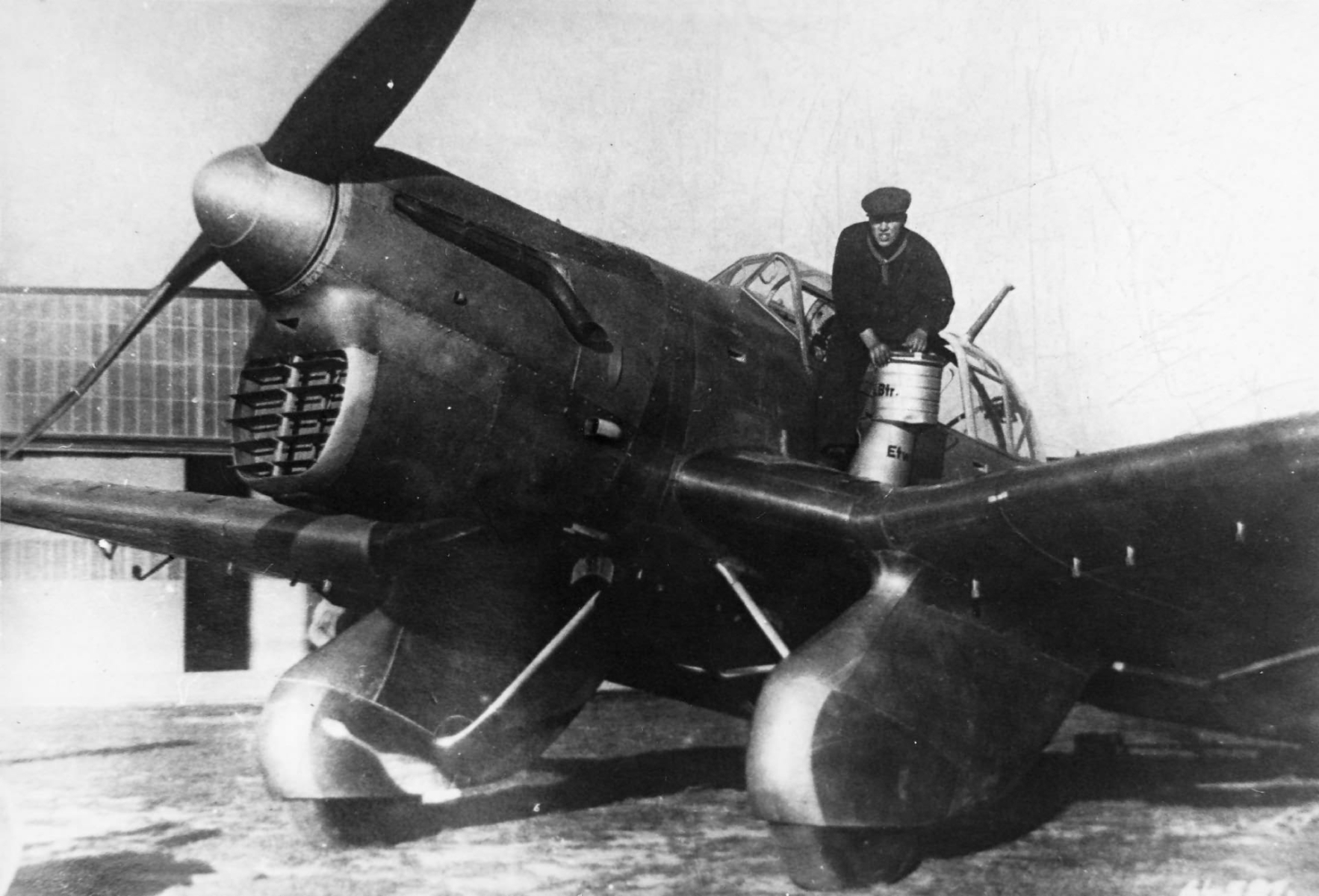
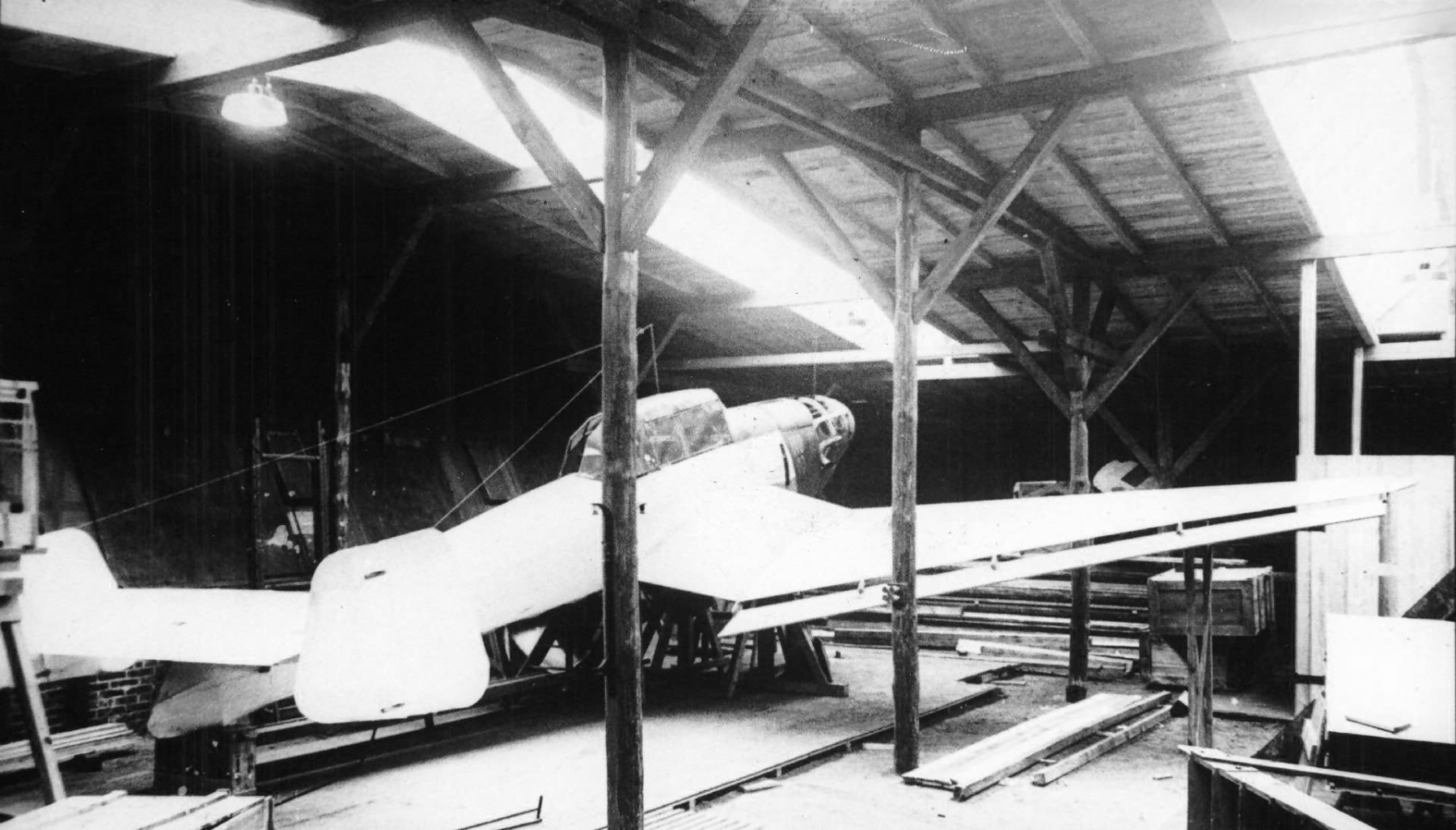
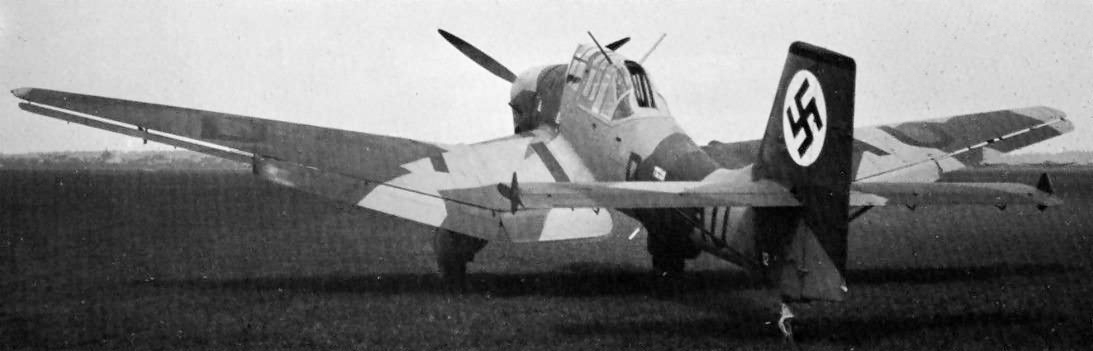
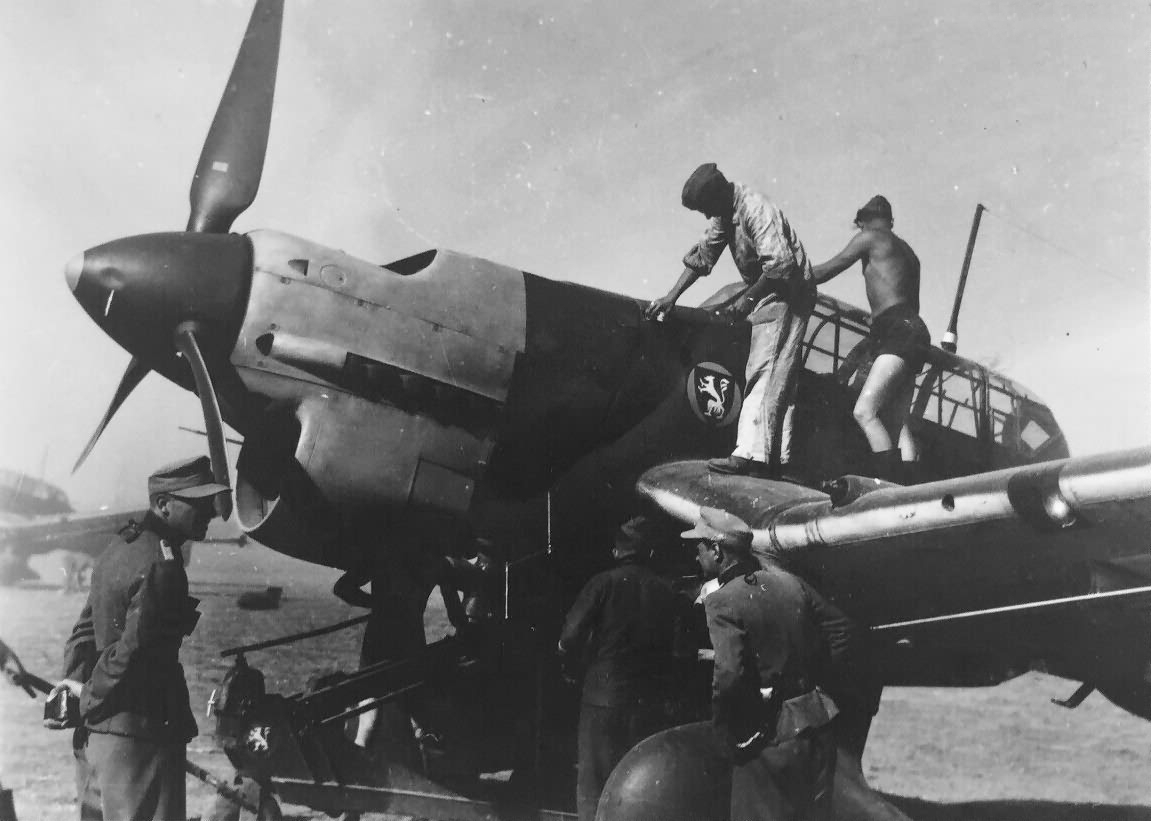
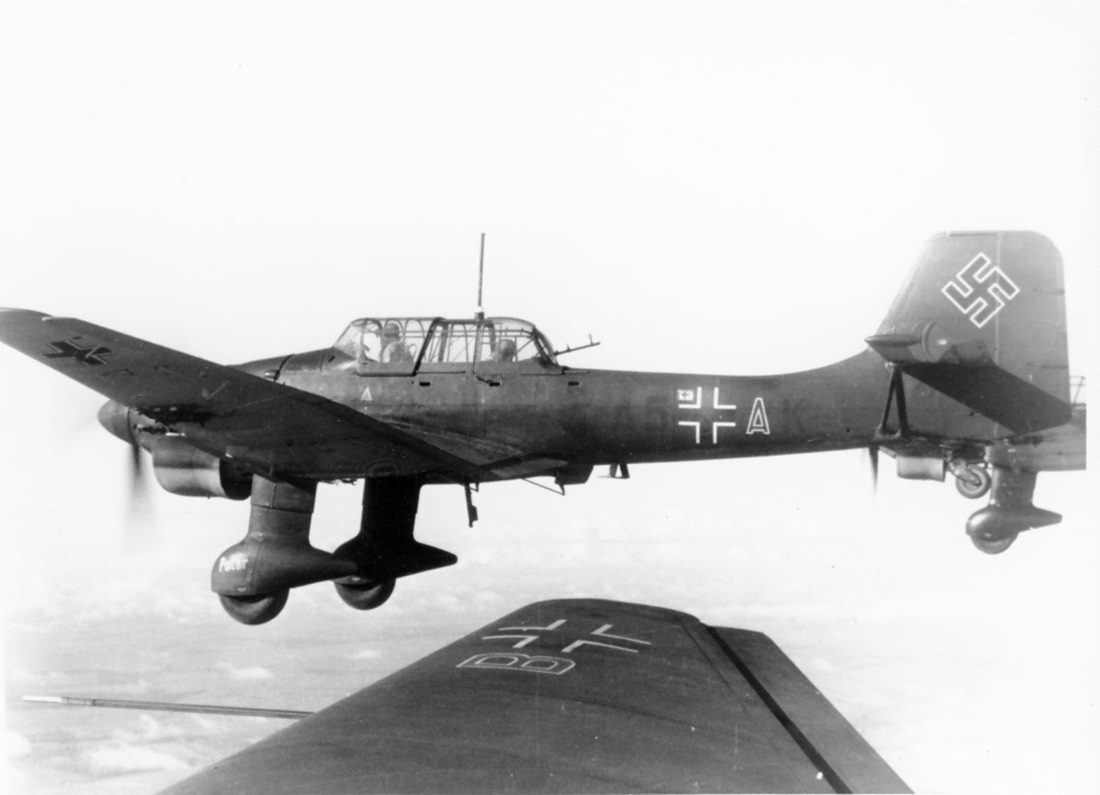
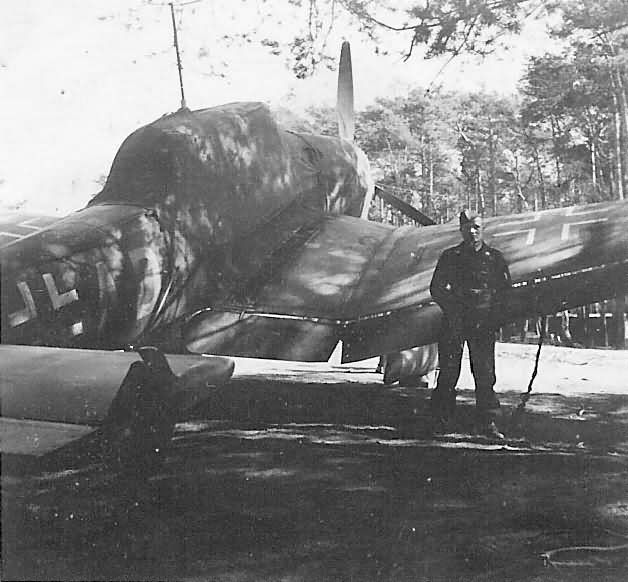
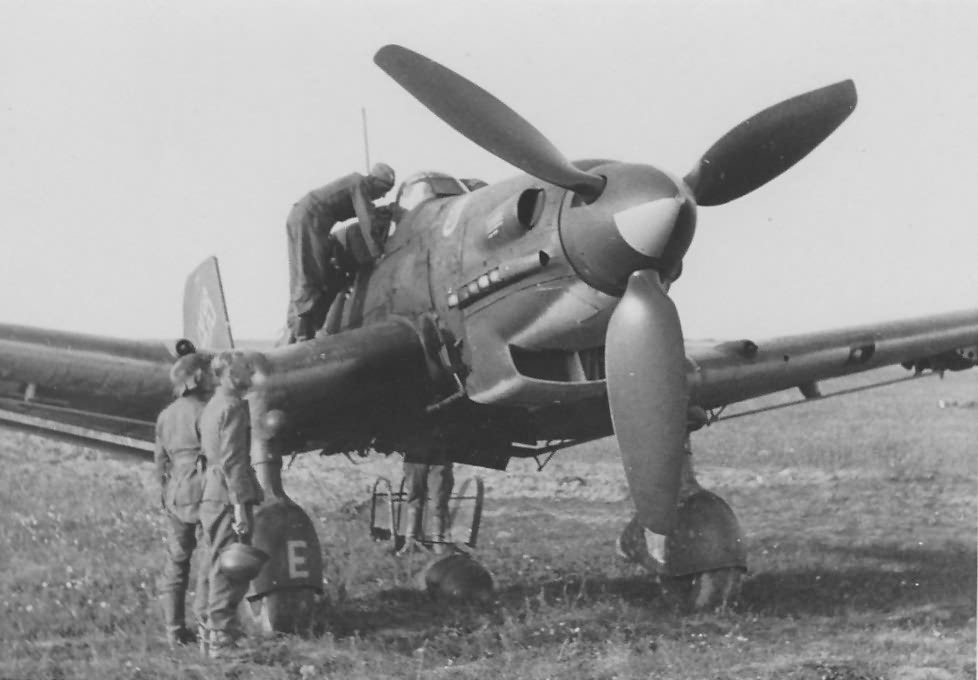
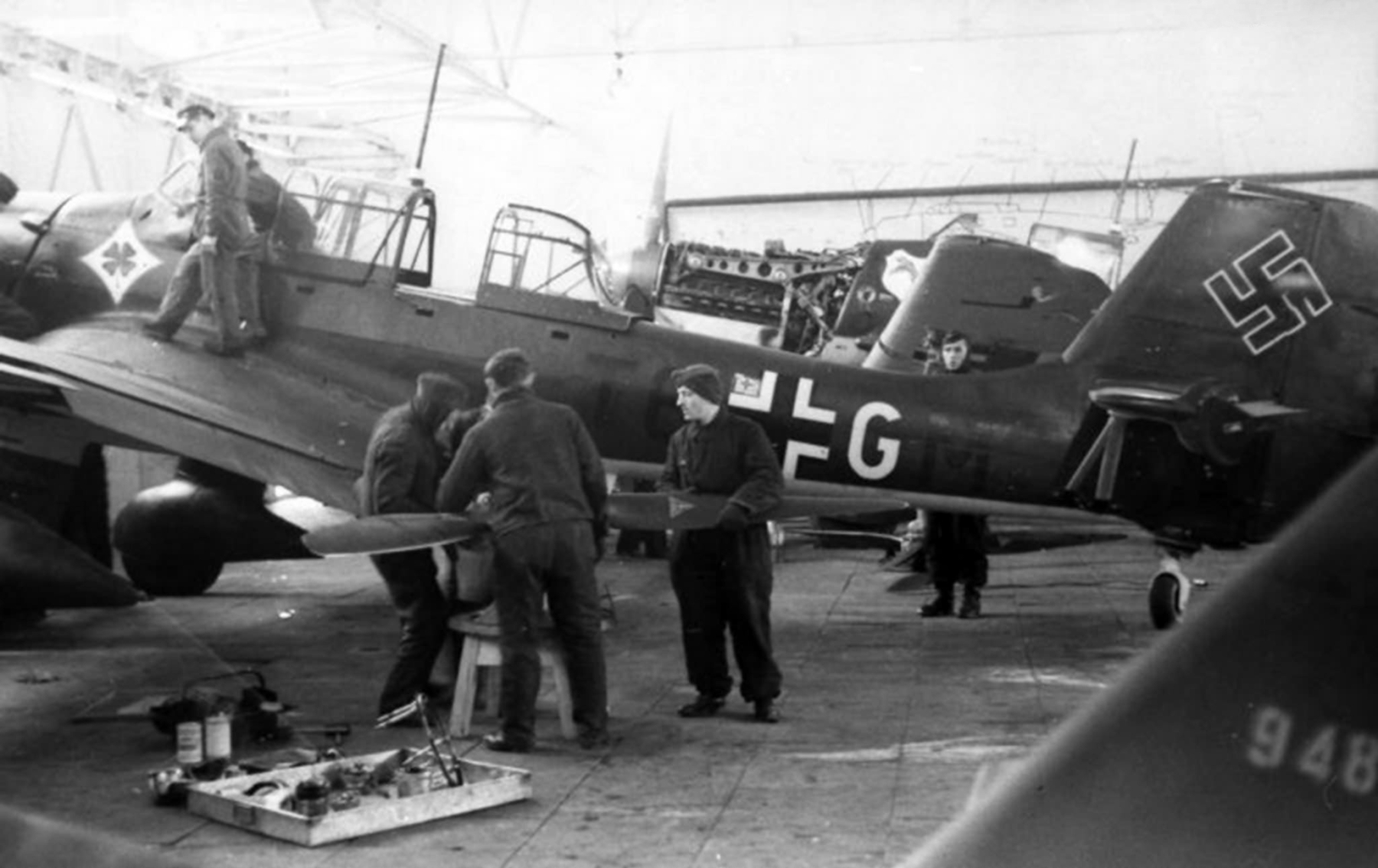
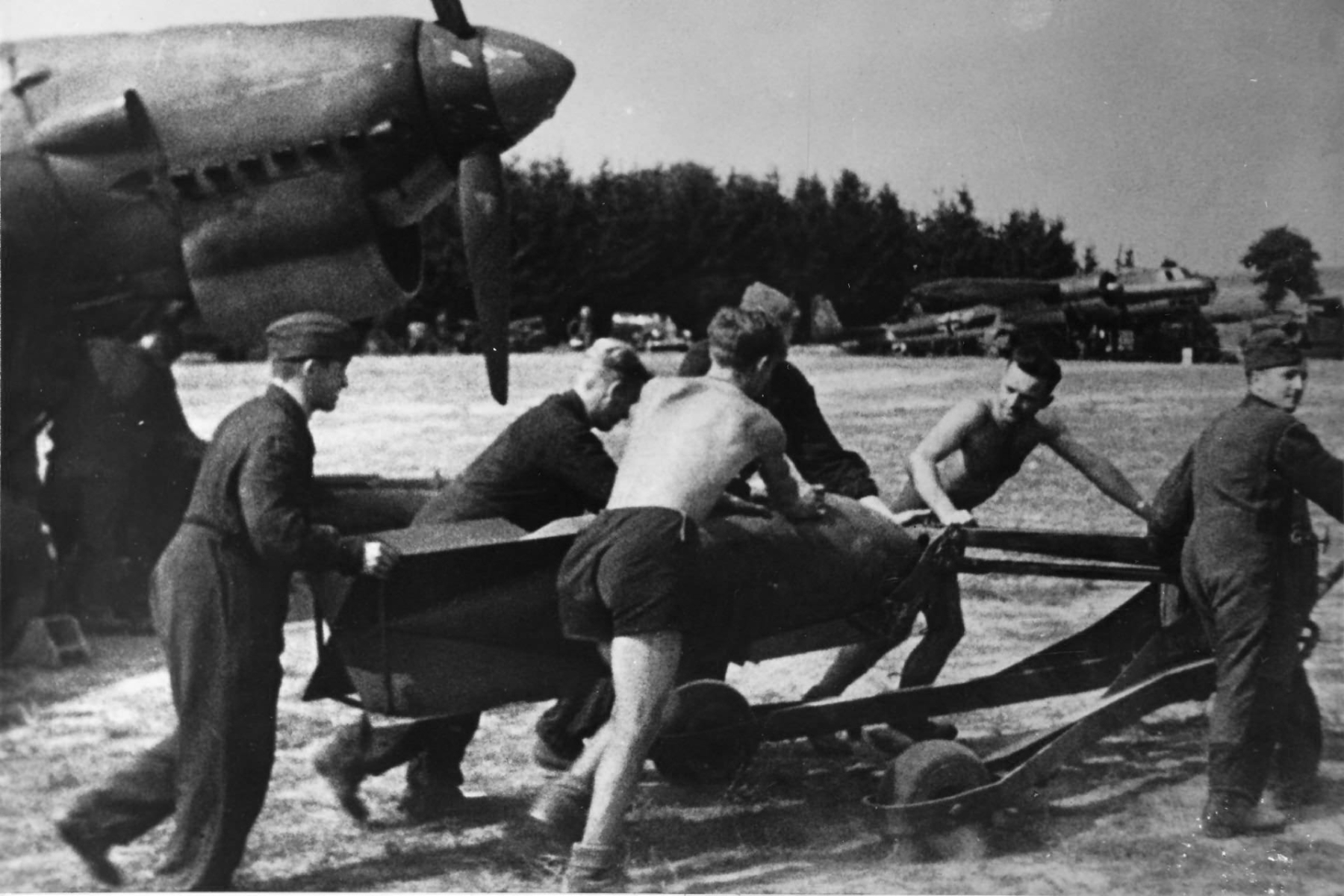
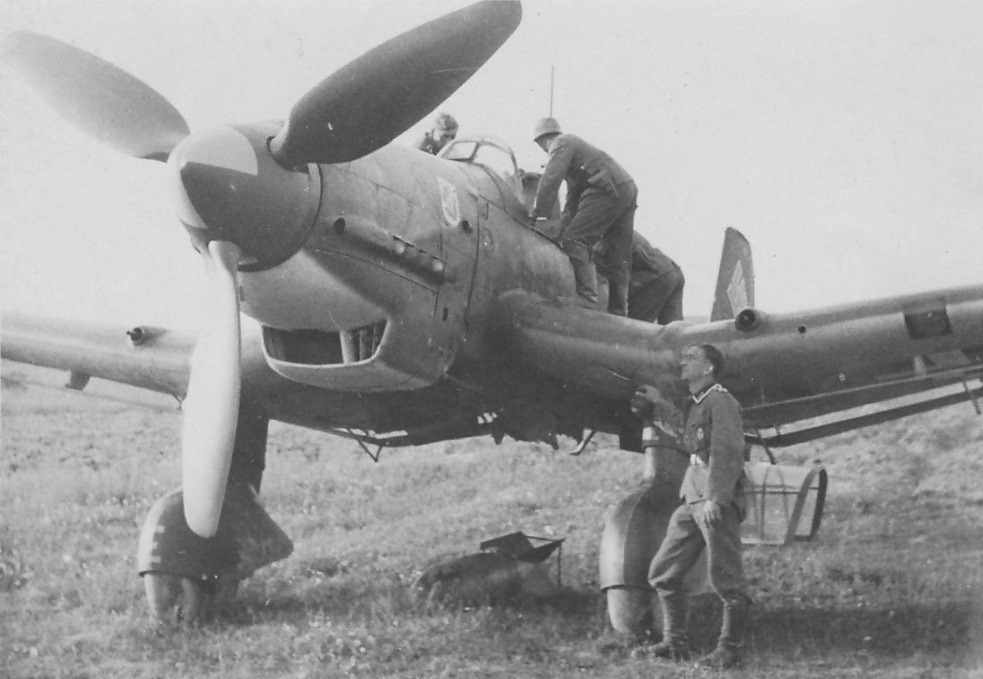
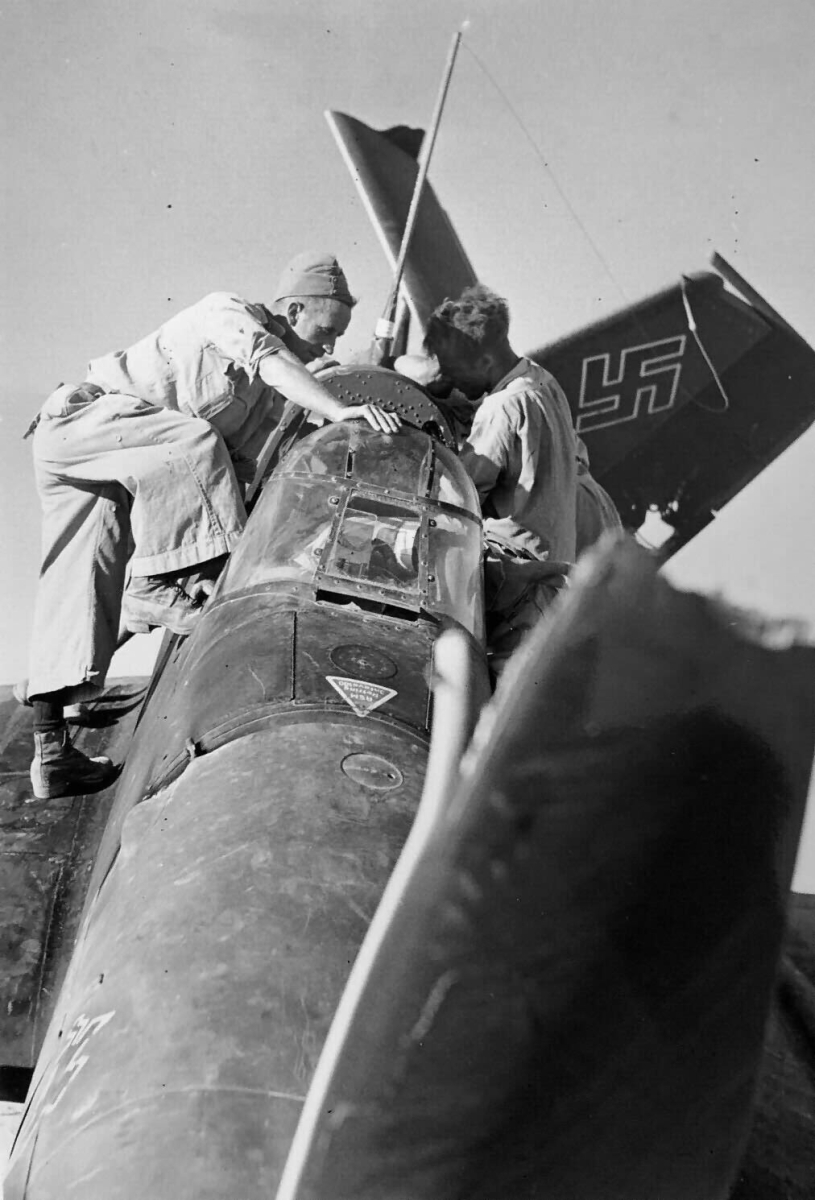
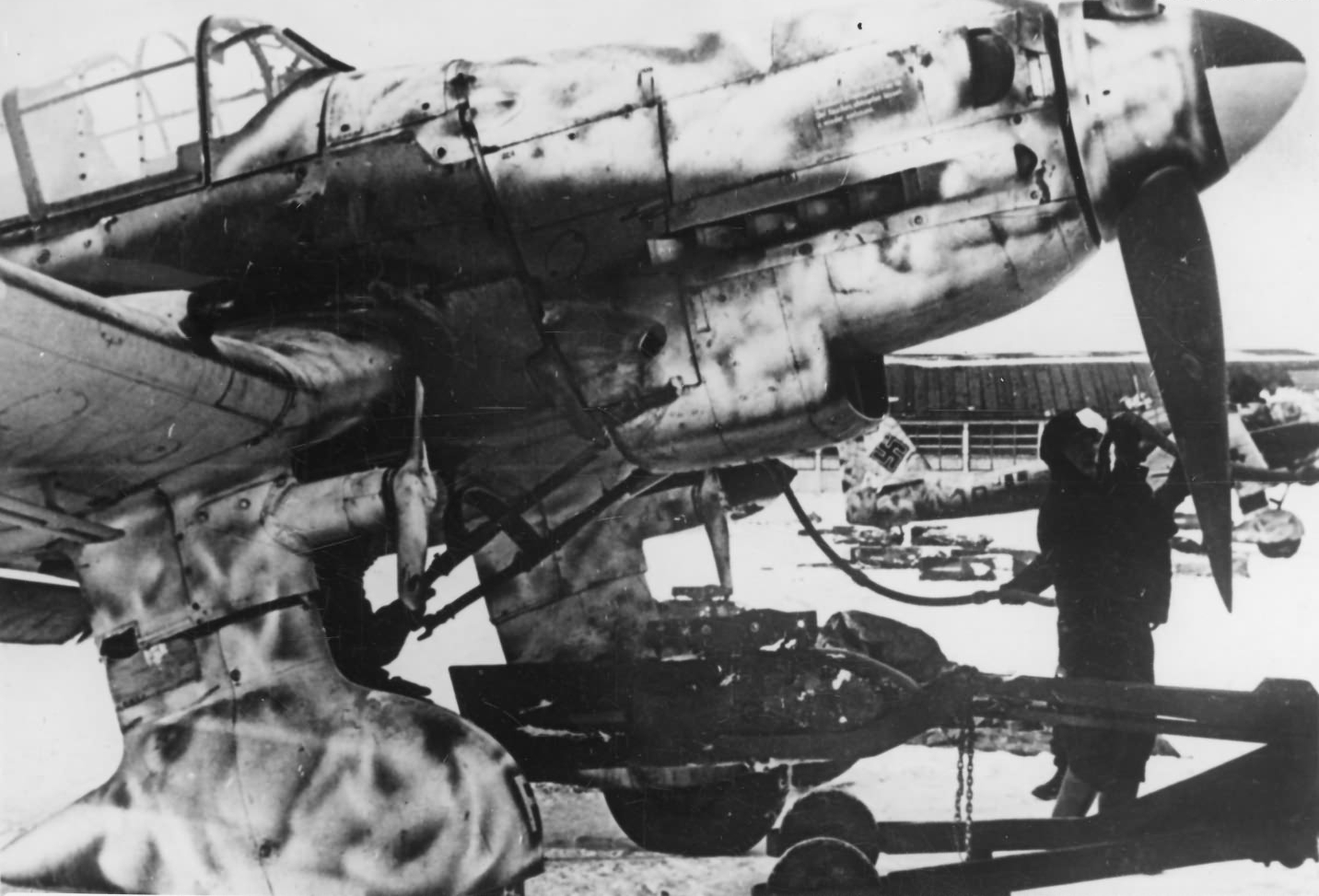
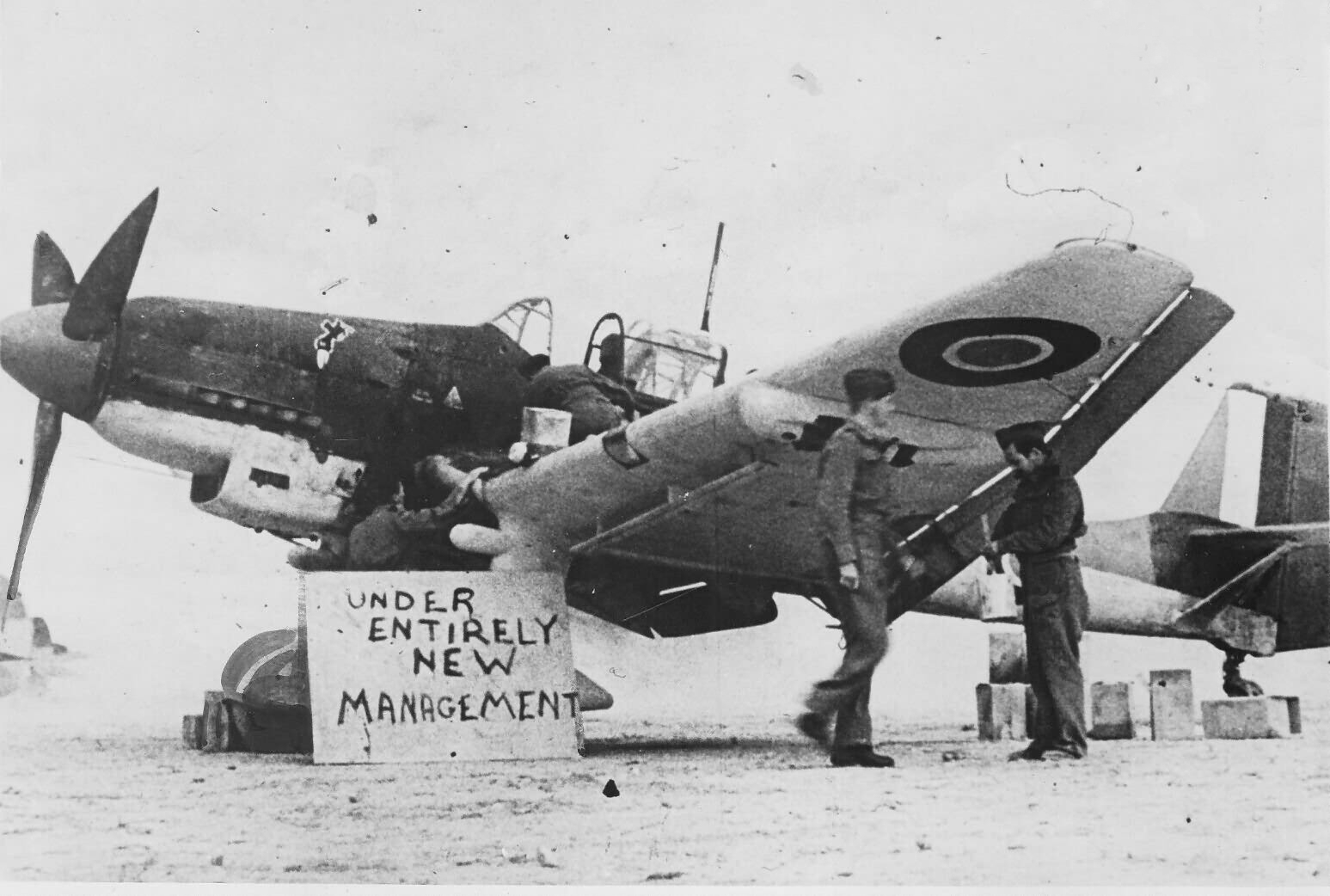
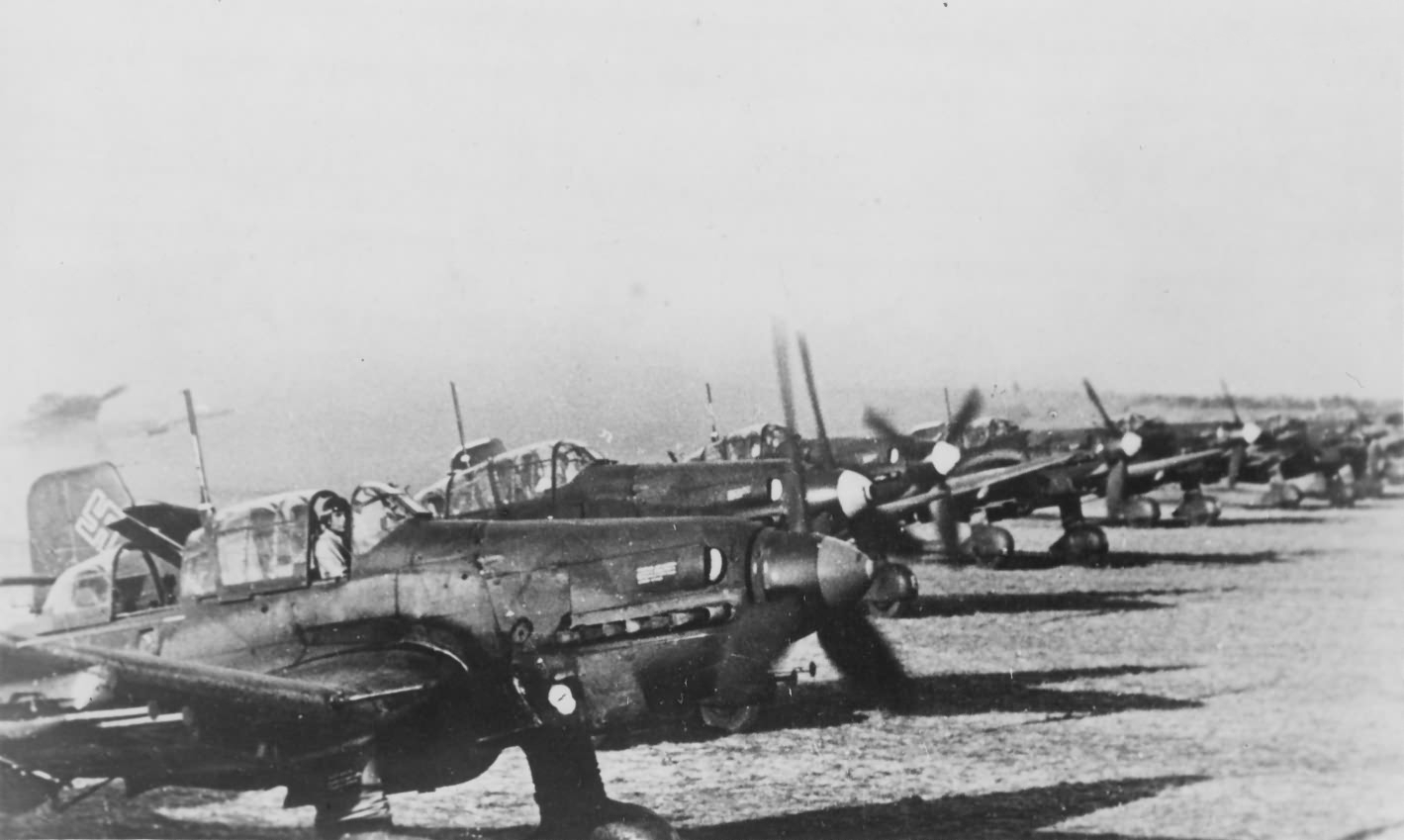
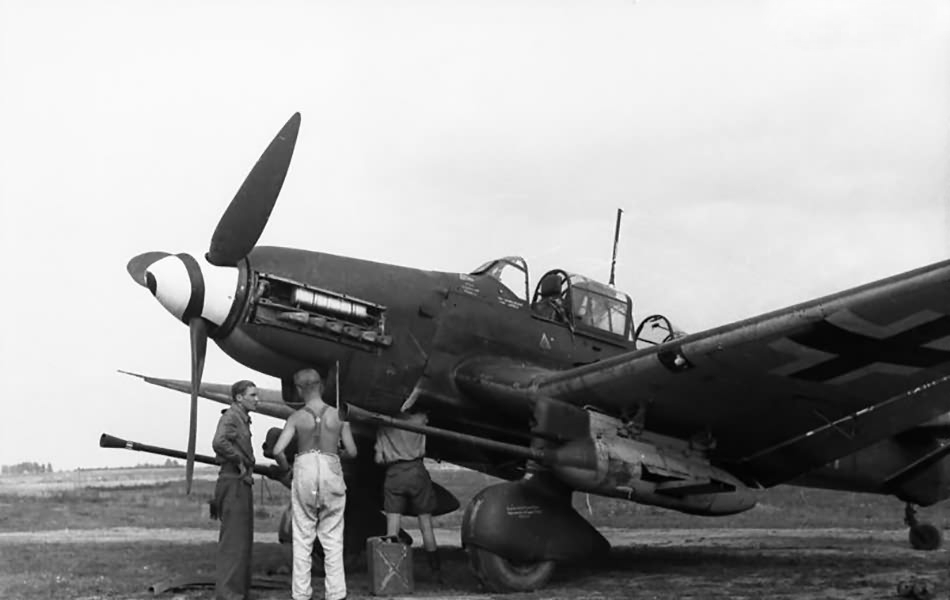
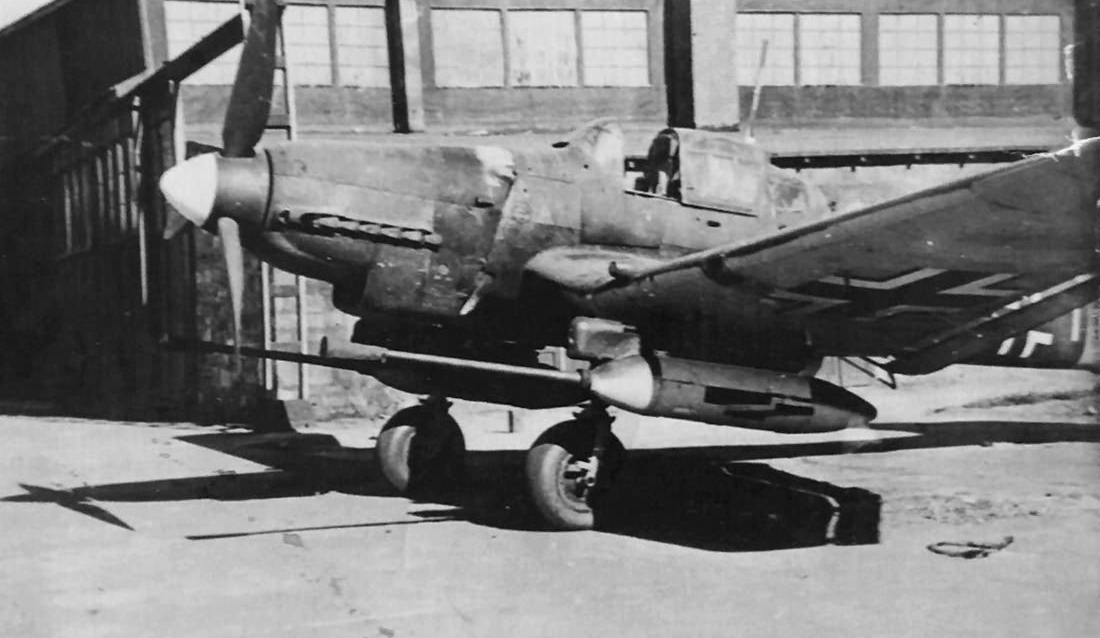
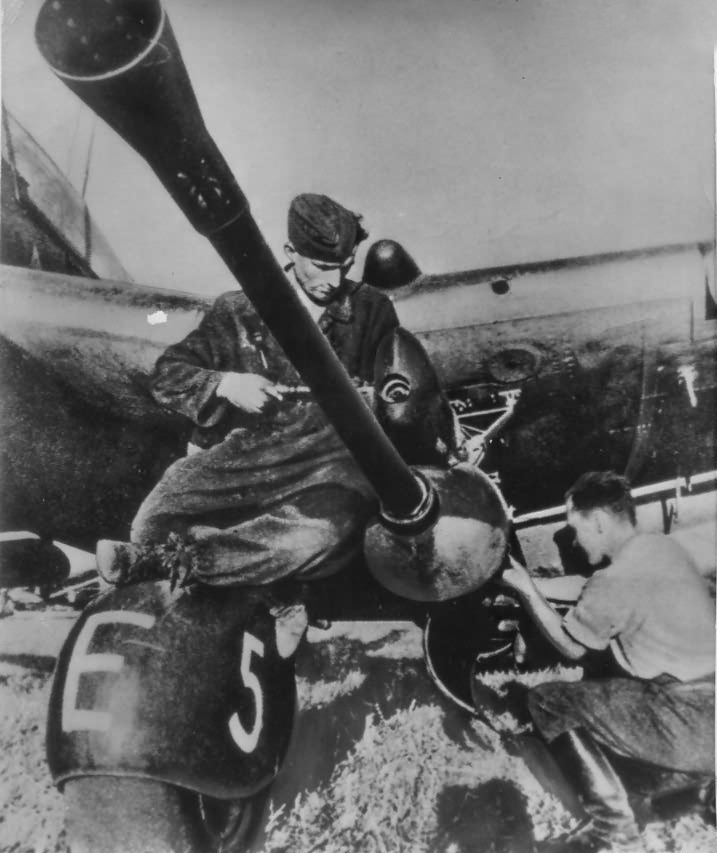
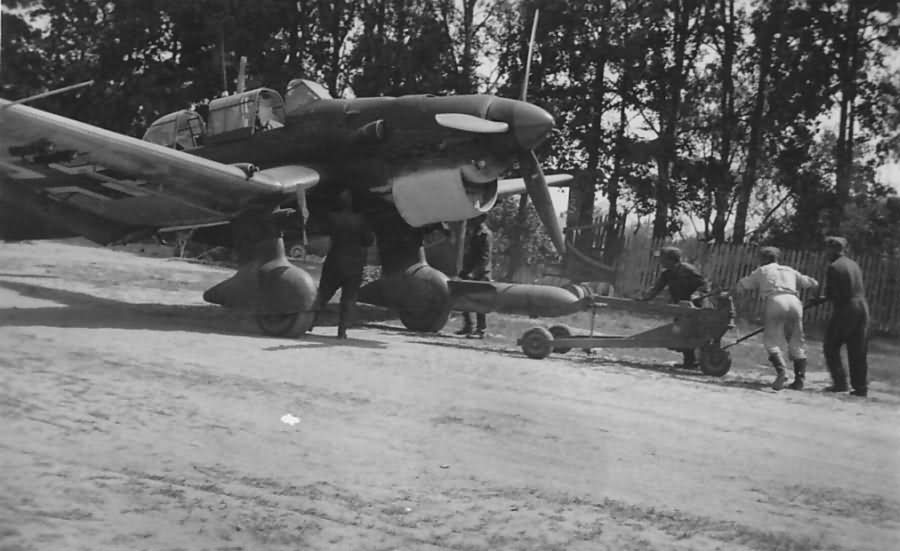
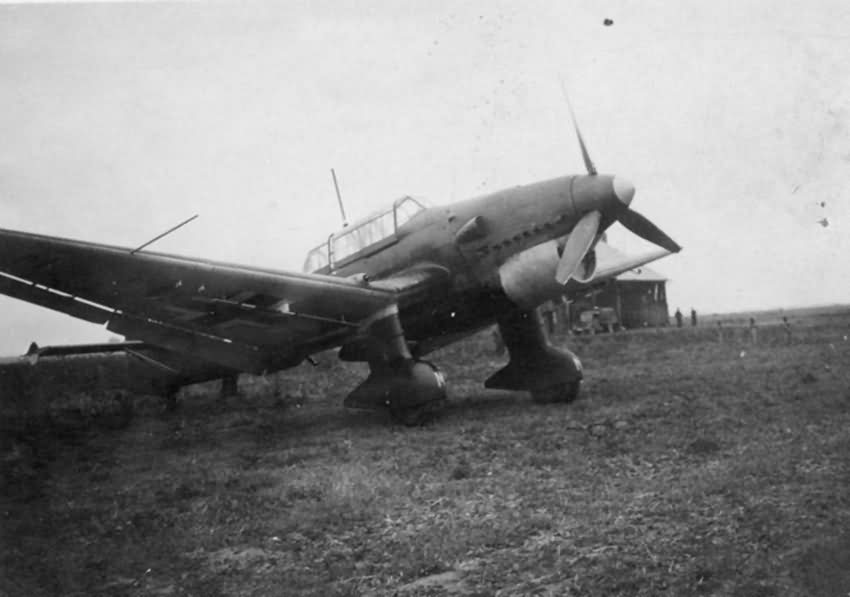
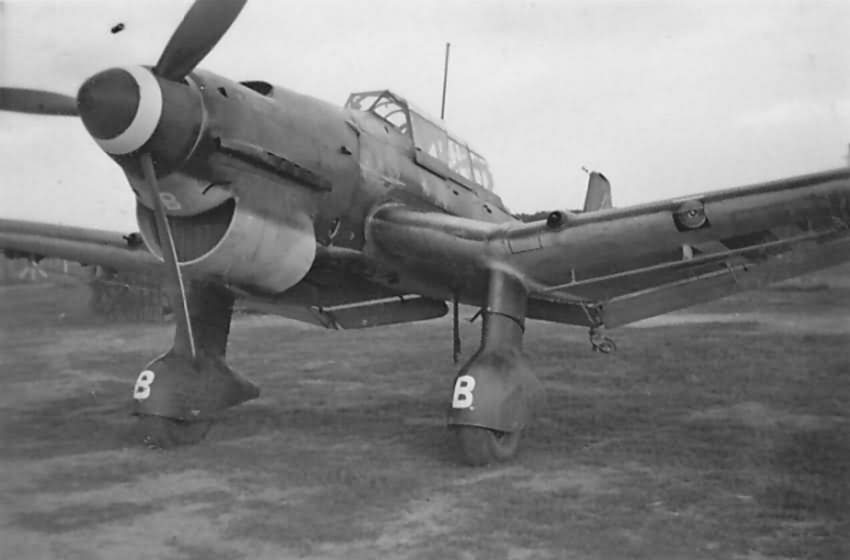
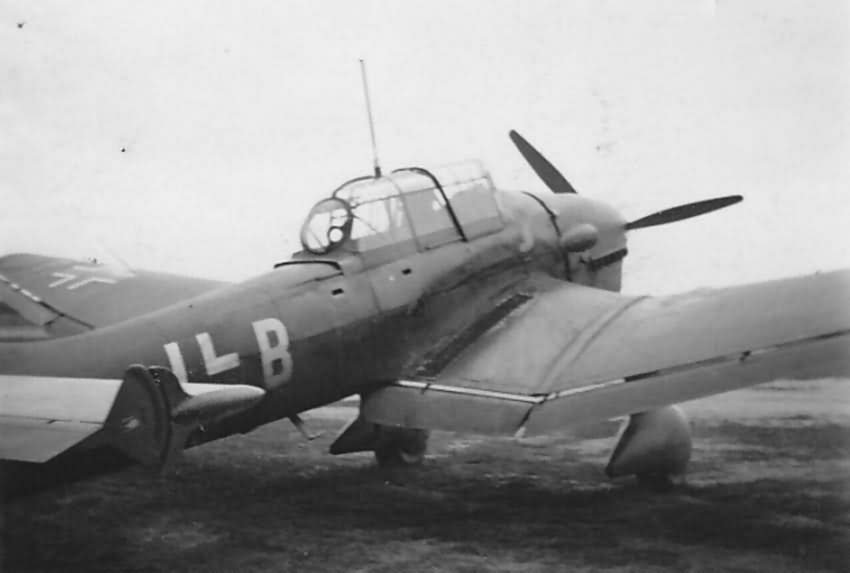
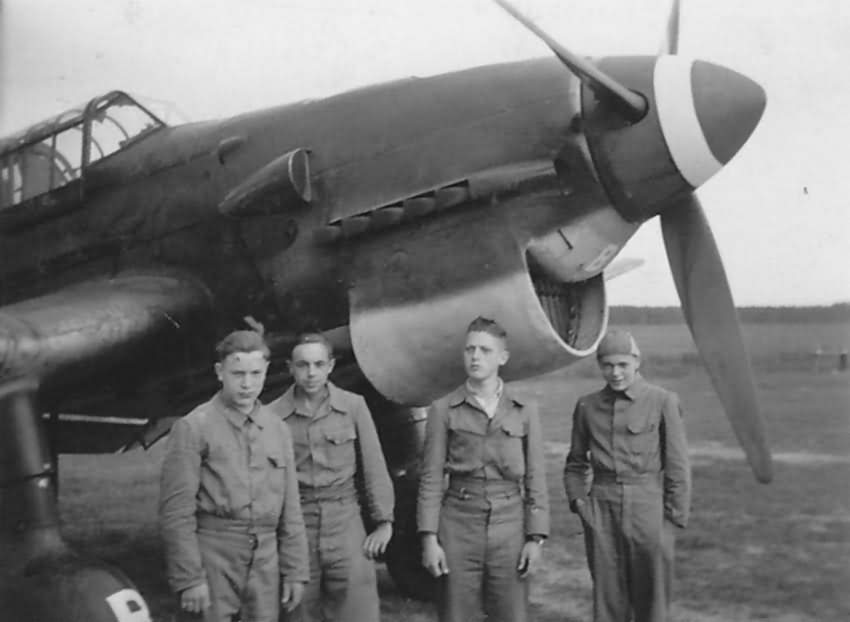
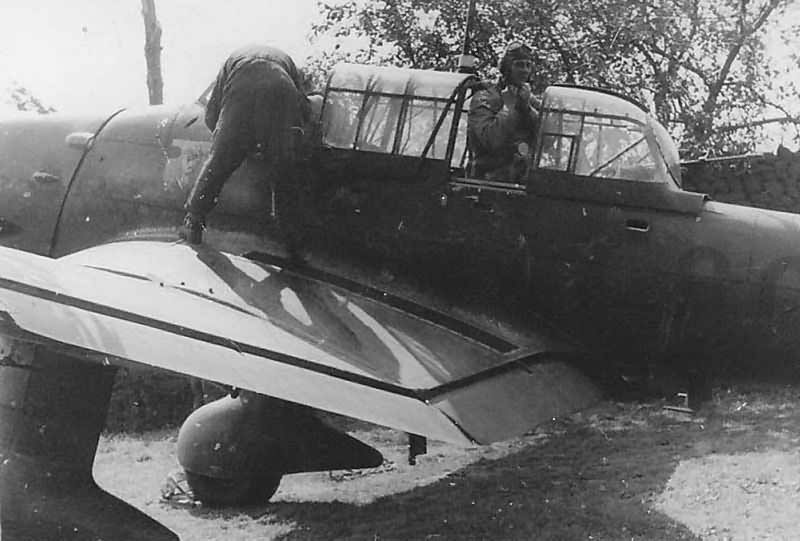
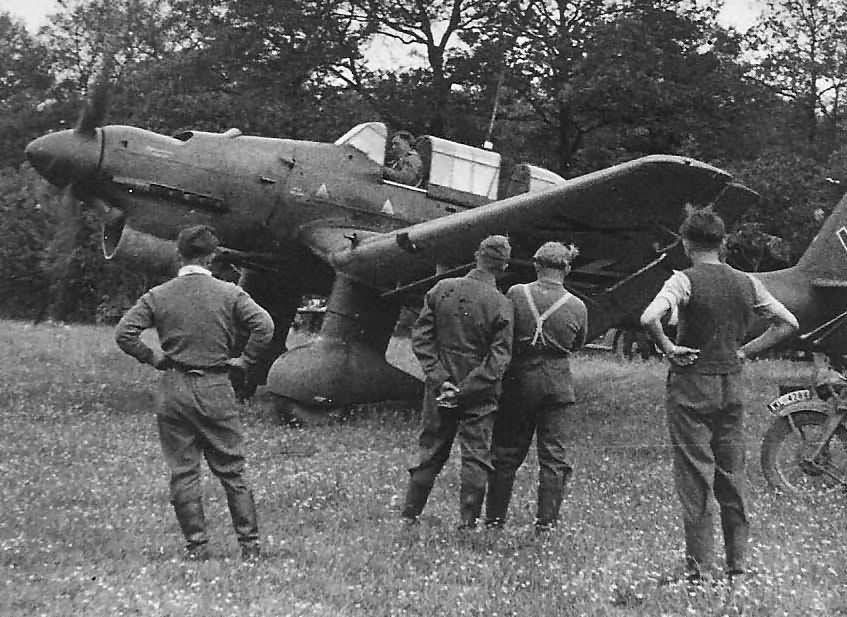
The Junkers Ju 87 Stuka (short for Sturzkampfflugzeug / “dive bomber”) was a German two-seat, all-metal dive-bomber and ground-attack aircraft developed by Hermann Pohlmann. First flown on September 17, 1935, the machine saw its combat debut in 1938 during the Spanish Civil War and became a central propaganda symbol of Luftwaffe power, instantly recognizable by its inverted gull wings, fixed spatted landing gear, and the terrifying Jericho Trompeten (Jericho Trumpets)—wind-driven sirens that demoralized ground troops during steep dives. The design featured advanced innovations, including an automatic pull-up system to recover the aircraft if the pilot lost consciousness under high G-forces, though it remained slow, unmaneuverable, and vulnerable to enemy fighters without direct fighter escort. The Stuka achieved major tactical successes during the campaigns in Poland, Scandinavia, France, the Mediterranean, Crete, and the initial stages of Operation Barbarossa, despite suffering heavy losses during the Battle of Britain. Across its lifespan of over 6,500 units built between 1936 and 1944, the aircraft evolved through several key variants: the early Ju 87A powered by Jumo 210 engines; the mass-produced Ju 87B with 1,000 hp Jumo 211 engines and sirened spats; the long-range Ju 87R with underwing drop tanks for maritime strikes; the carrier-capable Ju 87C intended for the Graf Zeppelin; and the aerodynamic Ju 87D, which featured heavier armor, a twin-barrel MG 81Z defense gun, extended wings (D-5), and ordnance capacity up to 1,800 kg. Lacking a timely replacement, the Stuka remained in frontline service until the end of World War II—increasingly relegated to night-bombing missions as daytime ground-attack roles were assumed by the Focke-Wulf Fw 190F.