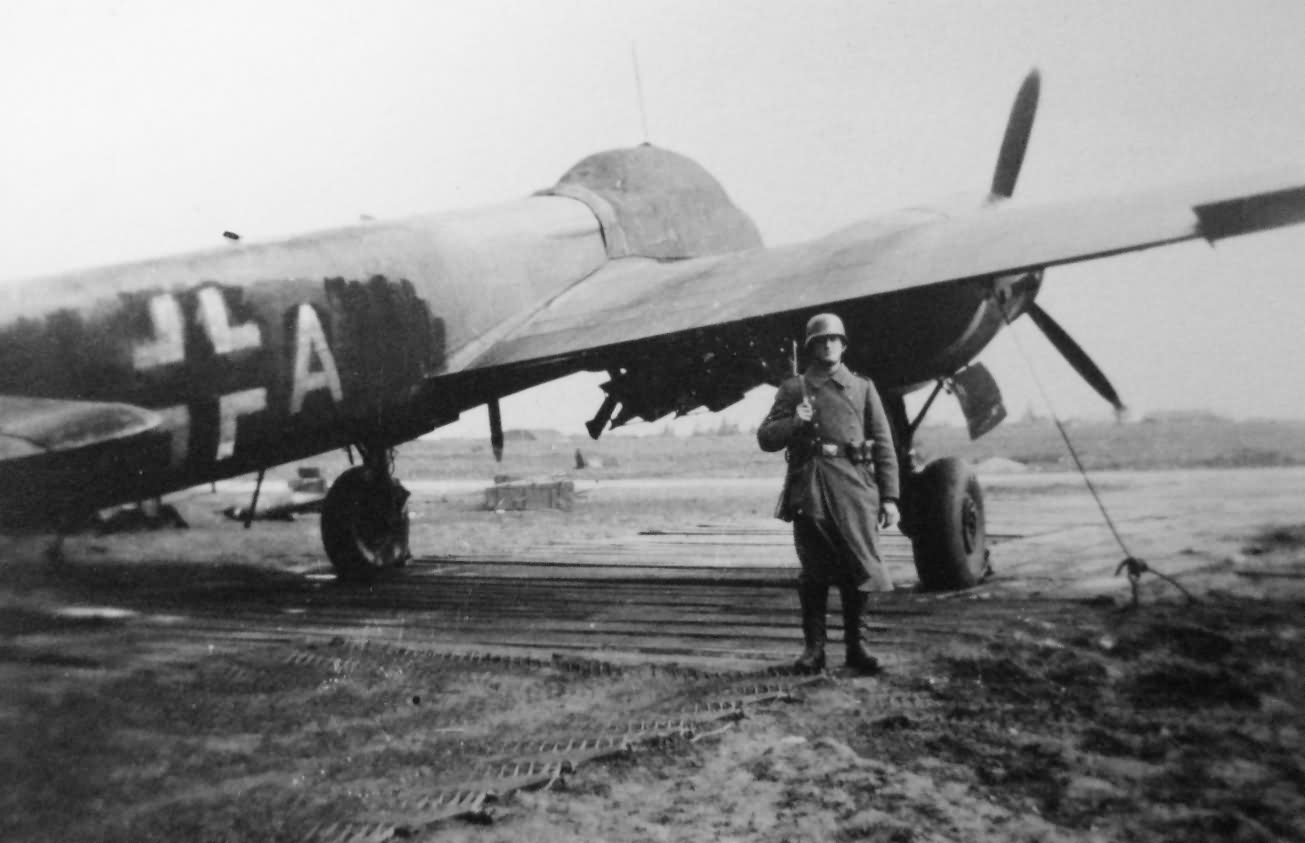
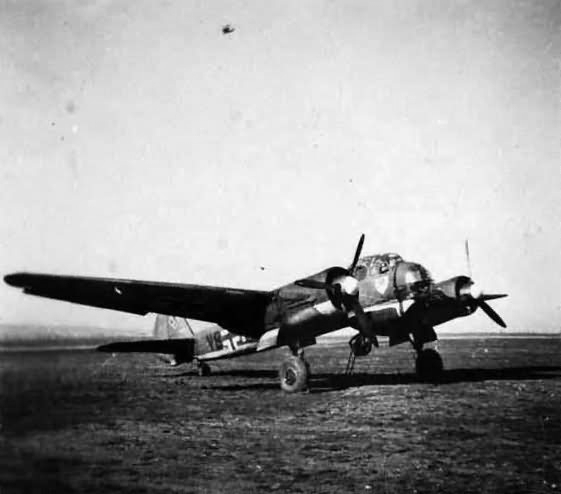
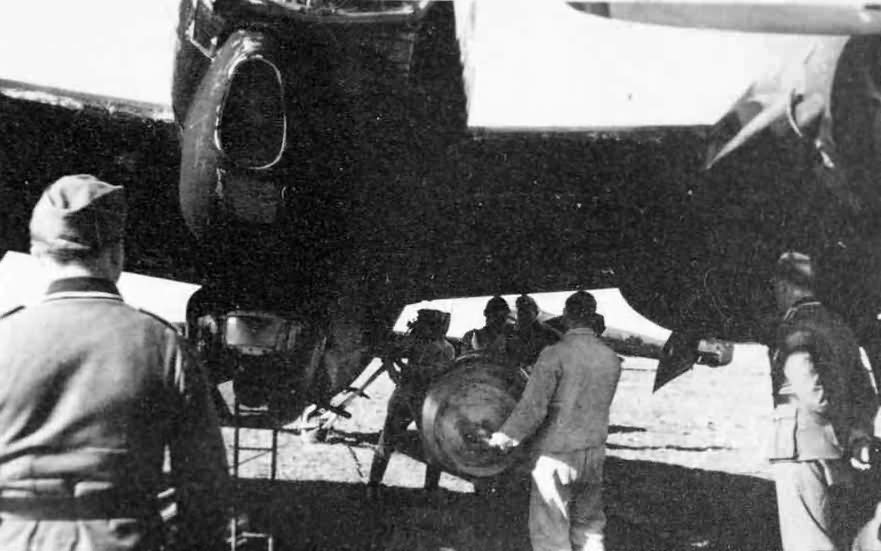
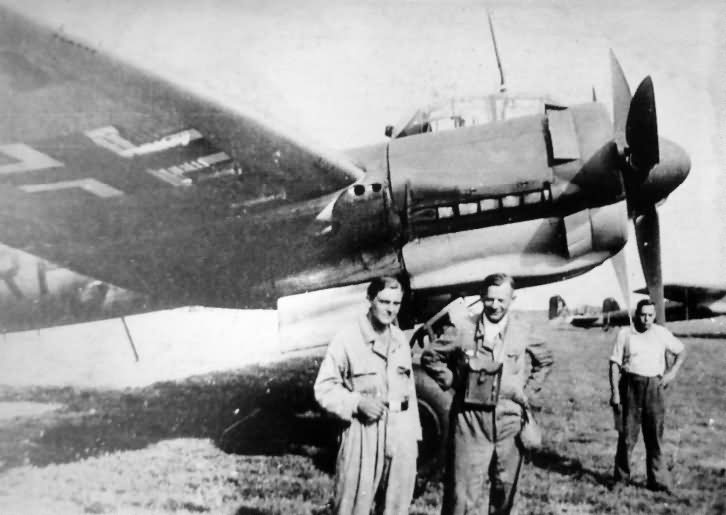
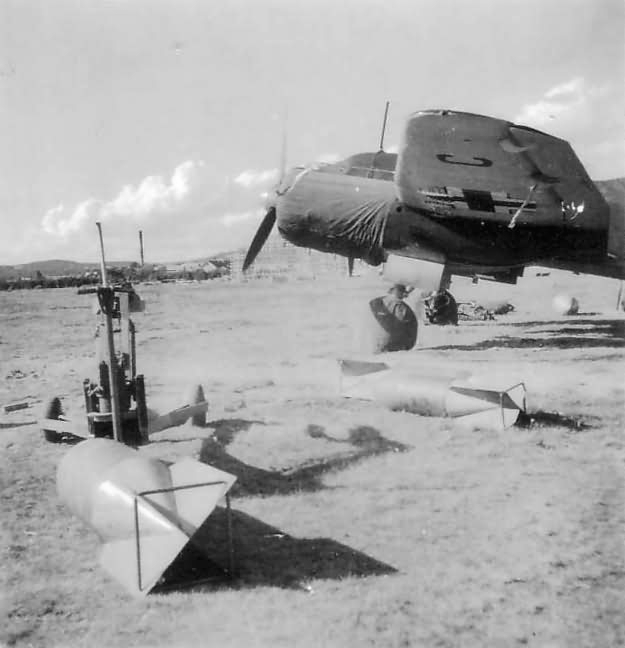
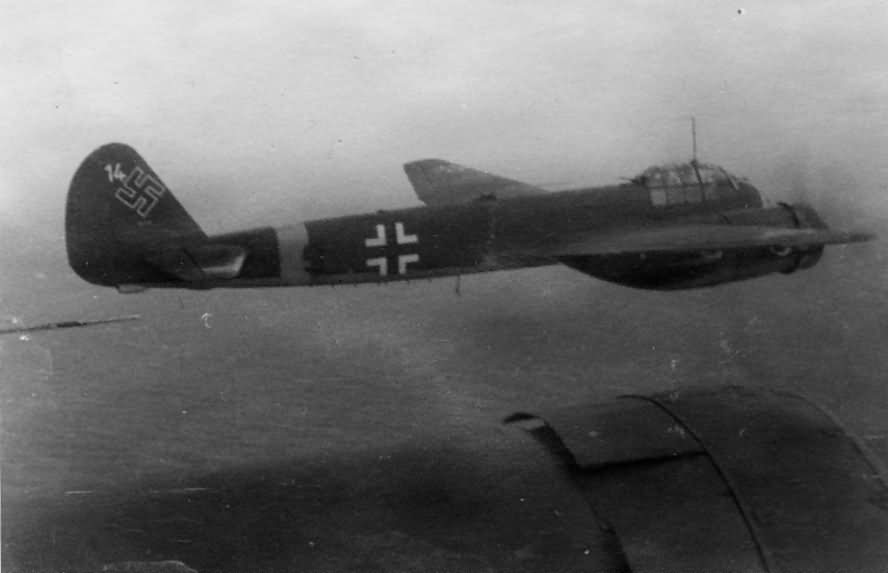
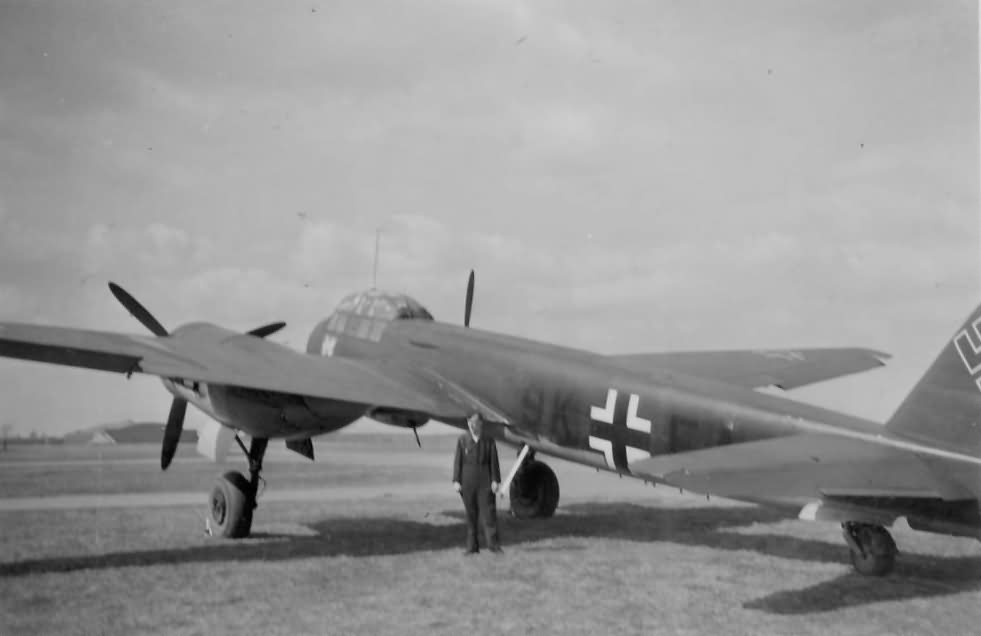
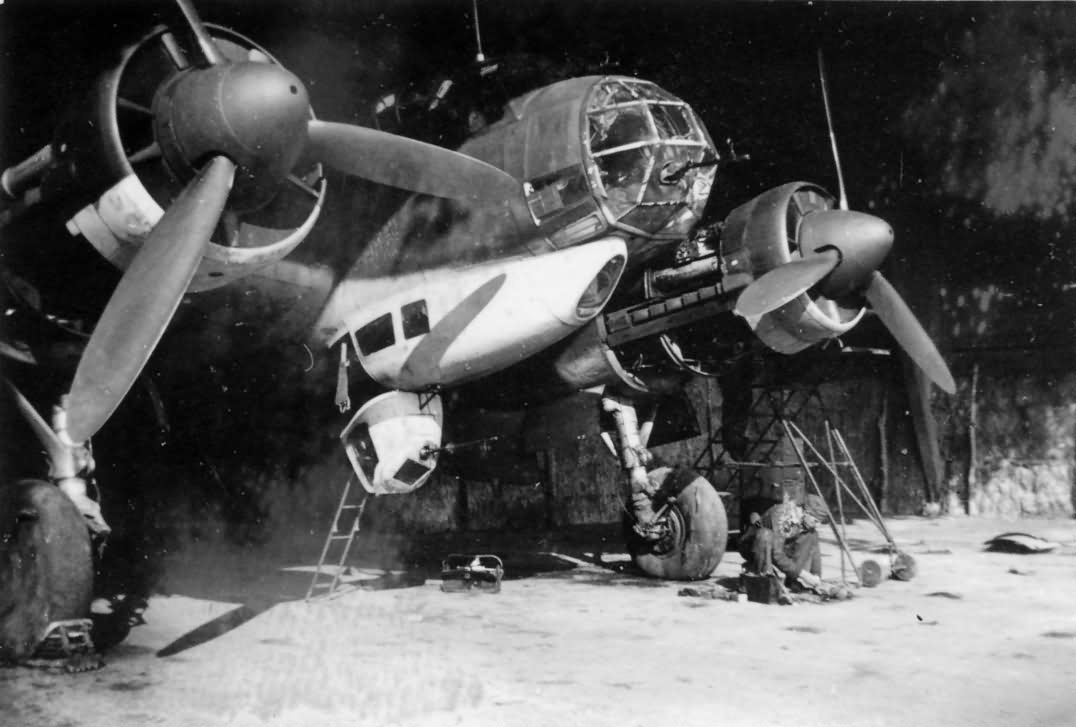
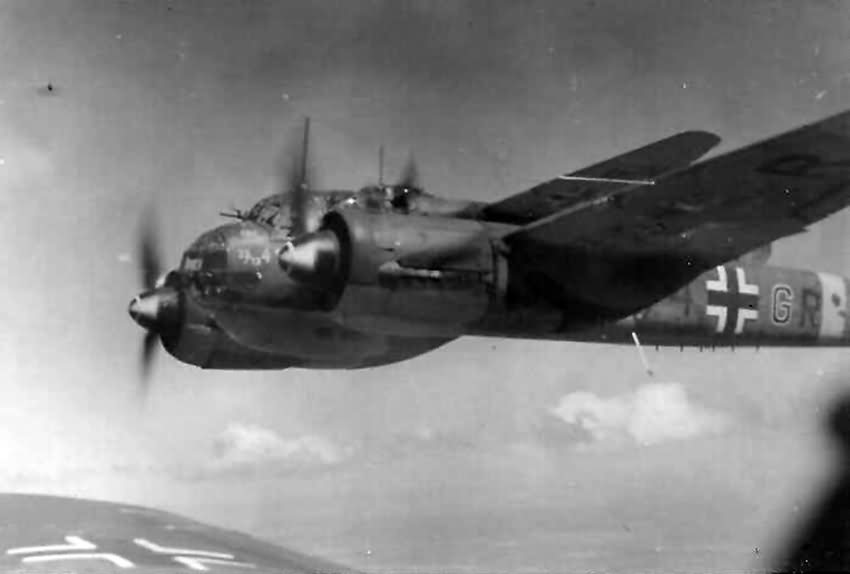
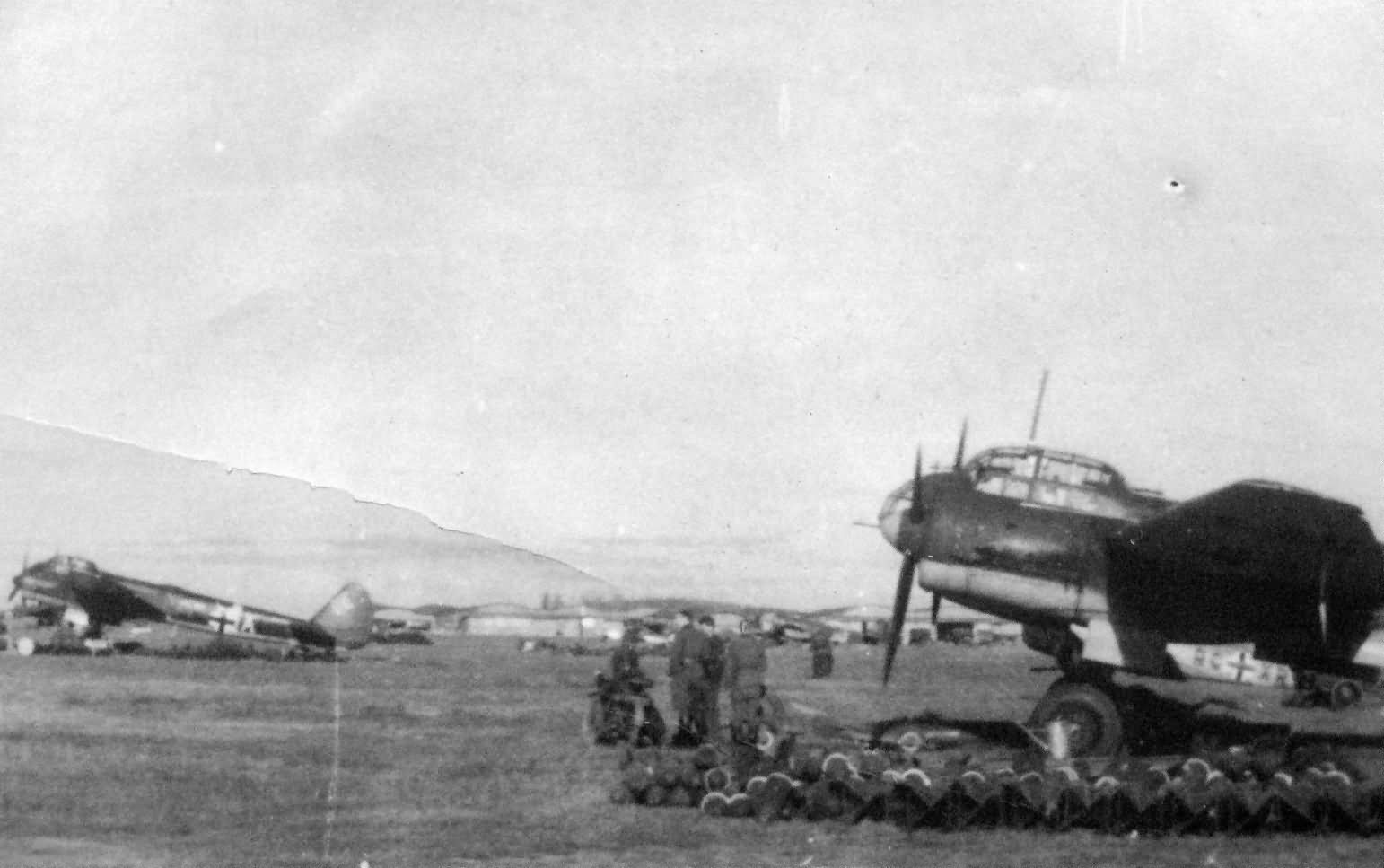
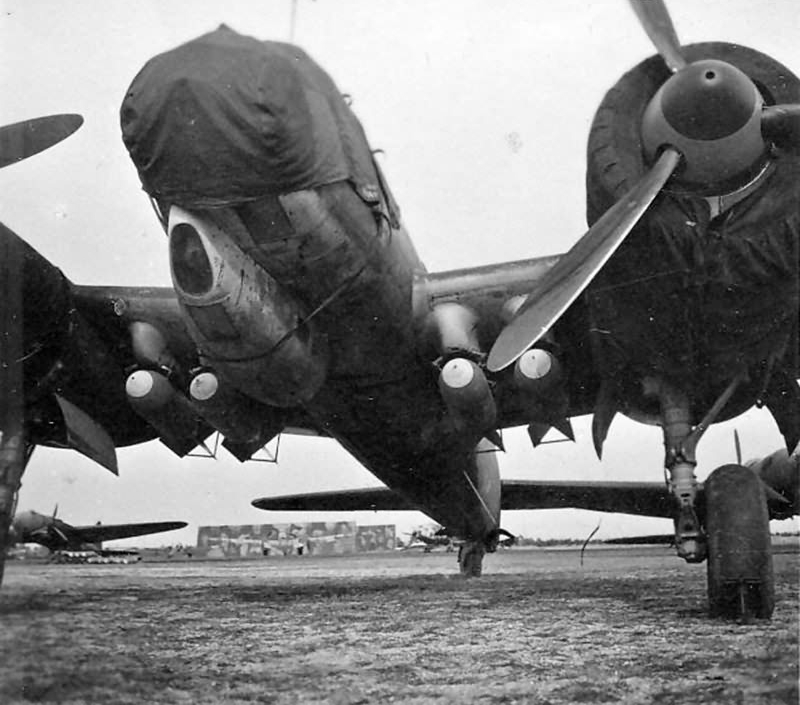
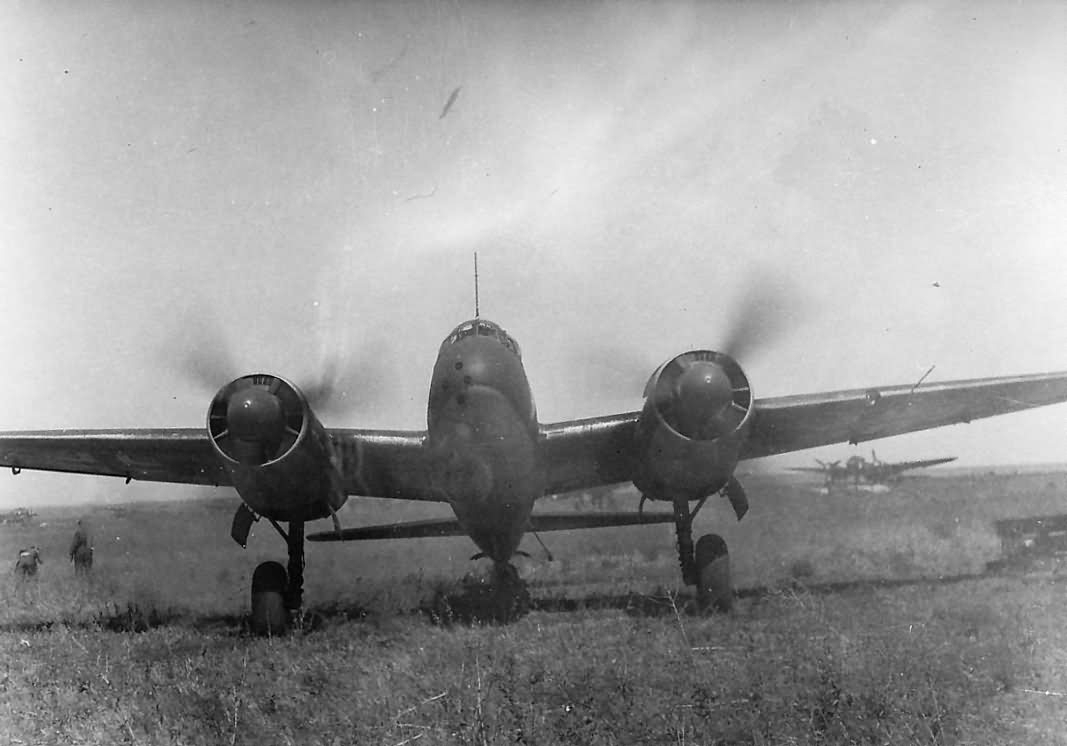
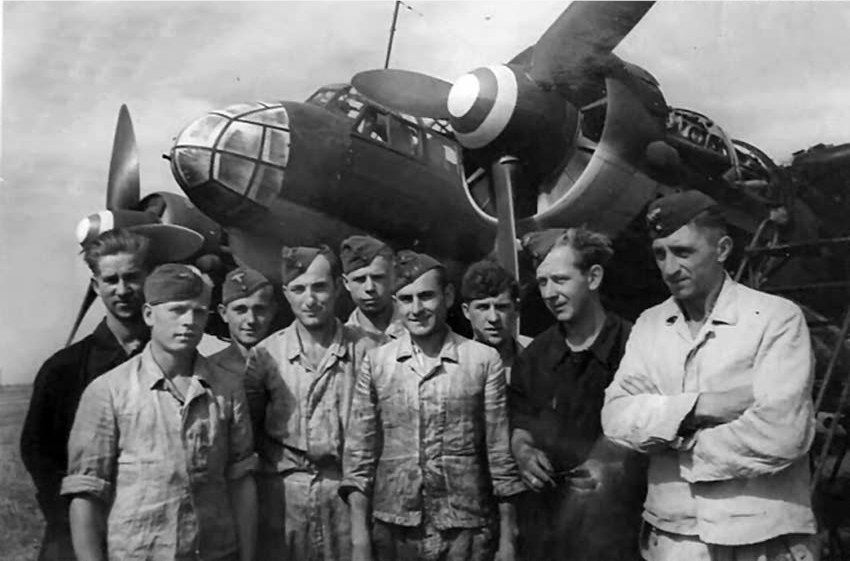
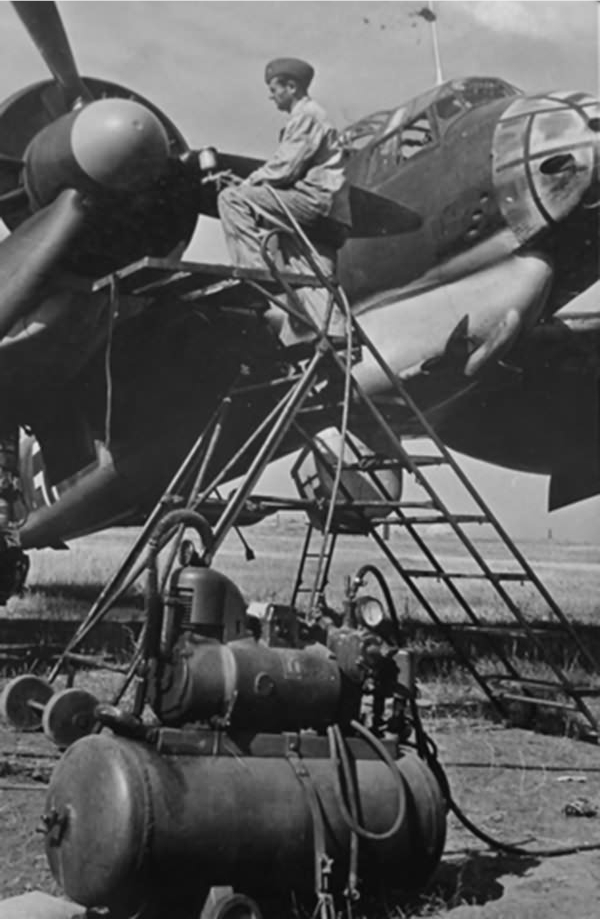
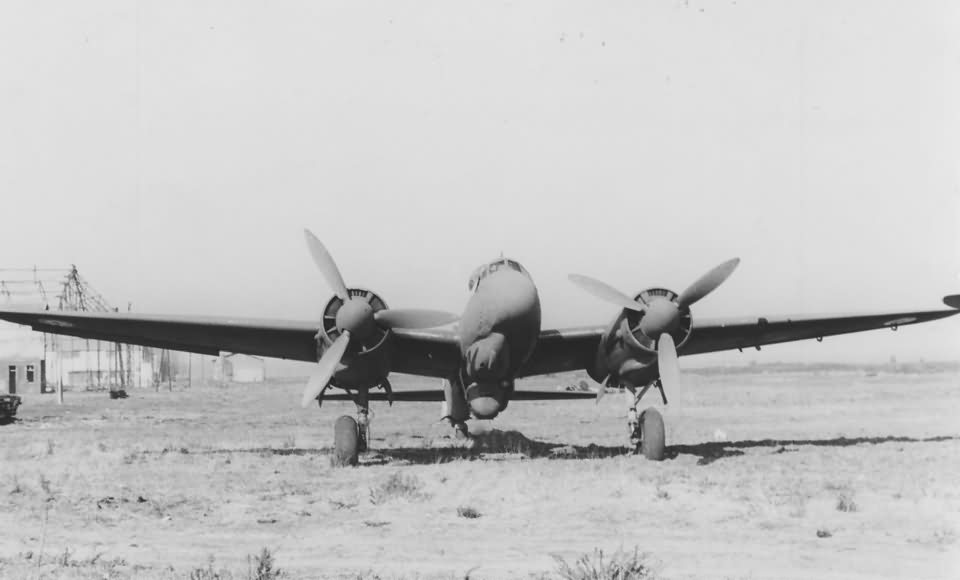
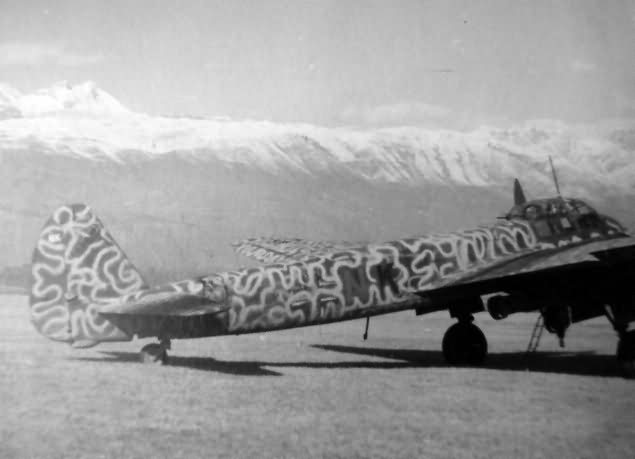
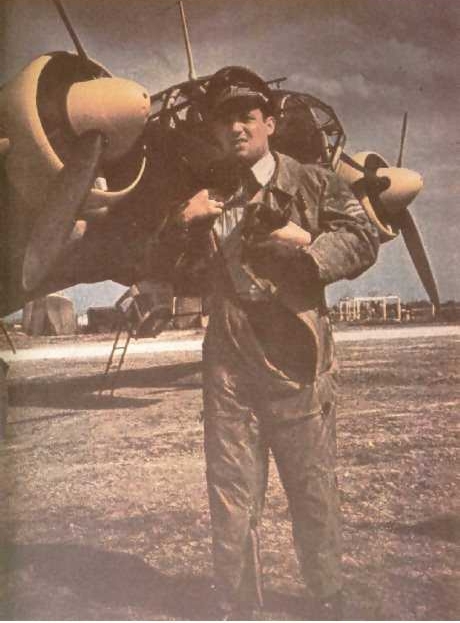
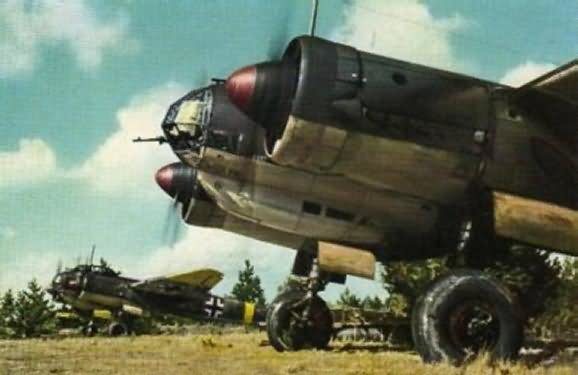
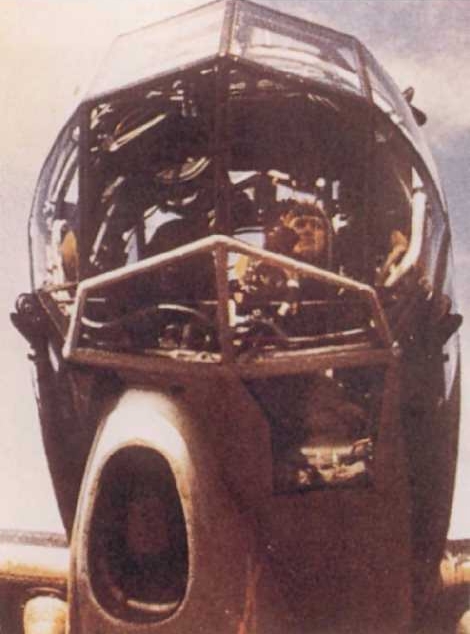
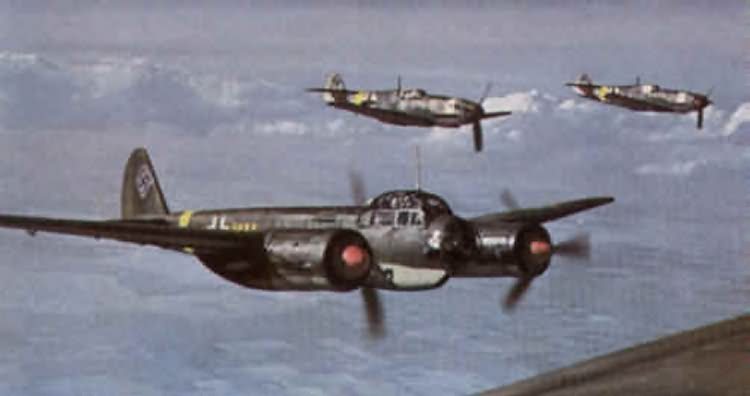
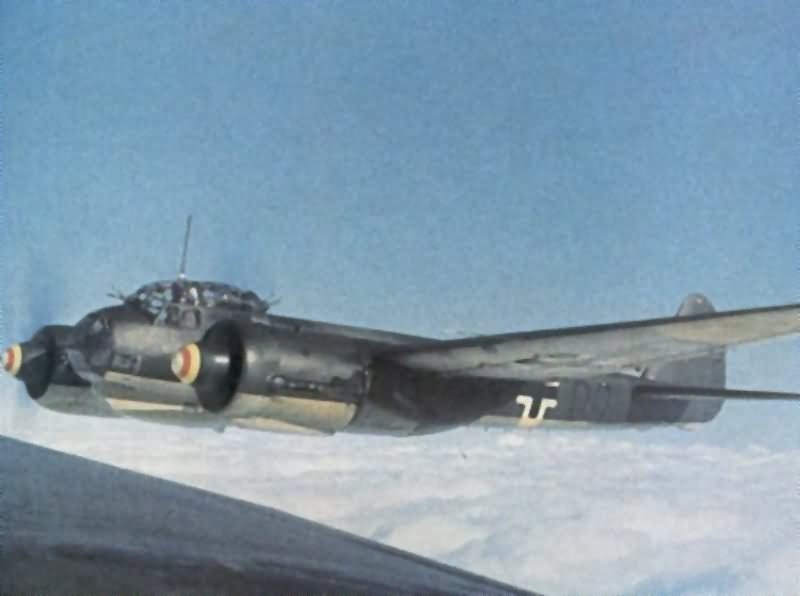
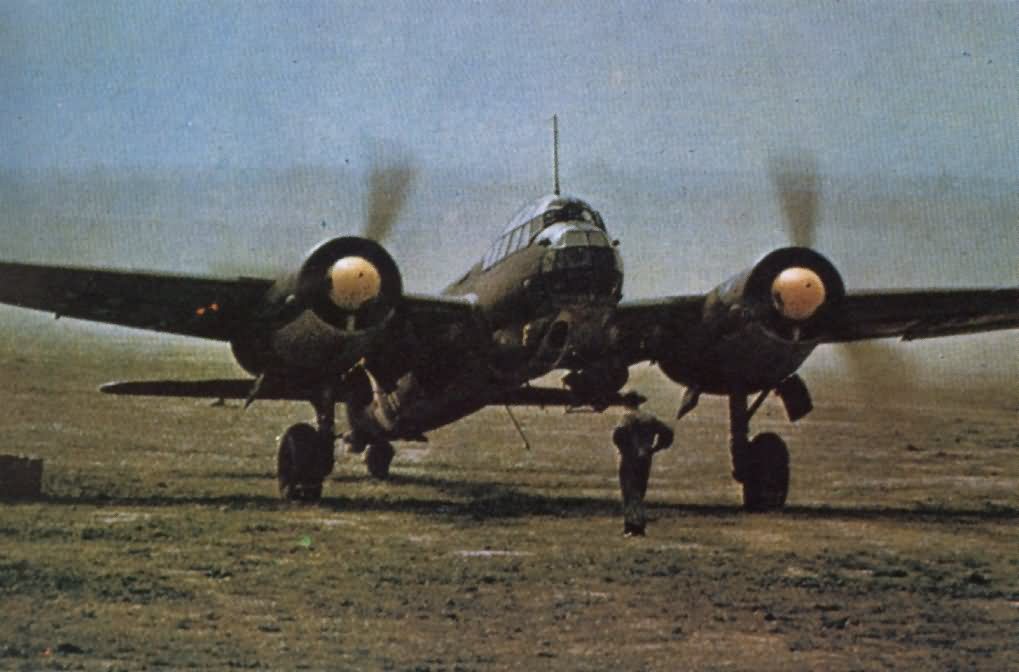
Junkers Ju 88 was a German two-engine multirole combat aircraft designed in the mid-1930s to satisfy the Reichsluftfahrtministerium requirement for a fast bomber (Schnellbomber) capable of reaching speeds of 500 km/h with an 800 kg bomb load. Engineered under Ernst Zindel alongside hired American stress-skin aviation specialists, the aircraft moved away from corrugated metal to a smooth, aerodynamically clean duralumin skin. Following early testing of prototypes—including the Ju 88 V1 (first flown in December 1936) and the streamlined Ju 88 V5, which set a 1,000 km closed-circuit speed record of 517 km/h carrying a 2,000 kg payload in 1939—the type introduced advanced technical innovations, such as hydraulic landing gear that rotated wheels 90° into slender nacelles and low-pressure tires for unpaved airfields. Entering serial production in mid-1939 with the first Ju 88 A-1 units delivered that September, the Ju 88 proved to be one of the most versatile and heavily produced aircraft of World War II (competing in adaptability with the British de Havilland Mosquito), serving extensively across all fronts as a high-speed level bomber, dive-bomber, torpedo bomber, heavy fighter, night fighter, maritime patrol, and reconnaissance aircraft.