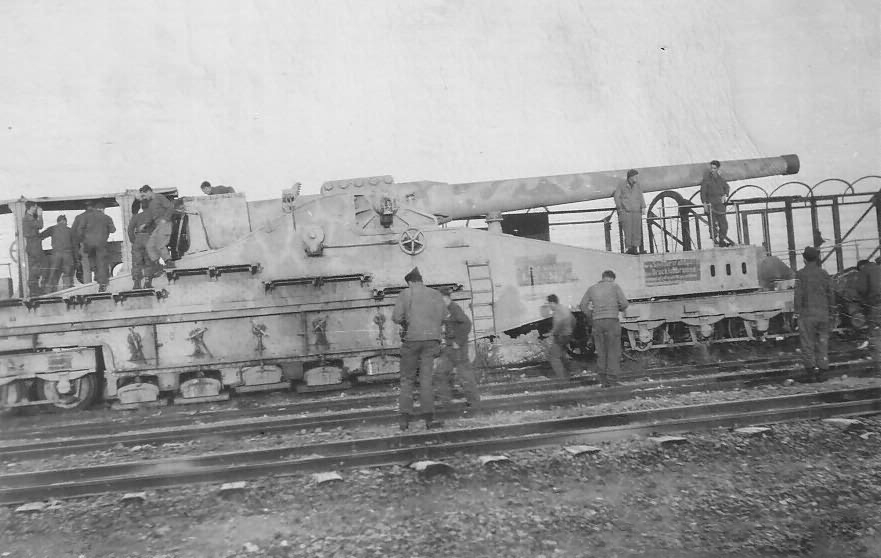
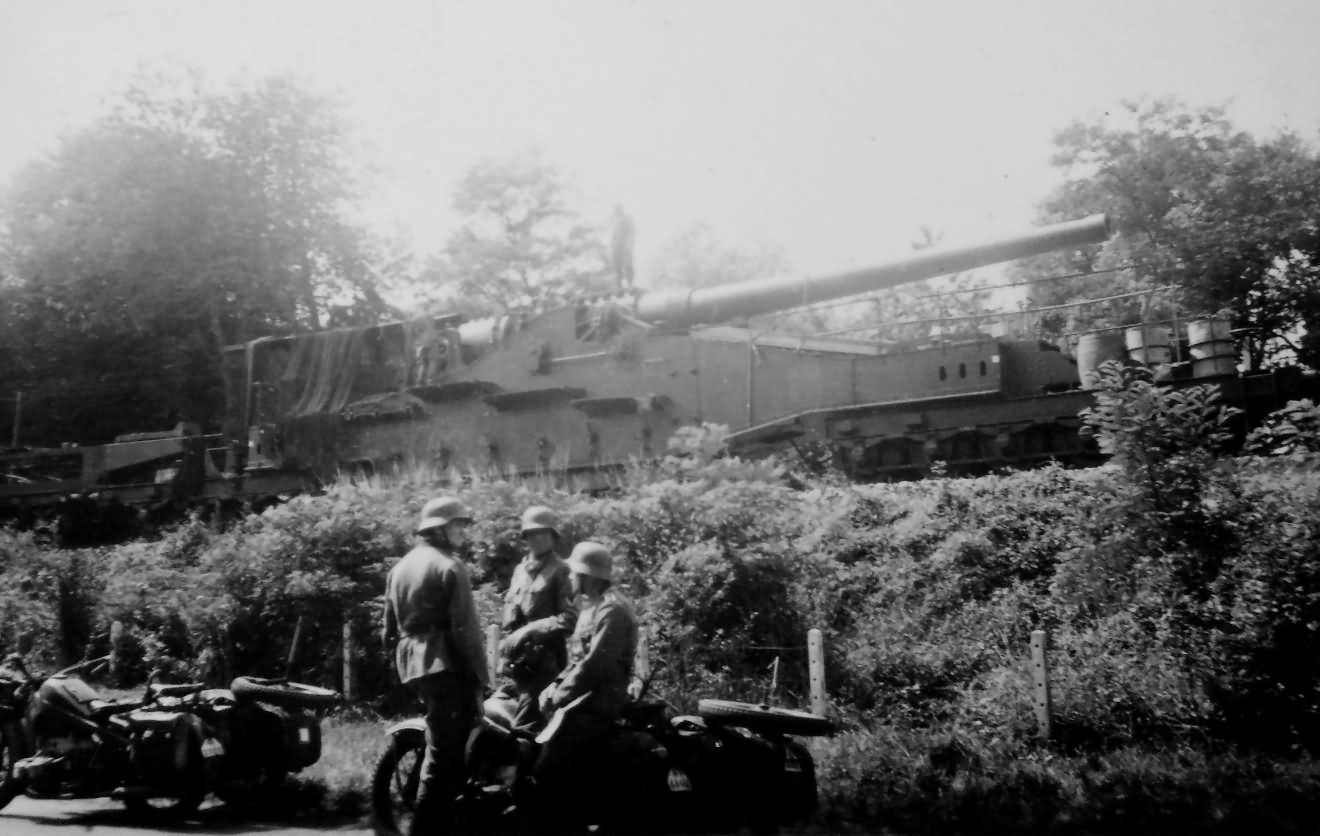
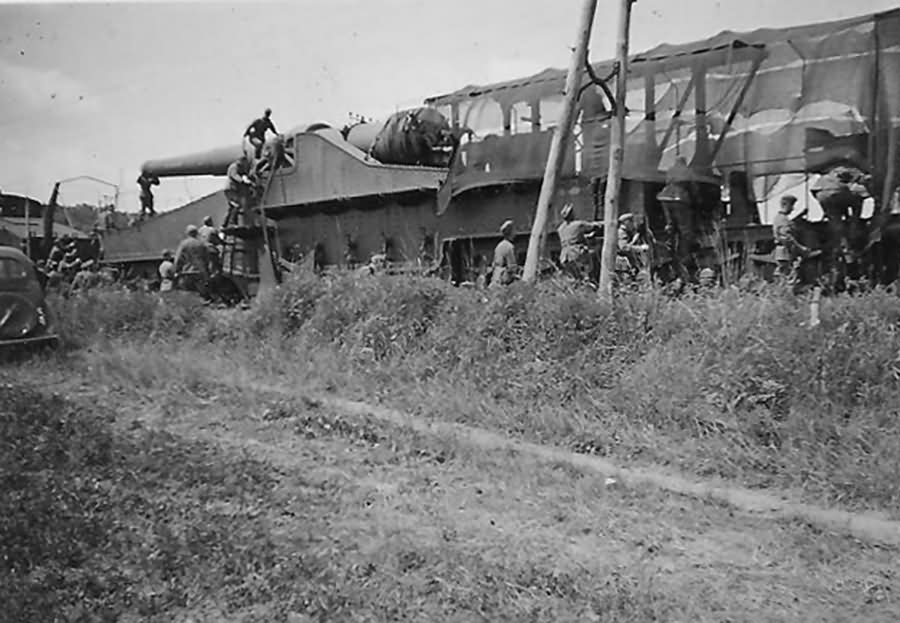
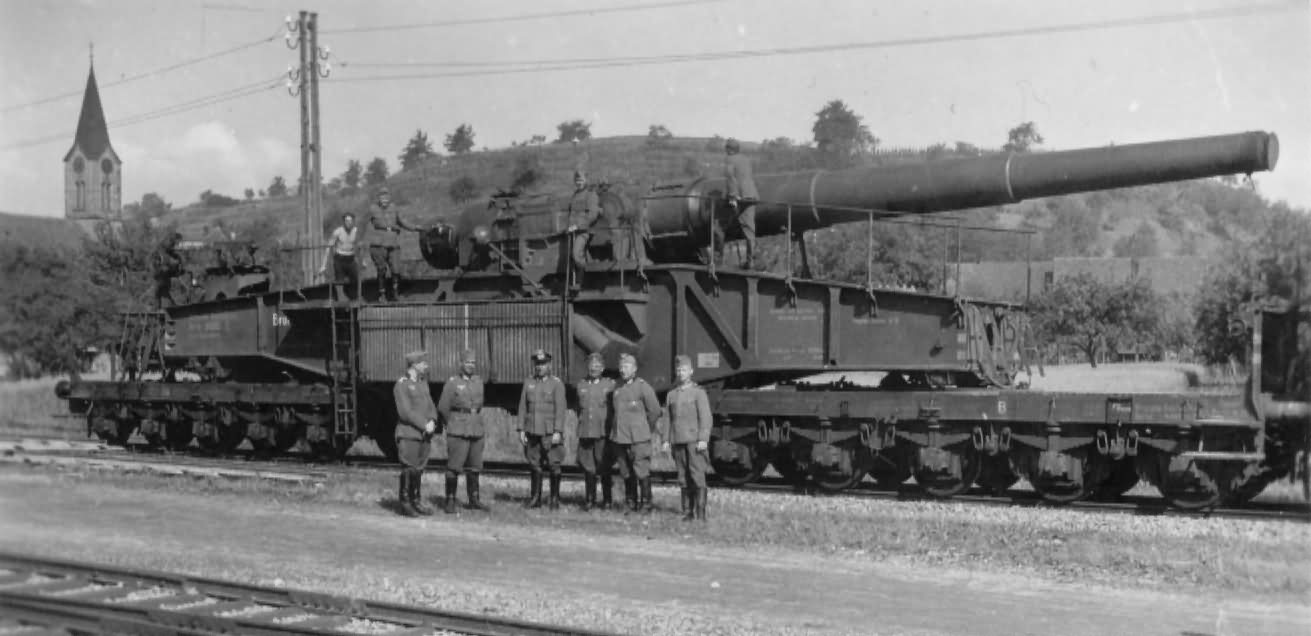
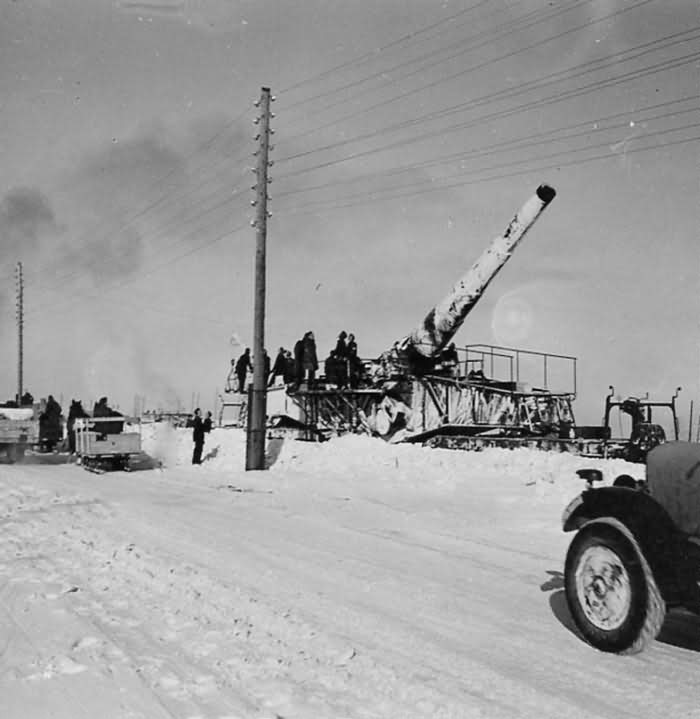
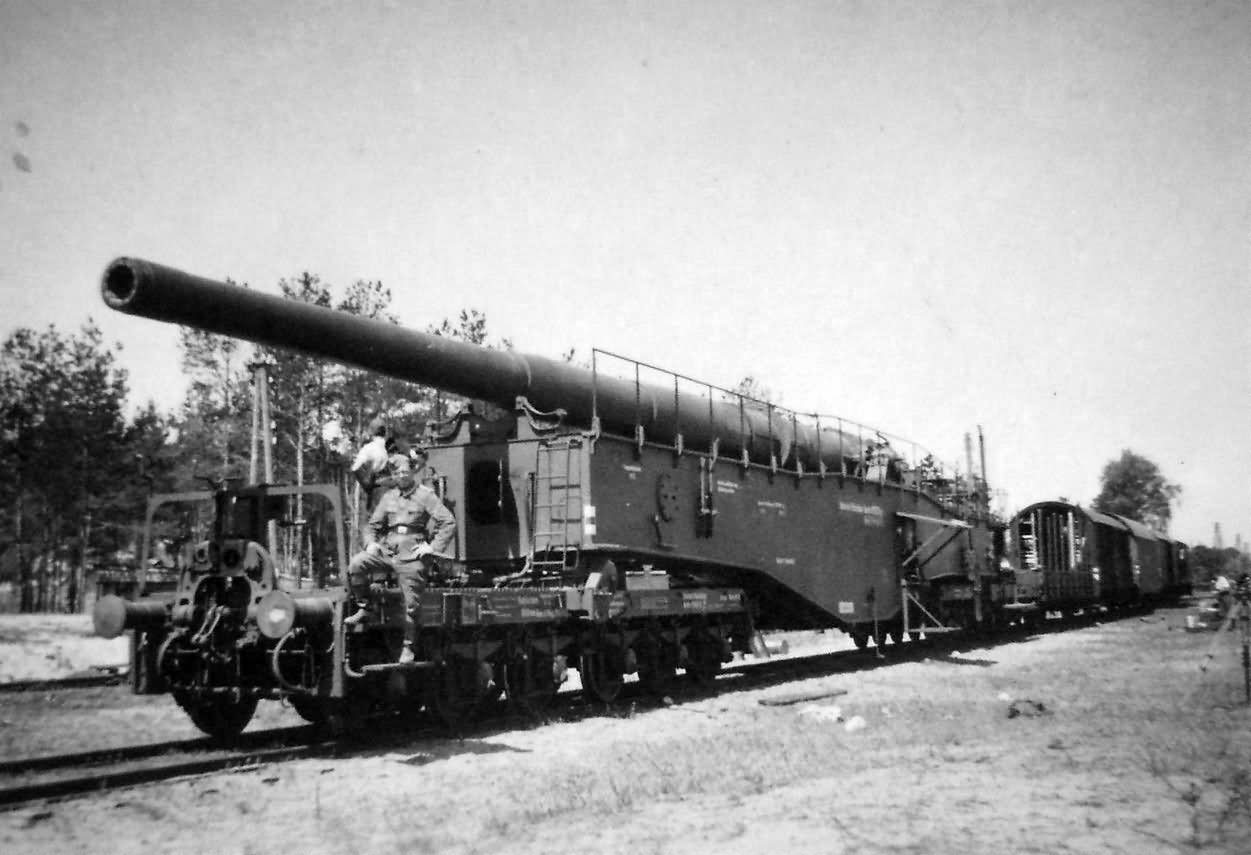
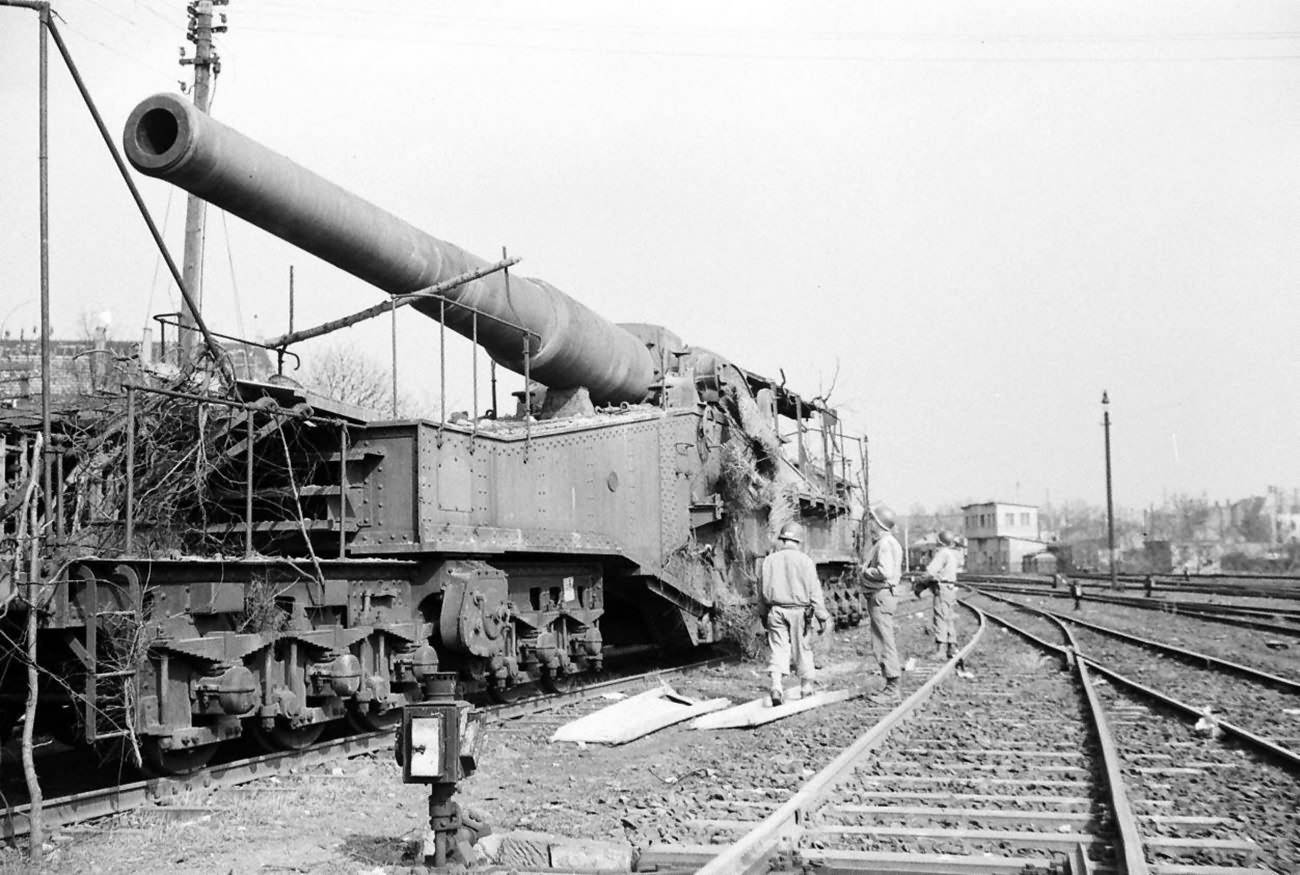
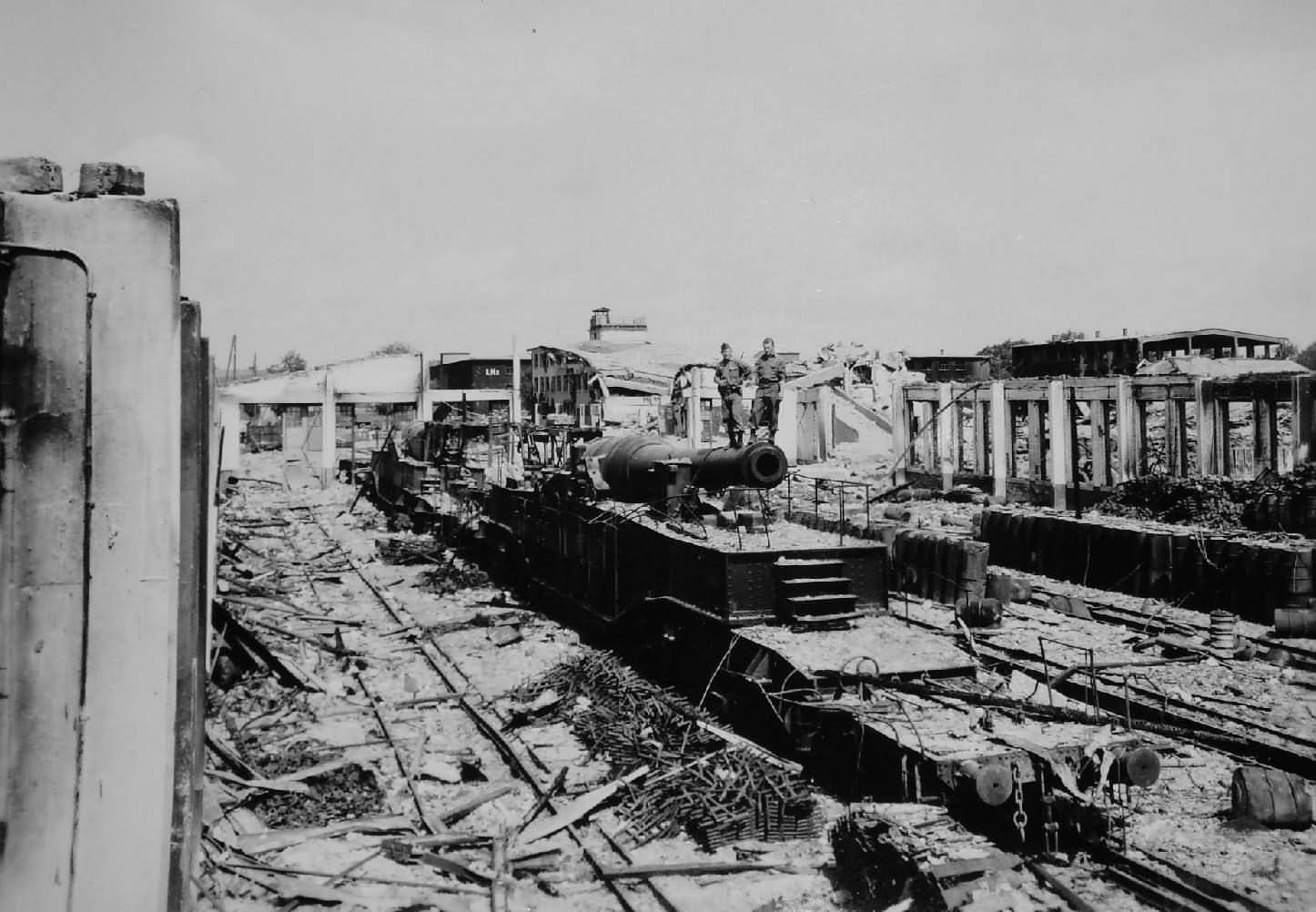
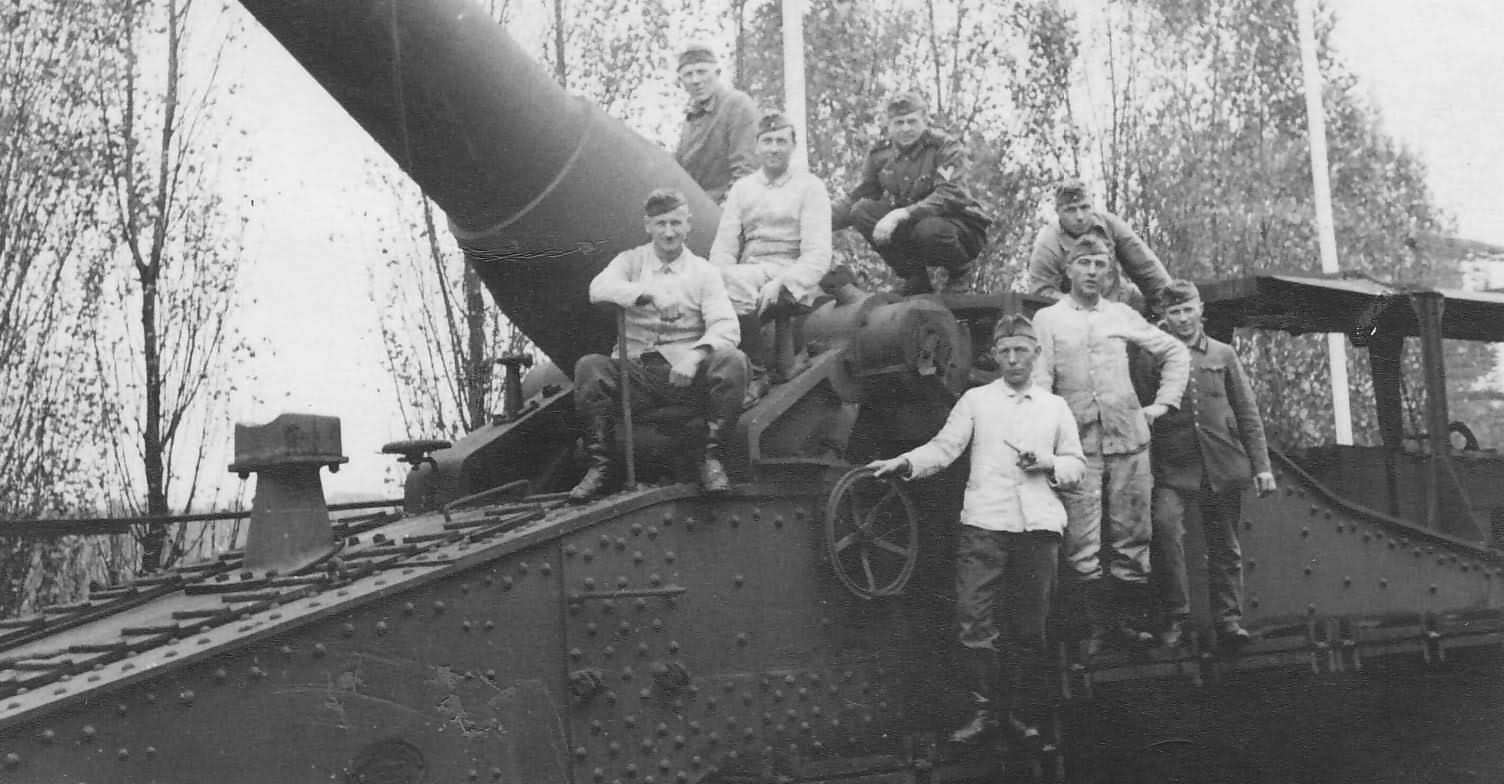
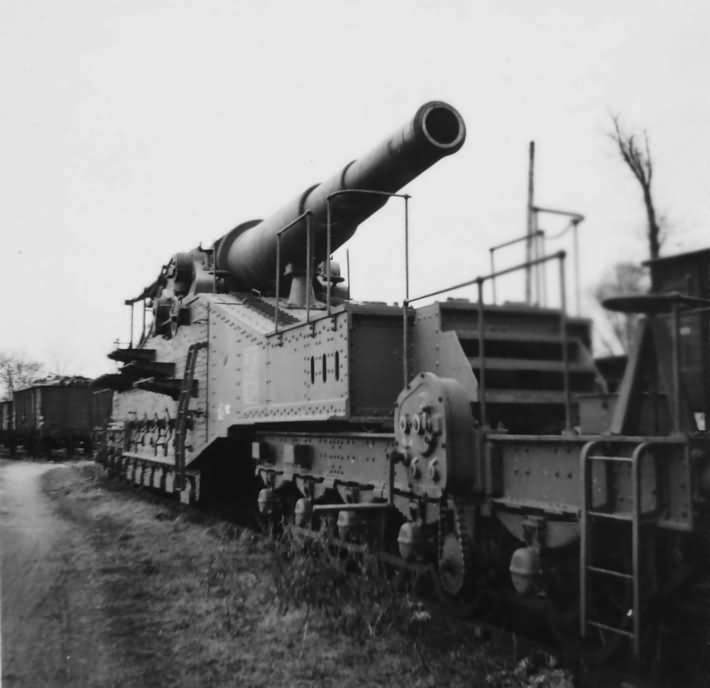
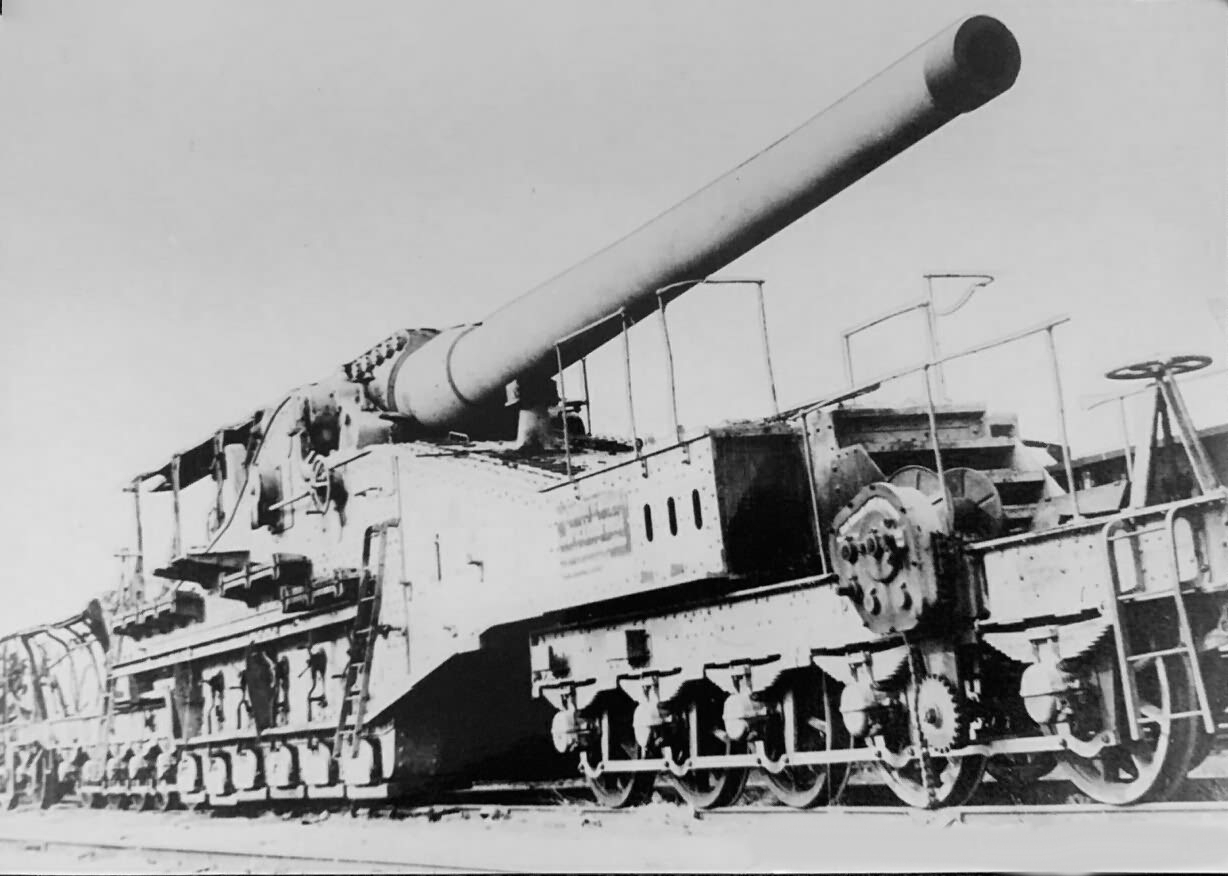
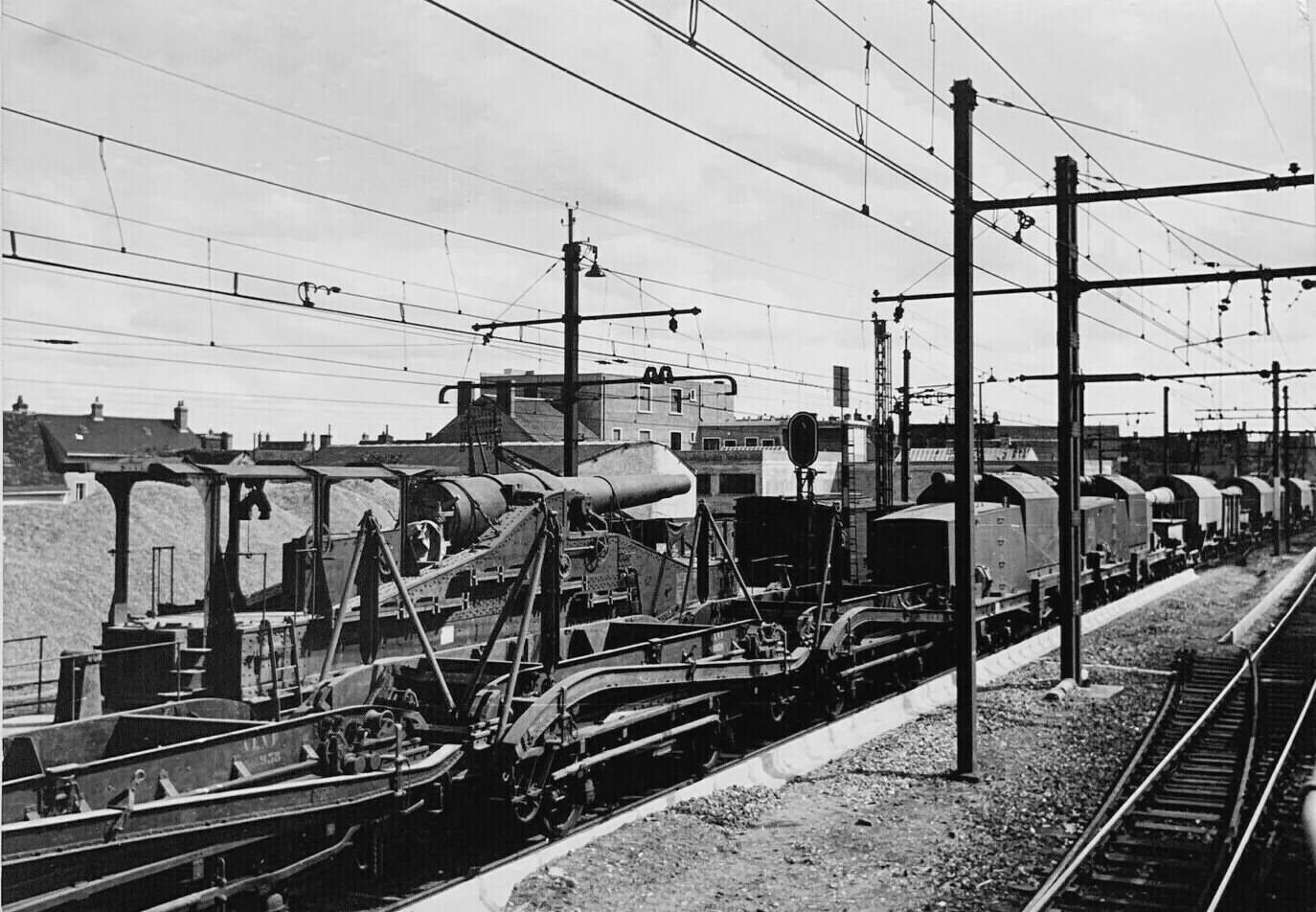
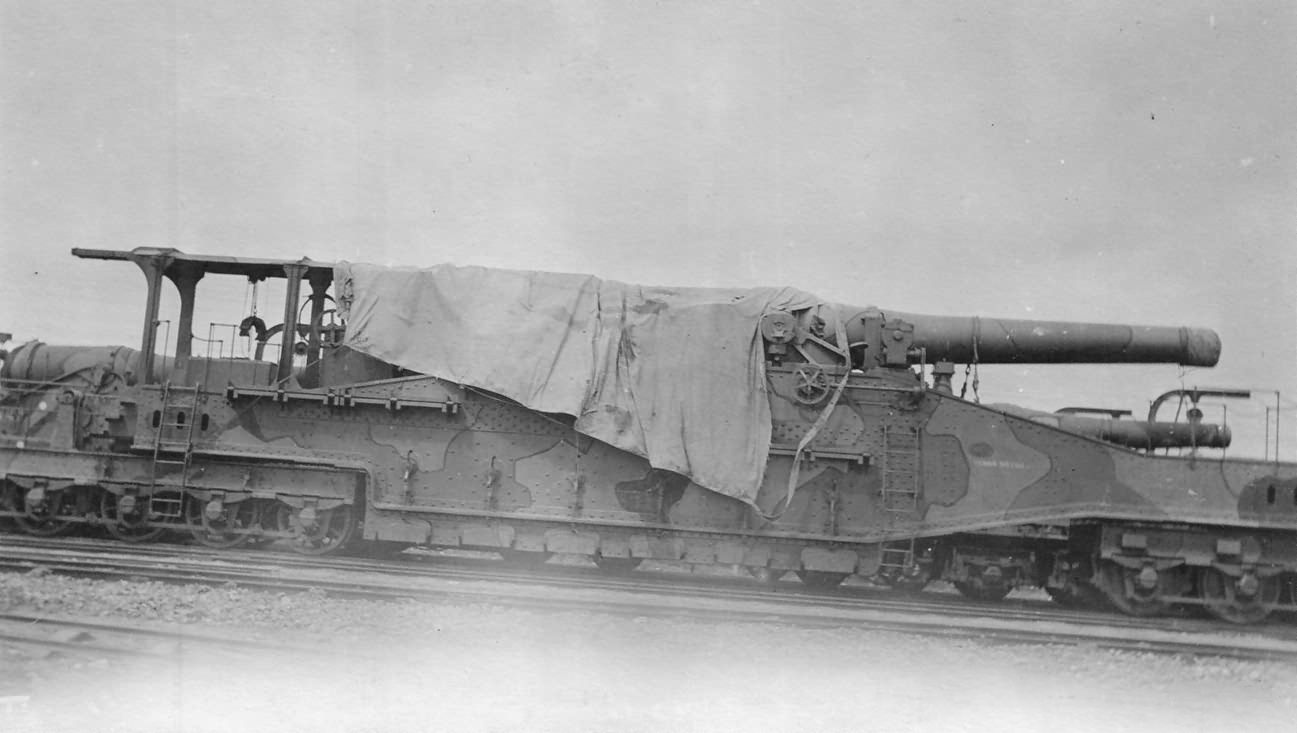
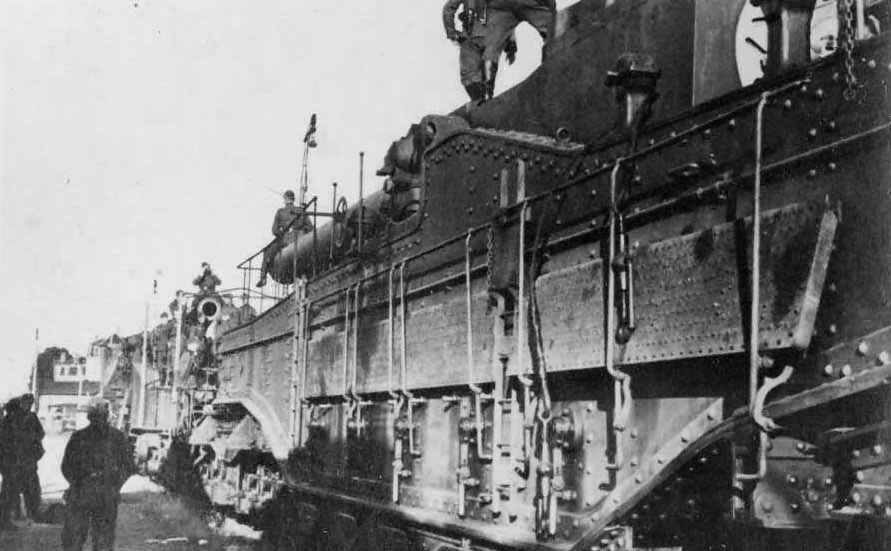
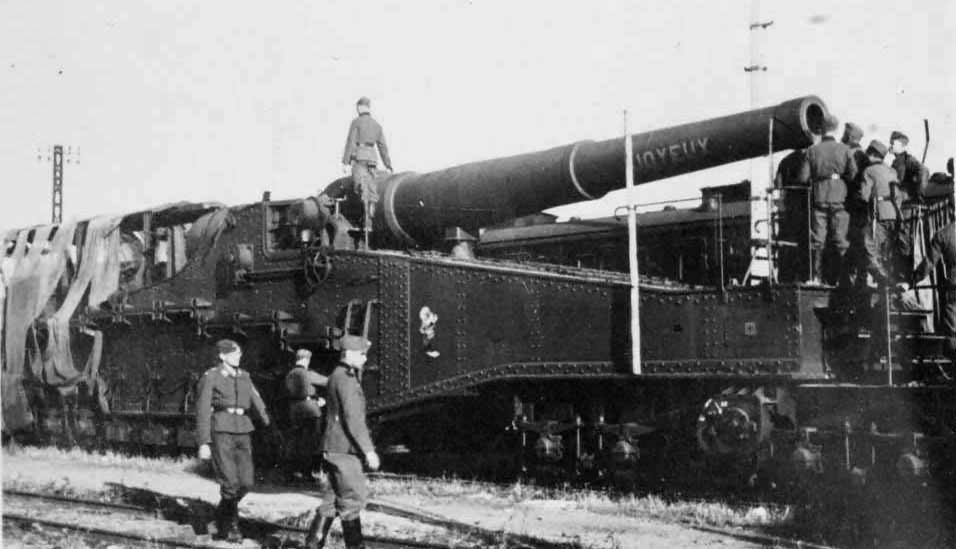
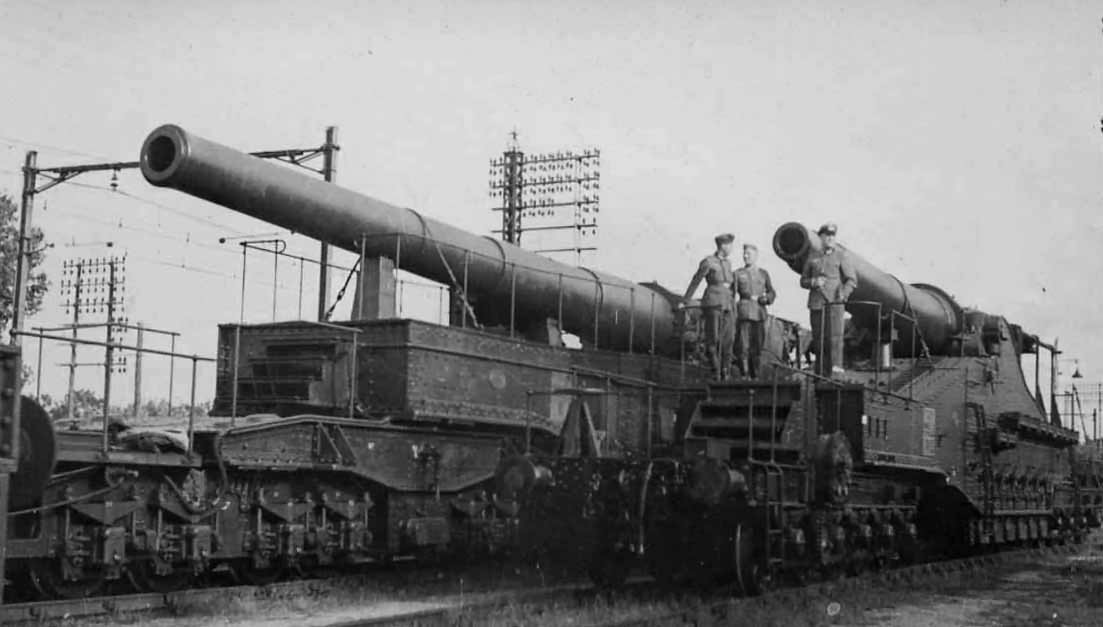
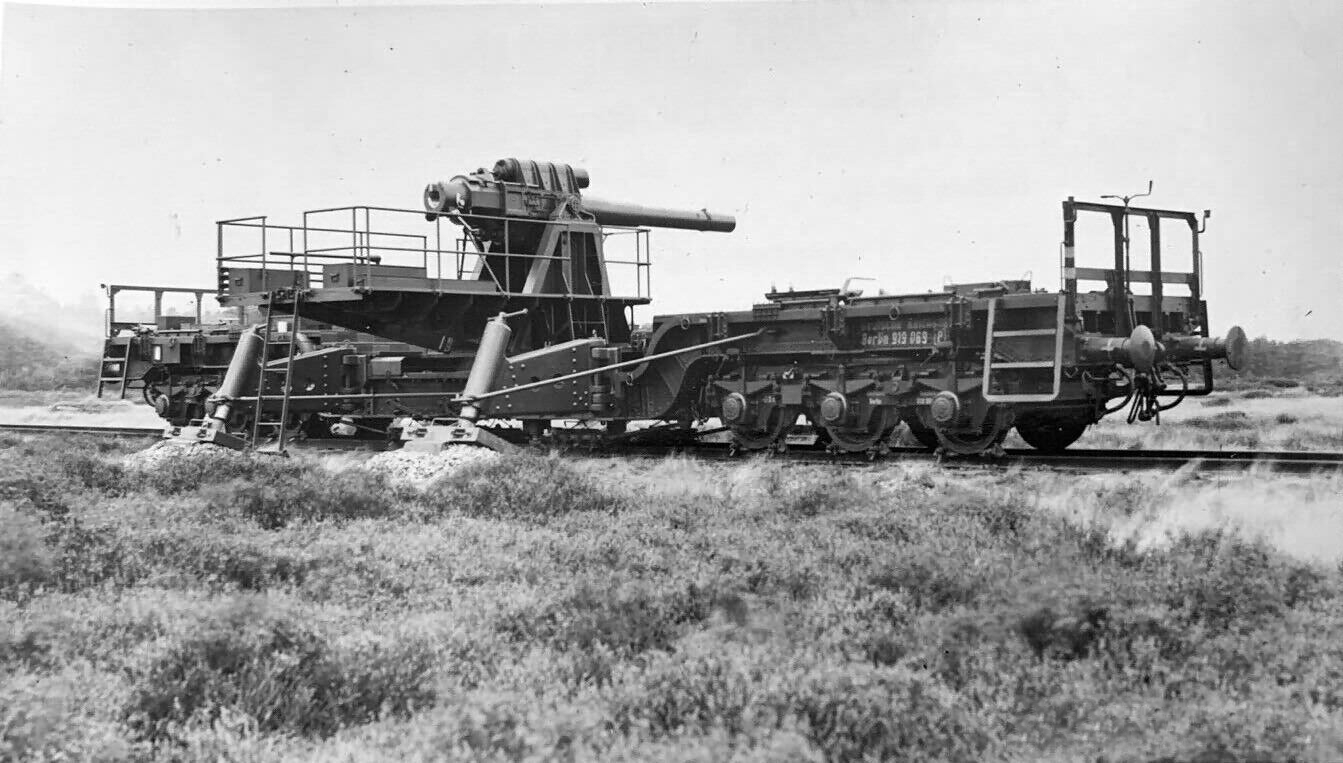
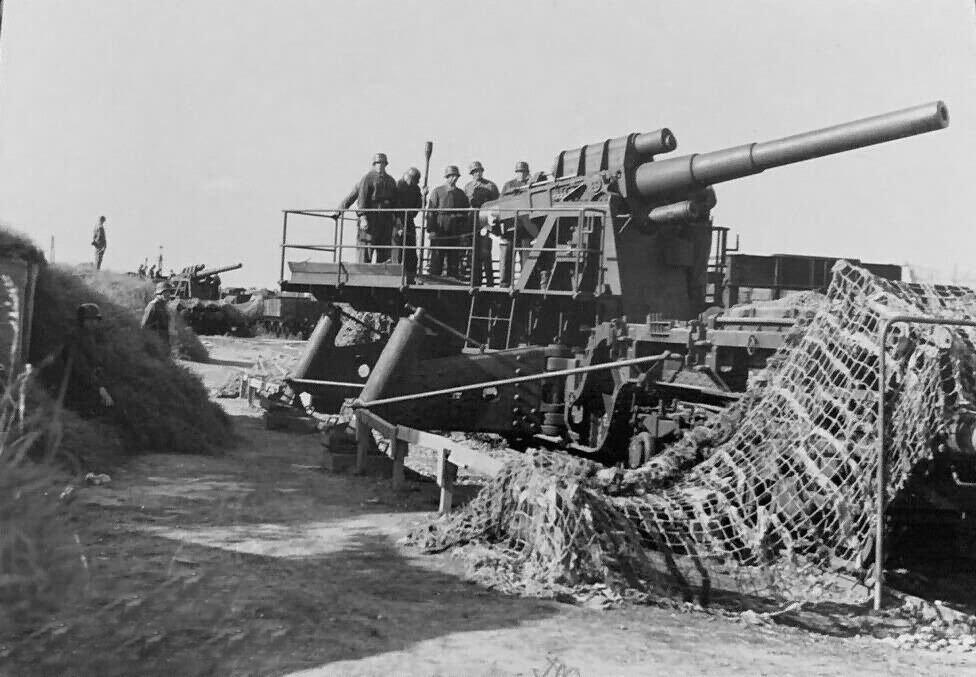
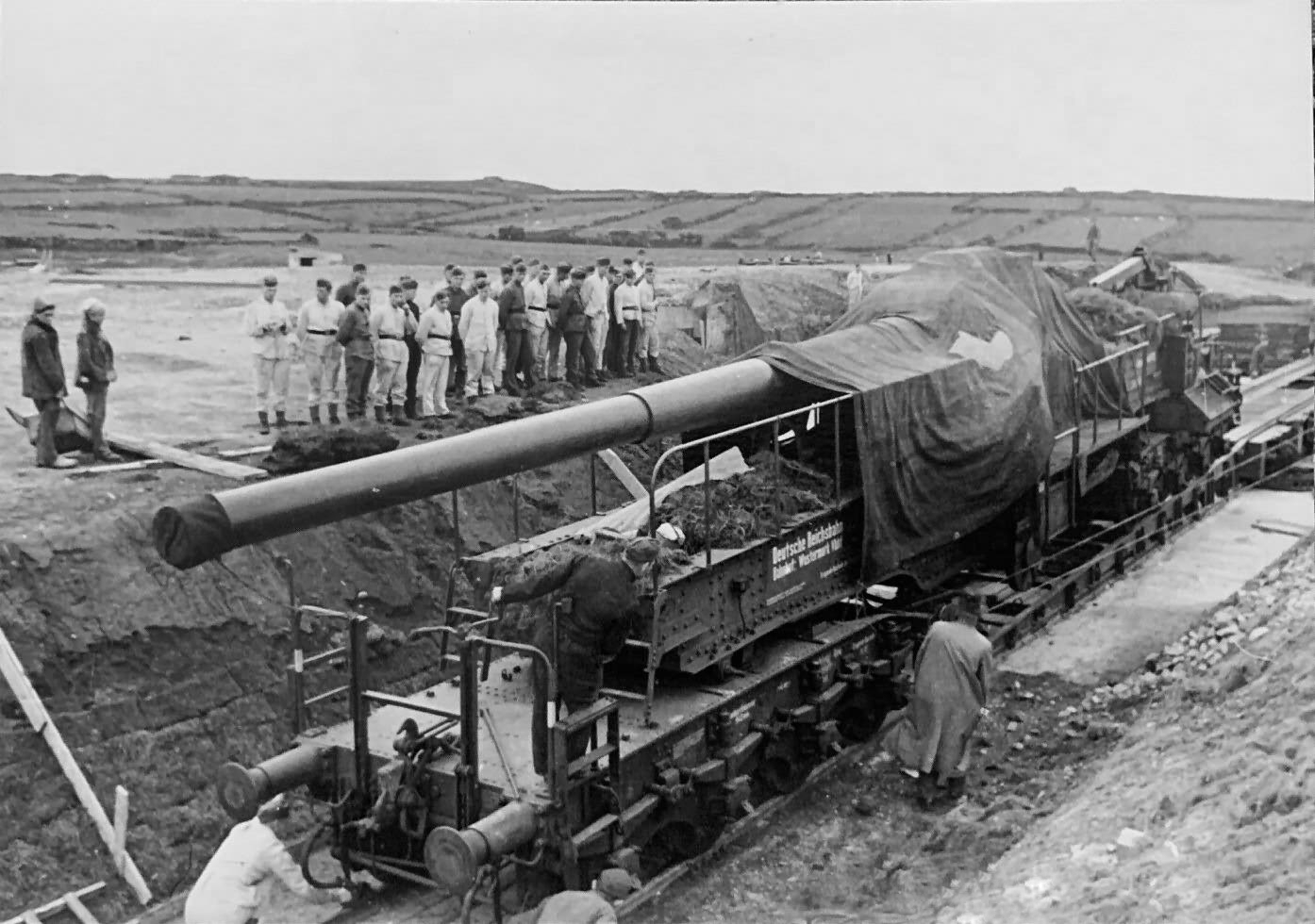
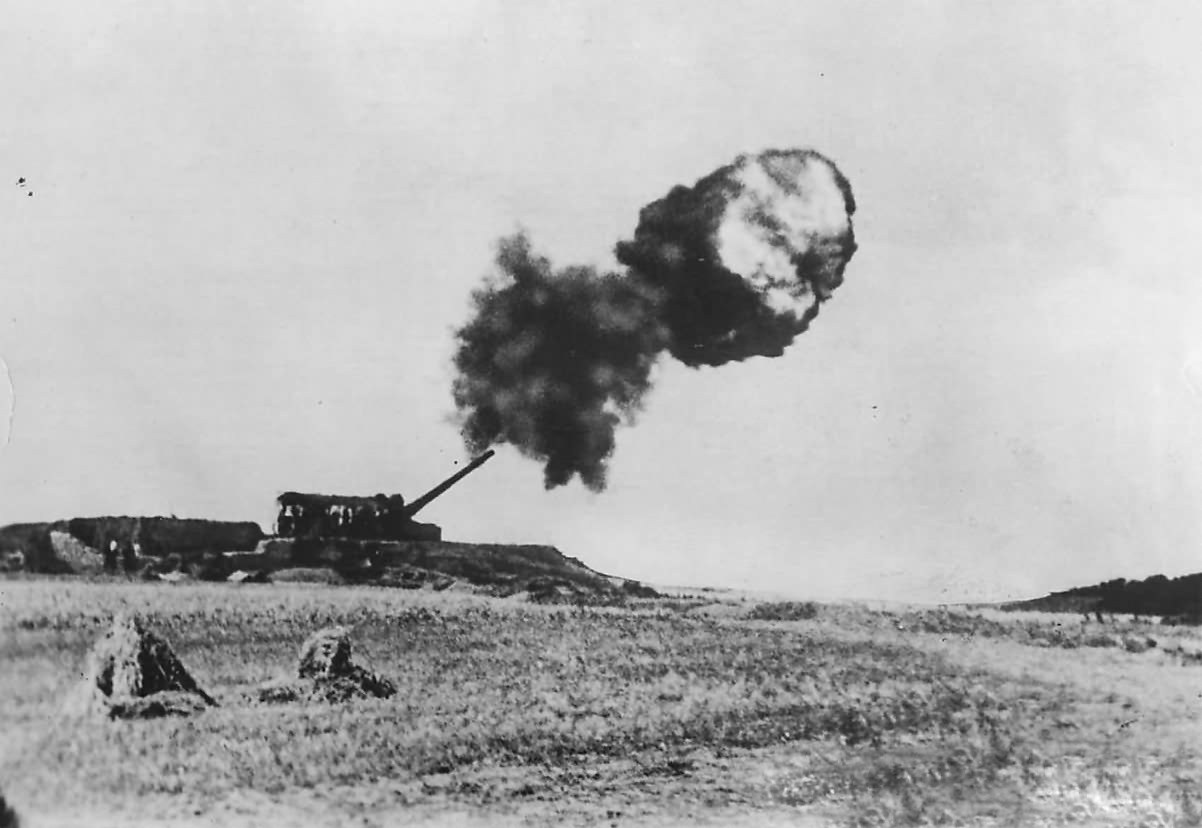
German Railway Guns (Eisenbahngeschütz) represented the pinnacle of super-heavy artillery development during both World Wars, designed primarily for long-range bombardment and destroying heavy fortifications. Because their immense weight required rail mobility, these guns operated along standard rail networks and utilized specialized curved tracks or turntables to adjust their traverse and absorb massive recoil forces. Early developments culminated in World War I’s Paris Gun (Pariser Kanone), which terrorized Paris from over 120 km away by firing shells into the stratosphere. During World War II, Krupp produced more refined models, most notably the 28 cm K5 (E)—nicknamed “Anzio Annie” by Allied troops—which became Germany’s most effective and widely used railway gun, seeing heavy combat at Anzio, Normandy, and the Eastern Front. The extreme end of this engineering was embodied by the 80 cm K (E) “Schwerer Gustav” and “Dora”, the largest caliber rifled weapons ever used in combat; weighing over 1,350 tons and requiring dual parallel tracks and a dedicated crew of hundreds, Gustav famously devastated the fortress of Sevastopol in 1942 with 7-ton concrete-piercing shells. Despite their immense destructive power and psychological impact, railway guns required elaborate logistics, long assembly times, and absolute air superiority, making them increasingly vulnerable and obsolete as Allied strategic bombing dominated the skies late in the war.