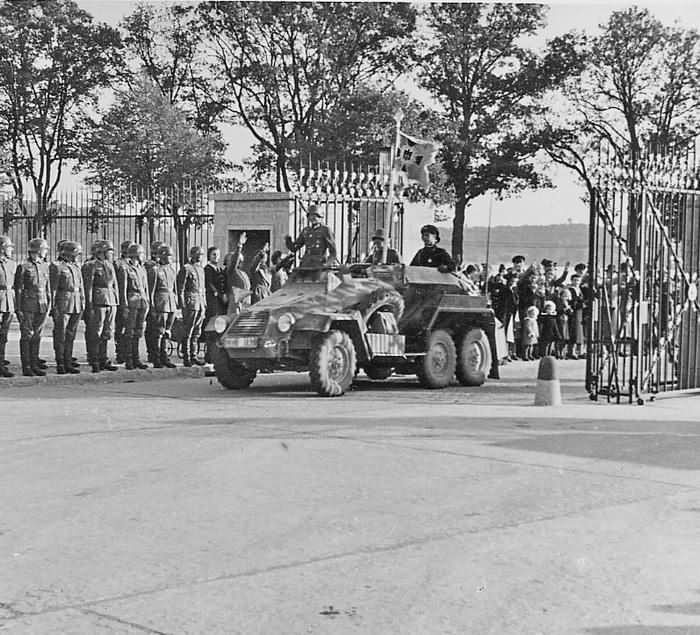
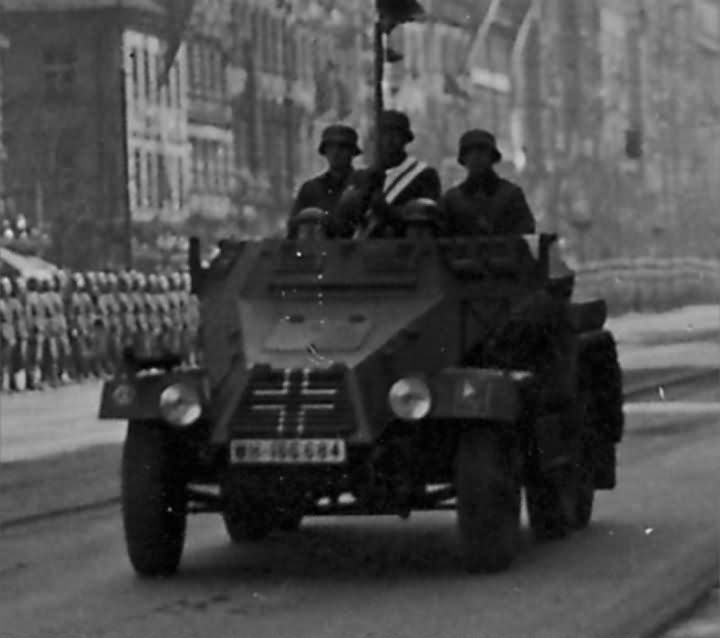
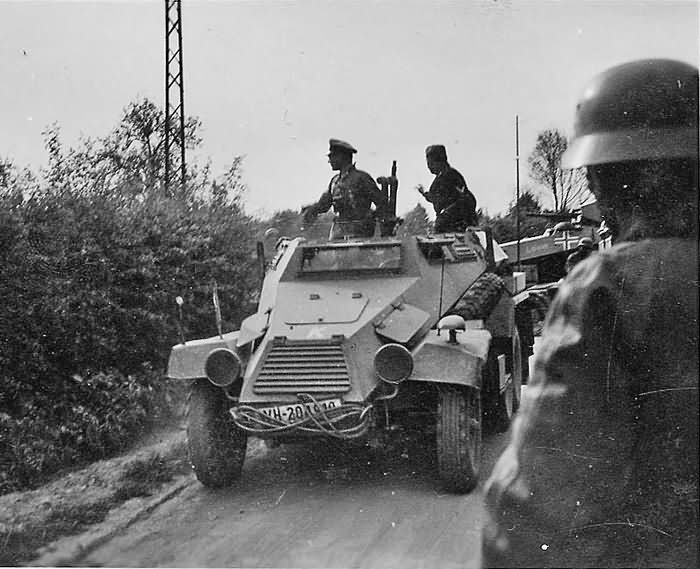
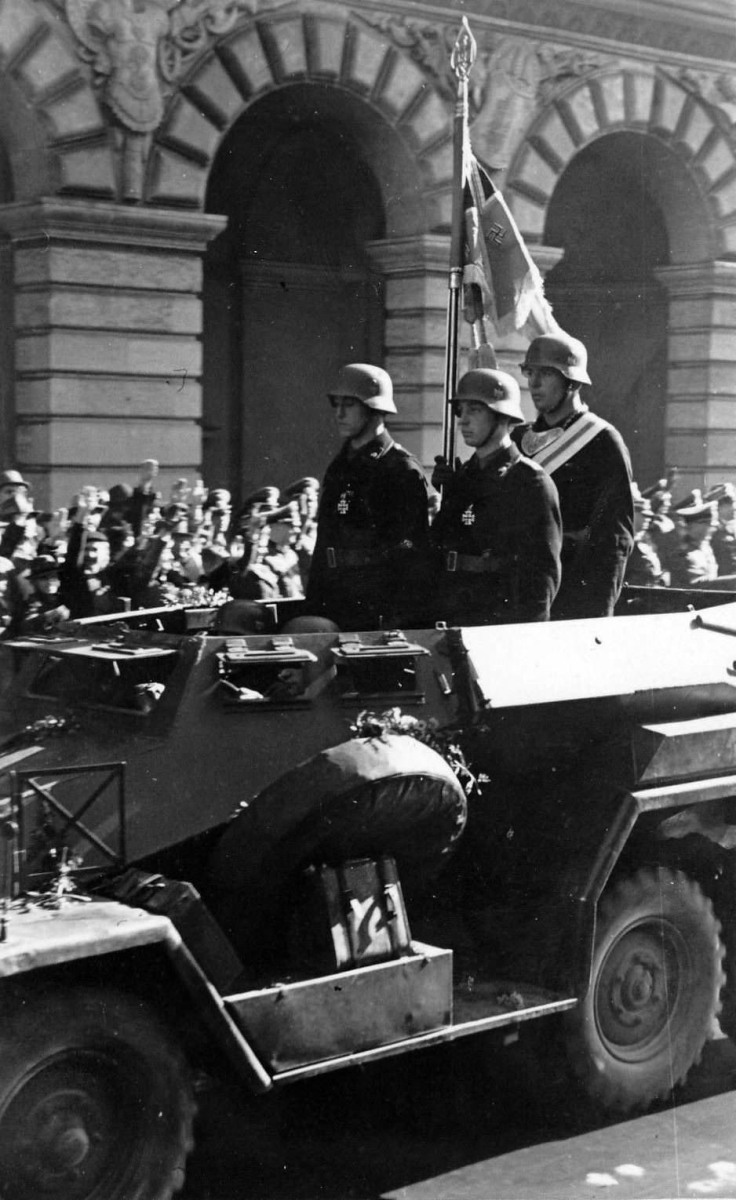
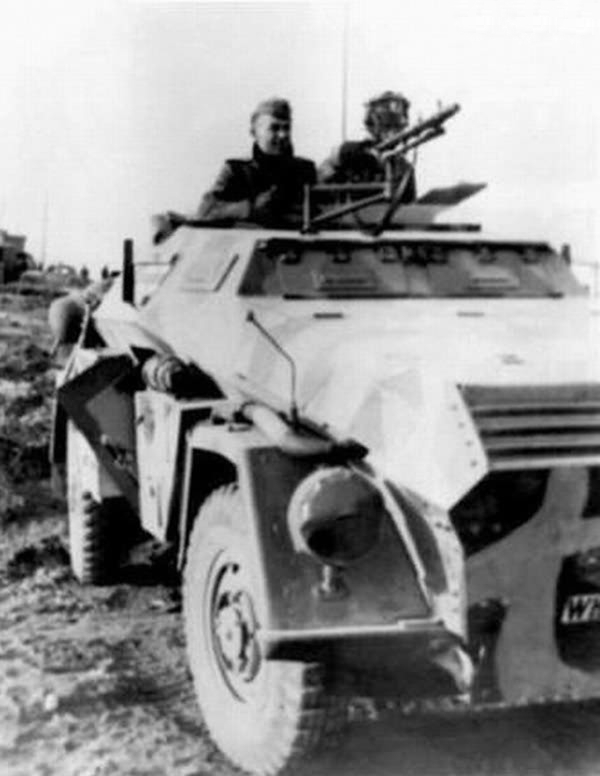
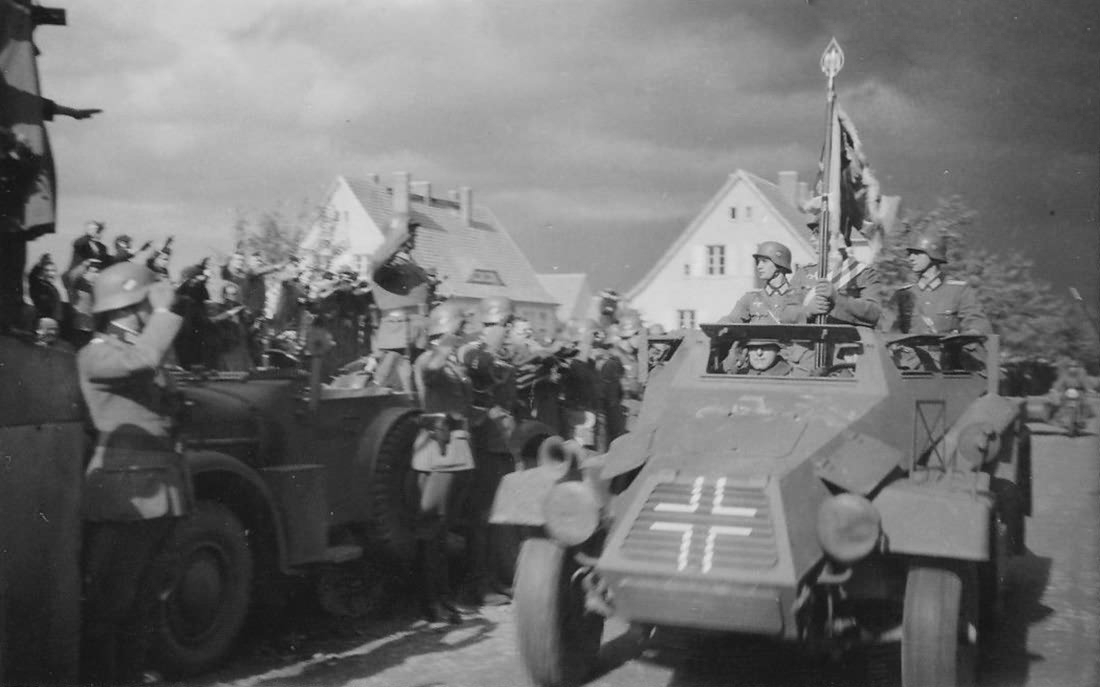
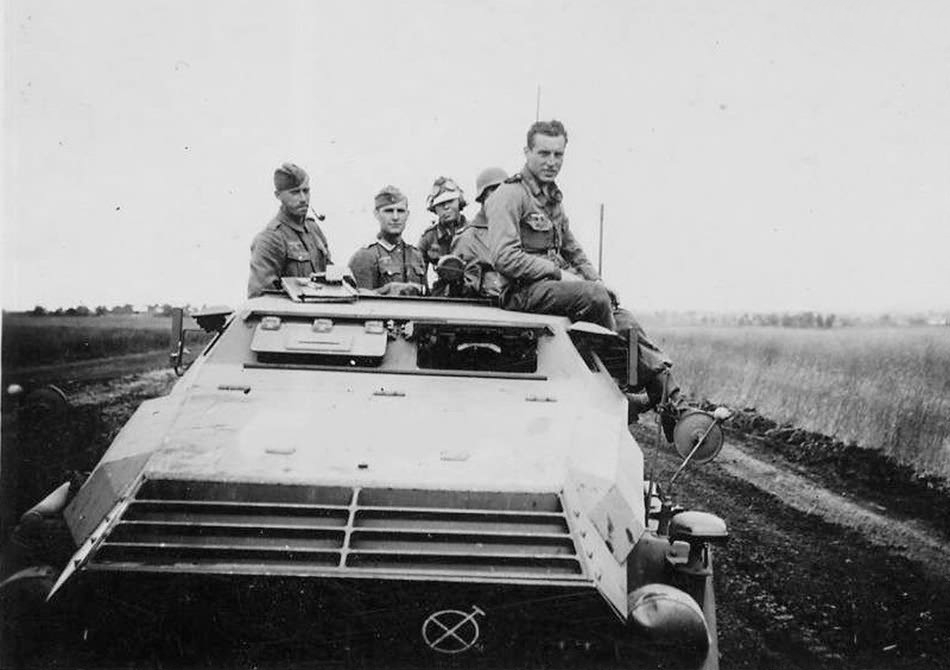
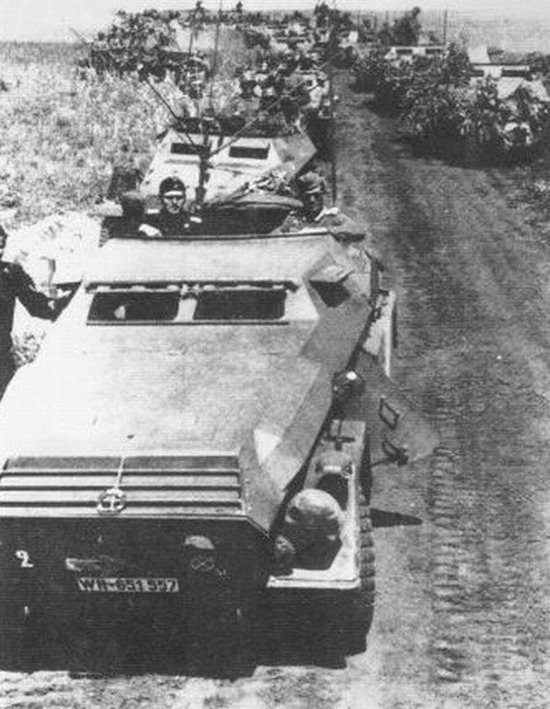
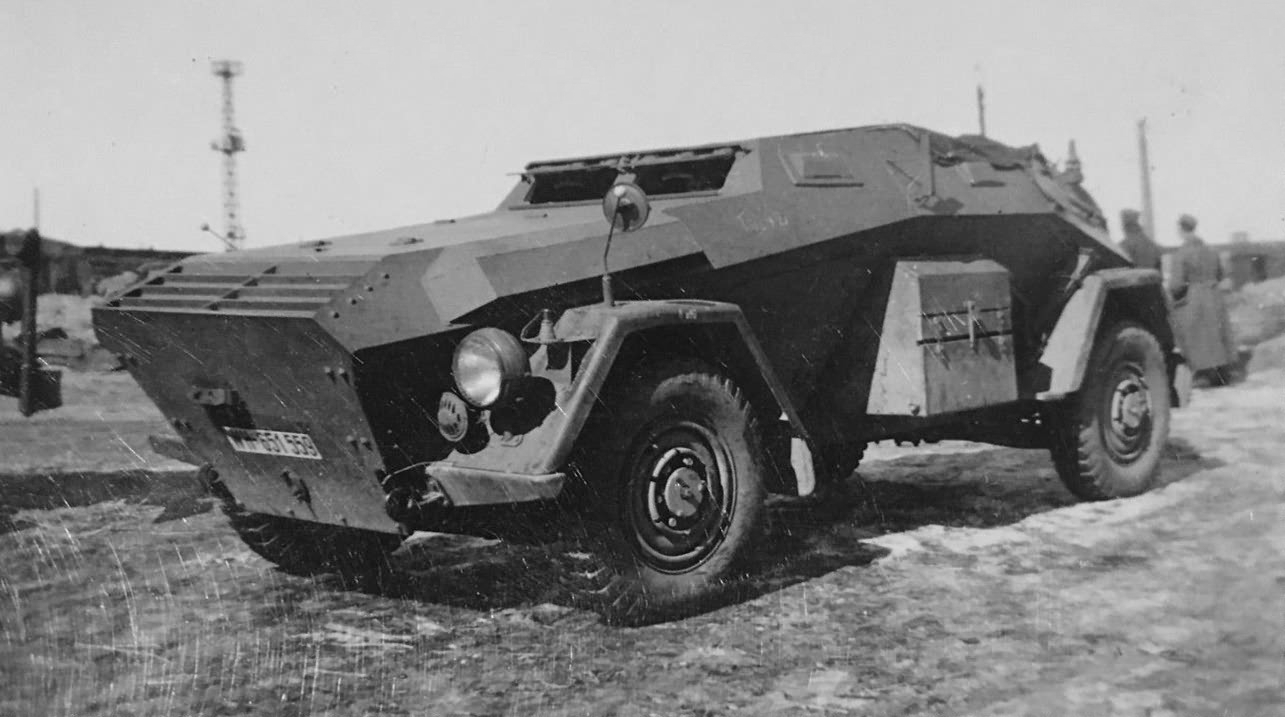
The Sd.Kfz. 247 (Schwerer geländegängiger Personenkraftwagen) was a specialized, open-topped armored command vehicle developed for the German Wehrmacht during the late 1930s. Designed specifically to transport commanders, staff officers, and radio crews leading motorcycle and armored reconnaissance units, it served as a mobile command post capable of keeping pace with fast-advancing mechanized formations. By providing a combination of moderate armor protection, reliable mobility, and ample interior space for maps and radio equipment, the Sd.Kfz. 247 ensured that field commanders could maintain direct operational control at the very tip of the Blitzkrieg spear without being overly exposed to small-arms fire or shell splinters.The production of the Sd.Kfz. 247 unfolded in two distinct operational variants built on completely different automotive platforms. The early Ausführung A variant, introduced in 1937, was constructed on a six-wheeled (6×4) Krupp Protze L2H143 truck chassis powered by a 3.5-liter, four-cylinder air-cooled Krupp boxer engine producing roughly 60 horsepower. Only ten units of this early variant were manufactured by Krupp, making it an extremely rare vehicle primarily used for initial doctrine testing and early wartime command duties during the invasions of Poland and France. As the limitations of the six-wheeled chassis in off-road environments became apparent, a second generation was developed. The Ausführung B variant was produced by Daimler-Benz between 1941 and 1942, utilizing a far superior four-wheeled (4×4) heavy car chassis based on the Horch 108 platform. Powered by a 3.8-liter V8 gasoline engine delivering 81 horsepower, the Ausf. B featured full-time all-wheel drive, which dramatically improved cross-country mobility, maneuverability, and reliability in rough terrain.Architecturally, the Sd.Kfz. 247 featured a uniquely shaped, multi-faceted hull constructed from sloped steel armor plates ranging from 8 to 12 millimeters in thickness. The vehicle was characterized by its open-topped crew compartment, which allowed officers exceptional all-around visibility to observe the battlefield and direct movements effectively. In inclement weather or under light threat, a folding canvas tarpaulin could be pulled over the open top for protection against rain and snow. Designed entirely as a staff transport rather than a front-line combatant, the Sd.Kfz. 247 was unarmored in terms of fixed weaponry, lacking a turret or permanently mounted cannon, though crew members routinely carried personal weapons and an MG 34 machine gun on a pintle mount for self-defense. Operated by a crew of six, including a driver and staff officers, the interior was fitted with map tables and radio equipment to facilitate real-time decision-making on the move.Although produced in relatively small numbers—with only 58 total units built across both variants—the Sd.Kfz. 247 played an indispensable role in early to mid-World War II operations across Western Europe, the Balkans, and the Eastern Front. Its specialized role as an armored staff transport allowed reconnaissance commanders to remain close to forward elements, reinforcing the decentralized command structure that was critical to early German tactical successes. Ultimately, the Sd.Kfz. 247 remains a prime example of interwar specialized vehicle design, bridging the gap between unarmored staff cars and fully enclosed command tanks.