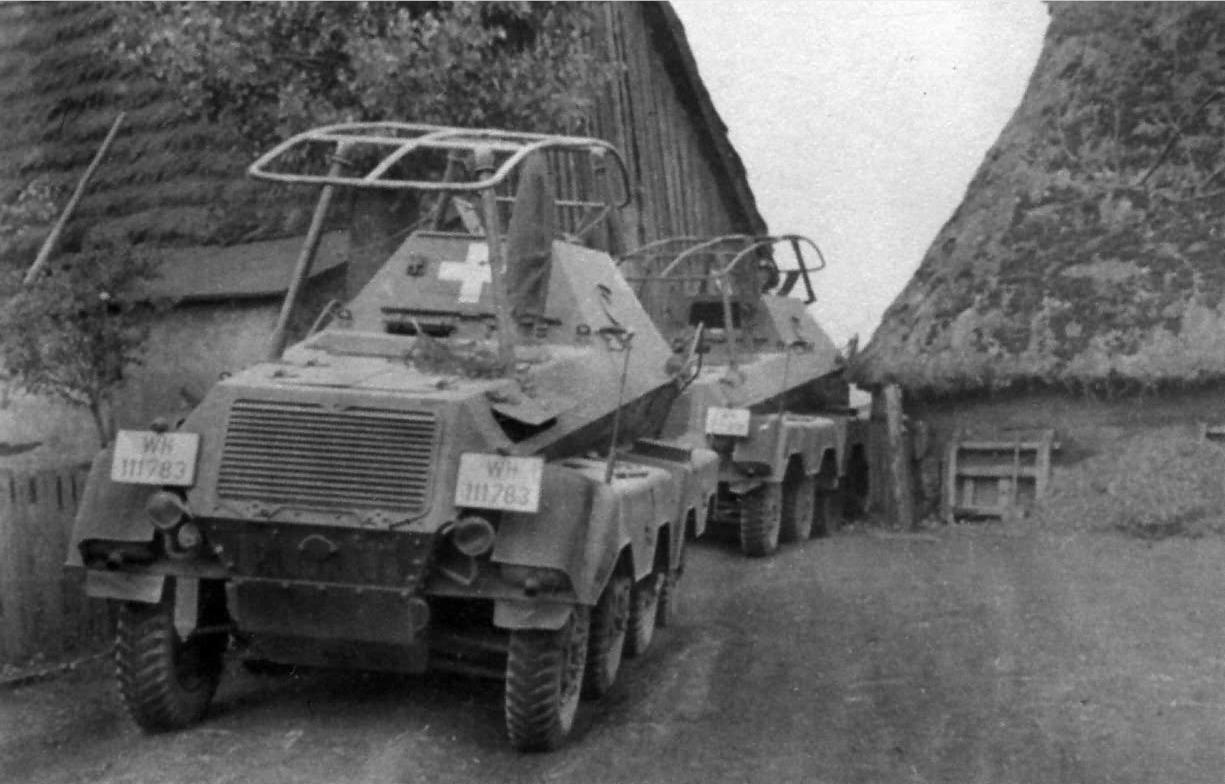
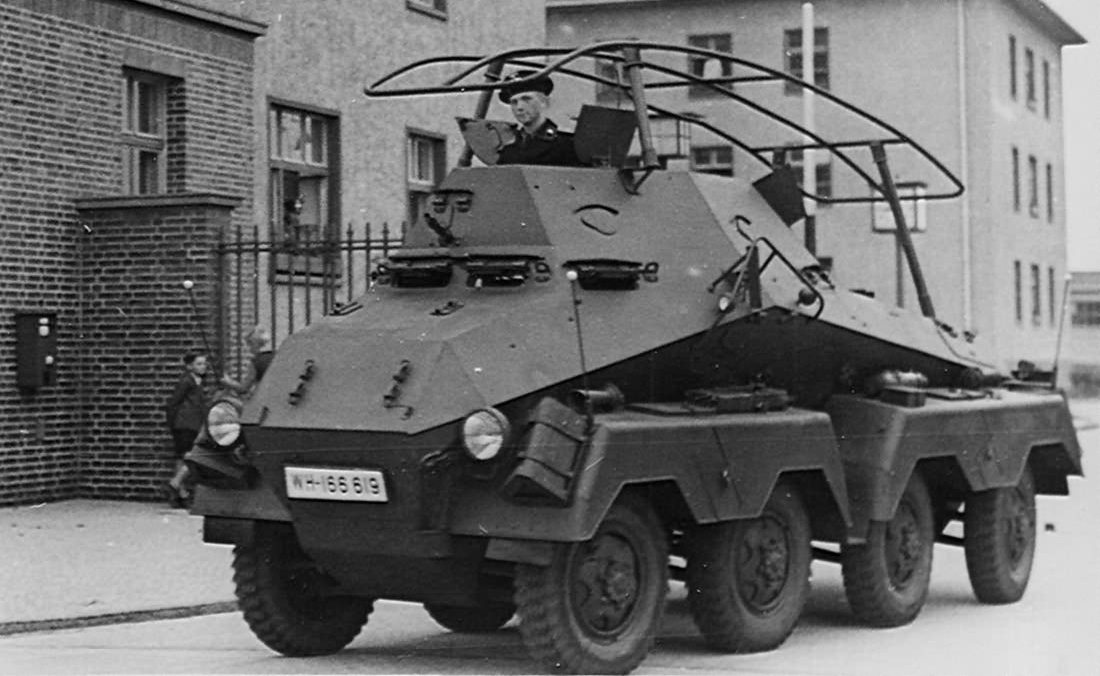
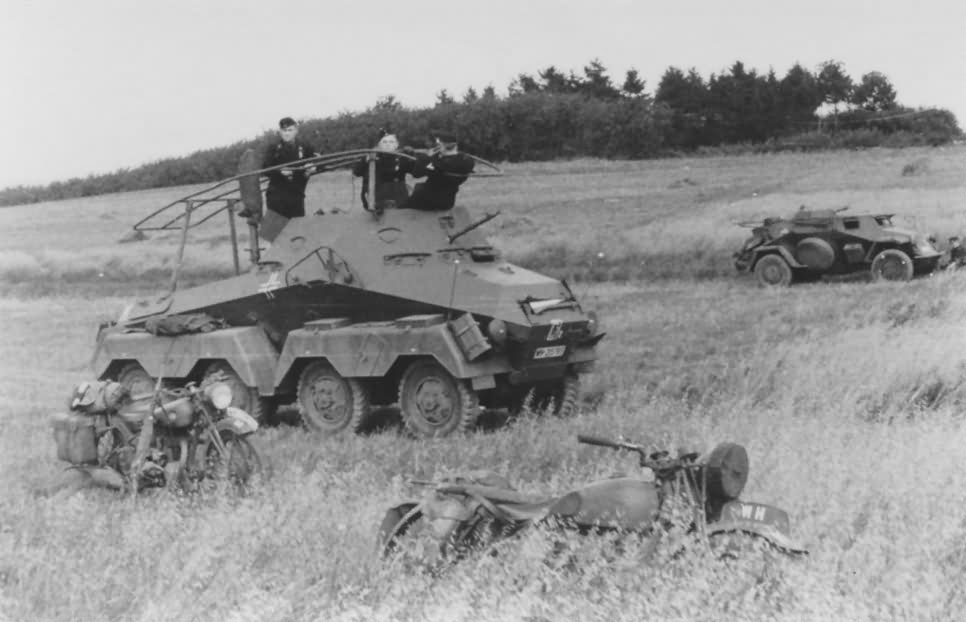
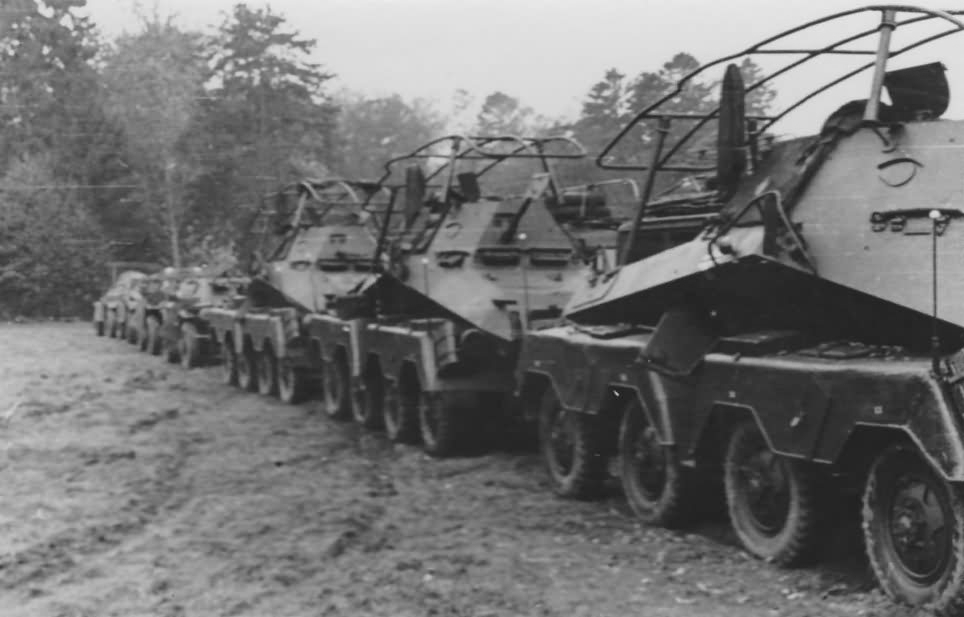
The Sd.Kfz. 263 (Panzerfunkwagen) was a specialized heavy armored radio command vehicle designed for the German Wehrmacht during the mid-1930s. Built specifically to serve as a high-level mobile communications hub for headquarters and reconnaissance commanders, it played a vital role in maintaining continuous long-distance contact between forward armored units, division staff, and higher command echelons. Designed to satisfy the demanding command-and-control requirements of Blitzkrieg doctrine, the Sd.Kfz. 263 ensured that operational orders and real-time intelligence could flow seamlessly across rapidly shifting battlefields without sacrificing mobility or commander safety.Like other heavy German armored cars of its generation, the Sd.Kfz. 263 evolved across two automotive iterations. Initial models were constructed on commercial six-wheeled (6×4) truck chassis, but their limited cross-country capability led to the development of the far superior eight-wheeled (8×8) version based on the heavy Büssing-NAG chassis. Powered by a 150-horsepower V8 gasoline engine, the 8×8 chassis featured full-time all-wheel drive, eight-wheel steering, and an innovative dual-steering system with dedicated forward and rear driver positions. This unique dual-driver setup allowed the 12-ton vehicle to disengage from dangerous forward situations immediately at road speeds up to 85 km/h without executing a turnaround maneuver. The vehicle’s structure was built from sloped steel armor plates ranging from 8 to 14.5 mm in thickness, later reinforced with front add-on armor, providing essential defense against small-arms fire and artillery splinters.What set the Sd.Kfz. 263 apart from other heavy armored cars was its distinctive large, fixed superstructure, which completely replaced the standard rotating cannon turret found on the Sd.Kfz. 231. This enlarged, non-rotating compartment was engineered to maximize interior workspace for a five-man crew consisting of a commander, two drivers, and two specialized radio operators. The expanded cabin was fitted with long-range high-frequency and medium-wave radio transmitters, receiver equipment, power generators, and map tables. To support transmission over vast distances, early production models featured a prominent, rigid steel frame antenna mounted on heavy brackets across the entire length of the hull. Later wartime modifications often replaced this cumbersome frame with a telescoping mast antenna, which could be extended high above the vehicle when stationary to maximize range and folded down during road transit.Because the Sd.Kfz. 263 was designed as a dedicated command and communications node rather than an offensive fighting vehicle, its armament was strictly defensive, consisting of a single 7.92 mm MG 34 machine gun mounted in the front superstructure plate. The vehicle saw extensive service in every major theater of World War II, including the invasions of Poland, France, and the Balkans, as well as the North African campaign and the Eastern Front. On the vast expanses of the Eastern Front and North Africa, its powerful radio suite proved indispensable for coordinating large-scale mechanized maneuvers. Although production ceased in 1943 as newer command platforms entered service, surviving Sd.Kfz. 263 vehicles remained in active operational use until the end of the war, leaving a lasting mark on the development of mobile military communications.