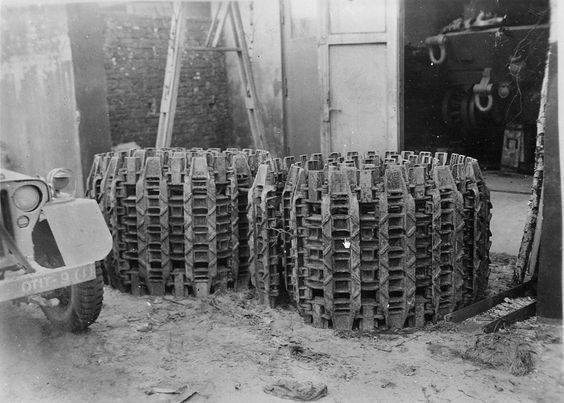
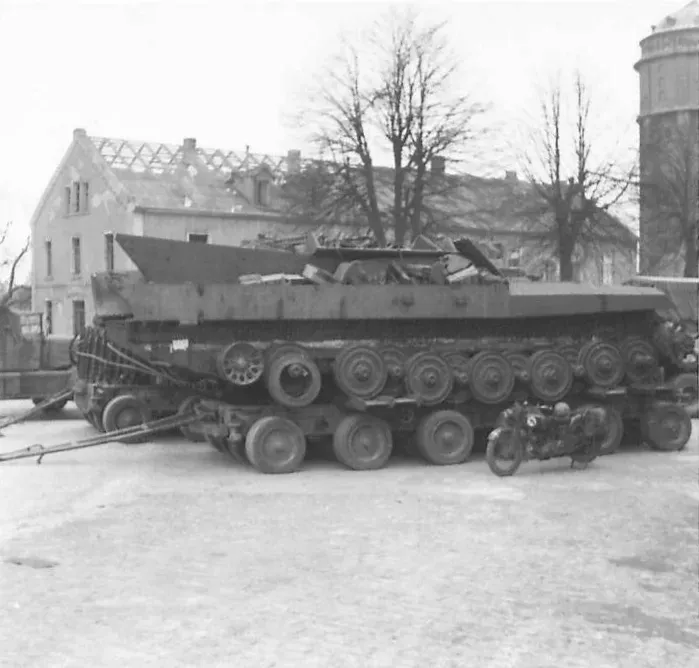
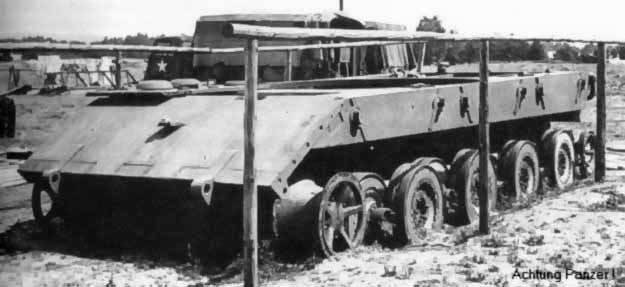
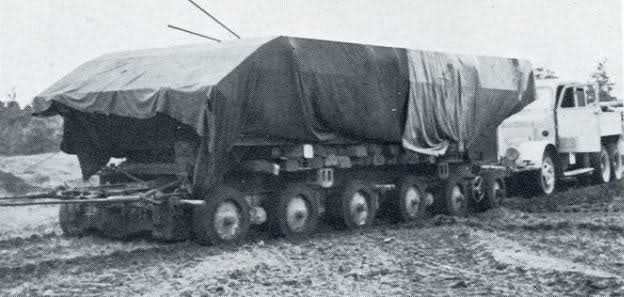
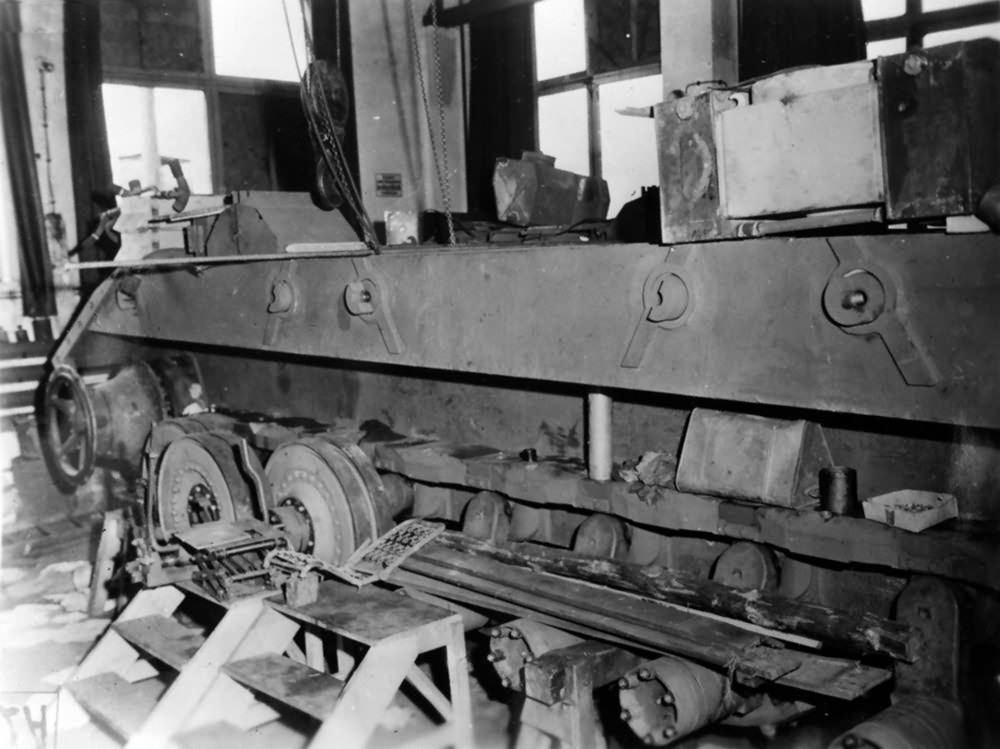
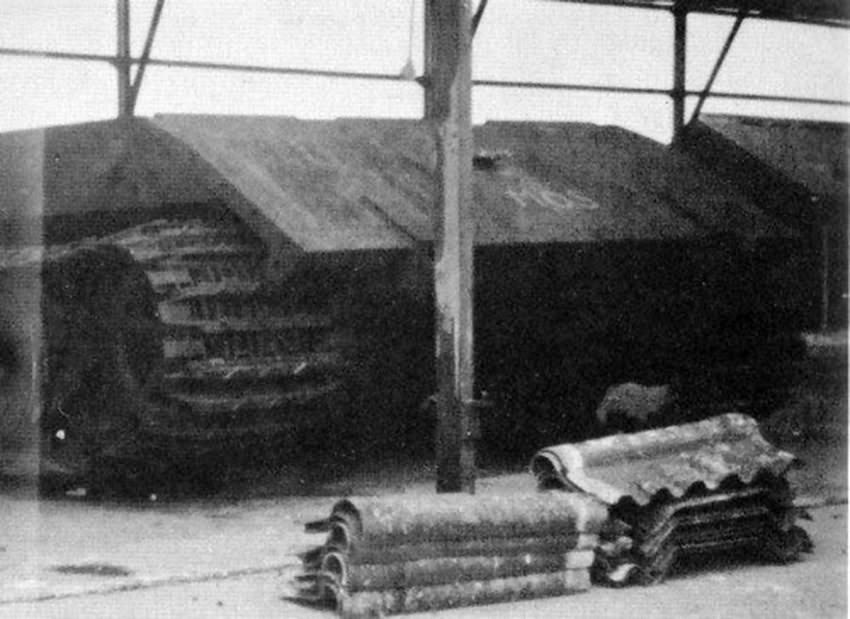
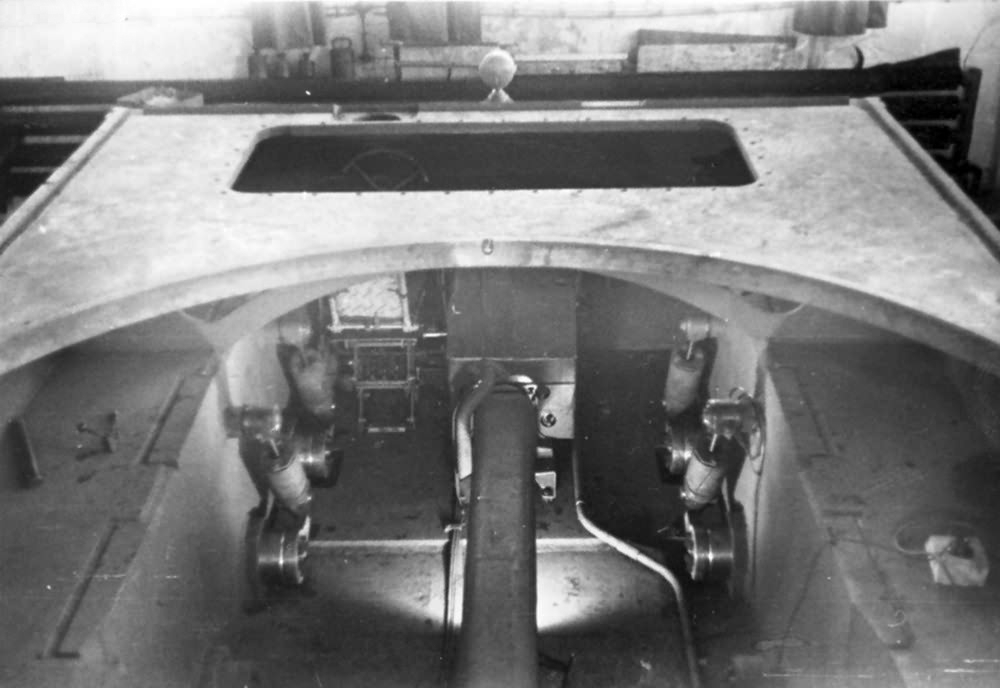
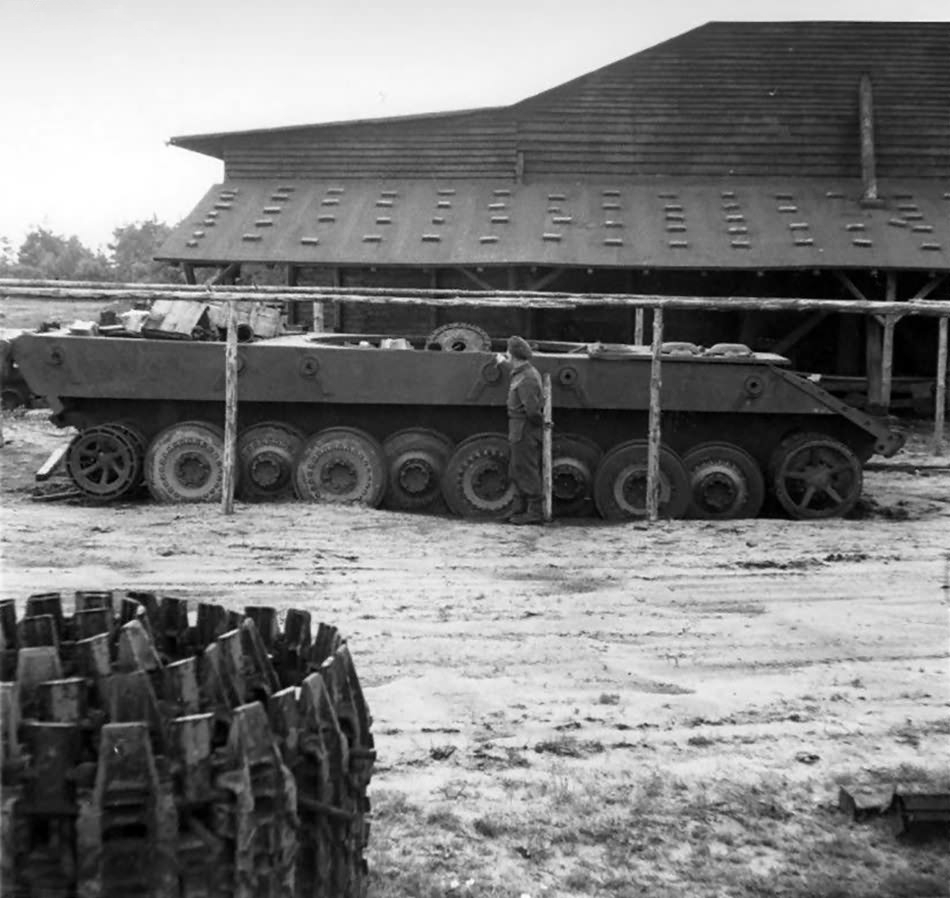
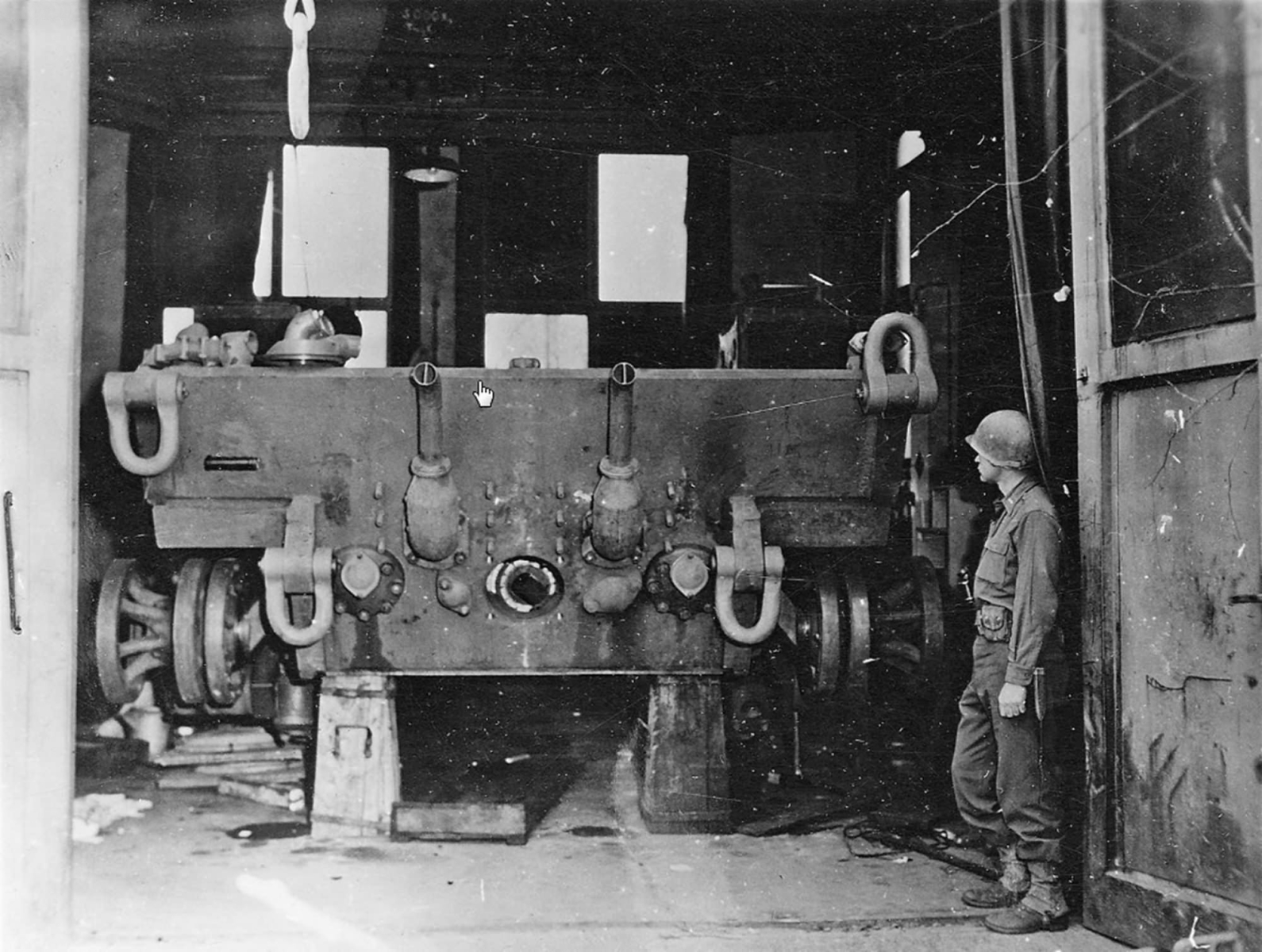
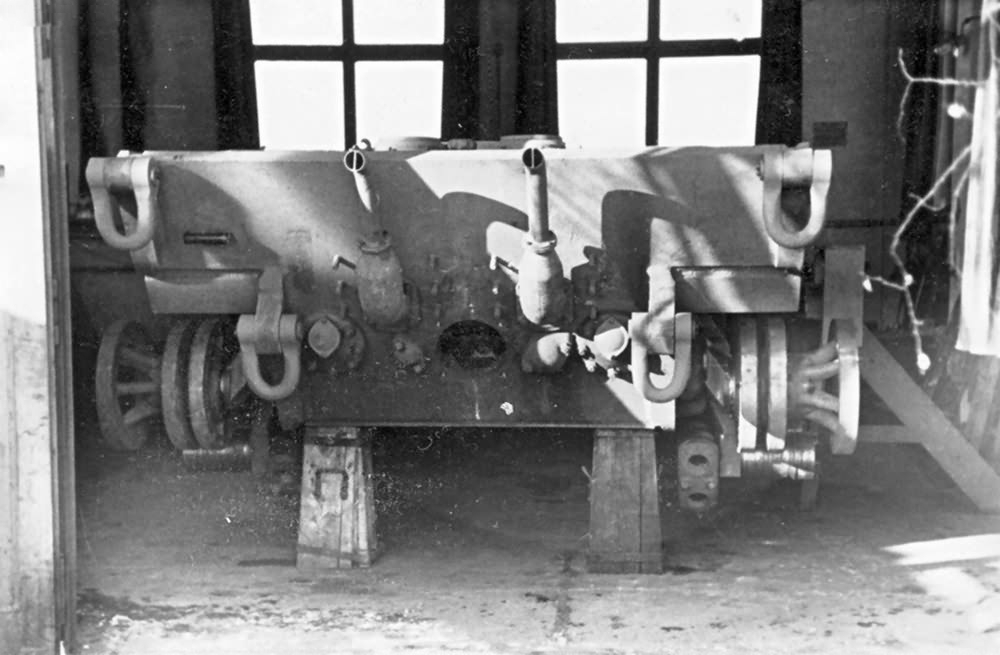
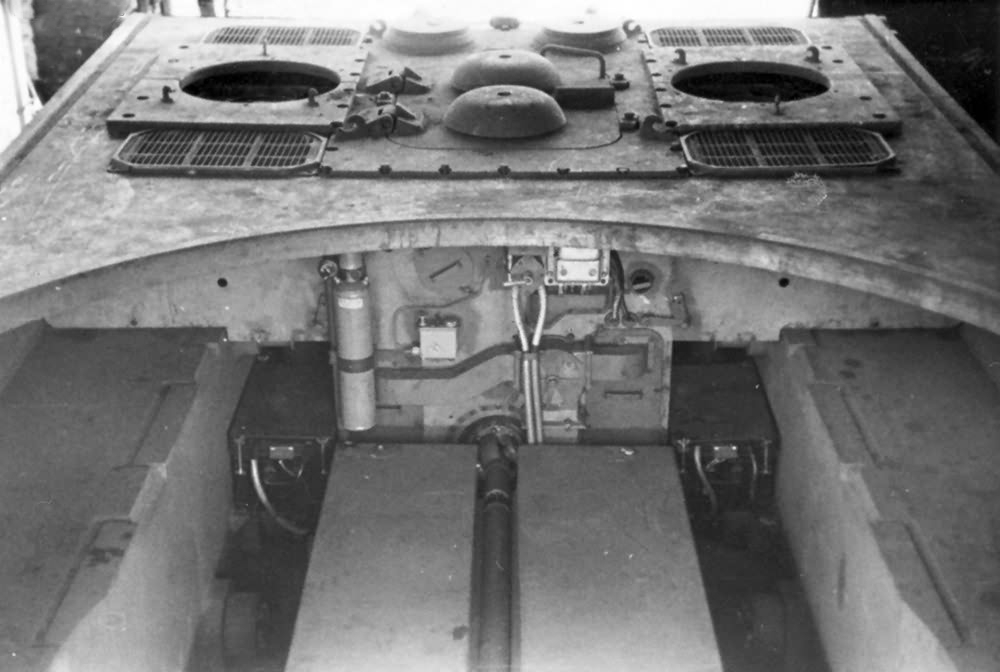
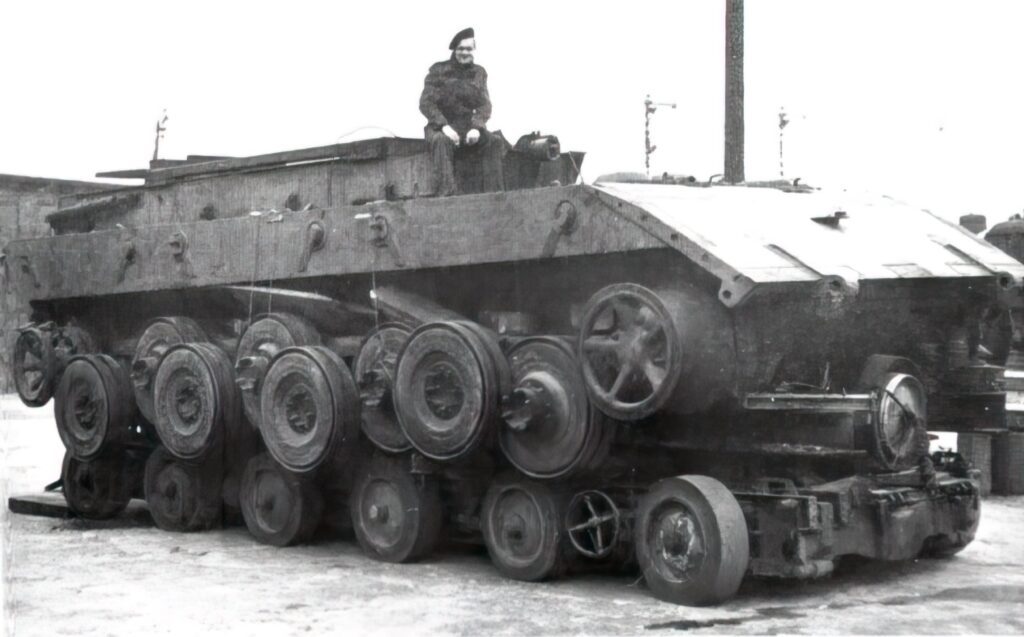
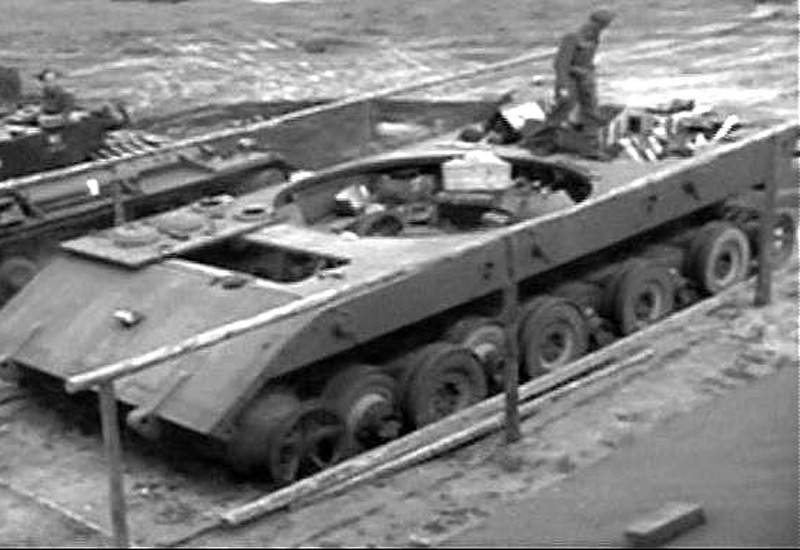
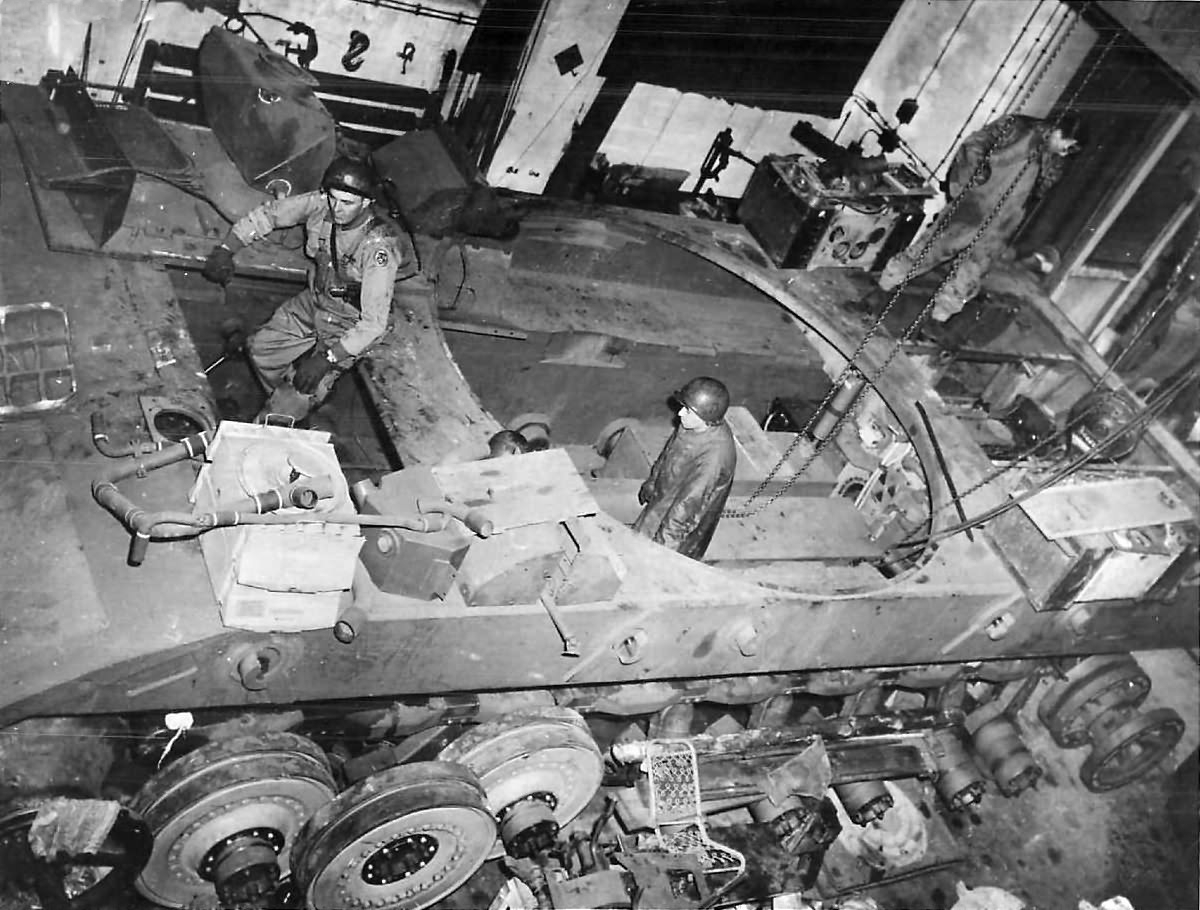
The Panzerkampfwagen E-100 was an super-heavy super-tank project developed under Germany’s E-Serie (“Standard Series”) program, designed to simplify armored vehicle component manufacturing and replace existing heavy tanks like the Tiger II. Originally designed by Krupp and later transferred to the Adlerwerke, the 140-ton experimental monster featured a conventional layout with rear-mounted engine and a massive chassis supported by a Belleville-washer suspension system, complemented by removable side armor skirts for rail transport. Intended to be armed with a 12.8 cm KwK 44 gun, a 15 cm main gun, or a 17 cm cannon in a fixed casemate variant, the E-100 was designed to house a lightened Maus II turret, though Hitler’s late-war restrictions on super-heavy tank development slowed work to a crawl. Powered experimentally by a 700 hp Maybach HL 230 engine from the King Tiger (which limited its top speed to approximately 20 km/h, though a supercharged 1,200 hp HL 232 engine was planned), the super-heavy chassis was only partially completed when Allied forces captured the Adler facility in May 1945, after which British authorities transported the chassis to England for technical evaluation before it was ultimately scrapped.