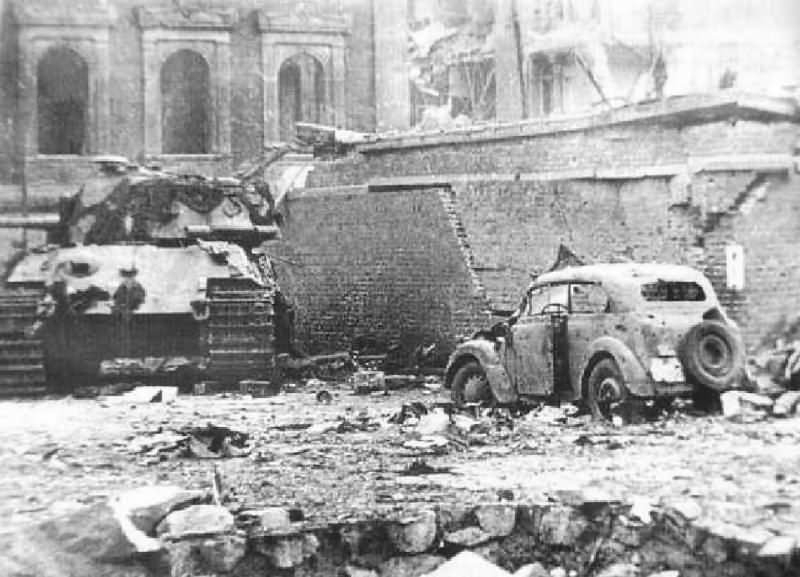
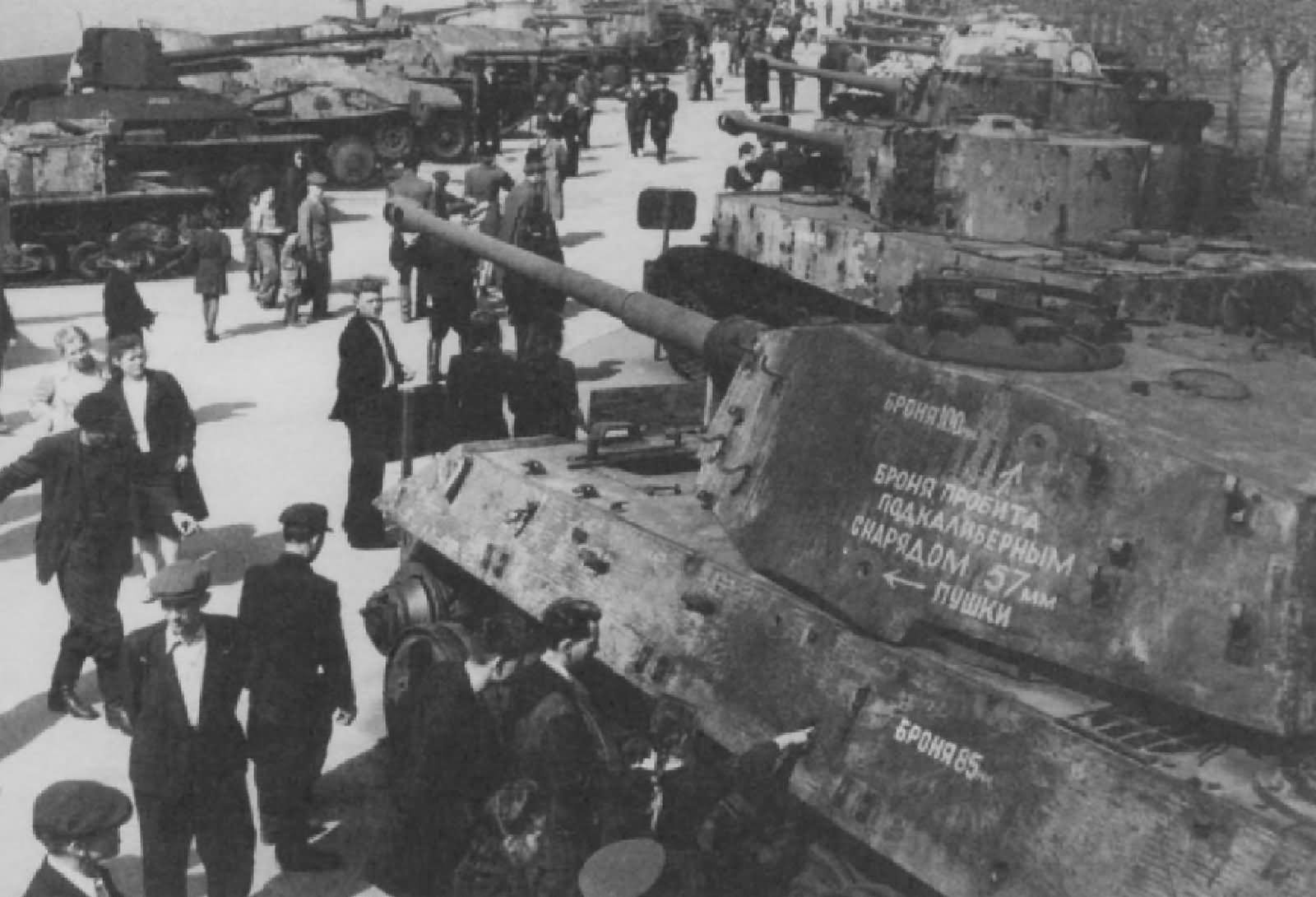
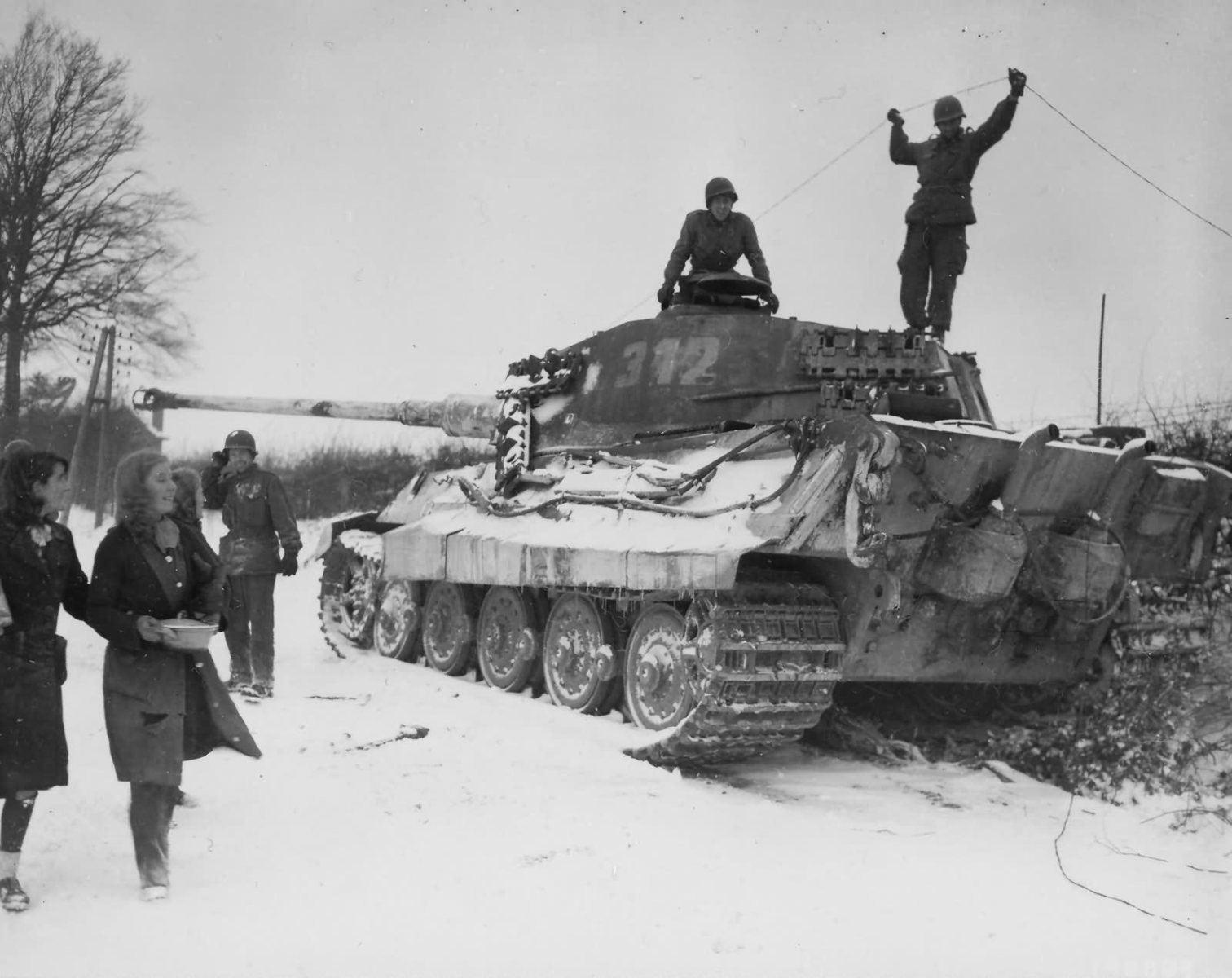
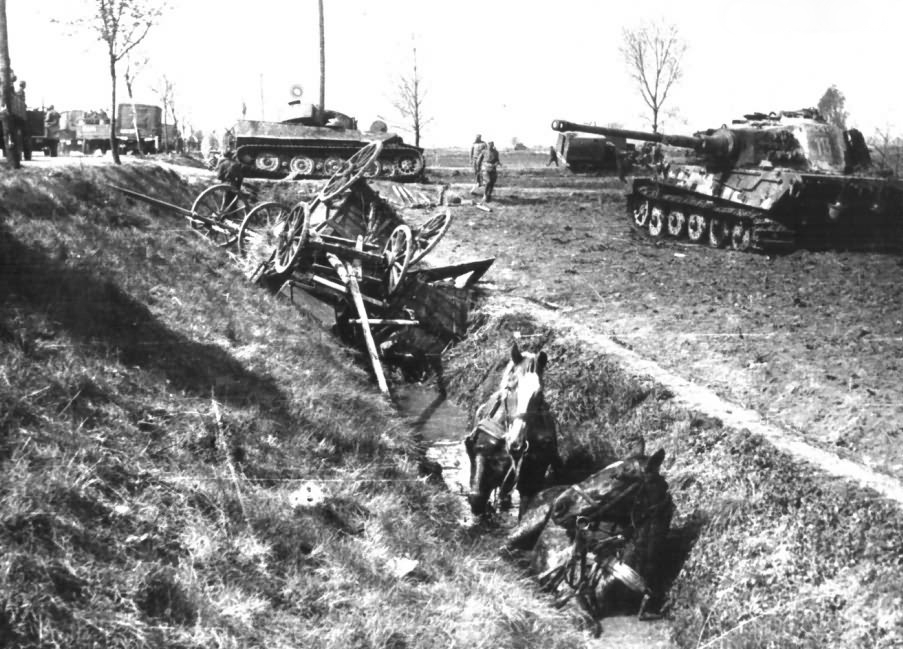
The Panzerkampfwagen VI Ausf. B Tiger II (Sd.Kfz. 182), popularly known as the Königstiger (“King Tiger”), was a German heavy tank developed by Henschel as the successor to the Tiger I and represented the heaviest tank to see combat service during World War II. Entering serial production in January 1944 under the design leadership of Erwin Aders, the 68-to-70-ton vehicle combined the sloped armor philosophy of the Panther tank (with a 150 mm glacis plate sloped at 50 degrees) with the massive 8.8 cm KwK 43 L/71 gun, a high-velocity cannon capable of destroying any Allied armored vehicle at extreme ranges up to 3,800 meters. Early production units featured a rounded Krupp-designed turret (often misattributed to Porsche), which was quickly superseded by Krupp’s streamlined production turret to reduce shot traps. Powered by the 700 hp Maybach HL 230 P30 engine, the King Tiger was severely underpowered and mechanically overstressed, consuming immense amounts of fuel and suffering frequent drive-train failures on muddy roads and narrow bridges. Issued to heavy tank battalions (schwere Panzer-Abteilungen) of the Army and Waffen-SS, the 487 units produced saw action in Normandy, during the Battle of Sandomierz on the Eastern Front, and as the armored spearhead of the Ardennes Offensive; despite its impenetrable frontal arc and terrifying firepower, late-war steel shortages (resulting in brittle armor) and strategic mobility constraints ensured it remained an over-engineered tactical fortress rather than a decisive operational weapon.