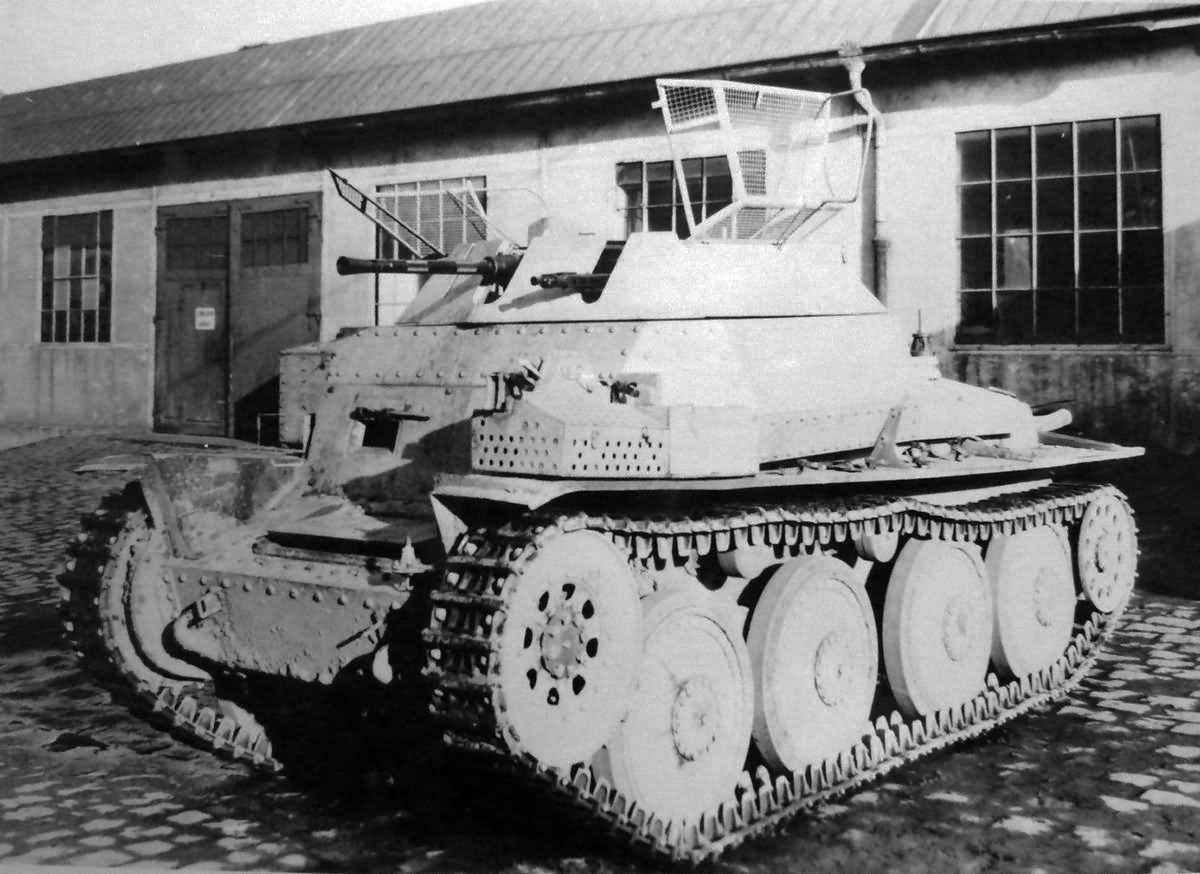
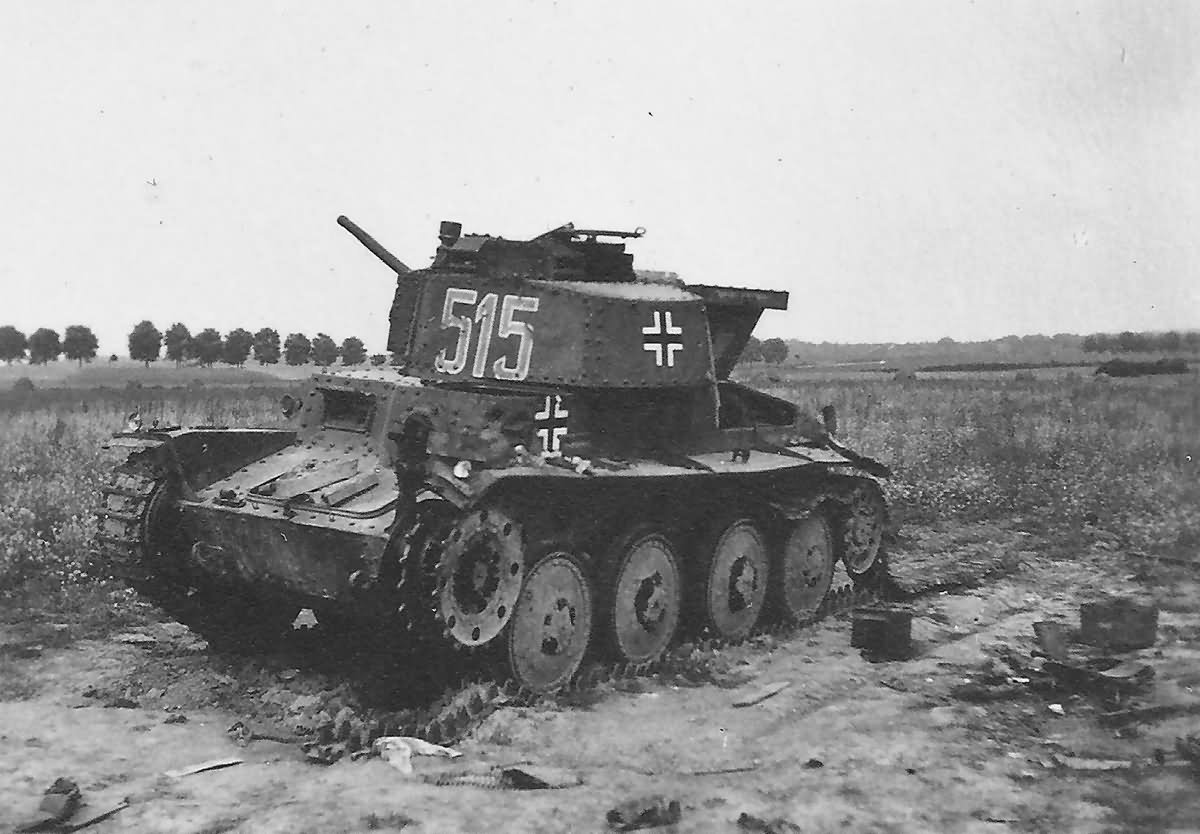
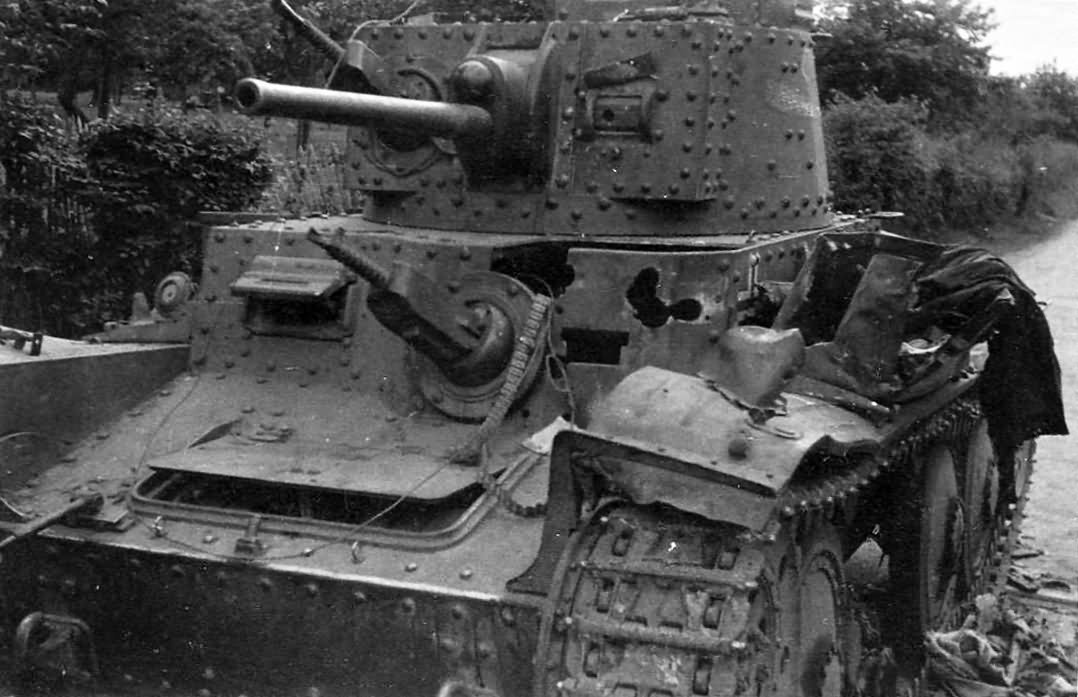
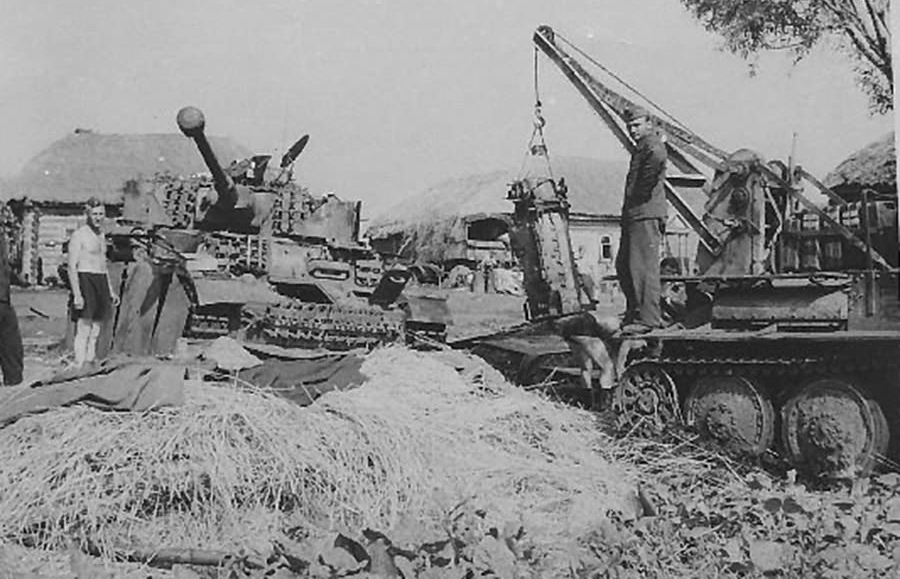
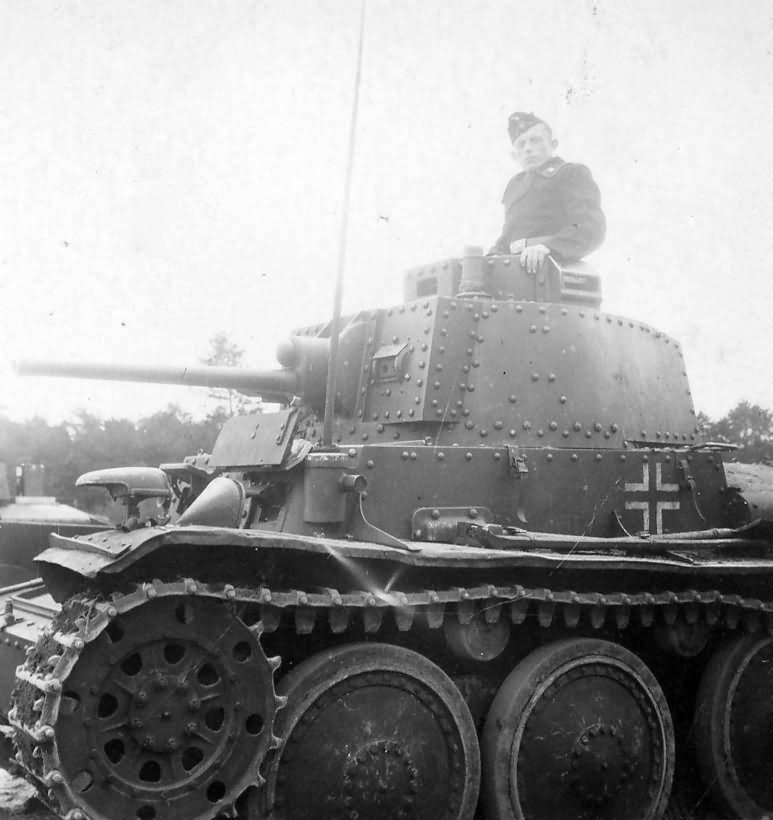
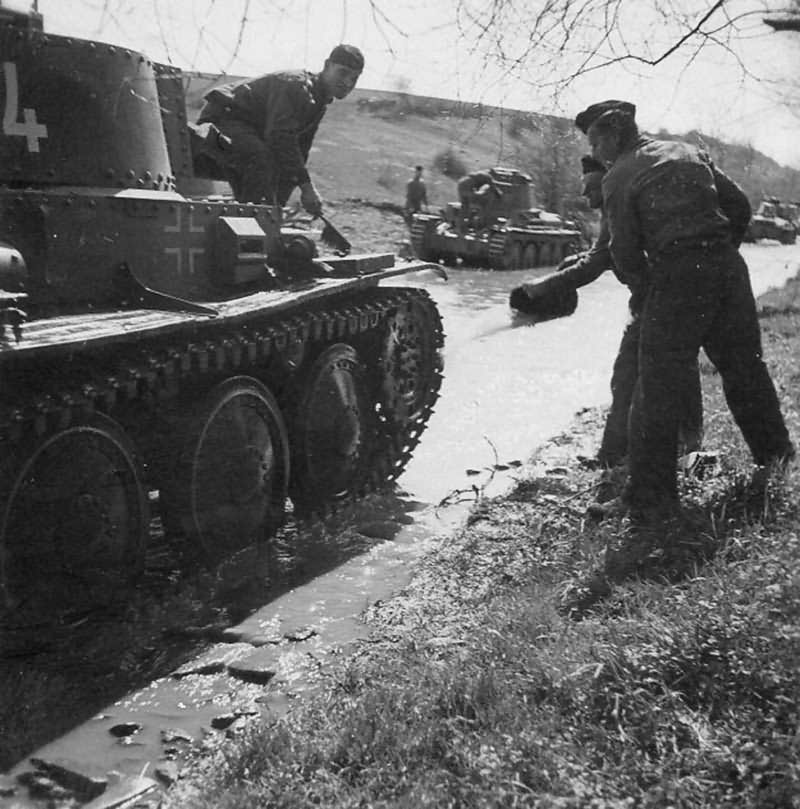
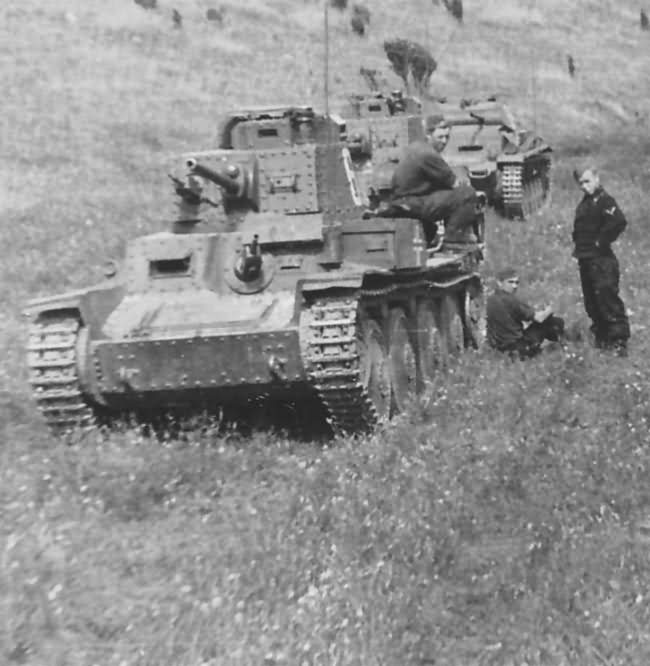
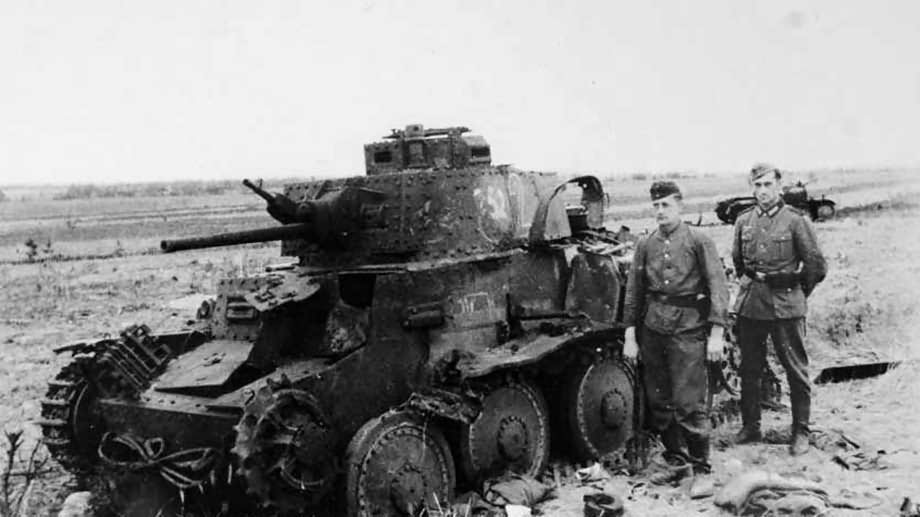
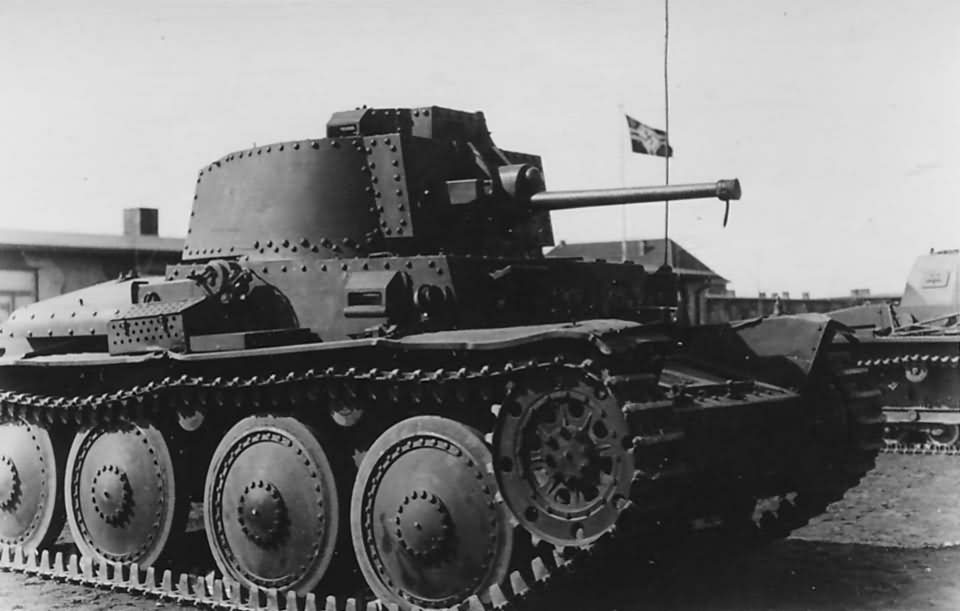
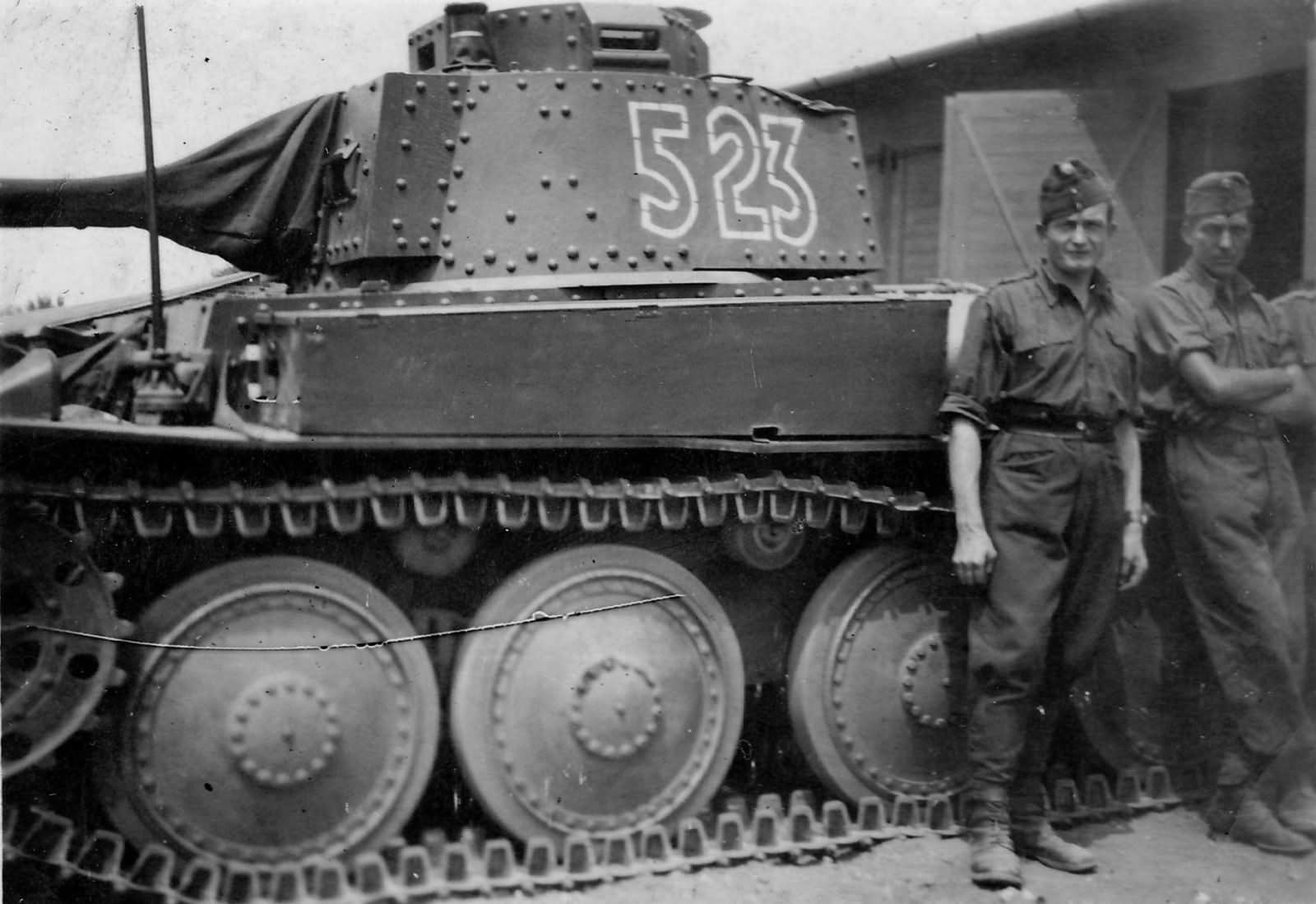
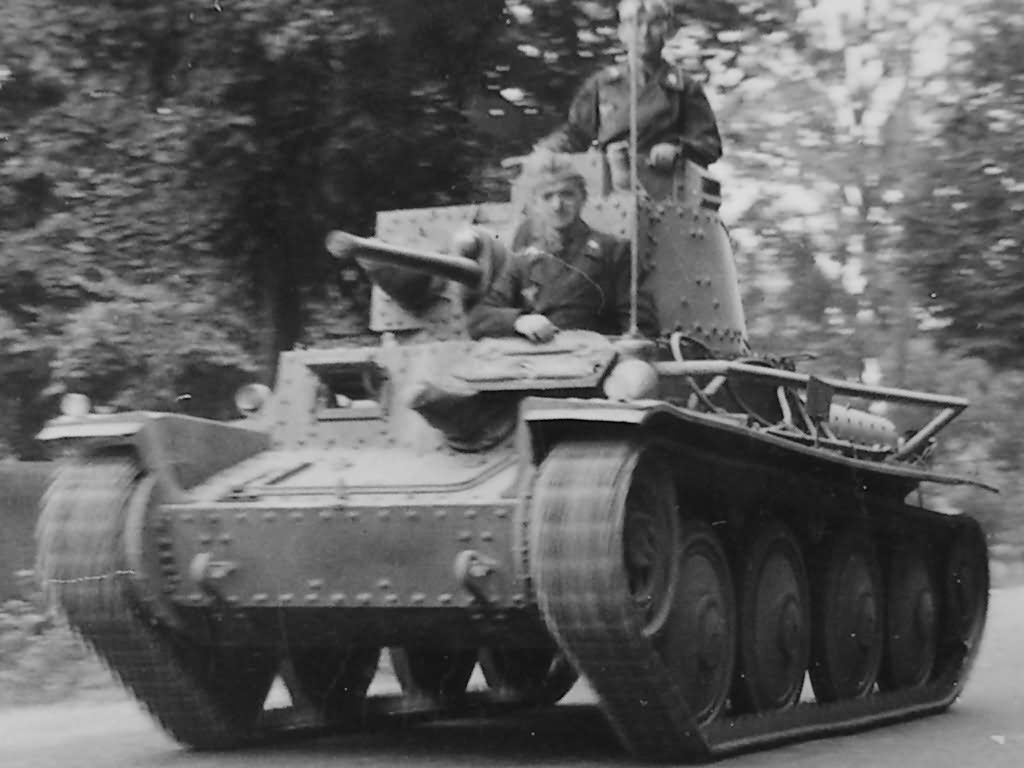
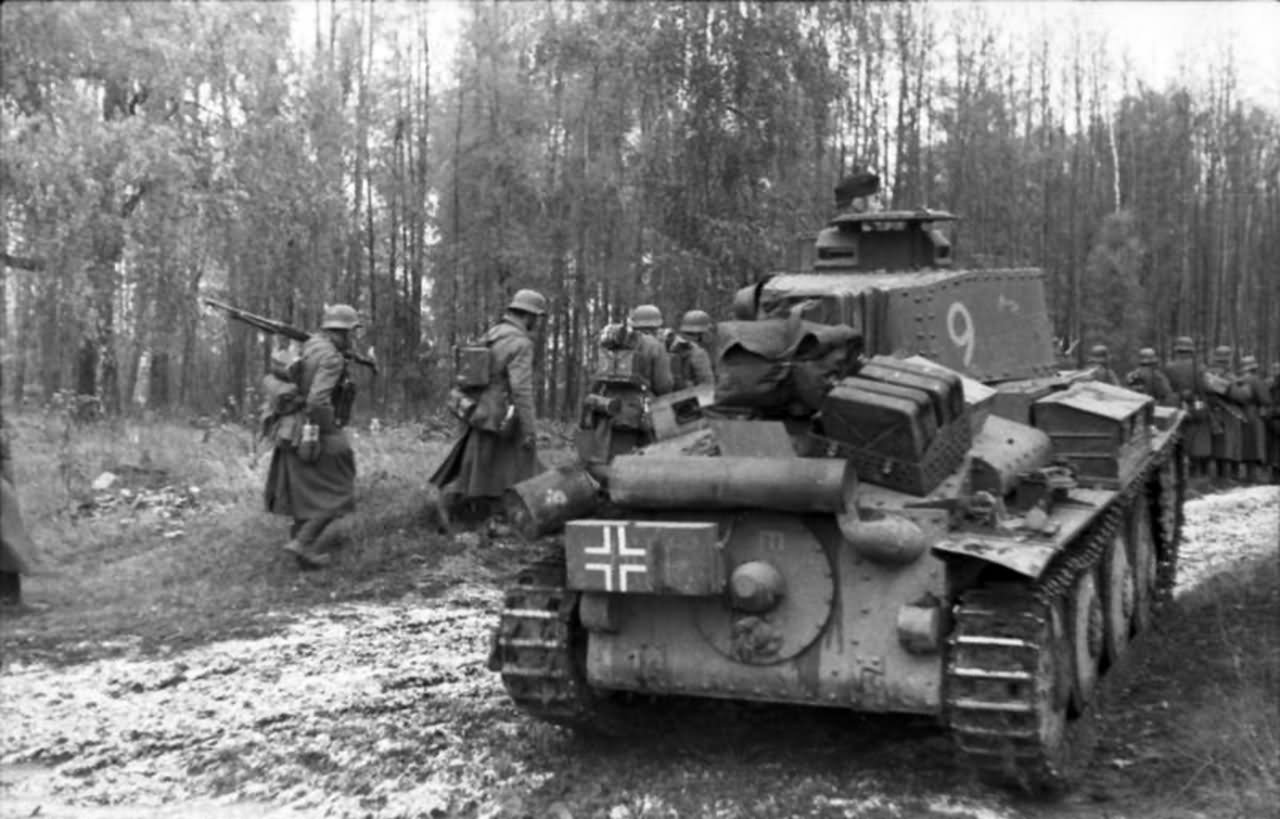
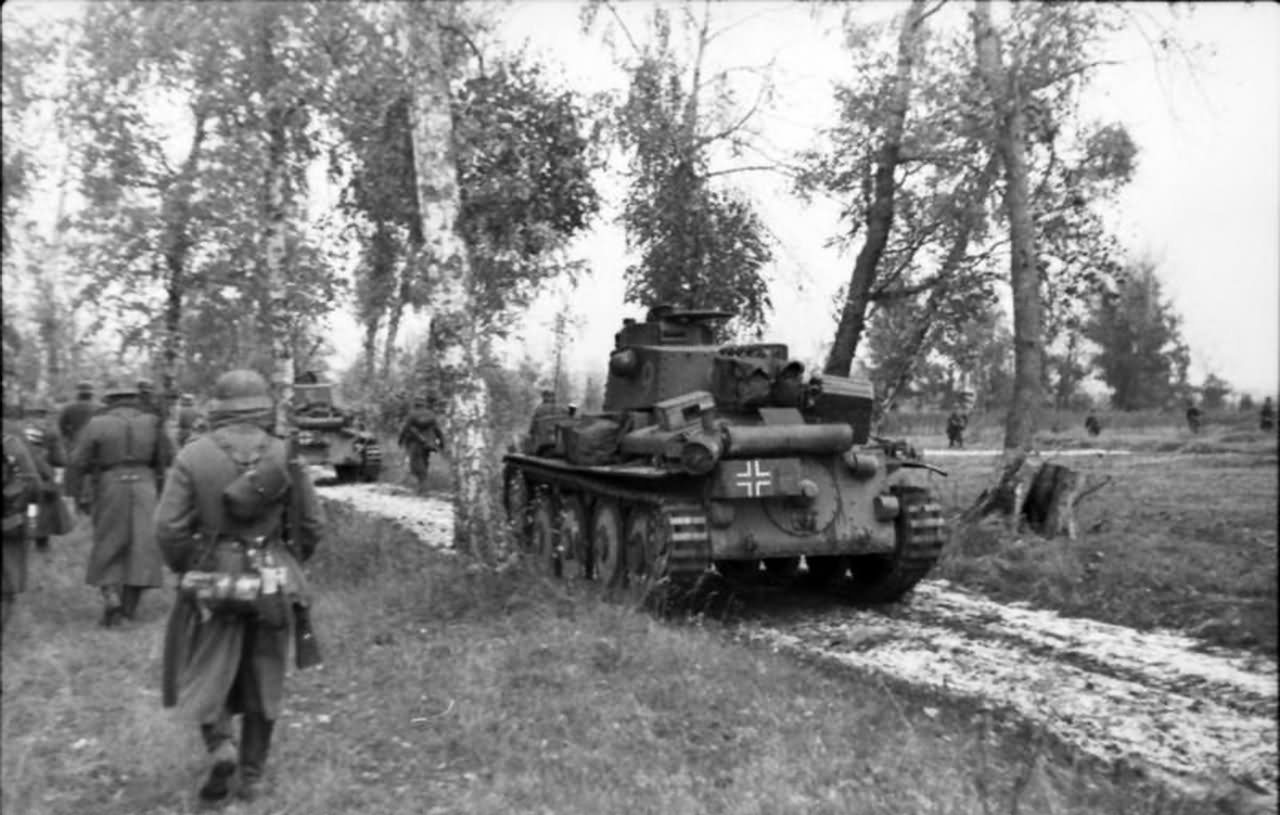
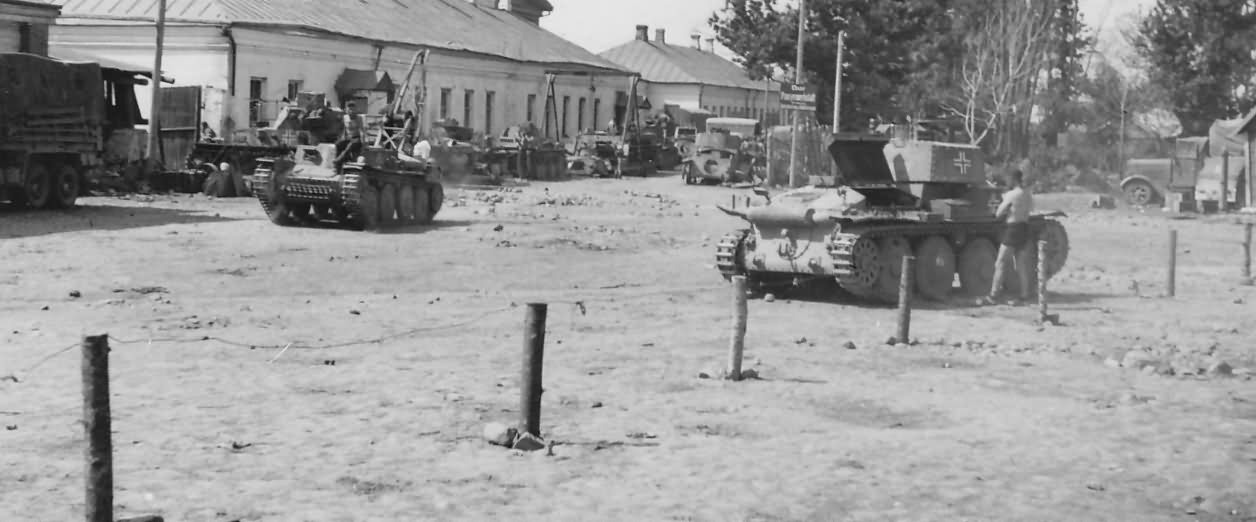
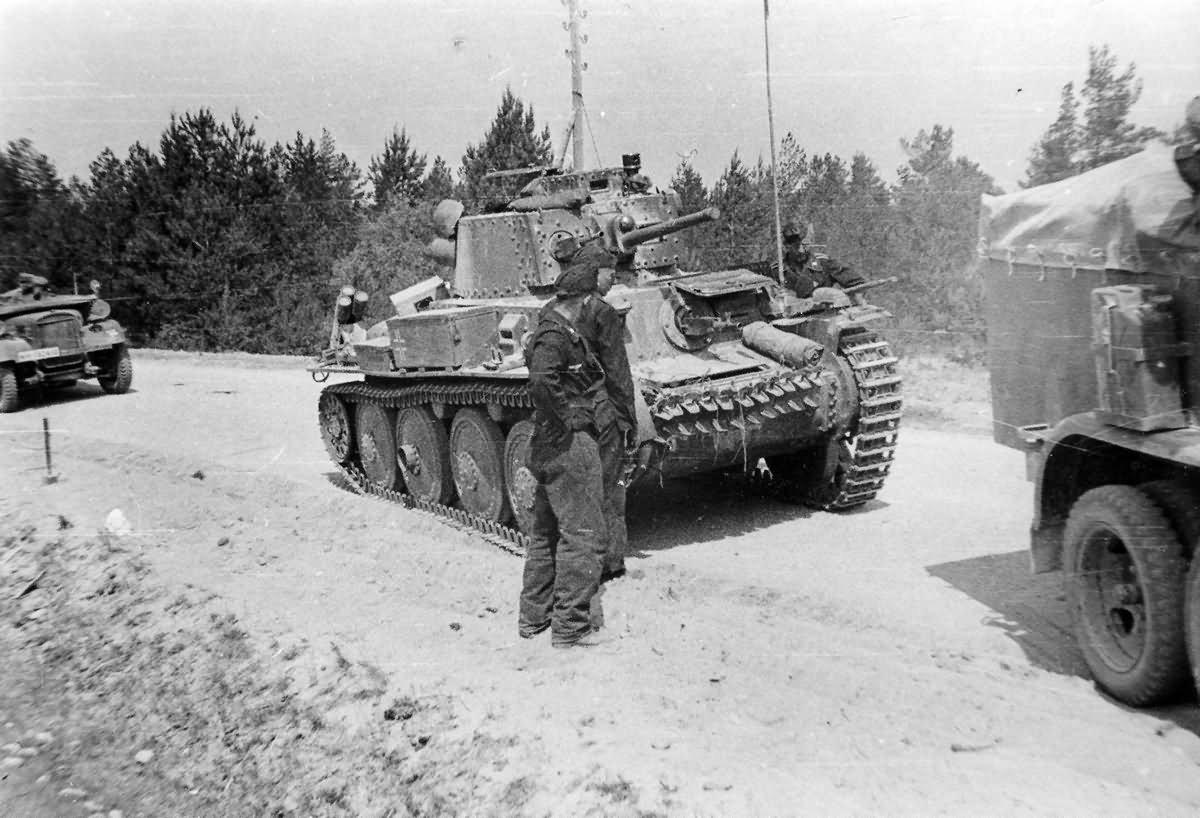
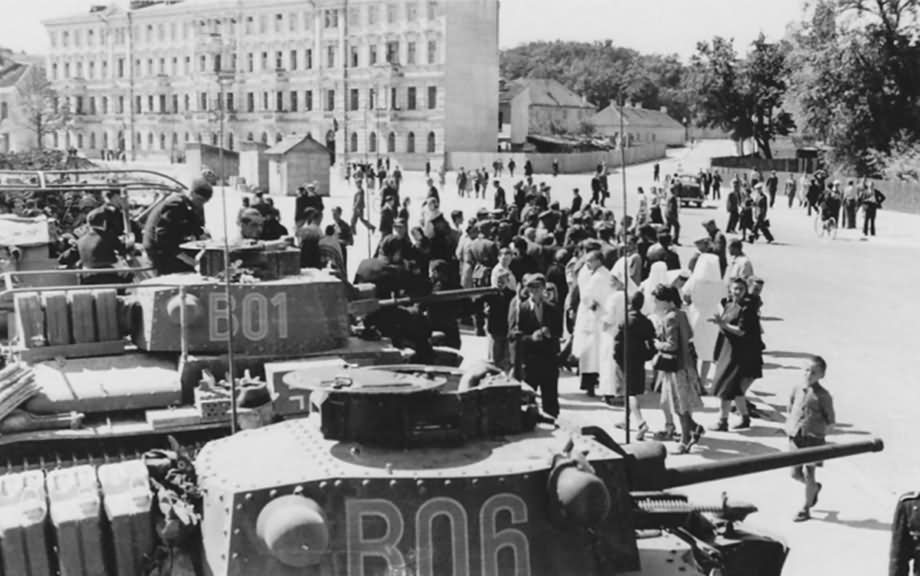
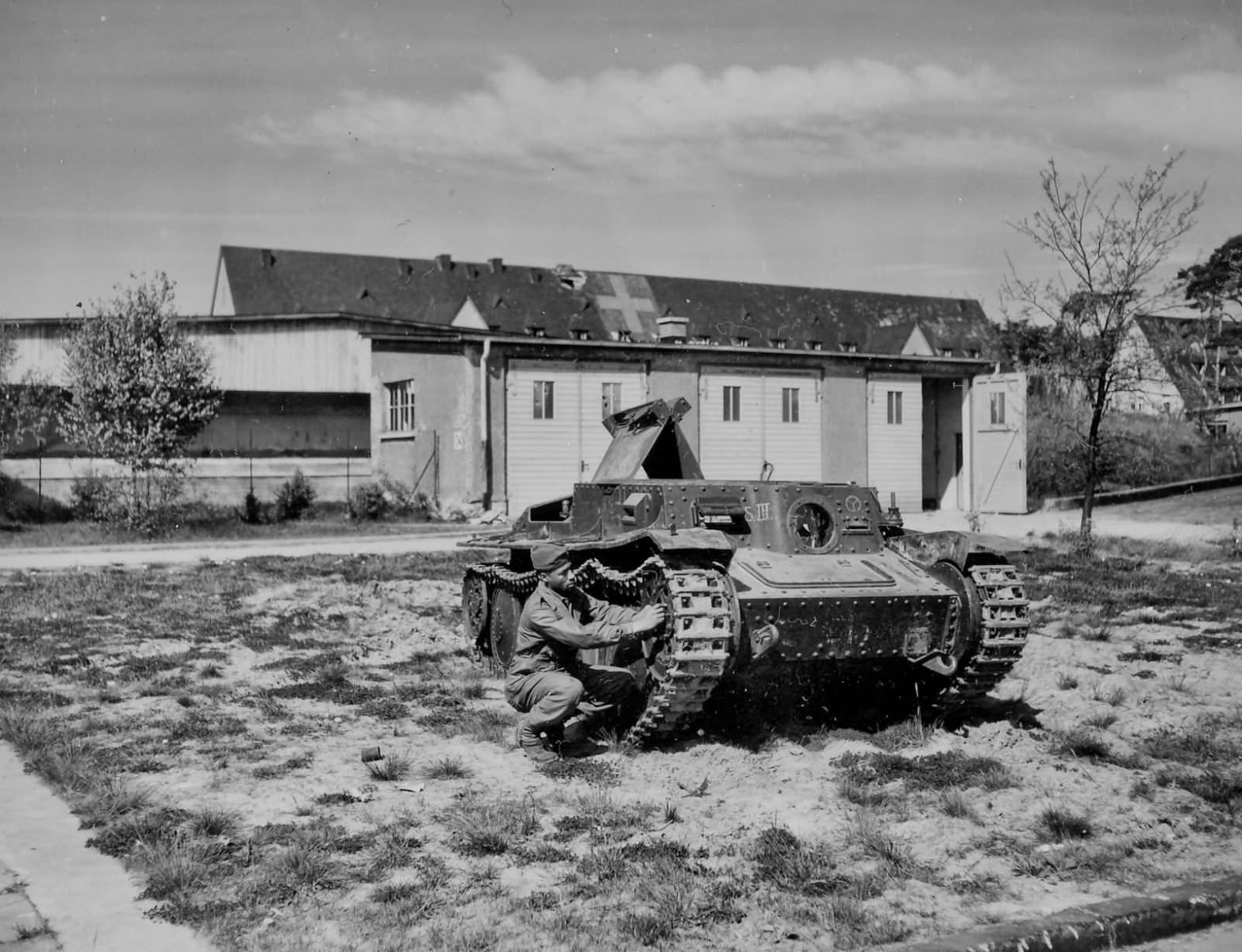
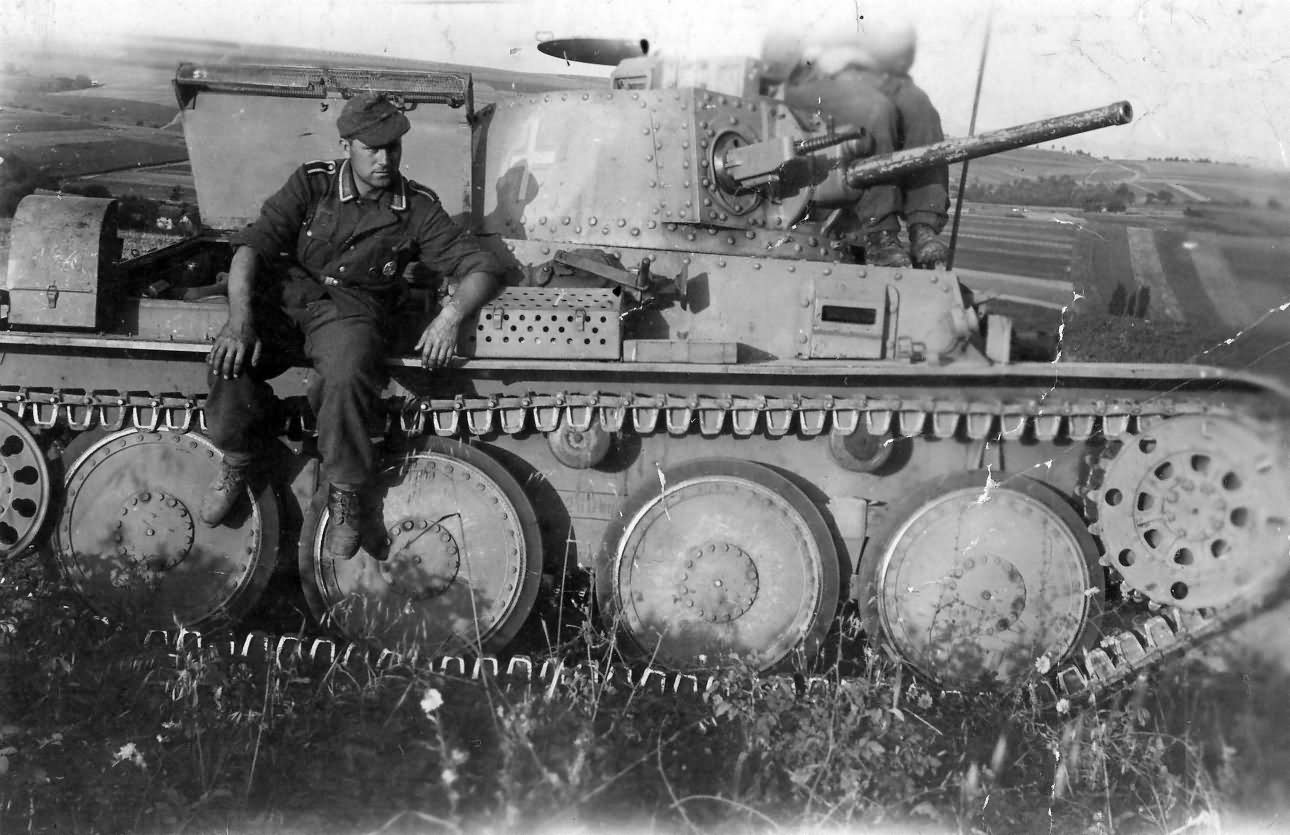
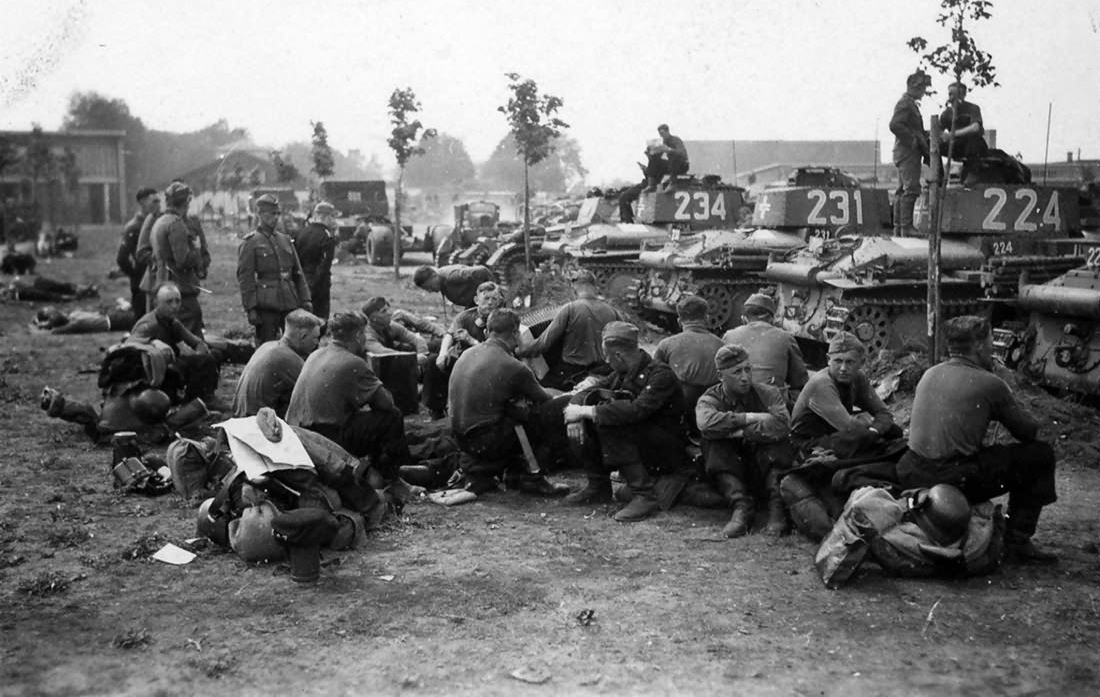
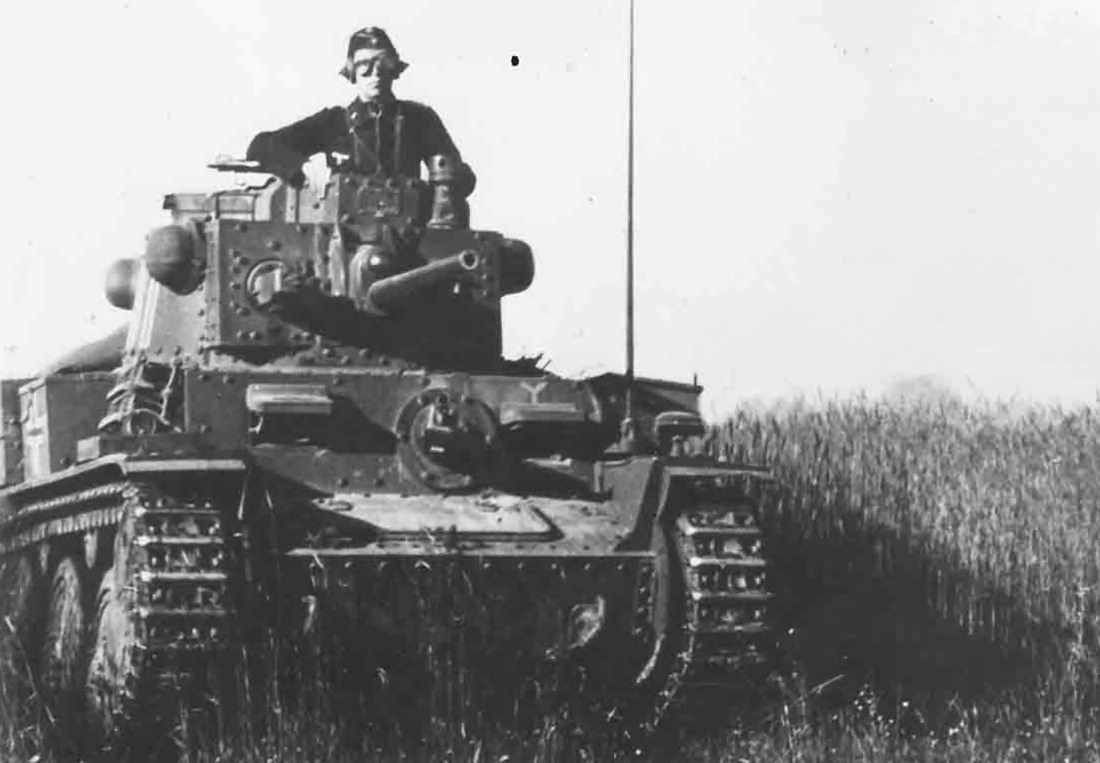
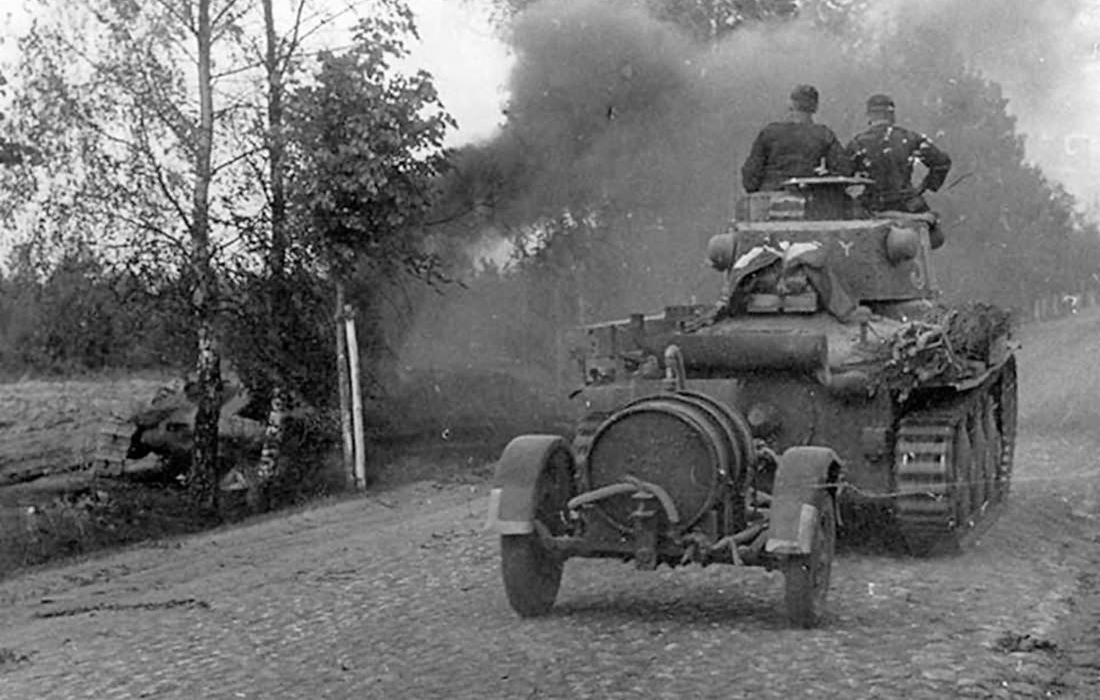
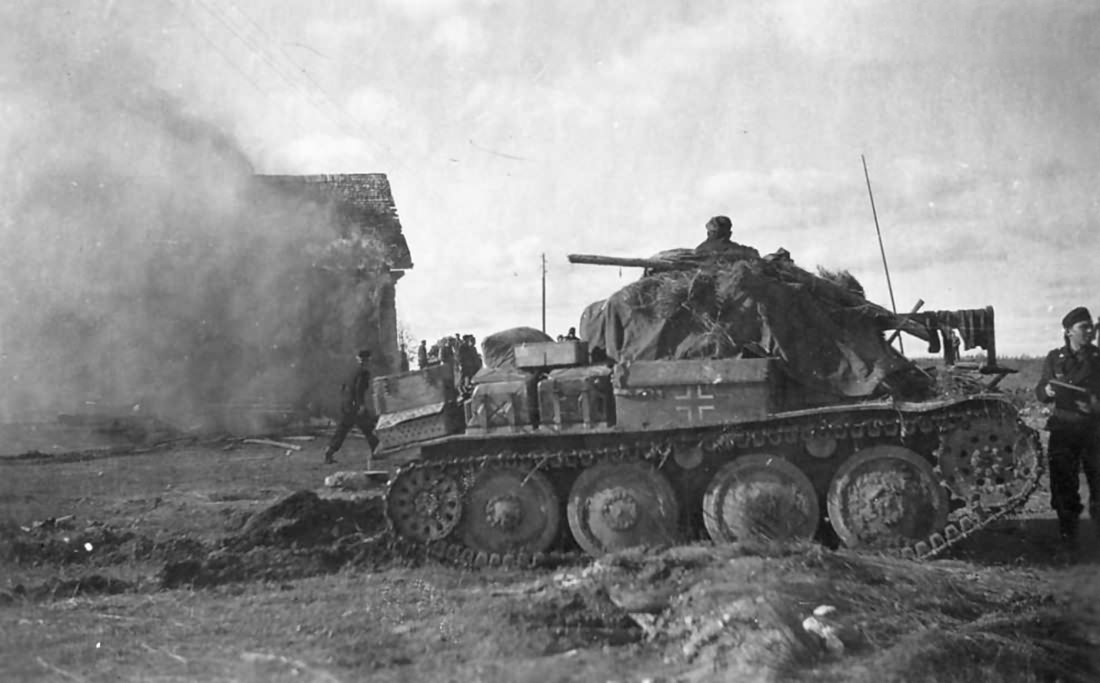
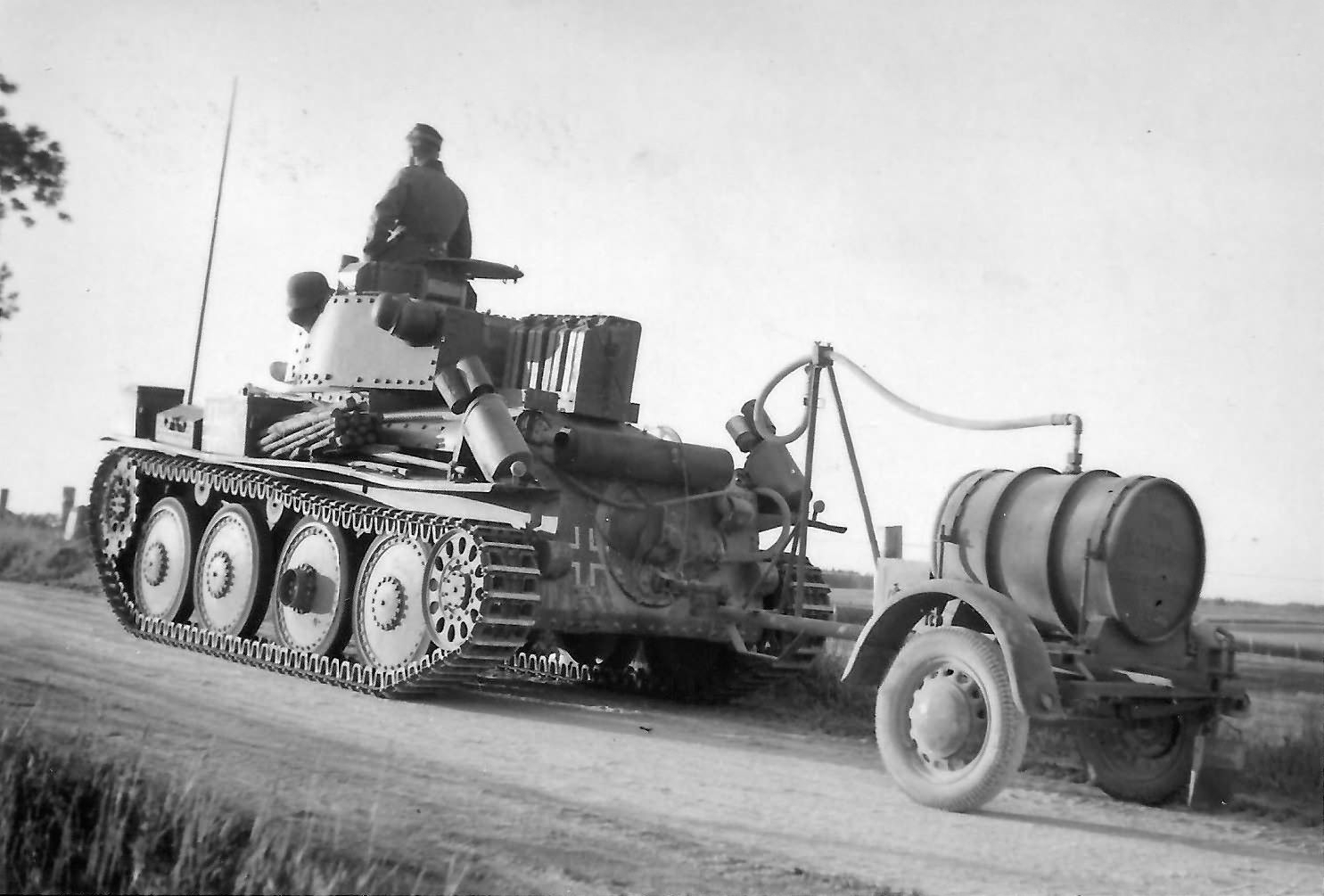
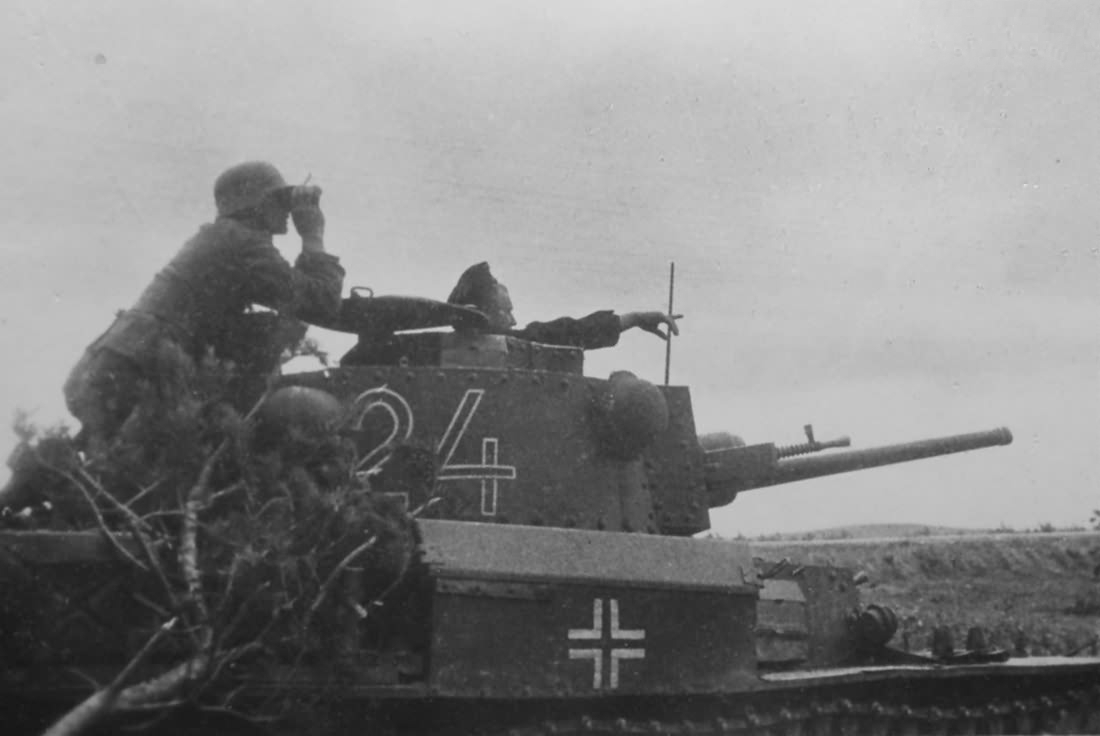
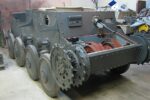
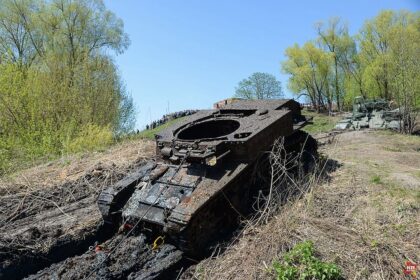
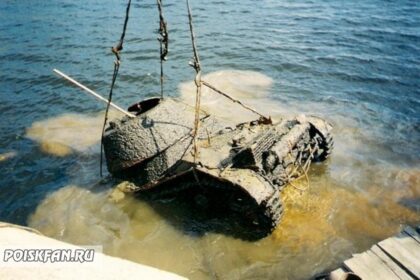
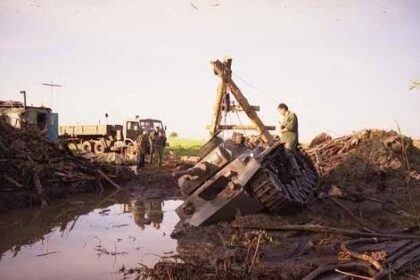
Panzerkampfwagen 38(t) (originally developed as the LT vz. 38 or Praga TNH) was a Czechoslovak light tank designed by ČKD prior to World War II. Seized by Germany after the occupation of Czechoslovakia in 1939, it was integrated into the Wehrmacht as a key component of its armored forces, compensating for shortages of early Panzer III units. Armed with an effective 3.7 cm KwK 38(t) L/47.8 main gun and featuring a reliable, low-maintenance chassis, the tank went through multiple production variants (Ausf. A through G) that progressively upgraded its frontal armor from 25 mm up to 50 mm, simplified construction, and introduced a flat front plate. Although its main weakness remained its riveted hull armor—which created lethal interior spalling when struck—over 1,400 gun tanks were built until mid-1942, and its chassis proved so adaptable that it continued production throughout the war as the base for iconic self-propelled guns and tank destroyers like the Marder III and Hetzer.