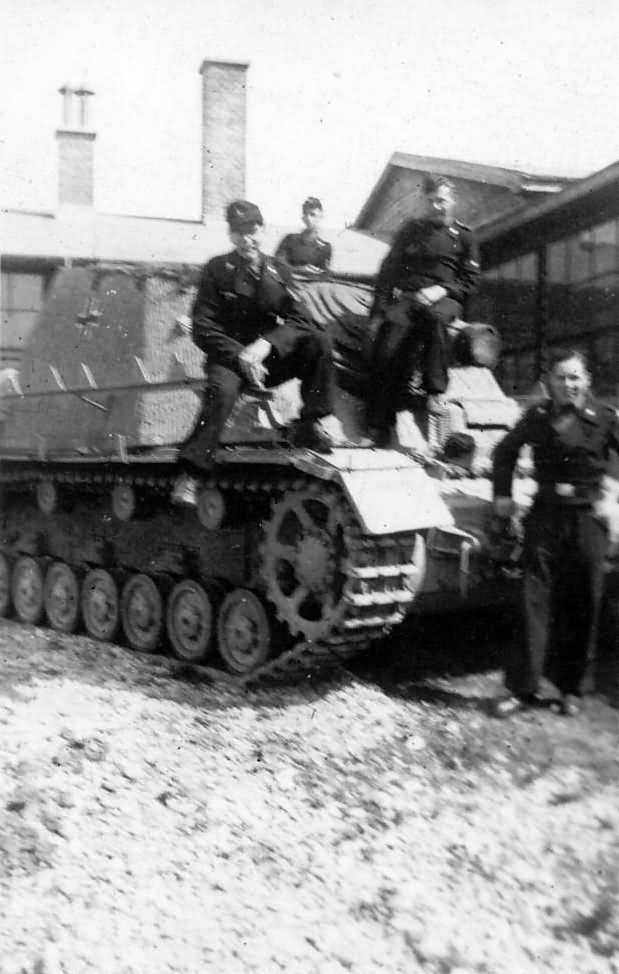
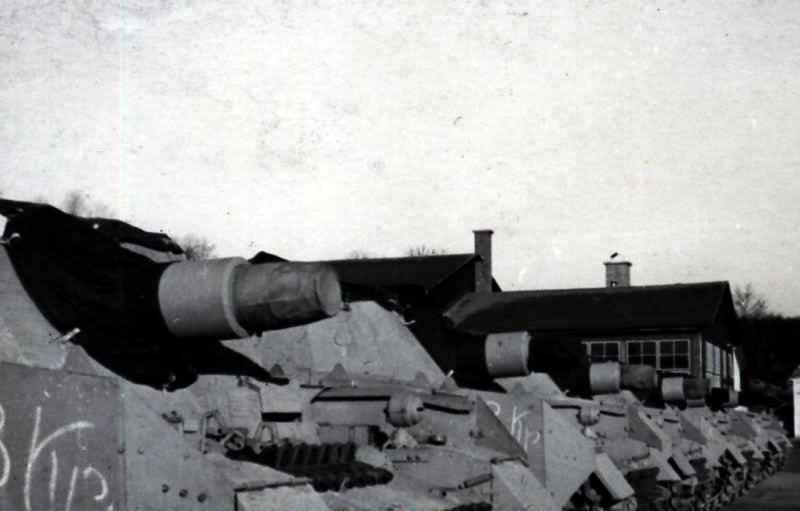
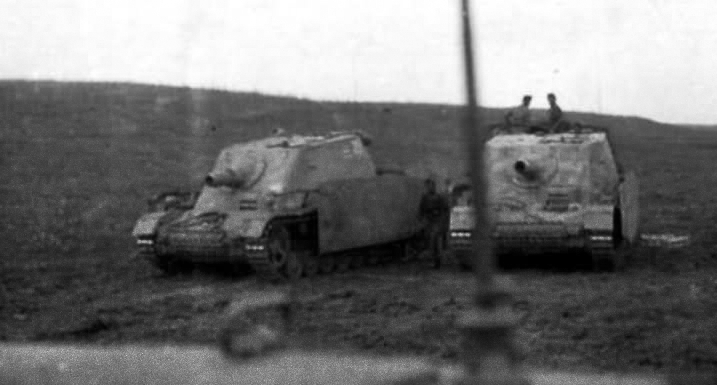
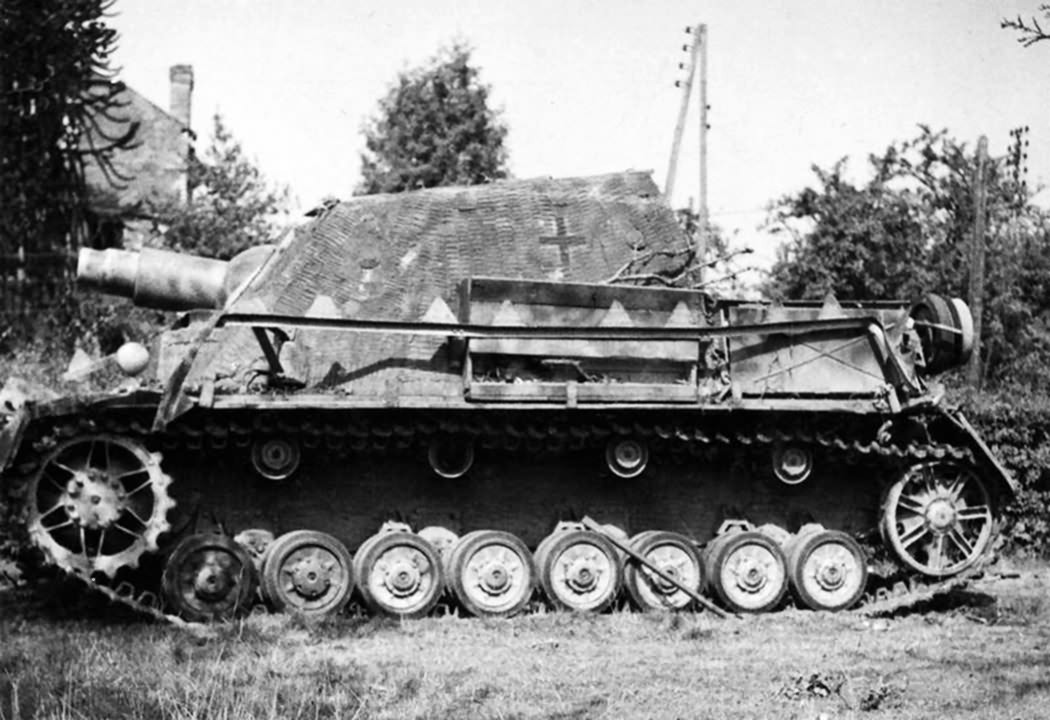
Sturmpanzer (Sd.Kfz. 166, Sturmpanzer IV)—commonly known in post-war literature as the “Brummbär” (a nickname coined by Allied intelligence rather than German sources) and abbreviated by its crews as “Stupa”—was a German heavy assault gun developed on the Panzer IV chassis following urban combat lessons learned at Stalingrad. Engineered by Alkett, it mounted a short 150 mm StuH 43 L/12 howitzer inside a heavily armored casemate to provide powerful direct fire support. Production ran from May 1943 to March 1945 across multiple factories (yielding 306 units across four series), using both converted Panzer IV hulls and newly manufactured ones. Armed with 38 rounds of high-explosive and anti-tank ammunition, later series also incorporated a hull-mounted MG 34 for close defense against infantry. The Sturmpanzer debuted at the Battle of Kursk in July 1943 with the 216th Sturmpanzer Battalion and subsequently saw extensive service with specialized battalions on all major fronts, including Italy, Normandy, Holland, Hungary, and during the suppression of the Warsaw Uprising.