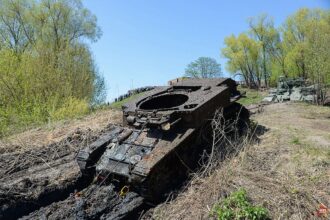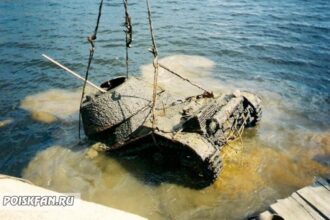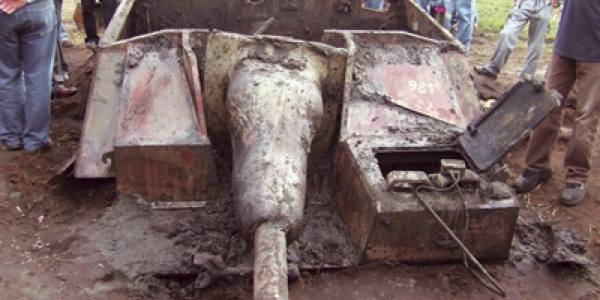
On January 18, 1945, as German forces retreated westward under intense pressure from the Soviet 1st Belorussian Front, a rare piece of World War II history met a watery fate near Koło, Poland.
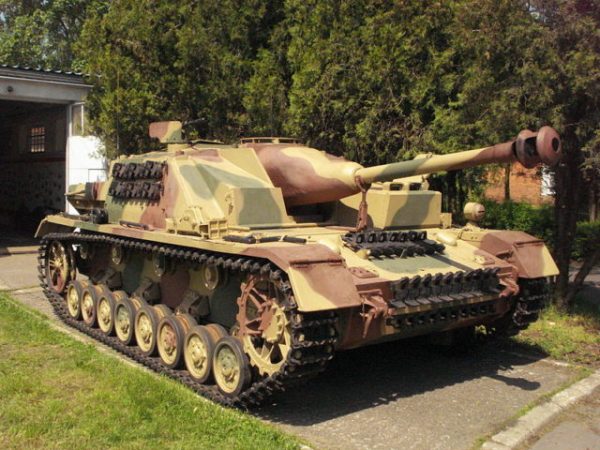
Decades later, the recovery and miraculous restoration of this StuG IV tank destroyer would shock historians and military enthusiasts worldwide.
A Fatal Decision on the Ice
During the chaos of the retreat, two StuG IVs were trundling toward Koło. When one vehicle broke down, its crew sabotaged it and fled. The second tank destroyer pushed on alone until it reached the Rgilewka River.
The river was frozen over, and the crew made the risky decision to attempt a crossing over the ice—a common but dangerous tactic on the Eastern Front.
- The Breakthrough: The ice couldn’t hold the heavy 23-ton armored vehicle. The StuG crashed through into the freezing water.
- The Crew’s Fate: Two of the four crew members escaped the sinking vehicle and found shelter in a nearby village, only to be captured and executed by Soviet forces the following day. The remaining two crewmen went down with the vehicle and were only recovered by locals the following spring.
Failed Post-War Recovery Efforts
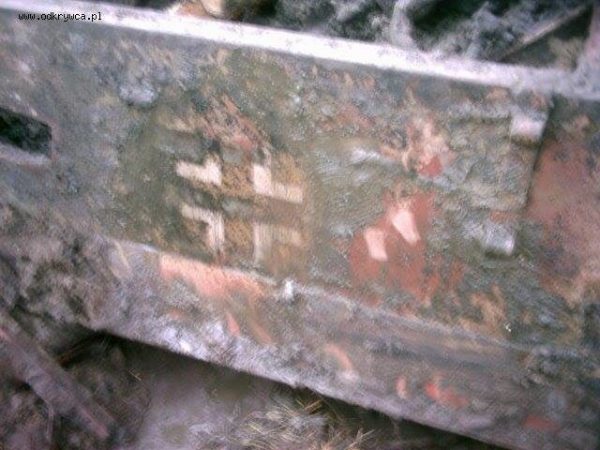
After the war, the empty tank destroyer sat submerged in the riverbed, mostly forgotten until the Polish military took notice in the mid-1950s:
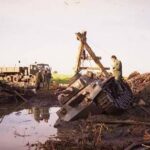
- First Attempt (1954): Two tanks were brought in to pull the StuG out, but bogged-down equipment and snapping cables halted the operation.
- Second Attempt: A heavy railway crane was deployed to lift the vehicle. However, the StuG was so heavily bogged down with silt and water that it nearly pulled the crane into the river.
Defeated, the military abandoned the project, leaving the StuG submerged for another 50 years.
The 2006 Rediscovery and Operation
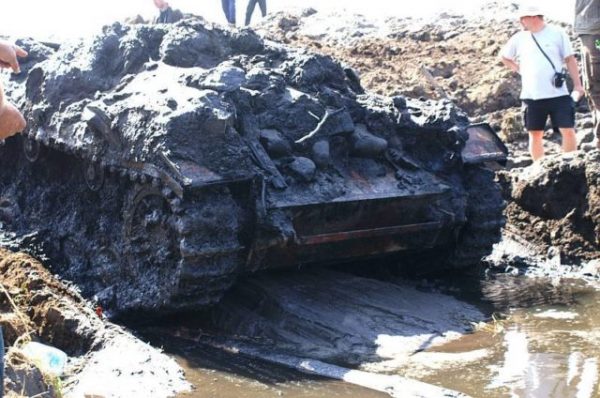
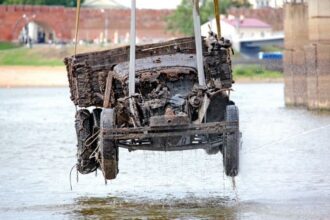
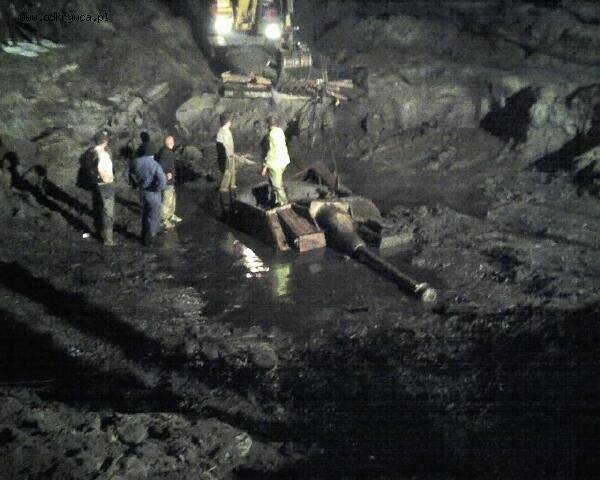
In 2006, historians revived the project. The tank destroyer was located beneath 10 feet of mud and silt.
Safety Warning: Because unexploded ordnance and human remains were suspected to be inside, a multidisciplinary team—including heavy equipment operators, divers, engineers, historians, and police—had to coordinate the complex recovery.
While no human remains were found inside, the team successfully recovered 49 live rounds for the main gun before transporting the vehicle to the Armored Warfare Museum in Poznań.
A Time Capsule Under Water
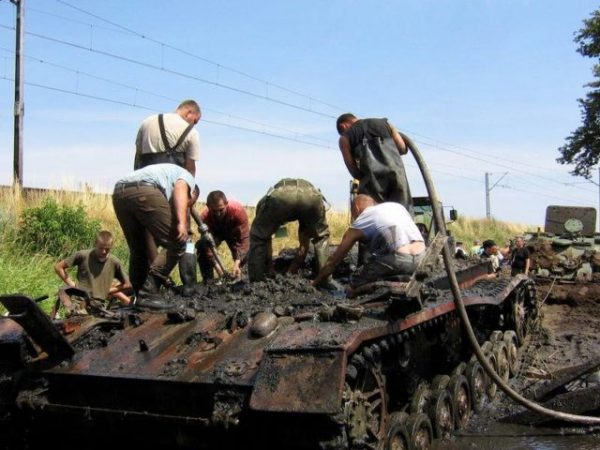
When historians began stripping the vehicle down to its bare hull, they discovered something remarkable. The low-oxygen environment at the bottom of the river had preserved the tank in extraordinary condition after more than 60 years underwater.
- Nearly Brand New: The odometer showed only 211 km (131 miles) on the clock when it sank.
- Community Support: Military collectors from all over the world donated missing or damaged original parts free of charge to help rebuild it.
The Engine Fires Up Again
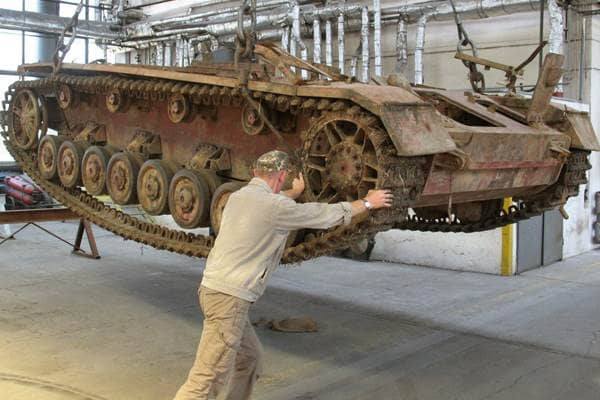
The most incredible milestone of the entire restoration process involved the vehicle’s engine—a Maybach HL 120 TRM:
After being completely stripped, inspected, and reassembled, engineers found no internal rust or corrosion. Aside from replacing a few gear wheels, the original components were completely intact.
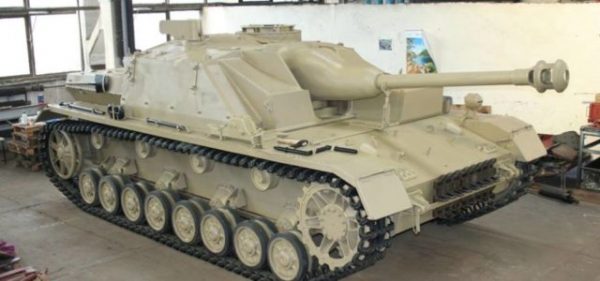
In 2009, after being filled with fresh fluids, the engine was fired up for the first time since 1945. By the end of that same year, the entire vehicle was completely restored and repainted—an astonishingly fast turnaround for such a complex project.
Today, this fully operational StuG IV stands in Poznań as one of only a few surviving examples in the world.