A centuries-old discovery on a remote beach in Australia is challenging everything we thought we knew about the nation’s early maritime history.
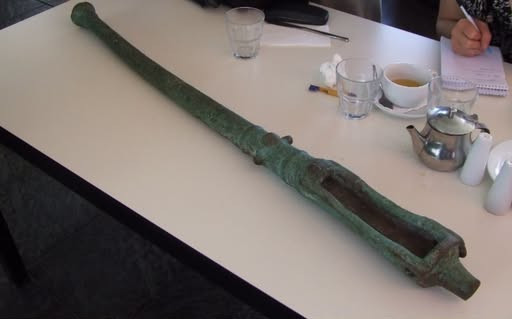
New scientific dating tests reveal that a bronze swivel gun—discovered on a Northern Territory beach back in 2010—sat buried on the seabed for up to 250 years. This timeline suggests that foreign seafarers visited Australian shores well before Captain James Cook’s famed arrival in 1770.
A Surprise Find at Dundee Beach
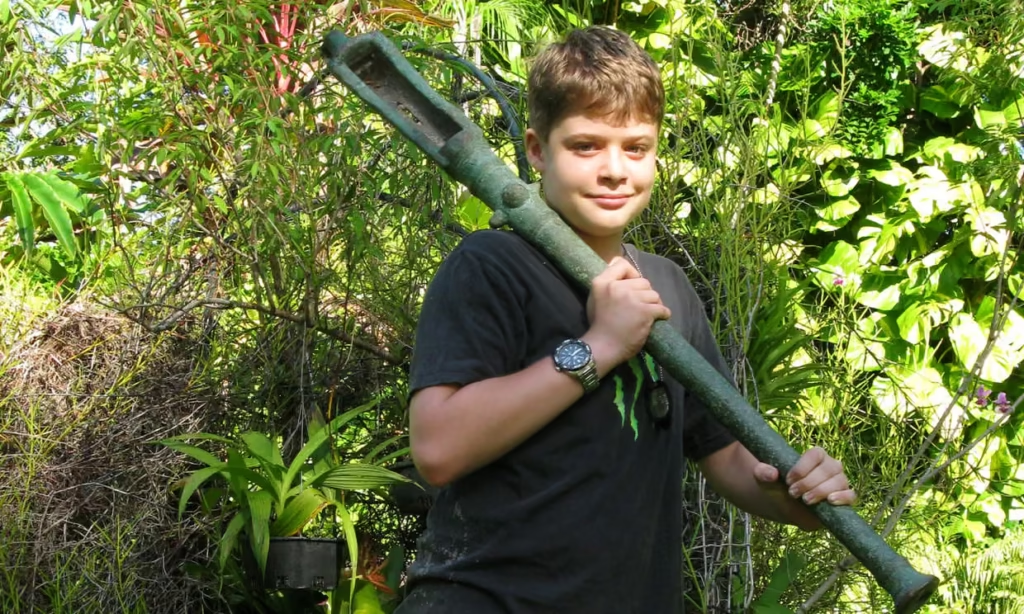
The story began when Christopher Doukas, a young boy from Darwin, stumbled upon the 107-centimeter-long anti-personnel artillery piece buried in the sand during an unusually low tide at Dundee Beach.
“The cannon is one of the most significant historical artefacts ever found in northern Australia.”
— Tim Stone, Australian Geomorphologist and Past Masters member
Stone believes this single find could alter the timeline of Australian history books.
Where Did the Swivel Gun Come From?
Initial speculation suggested the weapon might have belonged to 16th-century Portuguese explorers. However, researchers from the Past Masters—a multidisciplinary team solving historical mysteries—now point in a different direction.
They believe the gun likely belonged to Macassan or other Indonesian sailors around 1760:
- Trepang Trade Era: The estimated date aligns with the onset of the Macassan sea cucumber (trepang) trade, a period when Indonesian vessels frequently explored southern waters.
- Accidental Contact: The weapon may have arrived on Australian shores after an Indonesian ship was blown off course during a storm.
The Science Behind the Discovery
To establish when the gun was buried, geochronologist Matt Cupper from the University of Melbourne analyzed sediment taken directly from inside the barrel.
Using optically stimulated luminescence (OSL) dating, Cupper confirmed that the gun had been submerged and buried in the sand for approximately two and a half centuries.
“With the help of these tests the Past Masters hope to learn more about the exact age and origin of the cannon.”
— Ian McIntosh, Adjunct Professor of Anthropology (Indiana University)
Scientists in both Australia and North America are now conducting detailed metallurgical analyses to trace the exact origin of the bronze used to cast the weapon.
Rethinking Australia’s Historical Timeline
Traditionally, historians recognized Dutch explorer Willem Janszoon (1606) and Dirk Hartog shortly after as the first foreign seafarers to reach Australia, followed by Captain Cook in 1770.
However, recent archaeological evidence tells a broader story:
- The Dundee Beach Cannon: Points to pre-Cook contact with Asian seafaring neighbors around the 1760s.
- Ancient African Coins: In 1944, five 1,000-year-old coins from the ancient African Kingdom of Kilwa were discovered in the Northern Territory, hinting at even earlier transoceanic contact.
As testing continues, discoveries like the Dundee Beach cannon prove that Australia’s history before European settlement was far more interconnected than previously believed.