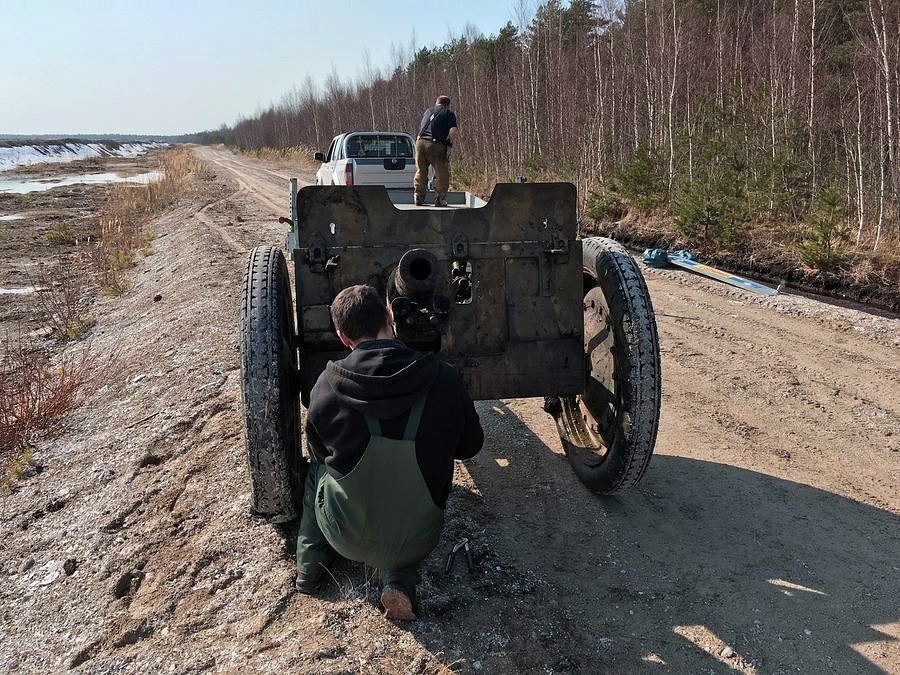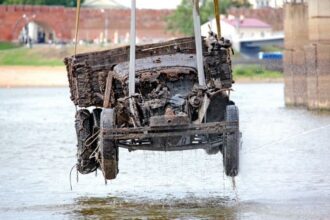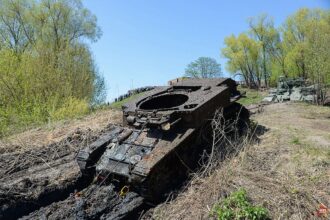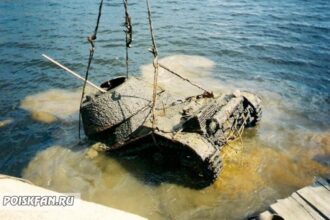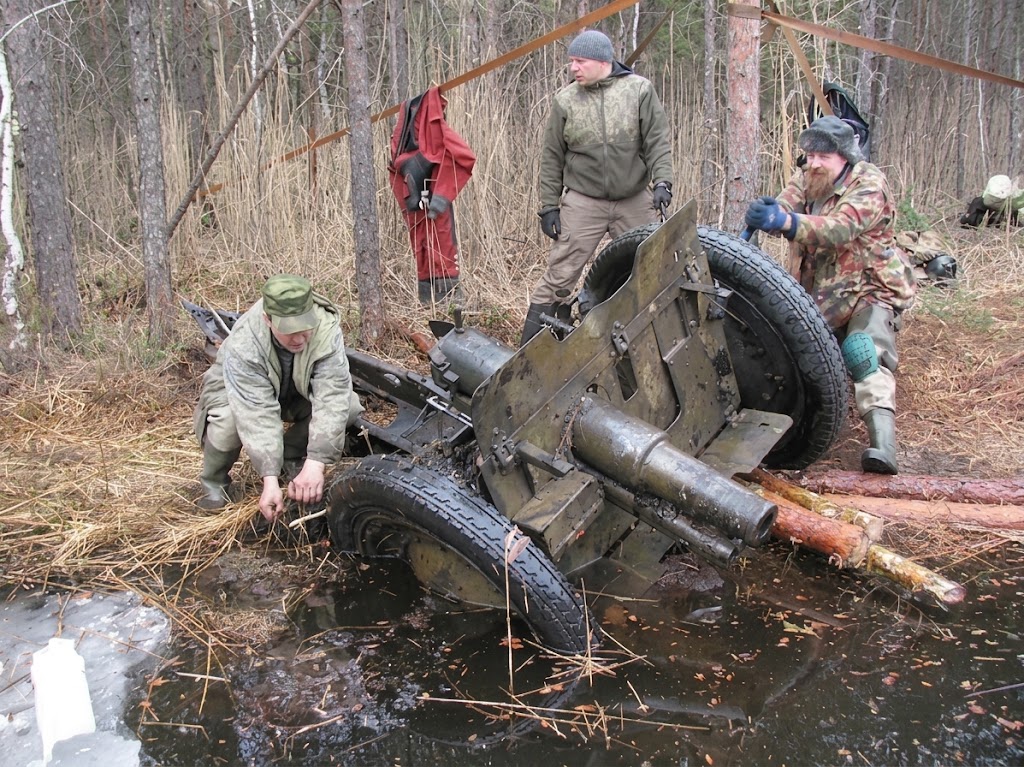
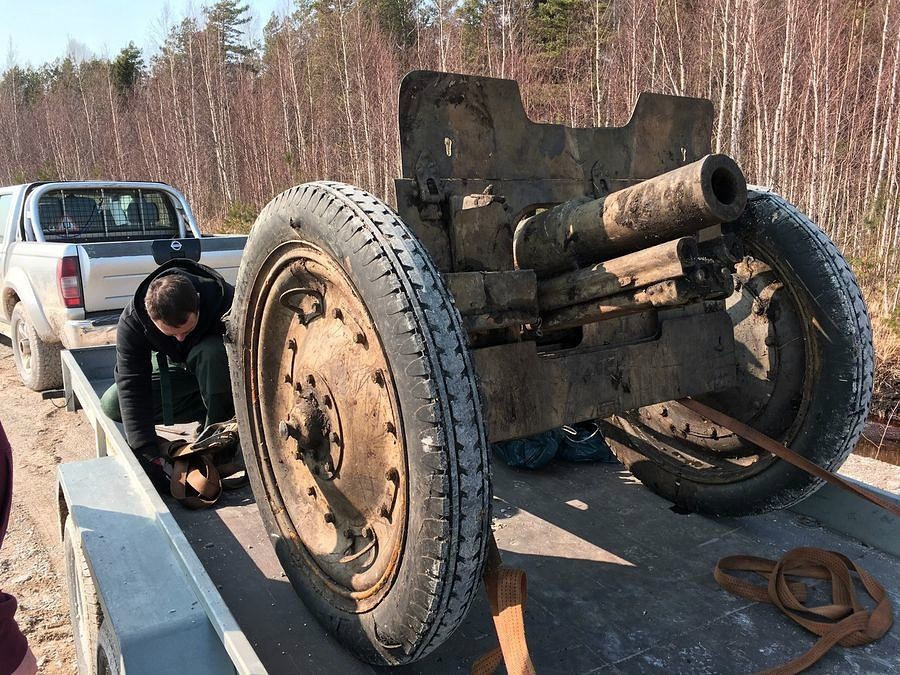
After resting beneath seven meters of swamp water and mud for over seven decades, a World War II artillery piece has finally seen the light of day. Dedicated military history enthusiasts from Ida-Viru County successfully pulled a remarkably preserved cannon from deep within an Estonian wetland, concluding a massive recovery operation.
A Three-Year Search
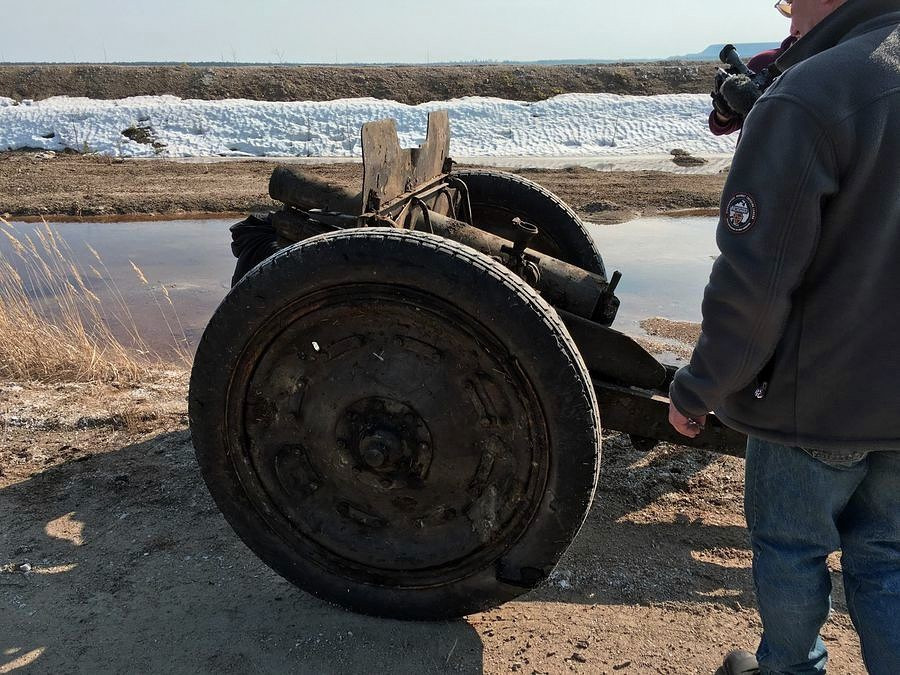
The extraction took place in the Kõrgesoo marshlands near Narva. The weapon—officially identified as a 76mm regimental cannon, Model 1927—was brought to the surface with the critical assistance of a specialized diver. Finding the artifact was no accident; the recovery was the culmination of a painstaking three-year search heavily guided by historical archival records.
According to Igor Sedunov, a board member of the Otsing War History Club, the artillery piece was swallowed by the swamp during a fierce battlefield engagement in April 1944.
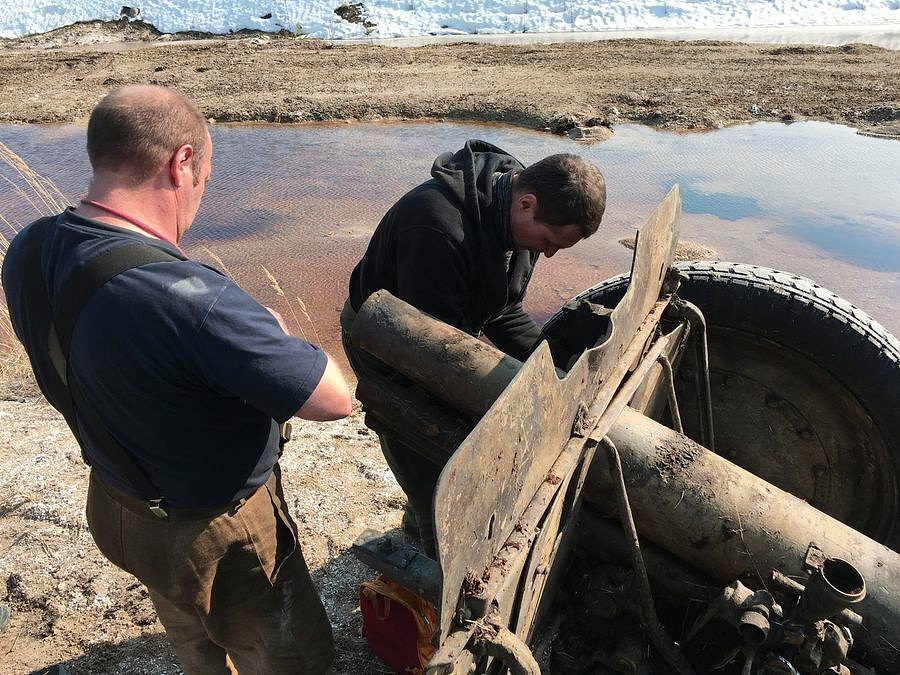
“This cannon fought here in the swamp… and during the battle it sank,” Sedunov explained, highlighting the harsh realities of the Eastern Front.
Built for the Harsh Terrain
Weighing approximately 800 kilograms, this specific cannon model was highly valued by the Red Army for its mobility. During the unforgiving winter months, these relatively lightweight 76mm cannons, alongside 45mm anti-tank guns, could be easily transported across the frozen bogs.
Today, the newly recovered artifact bears the literal scars of its violent past. Researchers have already noted visible bullet and shrapnel marks across its surface, as well as distinct evidence of hasty wartime field repairs.
Preservation and Future Display
Sedunov expressed deep gratitude to the Estonian National Heritage Board and the Laidoner Museum for their ongoing partnership, which allows local historical groups to actively preserve regional military heritage.
Because the heavy fighting occurred exactly in this region, the recovery team hopes to exhibit the weapon locally at the Sinimäe Museum in Ida-Viru County, pending final approval from the authorities.
The artifact is currently undergoing a delicate conservation process. The team is meticulously washing the weapon and applying specialized treatments designed to protect and preserve its original paint. Thanks to its surprisingly good condition, this extraordinary piece of World War II history is expected to be ready for public viewing in just a month or two.