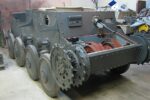
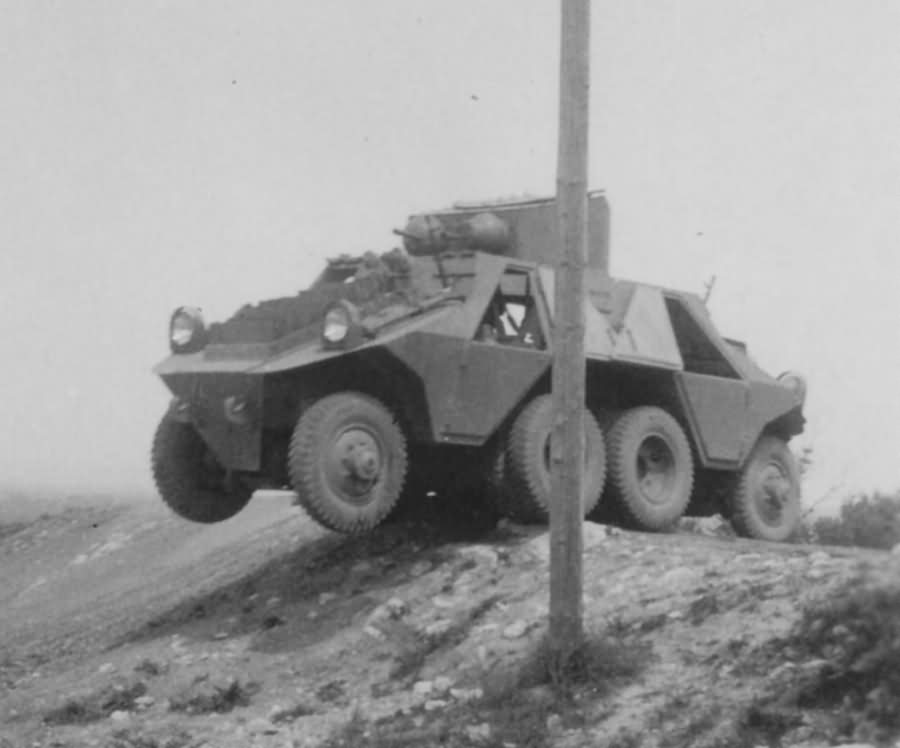
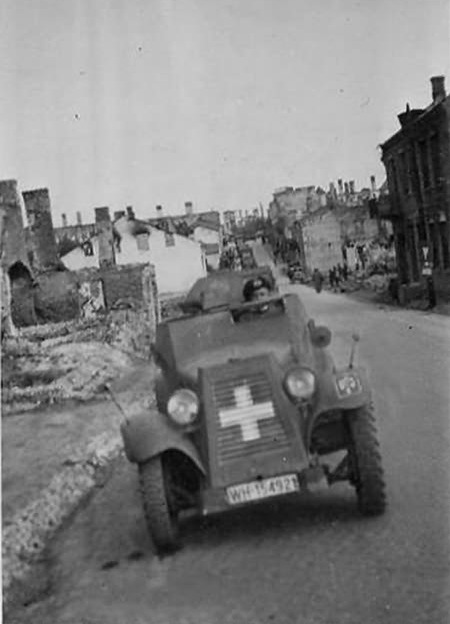
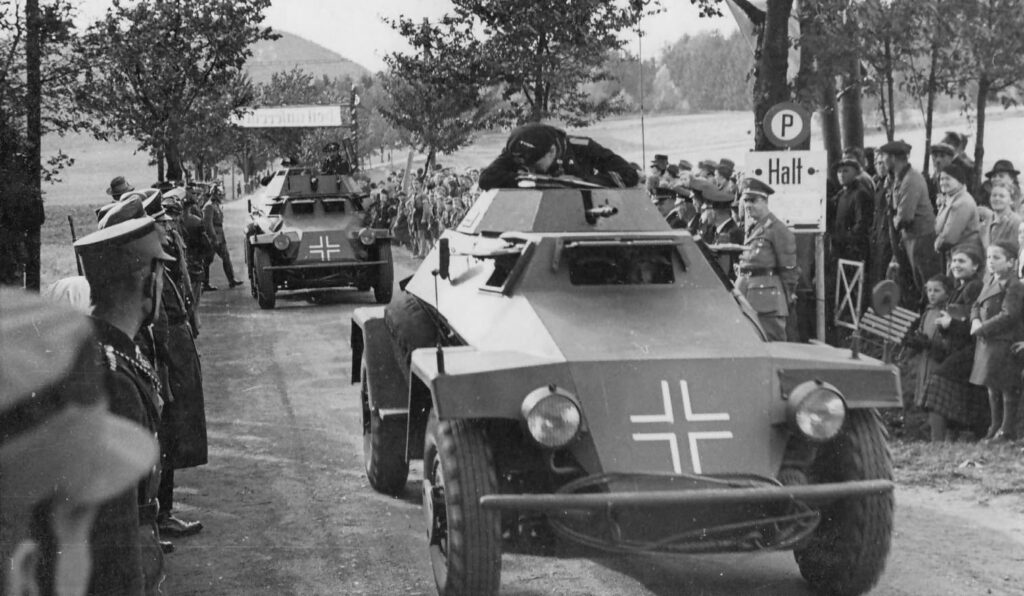
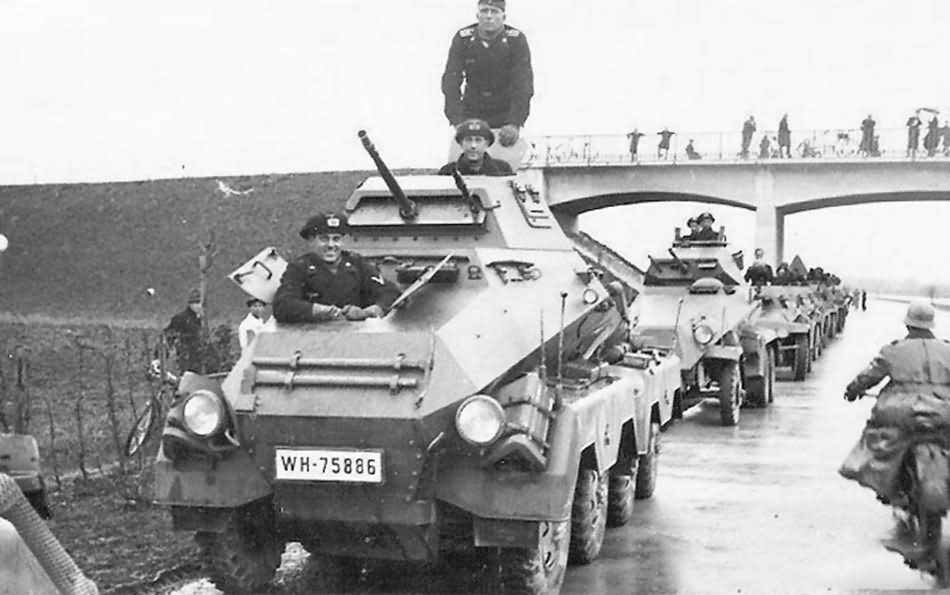
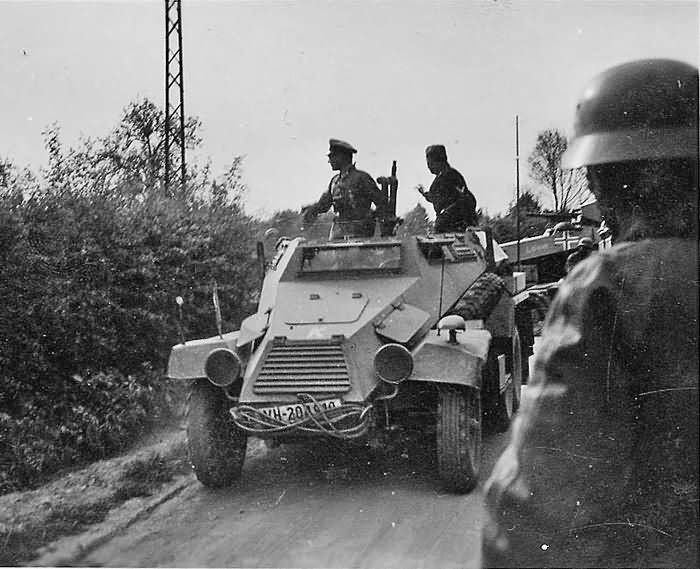
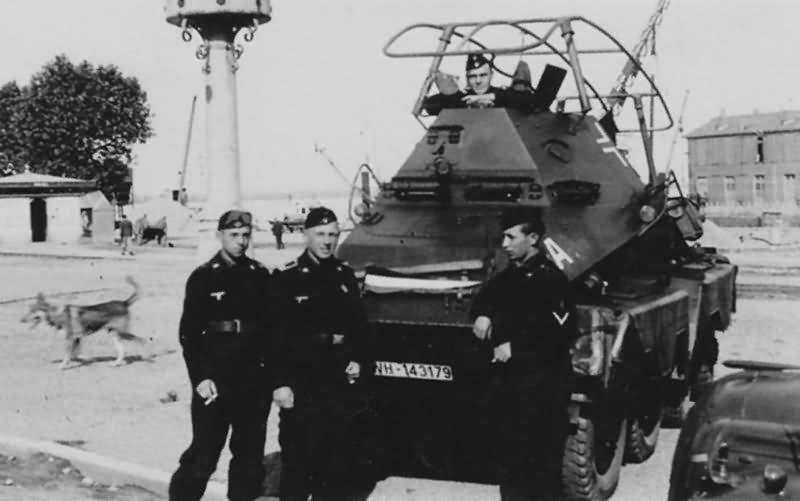
German wheeled armored vehicles—specifically reconnaissance (Panzerspähwagen) and command variants—formed the vital eyes, ears, and communications backbone of the Wehrmacht’s mechanized forces during World War II. Developed in the 1930s under strict secrecy to bypass Treaty of Versailles restrictions, these vehicles were tailored to meet the demanding mobility, speed, and real-time intelligence requirements of Blitzkrieg doctrine. Spanning light 4×4 scouts to sophisticated 8×8 heavy armored platforms, this diverse family of wheeled armor ensured that German commanders could maintain constant forward reconnaissance and operational control across vast battlefields.The development began with simple, improvised stopgaps like the Kfz. 13 (scout) and Kfz. 14 (radio car). Built on commercial Adler 4×4 passenger chassis with open-topped armor plates, these early vehicles provided essential initial training and saw limited action in Poland and France before being relegated to secondary training duties. Following the 1938 Anschluss, Germany incorporated the innovative Austrian-designed Steyr ADGZ, a heavy 8×8 dual-driving armored car armed with a 20 mm cannon. Recognized for its exceptional maneuverability, the ADGZ was later reproduced for the Waffen-SS and deployed extensively for rear-guard security and anti-partisan operations.The standard frontline light reconnaissance capability rested on the Leichter Panzerspähwagen (Sd.Kfz. 221/222/223) series, built on a specialized Horch 801 4×4 chassis featuring all-wheel drive and all-wheel steering. The foundational Sd.Kfz. 221 provided light scouting armed with a machine gun or heavy anti-tank rifle. Its far more famous derivative, the Sd.Kfz. 222, became the ubiquitous German light armored car, equipped with a 20 mm KwK autocannon and machine gun in an open-topped turret fitted with anti-grenade wire mesh screens. For long-range communication, the Sd.Kfz. 223 variant replaced the heavy cannon with powerful radio equipment and a prominent folding frame antenna, maintaining continuous contact between lead scouts and headquarters.For extended deep-penetration reconnaissance and heavy fire support, Germany engineered the Schwerer Panzerspähwagen series. Initially built on 6-wheeled commercial chassis and quickly superseded by advanced 8×8 all-wheel-drive platforms, these heavy vehicles offered exceptional cross-country capability. The Sd.Kfz. 231 served as the primary heavy recon gun car, while the Sd.Kfz. 232 added long-range radio installations. As armored units required more firepower, the Sd.Kfz. 233 Stummel was introduced, mounting a short-barreled 7.5 cm KwK 37 gun for direct infantry support. Command functions were handled by specialized vehicles like the Sd.Kfz. 263, a fixed-superstructure radio hub, and the Sd.Kfz. 247, an open-topped armored command vehicle built on 4×4 and 6×6 chassis specifically to carry staff officers.Ultimately, German wheeled armored reconnaissance and command vehicles proved immensely successful during the early victories in Western Europe and North Africa. However, as the war progressed onto the muddy, trackless expanses of the Eastern Front, their reliance on wheels over tracks exposed mobility limitations. Despite this, their engineering innovations, sophisticated radio integrations, and tactical doctrines left a lasting legacy on the evolution of modern military reconnaissance vehicles.
1