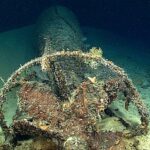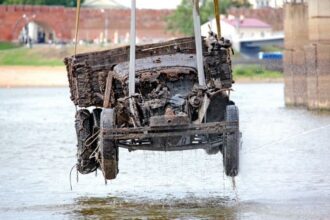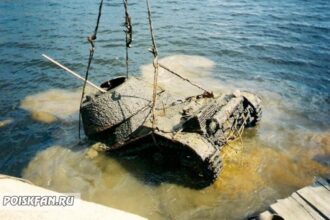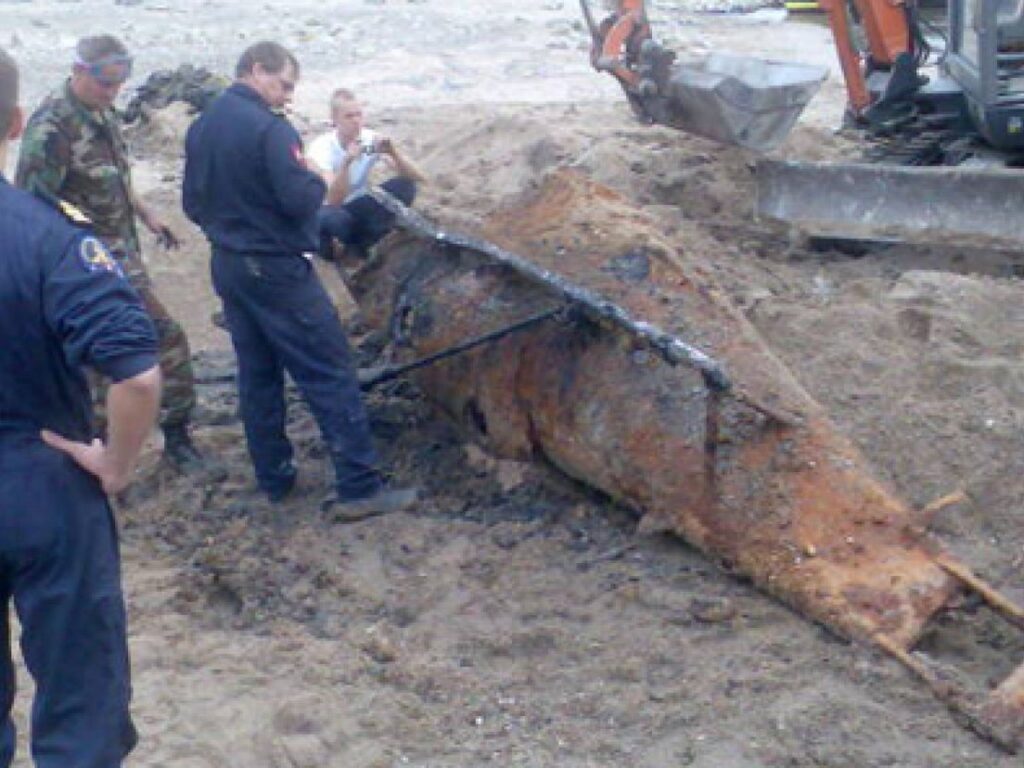
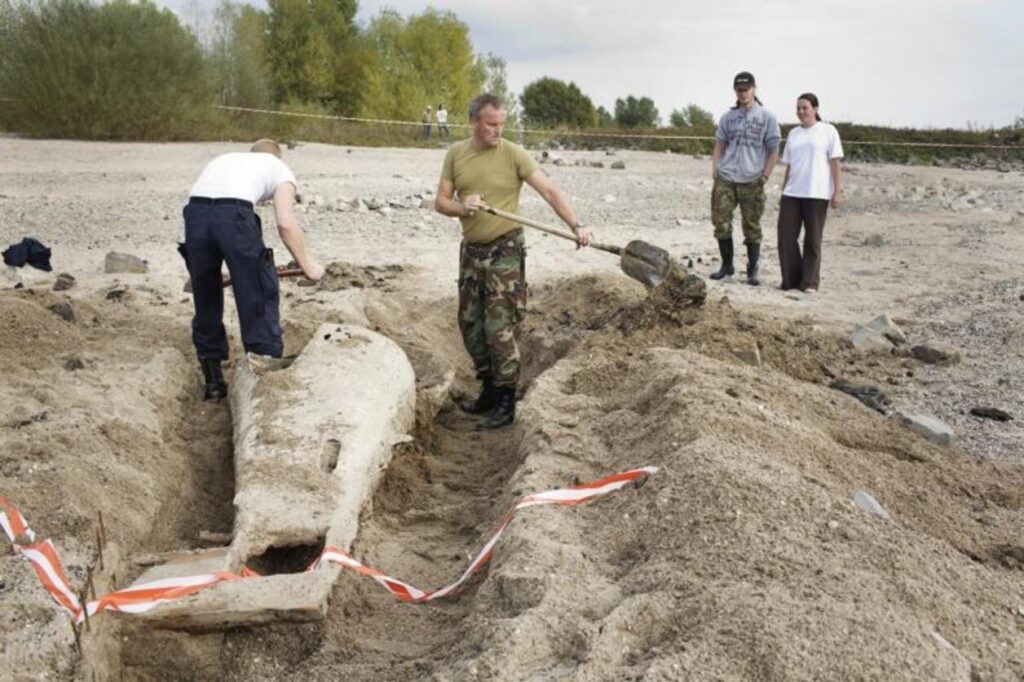
When Allied forces captured the critical river crossings at Nijmegen in September 1944, the German military made desperate, repeated attempts to destroy them. Decades later, a dramatic discovery near Gendt brought one of those forgotten missions back to light: a original World War II Biber midget submarine, raised from the mud of the Waal River.
The recovered vessel offers a striking window into the final, tumultuous months of the war in Western Europe—a time when specialized German units deployed unconventional weapons in high-stakes sabotage operations.
The Battle for the Nijmegen Crossings
Following the Allied capture of Nijmegen’s road and railway bridges on September 20, 1944, controlling these strategic choke points became a top priority for both sides. To halt the Allied advance into the Netherlands and Germany, the Wehrmacht unleashed a campaign of multi-domain attacks:
- Air and Submarine Strikes: Long-range bombing runs and riverine naval patrols targeted the structures.
- Elite Saboteurs: On September 29, 1944, German frogmen executed a daring covert operation, successfully detonating explosives that blew up the central arch of Nijmegen’s railway bridge.
Despite partial success, the crossings remained crucial Allied supply lines, prompting even more extreme measures in early 1945.
Enter the Kleinkampfverband and the January 1945 Assault
By January 1945, the Kriegsmarine turned to its newly formed Kleinkampfverband (Small Battle Units)—a specialized naval command created late in the war to conduct high-risk sabotage against Allied ports, shipping, and riverways using midget submarines and explosive motorboats.
Operating out of Emmerich, Germany, the unit launched several waves of single-pilot Biber (Beaver) midget submarines down the Waal River. Their objective was clear: navigate the swift currents unnoticed and launch torpedoes into the remaining bridge piers at Nijmegen.
Snared by Allied Defenses
The missions quickly turned catastrophic for the Biber pilots. Anticipating further underwater attacks after the September frogmen raid, the Allies had stretched heavy anti-torpedo nets across key sections of the river.
- Defeated Torpedoes: The physical nets effectively blocked incoming torpedoes from reaching the bridge structures.
- Trapped Submarines: The nets were so dense and hazardous that several Biber submarines became completely entangled in the underwater barriers, trapping their pilots in the riverbed.
The submarine recovered near Gendt was almost certainly one of the ill-fated vessels lost during these nighttime January attacks.
From the River Bed to Museum Preservation
After spending decades submerged beneath the Waal, the historic submarine was safely brought to the surface. Netherlands’ public works agency, Rijkswaterstaat, arranged for the historic artifact to be donated to a museum, ensuring that this rare relic of World War II naval warfare is preserved and made accessible to the public.