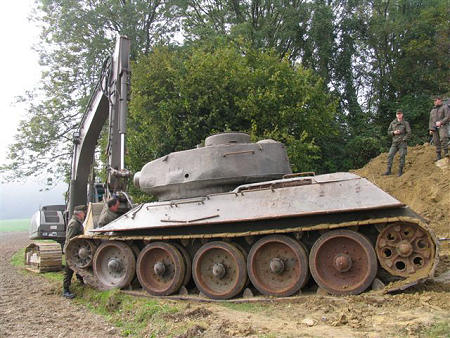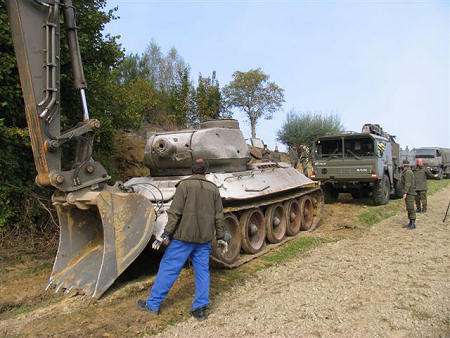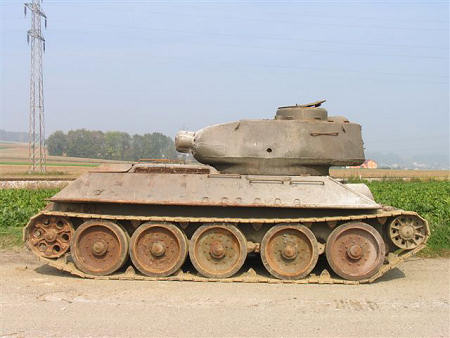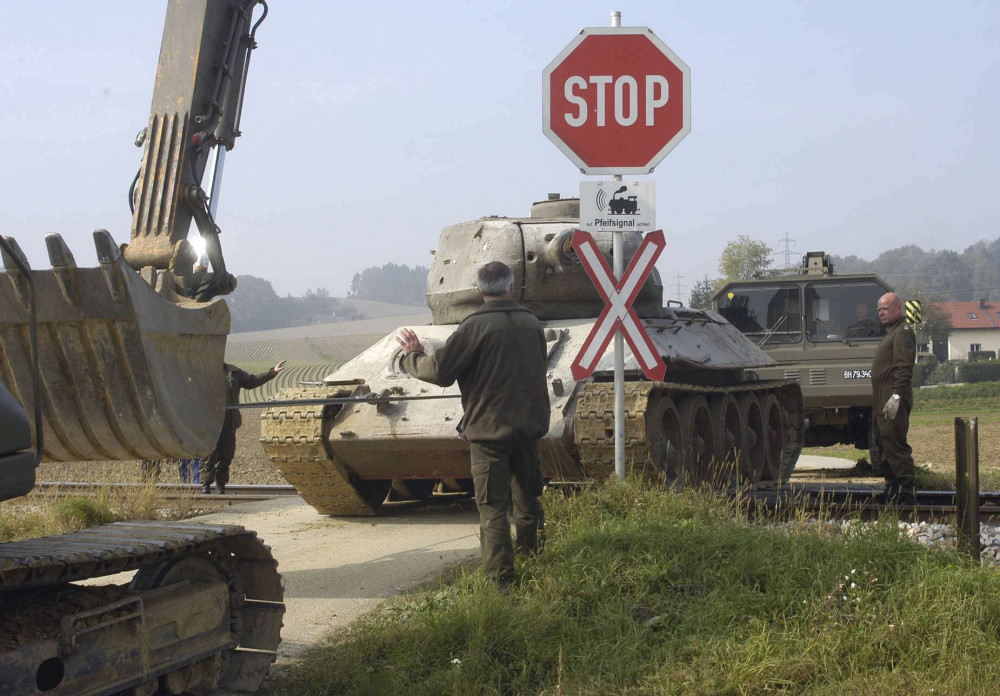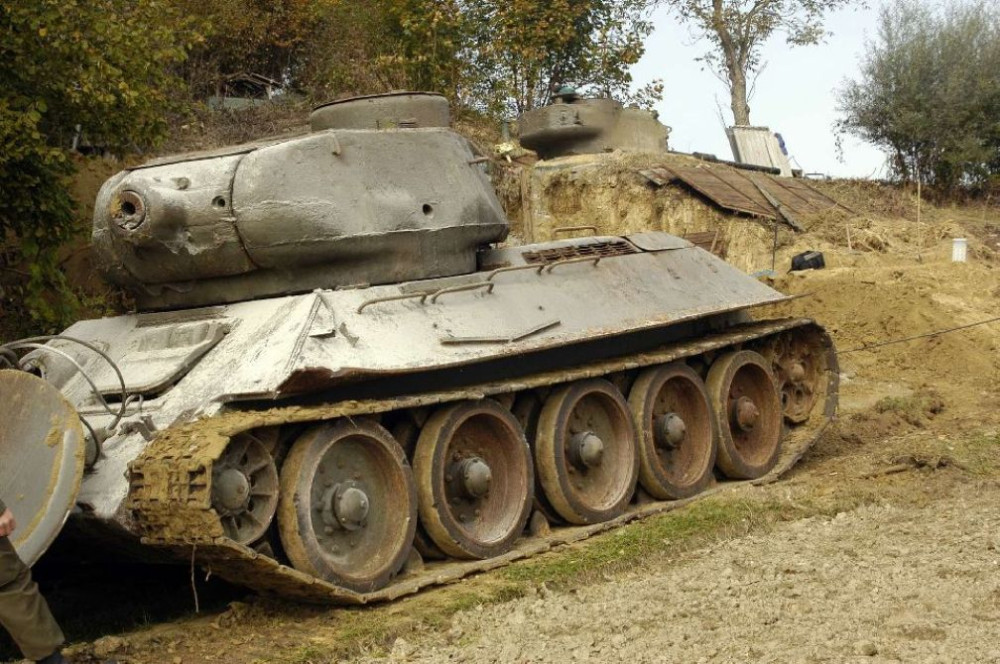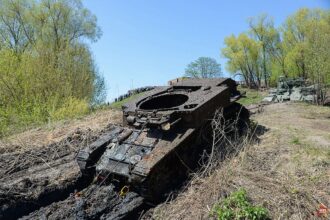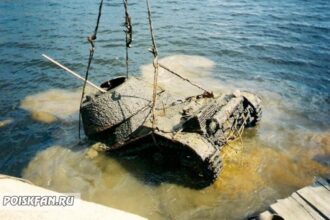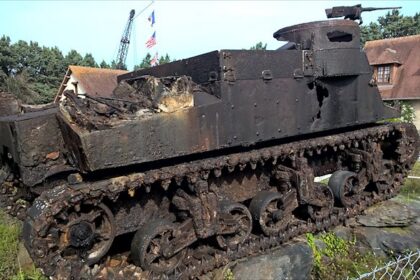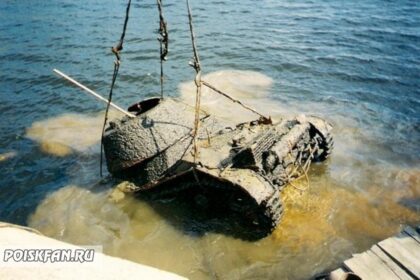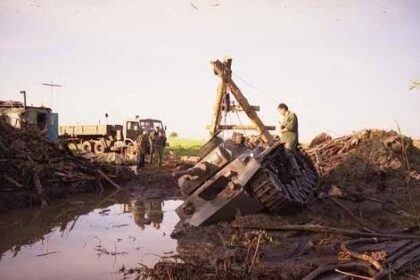
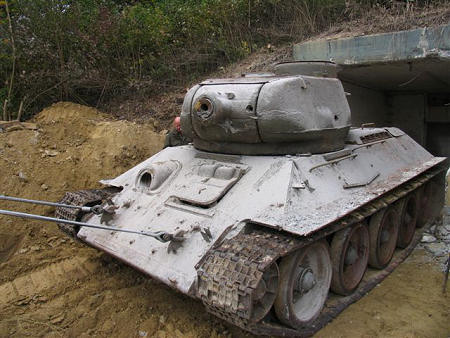
Scattered across the rolling hills of Upper Austria lie unassuming concrete structures—ghostly reminders of a time when World War III felt imminent. Built during the height of the Cold War, these “Fixed Fortifications” (Feste Anlagen) once embedded Soviet T-34 battle tanks directly into the earth to defend against potential invasion.
Throughout the 1970s, Austria constructed a network of hundreds of reinforced concrete shelters across the country. Designed as static defensive hubs, they were built to hold surplus armor and artillery from both Soviet and American military stockpiles. While the weapons are long gone, several of these abandoned structures still loom hidden in plain sight around the city of Linz.
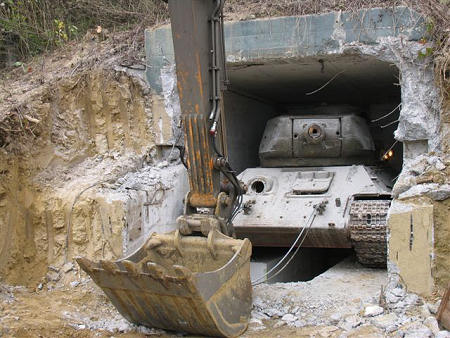
Embedded Armor: Soviet Tanks for Austrian Defense
The core strategy behind Upper Austria’s 76 Feste Anlagen was simple: turn heavy armor into unyielding pillboxes.
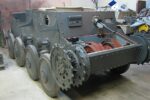
Following the end of Allied occupation in 1955, the Soviet Union supplied T-34 battle tanks to the newly formed Austrian Armed Forces (Bundesheer) as part of a military assistance package. Decades later, these legendary World War II tanks found a second life in the country’s Cold War defense strategy.
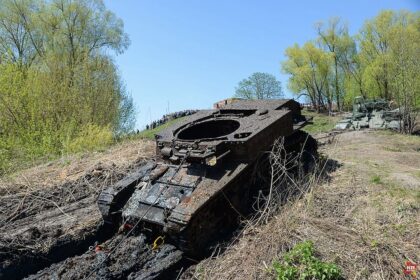
- 19 Fortifications were armed with complete T-34 tanks or their heavily armored turrets permanently encased in concrete.
- 57 Fortifications were equipped with heavy 15.5 cm field guns sourced from U.S. military stocks.
These garage-like bunkers were open on one side, allowing the embedded gun barrels to sweep key transit corridors and choke points to halt advancing enemy forces.
A Flawed and Rigid Defense Model
Despite the heavy firepower, the Feste Anlagen network suffered from a major tactical flaw: rigidity. Once a bunker was spotted, it couldn’t move or adapt to changing battlefield conditions.
Military historians often draw parallels between this Cold War strategy and Linz’s 1833 Maximilian fortification towers—another ambitious defensive system that ultimately proved too inflexible for modern warfare.
By the late 2000s, the system was completely obsolete. In 2007, the iconic T-34 tank at the Mauthausen fortification was officially removed. By 2008, the Austrian government had dismantled and disposed of the entire network’s remaining armament, leaving behind only empty concrete shells.
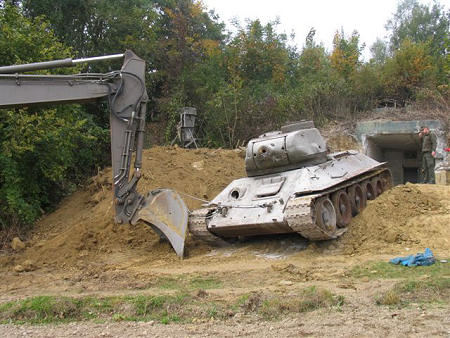
Exploring the Remains Today: Where to Find Them
Though stripped of their firepower, the concrete bunkers themselves proved too sturdy to easily erase. Measuring roughly 8 by 5 meters, many of these empty positions remain hidden along hillsides and valleys surrounding Linz.
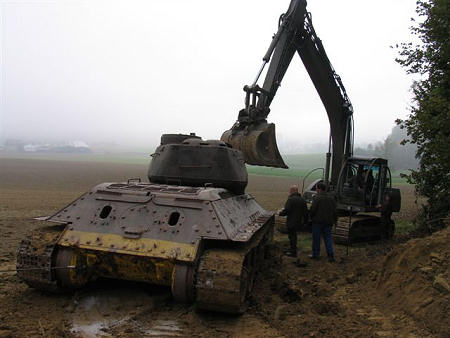
For urban explorers and history buffs, several notable sites are still recognizable today:
- The Danube Valley: Shortly before reaching the Ottensheim Tunnel.
- Pöstlingberg: Located behind the hill heading toward Gramastetten.
- Haselgraben Valley: Tucked beside the historic Speichermühle.
These hollow concrete structures stand as silent monuments to an era when Austria prepared its landscape for a war that fortunately never arrived.